
Reviewed · LEMOSHO ROUTE CLIMBS
8 Day Kilimanjaro Lemosho Climb
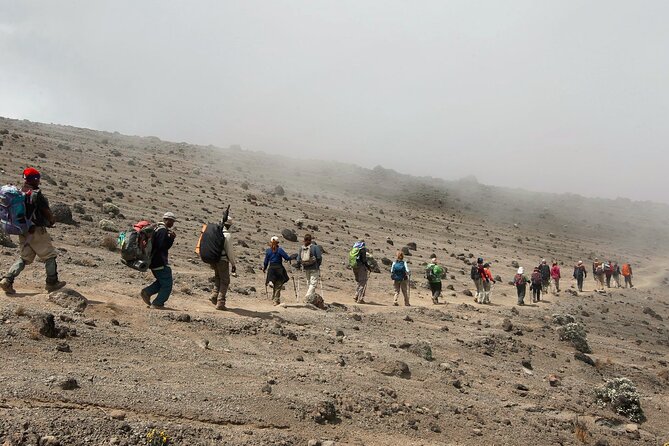
The best thing about this 8-day Lemosho climb is the route itself. You begin in a remote western forest, cross the open Shira Plateau, circle Kibo through high desert, and reach Uhuru Peak by way of the southern circuit. It feels like a real mountain journey, not simply a staircase to the summit.
I like the slow altitude profile and the Barranco Wall. You gain height gradually, then use your hands on a short, non-technical scramble that gives the climb some character without ropes or climbing training. I also like the amount of support included: guides, porters, a cook, waiter, tents, meals, boiled water, health checks, oxygen, and park fees are all covered.
The main caution is the summit day. It can last about 18 hours, beginning around midnight and combining a steep ascent, extreme altitude, a short summit stop, and a long descent. You need strong fitness, proper equipment, and a sensible attitude toward altitude.
Key points to know before booking
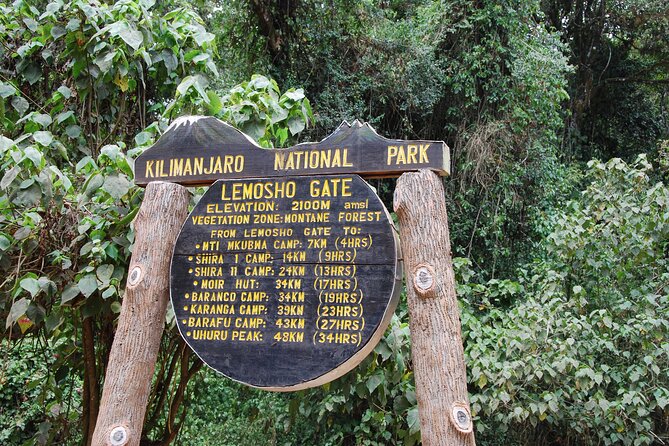
- Remote western start: Lemosho begins far from the busiest trailheads, with a 4×4 transfer from the gate to the trailhead.
- Strong acclimatization plan: The route climbs to Lava Tower at 4,630 meters, then descends to Barranco Valley before the summit push.
- A hands-on mountain section: Barranco Wall involves scrambling with hands and feet, but no special equipment or previous climbing experience.
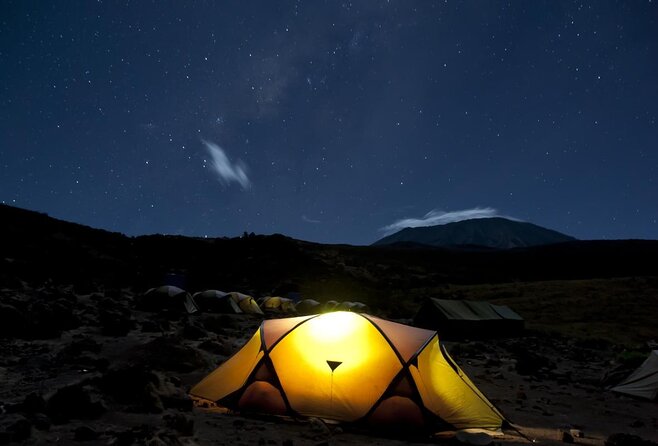
- Full camping service: A tent crew, mountain cook, waiter, porters, dining tent, tables, chairs, and foam mattresses are included.
- Medical checks are built in: Guides conduct health checks twice daily using a high-grade medical oximeter, with emergency oxygen and a first aid kit provided.
- Highly praised guiding: Past trips have featured guides including Mathayo Sanka, Calvin Shayo, Hamza, John, Isaac, and David, with particular praise for calm support and careful summit preparation.
Why the 8-day Lemosho route works well
Kilimanjaro is not a technical climb, but it is a serious high-altitude trek. You do not need ropes, crampons, or rock-climbing experience for this route, yet you still need to walk for many hours, sleep in tents, handle cold, and respond properly to altitude.
The extra day compared with shorter Lemosho itineraries matters. It gives you more time to adjust before the summit attempt, and the route uses the useful high-climb, low-sleep pattern on Day 4. You reach Lava Tower at 4,630 meters, then descend to camp near the elevation where you began. That is tiring, but it gives your body a better chance to adapt.
At $3,125 per person, this is not a budget trek. Still, the price covers many costs that can otherwise appear as add-ons: national park conservation and camping fees, rescue fees, remote-gate transport, a certified guide team, porters, meals, tents, boiled water, medical monitoring, and camping equipment. You still pay for tips, personal gear, insurance, visas, drinks, and accommodation before or after the climb.
This is described as a private activity, so only your group participates. That is useful if you want the guides focused on your party, though a larger private group may still have several guides and a sizeable support crew. Group discounts are available, so ask for the current price before booking if you are traveling with friends or family.
More Lemosho Route Climbs in Moshi:
- Kilimanjaro climb by Lemosho Route (7-day)
★ 5.0 · 651 reviews - Kilimanjaro Climbing Lemosho Route 8 Days.
★ 5.0 · 186 reviews - Kilimanjaro climb, Lemosho Route (8-day)
★ 5.0 · 148 reviews
Day 1: Lemosho Gate and the Kilimanjaro rainforest
Your morning begins with a 9:00 transfer from Shah Tours at 6 Sekou Toure Way in Moshi. The drive takes you toward Lemosho Gate, where you register before continuing along a 4×4 track to the trailhead.
The first walk lasts about four hours and enters the rainforest zone. This is a thick, varied part of Kilimanjaro, with dense vegetation and the chance of rain. The path can become slippery, so shoes with solid grip and trekking poles are useful.
The route winds steadily uphill to the first camp. Do not treat this as an easy warm-up just because the altitude is still modest. Wet forest paths, humidity, and the first day carrying a daypack can make the walk feel longer than expected.
Water is not included on the first trekking day, so plan for that detail. From the first camp onward, the crew provides boiled drinking water. Soft plastic bottles are permitted, while metal and hard plastic water bottles are specifically excluded from the package, so check your water system before arriving.
Day 2: Leaving the trees for Shira Ridge
Day 2 is about five hours. You leave the forest quickly on a steeper trail, and the thick greenery gives way to heather and moorland.
This change is one of the pleasures of Lemosho. The trees open up, the air feels different, and the views become wider. You cross Shira Ridge with views toward Shira Peak, one of Kilimanjaro’s three volcanic cones. Shira is heavily eroded and jagged, giving this side of the mountain a more rugged look than the neat cone many people picture.
The walking is steady rather than technical. The key is pace. Your guide will likely encourage the famous slow rhythm needed at altitude. You may find the day physically manageable, but the combination of climbing and increasing elevation deserves respect.
Day 3: Shira Plateau and the optional cathedral hike
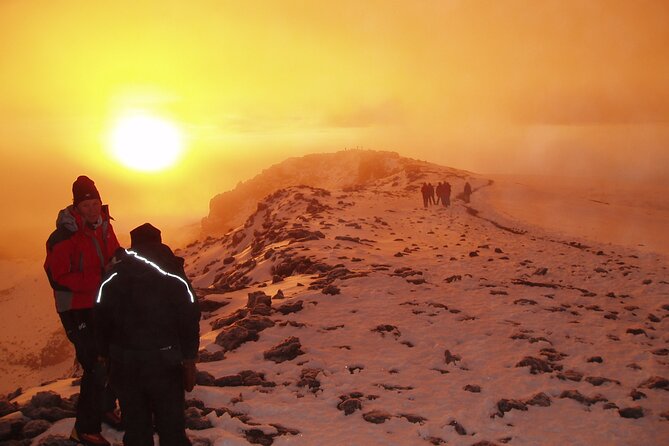
The third day covers about five hours across the Shira Plateau. The route continues through heather and moorland, with Kibo, the highest cone, becoming a stronger presence ahead.
There is an optional hike to Shira Cathedral at 3,880 meters. This is a useful choice for people who feel well and want extra scenery, but it should not become a pride contest. If you are tired, saving energy for the next days is the wiser decision.
From Shira, Kibo appears from a distinctive western angle. The plateau also gives you a clearer sense of the mountain’s volcanic shape, with Shira’s broken ridges contrasting with Kibo’s broad summit cone. This is one of the route’s scenic rewards and a good reason to choose Lemosho over a more direct ascent.
Camp is at Shira Two. By now, your routine is established: walk, eat, rest, wash at the campsite, and prepare for the following day. The package includes a small personal wash basin, hand-washing station, shared public campsite toilets, and a dining tent with tables and chairs.
Same country, a completely different kind of safari:
- Safari Serengeti And Ngorongoro
★ 5.0 · 288 reviews - Kilimanjaro climb, Machame Route (7-day)
★ 5.0 · 262 reviews - Climbing Kilimanjaro – Machame Route
★ 5.0 · 170 reviews - Climbing Kilimanjaro through 7 days Machame Route
★ 5.0 · 151 reviews
Day 4: Lava Tower, the alpine desert, and Barranco Valley
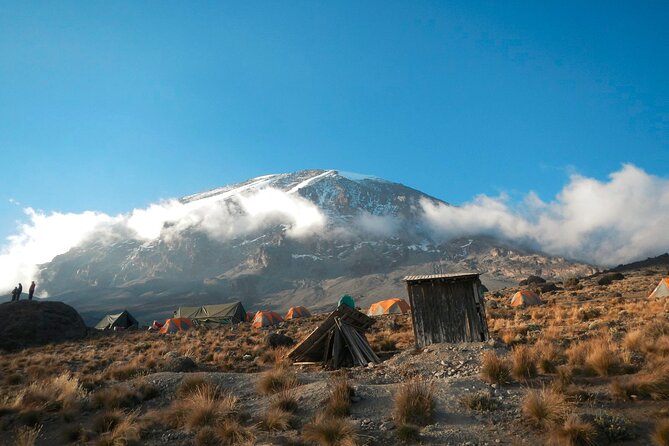
Day 4 is the route’s major acclimatization day and one of its hardest walking days. The trek takes about eight hours as you climb toward Lava Tower at 4,630 meters, or 15,190 feet.
The terrain changes again, this time to alpine desert. Vegetation becomes sparse, and Kibo feels much closer. Lava Tower is a valuable checkpoint. You can see how your body handles a higher elevation before summit night, while the guides can monitor your condition.
After reaching the tower, you descend counterclockwise around Kibo toward Barranco Valley. This descent is not wasted effort. It puts you at a lower sleeping elevation after the high point of the day, which supports acclimatization.
Along the way, look for Kilimanjaro senecios, large flowering plants adapted to the mountain’s harsh conditions. They are among the most unusual sights on the route. The day ends around the same general elevation where you started, but you will have climbed much higher during the day.
This is also a day when altitude symptoms may become more noticeable. Headache, nausea, dizziness, and unusual fatigue should be reported promptly. The included twice-daily health checks and oximeter are useful safeguards, but they do not replace honest communication with the guide.
Day 5: Scrambling over Barranco Wall
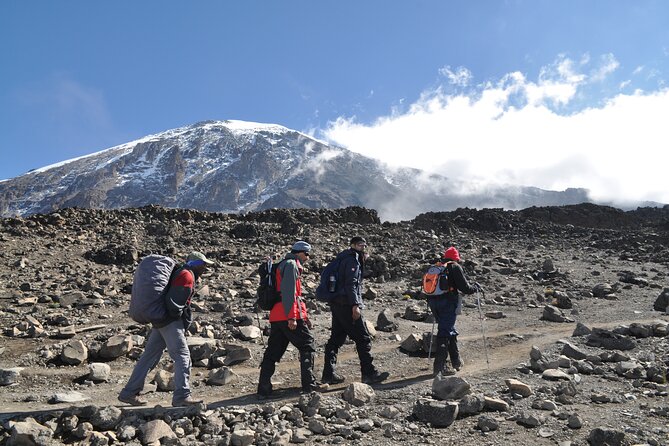
Day 5 begins with the Barranco Wall, a short scramble that requires hands and feet. It is not a technical climb, and no special equipment or previous climbing experience is required, but it is more engaging than ordinary trail walking.
The wall looks imposing from camp. Once you begin, the route uses natural steps and ledges. Your guide can help with pacing and foot placement, while porters may pass you carrying loads. At the top, you get a fine view back toward camp and across to the Heim Glacier on Kibo.
After the wall, the trail winds through alpine desert toward Karanga Valley. You descend into the valley, then climb again to camp. The walk takes about five hours, so the day is shorter than the Lava Tower day, but the repeated ups and downs can still test your legs.
Karanga Valley is the final water point. From here on, the crew must work with water brought up earlier, which explains the importance of the included boiled water service and careful campsite organization.
Day 6: A short walk to summit camp
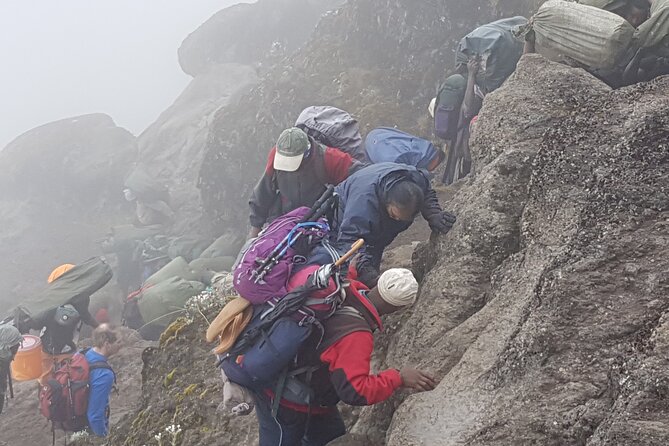
Day 6 is intentionally brief, about four hours. You climb slowly through the open alpine desert toward Kibo. The slope is not described as extremely steep, but the high elevation makes even casual walking feel demanding.
Mawenzi Peak may appear to the east, adding another dramatic feature to the mountain view. Mawenzi is Kilimanjaro’s second volcanic cone, and its sharp profile contrasts with Kibo’s rounded summit.
The short distance leaves you time at summit camp to rest and prepare. This is not a sightseeing afternoon. Eat what you can, organize your summit clothing, fill your water containers, and try to sleep before the midnight start.
A good summit attempt depends on this quiet preparation. You will need warm layers, gloves, a headlamp, spare batteries, water, snacks, and a daypack. Personal equipment such as sleeping bags, walking poles, duffel bags, and other mountain gear is not included, so budget for rentals or purchases before the climb.
Day 7: Stella Point, Uhuru Peak, and the long descent
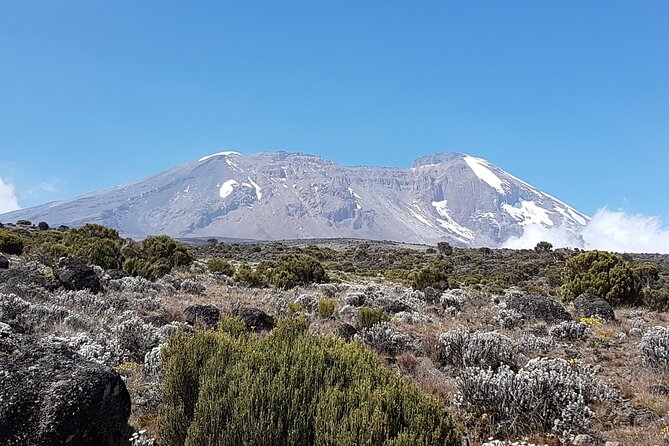
Summit day begins around midnight. You climb through the arctic zone in darkness, on loose volcanic scree, using a slow zigzag pattern toward Stella Point at 5,685 meters, or 18,650 feet.
This is the toughest physical and mental section. The cold, darkness, thin air, and steep slope combine to make progress feel slow. A calm guide team matters here. Guides named in past trips include Mathayo Sanka, Calvin Shayo, Hamza, John, Isaac, and David, and the most consistently praised qualities have been patience, reassurance, careful pacing, and attention to safety.
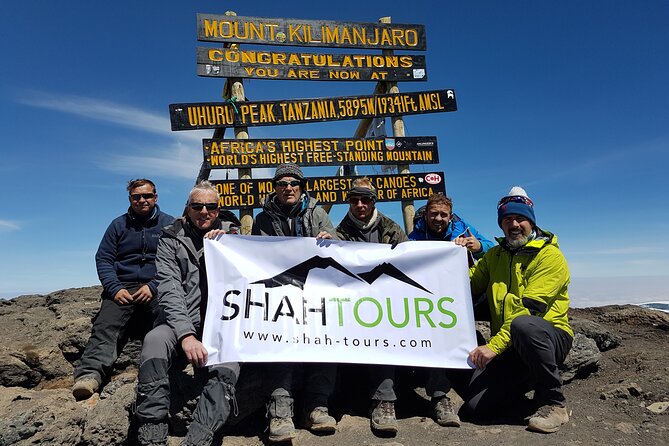
At Stella Point, you reach the Kibo crater rim. Uhuru Peak remains a short distance away, but it is still difficult. The summit is 5,895 meters, or 19,341 feet, and the altitude is severe. You normally spend only a short time at the top before descending.
After returning to base camp, you have breakfast or brunch and pack your gear. Then you descend through the alpine desert. The full day is listed at about 18 hours, making this the clearest reason to take your fitness seriously.
Do not judge success only by reaching Uhuru Peak. If a guide turns you around because of altitude symptoms, that is proper mountain management, not failure. This climb includes emergency oxygen and a first aid kit, but oxygen is a safety measure, not a guarantee that altitude illness can be ignored.
Day 8: Rainforest descent and Mweka Gate
The final day takes about four hours and descends through the southern rainforest to Mweka Gate. The change from arctic summit terrain to forest is rapid and satisfying.
At the gate, a vehicle takes you back to Moshi. The crew generally leaves from Mweka Gate, making it the natural place to say goodbye to the guides, porters, cook, and other staff who supported the climb.
The package includes one transfer from Moshi to the park gates and one return transfer from the gates to a Moshi-based lodge. It does not include pre-climb or post-climb accommodation, so confirm exactly where your transport begins and ends before you arrive.
Food, tents, porters, and mountain support
This is a fully supported camping climb rather than a minimalist trek. A mountain cook and waiter provide breakfast, lunch, and dinner for all seven nights on the mountain, with utensils, bowls, cups, and cutlery supplied.
The menu is not specified, so you should tell the company about dietary needs in advance. Past descriptions of the food have been especially positive, with fresh meals prepared daily and more choice than expected. That matters because eating enough becomes harder at altitude, and familiar, warm food can make a long day much easier.
One porter carries up to 15 kilograms of your personal luggage. A specialist tent crew sets up camp, and the package includes a four-season tent, basic one-inch foam mattress, dining tent, chairs, and tables. Odd-numbered groups receive one single tent, while even-numbered groups share tents. An extra single tent costs more.
The porter arrangement is worth checking carefully. The package includes the stated 15-kilogram allowance per person, but extra luggage porters, personal porters, and extra guides are not included. Pack lightly and clarify the exact bag handover process during the pre-climb briefing.
Shah Tours also lists Kilimanjaro Porters Assistance Project monitoring for fair treatment standards. That gives you a useful point to ask about directly, especially if responsible porter practices are important to your booking decision.
Safety and fitness: the part you should not skim
You should have a strong physical fitness level for this activity. The route is non-technical, but seven walking days, high-altitude camping, and an 18-hour summit day are demanding.
The company provides certified English-speaking mountain guides at the required KINAPA ratios. Guides conduct health checks twice each day with a high-grade medical oximeter. One emergency oxygen cylinder is provided for every five passengers, along with a first aid kit.
This climb is not recommended for people with lung problems or known altitude-related medical conditions. You also need travel insurance, which is not included. Flying Doctors emergency evacuation membership is another optional cost rather than part of the tour.
Take the pre-climb briefing and equipment check seriously. It is your chance to solve missing gear, luggage questions, and clothing problems before you are on the mountain.
What the $3,125 price really covers
The price is best understood as a package for permits, logistics, food, camping, and a large working crew. Park entry, conservation, camping, and rescue fees are included, as are taxes and VAT. Remote Lemosho transport is also covered, which is important because this route does not begin at an ordinary town-side trailhead.
You still need to budget for:
- Tips and gratuities
- International flights, visas, and insurance
- Moshi accommodation before and after the trek
- Sleeping bag, poles, duffel bag, and personal mountain clothing
- Drinks and personal items
- Extra single tents, guides, porters, or oxygen cylinders
- Comfort upgrades such as a private camping toilet, foldable bed, or upgraded menu
For a private, fully supported eight-day climb, the inclusions make the price easier to justify. I would still request a written breakdown of crew size, tipping guidance, gear rental costs, and accommodation arrangements before paying.
Who should book this climb
I would choose this route if you want the best mix of scenery and acclimatization, and if you prefer a private trip with a dedicated crew. It suits fit first-time climbers who are comfortable camping and willing to walk slowly for several days.
It is also a good choice for friends or families who want to share a major challenge. Past groups have included couples, families, groups of friends, and first-time climbers. The guide team has been praised for calm encouragement and personal care, with several trips singling out Mathayo, Calvin, Hamza, John, and other crew members.
I would think twice if you want a quick climb, dislike camping, have limited time for recovery, or expect hotel-level comfort. The Barranco scramble is manageable, but the summit day is not casual.
Should you book the 8-day Lemosho climb?
Book it if you want a scenic western approach, a quieter start, a strong acclimatization pattern, and a well-supported camping setup. The route gives you rainforest, Shira’s volcanic ridges, Lava Tower, senecios, Barranco Wall, Mawenzi views, and the chance to stand at Africa’s highest point.
The clearest strengths are the route profile, the included mountain services, and the guide-led safety checks. The clearest costs are the high price, personal equipment, tips, insurance, and the punishing summit day.
Before committing, confirm your guide team, accommodation in Moshi, equipment rental, group discount, and tipping expectations. If those details fit your budget and fitness, this is a strong Lemosho option for a serious but non-technical Kilimanjaro climb.
FAQ
Where does the climb start?
The meeting point is Shah Tours at 6 Sekou Toure Way in Moshi, Tanzania. The start time is 9:00 am.
How long does the activity last?
The climb lasts approximately eight days.
Is this a technical mountain climb?
No. The route is non-technical. The Barranco Wall includes a short scramble using your hands and feet, but no special equipment or previous climbing experience is required.
Is the tour private?
Yes. Only your group participates in the activity.
Are park and camping fees included?
Yes. National park conservation, park entry, camping, rescue fees, taxes, and VAT are included.
Are meals included?
Yes. Breakfast, lunch, and dinner are included for all seven nights on the mountain.
Is drinking water provided?
Boiled drinking water is provided from the first camp onward. Water on the first trekking day is not included.
Is mountain equipment included?
No. Personal equipment such as sleeping bags, walking poles, duffel bags, and other personal mountain gear is not included.
What happens during the summit attempt?
You begin around midnight on Day 7, climb to Stella Point at 5,685 meters, continue to Uhuru Peak at 5,895 meters, then descend to base camp for breakfast or brunch before continuing downhill.
Can I cancel for a full refund?
Yes, if you cancel at least 24 hours before the experience start time. Cancellations or changes made less than 24 hours before the start are not accepted for a refund.
Just added around Moshi
- Mt Kilimanjaro 6 days Marangu route hike★ 5.0 · 3 reviews
- Wildlife Extravaganza: Manyara, Tarangire & Ngorongoro in 3 Days★ 5.0 · 3 reviews
- Private Cycle to Kilimanjaro Bike Park Safari★ 5.0 · 6 reviews
- 3 Days Private E-Bike Tour in West Kilimanjaro★ 5.0 · 3 reviews
- West Kilimanjaro cycling Adventures★ 4.5 · 8 reviews
- machame route★ 5.0 · 16 reviews
- Kilimanjaro Climb & Safari – Lemosho Route – 13 Day★ 5.0 · 10 reviews
- Kilimanjaro Climbing Umbwe Route★ 5.0 · 3 reviews
Lemosho Route Climbs, compared.


8-Day Small-group Lemosho Kilimanjaro Summit Trekking
Read our review →





Climbing Kilimanjaro through 8 days Lemosho Route
Read our review →Browse the lists this tour appears in