
Reviewed · LEMOSHO ROUTE CLIMBS
8 Day Climbing Kilimanjaro Via Lemosho Route
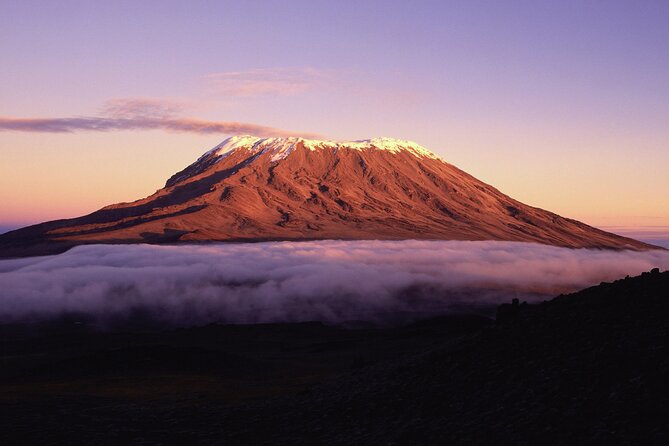
Kilimanjaro’s Lemosho Route gives you the mountain in chapters: rainforest, heather, high moorland, alpine desert, and the cold arctic summit zone. Over eight days, you walk toward Uhuru Peak at 19,341 feet, with a slower schedule designed to help your body adjust to the altitude.
I like the route’s changing scenery and the extra acclimatization time at Moir, Barranco, and Karanga camps. I also like the practical comfort of signature camping, with spacious tents and prepared breakfasts, lunches, and dinners. The catch is simple: this is a serious high-altitude climb, not a casual hike, and altitude sickness can stop even fit people before the summit.
Key points at a glance
- Six ecological zones: Move from Afromontane rainforest through heather, moorland, alpine desert, and the arctic summit zone.
- A scenic western approach: The Lemosho Route crosses the Shira Plateau and reaches some of Kilimanjaro’s prettiest valleys.
- Eight days for acclimatization: The schedule includes time at Moir, Barranco, Karanga, and Barafu camps before the summit attempt.
- A midnight summit bid: You climb toward Stella Point in darkness, then continue to Uhuru Peak for sunrise views over Mawenzi.
- Comfortable camping: Spacious tents, prepared meals, and a full crew make long days more manageable.
- Guides with strong personal recommendations: Past trips specifically name guides such as Yobu Eliamani Mbwambo, Rama, Paulo, and William.
Why the Lemosho Route is a good choice
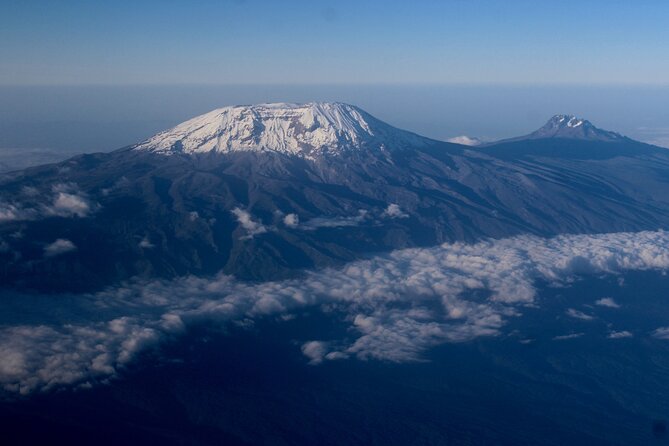
Kilimanjaro rises alone above northern Tanzania, but the mountain is not one unchanging wall of rock. Its slopes pass through distinct ecological zones, and the Lemosho Route lets you see that change at a steady pace.
You begin on the western side at Londorossi Gate, where the trail enters Afromontane rainforest. The route then climbs into heather, crosses the broad Shira Plateau, passes through high moorland, and reaches the dry alpine desert around Lava Tower and Barafu. Near the summit, vegetation gives way to bare volcanic ground, ice, wind, and thin air.
That variety is the main reason I would choose Lemosho over a faster route. The eight-day plan also gives you more time to adapt than a short itinerary. It cannot remove the risk of altitude sickness, but the gradual profile is useful, especially on a mountain where fitness alone does not predict summit success.
The group limit is listed as a maximum of 100 people. That is a large possible group, so you should ask how groups are divided and how many guides and porters are assigned to each section. The named guides from past trips include Yobu Eliamani Mbwambo, Rama, Paulo, and William, but your booking materials should confirm who will lead your departure.
More Lemosho Route Climbs in Moshi:
- Kilimanjaro climb by Lemosho Route (7-day)
★ 5.0 · 651 reviews - Kilimanjaro Climbing Lemosho Route 8 Days.
★ 5.0 · 186 reviews - Kilimanjaro climb, Lemosho Route (8-day)
★ 5.0 · 148 reviews
Day 1: Londorossi Gate to Forest Camp
The first day begins with a drive from Arusha to Londorossi Gate, the entrance used for the western approach. The trail starts around 7,742 feet and climbs to Forest Camp at about 9,498 feet.
You walk roughly four miles in three to four hours. The pace is intentionally gentle, which is exactly right on day one. You are not trying to prove anything yet. Your job is to settle into the rhythm, watch how your body feels, and get used to walking with a pack.
The trail passes through rainforest, the first major ecological zone. Wildlife may be visible, so keep your eyes open, though sightings are not promised. Lunch is taken along the trail, and camp is reached in the middle of the afternoon.
That early arrival matters. You have time to organize your tent, eat, and rest before the harder altitude days. The overnight stop is Forest Camp.
Day 2: Forest Camp to Shira 1 Camp
The second day climbs from about 9,498 to 11,500 feet over five miles. Plan on five to six hours of walking.
The forest thins as you move through podocarpus and juniper trees. Soon you reach heather and volcanic rock draped with lichen. The change is striking because the dense green forest disappears quickly, replaced by open ground and wide views.
You finish at Shira 1 Camp on the Shira Plateau. This plateau was once part of Kilimanjaro’s third volcanic peak before that peak collapsed. From camp, Kibo, the main summit, comes into clear view.
The elevation gain is noticeable, but the distance remains reasonable. Drink regularly, walk slowly, and avoid treating this day as a race. Lunch is served on the trail, and camp is reached in the afternoon.
Day 3: Across the Shira Plateau to Moir Camp
Day three is one of the scenic highlights. You cross the Shira Plateau at roughly 11,500 feet, walking about seven miles in five to seven hours before reaching Moir Camp at around 13,800 feet.
The first section takes three to four hours across moorland meadows. The plateau feels broad and exposed, with Kibo rising ahead. This is a good day for photographs, but the open terrain can also make the altitude feel more obvious. You may notice that ordinary uphill walking now requires a slower pace.
After lunch, the route climbs toward Moir Camp. If you still have energy, an optional late-afternoon walk in the Lent Hills provides extra acclimatization. Do not feel pressured to take it. At this height, rest can be more useful than collecting another viewpoint.
Moir Hut is the overnight stop. The camp’s high position helps prepare you for the next day, when the route goes above 15,000 feet before descending to Barranco.
Same country, a completely different kind of safari:
- Safari Serengeti And Ngorongoro
★ 5.0 · 288 reviews - Kilimanjaro climb, Machame Route (7-day)
★ 5.0 · 262 reviews - Climbing Kilimanjaro – Machame Route
★ 5.0 · 170 reviews - Climbing Kilimanjaro through 7 days Machame Route
★ 5.0 · 151 reviews
Day 4: Lava Tower and the Barranco Valley
Day four follows an important acclimatization pattern: climb high, then sleep lower. From Moir Camp, you ascend toward Lava Tower at about 15,223 feet, then descend to Barranco Camp at approximately 13,044 feet.
The walking distance is about seven kilometers, and the day takes four to six hours. The upper slopes are an alpine desert, with very little plant or animal life. The conditions can change quickly, and the combination of cold, wind, and thin air can make this shorter day feel demanding.
Lunch is usually taken near Lava Tower. A 300-foot ascent of the tower is optional for strong hikers. I would treat it as a bonus, not a test. The main gain comes from reaching the high point and then sleeping lower at Barranco.
The descent passes through the Garden of the Senecios, a striking area filled with giant groundsel plants and giant lobelias. Barranco Valley is one of the prettiest sections of the route, with steep volcanic walls and unusual high-altitude vegetation. Camp here at 13,044 feet.
Day 5: The Barranco Wall to Karanga Camp
The fifth day is short by distance but not necessarily easy. You walk about three miles in four to five hours, climbing from Barranco Camp to Karanga Camp at roughly 13,123 feet.
First comes the Barranco Wall. It looks intimidating from below, but the route is a hands-and-feet scramble rather than a technical rock climb. You may use all four limbs in places. Take your time, follow the guide’s route, and do not worry about looking graceful.
After the wall, the trail crosses the Karanga Valley through a series of inclines and declines. The repeated ups and downs can be tiring even though the distance is short. Karanga is chosen for acclimatization, giving you another night at altitude before Barafu.
The camp sits around 15,288 feet according to the day’s elevation information, although the itinerary also lists the overnight elevation near 13,123 feet. Ask the operator to clarify the exact camp altitude before departure, since the figures supplied for this section do not fully agree.
Sunset views toward the southern glacial valleys and ice fields are a major reward. This is also a good evening to check clothing, headlamp, water, and summit layers before the midnight start.
Day 6: Barafu Camp and the final rest
The sixth day is a half-day climb to Barafu Camp, the high camp used before the summit attempt. You reach the camp after ascending through alpine desert, where strong winds and bare volcanic ground are common.
Lunch is taken at the high camp, followed by a long rest. That rest is not wasted time. You need to conserve energy for the summit push, which begins just before midnight. Dinner is served early, and the planned schedule allows you to settle down before the coldest part of the climb.
Barafu offers views toward Mawenzi Peak when weather permits. The setting is stark rather than comfortable, and wind can make the camp feel harsh. This is the point where the trip shifts from scenic trekking to a focused endurance effort.
The itinerary’s elevation line combines the Barafu ascent, the summit, and the descent, while the written day-by-day description places the summit attempt after resting at Barafu. In practical terms, you should expect to reach Barafu on this day, rest, eat early, and leave around midnight for the summit.
Day 7: Stella Point, Uhuru Peak, and the long descent
The summit day starts just before midnight. You climb in darkness through the coldest and windiest section of the route. The pace is slow, with patience more important than speed.
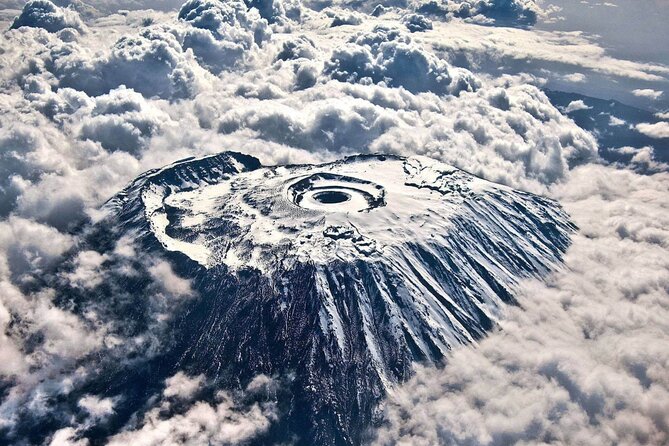
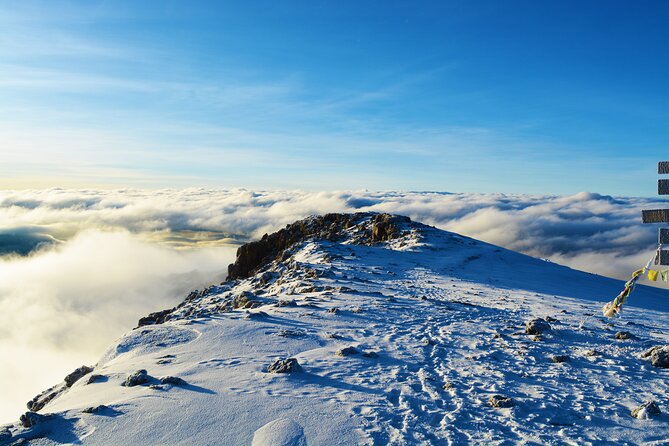
By dawn, you aim to reach Stella Point on the crater rim at about 18,652 feet. Sunrise over Mawenzi Peak is one of the defining moments of the climb. From Stella Point, the final section to Uhuru Peak is relatively short, but at nearly 19,341 feet, it can feel very long.
Uhuru Peak is the highest point on Kilimanjaro and the goal of the trip. You have a brief celebration, take photographs, and then begin the descent. Do not linger too long at the top. The thin air affects everyone, and the descent still requires concentration.
The supplied schedule gives seven to eight hours for the ascent and four to six hours for the descent, with roughly three miles up and seven miles down. Those figures are best understood as the summit day effort, not a simple four-hour walk. You may descend to a lower camp after the summit, where food and rest are waiting.
Altitude sickness is the biggest uncertainty. One past family group had a member who developed altitude sickness and did not reach the summit. That detail is worth taking seriously: turning around is the correct decision when symptoms become dangerous, and it does not erase the achievement of completing the mountain route.
Day 8: Montane forest and the return to Moshi
The final day descends through montane forest toward the park exit. The itinerary places the end of the descent around midday, followed by a farewell to the crew and a transfer to your hotel in Moshi.
After the summit effort, the lower forest may feel warm, thick, and almost startlingly alive. You finish tired, dusty, and ready for a shower. A celebratory dinner is planned after the transfer.
The day is listed as about ten hours, so do not schedule a tight onward connection. The pickup and hotel transfer are useful, but you should confirm the exact drop-off arrangements with Spirit of Kilimanjaro before departure.
Camping, meals, and guide support
The trip includes signature camping, described as spacious tents with deluxe comfort and prepared meals. Breakfast is included eight times, lunch nine times, and dinner eight times. The meal count suggests food is provided throughout the climb, including the summit schedule, but ask for the exact meal plan if you have allergies or dietary needs.
A strong guide makes a real difference on Kilimanjaro. The most useful support is not loud encouragement. It is setting a slow pace, watching for signs of altitude trouble, choosing sensible stopping points, and helping you make safe decisions.
Names connected with past climbs include Yobu Eliamani Mbwambo, Rama, Paulo, and William. One account describes Rama and Paulo adapting the pace and plan to the group, while another gives special praise to Yobu. Your own guide assignment may differ, so treat these names as useful points to raise when booking rather than a guarantee.
Is the $2,670 price good value?
At $2,670 per person, this is a substantial purchase, but the value depends on what you compare it with. The package covers an eight-day guided climb, camping, breakfast, lunch, and dinner, along with pickup support. It also gives you the longer Lemosho schedule instead of compressing the mountain into a faster ascent.
The price does not include a visa or international flights. You should also check the booking terms for any gear, park-related costs, transfers, tips, hotel nights, or other expenses not spelled out in the supplied details.
I see the strongest value in the route length and the support structure. Eight days gives you more time to adjust than a short climb, and the camping setup reduces some of the daily strain. The price is less compelling if you want a small private group and the maximum group size of 100 is used, so ask how your departure is organized.
Free cancellation is available if you cancel at least 24 hours before the start time. Changes or cancellations made inside that window are not accepted for a refund.
Who should book this climb?
This climb suits you if you want a major physical challenge, care about scenery, and can commit to a full week on the mountain. You need a moderate level of fitness, but fitness does not guarantee a summit. The altitude is the deciding factor for many people.
Lemosho is a good match if you prefer a gradual route with varied scenery and several acclimatization stops. It is also a sensible option if you like having guides, organized meals, camping equipment, and transport handled for you.
This is not the right choice if you want a relaxed holiday, dislike cold nights and basic mountain conditions, or have only a short amount of time in Tanzania. The route includes long walking days, a midnight summit start, steep sections such as the Barranco Wall, and a demanding descent after the summit.
Final call: choose Lemosho if time and altitude matter
I would choose this trip for the eight-day pace, changing ecological zones, and strong camping setup. The Shira Plateau, Lava Tower, Barranco Valley, and sunrise near Stella Point give the route plenty of scenery before the final test at Uhuru Peak.
Book it if you are ready for a serious climb and want a route that gives acclimatization a fair chance. Before paying, confirm your guide team, group size, exact camp elevations, included transfers, and any extra costs. If those details suit you, Spirit of Kilimanjaro’s Lemosho program offers a well-paced path to Africa’s highest summit.
FAQ
Where does the Kilimanjaro climb begin?
The climb begins near Londorossi Gate in Kilimanjaro National Park, after transport from Arusha. The meeting start time is listed as 8:00 am.
How long is the experience?
The experience lasts approximately eight days, ending with a descent to the park area and a transfer to your hotel in Moshi.
What altitude does Uhuru Peak reach?
Uhuru Peak reaches approximately 19,341 feet. The overview also gives the summit height as 19,340 feet.
What route does the climb use?
The climb uses the Lemosho Route, approaching Kilimanjaro from the west and crossing the Shira Plateau.
What meals are included?
Breakfast, lunch, and dinner are included. The supplied details list eight breakfasts, nine lunches, and eight dinners.
Are flights and visas included?
No. International flights and visas are not included in the price.
How physically fit do I need to be?
You should have a moderate level of physical fitness. The climb includes several hours of walking on most days, a high-altitude summit attempt, and a long descent.
Can I cancel for a full refund?
Yes, if you cancel at least 24 hours before the experience start time. Cancellations or changes made less than 24 hours before the start time are not accepted for a refund.
Just added around Moshi
- Mt Kilimanjaro 6 days Marangu route hike★ 5.0 · 3 reviews
- Wildlife Extravaganza: Manyara, Tarangire & Ngorongoro in 3 Days★ 5.0 · 3 reviews
- Private Cycle to Kilimanjaro Bike Park Safari★ 5.0 · 6 reviews
- 3 Days Private E-Bike Tour in West Kilimanjaro★ 5.0 · 3 reviews
- West Kilimanjaro cycling Adventures★ 4.5 · 8 reviews
- machame route★ 5.0 · 16 reviews
- Kilimanjaro Climb & Safari – Lemosho Route – 13 Day★ 5.0 · 10 reviews
- Kilimanjaro Climbing Umbwe Route★ 5.0 · 3 reviews
Lemosho Route Climbs, compared.


8-Day Small-group Lemosho Kilimanjaro Summit Trekking
Read our review →





Climbing Kilimanjaro through 8 days Lemosho Route
Read our review →Browse the lists this tour appears in