
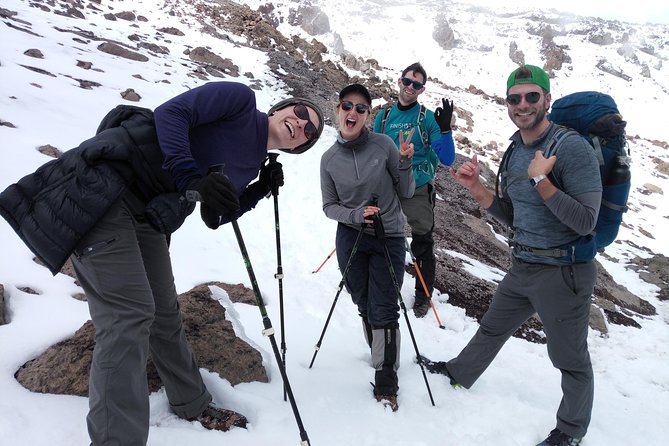
Reviewed · LEMOSHO ROUTE CLIMBS
7 days Lemosho route Climbing Mt.Kilimanjaro
Kilimanjaro’s Lemosho route gives you a gradual approach to Africa’s highest point, starting in quiet rainforest and crossing the broad Shira Plateau before the serious work begins. I like the route’s varied scenery and its careful acclimatization day near Lava Tower, followed by a descent to Barranco.
I also like that the price covers park and rescue fees, airport transfers, Moshi lodging, meals, guides, a cook, and porters. The crew has earned strong praise for its care and encouragement, including guides such as Goodluck, Abraham, Oscar, Bakari, and Nickson. The main drawback is the schedule: seven days still means a demanding summit night, with a 2 a.m. start and a long descent afterward.
Key points to know before you book
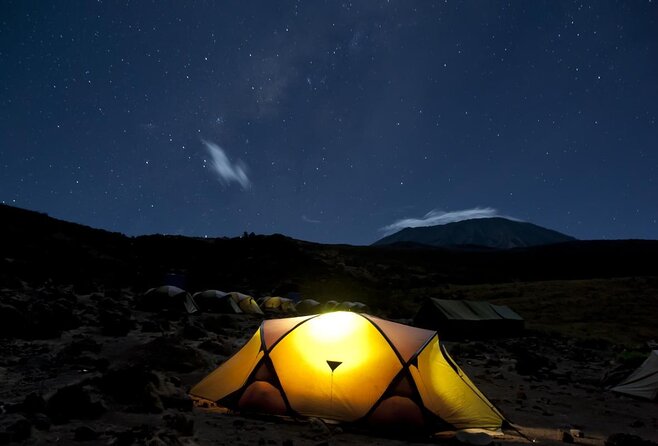
- Lemosho begins in rainforest: The opening hike feels remote and peaceful before the trail reaches the moorland.
- Shira Plateau aids acclimatization: Day three gives you time at high altitude rather than rushing straight toward the summit.
- Lava Tower is an important test: You climb to about 16,000 feet, then sleep lower at Barranco.
- Summit day is very long: Expect a pre-dawn ascent to Stella Point and Uhuru Peak, followed by a descent to Mweka.
- The price covers major essentials: Park fees, rescue fees, Moshi lodging, meals, drinking water, guides, porters, and transfers are included.
- A strong support crew matters: The company’s guides and porters receive repeated praise for safety, food, encouragement, and organization.
Why the Lemosho route is a smart choice
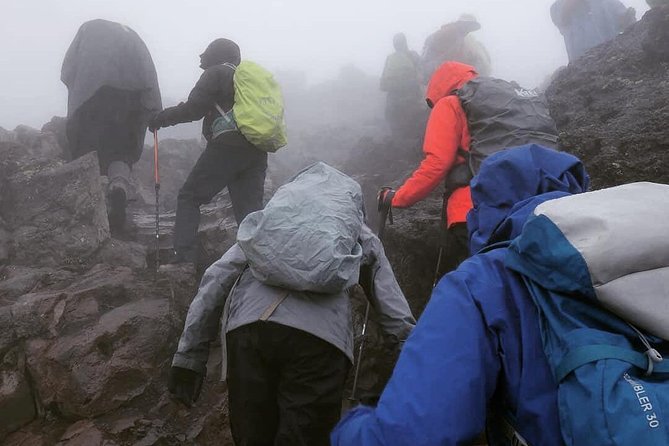
Lemosho is one of Kilimanjaro’s more scenic approaches. You start at about 7,800 feet and move through several distinct zones before reaching Uhuru Peak at 19,345 feet. That gradual change gives the route a strong sense of progression, from forest shade to open volcanic ground and finally snow near the summit.
The route also uses the southern circuit before summit day. That means you see Kibo from several angles instead of following the same view every day. The Shira Plateau offers wide views toward the mountain, while the Barranco and Karanga sections bring more rugged terrain and a sharper feeling that the summit is getting close.
Seven days is a reasonable middle ground. A shorter itinerary can feel rushed, while a longer climb usually gives you more time to adjust. Here, day three is used for acclimatization, and day four deliberately climbs high to Lava Tower before dropping down to Barranco. That climb-high, sleep-lower pattern is one of the most useful parts of the plan.
Still, do not mistake seven days for an easy version of Kilimanjaro. You need strong physical fitness, and summit night is the hardest stretch by far. The group may include up to 15 people, so the pace and daily rhythm will depend partly on the group’s ability.
More Lemosho Route Climbs in Moshi:
- Kilimanjaro climb by Lemosho Route (7-day)
★ 5.0 · 651 reviews - Kilimanjaro Climbing Lemosho Route 8 Days.
★ 5.0 · 186 reviews - Kilimanjaro climb, Lemosho Route (8-day)
★ 5.0 · 148 reviews
Day one: from Moshi to the Lemosho forest
The first day begins with a drive from Moshi to Londorossi Gate, which takes about four hours. You complete park entry formalities there, then continue for roughly another hour to the Lemosho trailhead.
After lunch, you start walking through undisturbed rainforest toward the first camp. The elevation rises from about 7,800 to 9,500 feet, with six kilometers of walking and roughly three to four hours on the trail.
This is a pleasant opening because the walking time is modest and the forest gives you a gentle introduction. You are not thrown straight into high, exposed terrain. The drawback is the long road transfer before the hike begins, so the day feels more like a full travel day than a relaxed half-day walk.
Lunch and dinner are provided, and you camp overnight. Since your Moshi accommodation is included for two nights, confirm whether one night is before the climb and one night is afterward. The supplied schedule lists camping on the mountain, but the final return-night arrangements should be clear before departure.
Day two: leaving the forest for Shira Ridge
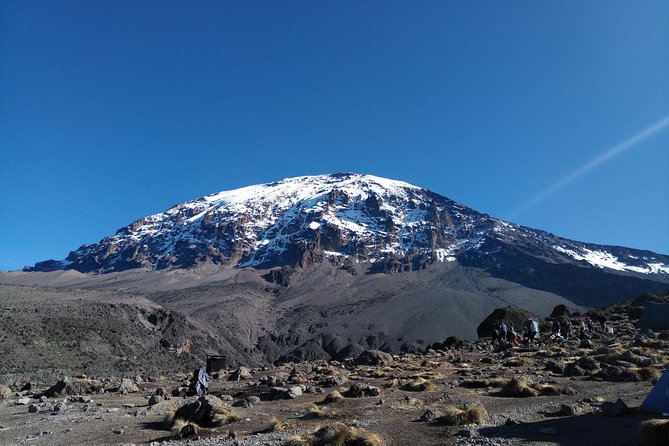
The trail climbs out of the forest and into moorland, where tall grasses, heather, volcanic rock, and lichen replace the dense trees. You cross several streams while ascending the rolling hills toward Shira Ridge.
The day covers eight kilometers and takes about five to six hours. Elevation rises from 9,500 to 11,500 feet, and you camp at Shira 1.
The special feature here is the first clear view of Kibo across the plateau. Kilimanjaro begins to feel less like a distant peak and more like the central subject of the trip. The open setting also gives you a better sense of the mountain’s scale.
This is where you should settle into the practical rhythm of the climb: walk slowly, drink regularly, eat even when your appetite drops, and keep rain gear close. The route is not technically described as a rock-climbing trip, but altitude and endurance make it demanding enough.
Day three: a full acclimatization day on Shira
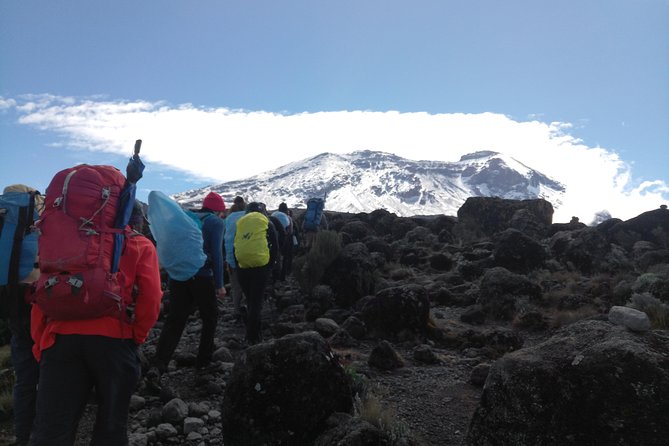
Day three is a major reason to consider this route. You spend a full day exploring the Shira Plateau rather than simply pushing higher toward the summit.
The route heads east toward Kibo, crosses moorland meadows, and reaches Shira 2 Camp by a stream. You then continue to Moir Hut, a less-used camp near Lent Hills. The total distance is about 14 kilometers, with five to seven hours of hiking, and the high point is around 13,800 feet.
The distance is longer than the day before, but the walking is described as gentle. Optional walks around Lent Hills provide a chance to adjust to altitude without the pressure of a summit attempt. Shira is also one of the highest plateaus on Earth, which makes this day memorable even without a dramatic physical challenge.
The practical catch is that altitude can affect you even during an apparently easy walk. Do not race because the trail feels manageable. A slow pace now may make the later days much more comfortable.
A few more Moshi trips to weigh up
- Kilimanjaro climb, Machame Route (7-day)
★ 5.0 · 262 reviews - Climbing Kilimanjaro through 7 days Machame Route
★ 5.0 · 151 reviews - Private Kilimanjaro Hike 7 Day Lemosho Route
★ 5.0 · 60 reviews - 7-Day Magical Tanzania Safari -Premium High End Package
★ 5.0 · 53 reviews
Day four: Lava Tower, the Shark’s Tooth, and Barranco
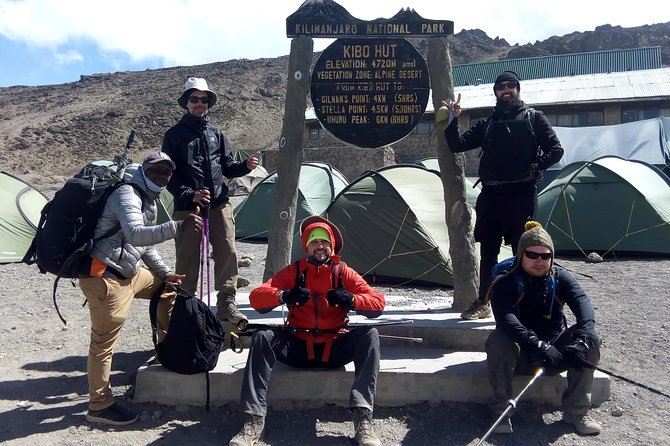
Day four is the route’s key acclimatization test. You leave the Shira Plateau and climb along a ridge toward the Lava Tower, also called the Shark’s Tooth.
The trail reaches roughly 16,000 feet near the Arrow Glacier junction before descending to Barranco Camp at about 13,000 feet. The listed distance is seven kilometers, with four to six hours of hiking, through semi-desert terrain.
You finish the day close to the elevation where you began, but that is the point. Your body gets time at a much higher altitude before you sleep lower at Barranco. This is a demanding day in terms of altitude, even if the distance is not especially long.
Barranco is also one of the more dramatic camps on the route. The change from moorland to dry, rocky ground makes the mountain feel harsher and more exposed. Dinner and camping follow, with the evening used for rest.
Day five: Barranco Wall and Barafu Camp
After breakfast, you tackle the steep ridge beside the Barranco Wall. The route then continues toward Karanga Valley before joining the Mweka Trail and climbing to Barafu Hut.
This is a long day, listed at nine kilometers and eight to 10 hours of hiking. Elevation rises from about 13,000 to 15,000 feet, and the habitat changes to alpine desert.
The Barranco Wall may sound intimidating, but the supplied details do not describe technical climbing equipment or rope work. Expect a steep, physical trail section rather than a rock-climbing expedition. Your guide’s pacing and support will matter here, especially if the group moves at different speeds.
At Barafu, you have completed the southern circuit and can see both Mawenzi and Kibo. This is your summit preparation camp, so the main task is not sightseeing. Eat dinner, organize clothing and headlamp batteries, and try to sleep before the early start.
Day six: the summit push from 2 a.m.
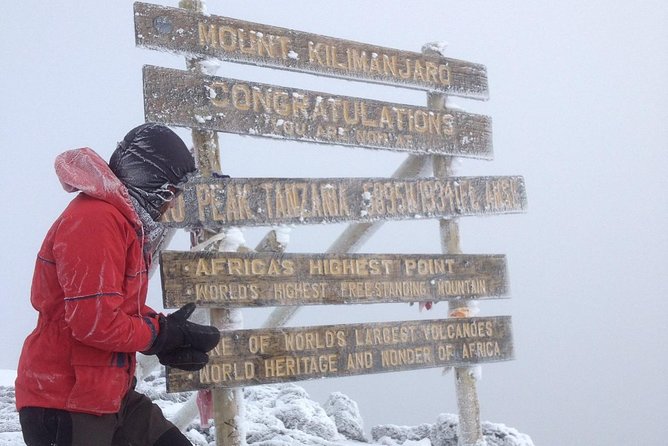
Summit day begins around 2 a.m. You climb between the Rebmann and Ratzel glaciers, moving northwest through heavy scree toward Stella Point on the crater rim.
Stella Point sits at about 18,600 feet. If the weather cooperates, sunrise here can be spectacular. From Stella, you continue for about an hour toward Uhuru Peak, and snow may appear along this final stretch.
Uhuru Peak reaches 19,345 feet, the highest point on Kilimanjaro and in Africa. Faster hikers may reach the summit in time for sunrise, but the exact timing depends on pace, altitude, weather, and how the group is feeling. Do not judge your climb against someone else’s speed.
The summit is only half of this day. After reaching Uhuru Peak, you descend toward Mweka Hut, stopping at Barafu for lunch. The schedule shows an ascent from about 15,300 to 19,345 feet, followed by a descent to roughly 10,000 feet. This is a punishing amount of altitude change in one day, so physical preparation and a cautious pace are essential.
The company’s strongest praise centers on the support team during this kind of difficult section. Guides are repeatedly described as attentive, encouraging, and good at keeping climbers calm. The cook also receives specific praise, with plentiful meals helping people maintain energy during the long days.
Day seven: rainforest descent and return to Moshi
After breakfast, you descend to Mweka Park Gate to receive your summit certificate. The trail drops from about 10,000 to 5,400 feet, covers 10 kilometers, and takes roughly three to four hours.
The lower forest can be wet and muddy. Gaiters and trekking poles are recommended, and you may be comfortable in shorts and a T-shirt at this lower elevation. Keep rain gear and warmer clothing handy, since conditions can change during the descent.
From the gate, the plan includes another hour to Mweka Village, where a vehicle takes you back to your hotel in Moshi. The listed accommodation for this day says camping, which does not match the return to a Moshi hotel. I would ask the operator to confirm the final overnight arrangement and exact transfer timing before you pay.
The next day is left open for a safari, a flight to Zanzibar, a flight home, or another destination. That makes the climb easy to combine with a wider Tanzania trip.
What the $2,850 price includes
At $2,850 per person, this is not a budget walk, but the price covers many of the costs that can otherwise appear as extras. Included are private transport between Kilimanjaro International Airport and your Moshi accommodation, two nights of Moshi lodging, park entry fees, and Kilimanjaro rescue fees.
You also receive guides, a cook, porters, treated and filtered drinking water, an emergency first-aid kit, and camping support. Meals include seven breakfasts, six lunches, and six dinners.
That package offers solid value if you want a supported climb rather than trying to arrange each element separately. Park fees and rescue fees are especially important because they are unavoidable parts of a properly organized Kilimanjaro trip.
You still need to budget for flights, travel insurance, and tips for the guides, porters, and cook. Tipping is not included, so ask for the company’s current guidance before departure and carry enough local cash for the mountain team.
Food, safety, and the support crew
The company puts safety and comfort at the center of its service. The package includes an emergency first-aid kit, rescue fees, filtered water, and professional guides. Those are useful safeguards, but no operator can remove the risks of altitude, cold, fatigue, or changing weather.
The most praised part of the service is the crew. Names that appear in the supplied material include Naick, Juliana, Goodluck Mwanga, Abraham, Oscar, Bakari, Nickson, Joseph, FC, Matthew, Tammy, and cook Yahaya. Guides may vary by departure, so treat these as examples rather than a promised team list.
The feedback also points to a friendly, personal style. Some groups played games while walking, which helped break up long hours on the trail. That will not replace good pacing or rest, but it can make a slow day more enjoyable.
Food is another strong point. You should expect full meals on the mountain, with breakfast and dinner included each day of the trek and lunch included on the six relevant days. If you have dietary needs, confirm them before arrival because the supplied information does not specify special-menu arrangements.
Who should choose this climb
This route suits you if you want varied scenery, a gradual approach, a full acclimatization day, and a locally based company in Moshi. It also works well for solo climbers and small groups who want a staffed, organized experience rather than an independent expedition.
It is less suitable if you want a short or easy mountain holiday. The 2 a.m. summit start, heavy scree, Barranco Wall, high-altitude camping, and long descent require real preparation. A strong fitness level is explicitly required.
The maximum group size is 15 people. That is small enough for a shared group atmosphere, but large enough that you should ask how guide-to-climber ratios are handled and whether a private departure is possible.
Pickup is offered, the meeting time is listed as 8:30 a.m., and the experience accepts mobile tickets. Confirmation is provided at booking, and the location is near public transportation, though the mountain transfer itself is arranged privately.
Should you book the 7-day Lemosho route?
I would choose this climb if your priority is a scenic, well-supported Kilimanjaro route with sensible acclimatization built into the schedule. The strong praise for the guides, porters, food, and personal care adds confidence, while the included park, rescue, transport, and lodging costs make the $2,850 fee easier to assess.
Before booking, confirm three details: the exact Moshi hotel nights, the day-six descent elevation and Mweka accommodation, and the current tipping guidance. If you are fit, comfortable camping, and ready for a very long summit day, this is a serious but well-structured way to attempt Kilimanjaro.
FAQ
How long is the Kilimanjaro climb?
The mountain itinerary lasts seven days, followed by an open day for a safari, Zanzibar, a flight home, or another destination.
Where does the climb begin?
The trip departs from Moshi and drives to Londorossi Gate before continuing to the Lemosho trailhead.
What is the highest point reached?
The summit is Uhuru Peak at 19,345 feet, the highest point on Mount Kilimanjaro and in Africa.
Is airport transportation included?
Yes. Private transport between Kilimanjaro International Airport and your accommodations in Moshi is included.
Are meals included?
Yes. The package includes seven breakfasts, six lunches, and six dinners.
Is camping included?
Yes. Accommodation on the mountain is camping. The schedule also includes two nights of accommodation in Moshi.
What is not included in the price?
Flights, travel insurance, and tips for the guides, porters, and cook are not included.
Just added around Moshi
- Mt Kilimanjaro 6 days Marangu route hike★ 5.0 · 3 reviews
- Wildlife Extravaganza: Manyara, Tarangire & Ngorongoro in 3 Days★ 5.0 · 3 reviews
- Private Cycle to Kilimanjaro Bike Park Safari★ 5.0 · 6 reviews
- 3 Days Private E-Bike Tour in West Kilimanjaro★ 5.0 · 3 reviews
- West Kilimanjaro cycling Adventures★ 4.5 · 8 reviews
- machame route★ 5.0 · 16 reviews
- Kilimanjaro Climb & Safari – Lemosho Route – 13 Day★ 5.0 · 10 reviews
- Kilimanjaro Climbing Umbwe Route★ 5.0 · 3 reviews
Lemosho Route Climbs, compared.


8-Day Small-group Lemosho Kilimanjaro Summit Trekking
Read our review →





Climbing Kilimanjaro through 8 days Lemosho Route
Read our review →Browse the lists this tour appears in