
Reviewed · KILIMANJARO CLIMBS
Mountain Kilimanjaro Climbing 7 Days Rongai Route
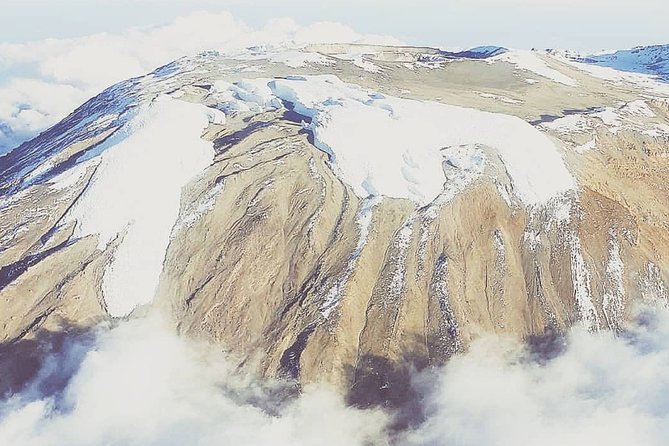
Rongai gives you a quieter way up Kilimanjaro, entering from the Kenyan border side and spending several days in open wilderness before joining the Marangu route. You’ll see farmland, pine forest, moorland, Mawenzi’s jagged cliffs, and the stark saddle beneath Kibo.
I like the low-traffic northern approach and the extra day built in for acclimatization. I also like the practical support around booking: Oscar is noted for answering questions through WhatsApp and shaping trips around each group’s needs. The main drawback is the price, $2,628.72 per person, while the published details do not spell out every inclusion beyond pickup and admission tickets.
- Rongai is Kilimanjaro’s only northern route, with broad views toward the Kenyan plains.
- Seven days gives you more breathing room than the six-day minimum, useful before the summit push.
- The route is quieter than Marangu, with several nights in remote moorland and high-country camps.
- Summit day lasts about 15 hours, beginning around midnight and reaching Uhuru Peak at 5,895 meters.
- The descent uses the Marangu route, so you return through rainforest rather than retracing your steps.
- Groups are capped at 15, and pickup is offered, but confirm the exact meeting and transfer details before paying.
Why Rongai suits a quieter Kilimanjaro climb
Rongai is the route to consider if you want less foot traffic and a more remote feel. It begins at NaleMuru on the northern side of the mountain, close to Kenya, and crosses farmland and pine forest before reaching the moorland zone.
The northern side receives less rain than the western approaches, making Rongai especially appealing during the rainy season. That does not make the climb easy, but it can mean a more comfortable trail underfoot and fewer wet hours during the lower stages.
The scenery changes more gradually than on some western routes. You will not get a new dramatic view at every turn, but you do get several days of open country, broad views toward Kenya, and close views of Kibo and Mawenzi, the two major volcanic peaks that shape the route.
This is rated as a moderately difficult climb. You still need a sound level of fitness, but the seven-day schedule avoids the compressed pace of the six-day option. I would choose seven days if your priority is giving your body more time to adjust to altitude.
Day 1: NaleMuru to Simba Camp at 2,625 meters
The first morning begins with a drive from Moshi to NaleMuru, the trailhead for Rongai. The initial walking is relatively gentle, passing through farmland and pine forest for about four hours.
This opening section gives you time to settle into the rhythm of the mountain. You are not immediately thrown onto steep ground, and the route moves from cultivated land into forest before reaching the edge of the moorland zone.
Simba Camp sits at 2,625 meters and offers wide views across the Kenyan plains. That view is one of the first special moments of the route. It also reminds you that Rongai is not simply a backdoor version of the more familiar southern approaches. You are seeing Kilimanjaro from a different side.
You might spot colobus monkeys in the forest. Elephants or buffalo are also mentioned as possible sightings, but wildlife is never guaranteed, so treat this as a pleasant possibility rather than a promise.
More Kilimanjaro Climbs in Kilimanjaro
- Kilimanjaro climb by Lemosho Route (7-day)
★ 5.0 · 651 reviews - Kilimanjaro climb, Machame Route (7-day)
★ 5.0 · 262 reviews - Kilimanjaro Climbing Lemosho Route 8 Days.
★ 5.0 · 186 reviews
Day 2: Simba Camp to Second Cave at 3,450 meters
Day two is a steady four-hour climb to Second Cave, at 3,450 meters. From here, the views toward Kibo and the eastern ice fields begin to take over.
The route is not described as a technical climb, but altitude starts to matter. A slow pace is useful now. The itinerary includes a hot lunch and free time at camp, followed by the option of an acclimatization walk toward Third Cave.
That rest period is one of the reasons the seven-day plan makes sense. You are not only covering distance. You are giving your body a chance to respond before the route climbs higher.
The afternoon walk is optional in the sense that you can rest at camp, but some movement at a higher elevation can help you prepare for the days ahead. Keep it easy. This is not the time to prove how fast you can walk.
Day 3: Across moorland to Kikelewa Cave
On the third day, the pine forest falls behind and the route moves through moorland. The walk takes about four hours, with clear views of Kibo’s eastern ice fields.
The character of the mountain changes here. The lower forest feels enclosed, while the moorland opens the sky and makes the scale of Kilimanjaro easier to grasp. The trail leaves the main route and heads toward the jagged peaks of Mawenzi.
Camp is set in a sheltered valley near Kikelewa Caves at 3,630 meters. Mawenzi is the sharper, more rugged-looking of Kilimanjaro’s main volcanic peaks, and camping beneath it gives this section a strong sense of place.
This is also one of the more remote parts of the climb. Rongai’s appeal is clearest here, before the route joins the busier Marangu path near Kibo Camp.
Day 4: Mawenzi Tarn and a useful acclimatization stop
Day four is shorter in distance but includes a steep section up grassy slopes. The reward is another broad view toward the Kenyan plains.
Vegetation fades as you climb toward Mawenzi Tarn Hut, at 4,330 meters, directly below Mawenzi’s cliffs. The itinerary allows time to rest or explore around camp for acclimatization.
At this elevation, the schedule matters more than raw mileage. You may feel fine at the start and notice the altitude later in the afternoon. Use the rest period well, drink what your support team provides, eat even if your appetite is reduced, and save your energy for summit night.
The camp’s setting is a major highlight. You are beneath the cliffs of Mawenzi, in a high volcanic environment that feels far removed from Moshi. The tradeoff is simple: the air is thinner, the night can feel long, and comfort becomes less important than pacing and recovery.
More Kilimanjaro Climbs in Moshi:
- Kilimanjaro climb, Lemosho Route (8-day)
★ 5.0 · 148 reviews - Kilimanjaro climb, Lemosho Route (6-day)
★ 5.0 · 129 reviews - Kilimanjaro climb, Marangu route (6-day)
★ 5.0 · 72 reviews - Private Kilimanjaro Hike 7 Day Lemosho Route
★ 5.0 · 60 reviews
Day 5: Crossing the saddle to Kibo Camp
Day five crosses the lunar-looking saddle between Mawenzi and Kibo. The trek takes about six hours, and the route is exposed, sparse, and stark.
This is one of the most memorable stretches because the summit appears ahead while the trail to high camp lies across the broad saddle. You can see the scale of the final effort before you begin it.
The two-hour-plus walk across this high desert has little vegetation and few visual distractions. That can be inspiring, but it can also feel mentally demanding. Keep your pace steady and avoid burning energy simply because Kibo is visible.
Once you reach Kibo Camp, the rest of the day is for resting. You are expected to turn in early before the midnight summit start. This is not a normal night of sleep. Your body is being asked to rest at altitude before a long climb through darkness, cold, and steep ground.
Day 6: Gillman’s Point, Uhuru Peak, and the long descent
Summit day is the serious test. You begin around midnight and climb slowly toward Hans Meyer Cave at 5,220 meters. From there, the trail continues upward to Gillman’s Point at 5,681 meters, reached around sunrise.
The sunrise at the crater rim is a natural reward for the hardest part of the night. The cold should begin to ease as the sun reaches the mountain, but you still have another one to two hours before Uhuru Peak.
Uhuru Peak is at 5,895 meters, the highest point on Kilimanjaro. Reaching it is not the end of the day. After the summit, you return to Kibo Hut for a warm meal and a one to two-hour rest, then continue down to Horombo Hut.
The entire day is listed at about 15 hours. That figure deserves respect. You need enough fitness for a long uphill effort followed by a major descent, and you need the mental patience to keep moving when the summit feels close but not yet reached.
The route through Gillman’s Point also matters. Reaching the crater rim is a major milestone, but it is not the same as reaching Uhuru Peak. The final section can feel tiring after the night climb, so save something for it.
Day 7: Marangu descent through Mandara to Moshi
The final day takes you down through the heath and moor zone to Mandara Hut at 2,700 meters. A warm lunch is scheduled there, followed by the return through tropical rainforest.
The descent takes about seven hours in total and ends at the Kilimanjaro National Park Gate at 1,860 meters. From the gate, a short transfer takes you back to your hotel in Moshi.
I like this finish because you do not simply reverse the Rongai trail. The descent through Marangu gives you a different view of the mountain and returns you to forest after the bare upper slopes.
At the park gate, you say goodbye to the guides, cooks, and porters who supported the climb. Tipping is specifically requested, so plan for that final gesture and carry enough local cash or confirm the preferred method before the trek begins. Back in Moshi, the warm shower and celebration will feel well earned.
What the $2,628.72 price means
At $2,628.72 per person, this is a serious purchase, not a casual day tour. The value comes from a seven-day supported climb, park admission listed as included, pickup, organized camps, and a route that avoids the busiest southern approach for much of the ascent.
Still, the supplied details do not list every cost covered by the price. Before booking, ask for a written breakdown covering transport, meals, camping equipment, accommodation before or after the climb, park fees, and the role of guides, cooks, and porters.
The maximum group size is 15. That is small enough to keep the party manageable, but it is not the same as a private climb. If you want a private group, ask for that arrangement specifically. One published experience involved a private seven-day Rongai climb combined with a five-day safari, so the operator has handled customized multi-part trips.
Oscar is the key booking contact named in the available information. He is described as answering questions in a WhatsApp group and adjusting arrangements to suit the group. That kind of contact is useful for a climb where small details matter, especially when you need clear advice about timing, packing, transfers, and tipping.
Fitness, altitude, and the midnight start
The activity calls for a moderate physical fitness level, but the summit day is far more demanding than that phrase may suggest. The route includes long walking days, high camps, a midnight departure, and a 15-hour summit-and-descent schedule.
You should be comfortable walking for several hours at a time and managing a sustained uphill effort. The six-day minimum is not the better choice simply because it is shorter. The seven-day version gives you extra time for acclimatization, which is a sensible trade for most people.
The listed start time is 12:00 am. Confirm whether this refers to the summit departure or the initial meeting time, since the day-by-day plan begins with a morning drive to NaleMuru and the summit push begins around midnight on day six.
Pickup is offered, and confirmation is provided at booking. Because the exact meeting point is not detailed, confirm your Moshi hotel pickup and the first morning’s departure time in advance.
Who should choose the Rongai Route
I would recommend this climb to you if you want a quieter route, prefer a gradual seven-day schedule, and like the idea of approaching Kilimanjaro from a less familiar direction.
It is also a strong option for someone with less backpacking experience who wants a supported climb rather than a stripped-down expedition. The route is rated moderately difficult, and the planned rest periods make it less rushed than the minimum six-day version.
You may want to consider another plan if you dislike long summit days, struggle with sleeping at altitude, or want a highly polished luxury experience. The available details focus on the mountain route and support team, not on hotel standards or premium equipment, so ask direct questions before you commit.
The route suits people who value atmosphere over speed. The views toward Kenya, the Mawenzi camps, the saddle between the volcanoes, and the change from Rongai ascent to Marangu descent give you a fuller sense of Kilimanjaro than a simple up-and-down route.
Should you book this Kilimanjaro climb?
Book it if the northern approach, lower traffic, and seven-day acclimatization plan appeal to you. The route offers a good mix of wilderness, volcanic scenery, and a different descent, while the operator provides pickup and a group limit of 15.
I would make the booking only after confirming exactly what the $2,628.72 includes and clarifying the 12:00 am meeting information. Also prepare for the real challenge: day six is a 15-hour effort, not a gentle sightseeing walk.
For a quieter Kilimanjaro experience with strong route variety and room to adjust to altitude, Rongai is a sensible choice. Just budget for tips, ask precise pre-trip questions, and choose the seven-day schedule rather than trying to save time with the six-day minimum.
FAQ
Where does the Rongai Route begin?
The climb begins at NaleMuru village on Kilimanjaro’s northern side, close to the Kenyan border.
How long is the Kilimanjaro climb?
The experience lasts approximately seven days. Six days is the minimum mentioned for Rongai, while seven days is recommended.
What is the highest point reached?
The climb reaches Uhuru Peak at 5,895 meters.
How long is summit day?
Day six takes about 15 hours. You begin the final ascent around midnight, reach the summit after passing Gillman’s Point, return to Kibo Hut, rest for one to two hours, and continue down to Horombo Hut.
Is pickup available?
Yes. Pickup is offered, though you should confirm the exact pickup point and time before departure.
How large can the group be?
The maximum group size is 15 people.
What level of fitness is needed?
A moderate level of physical fitness is required. The climb includes several four-hour walking days, a six-hour day across the saddle, and a demanding 15-hour summit day.
Does the route return the same way?
No. The ascent uses Rongai, while the descent follows the Marangu route through Mandara Hut and the rainforest.
Are admission tickets included?
Admission tickets are listed as included for each itinerary day.
Can you cancel for a full refund?
Yes, if you cancel at least 24 hours before the experience start time. Cancellations made less than 24 hours in advance are not refunded, and late changes are not accepted.
More 7-Day Experiences in Moshi
- Climbing Kilimanjaro through 7 days Machame Route
★ 5.0 · 151 reviews - 7-Day Magical Tanzania Safari -Premium High End Package
★ 5.0 · 53 reviews - 7 Days Machame route – Kilimanjaro
★ 5.0 · 45 reviews - Best Kilimanjaro Adventure 7 days Machame route Trekking
★ 5.0 · 42 reviews
Just added around Moshi
- Mt Kilimanjaro 6 days Marangu route hike★ 5.0 · 3 reviews
- Wildlife Extravaganza: Manyara, Tarangire & Ngorongoro in 3 Days★ 5.0 · 3 reviews
- Private Cycle to Kilimanjaro Bike Park Safari★ 5.0 · 6 reviews
- machame route★ 5.0 · 16 reviews
- 3 Days Private E-Bike Tour in West Kilimanjaro★ 5.0 · 3 reviews
- West Kilimanjaro cycling Adventures★ 4.5 · 8 reviews
- Kilimanjaro Climb & Safari – Lemosho Route – 13 Day★ 5.0 · 10 reviews
- Kilimanjaro Climbing Umbwe Route★ 5.0 · 3 reviews
Kilimanjaro Climbs, compared.



8-Day Small-group Lemosho Kilimanjaro Summit Trekking
Read our review →



7-Day Machame Kilimanjaro Summit Tour from Arusha
Read our review →
Browse the lists this tour appears in