
Reviewed · MACHAME ROUTE CLIMBS
6 Days Machame Route Kilimanjaro Trekking
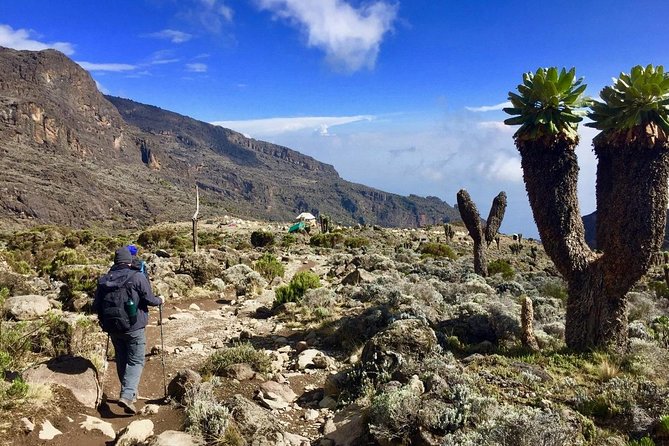
The Machame Route gives you Kilimanjaro in six distinct acts: wet rainforest, open moorland, high semi-desert, volcanic rock, icy summit country, and a muddy final descent. You walk beneath the mountain’s changing habitats before making the midnight push toward Uhuru Peak, Africa’s highest point.
I like the route’s big variety of scenery and its smart acclimatization day at Lava Tower and Barranco. I also like the strong practical support built into the price, including guides, porters, meals, camping equipment, park fees, and rescue coverage. The catch is the pace: six days is demanding, and anyone who walks slowly or struggles with altitude may be better served by a seven-day plan.
Key points to know before booking
- The trail climbs from 5,400 to 19,345 feet, then drops almost 14,000 feet in two days.
- Day three is the key acclimatization day, climbing toward Lava Tower before descending to Barranco Camp.
- The summit begins around midnight to 2 a.m., with the hardest hiking on steep scree toward Stella Point.
- Mafie Adventures supplies a full mountain team, including a professional guide, porters, cooking equipment, a mess tent, and five days of meals.
- Past guide names include Matthew, Joshua, Oliver, and Benjamin, with repeated praise for patient support and clear English.
- A seven-day itinerary may suit slower walkers better, since the six-day version leaves little spare time for a difficult altitude day.
Why the Machame Route remains so popular
Machame is often called the Whiskey Route, though the real attraction is not the nickname. It is the scenery. You move through rainforest, heather, moorland, semi-desert, alpine desert, and Arctic conditions without repeating the same trail on the way up.
The route is also popular because it offers a good balance between price and scenery. At $1,930.42 per person, it costs less than some longer or more luxurious Kilimanjaro programs, while still covering the major operational expenses that make a guided climb possible.
That price matters. Park access, rescue fees, camping equipment, porters, cooking gear, meals, taxes, and accommodation are included. You still need to budget for international flights, visas, insurance, gear rental, a sleeping bag, personal expenses, and tips.
This is a private activity, so only your group takes part. That can make a real difference on a hard day. Guides can adjust the walking pace to your needs rather than managing a large mixed group. The exact group size is not given, but the private format is clear.
The main caution is the six-day schedule. Kilimanjaro is not a technical climb in the mountaineering sense, but altitude makes ordinary hiking much harder. Six days allows less time for your body to adjust than longer itineraries. If you are a fast, fit walker, this can work well. If you prefer a slower pace, ask about seven days before paying.
More Kilimanjaro Climbs in Kilimanjaro
- Kilimanjaro climb by Lemosho Route (7-day)
★ 5.0 · 651 reviews - Kilimanjaro climb, Machame Route (7-day)
★ 5.0 · 262 reviews - Kilimanjaro Climbing Lemosho Route 8 Days.
★ 5.0 · 186 reviews
Day one: From Moshi to Machame Camp
The first drive from Moshi to Kilimanjaro National Park Gate takes about 50 minutes and passes through Machame village on the lower slopes of the mountain. The trail begins at about 5,400 feet and climbs to roughly 9,400 feet over 11 kilometers.
You spend the day in rainforest. The trail winds uphill along a ridge, with thick vegetation and a damp, sometimes slippery surface lower down. The walking time is listed as five to seven hours, so this is a proper first hiking day rather than a gentle warm-up.
Pack gaiters and trekking poles for this section. Mud can slow you down, especially in wet conditions. After the forest, you reach Machame Camp, where the crew sets up camp and serves dinner.
The first day is valuable because it introduces the steady rhythm of the trek: walk, rest, eat, and sleep. Do not race it. You have a much harder week ahead, and a calm start helps you protect your legs.
Day two: Heather and open moorland at Shira
After breakfast, the forest gives way to moorland. The trail climbs from about 9,400 to 12,500 feet over only five kilometers, with four to six hours of walking.
The shorter distance does not mean an easy day. The route crosses a small valley and follows a steep, rocky ridge covered with heather. It then turns west toward a river gorge and the Shira campsite.
I like this day because the mountain begins to feel wide and exposed after the enclosed forest. You can see more of the surrounding terrain, and the vegetation becomes lower and tougher. At the same time, the higher altitude may make the short distance feel surprisingly slow.
This is a good day to pay attention to your guide’s pace. The goal is not to cover ground quickly. It is to give your body time to adjust while keeping enough energy for the summit push later.
Day three: Lava Tower, the Shark’s Tooth, and Barranco
Day three is the route’s most important day for altitude adjustment. You leave the Shira Plateau and climb east along a ridge, passing a junction toward Kibo, the summit cone.
The route then turns southeast toward Lava Tower, also called the Shark’s Tooth. You climb to about 13,000 feet, with roughly 10 kilometers of walking and six to eight hours on the trail. A further junction leads toward Arrow Glacier at about 16,000 feet, although the itinerary then takes you down to Barranco Hut at approximately 13,000 feet.
That climb high and sleep lower pattern is exactly what makes this day useful. You expose your body to greater altitude, then descend for the night. You finish at nearly the same elevation where you started, but the day still prepares you for the summit.
The tradeoff is effort. This can be a tiring day before the steep Barranco Wall and long summit night. Take the descent seriously, eat dinner, drink what you can, and get as much rest as conditions allow.
More Machame Route Climbs in Kilimanjaro
- Climbing Kilimanjaro – Machame Route
★ 5.0 · 170 reviews - Climbing Kilimanjaro through 7 days Machame Route
★ 5.0 · 151 reviews - 7 Days Kilimanjaro via Machame route affordable price
★ 5.0 · 110 reviews - #1. Best Kilimanjaro Day hike Tour-Machame Route-ISMANI
★ 4.2 · 47 reviews
Day four: Barranco Wall and the move to Barafu
After breakfast, you leave Barranco and climb a steep ridge beside the Barranco Wall. The trail continues to Karanga Valley, then joins the junction connecting with the Mweka Trail before climbing to Barafu Hut.
The total distance is about nine kilometers, but the listed hiking time is eight to ten hours. That tells you what the day feels like: not especially long on paper, but slow and demanding because of altitude, rock, and the steady climb.
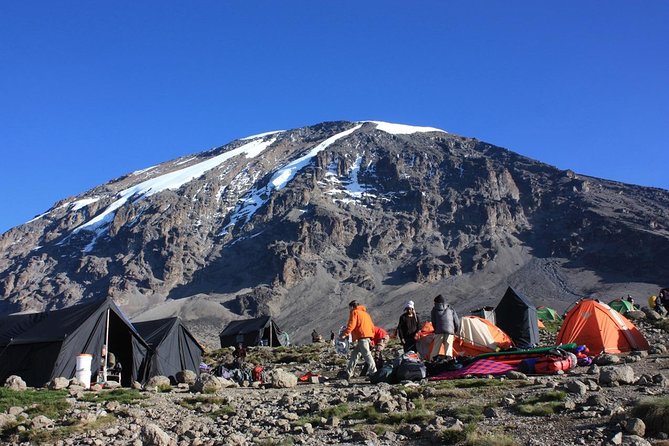
Barafu sits around 15,000 feet in alpine desert. From camp, you can see Mawenzi and Kibo, the two main volcanic peaks. You have also completed the South Circuit, which gives you changing views of the summit during the approach.
This is the practical heart of the trip. You reach high camp, eat, organize your summit clothing, and try to sleep before the midnight start. Rest may be difficult at this altitude, so prepare your gear before dinner instead of waiting until you are exhausted.
Day five: The midnight climb to Africa’s highest point
Summit day starts very early, usually between midnight and 2 a.m. You climb from about 15,300 feet to 19,345 feet, then descend to around 10,000 feet. The ascent covers approximately five kilometers, followed by a much longer 12-kilometer descent.
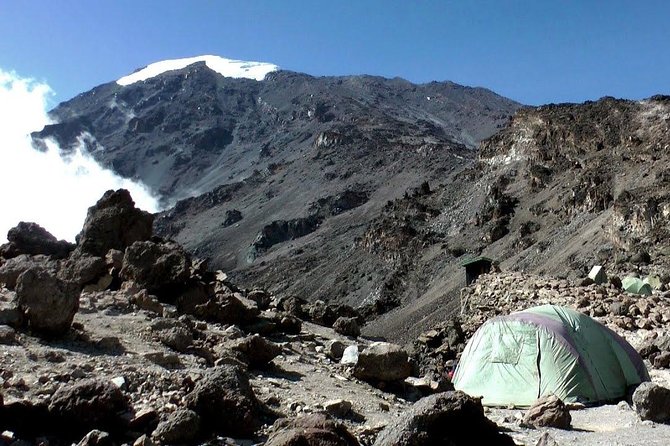
The route heads northwest between the Rebmann and Ratzel glaciers, then climbs through heavy scree toward Stella Point on the crater rim at about 18,600 feet. This is the hardest part of the trek, both physically and mentally.
Scree is loose volcanic rock. You take short steps, conserve energy, and follow the guide’s rhythm. The darkness can hide the slope ahead, which is often a blessing. You focus on the next few steps rather than the entire climb.
At Stella Point, you stop briefly and, weather permitting, watch the sunrise. The view from this high rim is one of the great rewards of the route. From there, the final summit section continues toward Uhuru Peak, listed at 19,345 feet.
Your guide support matters most here. Several past groups were led by guides named Matthew, Joshua, Oliver, or Benjamin, and the strongest praise centers on patient pacing, clear English, and close help during difficult moments. The company’s team also includes porters and a cook, so your job is to walk, manage your personal items, and follow safety instructions.
After the summit, you descend. This is not a minor add-on. The downward journey is long, and loose rock can punish tired knees. You continue toward a lower camp near 10,000 feet, where the air should feel easier and the day finally begins to wind down.
Day six: A muddy descent through the forest
The final day drops from about 10,000 feet to 5,400 feet over 10 kilometers. Walking time is three to four hours, with the trail returning to rainforest.
The descent is shorter than summit day, but your legs may be sore and your feet tired. Lower sections can be wet and muddy, so keep gaiters and trekking poles handy. Shorts and a T-shirt may be comfortable at this elevation, but keep rain gear and warmer clothing within reach.
You finish at Mweka Park Gate, where you receive your summit certificates. The end is practical rather than grand: descend, sign out, collect your certificate, and return to the meeting point.
The contrast is striking. In less than a week, you have gone from tropical forest to Arctic conditions and back again. That rapid change is one of the route’s best features, but it is also why good clothing management matters.
What the $1,930.42 price includes
The cost is strong value for a fully supported six-day climb, provided you already have suitable clothing and can handle the compressed schedule.
Included services are:
- Camping equipment, including a mess tent, mattress, and cooking equipment
- Park and parking fees
- Rescue fees
- All mountain accommodation
- Taxes and VAT
- A professional driver and guide
- Porterage
- Five breakfasts
- Five lunches
- Five dinners
The meal arrangement covers the five nights on the mountain. You should still confirm exactly what is provided before departure, especially if you have dietary needs, since the available information does not spell out menus or special meal arrangements.
Climbing gear and sleeping bags are available to rent, but they cost extra. Bath towels are not included. You also pay separately for flights, pre- and post-trek accommodation, travel insurance, visa fees, personal purchases, tips, and any government increase in park fees or taxes.
Porterage is a major part of the value. You should not assume you need to carry every item yourself, but you will still need a daypack with water, layers, snacks, rain protection, and personal essentials. Ask the operator about luggage limits and porter welfare before departure.
Guide support and the human side of the trek
The company is Mafie Adventures, and the guide team is repeatedly praised for practical care. Names connected with past climbs include Erastus, who coordinates arrangements, along with Matthew, Joshua, Oliver, and Benjamin.
The useful pattern is not one particular guide’s personality. It is the level of hands-on support. You can expect a guide close by on hard sections, help with pacing, and English communication. One account specifically notes that guides helped with small bags when needed.
Food is another strong point. The crew includes a cook, and past groups consistently found the meals good and sufficient. That is important on Kilimanjaro, where appetite can change at altitude and a warm meal becomes part of your recovery.
The private format may also help if you need a slower pace on summit night. Still, do not treat personal attention as a guarantee of reaching the top. Altitude affects people unpredictably, and your guide may advise you to stop if symptoms become serious.
Who should choose six days, and who should add a day
Choose this itinerary if you want the Machame Route’s scenery, prefer a private group, and are comfortable with long hiking days. It suits fit walkers who can maintain a steady pace and accept an early summit start.
Consider seven days if you walk slowly, want more time for altitude adjustment, or dislike rushing between camps. One direct piece of advice from the available feedback is especially useful: six days can be enough for a fast walker, while a slower walker may find seven days wiser.
April may offer a quieter mountain and smaller groups, but conditions can be wetter. That makes gaiters, rain gear, and trekking poles even more useful. The information does not promise any particular weather, so you should prepare for changeable conditions.
The activity offers pickup from Kilimanjaro International Airport and returns to the meeting point. The listed start time is 12:00 a.m., which appears to refer to the activity’s booking system rather than the actual first trail departure. Confirm your airport transfer and pre-trek timing directly before you fly.
Should you book this Kilimanjaro trek?
I would choose this six-day Machame trip if scenery and price matter most, and if you are ready for a serious hiking challenge. The route gives you excellent habitat changes, a useful high-and-low acclimatization day, and a full support crew for a reasonable all-in mountain price.
I would not choose it casually. The summit night is hard, the descent is long, and six days leaves little room for a slow pace or a poor adjustment to altitude. If you are uncertain, ask Mafie Adventures about the seven-day version before committing.
The experience has earned a 5 rating from 13 submitted ratings, with 100 percent recommending it. That is a small sample, but the repeated praise for guides, food, porter support, and careful organization gives you useful signs of a well-run operation. Pack for mud, cold, loose rock, and short sleep. Then the Machame Route can give you one of the clearest, most varied ways to reach the Roof of Africa.
FAQ
How long is the Machame Route trek?
The trek lasts six days, including the summit attempt and descent to Mweka Park Gate.
What elevation does the route reach?
The route reaches 19,345 feet at the summit. Stella Point is at about 18,600 feet, and the trail also passes Lava Tower at about 13,000 feet.
Are meals included?
Yes. The trip includes five breakfasts, five lunches, and five dinners.
Is camping equipment provided?
Yes. Camping equipment includes a mess tent, mattress, and cooking equipment. A sleeping bag is not included but is available for rent.
Is airport pickup available?
Yes. Pickup is offered, and the listed starting meeting point is Kilimanjaro International Airport.
Is this a private tour?
Yes. Only your group participates in the activity.
More 6-Day Experiences in Kilimanjaro
- Kilimanjaro climb, Lemosho Route (6-day)
★ 5.0 · 129 reviews - Kilimanjaro climb, Marangu route (6-day)
★ 5.0 · 72 reviews - 6 Days 5 Night Safari
★ 5.0 · 57 reviews - 6 Days Tanzania Classic Safari
★ 5.0 · 52 reviews
More Hiking & Trekking in Kilimanjaro
- Private Kilimanjaro Hike 7 Day Lemosho Route
★ 5.0 · 60 reviews - Best Kilimanjaro hiking day trip tour with Kilinge Adventures
★ 4.5 · 54 reviews - Best Kilimanjaro Adventure 7 days Machame route Trekking
★ 5.0 · 42 reviews - Kilimanjaro 7 Day Private Trekking Experience
★ 5.0 · 40 reviews
Just added around Kilimanjaro
- Mt Kilimanjaro 6 days Marangu route hike★ 5.0 · 3 reviews
- Wildlife Extravaganza: Manyara, Tarangire & Ngorongoro in 3 Days★ 5.0 · 3 reviews
- Private Cycle to Kilimanjaro Bike Park Safari★ 5.0 · 6 reviews
- 3 Days Private E-Bike Tour in West Kilimanjaro★ 5.0 · 3 reviews
- West Kilimanjaro cycling Adventures★ 4.5 · 8 reviews
- machame route★ 5.0 · 16 reviews
- Kilimanjaro Climb & Safari – Lemosho Route – 13 Day★ 5.0 · 10 reviews
- Kilimanjaro Climbing Umbwe Route★ 5.0 · 3 reviews
Machame Route Climbs, compared.



Climbing Kilimanjaro through 7 days Machame Route
Read our review →
7-Day Machame Kilimanjaro Summit Tour from Arusha
Read our review →
7 Days Kilimanjaro via Machame route affordable price
Read our review →
#1. Best Kilimanjaro Day hike Tour-Machame Route-ISMANI
Read our review →

The Best of Machame Route in 6 Days: Your World’s Summit Guide
Read our review →Browse the lists this tour appears in