
Reviewed · MACHAME ROUTE CLIMBS
Mount Kilimanjaro 6 days – Machame route
The big draw here is the Machame Route’s changing scenery. In six days, you walk from wet rainforest to high volcanic slopes, cross the Shira Plateau, pass Lava Tower and Barranco, then make the hard midnight push to Uhuru Peak at 5,895 meters.
I like the strong acclimatization day at Lava Tower and Barranco, even though it adds a long day without much net height gain. I also like the generous package: mountain crew, tents, meals, airport transfers, and two hotel nights are built into the $2,220 price.
The main caution is the schedule. This is a demanding six-day climb, not a relaxed mountain holiday. Summit day can run about 14 hours, and the route is best for a physically fit person with some hiking experience, though first-time trekkers do complete it.
Key points to know before booking
- Machame gives you varied mountain scenery, from rainforest and muddy lower trails to volcanic ridges, glaciers, and the summit crater rim.
- Day three is the acclimatization hinge, climbing toward Lava Tower at about 4,650 meters before dropping to Barranco Camp.
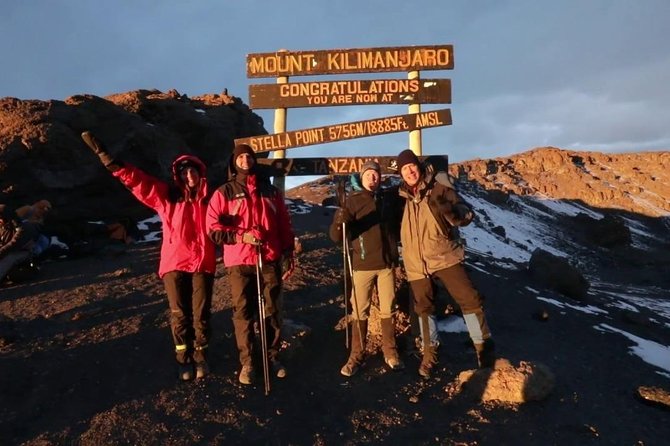
- Summit day begins between midnight and 2 a.m., with a steep scree climb to Stella Point, then Uhuru Peak.
- The price includes more than the climb, including five nights of meals, camping equipment, airport transfers, and hotel nights before and after.
- The crew matters on a route like this. Wence handles the operating side, while Emmanuel, Isaya, Jumanne, Ngwasuma, Yahya, the cook, porters, and assistant guides have been named as part of the mountain team.
- A portable toilet costs extra, and you must bring personal trekking gear, snacks, medicine, water-purifying tablets, and drinks.
Why the six-day Machame Route appeals to hikers
Machame is often called the Whisky Route, a nickname that hints at its tougher character compared with easier approaches. The trail covers about 62 kilometers, or 37 miles, from gate to gate, but the mileage tells only part of the story. Altitude, steep ground, loose scree, cold, and a very long summit day are what make this climb serious.
I like this route because it does not rush straight upward every day. You gain height, lose some of it, and gain it again. That pattern can feel inefficient on paper, but it gives your body a useful chance to adjust. The third day is especially important: you climb from roughly 3,850 meters toward Lava Tower at 4,650 meters, then descend to Barranco Camp at about 4,000 meters.
That is a long day, usually five to six hours, but it has a clear purpose. You get a taste of higher altitude before sleeping lower. On Kilimanjaro, that kind of pacing can matter more than shaving a few kilometers from the itinerary.
This is a private activity, so only your group takes part. The exact group size is not given, but you should expect a dedicated guide team rather than a large shared excursion. The mountain crew includes a qualified guide, assistant guides, porters, and a cook. The named team connected with this operation includes Wence, Emmanuel, Isaya, Jumanne, Ngwasuma, and Yahya.
More Kilimanjaro Climbs in Kilimanjaro
- Kilimanjaro climb by Lemosho Route (7-day)
★ 5.0 · 651 reviews - Kilimanjaro climb, Machame Route (7-day)
★ 5.0 · 262 reviews - Kilimanjaro Climbing Lemosho Route 8 Days.
★ 5.0 · 186 reviews
Day one: Machame Gate to the rainforest camp
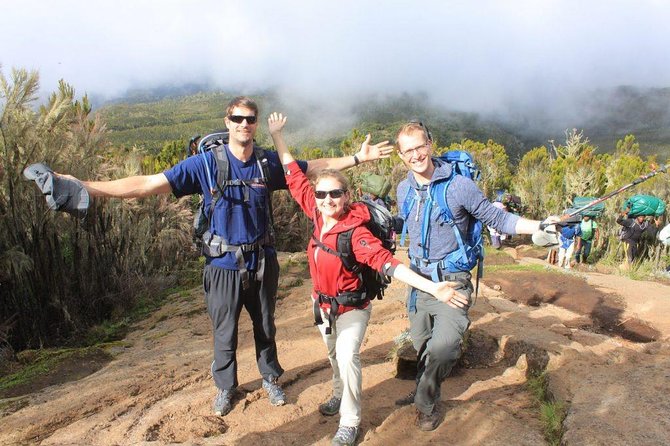
Your day begins with a drive of about 45 minutes from Moshi to the Kilimanjaro National Park Gate. The road passes through Machame village, located on the lower slopes of the mountain, before the walking begins.
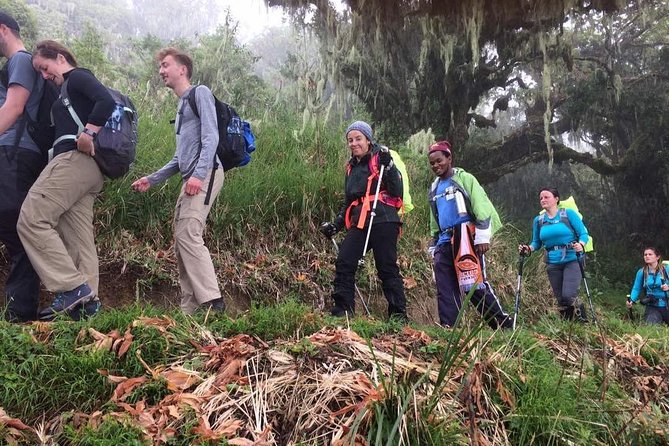
From the gate, the trail winds through rainforest and climbs along a ridge. This first section has a very different feel from the upper mountain. The air is wetter, the path can be muddy, and slippery footing is possible, especially at lower elevations.
The walk covers about 11 kilometers, rising from 1,830 meters to Machame Camp at 3,050 meters. Allow five to six hours. That is a full first day, but it gives you a proper introduction rather than a short warm-up.
Pack gaiters and trekking poles where you can reach them. You may not need them every minute, but muddy trail is much easier when your boots and lower legs are protected. Keep rain gear handy too. The forest section can be damp, and changing clothes at camp is less pleasant than staying reasonably dry.
Day two: leaving the forest for Shira
After breakfast, you leave the rainforest glades and move onto a steeper, rockier trail. The route crosses a valley along a rising ridge, then turns west toward a river gorge before reaching Shira Camp.
This is a shorter walking day by distance, about 5 kilometers, but it still takes four to five hours. You climb from 3,050 meters to approximately 3,850 meters. The shorter mileage does not make it effortless. The trail rises steadily, and the altitude begins to become a real part of the experience.
Shira is one of the route’s important transitions. The thick forest is behind you, and the surroundings become more open and exposed. You will notice the air thinning as the path climbs. Walk slowly, drink regularly, and resist the temptation to race ahead simply because the day is shorter.
The package includes camping equipment, a sleeping mattress, camp chairs, tables, washing water, and meals. Those details are useful here. You are not carrying every item needed to run a camp, and a hot meal and a place to sit can make a major difference after a high-altitude walking day.
Day three: Lava Tower and the useful drop to Barranco
Day three is the route’s cleverest walking day. From the Shira Plateau, you continue east along a ridge, passing the junction toward Kibo, Kilimanjaro’s highest cone. The route then turns southeast toward Lava Tower, also called the Shark’s Tooth, at about 4,650 meters.
The day covers roughly 10 kilometers and takes five to six hours. Although you finish near 4,000 meters, close to where you started, you have climbed much higher during the day. After Lava Tower, the trail drops to Barranco Camp.
This climb high, sleep lower pattern is valuable acclimatization. You may feel the altitude during the approach to Lava Tower, but the descent gives your body a better chance to settle before the summit attempt. It is also one of the days when patience pays off. Your goal is not to prove how fast you can walk. Your goal is to arrive at Barranco in useful condition.
The scenery here changes again. Volcanic rock replaces the softer forest trails, and the route begins to feel more like a high mountain crossing. The day is not a rest day, and you should not treat it as one. It is a purposeful, demanding stage that sets up the hardest two days ahead.
More Machame Route Climbs in Kilimanjaro
- Climbing Kilimanjaro – Machame Route
★ 5.0 · 170 reviews - Climbing Kilimanjaro through 7 days Machame Route
★ 5.0 · 151 reviews - 7 Days Kilimanjaro via Machame route affordable price
★ 5.0 · 110 reviews - #1. Best Kilimanjaro Day hike Tour-Machame Route-ISMANI
★ 4.2 · 47 reviews
Day four: Barranco to Barafu Camp
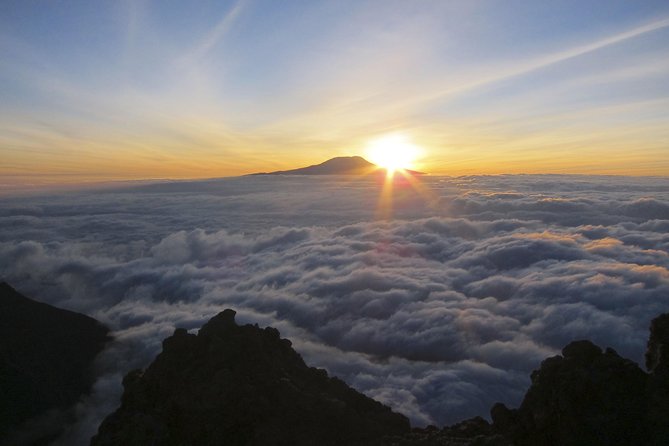
The fourth day takes you from about 4,050 meters to Barafu Camp at around 4,700 meters. The distance is approximately 9 kilometers, and the walking time is about seven hours.
Barafu means ice, and the camp is the staging point for the summit attempt. By now, you have completed what is known as the South Circuit, with views toward the summit from several angles. The route has not simply marched upward in a straight line, which is one reason the earlier acclimatization pattern matters.
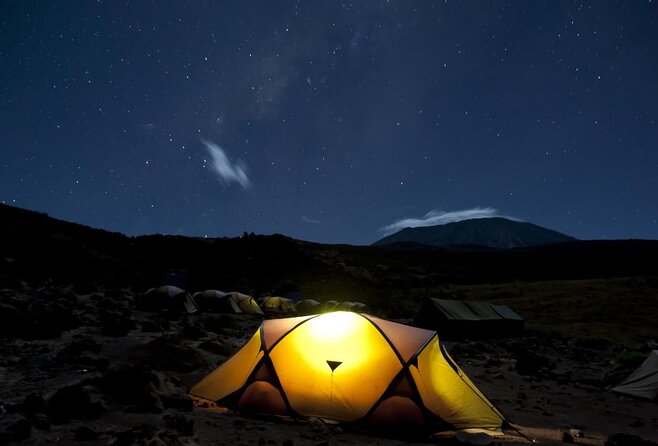
This is the day to organize your clothing, headlamp, water, snacks, and personal gear before dinner. The summit departure is set for between midnight and 2 a.m., so your evening will be short. You need to rest as much as possible, even if sleep is difficult at altitude.
Barafu is not the moment for last-minute packing experiments. Keep warm layers and rain protection accessible. The summit section is cold, and the trip from camp to the crater rim involves steep, loose ground. The supplied emergency oxygen and first-aid kit are for emergencies only, not for helping you reach the top. That distinction matters: they are safety provisions, not a substitute for acclimatization or fitness.
Day five: the midnight climb to Uhuru Peak
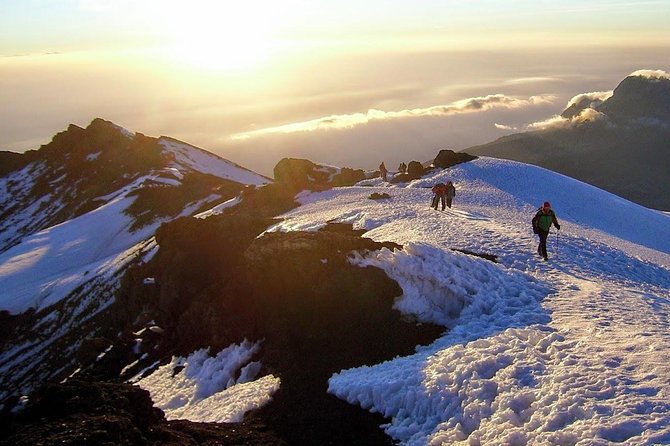
Summit day is the test. You leave Barafu between midnight and 2 a.m. and climb toward the summit between the Rebmann and Ratzel glaciers. The route heads northwest over heavy scree toward Stella Point on the crater rim.
The uphill distance is about 5 kilometers, but the conditions make it much harder than a normal five-kilometer walk. Loose scree can shift under your boots, the air is thin, and the darkness makes the climb feel slow and repetitive. This is the portion that demands the most mental strength.
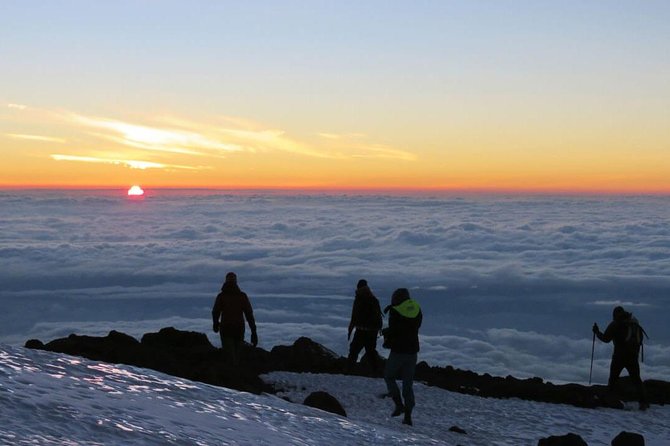
At Stella Point, around 5,739 meters, you can stop briefly and take in the sunrise. Faster hikers may see sunrise from the summit itself, but the schedule varies with pace and conditions. From Stella Point, you continue for roughly an hour toward Uhuru Peak, the highest point on Kilimanjaro at 5,895 meters.
Snow may appear on this final section. The summit moment is likely to be short. You may be tired, cold, and focused on breathing, so do not picture a long, leisurely stay at the top. The achievement is reaching the summit safely, taking in the views, and beginning the descent.
The return is long. You descend from the summit area through Barafu and continue toward the lower camp around 3,090 meters, covering approximately 13 kilometers downhill after the five-kilometer ascent. The full day can take about 14 hours.
That length is the biggest practical drawback of the six-day plan. A successful summit requires more than a strong uphill climb. You also need enough energy for hours of descent after you have already spent the night walking uphill. Trekking poles are especially useful here, since tired knees can make the downhill harder than expected.
Day six: the long exit through Mweka
After breakfast, you continue down the Mweka Trail from about 3,090 meters to the Mweka Park Gate at approximately 1,680 meters. The walk is around 10 kilometers and takes three to four hours.
The lower section can be wet and muddy, even after the summit day is finished. Gaiters and poles remain useful until the end. You can probably switch to shorts and a T-shirt lower down, but keep rain gear and warmer clothing within reach because mountain weather can change.
At the gate, you receive your summit certificates. From there, the route continues for about another hour to Mweka village, where a vehicle meets you for the roughly 30-minute drive back to your Moshi hotel.
This final transfer is included, as are the hotel night after the climb and dinner and breakfast there. That is a thoughtful part of the package. After a summit day and a muddy descent, you will appreciate not having to arrange your own transport or search for a room.
What the $2,220 price really covers
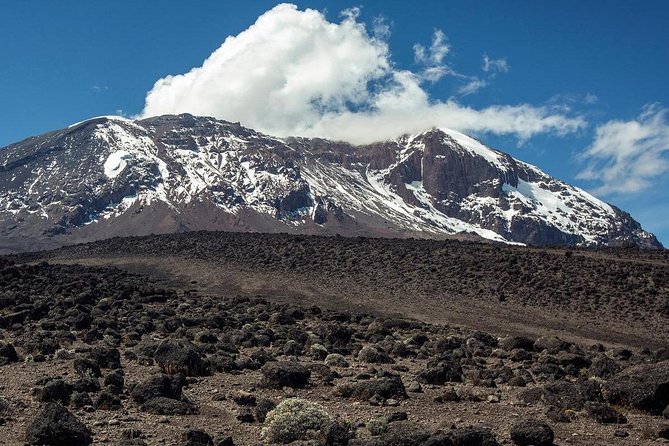
At $2,220 per person, this is not a cheap day trip, but Kilimanjaro pricing makes more sense when you look at what is included. The fee covers national park charges and other listed taxes and fees, airport transfers in both directions, a hotel night before and after the climb, and dinner and breakfast at those hotel stays.
On the mountain, the package includes:
- A qualified mountain guide and assistant guides
- Porters and a cook
- Crew salaries set according to Kilimanjaro National Park guidelines
- Tents, camp chairs, tables, and a sleeping mattress
- Washing water each day
- Five dinners, six lunches, and five breakfasts
- Emergency oxygen and a basic first-aid kit
The meals are a real part of the value. You are walking for several hours each day, and on summit day your body needs fuel before, during, and after the climb. One especially positive detail from the operation is the care given to food in difficult camping conditions. Do not expect restaurant choice, but you can expect the cook to be an important member of the team.
The price does not cover flights, visas, health or travel insurance, personal trekking equipment, alcoholic or non-alcoholic drinks, snacks, personal medicine, or water-purifying tablets. A portable toilet is optional but highly recommended, and it costs extra.
That last item is worth considering carefully. Basic mountain camping is part of the experience, but a private portable toilet can provide more comfort and privacy at camp. Decide before departure rather than treating it as an afterthought.
Gear and fitness: what you need to take seriously
The operator describes the climb as suitable for people with moderate physical fitness, with some hiking experience preferred. That is a fair description only if you understand that moderate fitness must cover a very long summit day at high altitude.
You do not need to be an elite athlete, but you should be comfortable walking for five to seven hours on uneven ground. You also need to manage the possibility of a 14-hour summit day, including both uphill and downhill sections.
Your personal equipment is not included. The supplied information does not give a full gear list, so you should confirm the exact equipment requirements before departure. At minimum, plan around the stated conditions: muddy rainforest, cold high camps, loose scree, possible snow near the summit, and wet ground on the descent.
Keep these items easy to reach during the walk:
- Rain gear
- Warm layers
- Gaiters
- Trekking poles
- Snacks
- Personal medicine
- Water-purifying tablets
- Suitable summit clothing
Emergency oxygen is carried for emergencies only. It should not be viewed as summit assistance. Your guide team will be the people who help you judge pace and manage the mountain days, but no support system removes the effects of altitude.
The guide team and the feel of the service
The operation is run by Wence, and the mountain crew connected with these climbs includes Emmanuel, Isaya, Jumanne, Ngwasuma, Yahya, porters, assistant guides, and a cook. Several of these team members have been singled out by name for their effort, organization, and care during difficult climbs.
That personal element matters on Kilimanjaro. Porters carry much of the camp equipment, the cook keeps meals coming in a difficult setting, and the guides set the pace and help the group through the long days. You should also remember that staff quality can vary from one departure to another, so ask who will lead your specific climb and how many assistant guides are assigned to your group.
The service record is not perfectly uniform. Some direct accounts describe a well-run climb, strong camp facilities, good food, and a highly motivated team. One account raises concerns about communication and the handling of a solo booking and route changes. The operator’s response says one group changed from Machame to Rongai at its own extra cost, which suggests that route decisions and extra charges should be confirmed in writing before you arrive.
That is sensible advice for any Kilimanjaro booking. Confirm the route, departure date, accommodation, group arrangement, portable toilet cost, and what happens if plans change. Clear expectations make a hard climb easier to manage.
Who should book this climb?
I would point fit hikers with limited high-altitude experience toward Machame only if they are ready to train and accept the schedule. The route is suitable for first-time Kilimanjaro climbers, but first-time does not mean unprepared.
This climb suits you if you want:
- A private trip for your own group
- Varied scenery rather than one repeated trail
- A route with a meaningful acclimatization day
- A full camping experience with crew support
- A package that includes hotels, meals, transfers, and park fees
You may prefer a longer Kilimanjaro itinerary if you are worried about the compressed six-day schedule. The supplied route information does not offer a longer version, so you would need to ask the operator about alternatives rather than assume one is available.
The route also suits someone who values practical support more than luxury. You get tents, camp furniture, a mattress, washing water, and cooked meals, but this remains mountain camping. Personal comforts such as drinks, snacks, and a portable toilet require extra planning or payment.
Should you book the six-day Machame Route?
Book it if you want one of Kilimanjaro’s best-known routes, can handle long hiking days, and value an all-in package with a private crew. The rainforest start, Lava Tower acclimatization, Barranco approach, and sunrise climb toward Uhuru Peak give the route a strong sense of progression.
Think twice if your fitness is only average, if you dislike camping, or if a 14-hour summit day sounds unrealistic. Before paying, get the route and crew details in writing, ask about the optional toilet, and confirm exactly what personal gear you must supply.
For the right hiker, $2,220 is a reasonable package price because it includes far more than trail access. The six-day schedule remains the central trade-off: it keeps the trip compact, but leaves less margin for fatigue and altitude. If you accept that challenge and prepare properly, Machame offers a serious, memorable path to the summit.
FAQ
How long is the Machame Route?
The route is approximately 62 kilometers, or 37 miles, from park gate to park gate.
How high is Uhuru Peak?
Uhuru Peak reaches 5,895 meters.
How long does the climb take?
The experience lasts approximately six days, including the arrival at Machame Gate, the summit attempt, and the descent to Mweka Gate.
Is the Machame Route suitable for beginners?
It is designed for physically fit people with some hiking experience, but first-time trekkers do use the route successfully.
What is the hardest day?
Day five is the hardest. The summit attempt starts between midnight and 2 a.m., climbs to Uhuru Peak, and then continues downhill for about 13 kilometers. The full day can take approximately 14 hours.
Are airport transfers included?
Yes. Return transfers from Kilimanjaro Airport to Moshi and from Moshi back to Kilimanjaro Airport are included.
Are hotel nights included?
Yes. One hotel night before the climb and one after the climb are included, with dinner and breakfast.
Is camping equipment provided?
Yes. The package includes tents, camp chairs, tables, a sleeping mattress, and water for washing up each day.
Is a portable toilet included?
No. A portable toilet is optional, costs extra, and is highly recommended.
More 6-Day Experiences in Kilimanjaro
- Kilimanjaro climb, Lemosho Route (6-day)
★ 5.0 · 129 reviews - Kilimanjaro climb, Marangu route (6-day)
★ 5.0 · 72 reviews - 6 Days 5 Night Safari
★ 5.0 · 57 reviews - 6 Days Tanzania Classic Safari
★ 5.0 · 52 reviews
Just added around Kilimanjaro
- Mt Kilimanjaro 6 days Marangu route hike★ 5.0 · 3 reviews
- Wildlife Extravaganza: Manyara, Tarangire & Ngorongoro in 3 Days★ 5.0 · 3 reviews
- Private Cycle to Kilimanjaro Bike Park Safari★ 5.0 · 6 reviews
- 3 Days Private E-Bike Tour in West Kilimanjaro★ 5.0 · 3 reviews
- West Kilimanjaro cycling Adventures★ 4.5 · 8 reviews
- machame route★ 5.0 · 16 reviews
- Kilimanjaro Climb & Safari – Lemosho Route – 13 Day★ 5.0 · 10 reviews
- Kilimanjaro Climbing Umbwe Route★ 5.0 · 3 reviews
Machame Route Climbs, compared.



Climbing Kilimanjaro through 7 days Machame Route
Read our review →
7-Day Machame Kilimanjaro Summit Tour from Arusha
Read our review →
7 Days Kilimanjaro via Machame route affordable price
Read our review →
#1. Best Kilimanjaro Day hike Tour-Machame Route-ISMANI
Read our review →

The Best of Machame Route in 6 Days: Your World’s Summit Guide
Read our review →Browse the lists this tour appears in