
Reviewed · LEMOSHO ROUTE CLIMBS
Lemosho Route
The Lemosho Route gives you Kilimanjaro in changing acts: thick forest, open moorland, volcanic desert, glacier views, and a final push to Uhuru Peak at 5,895 meters. The route is not a casual walk, but its slower rise and extra acclimatization time make it a sensible choice for a first high-altitude climb.
I like the varied scenery, especially the Shira Plateau, Lava Tower, Barranco Wall, and the views toward Kibo’s ice fields. I also like the practical start in Moshi, where your guide briefs you and checks your equipment before you head up the mountain. The main caution is simple: this trek is hard, and the summit day combines a midnight start, steep climbing, cold, altitude, and a long descent.
Key things to know before booking
- The route reaches 5,895 meters at Uhuru Peak, with the summit attempt beginning around midnight from Barafu Camp.
- Eight days is slightly confusing here: the schedule includes arrival day and departure from Mweka Gate, making nine itinerary days in total.
- Lava Tower at 4,640 meters provides an important high-altitude acclimatization point before you sleep lower at Barranco Camp.
- The Barranco Wall is steep but nontechnical, so you need sure footing and stamina rather than climbing equipment.
- The group limit is 15 people, which is small enough for a personal feel but large enough to include a mix of walking speeds.
- Maua’s named contacts and guides include Jackson, Omary, and Fadhili, though the guide assigned to your climb should be confirmed before you travel.
Moshi preparation and the first airport transfer
Your experience begins with pickup at Kilimanjaro International Airport. The stated meeting time is 2:00 am, although the day-one schedule describes an airport arrival followed by a transfer to a hotel in Moshi. I would confirm your actual pickup time and arrival arrangements directly with the operator, since the listed time may reflect a particular booking rather than every arrival.
At Lindrin Lodge, you stay on a bed-and-breakfast basis. You meet your guide, receive a briefing, and go through an equipment check. This is one of the most useful parts of the setup because missing mountain gear can be rented in Moshi before you leave.
Take this check seriously. You should make sure your warm clothing, rain protection, trekking shoes, headlamp, gloves, water containers, and summit snacks are ready before the mountain begins. The final summit morning is not the moment to discover that your headlamp is weak or your water freezes easily.
Maua’s planning contact has been identified as Jackson in company feedback, while Omary and Fadhili are among the named guides associated with the operator. Ask who will lead your particular departure, how many porters and cooks will be assigned, and what equipment rental costs extra.
More Lemosho Route Climbs in Kilimanjaro:
- Kilimanjaro climb by Lemosho Route (7-day)
★ 5.0 · 651 reviews - Kilimanjaro Climbing Lemosho Route 8 Days.
★ 5.0 · 186 reviews - Kilimanjaro climb, Lemosho Route (8-day)
★ 5.0 · 148 reviews
Day two: Lemosho Glades to Big Tree Camp
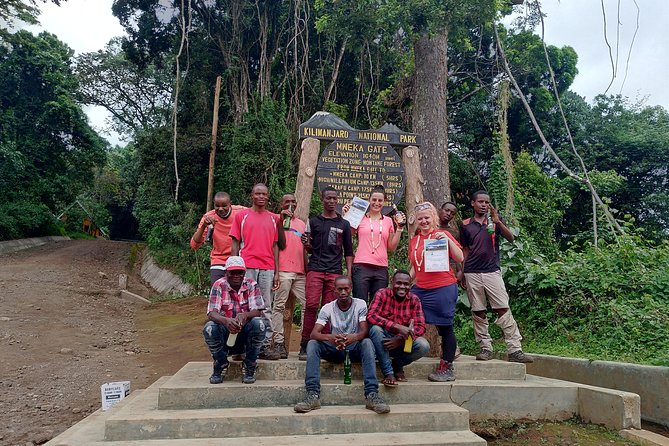
After breakfast, you leave the hotel at about 8:00 am and drive to the Lemosho gate on Kilimanjaro’s western side. Registration takes place before you start walking through the forest.
The route covers about 7 kilometers in four hours, ending at Big Tree Camp at 2,780 meters. This is a gentle opening compared with the days ahead. The forest gives you shade, and the steady pace lets you settle into the rhythm of hiking with a pack.
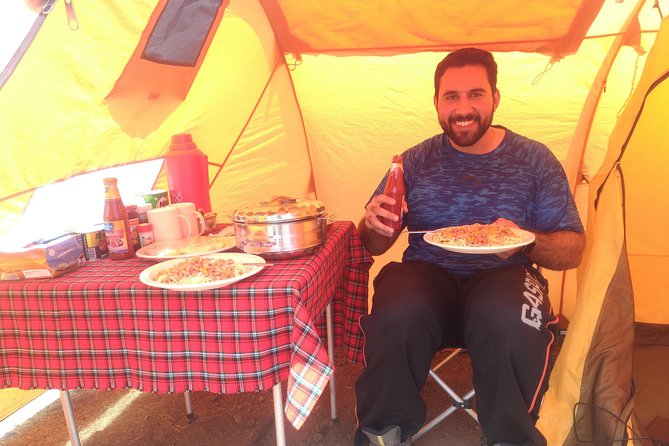
Your meals begin here, with breakfast, lunch, and dinner included. The early camp may feel basic, and the first day can seem almost too easy. That is useful. You want energy left in reserve, because Kilimanjaro rewards patience rather than speed.
Day three: Big Tree Camp to Shira 1
The mountain changes quickly on the walk to Shira 1 Camp. You leave much of the forest behind and cross grassy moorland and heather, with volcanic rock scattered along the route.
The distance is about 8.5 kilometers, taking roughly seven hours. Parts of the trail are fairly steep, and the altitude rises from 2,780 to 3,500 meters. You may see Kibo Peak appearing above the clouds, a striking reminder that the summit is still far higher.
This is the first day when your fitness and pacing matter more. Walk slowly, drink regularly, and tell your guide early if you develop a headache, nausea, dizziness, or unusual fatigue. A strong guide will monitor your condition, but you still need to speak up.
Shira 1 is valuable because you gain altitude without immediately sleeping at the day’s highest point. The route is already beginning its acclimatization work.
Day four: The Shira Plateau and views toward the ice fields
From Shira 1, you walk about 8 kilometers in five hours to Shira 2 Camp at 3,900 meters. The trail crosses the broad Shira Plateau, where the vegetation becomes shorter and the views open in every direction.
This day includes views toward Kilimanjaro’s Northern Ice fields from the western side. The perspective is unusual, and the changing shape of Kibo is one of the pleasures of taking the Lemosho approach.
The afternoon acclimatization walk is an important part of the schedule, not an optional extra to skip because you are tired. You walk higher, then return to camp to sleep lower than your highest point. That pattern helps your body adjust.
The drawback is that the plateau can feel exposed and repetitive if clouds cover the mountain. Still, this is a good day for a slow lunch, photographs, and a careful check of your feet and clothing before the harder section begins.
Same country, a completely different kind of safari:
- Safari Serengeti And Ngorongoro
★ 5.0 · 288 reviews - Kilimanjaro climb, Machame Route (7-day)
★ 5.0 · 262 reviews - Climbing Kilimanjaro – Machame Route
★ 5.0 · 170 reviews - Climbing Kilimanjaro through 7 days Machame Route
★ 5.0 · 151 reviews
Day five: Shira 2, Lava Tower, and Barranco
This is one of the best-designed days on the route. You climb from Shira 2 toward the upland desert, passing over lava ridges beneath the glaciers of the Western Breach.
The route reaches Lava Tower at 4,640 meters, the highest point of the day. You have lunch there before descending to Barranco Camp at 3,960 meters. The distance is around 10 kilometers, and the walking time is about seven hours.
The value of this day is not only the scenery. You climb high and sleep lower, giving your body a useful altitude lesson before summit night. The descent to Barranco also brings you into a dramatic valley, protected by tall cliffs with broad views over the plains.
You may feel the altitude strongly at Lava Tower. That is not a reason to panic, but it is a reason to report symptoms and follow your guide’s instructions. Do not treat the high point as a race or assume that feeling fine at a lower camp guarantees an easy summit.
Day six: The Barranco Wall and Karanga Camp
The day begins by descending into the Great Barranco, then climbing the Barranco Wall. This is a steep route over rock, but it is not technical climbing. You do not need mountaineering skills, though you do need balance, patience, and confidence with uneven steps.
The walk covers about 5.5 kilometers and takes roughly five hours. After the wall, you pass beneath the Heim and Kersten glaciers and continue toward the Karanga Valley. A final steep climb brings you to Karanga Camp at 3,963 meters.
For many people, the Barranco Wall is a psychological test more than a technical one. The trail can feel exposed in places, and you may need to use your hands for balance. Your guide should set a controlled pace and help you choose secure footholds.
If you still feel strong, the itinerary allows another afternoon acclimatization walk to around 4,200 meters. You then descend to camp. I like this extra walk because it adds altitude without committing you to a higher overnight camp.
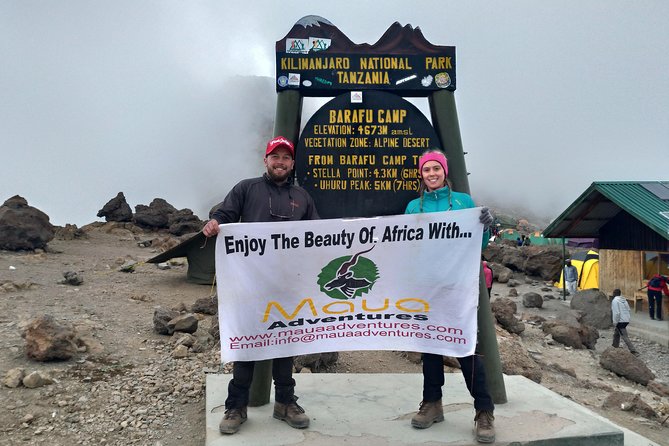
Day seven: Karanga to Barafu Camp
This is a short day by distance, only about 3 kilometers, but it is not easy. You climb to Barafu Camp at roughly 4,640 meters over steep, barren scree slopes.
There is no vegetation around Barafu, and the thin air makes even a short climb feel demanding. Once you arrive, you eat, drink, organize your summit clothing, and rest for the long night ahead.
Dinner comes early, followed by an attempt to sleep before waking around 11:00 pm or midnight. Many people do not sleep well before the summit attempt. That is normal, but you should still lie down, keep warm, and conserve energy.
Put every essential item within reach: warm layers, headlamp, water, snacks, gloves, and any personal medication. Ask how your insulated water reserves will be handled. Cold at this altitude can make drinking difficult, yet hydration remains important.
Summit night: Barafu Camp to Uhuru Peak
You wake around 11:30 pm for hot tea and biscuits, then set off close to midnight. The ascent toward Kibo is steep, slow, and physically draining.
The schedule allows six to eight hours to reach the crater rim, where you arrive near Stella Point at 5,739 meters. From there, you continue toward Uhuru Peak at 5,895 meters. The full summit day is listed at about 10 hours before the descent and overnight at Mweka Camp, although the exact timing depends on weather, pace, and how your body handles the altitude.
The best strategy is steady movement. Your guide will likely use the classic slow Kilimanjaro pace, and you should not feel embarrassed by it. The goal is to preserve strength for the upper slopes, not to arrive early and exhausted.
At the top, conditions can be cold and tiring even after sunrise. You may have only a short time for photographs before beginning the descent. From the summit, the route drops all the way to Mweka Camp at about 3,100 meters, which makes this a very long day.
The descent can be hard on knees and feet. Trekking poles are useful if you have them, and your shoes should already be broken in. Do not save your strongest pain medication or blister treatment for the summit. Carry what you need each day.
Day nine: Mweka Camp to the gate
After breakfast, you walk down through the lower rainforest to Mweka Gate at 1,640 meters. The distance is about 9 kilometers, taking three to five hours.
Compared with summit day, this is a pleasant finish, though tired legs can make downhill walking surprisingly uncomfortable. At the gate, successful climbers receive certificates: a green certificate for Stella Point or a gold certificate for Uhuru Peak.
The schedule also notes that it is customary to tip the trekking crew before returning to your Moshi hotel. Tipping is an important practical cost to discuss before departure. Ask the operator for its current guidance so you can budget fairly and avoid confusion at the end.
What the price of $2,310 means
At $2,310 per person, this is a major purchase, but a guided Kilimanjaro climb has costs beyond the walking itself. The price needs to be judged by the quality of preparation, guide support, food, transport, park administration, camping arrangements, and crew treatment.
The stated inclusions are surprisingly brief, listing parking fees while excluding items of a personal nature. That does not tell you enough to judge the real value. Before paying, request a written list covering park fees, camping fees, meals, accommodation, airport transfers, transport to the gate, crew wages, porter support, equipment, and emergency procedures.
Also ask whether the Moshi hotel night, rental equipment, crew tips, and transfers after the climb are included. These details can change the final cost by a meaningful amount.
The company receives a 5 rating from 21 published ratings, with 100 percent recommending it. The strongest pattern in the available feedback is not fancy accommodation. It is the human support: guides who keep people safe, crews who provide meals and camp service, flexible planning, and careful organization.
That matters on Kilimanjaro. A good camp team can make cold, tired evenings easier, while a calm guide can help you make sensible decisions when altitude symptoms appear. I would place more value on those points than on a polished hotel room.
Group size, fitness, and the real difficulty
The maximum group size is 15 people. That is manageable, but it is not the same as a private climb. Ask how many guides will accompany the group and how slower walkers are supported.
You need a moderate physical fitness level, but that phrase should not make the mountain sound easy. You will walk several hours on consecutive days, climb uneven ground, sleep at high camps, wake near midnight, and descend for hours after reaching the summit.
The trek suits you if you enjoy long walks, can tolerate basic mountain conditions, and are willing to follow a slow pace. It is less suitable if you want a flexible holiday with comfortable sleep, short walking days, or a guaranteed summit.
The route’s gradual profile is one of its main strengths. Shira 1, Shira 2, Lava Tower, Karanga, and Barafu give you several stages to adjust before the summit. Still, no itinerary removes altitude risk, and reaching Uhuru Peak is never guaranteed.
Booking details worth checking
Confirmation is provided at booking, and mobile tickets are available. Airport pickup is offered, but the listed start time of 2:00 am deserves clarification. I would confirm whether that refers to your airport meeting time, your flight arrival, or a standard system entry.
Free cancellation is available if you cancel at least 24 hours before the local start time. Changes made less than 24 hours before the start are not accepted, and late cancellations are not refunded. If poor weather forces cancellation, you are offered another date or a full refund.
The most important predeparture questions are these:
- Which guide will lead my group?
- What exactly is included in the $2,310 price?
- Is the itinerary eight trekking days or nine calendar days including arrival and departure?
- Are park fees, camping, meals, transfers, and crew tips included?
- What equipment can I rent in Moshi, and what are the rental prices?
- How are altitude problems handled during the climb?
Should you book the Lemosho Route?
I would choose this route if you want a scenic, slower approach to Kilimanjaro and you prefer to give yourself several acclimatization opportunities. The Shira Plateau, Lava Tower, Barranco Wall, glacier views, and summit night create a varied climb rather than a single long uphill walk.
I would not book it without first getting the inclusions in writing. The itinerary is strong, but the price description is too vague, and the eight-day label does not match the nine listed days from airport arrival to Mweka Gate.
For a fit, patient hiker who understands that the summit is hard work, this is a promising Kilimanjaro package. The most convincing reason to consider Maua Adventures is the repeated emphasis on organized support, caring guides, good food, and flexible planning. Confirm the details, prepare properly, and you will know exactly what you are buying.
FAQ
How long is the Lemosho Route experience?
The tour is advertised as approximately eight days, but the schedule lists Day 1 through Day 9. It includes arrival in Tanzania, seven trekking stages through summit day, and the final walk from Mweka Camp to Mweka Gate.
What is the highest point reached?
The summit is Uhuru Peak at 5,895 meters. The route also reaches Lava Tower at 4,640 meters and Stella Point at 5,739 meters during the summit ascent.
Where does the experience begin?
Pickup is offered from Kilimanjaro International Airport on Kilimanjaro Airport Road in Tanzania. The listed start time is 2:00 am, so you should confirm the exact pickup arrangement with Maua Adventures.
Is accommodation included before the trek?
The first night is listed as bed and breakfast at Lindrin Lodge in Moshi. The schedule does not provide a separate full description of every overnight accommodation type on the mountain.
Are meals included?
Breakfast, lunch, and dinner are included from Day 2 through Day 8 in the schedule. Day 9 includes breakfast before the descent to Mweka Gate.
How difficult is the trek?
You should have a moderate level of physical fitness. The trek includes several walking days of up to seven hours, a steep ascent of the Barranco Wall, high camps, and a summit attempt beginning around midnight.
Can I cancel for a full refund?
Yes. You can cancel at least 24 hours before the experience start time for a full refund. Cancellations or changes made less than 24 hours before the local start time are not accepted, and poor-weather cancellations may be moved to another date or refunded.
Just added around Kilimanjaro
- Mt Kilimanjaro 6 days Marangu route hike★ 5.0 · 3 reviews
- Private Cycle to Kilimanjaro Bike Park Safari★ 5.0 · 6 reviews
- Wildlife Extravaganza: Manyara, Tarangire & Ngorongoro in 3 Days★ 5.0 · 3 reviews
- 3 Days Private E-Bike Tour in West Kilimanjaro★ 5.0 · 3 reviews
- West Kilimanjaro cycling Adventures★ 4.5 · 8 reviews
- machame route★ 5.0 · 16 reviews
- Kilimanjaro Climb & Safari – Lemosho Route – 13 Day★ 5.0 · 10 reviews
- Kilimanjaro Climbing Umbwe Route★ 5.0 · 3 reviews
Lemosho Route Climbs, compared.


8-Day Small-group Lemosho Kilimanjaro Summit Trekking
Read our review →





Climbing Kilimanjaro through 8 days Lemosho Route
Read our review →Browse the lists this tour appears in