
Reviewed · HISTORICAL TOURS
Private Tour in Historical Dar es Salaam with Lunch
Dar es Salaam reveals itself in layers on this private city tour. You move from the fish trade at Kivukoni to carved wood at Mwenge, from colonial churches to the National Museum, then into the noisy daily business of Kariakoo Market. It is a useful way to see far more than the waterfront and hotel district.
I like the wide mix of stops and the fact that lunch, water, soda, transport, WiFi, and entry fees are covered. I also like the private format, since you can ask questions and spend more time on the parts that interest you. The main concern is pace: 12 listed stops in about seven hours leaves limited time at each place, and traffic can make the day feel tight.
Key points at a glance
- A private route led by Ben: The guide is praised for clear storytelling, a friendly manner, and strong knowledge of Dar es Salaam’s past and present.
- Markets with real local life: Kivukoni Fish Market and Kariakoo Market show two very different sides of the city’s trade.
- Tanzania’s art in two forms: Mwenge focuses on wood carving, while the Tingatinga Arts Cooperative Society offers colorful painted scenes and wildlife.
- Good museum pairing: The National Museum covers archaeology, culture, colonial rule, and independence, while the Village Museum presents traditional homes and customs.
- A full day with practical inclusions: The seven-hour tour includes a private air-conditioned vehicle, lunch, bottled water, soda, WiFi, taxes, and admission fees.
- A route with some modern contrast: Mlimani City Mall and the University of Dar es Salaam add present-day city life to the older sights.
Why this private Dar es Salaam tour works
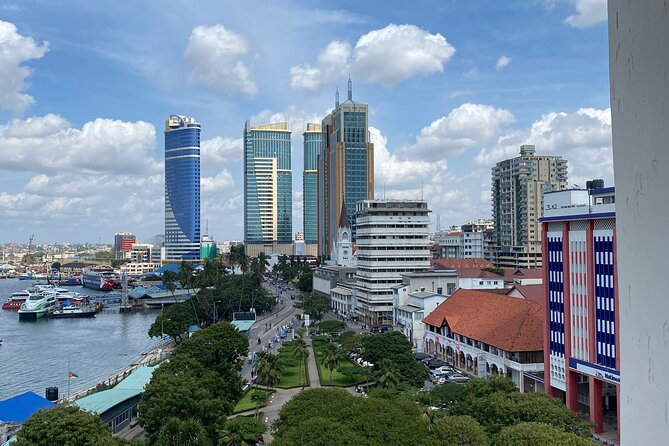
Dar es Salaam can be hard to read at street level. The city spreads widely, its roads can slow sharply, and its most interesting places are not arranged in one compact historic center. A private vehicle helps connect the pieces.
The tour’s strongest feature is its variety. In one day, you can see German colonial architecture, Islamic and Christian landmarks, coastal commerce, traditional housing, contemporary shopping, and Tanzanian painting. That makes this a good first look at the city, especially if you have only one day before or after a safari, beach stay, or cruise.
Guide Ben is the name most closely associated with the experience. His best role is likely as a storyteller who can explain how individual buildings and markets fit into Dar es Salaam’s wider story. The tour earns its value through that interpretation, not simply through driving past a list of sights.
Still, you should set realistic expectations. Seven hours is not enough for a slow visit at every stop. Several locations receive only 30 minutes, which is enough for an introduction, photographs, and a short explanation, but not a detailed exploration. If you prefer to linger in museums or shop carefully for art, ask in advance how the schedule can be adjusted.
A few more Dar es Salaam trips to weigh up
- Dar es Salaam: Mikumi National Park Day Trip with Lunch
★ 4.5 · 4 reviews - Zanzibar: Stone Town, Spice Tour, Prison Island with Lunch
★ 4.4 · 1,219 reviews - Zanzibar: Prison Island and Nakupenda Boat Trip with Lunch
★ 4.1 · 882 reviews
Old Boma and the city’s colonial foundations
The day begins at Old Boma, a German colonial-era building that now houses the Dar es Salaam Centre for Architectural Heritage. The building itself is the main attraction. Its preserved structure helps you picture the city before the modern skyline and expanding suburbs took shape.
Inside, displays cover architecture, cultural heritage, and urban development. Artifacts and photographs give context to the city’s growth. This is a short 30-minute stop, so think of it as an introduction rather than a full museum visit.
I like starting here because it gives the rest of the day a frame. After seeing how Dar es Salaam developed as a port and colonial city, the markets, churches, and public monuments have more meaning. The drawback is that a quick visit may feel abrupt if architecture is your main interest.
Kivukoni Fish Market by the Indian Ocean
Kivukoni Fish Market brings you close to the city’s working waterfront. You can expect rows of fresh seafood, fishermen bringing in their catch, and vendors cleaning and preparing fish for sale. Prawns, octopus, and several types of local fish are part of the scene.
This is one of the tour’s best stops for seeing ordinary trade rather than a polished attraction. The sounds of bargaining, the smell of the sea, and the constant movement make the market memorable. Keep your attention on the activity around you, and follow your guide’s advice about where to walk and when to pause.
The 30-minute visit gives you a taste of the market without taking over the day. It may not suit you if you dislike strong smells, wet floors, or crowded commercial spaces. For everyone else, it offers a direct look at Dar es Salaam’s connection to the Indian Ocean.
National Museum: archaeology, culture, and independence
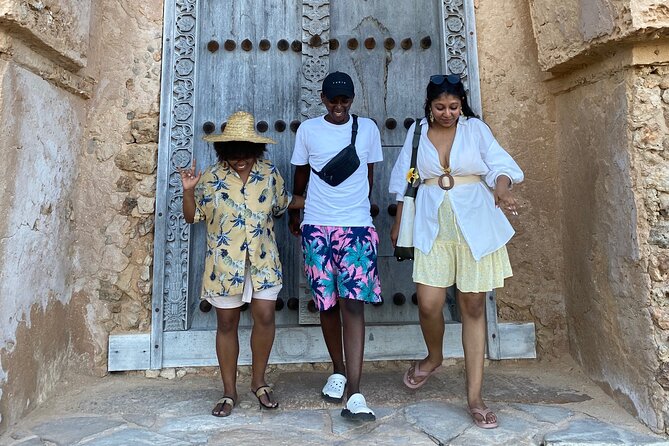
The National Museum receives the longest museum visit, at about one hour. Its exhibits cover fossil discoveries from Olduvai Gorge, ethnographic collections, historical objects, colonial rule, independence, and art.
This stop matters because Tanzania’s story is much older than the colonial period. Fossil material connects the country to major discoveries in human evolution, while the cultural displays show the range of communities and customs found across Tanzania. The sections on colonial rule and independence help place modern national identity in context.
You will get more from the museum if you ask Ben to point out the displays that best match your interests. One hour is useful but not generous, particularly if you like reading every panel. Treat this as a focused introduction to Tanzania’s past, not a museum day.
One practical note comes from the tour’s feedback: the museum was specifically singled out as interesting, even in an otherwise critical account of the day. That makes it a strong priority if time runs short.
Same country, a completely different kind of safari:
- Dar es Salaam: City Tour
★ 4.7 · 159 reviews - Dar es Salaam City Center: Walking Tour
★ 4.8 · 102 reviews - Dar es Salaam City Tour – Everyday
★ 5.0 · 64 reviews - MIKUMI NATIONAL PARK – 3 Days
★ 4.5 · 63 reviews
Village Museum and Tanzania’s traditional homes
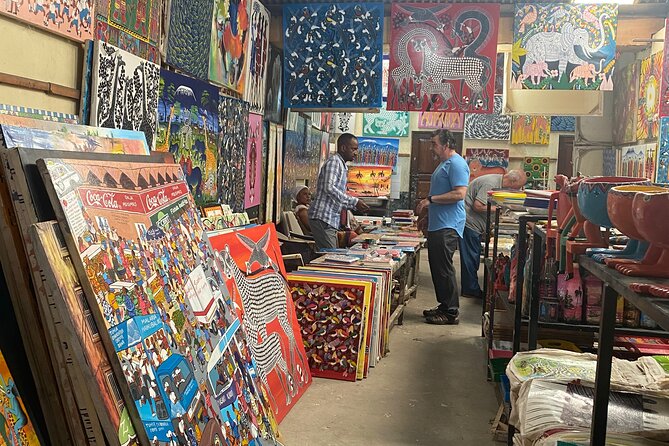
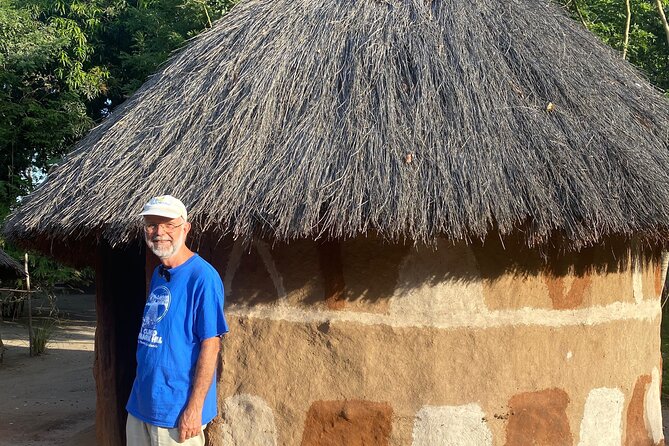
The Village Museum offers a different kind of cultural lesson. Instead of objects in glass cases, you see traditional houses associated with several ethnic groups in Tanzania. Each structure shows different building methods, layouts, and decorative details.
The museum also includes demonstrations of traditional crafts, music, and dance. These elements help connect the buildings to daily life and custom. The one-hour visit gives you enough time to walk among the homes and take in the setting without rushing through in a few minutes.
I especially like the pairing of the Village Museum with the National Museum. One explains Tanzania through artifacts and historical evidence. The other makes culture more physical and immediate.
The experience can vary depending on which demonstrations are taking place during your visit. The supplied details promise access to these cultural elements, but they do not specify a fixed performance schedule. Ask your guide what is happening that day.
Mwenge Woodcarvers Market and buying local art
Mwenge Woodcarvers Market is built around Tanzanian craftsmanship. You can browse carved animals, figures, small souvenirs, and larger pieces with traditional themes. Artisans may also be working nearby, giving you a chance to see how raw wood becomes a finished object.
This is a shopping stop, but it is more than a quick souvenir counter. The range of sizes makes it possible to find something small enough for a suitcase or a substantial piece for a home. Take your time comparing workmanship, finish, and price.
Thirty minutes is short for serious shopping. If you intend to buy a large carving, ask about extra time and transport arrangements before you go. The tour includes the stop, but it does not say that purchases or shipping are covered.
As with any craft market, bargaining may be part of the process, though the supplied information does not set out a specific shopping policy. Your guide can help you understand the local approach.
Tingatinga paintings in a working art cooperative
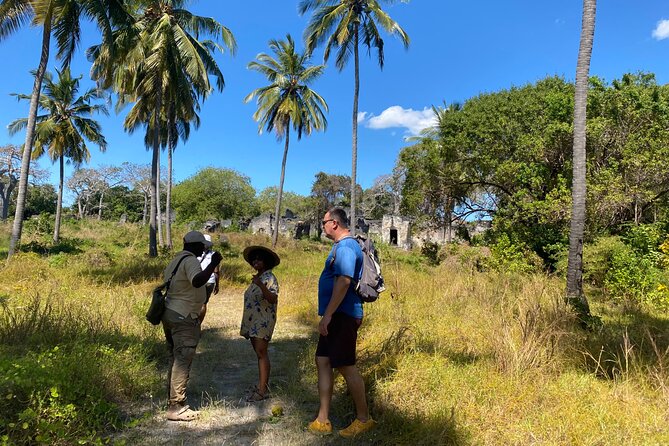
The Tingatinga Arts Cooperative Society introduces one of Tanzania’s best-known painting styles. Expect strong colors, wildlife, scenes of daily life, and imaginative compositions. You may see artists painting and have the chance to buy original work.
This stop complements Mwenge well. Wood carving is tactile and three-dimensional. Tingatinga painting is flat, graphic, and immediately colorful. Together, they show two very different forms of local artistic work.
The cooperative setting gives the visit more character than a standard souvenir shop. You can look at finished pieces while also seeing the creative process. Again, 30 minutes is enough to understand the style, but not necessarily enough to choose a painting carefully.
If you are buying art, consider the practical side. The tour details do not state whether packing or shipping is available, so ask before committing to a large canvas.
Azania Front Lutheran Church and St. Joseph’s Cathedral
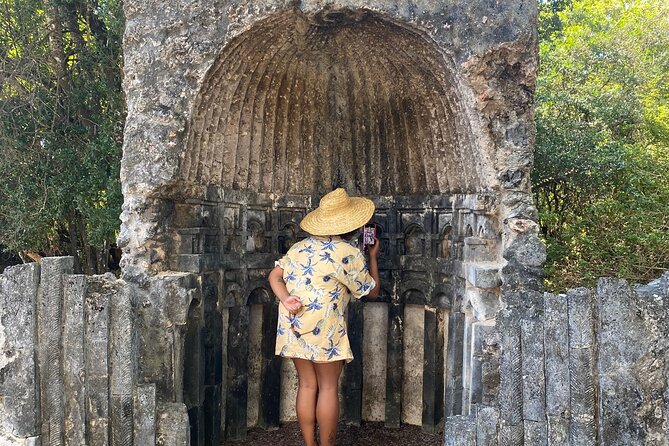
The religious stops show Dar es Salaam’s layered cultural identity. Azania Front Lutheran Church dates from the German colonial period and features Gothic-style design, stained glass, a quiet interior, and gardens. A service or concert may be taking place, but that is not guaranteed.
The church is a calm pause after the markets. Its architecture also links directly to Old Boma and the German period. Thirty minutes should allow you to appreciate the exterior and interior without turning the visit into a long church tour.
St. Joseph’s Cathedral offers a Catholic counterpart. Its architecture, stained glass, religious decoration, and peaceful interior reflect the role of Christian institutions in the city. You may attend a service if one is underway, though the tour information does not promise this.
You should dress and behave respectfully at both churches. They remain places of worship, not only historic buildings. Ask before taking photographs inside, and expect access to change if a service is in progress.
Askari Monument and central city history
The Askari Monument is a short but meaningful city-center stop. The bronze statue commemorates soldiers of the British colonial forces and occupies a prominent urban location near other important landmarks.
This is a place where your guide’s explanation matters. A monument can look simple when you pass it by, but its connection to colonial military history raises questions about memory, public space, and national identity. The listed 30 minutes should give you time for photographs and a brief account of its significance.
The monument is not a large attraction. If you want an extended historical site visit, it may feel limited. Its value comes from location and context, especially when paired with the nearby churches and Old Boma.
Kariakoo Market: the city in motion
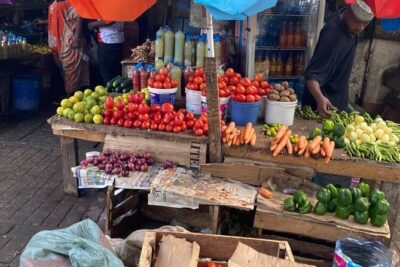
Kariakoo Market is one of the most energetic stops on the route. Stalls carry produce, spices, clothes, household goods, and local crafts. Displays are colorful, trade moves quickly, and bargaining is part of the atmosphere.
This is the place to see Dar es Salaam as a commercial city rather than a museum subject. You will encounter practical shopping, crowded paths, and the constant exchange between sellers and buyers. It is a good stop for photography only when people are comfortable with it, so ask before taking close-up pictures.
Thirty minutes will give you a strong first impression, but it is not enough to explore every section. Keep your belongings secure and stay close to your guide, especially if the market is busy. The private format helps here because you are not trying to keep up with a large group.
Mlimani City Mall and the University of Dar es Salaam
Mlimani City Mall provides a modern contrast to the older buildings and open-air markets. You can expect shops, local and international brands, a supermarket, restaurants, a food court, a cinema, and other leisure facilities.
At first, a mall may seem out of place on a heritage tour. I see its purpose: it shows the consumer side of present-day Dar es Salaam and gives you a cool, orderly break after the markets. The 30-minute stop is best for a quick look, a drink, or a practical purchase rather than a full shopping session.
The nearby University of Dar es Salaam adds another modern institution to the route. The campus includes faculties, research centers, libraries, classrooms, laboratories, and sports facilities. Visitors may encounter public lectures or cultural events, but none are guaranteed by the tour details.
Half an hour allows a campus overview, not an academic visit. This stop will appeal most if you want to understand education and public life in Tanzania. If museums and historic buildings matter more to you, it may be one of the places to shorten.
Coco Beach and Ngazija Mosque
Coco Beach brings the tour back to the coast. This popular sandy stretch faces the Indian Ocean and includes beachside food, bars, vendors, and possible activities such as swimming, boat rides, and jet skiing.
The information provided does not assign a visit length to Coco Beach, so treat it as a possible part of the route rather than a guaranteed long beach break. It may be used for a quick coastal look, depending on traffic and the day’s schedule. If swimming is important to you, confirm the plan before booking.
Ngazija Mosque adds an Islamic architectural and cultural perspective. Its design draws on Swahili and Islamic traditions, with carvings, Arabic calligraphy, and a quiet prayer hall. As with the churches, respectful clothing and conduct are essential.
The tour details do not specify interior access or a fixed visiting arrangement at the mosque. Ask your guide what can be seen when you arrive, and do not assume that prayer areas will be open to sightseeing.
What the $145 price includes
At $145 per person, this is not a bargain city bus tour. It is a private, full-day service with transport, lunch, entry fees, bottled water, soda, onboard WiFi, taxes, and pickup offered.
The value depends on your group size and priorities. If you are sharing the vehicle with several people, the private format can make the cost reasonable, especially since admission fees and lunch are already handled. You also avoid arranging separate taxis between widely scattered locations.
You are paying for convenience and a guide who can connect the sites. That matters in a city where traffic and distance can eat up time. The value is weaker if you want a slow museum visit, extended beach time, or a long shopping session, since the schedule covers many places in one day.
Alcohol is not included. The tour does include soft drinks and bottled water, so you should plan separately if you want anything alcoholic with lunch.
Timing, traffic, and the private format
The advertised duration is about seven hours, with pickup offered and a mobile ticket. The tour operates Monday through Friday during the stated booking period, from July 5, 2024, through June 18, 2026. Confirmation is provided at booking.
A private tour gives you more control than a shared excursion. You can ask for explanations, clarify unfamiliar customs, and discuss which stops deserve attention. It also means your group is not waiting for strangers at every doorway.
Traffic is the main practical risk. One account of the experience described a broken air-conditioning system and a long wait connected to pickup timing. The operator disputed the account and said the pickup arrangement and arrival time had not been followed. The lesson for you is simple: confirm the meeting point, pickup time, vehicle condition, and port access clearly before the morning of the tour.
The vehicle is advertised as air-conditioned, but it is sensible to check that this feature is working when you meet. Dar es Salaam can feel tiring in traffic, and a hot vehicle would affect the day.
Who should book this tour?
I would choose this tour if you want a broad introduction to Dar es Salaam and prefer a private guide to explain what you are seeing. It suits people interested in architecture, markets, art, religion, archaeology, and local daily life.
It is also a practical choice for a first visit with limited time. The route covers many corners of the city without requiring you to arrange separate transport or pay small admission charges throughout the day.
You may want another option if your main goal is a relaxed beach outing, serious museum study, or extended shopping. The schedule is ambitious. Its strength is range, not long stays.
Final verdict: a strong first look, with a busy schedule
I would book this tour for the variety and the private guiding, especially if Ben is available and you want stories rather than a simple drive-by. The combination of the National Museum, Village Museum, Kivukoni Fish Market, Kariakoo Market, and local art stops gives you a much fuller sense of Dar es Salaam than a short central-city walk.
Go in expecting an overview. Confirm pickup details, ask about air-conditioning, and decide which stops matter most to you before the day begins. With those points handled, the $145 price can make good sense for a private seven-hour introduction that includes lunch, transport, and admissions.
FAQ
How long does the Dar es Salaam tour last?
The tour lasts approximately seven hours.
Is this a private tour?
Yes. Only your group participates in the activity.
Is pickup available?
Pickup is offered. Confirm the exact meeting location and time when booking.
Who may guide the tour?
Ben is the guide named in the available tour information and associated with several accounts of the experience. You should confirm guide availability at booking.
Is lunch included?
Yes. Lunch is included in the tour price.
Are drinks included?
Bottled water and soda are included. Alcoholic beverages are not included.
Are admission fees included?
Yes. The tour price includes all fees and taxes, along with admission tickets for the listed stops.
Does the vehicle have air-conditioning and WiFi?
An air-conditioned vehicle and WiFi onboard are included features. Because one account raised an issue with air-conditioning, confirm that the vehicle is in working order when arranging the tour.
Can I cancel for a full refund?
Yes, if you cancel at least 24 hours before the experience start time. Cancellations within 24 hours are not refunded. If poor weather causes the operator to cancel, you are offered another date or a full refund.
Just added around Dar es Salaam
- Zanzibar: 3 Days to Mikumi and Chizua Waterfalls★ 3.5 · 5 reviews
- 3 Days Explore Selous Game Reserve + Boat safari + bushman walking★ 5.0 · 5 reviews
- 2 Day Wildlife Experience and Masai Culture Mikumi Park★ 5.0 · 5 reviews
- Explore Dar es Salaam: Full-Day Private City Tour★ 5.0 · 18 reviews
- Sunrise Beach Walk with Picnic Breakfast Activity★ 5.0 · 3 reviews
- 3 Days Safari to Nyerere National Park (Selous Game Reserve)★ 5.0 · 8 reviews
- Mikumi Np Mid Range Tour 3 Days★ 5.0 · 3 reviews
- Saadani National Park Day Tour★ 5.0 · 3 reviews
Historical Tours, compared.

Stone Town Historical Cultural Walking Guided Tour
Read our review →
Arusha Guided Walking City Tour, Culture, Lifestyle & History
Read our review →
Stone Town’s Hidden History: Private Guided Walking Tour
Read our review →


Zanzibar Stone Town Historical Tour and Spice Farm Tour
Read our review →Browse the lists this tour appears in