
Reviewed · LEMOSHO ROUTE CLIMBS
8 Days Mt Kilimanjaro Climb – Lemosho Route
The big draw here is the eight-day Lemosho climb, a long enough schedule to let you approach Uhuru Peak at a steady pace rather than rush up the mountain. You begin with a lodge stay in Moshi, spend seven days on the mountain, and return to town before your flight home.
I like that the price includes park, camping, and rescue fees, which can make a major difference on a Kilimanjaro trip. I also like the private format, the airport transfers, and the three daily meals while you are climbing. The main caution is the demanding summit day: 16.4 kilometers and about 15 hours is a serious test of fitness, patience, and altitude tolerance.
Key points to know before booking
- Eight days on the Lemosho route: The schedule gives you several gradual walking days before the summit attempt.
- A very long summit day: Day 8 is listed at 16.4 kilometers and 15 hours, making it the hardest part by far.
- Experienced local support: Guides named Stanley and Ombenio have been praised for helping climbers reach the top.
- Useful costs included: Park fees, camping fees, rescue fees, airport transfers, and meals on the mountain are covered.
- Private group format: Only your own group participates, which can make the pace and communication easier to manage.
- Ten-day travel plan: The climb is paired with a Moshi arrival day, a post-climb return, and an airport transfer.
Why the Lemosho route deserves eight days
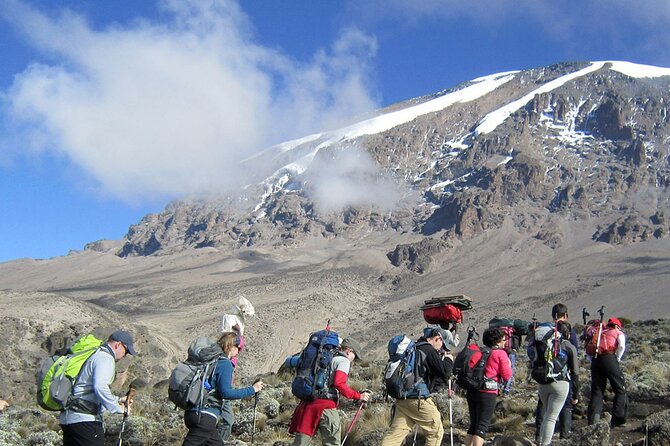
Kilimanjaro is not a technical climbing trip in the information provided, but it is still a demanding high-altitude walk. The challenge comes from the combination of long days, thin air, cold conditions at the top, and the need to keep moving when your body would rather stop.
The Lemosho schedule is useful because it avoids packing the whole mountain into a few rushed days. Days 2 through 7 cover between 3 and 10 kilometers, with walking times from three to seven hours. That gradual rhythm gives you time to adjust to the effort and to enjoy the changing views around Kilimanjaro.
The itinerary uses broad descriptions rather than naming each camp or trail section. That means you should ask the company for the exact camp names, elevations, and daily altitude changes before paying. Those details matter more than the distance alone. A short day can still be difficult if it climbs sharply.
The route is private, so you are not placed into a large shared party. I see this as a real benefit if you want to ask questions, move at a consistent pace, or discuss how you are feeling without addressing a crowd. It may also suit a couple, family, or small group that wants the climb to feel like its own trip.
More Kilimanjaro Climbs in Kilimanjaro
- Kilimanjaro climb by Lemosho Route (7-day)
★ 5.0 · 651 reviews - Kilimanjaro climb, Machame Route (7-day)
★ 5.0 · 262 reviews - Kilimanjaro Climbing Lemosho Route 8 Days.
★ 5.0 · 186 reviews
Day 1: Arrive in Moshi and rest
Your first day is deliberately simple. You are picked up at the airport and taken to a lodge in Moshi on a bed-and-breakfast basis. The listed duration is up to 12 hours, which reflects a full arrival day rather than 12 hours of driving or touring.
This is a sensible start. You do not want to land, rush into a mountain transfer, and begin walking while tired from an international flight. Use this day to rest, check your equipment, and confirm the next morning’s plan with the team.
The practical point is that the airport transfer is included in both directions. You should still confirm which airport pickup is covered and how the driver will identify you on arrival. The tour begins in Moshi and ends back at the meeting point before the final airport transfer.
Day 2: The first 7 kilometers toward Uhuru Peak
The first mountain day covers 7 kilometers, or about 4.3 miles, and takes roughly four hours. The description frames this as the beginning of the gradual approach to Uhuru Peak, the highest point on Kilimanjaro.
A shorter opening day is welcome. You can settle into the walking pace, learn how the guides organize the group, and see how your body responds to the first section of the climb. Do not treat this as an easy sightseeing walk, though. The mountain has only just begun, and conserving energy is part of the job.
This is also a good time to speak clearly with your guides. Stanley and Ombenio are two names associated with the guiding team, and direct communication will help you get the most from their experience. Tell them early if you have a headache, feel unusually tired, or need to adjust your pace.
Day 3: Seven hours among the valleys
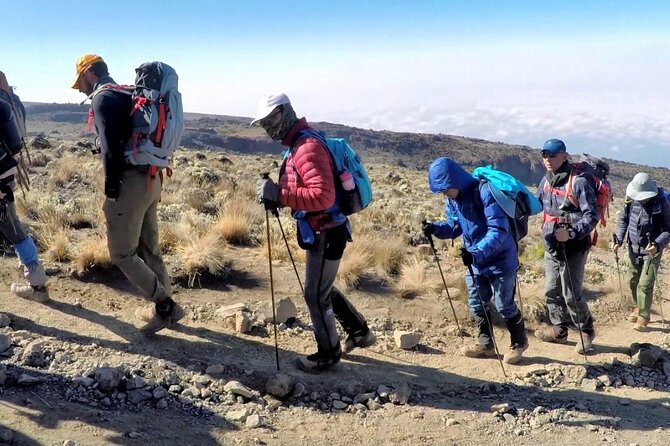
Day 3 covers 8.5 kilometers, or about 5.3 miles, and takes about seven hours. The route description points to valleys on either side, giving this section a more scenic feel than the straightforward distance suggests.
The jump from four hours to seven hours is worth noting. You may walk at a slow pace, but the day still demands stamina. Plan to treat every break as useful rather than as lost time. Eat what is provided, drink regularly, and keep your clothing easy to adjust.
Three meals a day are included while you are on the mountain. That is important because a climb of this length requires more than snacks stuffed into a daypack. The information does not specify menus, so bring any personal food items you know you will want. Personal items are not included in the price.
More Kilimanjaro Climbs in Moshi:
- Kilimanjaro climb, Lemosho Route (8-day)
★ 5.0 · 148 reviews - Kilimanjaro climb, Lemosho Route (6-day)
★ 5.0 · 129 reviews - Kilimanjaro climb, Marangu route (6-day)
★ 5.0 · 72 reviews - Private Kilimanjaro Hike 7 Day Lemosho Route
★ 5.0 · 60 reviews
Day 4: An eight-kilometer middle section
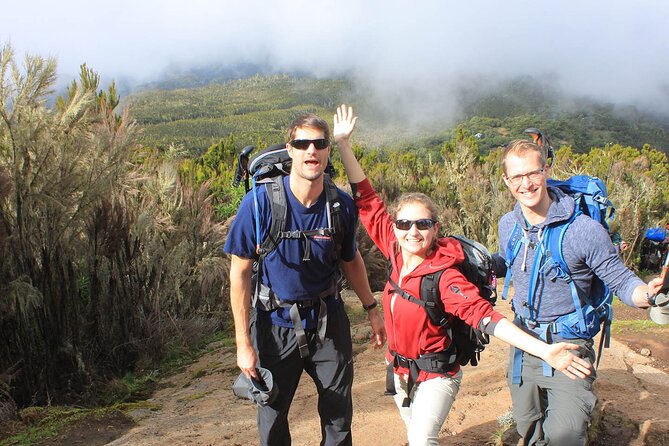
The fourth day covers 8 kilometers, or about 5 miles, over approximately five hours. Compared with Day 3, it is shorter in time, which may give you a useful recovery window while still moving higher.
The itinerary does not provide an elevation profile or the name of the overnight camp. Ask for both before departure. Knowing the altitude of each night’s stop helps you understand how the route is paced and lets you prepare for the possibility that altitude, not mileage, may be the main difficulty.
I like the shape of this schedule. It mixes longer days with shorter ones instead of demanding the same effort every day. Still, you should not assume the shorter day will feel easy. Mountain conditions can turn a five-hour walk into a tiring one, especially after several nights outdoors.
Day 5: The longest pre-summit walking day
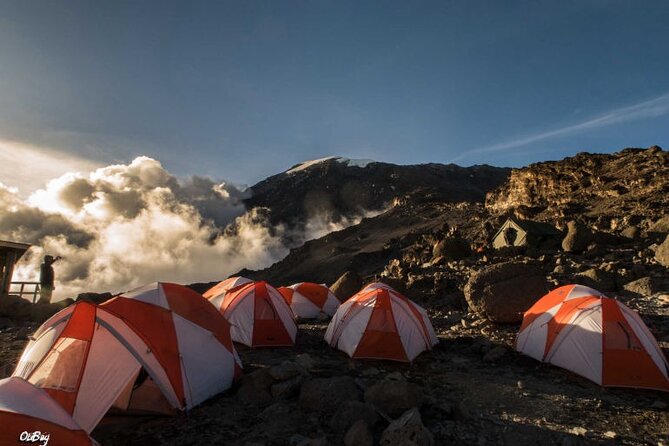
Day 5 covers 10 kilometers, or 6.2 miles, and takes about seven hours. This is the longest distance before summit day, so it is a useful test of how your legs and breathing are holding up.
By now, small problems become important. A loose boot, an uncomfortable pack strap, or insufficient water may be manageable for an hour but painful after seven. Use this day to make adjustments while you still have time. Your guides and support staff are central to the experience, so do not stay silent about equipment or fatigue.
The company describes its team as experienced in Kilimanjaro climbing and its vehicles as good. The included airport transfers are a practical part of that service, but the mountain section is where the staff matters most. Ask in advance how many guides and porters will accompany your private group and what porter welfare policies the company follows.
Day 6: A shorter 5.5-kilometer day
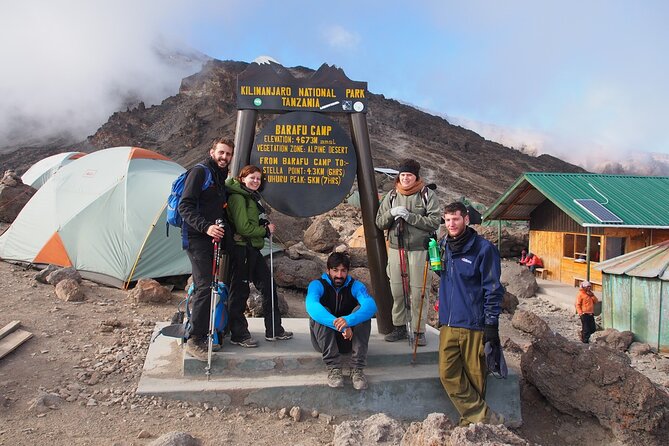
Day 6 covers 5.5 kilometers, or 3.4 miles, in around five hours. After the seven-hour stretch on Day 5, this shorter stage should feel more manageable on paper.
This is the sort of day that makes an eight-day plan more appealing. You are still progressing, but you are not being asked to produce your longest effort immediately before the summit. The itinerary does not say whether this is a rest day, an acclimatization day, or a particular camp section, so ask for the exact purpose of the stop.
The key is to resist the temptation to use a shorter day as an excuse to overexert yourself. Kilimanjaro rewards patience. Save your strength for the final climb.
Day 7: Only 3 kilometers before the summit attempt
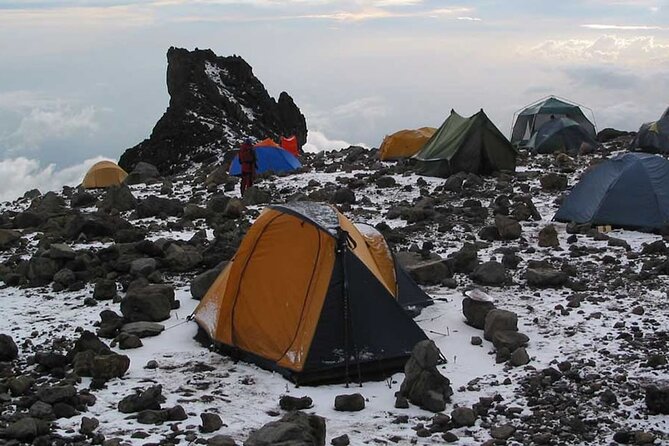
Day 7 covers just 3 kilometers, or 1.9 miles, and takes about three hours. This is the briefest mountain day in the plan and likely serves as a final positioning day before the push to Uhuru Peak, though the exact camp arrangement is not supplied.
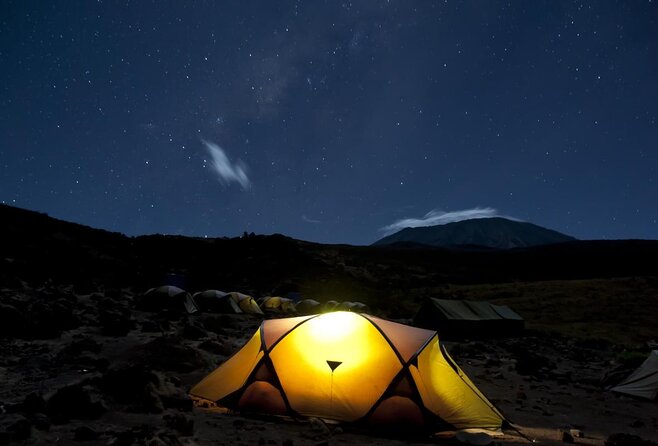
A short walking day can be mentally tricky. You may feel ready to get on with the summit, yet the best choice is usually to rest, eat, organize your clothing, and follow the guides’ instructions. Put your headlamp, warm layers, water, and personal essentials where you can reach them quickly.
The plan’s biggest strength is visible here: you have not been forced to spend every day walking for seven or eight hours. Its weakness is that the published details do not explain the altitude gain or start time. Those are essential questions, especially for a summit day listed at 15 hours.
Day 8: A 15-hour push to Uhuru Peak
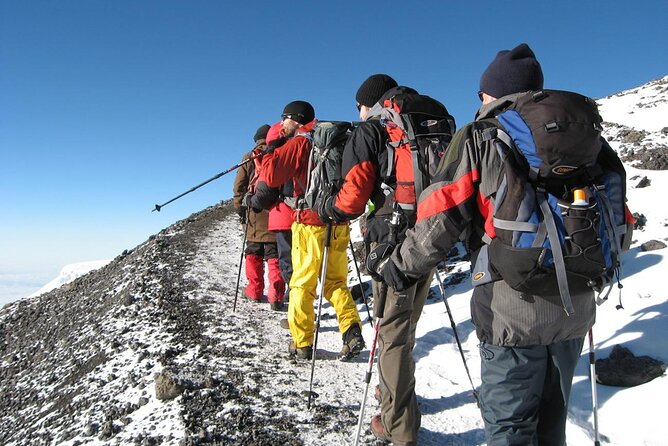
Summit day covers 16.4 kilometers, or 9.6 miles, and takes about 15 hours. The itinerary marks this as the day you reach Uhuru Peak. That is the emotional high point, but it is also the section you should take most seriously.
Fifteen hours is a long day for anyone. You will need patience, steady pacing, and enough warmth and food to keep going. The distance is not extreme by ordinary hiking standards, but altitude changes the rules. You may move slowly, take frequent breaks, and find that familiar tasks require extra effort.
The strongest praise directed at this company has focused on its guides, particularly Stanley and Ombenio, who helped an October group complete the Lemosho route. Another successful climber credited the team with doing well across the climb and stressed the value of preparing properly. That is useful advice: the guides can support your attempt, but they cannot replace physical preparation.
Reaching Uhuru Peak is not guaranteed by booking any tour. Weather, health, altitude, and fatigue all matter. The operator states that poor weather can lead to a rescheduled experience or a full refund, but you should clarify how a weather decision is made during the climb and what happens if you personally need to stop.
Day 9: Return toward Moshi
Day 9 covers 9.1 kilometers, listed as 7.5 miles, and takes about six hours. It is described as the return to Moshi, with the admission ticket free.
This is still a substantial walking day after the summit. Do not plan a packed evening in town. You may want a shower, a proper bed, and a quiet meal instead. The distance figures are slightly inconsistent, since 9.1 kilometers is closer to 5.7 miles than 7.5 miles. Ask the company to confirm the expected distance and transport arrangements for this day.
That small discrepancy does not automatically make the trip poor, but it shows why a detailed briefing is worthwhile. Exact distances, camp elevations, and transfer times help you judge the schedule realistically.
Day 10: Airport transfer home
The final day is a 30-minute drive in the Kilimanjaro Region to the airport. This transfer is included, and the activity ends back at the meeting point before you depart.
A ten-day plan gives you a clear buffer around the eight mountain days. Still, check your flight time carefully. The supplied information does not state how early the vehicle leaves, which airport is used, or what happens if the mountain schedule runs late.
What the $2,950 price really covers
At $2,950 per person, this is not a low-cost mountain holiday. But Kilimanjaro pricing needs to be judged by what is included, not just by the headline figure.
The package covers park fees, camping fees, rescue fees, two-way private airport transfers, and three meals daily while you are on the mountain. Breakfast is also listed for ten days, though the wording is not fully clear about how this relates to the mountain meal plan. Ask the company to confirm exactly which breakfasts are provided at the lodge and during the climb.
Rescue fees are especially relevant on a high-altitude expedition. They do not mean every possible medical or evacuation cost is covered, so you should check your travel insurance carefully. Tanzania visa costs, tips for the mountain crew, and personal items are excluded.
Tips can be a meaningful extra cost, particularly when a team includes guides and porters. Request the recommended tipping range before departure so you are not making a rushed decision at the end.
For the right person, the price offers a fairly complete framework: transport, permits, food, camping, and an experienced support team. It is less attractive if you want a bare-bones trek or if you are comparing it with a shorter route. The eight-day schedule and private format are what give this package much of its value.
Who should choose this climb
I would look closely at this trip if you want a private Kilimanjaro attempt with a gradual schedule and airport transport already arranged. It suits people who value direct support, do not want to coordinate permits and camping independently, and can commit to a full ten-day Tanzania plan.
It may also suit a first-time African mountain climber, since the company has guided people from many countries and the schedule includes a lodge arrival day and several shorter walking stages. A first attempt still requires serious preparation. The summit day is long, and the information does not promise a summit success rate.
You should be cautious if you dislike camping, have limited time, or are uncomfortable with a possible 15-hour summit day. You should also ask more questions if you need a precise daily elevation chart, named camps, detailed equipment lists, or a clearly stated group size.
The tour is private, and most people can participate according to the supplied information. Service animals are allowed, and the start point is near public transportation. Those facts may help with access, but they do not remove the physical demands of the climb.
Booking and cancellation details worth checking
Confirmation is provided at booking. The tour offers free cancellation up to 24 hours before the local start time for a full refund. Cancellations or changes made within 24 hours are not accepted for a refund.
The experience requires suitable weather and a minimum number of participants. If poor weather cancels the climb, you are offered another date or a full refund. If the minimum number is not met, you are offered another date or experience, or a full refund.
Before booking, I would ask for the exact route map, daily camp elevations, equipment list, guide-to-climber ratio, porter arrangements, and the policy if one member of a private group cannot continue. These questions are more useful than simply asking how scenic the route is.
Should you book the 8-day Lemosho climb?
Book it if you want a private, organized climb with a longer route schedule, included park and camping costs, meals, rescue fees, and airport transfers. The gradual pattern from Day 2 through Day 7 is sensible, and the guiding team, including Stanley and Ombenio, has the kind of summit experience you want nearby.
Do not book it without clarification if the missing camp names, altitude figures, and summit logistics bother you. The 15-hour final day is no small detail, and the Day 9 distance needs checking because the mileage and kilometer figures do not match.
My call: this looks like a promising choice for a prepared climber who values service and a private group, but I would make the booking only after getting the full altitude profile and written inclusions. The mountain will provide enough uncertainty on its own. Your itinerary should not.
FAQ
Where does the climb start and finish?
The activity starts in Moshi, Tanzania. It ends back at the meeting point after the return from the mountain, followed by an airport transfer on Day 10.
How long does the full experience last?
The schedule lasts approximately ten days. Eight days are assigned to the Kilimanjaro climb, with an arrival day in Moshi and a final airport-transfer day.
What route is used?
The climb uses the Lemosho Route.
Is airport transportation included?
Yes. Two-way private airport transfers are included in the package.
Are meals included?
Three meals daily are included while you are on the mountain. Breakfast is also listed for ten days, so you should confirm the exact breakfast arrangements with the operator.
What costs are not included?
The Tanzania visa, tips for the mountain crew, and personal items are not included.
Can I cancel for a full refund?
Yes, if you cancel at least 24 hours before the local start time. Cancellations or changes made less than 24 hours before the start are not refunded.
More Lemosho Route Climbs in Moshi
- Kilimanjaro Lemosho Route
★ 5.0 · 71 reviews - Climbing Kilimanjaro through 8 days Lemosho Route
★ 5.0 · 52 reviews - 8 Days Climbing Mt.Kilimanjaro (Lemosho Route)
★ 4.5 · 37 reviews - 7 days Lemosho route Climbing Mt.Kilimanjaro
★ 5.0 · 31 reviews
Just added around Moshi
- Mt Kilimanjaro 6 days Marangu route hike★ 5.0 · 3 reviews
- Wildlife Extravaganza: Manyara, Tarangire & Ngorongoro in 3 Days★ 5.0 · 3 reviews
- Private Cycle to Kilimanjaro Bike Park Safari★ 5.0 · 6 reviews
- 3 Days Private E-Bike Tour in West Kilimanjaro★ 5.0 · 3 reviews
- West Kilimanjaro cycling Adventures★ 4.5 · 8 reviews
- machame route★ 5.0 · 16 reviews
- Kilimanjaro Climb & Safari – Lemosho Route – 13 Day★ 5.0 · 10 reviews
- Kilimanjaro Climbing Umbwe Route★ 5.0 · 3 reviews
Lemosho Route Climbs, compared.


8-Day Small-group Lemosho Kilimanjaro Summit Trekking
Read our review →





Climbing Kilimanjaro through 8 days Lemosho Route
Read our review →Browse the lists this tour appears in