
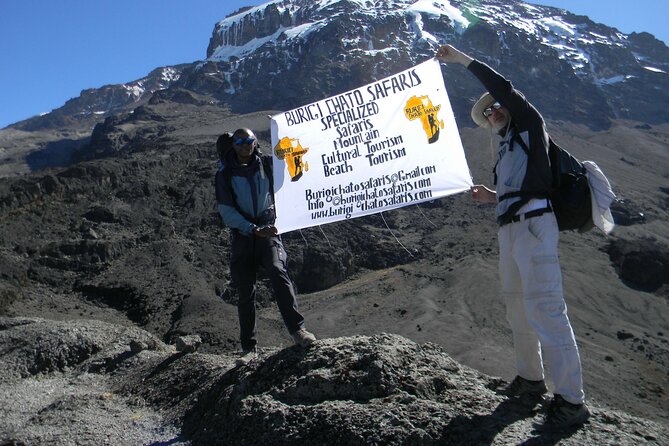
Reviewed · LEMOSHO ROUTE CLIMBS
7 Days Kilimanjaro Climbing | Hiking Tour via the Lemosho Route
Kilimanjaro’s Lemosho Route gives you a fine week-long introduction to Africa’s highest mountain, moving from rainforest and colobus monkeys to the stark upper slopes above 4,000 meters. I like the gradual route design and the fact that tents, meals, park fees, and Moshi transfers are included, which keeps your packing and planning simple. The catch is the pace: seven days is a serious physical test, and altitude sickness can stop even a fit hiker before the summit.
I also like the Lava Tower acclimatization walk, followed by a descent to Barranco Camp, and the chance to see the mountain change from thick forest to high-altitude desert. You should note that the advertised group capacity can reach 500 people, so ask about your actual group size before booking. Individual guide names are not provided, and a hotel night before the climb, flights, insurance, visa, airport pickup, and tips cost extra.
Key points to know before booking
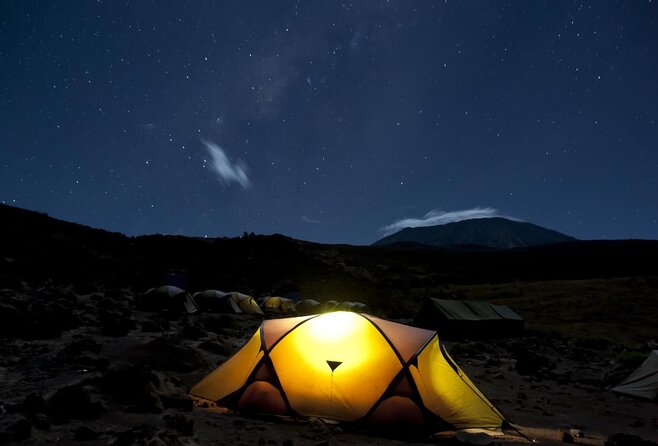
- Lemosho offers varied scenery: You move through rainforest, moorland, Shira Plateau, giant heather, senecio plants, rocky valleys, and high-altitude desert.
- The Lava Tower day helps with acclimatization: You climb to about 4,640 meters for lunch, then sleep lower at Barranco Camp.
- Summit night begins around 11 p.m. to midnight: The Barafu to Uhuru Peak walk can take six to seven hours in cold, dark conditions.
- Camping supplies and food are included: Tents, breakfast, lunch, dinner, guide services, fees, and taxes are covered.
- The final descent ends at Mweka Gate: You sign out, receive your certificate, and return to your Moshi hotel with the group.
- The price is attractive but not all-inclusive: At $965 per person, it covers much of the mountain operation, but several important trip costs remain yours.
Why the Lemosho Route works well in seven days
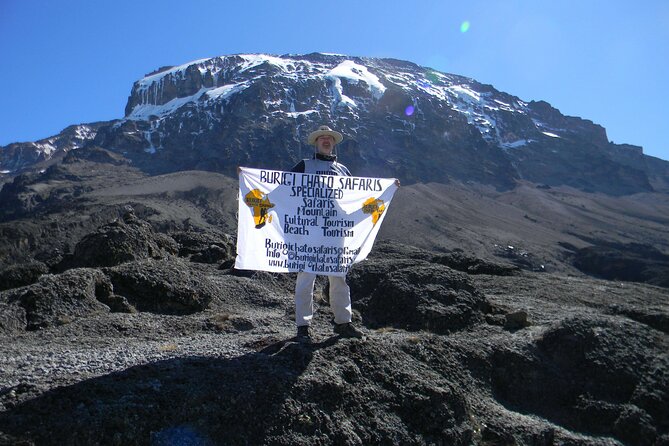
Lemosho is a strong choice if you want a route with changing scenery and a proper acclimatization stop rather than a quick dash toward the summit. The opening section begins on Kilimanjaro’s western side, where the air is cooler and the forest feels far removed from Moshi.
The first two days are not just transport and walking. They set the rhythm for the entire climb. You eat, walk, rest, and sleep at increasing heights while your guide controls the pace. That slow approach matters more than speed on Kilimanjaro.
Still, seven days is not a relaxed mountain holiday. You spend much of the week walking for several hours, then face a summit night that starts before midnight. If you want a gentler schedule with more time for your body to adjust, compare this trip with a longer Kilimanjaro itinerary before paying.
The route also has a practical advantage for first-time climbers: you do not need to carry camping equipment. Porters and the mountain support team handle the tents and larger supplies, while you can focus on your daypack, warm layers, water, snacks, and personal items.
More Kilimanjaro Climbs in Kilimanjaro
- Kilimanjaro climb by Lemosho Route (7-day)
★ 5.0 · 651 reviews - Kilimanjaro climb, Machame Route (7-day)
★ 5.0 · 262 reviews - Kilimanjaro Climbing Lemosho Route 8 Days.
★ 5.0 · 186 reviews
Day 1: Londorosi to Big Tree Camp through rainforest
After breakfast at your inn, pickup is scheduled around 10:00 to 10:30 a.m. The group drives toward Londorosi Gate, with stops to buy fresh food and visit a supermarket if you need extra supplies. This is useful because it gives you one last chance to check your snacks and personal items before leaving town.
At Londorosi, the park registration process takes place. You have lunch before continuing by vehicle to Lemosho Gate, the actual walking start point. The distinction matters: the day includes a fair amount of driving before your boots hit the trail.
From Lemosho Gate, you walk through lush forest toward Big Tree Camp, also called Mti Mkubwa Camp. The route takes about four hours, and black-and-white colobus monkeys may appear in the trees. That wildlife possibility adds a welcome spark to what could otherwise feel like a short orientation day.
This is a good first stage because the walking time is manageable. You begin learning how your boots, daypack, and clothing feel without immediately facing steep ground. The drawback is that the day can feel logistically busy, with registration, shopping, lunch, transfers, and camp setup all packed together.
Day 2: Shira Camp and the first broad mountain views
Day two covers about eight kilometers and takes roughly six hours. You leave the rainforest and enter savannah and rougher ground, crossing several water streams before reaching Shira Camp 1 for lunch.
The scenery opens dramatically here. At Shira Ridge, you may get broad views toward Kibo, the main volcanic cone and the high point you are trying to reach. After lunch, you continue toward Shira Camp 2 for the night.
This change in vegetation is one of the route’s pleasures. The forest feels enclosed and green; the Shira section feels open, exposed, and much more like a high mountain. You begin to sense the scale of Kilimanjaro rather than simply walking through woodland.
The route description includes a walk down toward Shira Camp 1 before continuing to Shira Camp 2. That rise and fall can be tiring early in the climb, but it gives your legs useful practice for the uneven days ahead. Listen to the guide’s pace instructions and resist the temptation to walk quickly when you feel strong.
Day 3: Lava Tower at 4,640 meters, then Barranco
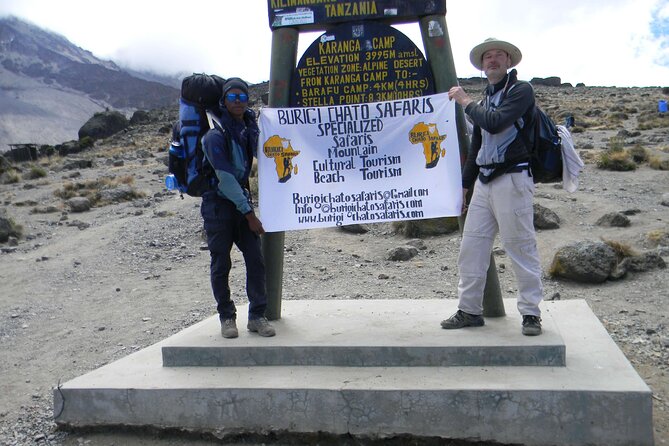
Day three is one of the most valuable days on the route. You cross moorland and giant heather before reaching the Shira Plateau, described as one of the longest level areas of its kind in the world. The walking time is about five hours, but the altitude makes the effort feel greater.
The key goal is Lava Tower at approximately 4,640 meters. You climb there for lunch, then descend to Barranco Camp at about 3,960 meters. This is classic acclimatization logic: spend time high, then sleep lower.
The descent also brings a fine change in scenery. Giant Senecio kilimanjari plants appear along the trail, their unusual forms making the upper mountain feel unlike any ordinary hike. Barranco Camp offers broad plain views and a memorable setting for the night.
You should treat this as a serious altitude day, even if the mileage looks modest. Headache, nausea, unusual fatigue, or other signs of altitude sickness deserve immediate attention. One person on a comparable climb became sick and did not summit, while the support team helped manage the situation. That is a useful reminder that reaching Uhuru Peak is never guaranteed.
More Kilimanjaro Climbs in Moshi:
- Kilimanjaro climb, Lemosho Route (8-day)
★ 5.0 · 148 reviews - Kilimanjaro climb, Lemosho Route (6-day)
★ 5.0 · 129 reviews - Kilimanjaro climb, Marangu route (6-day)
★ 5.0 · 72 reviews - Private Kilimanjaro Hike 7 Day Lemosho Route
★ 5.0 · 60 reviews
Day 4: Barranco Wall and the Karanga Valley
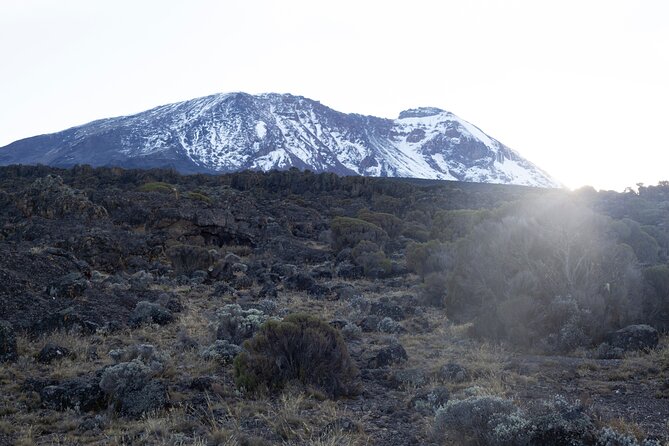
After breakfast, you tackle the Barranco Wall. The route describes it as technical but not exceptionally difficult. In practical terms, you should expect a longer, tiring scramble over uneven ground rather than a simple walking path.
This section requires patience. You may use your hands at points, and the guide’s instructions matter more than your desire to move fast. The wall is often treated as one of the route’s defining challenges, but it is followed by a descent into Karanga Valley at about 3,963 meters.
At Karanga, you rest, eat, and spend time with the group before returning to your tent. The day takes about five hours, but the combination of the wall, rough footing, and repeated ups and downs can leave you more tired than the duration suggests.
I like the way this day breaks up the approach to Barafu. You are not forced into one very long march from Barranco to the summit camp. Still, it is not a sightseeing stroll. Good balance, steady breathing, and a willingness to go slowly will serve you better than athletic bursts.
Day 5: The short, hard climb to Barafu Camp
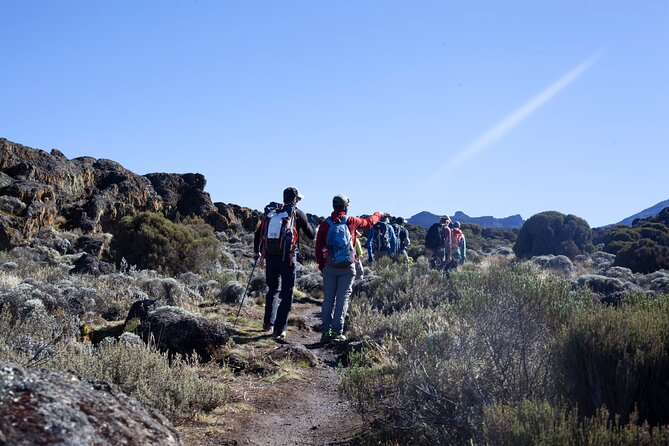
Day five follows a route beside a ravine and then climbs west toward Barafu Camp at about 4,664 meters. The distance is only around three kilometers, with an estimated walking time of five hours, but the climb is described as short and difficult.
Barafu means a major change in comfort. Above 4,000 meters, the vegetation becomes high-altitude desert, and the area around camp is cold and exposed. The only bird specifically noted here is the white-necked raven. There are no streams at this height, and the itinerary warns that there is no water for washing.
That last point is worth taking seriously. You should expect basic mountain camping, not a lodge with showers or easy water access. Keep wet wipes, hand sanitizer, and a warm layer close by, but remember that all personal supplies must be carried or packed within the operation’s arrangements.
After an early dinner, you rest for the summit attempt. The start is planned for around 11:00 p.m. to midnight. Try to treat this rest period as part of the climb, not wasted time. You will need every bit of energy for the long night ahead.
Day 6: Uhuru Peak, sunrise, and the long return
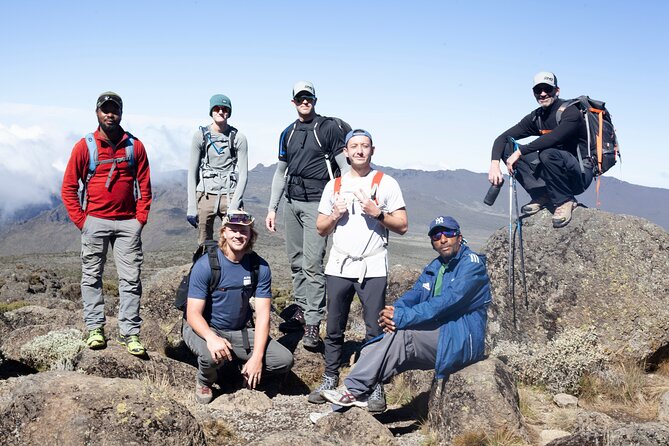
Summit day begins with coffee and biscuits or cookies before you put on your warmest layers. The timing places you on the upper mountain during the coldest part of the night, so clothing is not a minor detail.
From Barafu Camp to Uhuru Peak, the stated walking time is six to seven hours. The route is slow and demanding, with temperatures potentially falling to minus 20 degrees Celsius in June. You should follow the guide’s pace and instructions, take small steps, and avoid wasting energy on unnecessary stops.
If the weather allows, sunrise and the views from Africa’s highest point are the reward. Uhuru Peak is at the summit of Kilimanjaro, and reaching it gives you the literal high point of the trip. Plan emotionally for an attempt rather than a promise. Altitude sickness, exhaustion, or weather can turn you around, and descending safely is the correct decision.
The day is listed at about eight hours, though the summit portion alone can take six to seven hours and the descent adds more effort. Clarify the exact day-six schedule with the operator before departure, since the practical duration may depend on where you finish and how the group moves.
After time at the summit, you descend. The route description is truncated at the end, so you should ask for the precise camp or stopping point after Uhuru Peak. This is one of the details I would confirm before booking, especially if you want a clear picture of the final night on the mountain.
Day 7: Mweka Gate, certificates, and Moshi
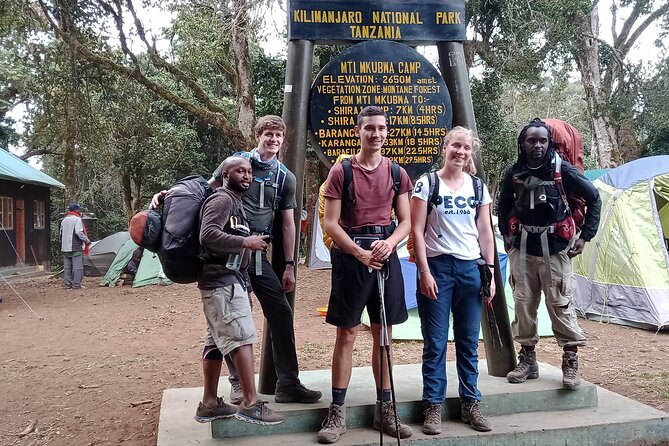
After breakfast, you descend to Mweka Gate. The final walking section is expected to take about five hours. At the gate, you sign out and receive certificates, then meet the driver-guide for the return to the meeting point or your hotel in Moshi Town.
This last transfer is useful if you plan to fly onward, continue to Zanzibar, or begin a safari the following day. The operator also suggests arranging a quick beer celebration with the group after returning to town, which sounds like a fitting way to mark the effort.
The day is not only a victory lap. Your knees and feet may be tired after the summit descent, so allow time to shower, eat, and rest before making firm plans. If your onward trip begins immediately, build in some flexibility.
What the $965 price really covers
At $965 per person, the trip offers good value on paper for a guided seven-day Kilimanjaro climb. Park fees, taxes, guide services, meals, camping gear, and transfers from Moshi are included. Breakfast is listed six times, dinner six times, and lunch seven times, so ask the operator to confirm the exact meal schedule, especially around the summit day.
The included tent equipment is one of the biggest savings in practical terms. You can pack lighter and avoid buying or transporting a full camping setup. The price also includes group discounts, though the actual discount terms are not stated.
You still need to budget for:
- Guide tips
- Visa costs
- Medical and travel insurance
- Local and international flights
- Airport pickup
- One hotel night before the climb
- Personal snacks and any extra shopping
Airport pickup is specifically excluded even though transfers from Moshi are included. That difference matters if you fly into Tanzania and need to reach Moshi independently.
The advertised group limit can be as high as 500 people. That may be a maximum platform capacity rather than the size of your actual climbing party, but you should ask directly. A smaller group usually makes communication, pacing, and summit decisions easier.
Food, camping, and the mountain support team
Your meals are included, which removes one of the larger worries on a multi-day mountain trip. The schedule provides breakfast, lunch, and dinner across the climb, but it does not list menus or special-diet arrangements. If you have dietary needs, confirm them before arrival.
The support setup is a clear strength of this experience. The mountain crew carries the tents and large luggage, while guides lead the walking. The supplied information also refers to cooks and porters, and the overall operation is built around keeping the group fed and housed at each camp.
That does not mean you should pack without thought. You will still need suitable summit clothing, personal toiletries, day-hike essentials, and any medication prescribed for you. The high camps have limited water, and Barafu has no running streams for washing.
The team received especially strong praise for its organization, friendly manner, and effort during difficult moments. Since no individual guide names are supplied, ask who will lead your group and how many porters and cooks are assigned to it. Clear answers here will tell you a lot about the operation.
Who should book this climb?
I would recommend this trip to a fit hiker who wants a structured Kilimanjaro attempt with meals, tents, and park costs arranged in advance. It suits you if you can handle several consecutive days of walking, basic camping, cold conditions, and a night start for the summit.
It is also a good match if you are combining Kilimanjaro with a safari or Zanzibar. The return to Moshi on day seven makes that onward planning straightforward, although you should not schedule an important flight too tightly after the descent.
I would be more cautious if this is your first multi-day hike, if you dislike sleeping in tents, or if you want a leisurely approach to altitude. The route includes acclimatization, but seven days still leaves little room for a slow adjustment or a spare weather day.
The strong rating and positive comments point to the support crew, equipment, organization, and guides as the most praised parts of the experience. Those are exactly the areas that matter on Kilimanjaro. Ask about current equipment condition, group size, guide assignments, water arrangements, and the day-six descent before committing.
Should you book the 7-day Lemosho climb?
Book it if you want a reasonably priced, well-supported attempt on Kilimanjaro and are comfortable with a demanding schedule. The route gives you excellent variety, from colobus habitat to Lava Tower, giant senecio plants, Barranco Wall, and the severe upper slopes near Barafu.
Do not book it simply because the price looks low or because the summit sounds guaranteed. Add insurance, tips, visas, a pre-climb hotel night, and transport from the airport to your budget. Most important, prepare for the possibility of turning back safely if altitude sickness or bad weather intervenes.
For a strong hiker who values a prepared support crew and a route with major scenery changes, this is a sensible Kilimanjaro package. Go in with realistic expectations, confirm the unclear logistics, and let the guide set the pace.
FAQ
How long is the Kilimanjaro climbing tour?
The climb lasts approximately seven days, beginning and ending at the stated meeting point in Moshi.
Which Kilimanjaro route does the tour use?
The tour uses the Lemosho Route for the ascent and descends through Mweka Gate.
What is included in the tour price?
The price includes all fees and taxes, a guide, breakfast, lunch, dinner, camping gear, and transfers from Moshi.
Are tents provided?
Yes. Camping tents are provided, allowing you to pack lighter. The information does not specify which other personal camping items are supplied.
What is not included?
Tips for the guide, visas, medical and travel insurance, local and international flights, airport pickup, and one hotel night before the tour are not included.
What time does the tour start?
The stated meeting time is 8:30 a.m. On day one, pickup from the inn is described as taking place around 10:00 to 10:30 a.m., so confirm the exact pickup time with the operator.
Can I cancel for a full refund?
Yes, you can cancel at least 24 hours before the local start time for a full refund. Cancellations or changes made less than 24 hours before the start are not accepted for a refund. If poor weather causes cancellation, you are offered another date or a full refund.
More Hiking & Trekking in Moshi
- Best Kilimanjaro hiking day trip tour with Kilinge Adventures
★ 4.5 · 54 reviews - #1. Best Kilimanjaro Day hike Tour-Machame Route-ISMANI
★ 4.2 · 47 reviews - Best Kilimanjaro Adventure 7 days Machame route Trekking
★ 5.0 · 42 reviews - Kilimanjaro 7 Day Private Trekking Experience
★ 5.0 · 40 reviews
More Lemosho Route Climbs in Moshi
- Kilimanjaro Lemosho Route
★ 5.0 · 71 reviews - Climbing Kilimanjaro through 8 days Lemosho Route
★ 5.0 · 52 reviews - 8 Days Climbing Mt.Kilimanjaro (Lemosho Route)
★ 4.5 · 37 reviews - 7 days Lemosho route Climbing Mt.Kilimanjaro
★ 5.0 · 31 reviews
Just added around Moshi
- Mt Kilimanjaro 6 days Marangu route hike★ 5.0 · 3 reviews
- Wildlife Extravaganza: Manyara, Tarangire & Ngorongoro in 3 Days★ 5.0 · 3 reviews
- Private Cycle to Kilimanjaro Bike Park Safari★ 5.0 · 6 reviews
- 3 Days Private E-Bike Tour in West Kilimanjaro★ 5.0 · 3 reviews
- West Kilimanjaro cycling Adventures★ 4.5 · 8 reviews
- machame route★ 5.0 · 16 reviews
- Kilimanjaro Climb & Safari – Lemosho Route – 13 Day★ 5.0 · 10 reviews
- Kilimanjaro Climbing Umbwe Route★ 5.0 · 3 reviews
Lemosho Route Climbs, compared.


8-Day Small-group Lemosho Kilimanjaro Summit Trekking
Read our review →





Climbing Kilimanjaro through 8 days Lemosho Route
Read our review →Browse the lists this tour appears in