
Reviewed · KILIMANJARO CLIMBS
6 Days Mount Kilimanjaro Climbing via Rongai Route
The Rongai Route gives you a quieter way up Kilimanjaro, approaching from the north near Kenya rather than following the busier Marangu trail from the south. Its moderate slope makes the climb appealing if you have limited backpacking experience, and the drier northern side can be a sensible choice during the rainy season. I like the changing scenery, from coffee country and woodland to ice fields and alpine desert. I also like the practical route design: you go up Rongai and come down through Marangu, so the walk does not simply retrace itself.
The main consideration is the pace. A six-day ascent is demanding, with a long summit night after only a few hours of rest. The price of $2,200 per person covers accommodation on the mountain, meals, park fees, taxes, and transport from Moshi, but you still need to budget for personal gear, travel insurance, visas, and tips for the climbing crew. Kentau Safaris has earned praise for clear updates, safety-minded organization, and owner Dominic’s hands-on planning.
Key points to know before you book
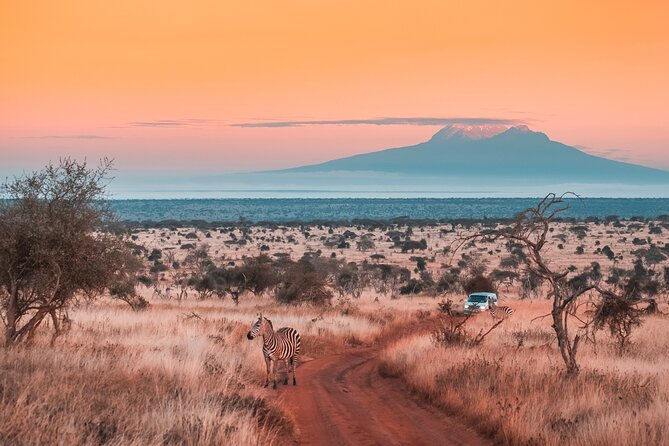
- Northern approach: Rongai is quieter than Marangu and receives less rain than Kilimanjaro’s southern side.
- Six-day schedule: The plan moves from forest to moorland, semi-desert, alpine desert, and the summit in a steady progression.
- Private departure: Only your group takes part, with pickup and drop-off at your Moshi hotel or residence.
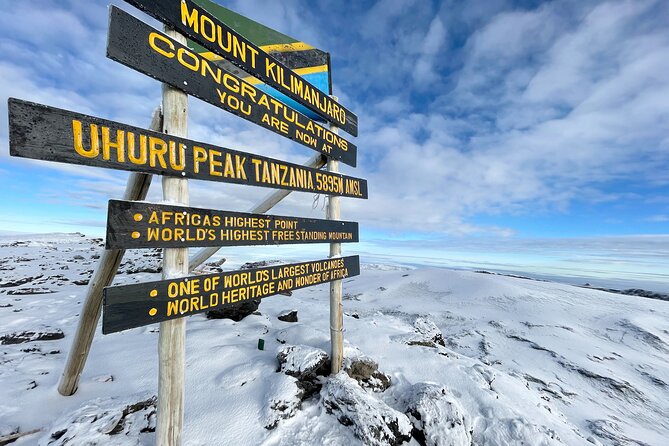
- Summit night: You start between midnight and 2 a.m., climb over heavy scree to Stella Point, then continue to Uhuru Peak.
- Different descent: The return uses the Marangu Route, finishing at the Marangu Park Gate.
- Organized support: Dominic and the Kentau team handle planning and updates, while the package includes mountain accommodation, meals, permits, and taxes.
Why the Rongai Route feels different
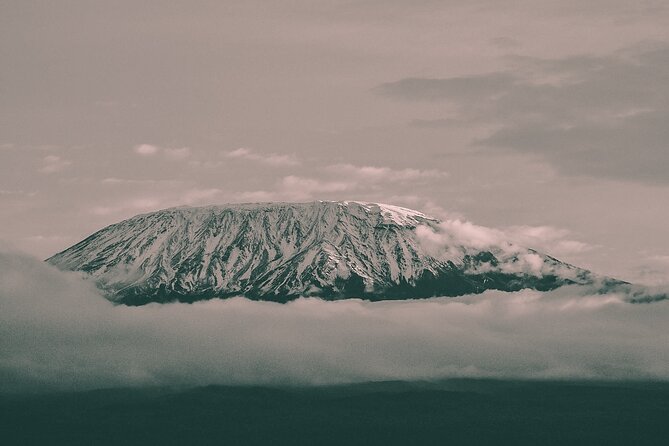
Rongai is the route to consider if you want a less familiar side of Kilimanjaro. The northern approach has a more remote feel than the popular Marangu Route, and its relatively moderate slope gives your body a better chance to adjust gradually. That does not make the climb easy. Kilimanjaro remains a high-altitude mountain, and the summit push is physically serious.
I like the way the route changes character as you gain height. On the first day, you pass coffee plantations and the village of Nale Muru before entering Kilimanjaro National Park. By the upper camps, the shrubs have thinned out, temperatures have dropped, and the eastern ice fields draw your eye toward Kibo.
The route also has a practical weather advantage. The northern side receives less precipitation, so Rongai can be a useful option during the rainy season. Conditions can still be wet, cold, or unpleasant, especially on the descent, but the route choice shows sensible planning rather than simply following the most famous path.
This is a private tour, so only your group participates. That matters on a mountain. You can discuss your pace and how you feel with your guide instead of being tied to a large mixed group. The supplied details do not give a fixed group size or name individual mountain guides, so you should confirm the guide-to-climber arrangement before booking.
More Kilimanjaro Climbs in Kilimanjaro
- Kilimanjaro climb by Lemosho Route (7-day)
★ 5.0 · 651 reviews - Kilimanjaro climb, Machame Route (7-day)
★ 5.0 · 262 reviews - Kilimanjaro Climbing Lemosho Route 8 Days.
★ 5.0 · 186 reviews
Day 1: Moshi to Simba Camp through Nale Muru
The day begins at 7 a.m. in Moshi. A four to five-hour drive carries you through coffee-growing country and toward Nale Muru, the village associated with the Rongai trailhead. The drive is part of the day’s experience, not just a transfer. You watch the scenery change as settled agricultural areas give way to the national park surroundings.
At the Kilimanjaro National Park Gate, your crew waits for permits to be issued. This pause can feel slow, but it is a normal part of beginning a major mountain trek. It also gives you a first look at the operation behind the climb, with crews preparing supplies and equipment for the days ahead.
Once walking begins, the trail passes through wooded scenery on windy paths. Your guide explains local plants, animals, and wildlife you may encounter. The day ends at Simba Camp near the first cave, at the edge of the moorland zone. One special reward here is the view across the plains of Kenya.
The listed hiking time is about seven hours, including the day’s mountain routine. You receive accommodation, dinner, and breakfast as part of the package, along with the required park fees and taxes. Keep your daypack organized from the start, since you will want easy access to water, rain protection, and warm layers while your main equipment is handled by the climbing team.
Day 2: Moorland views toward Second Cave
After breakfast, you continue over moorland on a steady uphill path. The slope is described as consistent rather than sharply steep, which fits Rongai’s reputation as a moderate route. Still, seven hours of walking at altitude can be tiring, so a patient pace matters more than speed.
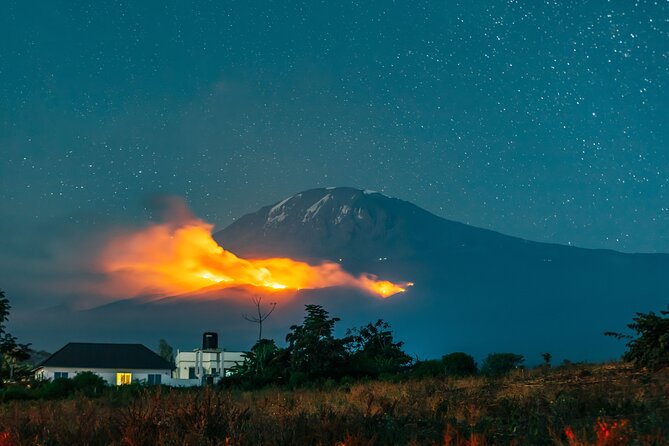
This is a rewarding day for views. You can see Kibo more clearly and catch your first look at the ice fields along the eastern crater rim. The small shrubs of the moorland become thinner as you approach Second Cave, and the falling temperature becomes harder to ignore.
I would treat this camp as the point where comfort becomes a smaller part of the trip. The surroundings become more open, colder, and less sheltered. Pack warm clothing where you can reach it without unpacking everything, and listen closely to your guide if you notice a headache, unusual fatigue, or other signs that your body is struggling with altitude.
Day 3: Semi-desert and the first serious altitude check
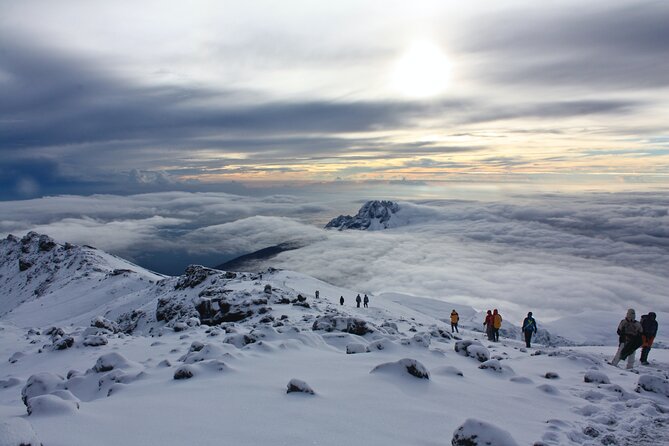
Day three is shorter, at about six hours, but it continues uphill. After breakfast and packing, you enter semi-desert terrain. The vegetation becomes sparse, and the eastern ice fields remain a constant visual marker as you move closer to Kibo.
This shorter day is useful because the climb is not only about covering distance. Your body needs time to adjust to the thinner air. The route description specifically tells you to pay attention to your condition and keep your guide informed about possible altitude sickness. That advice should be treated as a basic safety rule, not a casual suggestion.
The best feature of this day is its simplicity. You walk steadily, watch the terrain change, and save energy for the much harder summit attempt. The drawback is that altitude can make even a relatively short hike feel long. Do not judge your fitness by how you perform at sea level. Tell the guide early if something feels wrong.
More Kilimanjaro Climbs in Moshi:
- Kilimanjaro climb, Lemosho Route (8-day)
★ 5.0 · 148 reviews - Kilimanjaro climb, Lemosho Route (6-day)
★ 5.0 · 129 reviews - Kilimanjaro climb, Marangu route (6-day)
★ 5.0 · 72 reviews - Private Kilimanjaro Hike 7 Day Lemosho Route
★ 5.0 · 60 reviews
Day 4: Kibo Huts and preparation for summit night
You leave Third Cave early and move through alpine desert for the rest of the ascent. The route takes you just below Kibo’s crater wall to Kibo Huts, where you join the Marangu Route for the final approach to the summit.
This is about six hours of hiking, but it may feel like the most important preparation day. The surroundings are stark, the air is cold, and the summit is close enough to occupy your thoughts. You need to prepare clothing and equipment before bed, replace batteries in your headlamp and camera, and aim to sleep by 7 p.m.
The early bedtime is practical but not always easy. You may be excited, uncomfortable, or unable to sleep for long. That is why organization matters. Put your summit clothes, headlamp, batteries, and other essentials within reach before lying down. You should not be sorting through bags at midnight.
The itinerary allows only a few hours of rest before the summit push. This is the clearest reason to view the six-day schedule as demanding, even though Rongai itself is considered moderately difficult. If you want a slower acclimatization plan, ask Kentau Safaris if a longer itinerary is available before you commit.
Day 5: Stella Point, sunrise, and Uhuru Peak
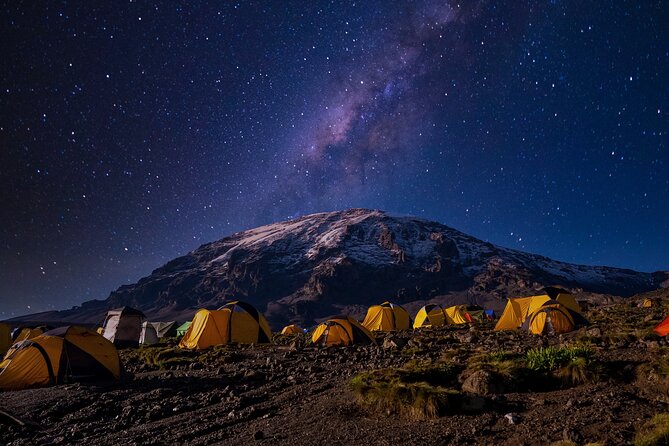
Summit day begins between midnight and 2 a.m. This is the most difficult part of the climb, both mentally and physically. You leave Kibo Huts in the dark and climb between the Rebmann and Ratzel glaciers, trying to conserve warmth and focus.
The route uses switchbacks in a northwesterly direction and rises through heavy scree toward Stella Point on the crater rim. The loose surface can make progress feel slow. You will want sturdy personal gear, a reliable headlamp, warm clothing, and trekking poles if you use them. Personal equipment is not included in the $2,200 price, so this is an area where preparation affects your comfort.
Stella Point brings one of the great rewards of the climb: sunrise from the crater rim. Faster hikers may see sunrise from the summit, while others pause at Stella Point before making the final push. From there, the remaining ascent to Uhuru Peak takes about one hour according to the itinerary.
Reaching Uhuru Peak, the highest point on Kilimanjaro, is the emotional center of the trip. The route description ends partway through the summit detail, so you should ask for the exact summit-day schedule and expected time at the peak. Do not underestimate the return. After reaching the top, you still need to descend, and fatigue can affect balance and judgment.
The total listed time for day five is about seven hours, though the summit schedule involves an early start and a demanding ascent. Confirm how the operator counts the hiking hours, since the full summit day can feel longer than a standard camp-to-camp walk.
Day 6: Marangu descent and the return to Moshi
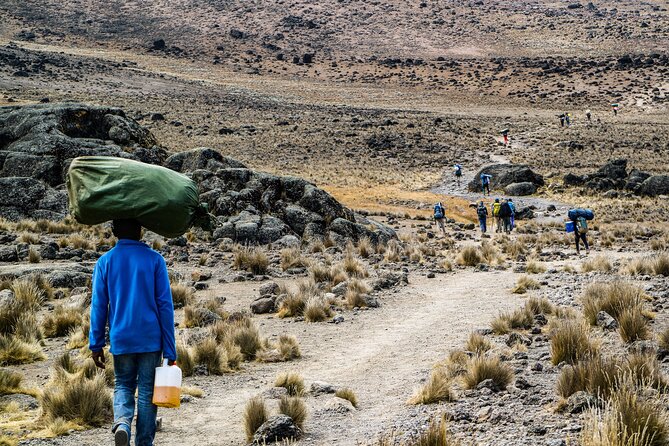
After breakfast, you take part in a ceremony of appreciation and team bonding before saying goodbye to the mountain crew. The descent continues through the Marangu Route, with lunch at Mandara Huts. You also leave your guides, cooks, and porters there, making this the right moment to give tips to the climbing team.
Tipping is not included. Carry enough local currency or confirm the preferred payment method before you leave Moshi. The final tip is an important part of recognizing the crew’s work, especially on a climb that includes food, camp support, route assistance, and summit guidance.
You continue to the Marangu Park Gate, where you receive your summit certificates. The change in altitude brings warmer weather, but the trail can be wet, muddy, and steep. Gaiters and trekking poles are specifically recommended for this section, and I would take that advice seriously.
A vehicle meets you at the gate and drives you back to your Moshi hotel or residence, a trip of about 45 minutes. Pickup and drop-off are included, which removes one small but welcome piece of post-climb planning.
What the $2,200 price covers
At $2,200 per person, this is not a budget walk, but it includes several large costs that you would otherwise need to arrange separately. The package covers mountain accommodation, all fees and taxes, pickup from and drop-off at your hotel or residence, five lunches, six dinners, and five breakfasts.
The meal count fits the six-day schedule, though it is worth asking how meals are handled on summit day and during the transfer to the trailhead. The supplied information confirms the meals are included, but does not describe menus, dietary options, tent arrangements, or sleeping equipment.
You still pay for:
- Tips for guides, cooks, and porters
- Air tickets and travel insurance
- Personal climbing and hiking gear
- Entry visa
The value is strongest if you want one operator to handle the main mountain arrangements. You are paying for permits, transport, camp accommodation, food, and a private trip rather than only a guide walking with you. The value is weaker if you already have local support or own none of the required cold-weather equipment, since personal gear can add a significant extra cost.
The Kentau Safaris approach
The strongest impression from the available feedback is organization. Kentau Safaris is praised for keeping clients updated at each stage, and owner Dominic is described as cooperative from early planning through the end of a five-day climb. That suggests a useful level of contact before departure, especially if this is your first high-altitude trek.
Safety and professionalism are also repeatedly emphasized. I would still ask direct questions before booking: who will be your lead guide, how does the team respond to altitude sickness, what equipment is supplied, and how many people will be in your private group? Good planning is valuable, but you should understand the safety process in clear terms.
The comments also describe the experience as tough, enjoyable, well organized, professional, and fun. Those qualities can coexist on Kilimanjaro. The climb will not be easy, but a calm crew and clear daily plan can make hard sections more manageable.
Who should choose this climb?
I would recommend this route if you want a quieter approach to Kilimanjaro, prefer a private departure, and have moderate physical fitness. It is also a good match if the northern side’s lower precipitation is useful for your travel dates or if you would rather avoid repeating the same trail on the way down.
You should be comfortable walking for roughly six to seven hours on most days and starting the summit attempt around midnight or later. You do not need extensive backpacking experience according to the tour description, but you do need to prepare properly for cold, steep, muddy, and high-altitude conditions.
I would hesitate if you want a relaxed holiday with plenty of sleep. The six-day schedule has a relatively short acclimatization window, and day five is a serious test. You should also think carefully about the added cost of gear, insurance, visa, flights, and tips.
Booking confirmation is provided at the time of purchase. The experience is near public transportation, though hotel pickup is offered from Moshi. Free cancellation is available if you cancel at least 24 hours before the local start time. Changes or cancellations inside that window are not accepted and are not refunded.
Should you book the Rongai Route?
Book this trip if you want a private, well-organized Kilimanjaro attempt with a less-used northern approach, included mountain logistics, and a descent through Marangu. The combination of changing scenery, Kenya views, eastern ice fields, Stella Point sunrise, and Uhuru Peak gives the six days a clear sense of progression.
Before paying, confirm the guide names, group size, equipment list, meal arrangements, and altitude-safety procedures. If you have the fitness for long walking days and accept the limited rest before the summit, the $2,200 package offers solid practical value. If you prefer a gentler ascent, ask about adding an acclimatization day rather than assuming the six-day plan will feel easy.
FAQ
Where does the Kilimanjaro climb start?
The climb starts in Moshi, Tanzania, with pickup offered from your hotel or residence. The listed start time is 7 a.m.
How long is the Rongai Route experience?
The experience lasts approximately six days. Hiking days are listed at about six to seven hours, with the summit attempt beginning between midnight and 2 a.m.
Is this a private tour?
Yes. Only your group participates in the activity.
What meals are included?
The package includes five lunches, six dinners, and five breakfasts.
Is accommodation included during the climb?
Yes. Accommodation during the hike is included in the price.
What is not included in the tour price?
Tips for the climbing team, air tickets, travel insurance, personal gear, and the entry visa are not included.
What happens after reaching the summit?
You descend through the Marangu Route, stop at Mandara Huts for lunch, continue to the Marangu Park Gate, receive summit certificates, and then return by vehicle to your Moshi hotel or residence.
More 6-Day Experiences in Moshi
- 6 Days 5 Night Safari
★ 5.0 · 57 reviews - The Best of Machame Route in 6 Days: Your World’s Summit Guide
★ 5.0 · 44 reviews - 6 Days Machame Route Kilimanjaro Climbing
★ 5.0 · 42 reviews - 6 Days Private Mount Climbing in Kilimanjaro Machame Route
★ 5.0 · 38 reviews
Just added around Moshi
- Mt Kilimanjaro 6 days Marangu route hike★ 5.0 · 3 reviews
- Private Cycle to Kilimanjaro Bike Park Safari★ 5.0 · 6 reviews
- Wildlife Extravaganza: Manyara, Tarangire & Ngorongoro in 3 Days★ 5.0 · 3 reviews
- 3 Days Private E-Bike Tour in West Kilimanjaro★ 5.0 · 3 reviews
- West Kilimanjaro cycling Adventures★ 4.5 · 8 reviews
- machame route★ 5.0 · 16 reviews
- Kilimanjaro Climb & Safari – Lemosho Route – 13 Day★ 5.0 · 10 reviews
- Kilimanjaro Climbing Umbwe Route★ 5.0 · 3 reviews
Kilimanjaro Climbs, compared.



8-Day Small-group Lemosho Kilimanjaro Summit Trekking
Read our review →



7-Day Machame Kilimanjaro Summit Tour from Arusha
Read our review →
Browse the lists this tour appears in