
Reviewed · KILIMANJARO CLIMBS
6 Days Kilimanjaro climbing | Hiking Tour via the Rongai Route
Mount Kilimanjaro’s Rongai Route gives you a quieter way up Africa’s highest mountain, with a gradual approach through forest, heather, alpine desert, and the high volcanic slopes beneath Kibo. The route finishes with a summit push to Uhuru Peak, then descends by the Marangu side.
I like the extra acclimatization time built into the six-day plan, especially the stay at Mawenzi Tarn. I also like the practical camp routine: hot drinks, washing water, cooked meals, and porters who prepare the tents before you arrive. The main concern is the cost you still need to add for park fees, hotels, flights, and crew tips.
Key points to know before you book
- Rongai is the quieter northern approach: You begin near Marangu, then transfer to the Rongai trailhead at about 1,950 meters.
- Mawenzi Tarn is the scenic highlight: Camp sits below the jagged Mawenzi peak beside a small lake.
- The summit day is very long: Expect about 14 hours, starting around 11:00 or 11:30 p.m.
- Meals and camp support are included: The package lists six lunches, five breakfasts, and six dinners, along with porter and cook support.
- The tour is private: Only your group participates, although solo hikers may be paired with another solo participant by the company.
- The advertised price is not the final trip cost: At $930 per person, you must still budget for park fees, tipping, flights, and accommodation before and after the climb.
Why the Rongai Route is worth considering
The Rongai Route approaches Kilimanjaro from the northern side, close to the Tanzanian-Kenyan border. Your trip begins at the Marangu Park Gate, but you do not hike from there. A vehicle takes you for roughly three hours to the Rongai trail, where the walking begins at around 1,950 meters.
That transfer is a useful detail to understand. This is not a simple walk from the meeting point to the mountain path. You need to be ready for an early start from Moshi, transport, registration, and a trailhead farther into the mountain area.
The route is appealing because it changes character each day. You begin among cypress plantations and mountain forest, then move into heather and moorland, alpine desert, and finally the cold, rocky upper slopes. You may spot large monkeys in the forest, but the real reward is the steady change in vegetation as you gain height.
I like the way this route gives you a sense of Kilimanjaro as a living mountain rather than a single long climb. The forest feels separate from the high camps, and Mawenzi provides a dramatic landmark long before summit night.
More Kilimanjaro Climbs in Kilimanjaro
- Kilimanjaro climb by Lemosho Route (7-day)
★ 5.0 · 651 reviews - Kilimanjaro climb, Machame Route (7-day)
★ 5.0 · 262 reviews - Kilimanjaro Climbing Lemosho Route 8 Days.
★ 5.0 · 186 reviews
Day 1: Forest walking to Cave Camp at 2,600 meters
The first walking day starts after the drive to the Rongai trail. A packed lunch may be available for the transfer toward the Nelemoru area, depending on conditions. From the trailhead, you walk through plantations and mountain forest for about five hours.
This is a sensible opening stage. The path gains height without forcing you into a huge first-day effort. It gives you time to settle into the pace, learn how your pack feels, and see how the guide manages breaks.
The first camp is Cave Camp 1 at about 2,600 meters. By the time you arrive, the porters and cook should already be ahead of you. The tent is set up, and the camp routine includes hot water for washing, a hot drink, and often popcorn or a similar snack.
That small comfort matters. At altitude, a warm drink and clean clothes can do more for your mood than a grand speech about reaching the summit. You will also want to organize your sleeping bag, spare layers, headlamp, and water before darkness and cold make the job harder.
The first night is still a mountain camp, not a hotel. The supplied details promise washing water and food, but they do not specify private facilities or luxury camping. Pack with the expectation of basic conditions.
Day 2: From the heather zone to Kikelelwa Cave
Day two covers about seven hours. You leave Cave Camp 1 after a light breakfast and enter moor-style terrain covered with heather. The route climbs to Cave Camp 2 at around 3,450 meters, where lunch is served.
After resting, you continue to Kikelelwa Cave, also described as the third cave campsite, at about 3,600 meters. The six-day schedule is useful here because it spreads the climb instead of rushing you toward the upper mountain in fewer stages.
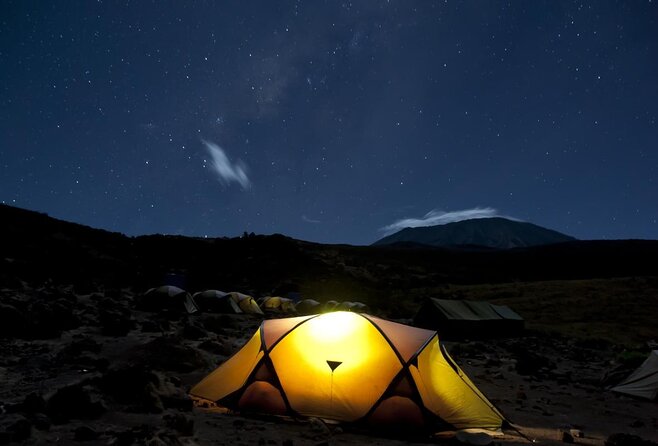
Kikelelwa sits in a valley with small caves below the saddle. The setting is more exposed than the forest, and the cold becomes a bigger part of the trip. The camp team provides a tent, hot water for washing, tea or coffee, snacks, and dinner.
The supplied plan warns that this can be a very cold night. Take that seriously. The information does not list a gear package, sleeping bag, or rental equipment, so confirm what you must bring or hire before arrival. Warm layers, dry socks, gloves, and a way to protect your water from freezing are practical concerns for any high camp, but you should check the operator’s exact packing advice.
This is also the point where the climb begins to feel less like a long hike and more like a high-altitude expedition. Walk slowly. Drink regularly. Tell your guide about headaches, nausea, unusual tiredness, or poor sleep rather than trying to hide symptoms.
Day 3: Mawenzi Tarn and the best camp setting
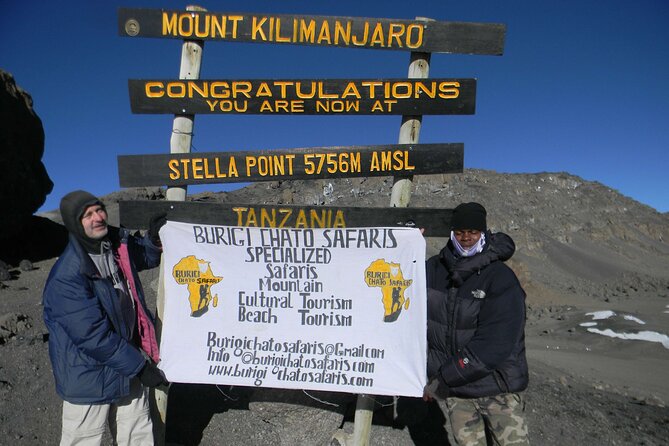
Day three is shorter, at about four hours, but it takes you to 4,330 meters. From Kikelelwa, the trail begins with an easier incline before becoming steeper as you approach Mawenzi Tarn.
Mawenzi Tarn is the scenic centerpiece of this route. The camp sits in a hollow beneath Mawenzi’s sharp volcanic summit, close to a small lake. From nearby ridges and towers, you can look toward Kibo, the main summit cone, and watch the light change across the mountain.
The schedule leaves several hours for lunch, rest, and short walks around camp. That pause is not wasted time. It helps your body adjust and gives you a chance to enjoy one of the most unusual places on the route without immediately having to pack up and move on.
I would treat this as a day for restraint. The plan allows exploration, but you do not need to climb every nearby ridge. At 4,330 meters, the smart choice is a short outing followed by food, fluids, and sleep.
The camp also gives you one of the clearest visual reminders of Kilimanjaro’s volcanic form. Mawenzi is rugged and broken, while Kibo appears broader and more distant. The two peaks frame the route toward the saddle and the summit days ahead.
More Kilimanjaro Climbs in Moshi:
- Kilimanjaro climb, Lemosho Route (8-day)
★ 5.0 · 148 reviews - Kilimanjaro climb, Lemosho Route (6-day)
★ 5.0 · 129 reviews - Kilimanjaro climb, Marangu route (6-day)
★ 5.0 · 72 reviews - Private Kilimanjaro Hike 7 Day Lemosho Route
★ 5.0 · 60 reviews
Day 4: Across the saddle to Kibo Hut
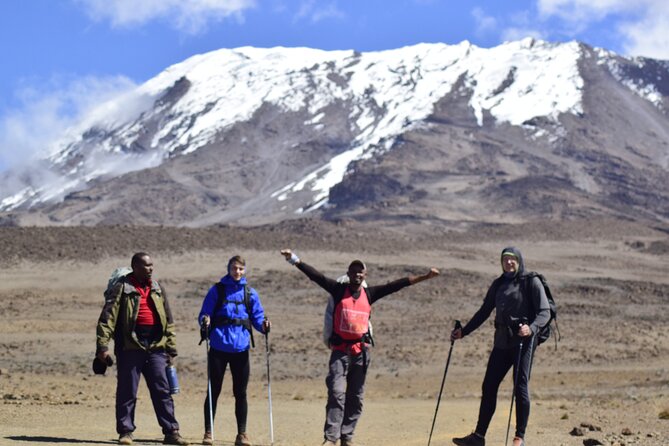
After breakfast, you climb a small ridge and follow a gentler trail along the northern part of the saddle between Mawenzi and Kibo. The vegetation is now alpine desert, with little grass and occasional everlasting flowers.
This part of the route can feel stark and wide open. In clear weather, the views are impressive, but conditions can change quickly on a mountain. The Rongai path eventually joins the Marangu Route, so the final approach to Kibo Hut is shared with hikers coming from the other side.
The day takes about five hours and ends at Kibo Hut, listed at roughly 4,700 meters. The climb becomes steeper near the hut. You arrive around lunchtime, then have time to wash, eat, and rest before the summit attempt.
The timing is important. You do not simply reach Kibo Hut and continue to the top. The plan depends on using the afternoon to recover and prepare for a wake-up call around 11:00 or 11:30 p.m.
Use those hours carefully. Eat the supplied meal, arrange your summit clothing, refill your water, and set out the items you will need in the dark. Since the summit night is the hardest part of the trip, small preparation jobs can prevent a great deal of fumbling later.
Day 5: The 14-hour push to Uhuru Peak
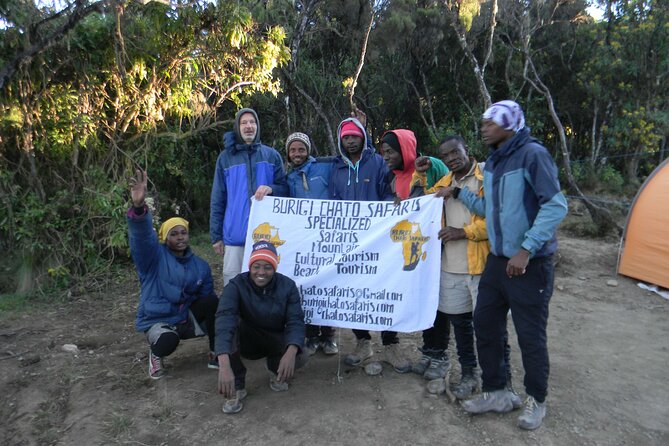
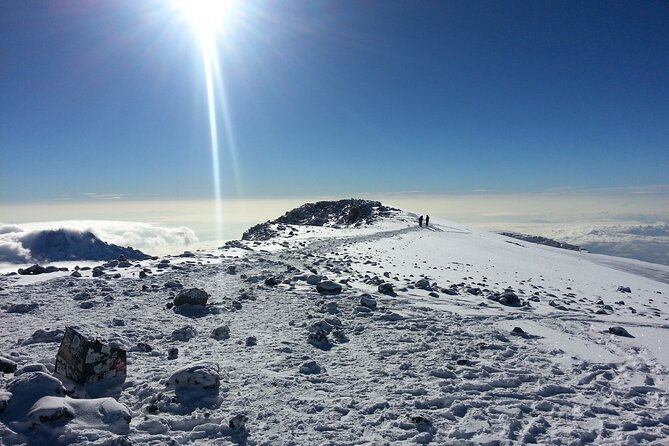
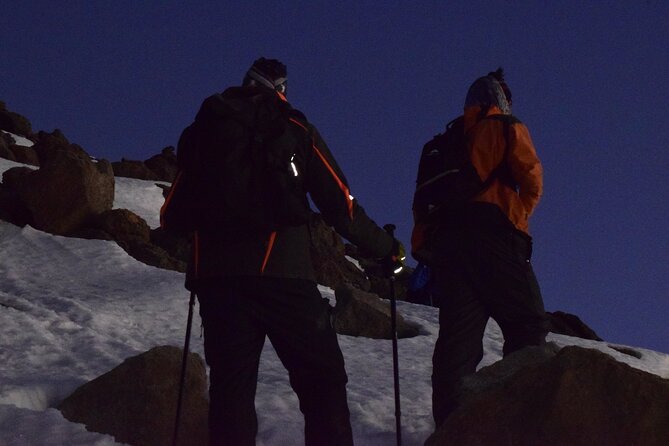
Summit day is the physical test. You leave around 11:00 or 11:30 p.m., climbing in darkness toward Gillman’s Point. From Gillman’s Point, the itinerary gives about 1.5 hours to reach the higher part of the crater rim, passing Stella Point at approximately 5,752 meters.
The precise timing and route descriptions should be confirmed with the operator, since the supplied schedule presents Gillman’s Point and Stella Point in a slightly confusing order. The practical message is clear: you will climb to the crater rim, then continue across often snow-covered ground toward Uhuru Peak.
The final section can be extremely hard. Progress is slow, the air is thin, and the cold is strongest before sunrise. This is where a good guide matters most. The company’s own information says the guide will judge your ability and work toward your summit goal, and the supplied feedback repeatedly praises the guides, cook, and porters.
Do not judge the climb by speed. On summit night, a controlled pace is more useful than trying to keep up with someone stronger. The guide should help you find a rhythm and decide when a pause is needed.
At Uhuru Peak, you will likely have only a few minutes for photographs. That is sensible at this altitude. Take the picture, enjoy the moment, and begin the descent before the cold and fatigue become worse.
You then return to Kibo Hut for lunch. From Kibo, the route continues for about three hours to Horombo Hut at approximately 3,720 meters. This makes the day about 14 hours in total, so you should expect exhaustion even if the summit attempt goes well.
The descent to Horombo is not a minor add-on. It is part of the same demanding day. Save some food and water for it, and keep your warmer layers available until you are safely lower.
Day 6: Down through Mandara Hut to Marangu Gate
The final morning begins with breakfast at Horombo Hut. You descend through Mandara Hut at about 2,700 meters and continue to Marangu Gate at roughly 1,980 meters.
The supplied itinerary says this takes you down after a break for lunch, though the listed duration of six minutes is clearly not a realistic hiking time. Treat the final day as a substantial descent rather than a quick transfer. Your knees and feet may be more tired than expected after summit day.
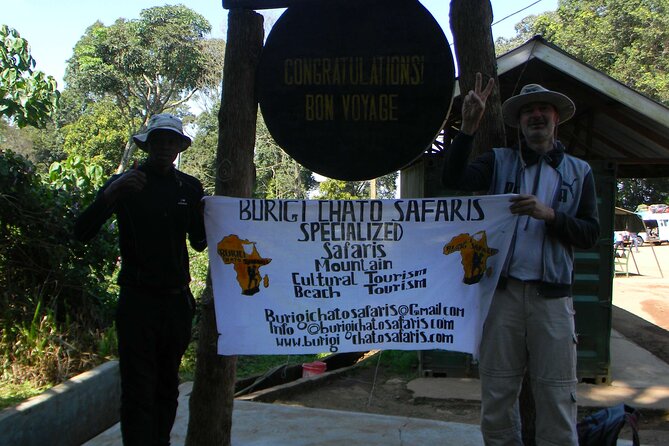
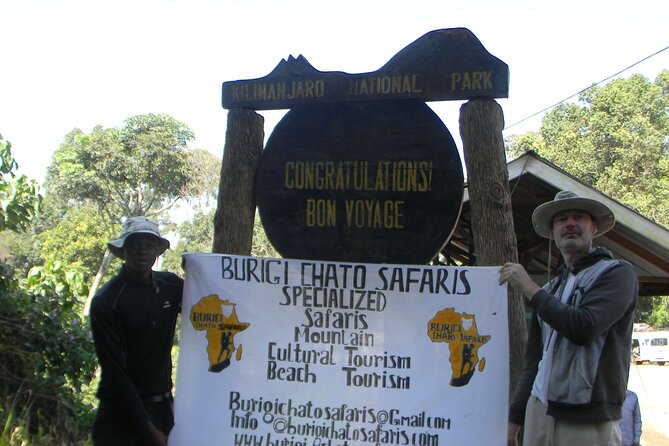
At the gate, you sign the register and receive a certificate. The green certificate is for Gillman’s Point, while the gold certificate is for Uhuru Peak. Celebrations, singing, dancing, and farewells with the crew may happen at Horombo or at the gate.
A driver then returns you to your Moshi hotel. Hotel accommodation itself is not included, so you need to arrange that separately or ask the company to book it for you.
Food, porters, and camp routine
The package includes airport pickup and drop-off, gate transfers, crew wages, six lunches, five breakfasts, and six dinners. The meal count is useful, but you should confirm exactly how food is handled on the transfer day and summit day, especially the food available before the midnight start.
The camp routine sounds practical rather than elaborate. Porters move ahead, pitch the tent, and prepare hot water, drinks, snacks, and meals. That support lets you focus on walking, eating, resting, and staying warm.
The cook is an important part of the climb. The supplied feedback gives particular praise to the cook as well as the guides and porters. Still, do not assume every dietary need is covered unless you state it when booking.
Crew wages are listed as included, but tipping is not. Tipping is a normal additional cost on guided mountain climbs, and you should ask the company for its current guidance. The exact amount is not provided here, so do not rely on the $930 price as your complete budget.
What the $930 price really covers
At $930 per person, this trip can be good value for a six-day guided climb, but the headline price needs careful reading. The package covers meals, transfers, airport pickup and drop-off, and crew wages.
You must still pay for:
- Kilimanjaro park fees
- Flights
- Visas
- Tips for the crew
- Hotel accommodation before and after the climb
Park fees are especially important. They may be paid directly to the park or through the tour operator, so ask for a full cost breakdown before you commit. Group discounts are offered, and the activity is private, so larger groups may be able to reduce the per-person price.
The price is best judged against what you receive in logistical support. A six-day schedule, porters, a cook, meals, transfers, and summit guidance are meaningful inclusions. The final figure may be much higher once required fees and personal costs are added.
Who should choose this six-day climb
This trip suits you if you want a private Kilimanjaro climb with a slower schedule than a rushed ascent. The plan gives you a full day around Mawenzi Tarn and a gradual move from 1,950 meters to the high camps.
It may also suit a solo participant. The company says solo hikers can be paired with another solo person, so ask how that arrangement works if you do not have your own group.
You should be ready for cold nights, basic camps, steep ground, and a 14-hour summit day. The information says most people can participate, but that does not mean the climb is easy. A medical check and honest discussion about your fitness and altitude experience are sensible before booking.
The route can also work well after a Mount Meru hike. One supplied account describes Meru as preparation for Kilimanjaro and says the combination was tough but worthwhile. That is not a requirement stated by the operator, but it is a useful option if you want an earlier test of mountain walking.
Booking confirmation is provided at the time of purchase. The meeting point is Burigi Chato Safaris on Mkwawa Street in Shanty Town, Moshi, with an 8:30 a.m. start. The activity returns to that meeting point area, followed by the hotel transfer.
Free cancellation is available up to 24 hours before the local start time. Inside 24 hours, the payment is not refunded, and changes are not accepted. Since the climb depends on good weather, a cancellation for poor conditions brings either another date or a full refund.
Should you book the Rongai Route?
Book this climb if you value a private group, strong camp support, changing scenery, and extra time for acclimatization. The Mawenzi Tarn overnight and the northern approach give the route a character different from a direct, hurried ascent.
Before paying, request the exact park fee, hotel, equipment, tipping, and airport transfer details. Also ask the company to clarify the summit route wording and the unrealistic six-minute final-day duration.
If you want a gentle holiday, this is not it. If you want a serious mountain challenge with a clear six-day structure, experienced crew support, and a real chance to reach Uhuru Peak, this $930 starting price deserves a close look.
FAQ
Where does the Kilimanjaro climb begin?
The meeting point is Burigi Chato Safaris on Mkwawa Street in Shanty Town, Moshi. The listed start time is 8:30 a.m., followed by transport toward the Rongai trail.
How long is the tour?
The activity lasts approximately six days.
Is this a private tour?
Yes. Only your group participates in the activity. Solo hikers may be paired with another solo participant by the company.
What route does the climb use?
The ascent uses the Rongai Route, beginning near the northern side of Kilimanjaro. The route later joins the Marangu Route between Mawenzi and Kibo, and the descent ends at Marangu Gate.
Is food included?
Yes. The package lists six lunches, five breakfasts, and six dinners.
Are airport transfers included?
Airport pickup and drop-off are listed as included, along with gate transfers.
Are park fees included in the $930 price?
No. Mount Kilimanjaro park fees are not included. They may be paid directly to the park or through the tour operator.
What happens if bad weather cancels the climb?
If poor weather causes cancellation, you will be offered another date or a full refund. For a standard cancellation, you must cancel at least 24 hours before the local start time for a full refund.
More 6-Day Experiences in Moshi
- 6 Days 5 Night Safari
★ 5.0 · 57 reviews - The Best of Machame Route in 6 Days: Your World’s Summit Guide
★ 5.0 · 44 reviews - 6 Days Machame Route Kilimanjaro Climbing
★ 5.0 · 42 reviews - 6 Days Private Mount Climbing in Kilimanjaro Machame Route
★ 5.0 · 38 reviews
More Hiking & Trekking in Moshi
- Best Kilimanjaro hiking day trip tour with Kilinge Adventures
★ 4.5 · 54 reviews - #1. Best Kilimanjaro Day hike Tour-Machame Route-ISMANI
★ 4.2 · 47 reviews - Best Kilimanjaro Adventure 7 days Machame route Trekking
★ 5.0 · 42 reviews - Kilimanjaro 7 Day Private Trekking Experience
★ 5.0 · 40 reviews
Just added around Moshi
- Mt Kilimanjaro 6 days Marangu route hike★ 5.0 · 3 reviews
- Wildlife Extravaganza: Manyara, Tarangire & Ngorongoro in 3 Days★ 5.0 · 3 reviews
- Private Cycle to Kilimanjaro Bike Park Safari★ 5.0 · 6 reviews
- 3 Days Private E-Bike Tour in West Kilimanjaro★ 5.0 · 3 reviews
- West Kilimanjaro cycling Adventures★ 4.5 · 8 reviews
- machame route★ 5.0 · 16 reviews
- Kilimanjaro Climb & Safari – Lemosho Route – 13 Day★ 5.0 · 10 reviews
- Kilimanjaro Climbing Umbwe Route★ 5.0 · 3 reviews
Kilimanjaro Climbs, compared.



8-Day Small-group Lemosho Kilimanjaro Summit Trekking
Read our review →



7-Day Machame Kilimanjaro Summit Tour from Arusha
Read our review →
Browse the lists this tour appears in