
Reviewed · 7-DAY EXPERIENCES
Rongai Route 7 Days
Kilimanjaro’s Rongai Route gives you a quieter way up Africa’s highest mountain. You approach from the Kenyan border, walk through pine forest and open moorland, camp below Mawenzi’s jagged peaks, and reach Uhuru Peak after a long midnight push. The descent uses the Marangu Route, so the scenery changes nicely on the way down.
I like the low crowd levels and the route’s gradual early ascent. I also like its practical edge: the northern side receives less rain, and the private format means your group is not mixed with strangers. Wild Root’s team has handled groups from Singapore and a 12-person family safari party, with strong praise for organization, food, and safety.
The catch is the summit day. You cover about 22 kilometers in 12 to 15 hours, then descend to Horombo Hut. The price of $2,923.08 per person is substantial, and you still need to arrange a sleeping bag, walking poles, visa, drinks, personal costs, and gratuity.
Key points to know before booking
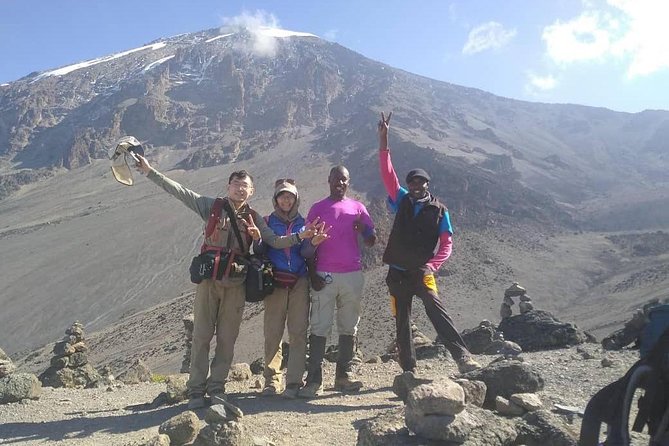
- The only northern approach: Rongai begins near Nale Moru, close to Kenya, and offers a remote feel for most of the climb.
- Seven days with a serious summit day: The route builds altitude steadily, but the Kibo Hut to Uhuru Peak and Horombo Hut stage is long and tiring.
- Private group format: Only your party takes part, with a professional guide team, chef, and porters.
- Camping with proper support: Four-season private sleeping tents, mess tents, tables, chairs, and included meals make high-altitude camping easier.
- Different route up and down: You ascend Rongai and descend through Marangu, giving you more visual variety.
- Strong organization is a major selling point: Feedback highlights good food, helpful staff, safety checks, and smooth logistics.
Why the Rongai Route feels different
Rongai is Kilimanjaro’s northern route, and that location shapes the whole experience. You do not begin among the busy southern trailheads. Instead, the route starts at Nale Moru Gate, where farmland and pine forest lead into a quieter mountain setting.
The first days rise gradually. That matters if you have limited backpacking experience or prefer a steady rhythm instead of a sharp early climb. Rongai is still a moderately difficult trek, and altitude remains the main challenge, but the gentler slope gives your body more time to adjust.
The route also has a useful weather advantage. The northern side receives less precipitation than many western approaches, making Rongai a sensible choice during the rainy season. That is not a promise of dry weather. Mountain conditions can change quickly, and the operator notes that poor weather may require a new date or a refund.
The tradeoff is scenery. Rongai passes through real wilderness for much of the route, but it is not as varied as the western trails. You gain quiet and open space, while giving up some of the dramatic forest and changing views found elsewhere.
A few more Moshi trips to weigh up
- Kilimanjaro climb by Lemosho Route (7-day)
★ 5.0 · 651 reviews - Kilimanjaro climb, Machame Route (7-day)
★ 5.0 · 262 reviews - Climbing Kilimanjaro through 7 days Machame Route
★ 5.0 · 151 reviews
Day 1: Nale Moru Gate to Simba Camp
The morning begins with a drive to the village of Nale Moru. The start point sits at about 1,990 meters, and the first walk covers 8 kilometers to Simba Camp at 2,625 meters.
You spend much of this stage in farmland and pine forest. The schedule allows four to five hours, leaving time to settle into the walking pace and get used to the routine of carrying your day pack. Colobus monkeys may appear, and elephants or buffalo are possible if you are lucky, although wildlife sightings are never guaranteed.
Simba Camp sits at the edge of the moorland zone. This is an important transition point: the trees begin to thin, the air feels cooler, and the mountain starts to look less like a forest walk and more like a high-altitude climb.
Meals are included, as they are throughout the trek. The setup includes a chef and a mess tent with a table and chairs. That sounds basic, and it is, but having a sheltered place to eat and organize your gear can make a real difference after a wet or tiring day.
Day 2: A steady climb to Second Cave Camp
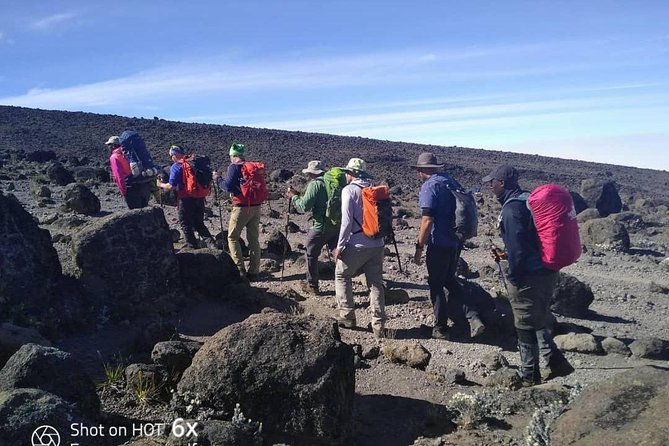
The second day is short by mountain standards. You walk about 5 kilometers from Simba Camp to Second Cave Camp, gaining almost 900 meters to reach 3,480 meters. The expected walking time is three to four hours.
This is a steady ascent through moorland. The route offers views toward Kibo, the main volcanic cone, and its eastern ice fields. These views help you understand the mountain’s shape: Kibo is the summit cone, Mawenzi is the sharp second peak, and Shira is the third volcanic area.
The short distance does not mean an effortless day. Altitude can affect you even when the trail is not steep. Walk slowly, drink as directed by your guide, and treat the afternoon as recovery time rather than a chance to burn extra energy.
Second Cave Camp marks one of the route’s advantages. You are already above the busy lower forest, with open ground and broad views, but you have not yet reached the stark upper zones. It is a good point to check how your body is responding before the route climbs higher.
Day 3: Leaving the main trail for Kikelewa Camp
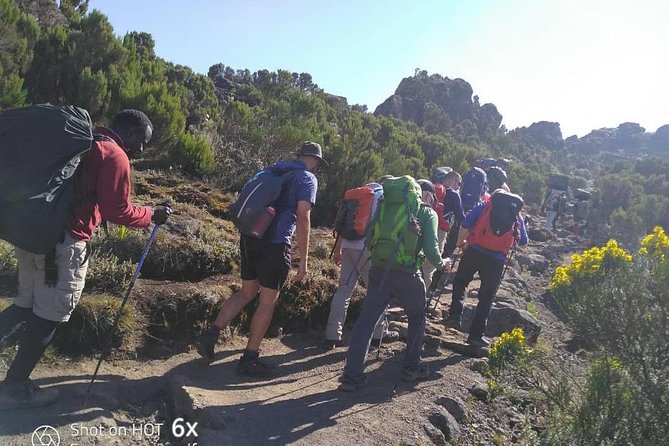
From Second Cave Camp, you continue to Kikelewa Camp at 3,630 meters. The supplied schedule gives roughly three hours for this stage, though the distance is not clearly stated.
The trail leaves the pine forest behind and continues through moorland. Kibo’s eastern ice fields remain in view, while the route turns toward Mawenzi, whose jagged peaks give this section a more rugged character.
A smaller path leads away from the main trail toward Kikelewa. That change is part of the charm. You are not simply following a broad, heavily used track from one camp to the next. Rongai spends much of its length in remote country, and this side path helps preserve that feeling.
The day is also useful for acclimatization. You gain only a modest amount of height from Second Cave, then sleep at 3,630 meters. The aim is not speed. It is to keep moving upward while giving your body time to adjust.
Same country, a completely different kind of safari:
- Safari Serengeti And Ngorongoro
★ 5.0 · 288 reviews - Kilimanjaro Climbing Lemosho Route 8 Days.
★ 5.0 · 186 reviews - Climbing Kilimanjaro – Machame Route
★ 5.0 · 170 reviews - Kilimanjaro climb, Lemosho Route (8-day)
★ 5.0 · 148 reviews
Day 4: Mawenzi Tarn and a valuable rest afternoon
Day four climbs from Kikelewa Camp to Mawenzi Tarn Hut at 4,310 meters. The distance is listed as 8 kilometers, with four to five hours of walking.
The ascent is short but steep across grassy slopes. In return, you get views toward the Kenyan plains to the north. Soon the vegetation fades, and Mawenzi’s cliffs rise around the camp. This is one of the more memorable settings on the route, especially for anyone who likes stark mountain scenery rather than busy trail corridors.
The afternoon is deliberately open. You can rest or explore near camp, with acclimatization as the main goal. Take that advice seriously. At over 4,000 meters, a slow afternoon can be more useful than an ambitious walk.
Mawenzi Tarn is also where the trek begins to feel physically demanding in a new way. The problem is not only the slope. Cold, thin air, reduced appetite, and poor sleep can all appear at this height. Your guide team should help monitor your condition, but you need to report symptoms clearly and promptly.
Day 5: Crossing the saddle to Kibo Hut
The fifth day crosses the lunar-looking saddle between Mawenzi and Kibo. You walk 8 kilometers from Mawenzi Tarn to Kibo Hut, gaining nearly 400 meters to reach 4,700 meters. The expected time is five to six hours.
There is little vegetation here. The broad, open saddle gives you a clear view of Kibo and the route toward the high camp. It is an impressive setting, but it can also feel exposed and monotonous. Bring patience. The point of this stage is to conserve strength for the summit, not to collect one last heroic walking story before dinner.
Once at Kibo Hut, the plan is simple: eat, rest, and sleep early. The summit attempt begins around midnight. A good afternoon nap may be more valuable than sightseeing around camp.
The included chef and mess tent are especially useful here. You will want a warm meal and a chance to organize layers, headwear, gloves, water, and snacks before bed. Sleeping bags are not included, so make sure that item is arranged before reaching the mountain.
Day 6: Uhuru Peak and the long return to Horombo
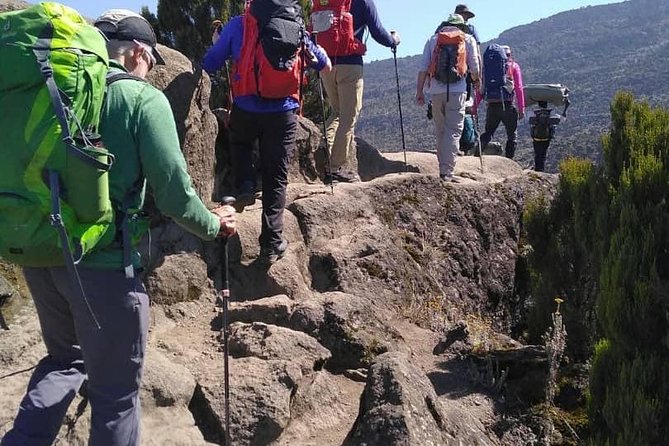
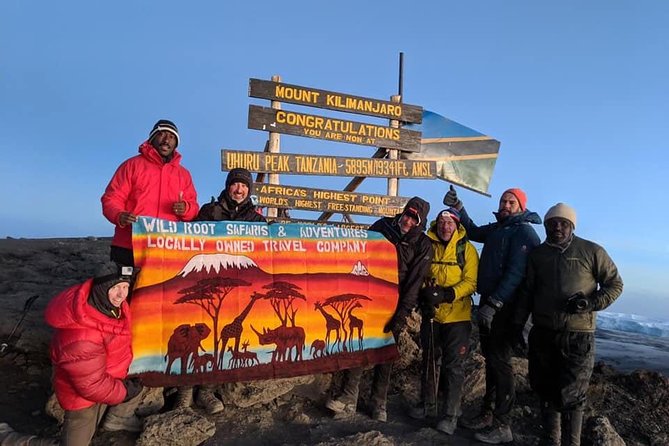
This is the day that decides the trek. You leave Kibo Hut around midnight and climb slowly toward the crater rim. The route passes Hans Meyer Cave at about 5,220 meters before continuing toward Gillman’s Point at 5,681 meters.
Sunrise near Gillman’s Point can be a powerful moment, but do not mistake it for the summit. You still have another one to two hours along the crater rim to Uhuru Peak, at 5,895 meters. At this height, every step can feel expensive.
The full stage covers about 22 kilometers and lasts 12 to 15 hours. After reaching Uhuru Peak, you return to Kibo Hut for a warm meal and a one to two-hour break. Then you continue down to Horombo Hut at 3,700 meters.
This schedule is the biggest physical drawback of the trip. You are not finished when you reach the summit. The descent to Kibo, the meal break, and the further walk to Horombo require stamina. Good fitness is essential, and the tour specifically asks participants to have a strong physical fitness level.
The support team matters greatly on this day. The company provides professional mountain guides, a chef, and porters, with guide, chef, and porter allowances included. Previous groups led by Wild Root’s team praised the staff for being helpful, cheerful, safety-minded, and well organized. One named group leader, Khoo Swee Chiow, led a Singaporean trekking group in 2018, while Matthew handled a 12-person family safari itinerary. Those details suggest experience with both private family planning and organized group climbs, though you should confirm your own guide names before departure.
Day 7: Descending through Marangu
The final stage leaves Horombo Hut and descends to Marangu Gate at 1,860 meters. The route covers about 20.8 kilometers and takes around eight hours.
You pass back through heath and moorland to Mandara Hut at 2,700 meters, where lunch is planned. From there, the trail enters tropical rainforest again. After several days above the trees, the return to thicker vegetation feels like a real change of world.
The descent is long, and downhill walking can punish knees and toes after the summit day. Use walking poles, which are not included, and keep your pace controlled. A short transfer takes you back to your hotel in Arusha according to the supplied plan, although the experience is based in Moshi. Ask the operator to confirm the exact final drop-off location if you are staying elsewhere.
A warm shower and a proper bed will feel well earned. Airport pickup and drop-off are included, along with first and last accommodation, but confirm the hotel details and number of nights before booking.
What the $2,923.08 price covers
At $2,923.08 per person, this is not a bargain trek. It is a full-service private climb, and much of the cost reflects the staff and equipment needed to move safely on Kilimanjaro.
The package includes:
- Professional mountain guides
- Chef and porters
- Guide, chef, and porter allowances
- Quality waterproof four-season private sleeping tents
- Mess tents with tables and chairs
- Meals during the climb
- First and last accommodation
- Airport pickup and drop-off
- Dinner listed for seven nights
The meal information deserves a quick check. Each itinerary day lists breakfast, lunch, and dinner, while the inclusions section specifically mentions seven dinners. Ask for a written confirmation of all meals and accommodation nights so there are no surprises.
You still pay for a sleeping bag, walking poles, Tanzania visa, gratuity, drinks, laundry, telephone use, and other personal expenses. Those extras can add up, especially gratuity and cold-weather equipment.
The price makes more sense if you value a private group, a dedicated support crew, camping equipment, food preparation, transfers, and a quieter route. If your main goal is simply reaching the summit at the lowest possible cost, compare other operators carefully. The cheapest option is not automatically the best choice on a high-altitude climb, but this package should explain its staff standards and safety practices clearly before you commit.
Who should choose this route
I would point this trek toward fit walkers who want a quieter approach and do not mind camping. It suits people with limited backpacking experience better than some steeper routes because the early ascent is gradual, but you still need to prepare for the summit day and the altitude.
Rongai is a good choice if:
- You prefer lower crowds and a more remote feel.
- You are climbing during a wetter season and want the drier northern side.
- You like the idea of ascending one route and descending another.
- You want a private trip rather than a mixed departure.
- You value included staff, meals, tents, and transport.
I would hesitate if you dislike long summit days, have no time for physical preparation, or expect hotel-style comfort. The tents and mess facilities are described as high quality, but this remains a mountain camp, not a lodge holiday.
The tour starts at 8:00 am. Confirmation is normally sent at booking, though bookings made within 12 hours of departure depend on availability. The activity is near public transportation, but the practical plan includes pickup, so confirm the meeting point and transfer details before setting out.
Should you book the Rongai Route?
Book it if you want a quieter, gradual route with a strong support structure and you accept the cost. The northern approach, Mawenzi Tarn, the broad saddle to Kibo, and the Marangu descent give the seven days a clear sense of progression.
I would choose this trip for a private group that values organization, good meals, and a dedicated mountain crew. The positive feedback focuses on exactly those points: excellent logistics, helpful staff, food, and attention to safety.
I would not book it without asking about guide qualifications, porter welfare, meal details, sleeping bag rental, accommodation, and the Arusha versus Moshi transfer plan. If the answers are clear and your fitness is ready for a 12 to 15-hour summit stage, this is a sensible and memorable way to attempt Kilimanjaro.
FAQ
How long is the Rongai Route experience?
The climb takes approximately seven days. The route begins at Nale Moru Gate and ends at Marangu Gate after the summit attempt.
Where does the Rongai Route begin?
It begins at Nale Moru Gate, near the Kenyan border on Kilimanjaro’s northern side. The first camp is Simba Camp at 2,625 meters.
Is the tour private?
Yes. Only your group participates in this private tour or activity.
Are meals included?
Breakfast, lunch, and dinner are listed for the trekking days. The package also includes dinner listed for seven nights. Confirm the full meal schedule with the operator before departure.
Are sleeping bags and walking poles provided?
No. Sleeping bags and walking poles are not included, so you need to bring or arrange them separately.
What happens if poor weather cancels the climb?
If poor weather causes cancellation, you will be offered a different date or a full refund. For other cancellations, you must cancel at least 24 hours before the start time to receive a full refund.
Just added around Moshi
- Mt Kilimanjaro 6 days Marangu route hike★ 5.0 · 3 reviews
- Private Cycle to Kilimanjaro Bike Park Safari★ 5.0 · 6 reviews
- Wildlife Extravaganza: Manyara, Tarangire & Ngorongoro in 3 Days★ 5.0 · 3 reviews
- 3 Days Private E-Bike Tour in West Kilimanjaro★ 5.0 · 3 reviews
- West Kilimanjaro cycling Adventures★ 4.5 · 8 reviews
- machame route★ 5.0 · 16 reviews
- Kilimanjaro Climb & Safari – Lemosho Route – 13 Day★ 5.0 · 10 reviews
- Kilimanjaro Climbing Umbwe Route★ 5.0 · 3 reviews
7-Day Experiences, compared.

7-Day Premium Luxury Tanzania Safari All-Inclusive
Read our review →
Group Safari 7 Days in Tanzania’s Main Parks
Read our review →

Climbing Kilimanjaro through 7 days Machame Route
Read our review →
7-Day Machame Kilimanjaro Summit Tour from Arusha
Read our review →Browse the lists this tour appears in