
Reviewed · MACHAME ROUTE CLIMBS
Mountain Kilimanjaro Climbing 7 Days Machame Route
Reaching Uhuru Peak at 5,895 meters is the great prize here, but the route earns its Whiskey nickname honestly. You’ll climb steep trails, sleep in tents, cross muddy forest paths, and spend one long night working up scree toward the summit. I like the seven-day schedule because it gives your body more time to adjust than the shorter six-day version. I also like the changing scenery, from thick rainforest to bare volcanic slopes and ice near the top.
I especially like the walk high, sleep low plan on Day 3, and the wide views toward Mount Meru and Mawenzi Peak. The main drawback is the physical strain: the summit day lasts about 15 hours, and the route offers tent camping rather than huts. You need solid fitness, patience, and a willingness to be uncomfortable.
Key points at a glance
- Machame Gate begins the climb in thick rainforest, with wet, muddy sections and a steady uphill path.
- Seven days gives you six nights on the mountain, a better altitude schedule than the minimum six-day version.
- The Shira Plateau and southern circuit provide changing views, including Mount Meru, Lava Tower, glaciers, and Mawenzi Peak.
- Summit night starts around midnight, followed by a climb to Stella Point at 5,739 meters and Uhuru Peak at 5,895 meters.
- Camping and porter support are part of the route style, with no mountain huts like those on Marangu.
- The group limit is 15 people, and the listed price is $2,564.11 per person.
Why the Machame Route is worth the effort
Machame is Kilimanjaro’s classic scenic route, but it is not the soft option. The path rises more sharply than the Marangu route, and you sleep in tents instead of huts. That makes the trip feel more like a true mountain expedition, though it also demands more from your legs and your attitude.
I like the route because the mountain keeps changing character. You begin under tall trees, move through open high moorland, pass volcanic rock and glaciers, then finish in the rainforest again. The walk never feels like the same view repeated for a week.
The seven-day version is the sensible choice for most people. A six-day climb is possible, but the extra night gives you more time to adjust to thin air. No route can remove the risk of altitude sickness, but a slower schedule gives your body a better chance to respond.
The local operator is Exceed Expectations Tours & Safari, led by Oscar Swai. The company has handled both Kilimanjaro climbs and combined mountain and safari trips. The personal contact can matter when you are arranging a demanding trip, especially if you are also adding a Tanzania safari before or after the climb.
More Kilimanjaro Climbs in Kilimanjaro
- Kilimanjaro climb by Lemosho Route (7-day)
★ 5.0 · 651 reviews - Kilimanjaro climb, Machame Route (7-day)
★ 5.0 · 262 reviews - Kilimanjaro Climbing Lemosho Route 8 Days.
★ 5.0 · 186 reviews
Day 1: Machame Gate and the wet rainforest
The first morning begins with about an hour of driving from Moshi to Machame Gate. Park formalities take place here, and you meet the porter crew before setting out.
The first section climbs through dense rainforest for about six hours. This is a steady introduction rather than a gentle stroll. The trail can be overgrown in places, and wet, muddy ground is common. Good footwear and patience matter more here than speed.
The forest is one of the most appealing parts of the route. The air feels cooler and damper, and the vegetation gives you a strong sense that you are leaving ordinary roads behind. You will not yet see the stark summit world, but this green beginning provides a fine contrast for the days ahead.
The practical concern is that your feet may get wet early. Keep rain protection handy, not buried at the bottom of your bag. Since the route is less well-trodden in sections, your pace may feel uneven.
Day 2: Climbing toward the Shira Plateau
Day 2 continues upward through forest before reaching a steeper ascent onto the Shira Plateau. The walking time is about five hours, so this is shorter than the first day.
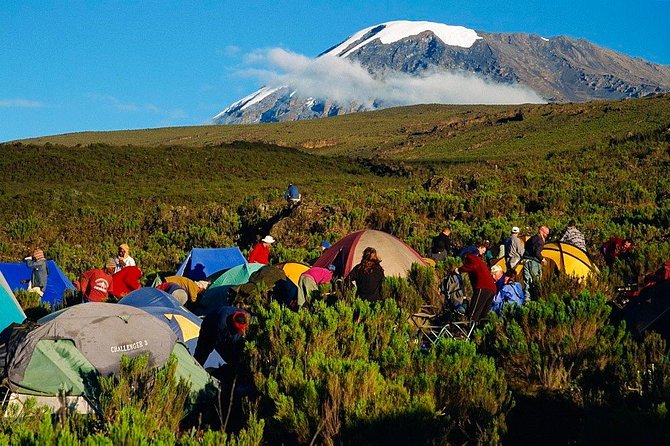
The reward is the first broad mountain view. Looking back, you can see Mount Meru rising above the Arusha area. That distant peak helps you understand the scale of northern Tanzania, while Kilimanjaro begins to feel less like a far-off goal and more like the world around you.
The Shira Plateau changes the mood of the climb. Trees thin out, the air feels more open, and the route takes on a high-altitude character. You are still early in the trip, but the mountain is already testing how well you manage a steady pace.
Do not treat the shorter day as a reason to hurry. A slow rhythm, regular drinking, and careful attention to how you feel are more useful than arriving at camp far ahead of schedule.
Day 3: Lava Tower and the value of sleeping lower
Day 3 is the longest walking day before the summit push, at about eight hours. You cross high moorland on the southwest side of Kilimanjaro, pass below Lava Tower, and continue toward camp.
The route reaches about 4,600 meters during the day. That is a serious altitude gain, but the plan follows the mountaineering rule of walking high and sleeping low. You spend time at a higher level, then rest at a lower camp to help your body adjust.
This day is important for more than scenery. It gives you a useful test of how you respond to altitude before the hardest sections arrive. Headache, poor sleep, unusual tiredness, and nausea should not be brushed aside. Tell your mountain crew if you feel unwell.
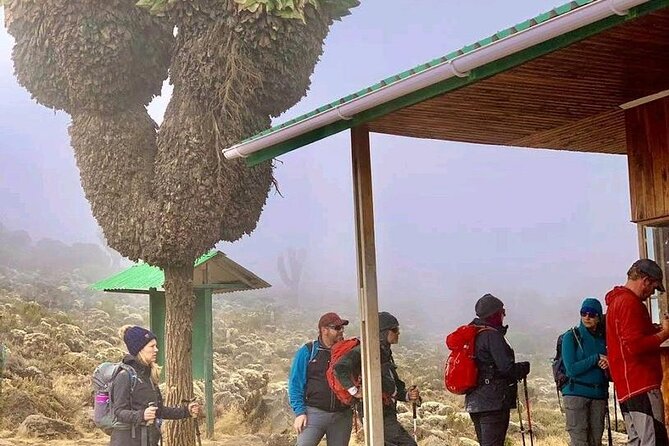
Lava Tower and the remnants of the Western Breach add drama to the day. The surroundings become more severe, with less vegetation and more exposed volcanic ground. You may find this one of the most memorable sections because it marks a clear break from the forest.
More Machame Route Climbs in Kilimanjaro
- Climbing Kilimanjaro – Machame Route
★ 5.0 · 170 reviews - Climbing Kilimanjaro through 7 days Machame Route
★ 5.0 · 151 reviews - #1. Best Kilimanjaro Day hike Tour-Machame Route-ISMANI
★ 4.2 · 47 reviews - 7 Days Machame route – Kilimanjaro
★ 5.0 · 45 reviews
Day 4: The Barranco Wall and Karanga Camp
Day 4 begins with a descent into the Great Barranco, followed by the climb up the Barranco Wall. The wall looks intimidating, but it is not a technical rock climb. It is a long, tiring scramble over rock, with steep sections that require care and a good rhythm.
This is one of the route’s signature moments. You climb with the southeastern slopes of Kibo nearby, then pass beneath the Heim and Kersten glaciers. The ice gives you a sharp reminder that this is a high mountain, not simply a long hiking trail.
After the wall, the path continues toward the Karanga Valley. A steep climb then leads to Karanga Camp at 3,963 meters. The scheduled walking time is about five hours, though the rocky terrain can make the day feel more demanding than the number suggests.
For people feeling strong, the plan includes a possible afternoon acclimatization walk to around 4,200 meters, followed by a return to camp. That extra climb is useful, but it should not become a contest. Rest is part of the itinerary, not wasted time.
Day 5: Barafu Camp and the wait for midnight
Day 5 is short on paper, about three hours, but it is steep and tiring. You cross bare scree slopes to Barafu Camp at 4,640 meters, with almost no vegetation around you.
Barafu means ice in Swahili, and the setting feels stark. This is the high camp, the launch point for the summit attempt. You eat, drink, stay warm, and rest during the afternoon before an early dinner and an attempt at sleep.
The schedule calls for waking between 11 p.m. and midnight. That unusual timing is one reason you should not spend the afternoon wandering around camp. Save your strength for the night ahead.
Barafu is also where the climb becomes mental. The summit is close on the map, but the altitude and steep scree make every step harder. Keep warm layers and water ready, since fumbling with bags in the dark is unpleasant when you are tired.
Day 6: Stella Point, Uhuru Peak, and a 15-hour test
Summit day begins around midnight. You climb steeply over scree for four to five hours toward the summit glaciers. The route gains a great deal of height in a short distance, so this is the toughest physical part of the trip.
The goal is Stella Point at 5,739 meters, reached around sunrise. The first light over the mountain can be spectacular, with ice cliffs inside the crater and views toward Mawenzi Peak. The final walk from Stella Point to Uhuru Peak takes about another hour.
At 5,895 meters, Uhuru Peak is the highest point in Africa. Reaching it is a major achievement, but do not let the summit photo persuade you to linger too long. At this height, conditions can change quickly, and the descent is still long.
You return to Stella Point and descend the scree to Barafu Camp for breakfast. Then you continue to Millennium Camp for a proper rest. The full day lasts about 15 hours, so the descent is not an afterthought. It is a major part of the day, and tired legs make careful foot placement essential.
The summit stories connected with this climb often focus on the exhaustion of leaving Barafu around 2 a.m. and the pride of reaching the top. That is a fair picture of the experience. The goal is thrilling, but the route asks you to work for every meter.
Day 7: Returning through the forest to Mweka Gate
The final day is a gentle six-hour trek down through rainforest to Mweka Gate. After the bare slopes above Barafu, the return to trees feels welcome.
At Mweka Gate, you complete park formalities and receive a certificate. Vehicles then take you back to your hotel in Moshi, where a hot shower becomes a very reasonable reward.
The descent can be harder on your knees than expected. Trekking poles may help, though the supplied details do not specify equipment. Plan to keep your pace controlled, even though the end is in sight.
Camping, porters, and group size
Machame uses tents rather than the huts found on Marangu. That is a key choice, not a minor detail. Tents provide a more basic mountain experience, and you should be comfortable with simple conditions for six nights.
You meet the porter crew at Machame Gate. Their support helps carry the equipment needed for a week on the mountain, but you still need to manage your personal essentials sensibly. Keep frequently used items accessible, especially rain gear, warm layers, water, and snacks.
The maximum group size is 15 people. That is large enough to provide a social feel, but small enough to avoid the scale of a mass outing. Your pace may still be shaped by the group and by altitude, so this is not a private, on-your-own schedule.
The listed start time is 12:00 a.m., but the itinerary makes clear that this refers to the summit day start rather than the drive from Moshi on Day 1. Confirm the exact pickup and first-day departure time when booking.
What $2,564.11 buys you in practical terms
At $2,564.11 per person, this is a major purchase. The value comes from the seven-day mountain schedule, national park access, the organized route, porter crew, tented camps, transport back to Moshi, and the planning needed for a summit attempt. The supplied details do not itemize every inclusion, so ask for a written list before paying.
The price may appeal if you want a structured climb rather than trying to arrange permits, camps, transport, and mountain staff yourself. It also becomes more useful if you plan to combine the climb with a safari, something the operator has arranged for past clients.
I would compare the price with other seven-day Machame trips, but I would not choose on cost alone. Ask how porter welfare is handled, what meals and gear support are included, how altitude problems are managed, and what happens if you cannot continue. Those points affect the real value far more than a small price difference.
The operator has been praised for quick replies, detailed quotes, reasonable pricing, and attentive care during difficult travel conditions. Oscar Swai is the named director, so you have a clear contact for questions before departure.
Who should book this climb
This route suits you if you want a demanding mountain trip with strong scenery and a real summit goal. You should have a moderate level of physical fitness and be ready for long days, cold conditions, steep ground, and a midnight start.
It is a good fit for someone who prefers gradual acclimatization over the shortest possible schedule. The seven-day version gives you a better rhythm than the six-day option, though it cannot guarantee success at altitude.
You may prefer Marangu if huts and a more gradual trail matter more to you than the tented experience and scenery of Machame. Machame is the better choice if you want the southern circuit, the Barranco Wall, Lava Tower, Shira Plateau, and different views around the mountain.
Small details that make the climb easier
Pack for several climates. The first day can be wet and muddy in the rainforest, while the upper camps are cold, exposed, and nearly free of vegetation. You need clothing that can handle both ends of that range.
Take the acclimatization plan seriously. The extra walk above Karanga Camp is useful only if you still have enough energy to rest afterward. On Day 3, the high point of about 4,600 meters is a warning that altitude is already part of the climb.
Keep your schedule clear after the summit. Day 6 can last 15 hours, and you may want nothing more ambitious than food, sleep, and a shower once you reach Moshi.
The cancellation terms allow a full refund if you cancel at least 24 hours before the local start time. Changes or cancellations inside that period are not accepted for a refund, so check your plans carefully.
Should you book the 7-day Machame Route?
I would recommend this climb to a fit, prepared person who wants Kilimanjaro’s scenic route and accepts the hard parts along with the summit photo. The seven-day timing is the strongest feature because it gives you more room to adjust than a six-day ascent.
Book it if you value a full mountain route, tent camping, porter support, and the chance to approach the summit from the south before descending through Mweka. Be cautious if you dislike long days, basic camps, steep rock, or uncertain sleep.
Before booking, ask Exceed Expectations Tours & Safari for the complete list of inclusions and the exact first-day pickup time. If the answers suit your needs, this is a demanding but well-shaped way to reach Africa’s highest summit.
FAQ
How long is the Machame Route climb?
The climb lasts approximately seven days, with six nights on the mountain. A shorter six-day version is possible, but this itinerary uses seven days for a better altitude schedule.
What time does the summit climb begin?
The summit attempt begins around midnight, after resting at Barafu Camp. The itinerary says climbers wake between 11 p.m. and midnight.
How high is Uhuru Peak?
Uhuru Peak is 5,895 meters above sea level. Stella Point, on the crater rim, is listed at 5,739 meters.
How difficult is the Machame Route?
You should have a moderate level of physical fitness. The route includes steep trails, muddy forest paths, rocky sections, high-altitude walking, tent camping, and a summit day lasting about 15 hours.
How many people can join the group?
The maximum group size is 15 people.
Can I cancel for a full refund?
Yes, if you cancel at least 24 hours before the experience start time. Cancellations or changes made less than 24 hours before the local start time are not accepted for a refund.
More Machame Route Climbs in Moshi
- The Best of Machame Route in 6 Days: Your World’s Summit Guide
★ 5.0 · 44 reviews - Best Kilimanjaro Adventure 7 days Machame route Trekking
★ 5.0 · 42 reviews - 6 Days Machame Route Kilimanjaro Climbing
★ 5.0 · 42 reviews - 6 Days Private Mount Climbing in Kilimanjaro Machame Route
★ 5.0 · 38 reviews
More Kilimanjaro Climbs in Moshi
- Kilimanjaro climb, Lemosho Route (8-day)
★ 5.0 · 148 reviews - Kilimanjaro climb, Lemosho Route (6-day)
★ 5.0 · 129 reviews - Kilimanjaro climb, Marangu route (6-day)
★ 5.0 · 72 reviews - Private Kilimanjaro Hike 7 Day Lemosho Route
★ 5.0 · 60 reviews
Just added around Moshi
- Mt Kilimanjaro 6 days Marangu route hike★ 5.0 · 3 reviews
- Wildlife Extravaganza: Manyara, Tarangire & Ngorongoro in 3 Days★ 5.0 · 3 reviews
- Private Cycle to Kilimanjaro Bike Park Safari★ 5.0 · 6 reviews
- 3 Days Private E-Bike Tour in West Kilimanjaro★ 5.0 · 3 reviews
- West Kilimanjaro cycling Adventures★ 4.5 · 8 reviews
- machame route★ 5.0 · 16 reviews
- Kilimanjaro Climb & Safari – Lemosho Route – 13 Day★ 5.0 · 10 reviews
- Kilimanjaro Climbing Umbwe Route★ 5.0 · 3 reviews
Machame Route Climbs, compared.



Climbing Kilimanjaro through 7 days Machame Route
Read our review →
7-Day Machame Kilimanjaro Summit Tour from Arusha
Read our review →
7 Days Kilimanjaro via Machame route affordable price
Read our review →
#1. Best Kilimanjaro Day hike Tour-Machame Route-ISMANI
Read our review →

The Best of Machame Route in 6 Days: Your World’s Summit Guide
Read our review →Browse the lists this tour appears in