
Reviewed · MACHAME ROUTE CLIMBS
Mount Kilimanjaro 7 Days – Machame Route
The Machame Route gives you Kilimanjaro in seven demanding days, moving from rainforest to rocky ridges, high desert, glacier views, and a pre-dawn push to Uhuru Peak. It is called the Whiskey route for good reason: this is the steeper, more adventurous alternative to the gentler Marangu path.
I like the route’s careful climb-high, sleep-lower rhythm on Day 3, and I like that the price includes the mountain crew, camping setup, meals, airport transfers, and hotel nights in Moshi. The main drawback is simple: the route is busy, and its long, steep days are not a good match for someone who has never done sustained hiking.
Key points to know before you book
- A seven-day schedule gives you better acclimatization than the six-day minimum on the Machame Route.
- Day 3 reaches Lava Tower at 4,650 meters, then drops to Barranco Camp to help your body adjust.
- The summit push begins around midnight to 2 a.m., with 5 kilometers up and 13 kilometers down on the same day.
- The Barranco Wall is a steep, hands-on section, though the route continues along a ridge rather than requiring technical climbing.
- Your $2,530 price includes a full mountain operation, from park fees and crew wages to tents, meals, transfers, and two hotel nights.
- The private format keeps the climb to your own group, supported by a guide team, porters, and a cook.
Why the Machame Route is a serious but rewarding choice
Kilimanjaro is not a technical mountain climb on this route, but it is still a major physical effort. You walk uphill for several days, sleep at altitude, and then face the hardest section when you are tired and cold. The 7-day version is the sensible choice because it gives you one extra day compared with the six-day minimum.
The Machame trail begins on the mountain’s southern side and works eastward beneath the southern ice fields. Its scenery changes often, which helps the long days feel varied. You start under tall rainforest, reach the open Shira Plateau, pass volcanic rock and high ridges, then approach the summit through a barren alpine zone.
The route’s popularity cuts both ways. You get a well-used trail and a familiar camping pattern, but you should not expect solitude. The scenery remains impressive, yet crowded camps can take away some of the wilderness feeling.
The tour is listed at $2,530 per person. That is a substantial price, but it covers much more than a guide and a park entry. It includes all fees and taxes, transfers from Kilimanjaro Airport to Moshi and back, dinner and breakfast at a hotel before and after the climb, six breakfasts, six dinners, seven lunches, tents, camp furniture, sleeping mattresses, drinking water, hot washing water, and the mountain crew.
That crew includes a qualified guide, assistant guides, porters, and a cook. Salaries are paid according to Kilimanjaro National Park guidelines, which matters on a climb where the porters carry much of the camp operation. You still need to budget for flights, visas, insurance, personal gear, snacks, medicine, and water-purifying tablets.
More Kilimanjaro Climbs in Kilimanjaro
- Kilimanjaro climb by Lemosho Route (7-day)
★ 5.0 · 651 reviews - Kilimanjaro climb, Machame Route (7-day)
★ 5.0 · 262 reviews - Kilimanjaro Climbing Lemosho Route 8 Days.
★ 5.0 · 186 reviews
Day 1: Machame Gate to Machame Camp
The drive from Moshi to the Kilimanjaro National Park gate takes about 45 minutes. You pass through Machame village on the lower slopes before starting the walk from about 1,830 meters toward Machame Camp at 3,050 meters.
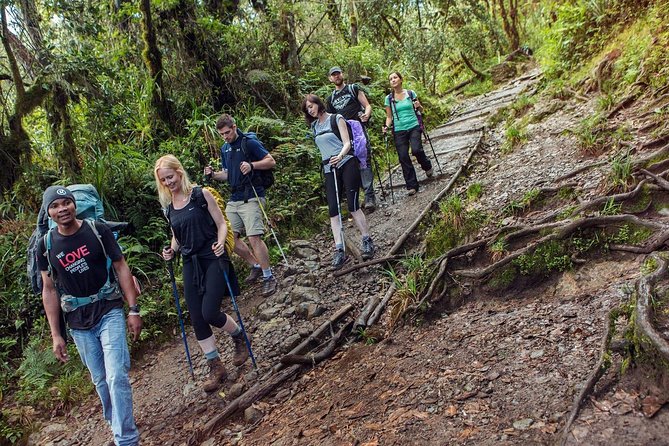
The first day covers roughly 11 kilometers and takes five to six hours. The trail winds through rainforest, following a ridge with a steady uphill grade. This is a pleasant introduction to the mountain, but the lower trail can be muddy and slippery.
Pack gaiters and trekking poles where you can reach them early. Do not bury rain gear in the bottom of your bag. The forest section can be wet, and a muddy first day is much easier to manage if your feet stay dry and you have extra balance on steep ground.
Machame Camp marks your first night in the mountain camping system. The crew supplies tents, tables, chairs, mattresses, food, drinking water, and hot water for washing up. You should still bring personal hiking clothing and equipment, since those items are not included, although some gear can be rented from the operator’s store in Tanzania.
Day 2: Machame Camp to Shira Camp
Day 2 is shorter, covering about 5 kilometers in four to five hours, but it is not an easy stroll. You leave the rainforest glades and follow an ascending trail across a valley and up a steep, rocky ridge.
The route then turns west toward a river gorge before reaching Shira Camp at 3,850 meters. This is your first major change in scenery. The dense forest gives way to more open ground, and the mountain begins to feel exposed.
The short distance is useful because altitude, not mileage, is now the main issue. Walk slowly, drink regularly, and do not use the relatively brief day as an excuse to rush. The tour asks for moderate physical fitness, but the overall route is classified as difficult. That distinction is worth taking seriously: you do not need technical climbing skills, but you do need to cope with repeated uphill walking and high elevation.
Day 3: Shira Plateau, Lava Tower, and Barranco Camp
This is one of the most important days of the trip. From Shira Camp at about 3,850 meters, you walk east along a ridge, passing the junction toward Kibo, Kilimanjaro’s main summit cone.
The trail climbs toward Lava Tower, also called the Shark’s Tooth, at about 4,650 meters. The day covers around 10 kilometers and takes five to six hours. You then descend to Barranco Camp at roughly 4,000 meters, ending the day near the elevation where you started.
That apparent up-and-down pattern is exactly the point. Spending time higher before sleeping lower gives your body a useful chance to adjust. It may feel frustrating to climb only to lose elevation again, but this is one of the route’s strongest features.
You may notice the first clear effects of altitude here, including slower movement or a headache. The practical response is to keep your pace calm and tell your guide if you feel unwell. Emergency oxygen and a basic first aid kit are carried for emergencies, but the oxygen is not intended as a way to help you reach the summit when your body is not coping.
The Lava Tower section also gives you a strong sense of how the mountain is built. Rock, open slopes, and the high volcanic setting replace the softer forest trails below. Then Barranco’s position brings one of the route’s most memorable camp settings, with the Barranco Wall rising nearby.
More Machame Route Climbs in Kilimanjaro
- Climbing Kilimanjaro – Machame Route
★ 5.0 · 170 reviews - Climbing Kilimanjaro through 7 days Machame Route
★ 5.0 · 151 reviews - 7 Days Kilimanjaro via Machame route affordable price
★ 5.0 · 110 reviews - #1. Best Kilimanjaro Day hike Tour-Machame Route-ISMANI
★ 4.2 · 47 reviews
Day 4: The Barranco Wall to Karanga Valley
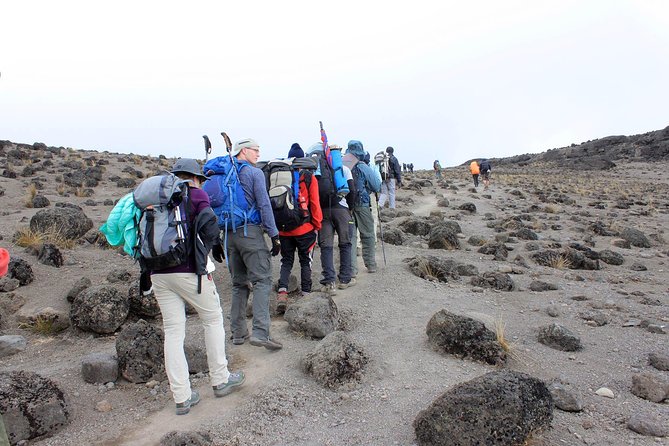
Day 4 is short on paper, only about 5 kilometers and three to four hours. It is also one of the most distinctive sections of the route because you leave Barranco Camp by climbing the Barranco Wall.
The wall is steep and calls for careful foot placement. You may use your hands in places, but this is described as a hiking route, not a technical climbing route. Your guide and assistant guides are there to help keep the group moving safely over the rocky ridge.
After the wall, the trail continues to Karanga Valley at about 4,050 meters. It then meets the junction connecting with the Mweka Trail. The modest distance gives you time to recover after Day 3 while still gaining useful altitude.
The day can feel harder than its mileage suggests. Short mountain days often involve steep ground, uneven rock, and slow movement. Keep your pack light and organized, and make sure your water and warm layers are easy to reach.
Day 5: Karanga Valley to Barafu Camp
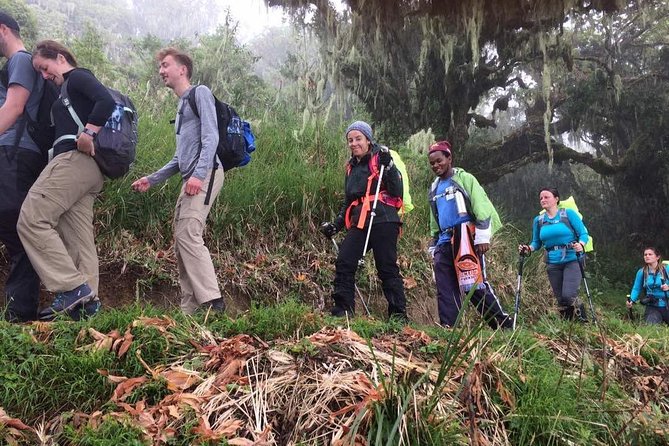
From Karanga Valley, you continue upward to Barafu Camp at 4,700 meters. The day is only about 4 kilometers and takes three to four hours, but this is not a casual camp transfer. You are climbing into the high zone and preparing for the summit attempt.
By Barafu, you have completed the South Circuit. The route has shown you the summit from several angles, which gives the climb a welcome sense of progress. At camp, the main job is to rest, eat dinner, organize your summit clothes, and sleep if you can.
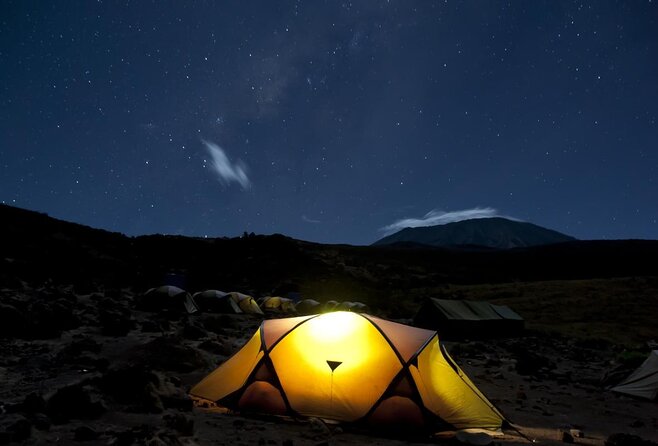
You will not get a normal night. The summit push starts between midnight and 2 a.m. Keep your headlamp, gloves, hat, water, and warmer layers ready before lying down. This is also the right time to check every personal item, since searching through a duffel in the dark is no fun at 4,700 meters.
The mountain cook is a particularly important part of the setup. Food is included throughout the climb, and the crew prepares six dinners, six breakfasts, and seven lunches. One of the strongest details from the company’s past service is the praise for cook J4, who was credited with producing very good meals despite difficult weather. On a long climb, hot food is not a minor comfort. It can determine how well you recover each day.
Day 6: Barafu Camp to Uhuru Peak and Mweka Camp
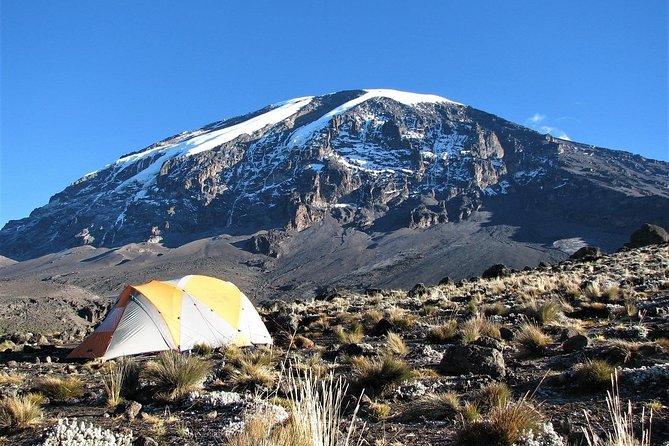
Summit day is the test. You climb from Barafu at 4,700 meters to Uhuru Peak at 5,895 meters, then descend all the way to Mweka Camp at about 3,090 meters.
The ascent covers about 5 kilometers and the descent another 13 kilometers. The total hiking time is listed at around 13 hours, though the exact pace depends on the group, trail conditions, and time spent at the summit.
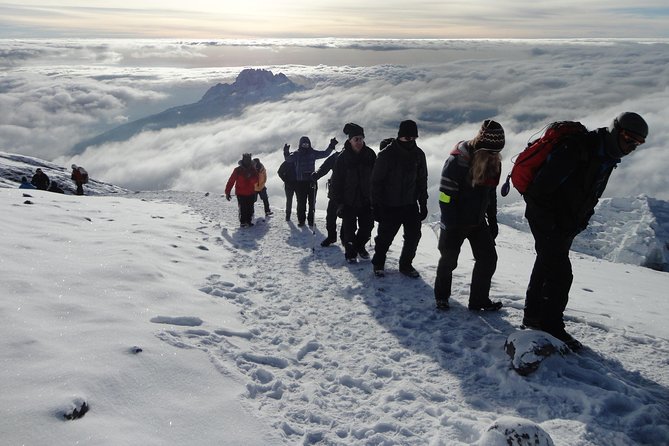
You start in darkness and head toward the crater rim between the Rebmann and Ratzel glaciers. The route climbs through heavy scree toward Stella Point. This section is physically and mentally hard because the ground is loose, the air is thin, and progress can feel slow.
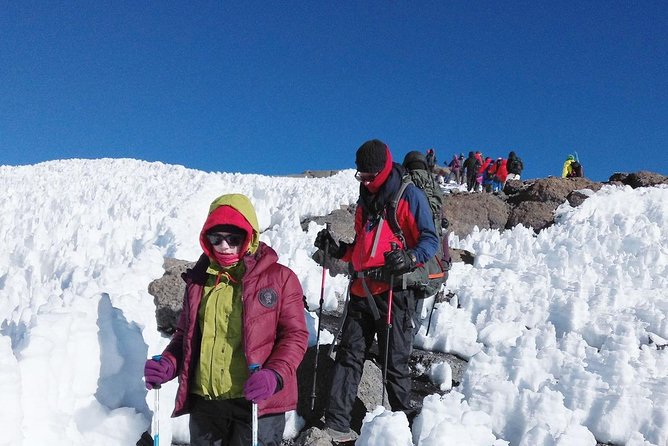
At Stella Point, you reach the crater rim and usually pause briefly. The sunrise is one of the great rewards of the climb, though faster hikers may see it from closer to the summit. From Stella Point, you may encounter snow during the final hour toward Uhuru Peak.
The summit is not the end of the day. After time at Uhuru Peak, you descend toward Mweka Camp. The lower you go, the better your body may feel, but your legs will be tired and the total distance is long. Eat and drink during the descent rather than waiting until camp.
Emergency oxygen is included for emergencies only. It is not summit assistance, and you should not treat it as a guarantee that you can continue if altitude sickness becomes serious. Your guide team’s role is important here. Past climbs with Intrepid Explorer Tanzania specifically identify guides Alan and Shefii as part of a supportive summit crew, and the company’s owner, Wenceslaus Tarimo, is described as available by phone and message for planning help.
Day 7: Mweka Camp to Moshi
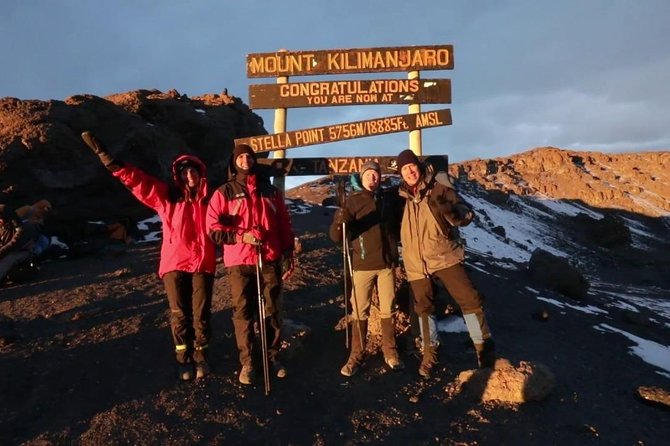
The final hiking day descends from around 3,090 meters to the Mweka Park Gate at about 1,680 meters. The walk is approximately 10 kilometers and takes three to four hours.
At the gate, you receive your summit certificate. The trail can be wet and muddy at lower elevations, so keep your gaiters and poles handy until the walk is over. Shorts and a T-shirt may be comfortable lower down, but keep rain gear and warmer clothing accessible in case conditions change.
You continue for about another hour to Mweka Village, where a vehicle meets you for the roughly 30-minute drive back to your Moshi hotel. The return hotel night is included, along with dinner and breakfast. That is valuable because it gives you a proper place to wash, sleep, and recover after the summit day instead of sending you straight to an airport.
What the crew and private format mean for you
This is a private activity, so only your own group participates. That gives you more control over walking pace and group decisions than a large shared departure. It does not mean the mountain itself is private. Machame is popular, and you will share the route and camps with other climbing parties.
The operation includes a qualified mountain guide, assistant guides, porters, and a cook. You should ask about porter packing limits and tipping expectations before departure, even though crew salaries are included according to park guidelines. The supplied information confirms the crew structure and pay basis, but it does not give a separate tipping amount.
The company has also received strong praise for friendly service, safe organization, equipment, food, and local ownership. I would give those points real weight when comparing operators. A Kilimanjaro climb depends on many small tasks being handled well, from food and camp setup to route decisions and communication.
You should still inspect rented gear carefully and bring any personal medication you need. Personal hiking equipment, snacks, medicine, and water-purifying tablets are not included. A portable toilet is optional but highly recommended, which may be worth considering if shared campsite facilities are a concern.
Who should book this Kilimanjaro climb?
I would choose this route if you already enjoy hiking, backpacking, or long days on your feet. It suits someone who wants varied scenery and accepts that the climb will be physically demanding.
The seven-day plan also fits you if you prefer a more measured altitude schedule. It is not a guarantee of reaching the summit, but the Day 3 high point at Lava Tower followed by the descent to Barranco is a sensible part of the route design.
I would hesitate if you have no hiking background, dislike steep or muddy trails, or want a quiet mountain experience. Machame is scenic, but the crowds reduce the feeling of being alone in the wild. You should also be comfortable with camping, early starts, limited personal space, and a summit day that lasts most of a day and night.
At $2,530, the package offers solid value if you need the complete arrangement. Airport transfers, two hotel nights, park fees, food, crew, equipment, and emergency supplies would be costly and complicated to arrange separately. The price is less attractive if you already have a local setup, most camping equipment, and independent transport.
Should you book the seven-day Machame Route?
Book it if you want the classic, scenic Kilimanjaro challenge and you value a full support team. The route gives you rainforest, Shira’s open high country, Lava Tower, Barranco Wall, the South Circuit, and a sunrise summit attempt in one well-planned week.
Before paying, confirm the exact personal gear available for rent, the pickup schedule, and the operator’s current guidance on medical clearance and crew tips. If you can handle steep hiking and accept crowded camps, this is a strong choice. If your priority is the easiest walking schedule or the quietest route, choose a different Kilimanjaro plan.
Free cancellation is available when you cancel at least 24 hours before the local start time. Changes or cancellations inside that window are not accepted for a refund.
FAQ
How long is the Machame Route tour?
The climb lasts approximately seven days. The route can be completed in six days at minimum, but seven days is recommended for acclimatization.
What is the price per person?
The listed price is $2,530 per person.
Is this a private tour?
Yes. Only your own group participates in the activity.
Where does the climb begin?
The climb begins at Machame Gate in Mount Kilimanjaro National Park, Tanzania.
Where does the activity end?
The final descent reaches Mweka Village, where a vehicle takes you back to your Moshi hotel. The activity ends back at the meeting point area.
Are airport transfers included?
Yes. Transfers from Kilimanjaro Airport to Moshi and from Moshi back to Kilimanjaro Airport are included.
Are hotel nights included?
Yes. The package includes the hotel night before the climb and the hotel night after it, with dinner and breakfast included.
What meals are provided on the mountain?
The package includes six breakfasts, six dinners, and seven lunches.
Is camping equipment provided?
Yes. Tents, camp chairs, tables, and sleeping mattresses are included. Personal hiking and trekking gear is not included, though some items may be available for rent in Tanzania.
When does the summit attempt begin?
The summit attempt starts very early, between midnight and 2 a.m. on Day 6. You climb from Barafu Camp toward Uhuru Peak at 5,895 meters.
Is emergency oxygen provided?
Yes. Emergency oxygen and a basic first aid kit are included for emergencies only. The oxygen is not provided as summit assistance.
What fitness level is required?
The activity states that you should have a moderate physical fitness level. The Machame Route is also considered difficult, with steep trails and long hiking days, especially on the summit day.
Is a portable toilet included?
No. A portable toilet is optional, but it is highly recommended.
What does the cancellation policy allow?
You can cancel at least 24 hours before the experience start time for a full refund. Cancellations or changes made less than 24 hours before the start time are not accepted for a refund.
More 7-Day Experiences in Kilimanjaro
- Private Kilimanjaro Hike 7 Day Lemosho Route
★ 5.0 · 60 reviews - 7-Day Magical Tanzania Safari -Premium High End Package
★ 5.0 · 53 reviews - 7 Days Machame route – Kilimanjaro
★ 5.0 · 45 reviews - Best Kilimanjaro Adventure 7 days Machame route Trekking
★ 5.0 · 42 reviews
Just added around Kilimanjaro
- Mt Kilimanjaro 6 days Marangu route hike★ 5.0 · 3 reviews
- Private Cycle to Kilimanjaro Bike Park Safari★ 5.0 · 6 reviews
- Wildlife Extravaganza: Manyara, Tarangire & Ngorongoro in 3 Days★ 5.0 · 3 reviews
- 3 Days Private E-Bike Tour in West Kilimanjaro★ 5.0 · 3 reviews
- West Kilimanjaro cycling Adventures★ 4.5 · 8 reviews
- machame route★ 5.0 · 16 reviews
- Kilimanjaro Climb & Safari – Lemosho Route – 13 Day★ 5.0 · 10 reviews
- Kilimanjaro Climbing Umbwe Route★ 5.0 · 3 reviews
Machame Route Climbs, compared.



Climbing Kilimanjaro through 7 days Machame Route
Read our review →
7-Day Machame Kilimanjaro Summit Tour from Arusha
Read our review →
7 Days Kilimanjaro via Machame route affordable price
Read our review →
#1. Best Kilimanjaro Day hike Tour-Machame Route-ISMANI
Read our review →

The Best of Machame Route in 6 Days: Your World’s Summit Guide
Read our review →Browse the lists this tour appears in