
Reviewed · KILIMANJARO TOURS
Moshi: Town tour and Local Markets tour
Moshi’s markets tell you more about daily life than a quick look at its tourist cafés ever could. This three-hour outing moves from the old railway station to banana, fish, spice, clothing, and food stalls, with guide Isaac explaining how people earn, shop, bank, and get around. I like the fruit tasting and the chance to compare three different markets. I also like that the tour includes practical local details, such as Tanzania’s SIM-based banking system, rather than stopping at photo opportunities.
The main consideration is pace. You cover a lot of ground in three hours, with short visits at several stops. Markets can be crowded and lively, and food and drinks are not included, so bring some Tanzanian shillings if you want to buy a snack, fruit, coffee, or a souvenir.
Key points at a glance
- Three markets, three different roles: Visit Manyema, Mbuyuni, and the Central Market to see how each serves local shoppers and sellers.
- Isaac is the key part of the experience: He is praised for clear English, friendly service, flexible timing, and practical help before and after the tour.
- Start with Moshi’s railway story: The train station offers a look at the railway’s place in the town and a chance to photograph Mount Kilimanjaro when visibility allows.
- Taste local fruit: The market visit includes samples of seasonal fruit and explanations of the produce being sold.
- See everyday business in action: The route covers banks, SIM banking, the bus stand, a dispensary, and market trade.
- End with purposeful shopping: Blue Zebra Art offers crafts, Tanzanite, and products made by disabled artisans, with proceeds supporting community causes.
Why this Moshi tour is worth your morning
Moshi is often treated as a staging point for Mount Kilimanjaro. That is a mistake. The mountain is the headline, but the town gives you a better sense of Tanzania’s daily rhythm: produce arriving at market, buses loading passengers, mobile phones handling money, and small businesses serving local needs.
I like this tour because it does not pretend Moshi is a polished museum. You walk through working markets where people are buying food, selling clothes, arranging transport, and managing household needs. That makes the experience more useful than a standard sightseeing loop.
The other strong point is the guide. Isaac, also called Zac, is the person who turns a sequence of stops into a connected story. He explains what you are seeing, answers questions in good English, and adjusts the outing when practical needs arise. Past visitors have also found him reliable with pickup times and helpful with extras such as finding a pharmacy, exchanging money, visiting a supermarket, or collecting Kilimanjaro equipment.
The tour is advertised at $25 per person, including pickup and drop-off within Moshi Urban and bottled water. For that price, the value is good if you want an introduction to town life without arranging several short trips yourself. You are paying for transport, a local guide, translation, orientation, and access to places that can feel confusing on your first visit.
This is not a food tour with a long meal, nor is it a major historical tour with indoor monuments. It is a practical walk-and-drive through ordinary Moshi. You will pay separately for anything you eat, drink, or buy.
Other Moshi days people book alongside this one:
- Kilimanjaro climb by Lemosho Route (7-day)
★ 5.0 · 651 reviews - Safari Serengeti And Ngorongoro
★ 5.0 · 288 reviews - Kilimanjaro climb, Machame Route (7-day)
★ 5.0 · 262 reviews
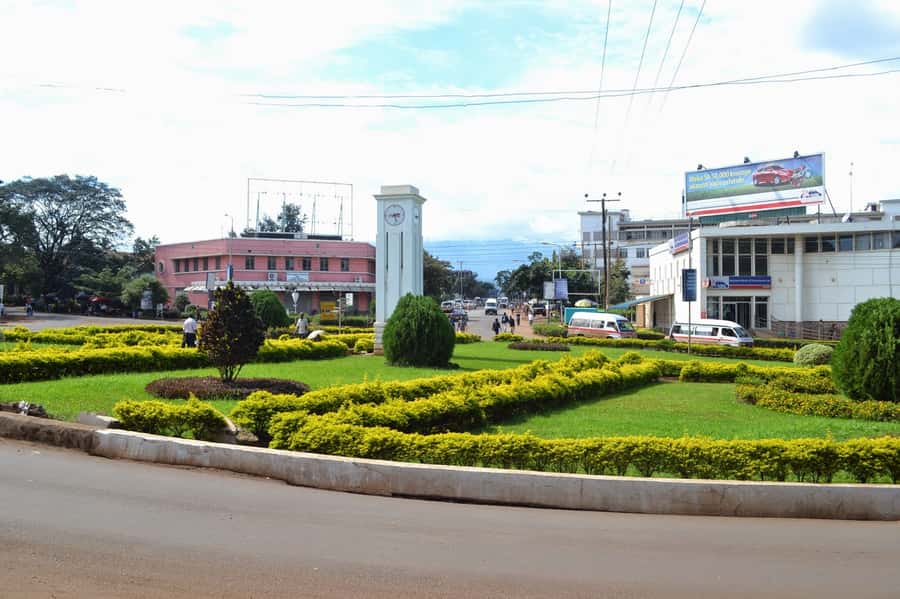
The train station gives Moshi a useful beginning
Pickup is from your lodging in Moshi Urban. The first stop is the train station, planned as a 25-minute visit with time for photos, sightseeing, and an explanation of the railway.
This is a smart starting point. A railway station is not just a transport stop here. It helps place Moshi within Tanzania’s wider network and gives Isaac a natural way to explain how rail travel has shaped movement and trade. You can also look for views of Mount Kilimanjaro from the area, though mountain visibility depends on weather and cloud.
One especially memorable possibility is arriving when a train is coming in from Dar es Salaam. That timing cannot be promised, but if it happens, the station becomes much more than a photo stop. The railway, the arriving passengers, and the walk toward the markets create a strong introduction to how people and goods move through the region.
Bring your phone or camera, but do not make the station the whole point of the morning. The real strength of the stop is the context Isaac provides before you enter the market districts.
Manyema and Mbuyuni show the everyday food trade
The market portion begins with Manyema Market, followed by Mbuyuni Market. Each stop is planned for roughly 25 minutes, and the schedule includes walking, photos, explanations, and time in food-selling areas.
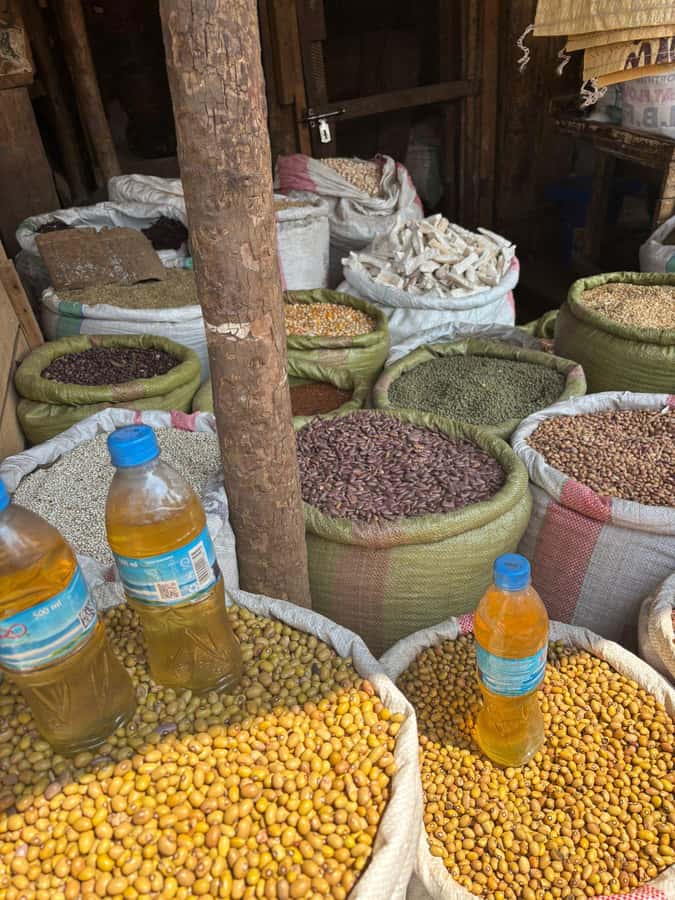
At Manyema, you might see the practical side of shopping for a household. Isaac can help identify produce and explain how the market works, so you are not left guessing what you are looking at. The value here comes from questions: what is sold locally, how produce reaches the stall, and which goods serve everyday meals.
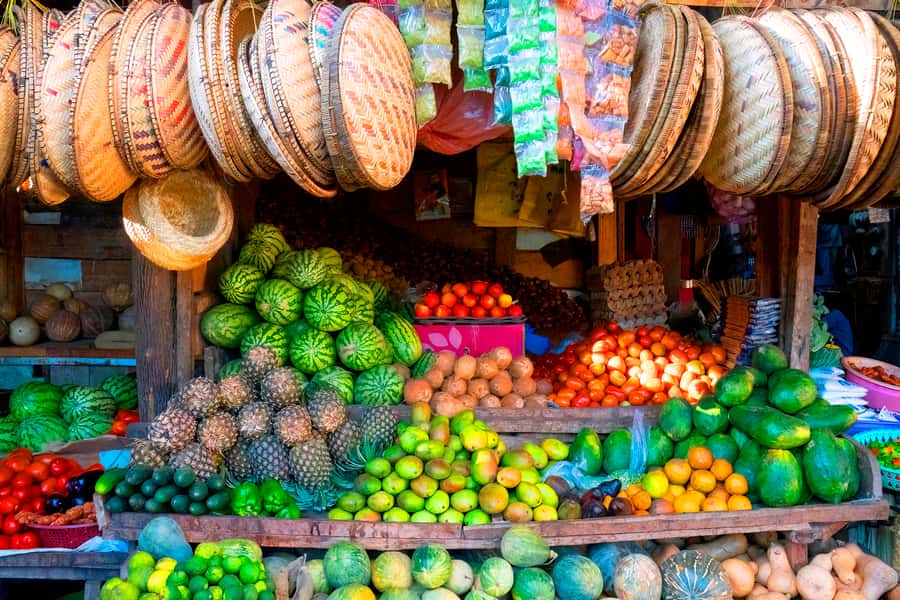
Mbuyuni adds several specific areas to the visit. The route includes a banana market, fish market, spice market, clothing market, and a local dispensary. You also learn about the local economy, which gives the market a wider meaning. This is not simply a place to photograph colorful stalls. It is a place where food, health, clothing, and small-scale trade meet.
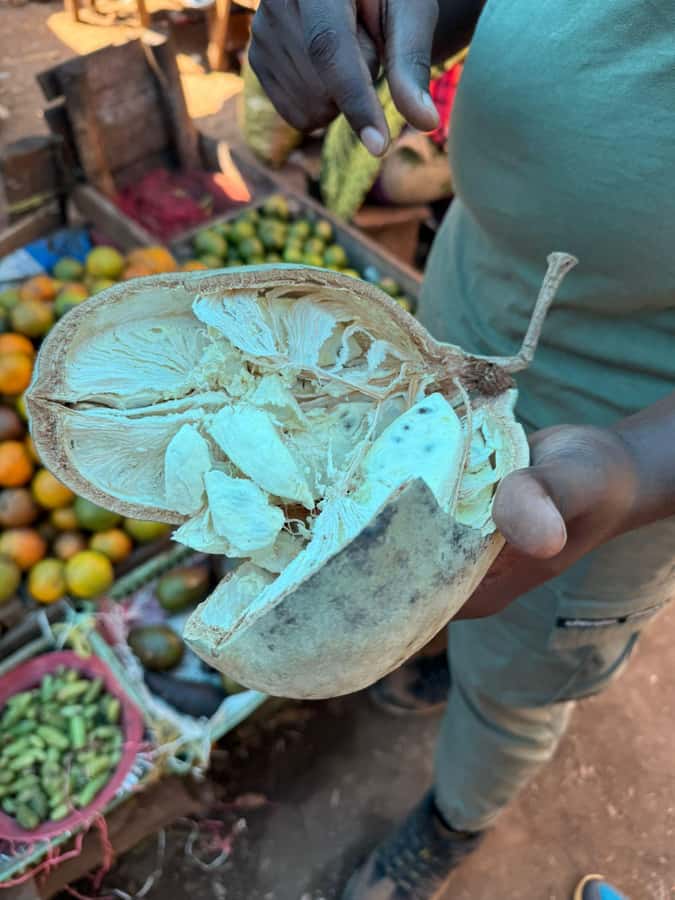
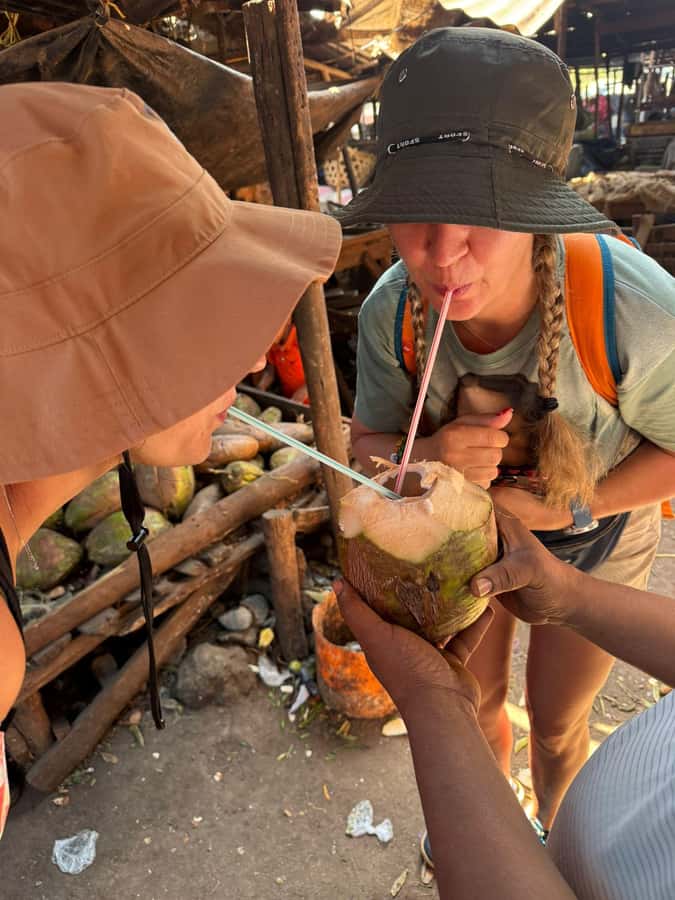
The fruit tasting is one of the tour’s nicest touches. You can sample different fruits and take away a better sense of what is grown or sold in the area. The selection may vary, so you should think of this as a chance to taste what is available rather than a fixed menu.
This part does require some awareness. Markets are working places, not staged attractions. Follow Isaac’s lead with photographs, especially around sellers and customers, and keep your belongings secure in crowded sections. Comfortable shoes matter because you will walk on the market route, and comfortable clothing will make the morning easier in warm conditions.
Central Market explains the difference between markets
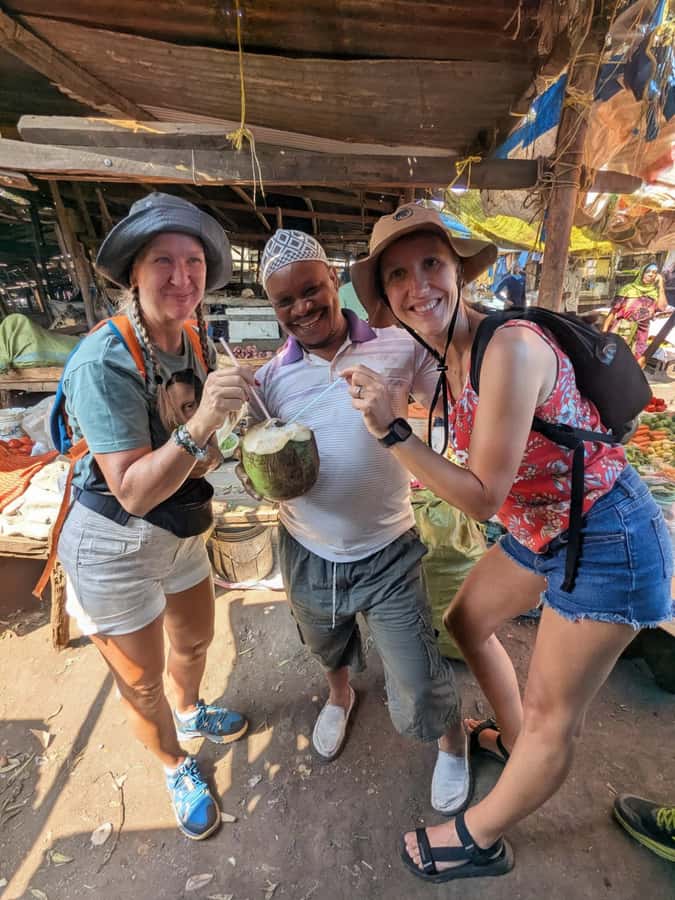
The Main Market, also called the Central Market in the tour description, is another 25-minute stop. Isaac explains how it differs from Manyema and Mbuyuni, then takes you through the food market.
That comparison is important. Seeing three markets in isolation can blur together, especially if you are new to Moshi. With a guide pointing out the different functions, you can pay attention to what is sold, who appears to be shopping, and how the spaces are arranged.
The Central Market is also where the tour connects food trade with the town’s wider economy. Along the way, you pass local banks and hear about SIM banking in Tanzania. Mobile-based financial services are a useful part of daily business, and this explanation can help you understand how people handle payments and money without relying only on traditional bank visits.
I particularly like that this subject appears during the walk instead of being delivered as a separate lecture. It connects the visible activity around you with the less visible systems that keep small businesses running.
You should not expect a long stop at every section. The planned schedule is brisk, and the point is to build a broad picture of Moshi. If one market interests you more than another, tell Isaac. His flexibility is one of the strongest features of the experience, and several bookings have been adjusted around personal interests or transport needs.
Same country, a completely different kind of safari:
- Kilimanjaro Climbing Lemosho Route 8 Days.
★ 5.0 · 186 reviews - Climbing Kilimanjaro – Machame Route
★ 5.0 · 170 reviews - Climbing Kilimanjaro through 7 days Machame Route
★ 5.0 · 151 reviews - Kilimanjaro climb, Lemosho Route (8-day)
★ 5.0 · 148 reviews
Coffee Union Cafe offers a proper pause
After the markets, you stop for about 20 minutes at Coffee Union Cafe. This is a break for coffee and tea, and it gives you a chance to sit down before the final parts of the route.
The café stop works well because the morning involves walking, heat, noise, and constant new information. It is also tied to Moshi’s coffee identity without turning the tour into a formal coffee plantation visit. Isaac can point you toward a good local place and help you choose between coffee and tea.
Food and drinks are not included in the $25 price, so budget for your own order. This is a small extra cost, but it is worth remembering if you are comparing the tour with an all-inclusive food experience.
The break also gives you a chance to ask about anything you missed. Isaac has been praised for taking time with questions and explaining Tanzanian culture, history, and current daily life in clear English.
The bus stand adds another piece of town life
The Moshi Bus Stand is a shorter stop, planned for about 15 minutes. You walk through the area, take photos, and learn how people do business around local transport.
It is a useful contrast with the markets. At the bus stand, movement is the main activity. People are arranging journeys, carrying goods, meeting others, and making short-distance travel work. Even a brief visit helps you understand why transport hubs are important economic spaces.
The stop is not designed as a long station tour. It is better understood as a quick look at another part of Moshi’s daily system. If you enjoy watching how a town functions, you will get more from this than from another generic photo stop.
Some outings have also included a tuk-tuk ride or practical detours, but these are not guaranteed parts of the advertised plan. Treat them as possible additions based on timing and your requests, not as promised inclusions.
Blue Zebra Art makes the final shopping stop count
The final stop is Blue Zebra Art, Tanzanite, and Souvenir Shop, with about 20 minutes for browsing and shopping.
This shop is different from a standard souvenir stall because many of its products are made by disabled artisans. Part of the proceeds goes back into community support, including help for orphans attending school and assistance for people in need. That gives your purchase a social purpose, though you should still inspect items carefully and buy only what you genuinely want.
The shop also sells Tanzanite, a valuable gemstone found only in Tanzania. If you are considering a purchase, take your time and ask questions about the stone, price, and documentation. The tour gives you an introduction to the option, not a requirement to buy.
This is a good final stop because it lets you finish with something tangible. You can leave with a craft, a small gift, or simply a better understanding of how local products are connected to community support. Shopping is optional, and the tour does not include purchases.
What the guide adds to the price
At $25 per person, the main value is not the number of stops. It is the interpretation between them.
Isaac has received strong praise for accurate communication, reliable pickup and drop-off, excellent English, and a warm manner. He has also helped with needs outside the basic route, including pharmacy visits, money exchange, supermarket stops, restaurant suggestions, and Kilimanjaro gear collection. These extras depend on time and your request, but they show the sort of practical support you can expect from a guide who pays attention.
The tour can also work well for solo visitors. One solo woman specifically felt safe with Isaac in an unfamiliar setting, and others appreciated the personal attention of what became a private outing. Group size is not clearly fixed in the supplied details, so ask when booking if that matters to you.
You can cancel up to 24 hours before the activity for a full refund, and the reserve-now-pay-later option keeps you from paying at booking. Starting times vary, so check availability. The live guiding is in English.
Who should book this Moshi town tour
I would choose this experience if you have just arrived in Moshi and want a useful orientation before or after Kilimanjaro. It suits you especially well if you are curious about food, commerce, transport, and ordinary routines rather than only major sights.
It is also a good fit for solo visitors, first-time visitors who do not feel ready to handle the markets alone, and anyone who wants a flexible guide. The tour has been adjusted for early departures and last-minute bookings, though you should arrange such changes in advance whenever possible.
You may want something else if you prefer a slow, formal museum visit, a long sit-down meal, or a shopping-free excursion. The markets are active and practical. You will walk, listen, look closely, and make your way through places that can feel noisy and busy.
Wear comfortable shoes and clothes. Bottled water is supplied, but bring money for fruit, coffee, tea, food, or crafts. A small bag is easier than bulky luggage, and a little patience will make the market visits more enjoyable.
Should you book it?
Yes, if you want to see Moshi as a living town rather than a stopover beneath Kilimanjaro. The combination of three markets, fruit tasting, railway history, SIM banking, coffee, buses, and community-minded crafts gives you a lot in three hours.
The strongest reason to book is Isaac’s personal guidance. He makes the route understandable, helps with practical requests, and can shape the conversation around your interests. Just keep your expectations clear: this is a brisk local-life tour, not a full meal or a major historical sightseeing program.
At $25, hotel pickup, drop-off, bottled water, and a live English-speaking guide make it a sound value. If you have one free morning in Moshi, this is a sensible way to spend it.
FAQ
How long does the Moshi town and markets tour last?
The activity lasts three hours, including pickup from and return to Moshi Urban lodging.
What places are included on the route?
The route includes Moshi Train Station, Manyema Market, Mbuyuni Market, the Main or Central Market, Coffee Union Cafe, Moshi Bus Stand, and Blue Zebra Art, Tanzanite, and Souvenir Shop.
Is hotel pickup and drop-off included?
Yes. Pickup and drop-off from lodging in Moshi Urban are included.
Is food included in the tour price?
No. Food and drinks are not included. Bottled water is included, and you can pay separately for fruit, coffee, tea, or other purchases.
What language does the guide speak?
The live tour guide speaks English.
Can I cancel the booking?
Yes. You can cancel up to 24 hours in advance for a full refund. The reserve-now-pay-later option lets you book without paying immediately.
Just added around Moshi
- Mt Kilimanjaro 6 days Marangu route hike★ 5.0 · 3 reviews
- Wildlife Extravaganza: Manyara, Tarangire & Ngorongoro in 3 Days★ 5.0 · 3 reviews
- Private Cycle to Kilimanjaro Bike Park Safari★ 5.0 · 6 reviews
- 3 Days Private E-Bike Tour in West Kilimanjaro★ 5.0 · 3 reviews
- West Kilimanjaro cycling Adventures★ 4.5 · 8 reviews
- machame route★ 5.0 · 16 reviews
- Kilimanjaro Climb & Safari – Lemosho Route – 13 Day★ 5.0 · 10 reviews
- Kilimanjaro Climbing Umbwe Route★ 5.0 · 3 reviews
Kilimanjaro Tours, compared.






Climbing Kilimanjaro through 7 days Machame Route
Read our review →
