
Reviewed · MACHAME ROUTE CLIMBS
Kilimanjaro Climb • Machame Route ~ 10 Day
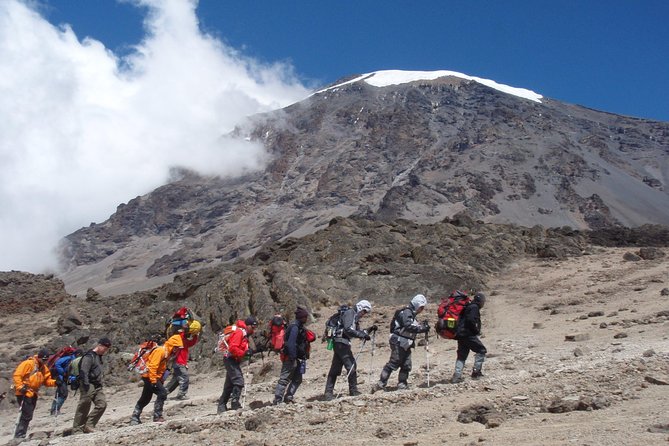
Kilimanjaro’s Machame Route gives you the mountain in chapters: mossy rainforest, open heather, ancient lava, giant senecios, glaciers, and a cold, rocky summit. The 10-day schedule adds valuable time for acclimatization, while porters carry the camp equipment and the crew handles setup each night.
I like the two nights in Moshi before the climb, which gives you time for an orientation and gear check rather than rushing straight to the trail. I also like the focus on medically trained High Altitude First Responders, daily medical checks, and a summit attempt timed around daylight. The drawback is simple: this remains a very hard high-altitude climb, and rental clothing and climbing gear cost extra.
Key points at a glance
- Two nights in Moshi give you time to meet the guides, check equipment, and prepare properly.
- Machame Route scenery changes fast, from tropical forest and colobus monkeys to Shira Plateau, lava flows, glaciers, and stark high camps.
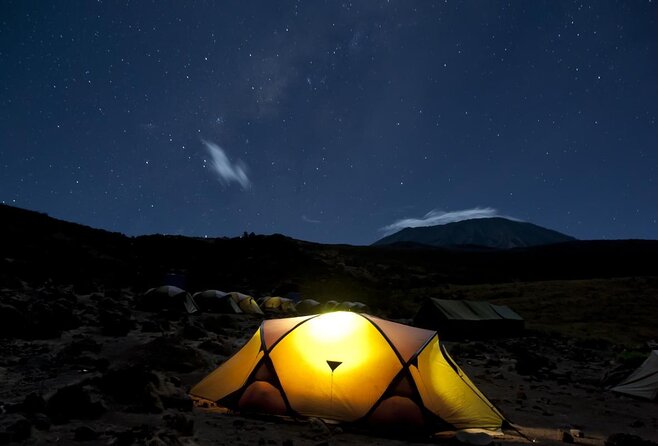
- Porters carry the equipment and set up camp, so you can focus on walking and acclimatizing.
- The Barranco Wall adds a hands-on scramble to an already demanding route.
- Summit day covers Uhuru Peak and the long descent to Millennium Camp, with roughly 12 to 15 hours of hiking in total.
- The $5,628 price includes meals and a full support crew, but clothing and climbing gear rental are not included.
Two preparation nights in Moshi
Your climb begins in Moshi, Tanzania, with a night at a family-owned hotel and a second day set aside for preparation. That extra time matters. Kilimanjaro is not a technical climbing trip in the usual sense, but altitude, cold, long walking days, and changing weather can defeat a fit person who arrives poorly prepared.
The guide team gives you a detailed climb orientation and checks your gear before you leave town. This is where you should resolve practical questions about clothing, boots, sleeping equipment, and anything you may need to rent. The tour price does not include climbing gear or clothing rental, so budget for those items if your own kit is incomplete.
The schedule lists a midnight start time, but the first two days are clearly described as Moshi preparation days. Confirm your pickup and meeting details before arrival, especially if you are arranging flights or adding a safari afterward.
More Kilimanjaro Climbs in Kilimanjaro
- Kilimanjaro climb by Lemosho Route (7-day)
★ 5.0 · 651 reviews - Kilimanjaro climb, Machame Route (7-day)
★ 5.0 · 262 reviews - Kilimanjaro Climbing Lemosho Route 8 Days.
★ 5.0 · 186 reviews
Day 3: Machame Gate and the rainforest
After breakfast, you drive to Machame Gate and complete the national park registration. Once the guide handles the paperwork, you begin walking through tropical rainforest toward Machame Camp.
This first hiking day takes about seven hours. The trail winds uphill, and the forest can feel close and damp, with moss, unusual plants, and the chance to hear or see colobus monkeys in the canopy. The setting is a strong opening because you begin among trees rather than on bare rock.
The crew sets up camp before you arrive. That is a real benefit after a long uphill walk. You can change clothes, settle into camp, eat, and rest instead of pitching tents while tired.
Do not mistake the first day for an easy stroll. You are gaining altitude from the start, and the trail is uphill. Walk slowly and save energy. The crew’s job is to support the climb, but your pace and attitude still matter.
Day 4: Shira Plateau and the first high views
The rainforest gives way to heather and more open ground as you climb toward Shira Camp. On a clear day, Kibo Peak appears about 12 kilometers away, giving you your first close view of the summit area.
The route takes roughly seven to eight hours. Above 9,000 feet, you may see lobelia, protea, and giant senecio plants. These strange high-altitude plants make the route feel very different from the forest below.
This is the day to take the guide’s slow pace seriously. You may notice shortness of breath as the air thins. The goal is not to race to camp. It is to keep moving steadily, eat and drink as directed, and allow your body time to adjust.
The open views are a pleasure, but they also mean less shelter from sun, wind, or weather. Your layers, sun protection, and water system need to be easy to reach.
Day 5: Lava Tower, glaciers, and Barranco Camp
The route climbs toward Lava Tower before descending through giant senecios to Barranco Camp. This up-and-down pattern is one of the route’s useful features for acclimatization. You climb high, then sleep lower than your highest point of the day.
The walking takes about eight hours. Around Barranco, Kibo’s south-facing glaciers come into view, and the scale of the mountain becomes more serious. You are no longer simply walking through a forested volcano. You are moving among volcanic rock, high valleys, and ice-covered peaks.
The descent toward camp may feel welcome, but it can be tiring after the climb to Lava Tower. Keep your knees and feet in mind. A careful pace now protects your energy for the final days.
Barranco Camp also prepares you mentally for the next morning. The Barranco Wall rises nearby, and the route will soon leave ordinary hiking behind for a more hands-on section.
More Machame Route Climbs in Kilimanjaro
- Climbing Kilimanjaro – Machame Route
★ 5.0 · 170 reviews - Climbing Kilimanjaro through 7 days Machame Route
★ 5.0 · 151 reviews - #1. Best Kilimanjaro Day hike Tour-Machame Route-ISMANI
★ 4.2 · 47 reviews - 7 Days Machame route – Kilimanjaro
★ 5.0 · 45 reviews
Day 6: The Barranco Wall and the Mawenzi view
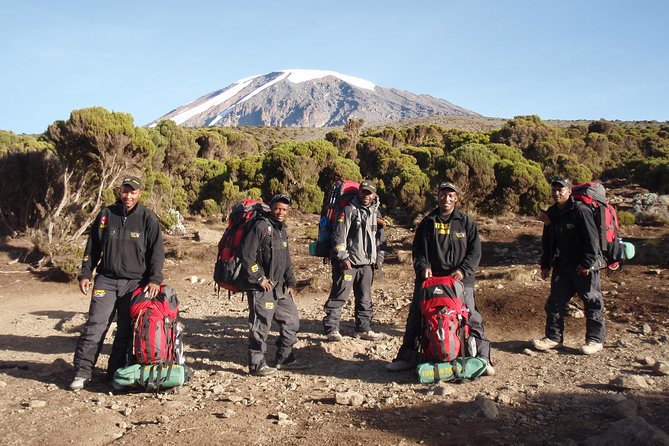
After breakfast, you climb the Barranco Wall. This is one of the route’s most memorable sections, with steep movement up rock and broad views across the valleys.
The day lasts about five hours, shorter than several other stages. That does not make it effortless. The wall requires concentration, balance, and patience. Follow the guide’s line, keep your hands free when possible, and avoid rushing behind faster members of the group.
Kibo Peak hangs to your left, while Mawenzi rises ahead to the right. Seeing both major volcanic peaks gives this day a sense of place that a simple distance chart cannot show.
The shorter walking time gives you more rest at camp, which is important as altitude continues to build. You may feel good after the morning’s climb, then notice fatigue or breathlessness later in the day. Pay attention to those changes and report concerns to the medical team.
Day 7: Barafu Camp and the final high camp
The trail becomes rocky and craggy as you climb to Barafu Camp. At this altitude, the air is thin, and even a short uphill section can feel demanding. The hike is listed at about four hours, but the effort can feel much greater than the clock suggests.
Barafu means ice in Swahili, and the name fits the conditions. It is extremely cold at this high camp. You should have warm layers ready rather than buried in a bag, and you will want to organize summit clothing before resting.
The camp has a particular mood. You are close to the hardest part of the climb, and clouds may move across the view, revealing Mawenzi Peak and the plains far below. Rest here is not wasted time. It is part of summit preparation.
The schedule describes the day as short, but you should not use that as a reason to push hard. Eat, drink, rest, and keep your gear simple. The summit attempt begins before or around sunrise, depending on the group’s plan and conditions.
Day 8: Uhuru Peak and the long descent
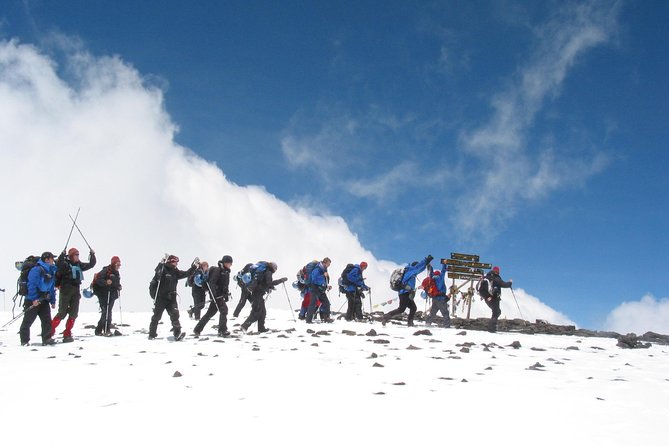
Summit day is the test. The route from Barafu to the summit is about 2.75 miles, or 4.5 kilometers, but it takes roughly seven to nine hours because of the altitude and steep terrain.
The stated plan is to begin a couple of hours before sunrise and reach the crater rim after lunch, while the general description places the summit attempt just after sunrise. Exact timing may vary, so treat the schedule as an outline rather than a promise. The important point is that the summit section is steep, cold, slow, and physically demanding.
At the crater rim, you enter the high volcanic world around Kibo. Mawenzi Peak, the dark saddle below, and the crater ice walls create the kind of view that makes the long approach worthwhile. From there, you continue for another one to two hours to Uhuru Peak, at 19,341 feet, or 5,895 meters.
The summit is not the end of the day. After reaching Uhuru Peak, you descend to Barafu Camp for a rest, then continue to Millennium Camp at about 12,590 feet, or 3,837 meters. The descent is listed at five to six hours and covers about 6.3 miles, or 10.1 kilometers.
In total, this can be a 12 to 15 hour day. That is the main physical warning attached to the experience. Reaching the summit is only half of the work. You still need enough energy and care for the long descent over loose, rocky ground.
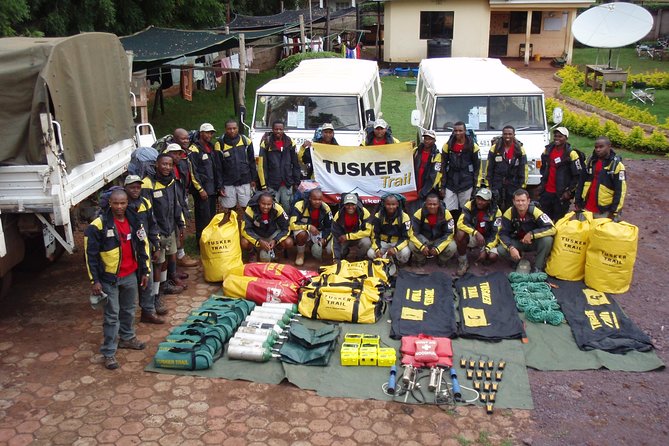
The medical support is especially valuable here. Tusker Trail describes its guiding team as medically trained High Altitude First Responders, with careful medical evaluations during the climb. That does not remove the risks of altitude, but it gives you a stronger support system when symptoms need attention.
Day 9: Rainforest descent and the final celebration
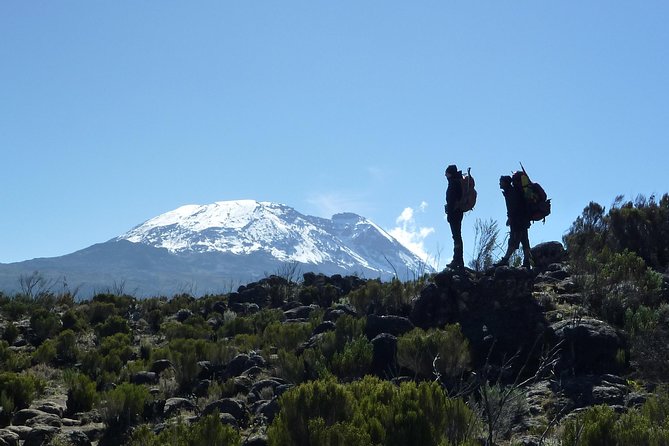
From Millennium Camp, you hike for about two hours to Mweka Camp, then spend another four hours descending through rainforest to the gate. The return to trees marks a clear change in temperature, air, and scenery.
At the gate, you have a final lunch and celebrate with the guides and porters. You then drive back to the Moshi hotel for a well-earned shower.
This day is easier than summit day but not trivial. Descending can place a different strain on your legs, especially after the long push from Barafu. Take your time, use your poles if you have them, and keep an eye on your footing.
The final lunch and drive back to the hotel give the trip a proper ending rather than leaving you to find your own way down. Day 10 is open for departure from Tanzania or a safari extension.
What the crew support means in practice
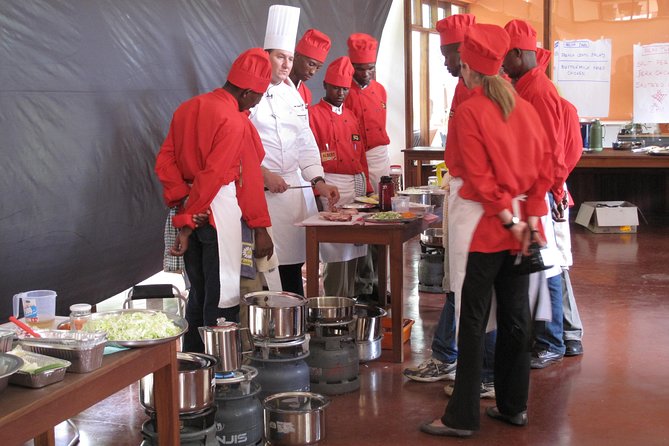
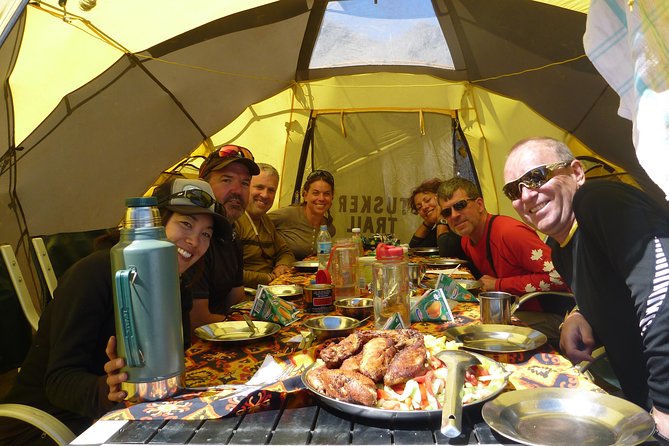
The support structure is a major part of the price. Porters carry the equipment and set up camp, while the crew prepares meals with local touches. The package includes eight dinners, ten lunches, and nine breakfasts, which covers the full scheduled experience.
You are not carrying the full camping load, but this is not a luggage-free holiday. You still need to carry your personal day-use items and manage your own clothing, water, and small essentials. The supplied information does not specify a personal luggage limit, so ask the operator before packing.
The food is described as energizing and nourishing, with local flavor. That matters because regular meals become part of your altitude strategy. You may not feel hungry at high elevation, but food and fluids help you keep moving.
The medical attention is another strong point. Daily checks and medically trained guides were repeatedly praised in the supplied feedback, along with the tents, food, advice, and attentive care. Named guides connected with the company include Kombe, Guadance, Nemis, and Ureo, though you should confirm which guides are assigned to your departure.
The support also appears to suit different types of climbers. The company has handled family groups with children aged 14 to 22, solo female participants, solo first-time international visitors, and larger groups with extensive mountain support. That does not make the climb easy, but it suggests the operation is built around close group care.
Is $5,628 a fair price?
At $5,628 per person, this is a major expense. You are paying for far more than park access and a guide. The price supports a 10-day route, two preparation nights in Moshi, camp staff, porters, meals, transportation to and from the mountain, camp setup, guiding, and medical oversight.
The 10-day duration also helps explain the cost. A longer itinerary gives you more time to adjust to altitude than a rushed climb. It includes a gradual route through several altitude zones, with the Lava Tower ascent and descent providing a useful acclimatization pattern.
The strongest value comes if you want a carefully supported climb rather than the lowest possible price. The company’s own feedback emphasizes attentive guides, strong hospitality, good food, clean and comfortable camp arrangements, and careful medical checks. The price may feel high, but these are the parts of a Kilimanjaro trip that affect both comfort and summit prospects.
Still, check what you need to add. Climbing gear and clothing rental are excluded, and the supplied details do not list flights, tips, personal insurance, or optional safari arrangements. Do not assume those are included. Ask for a full pre-departure cost sheet.
Who should choose this Machame climb?
I would consider this route a good fit if you want:
- A 10-day schedule with substantial support
- A private trip for your own group
- A route with major scenery changes
- Porters and camp staff handling the heavy work
- Medical support from trained high-altitude personnel
- Time in Moshi for preparation before hiking
- The option to leave Tanzania or continue on safari afterward
You should think carefully before booking if you dislike cold camping, long walking days, steep uphill trails, or basic high-altitude conditions. The summit day is especially demanding, and the short Barafu schedule does not mean you will feel fresh.
The listing says most people can participate, but that should not replace honest preparation. Your fitness, medical history, altitude experience, and ability to handle a 12 to 15 hour summit day all deserve serious thought. Speak with a medical professional if you have concerns about high altitude.
The private format is useful for families, friends, and small groups that want to move at their own pace within the guide’s safety limits. It may be less appealing if you are looking for a social, low-cost group departure.
Practical details before you book
Pickup is offered, and the ticket is mobile. Confirmation is provided at booking, while cancellation is free up to 24 hours before the local start time. Changes or cancellations inside that window are not accepted for a refund.
Moshi is the base, so allow enough time to arrive rested for the orientation and gear check. You can depart Tanzania on Day 10 or continue to one of the region’s wildlife reserves, making this an easy pairing with a safari.
The route includes national park registration at Machame Gate and a return through Mweka Gate. Admission to the mountain portion is included. The experience is private, with only your group participating.
Should you book it?
Book this Machame climb if you want a serious Kilimanjaro attempt with a long acclimatization schedule, a large support operation, prepared camps, regular meals, and strong medical attention. The changing scenery and the Barranco Wall give the route plenty of character, while the two Moshi nights make the start less frantic.
I would not choose it purely for the summit photograph. The price is high, gear rental is extra, and summit day is a long physical ordeal followed by more descent. But if you value careful preparation and a crew that stays closely involved from Moshi through the final lunch, this 10-day plan offers a well-supported way to take on Africa’s highest peak.
FAQ
Where does the Kilimanjaro climb begin?
The experience begins in Moshi, Tanzania. You spend the opening days there before driving to Machame Gate.
How long does the experience last?
The climb lasts approximately 10 days. Day 10 is set aside for departure from Tanzania or continuing on safari.
Which Kilimanjaro route does the tour use?
It uses the Machame Route, including Machame Gate, Shira Camp, Lava Tower, Barranco Camp, Barafu Camp, Millennium Camp, and Mweka Gate.
How high is Uhuru Peak?
Uhuru Peak is listed at 19,341 feet, or 5,895 meters, above sea level.
Is the tour private?
Yes. Only your group participates in this private tour or activity.
Are meals included?
Yes. The package includes eight dinners, ten lunches, and nine breakfasts.
Are climbing clothes and gear included?
No. Climbing gear and clothing rental are not included in the price.
Is pickup available?
Yes. Pickup is offered, though you should confirm the exact pickup arrangement and time before the climb.
Can I cancel for a full refund?
Yes, if you cancel at least 24 hours before the experience’s local start time. Cancellations or changes made less than 24 hours before the start are not accepted for a refund.
More Machame Route Climbs in Moshi
- The Best of Machame Route in 6 Days: Your World’s Summit Guide
★ 5.0 · 44 reviews - Best Kilimanjaro Adventure 7 days Machame route Trekking
★ 5.0 · 42 reviews - 6 Days Machame Route Kilimanjaro Climbing
★ 5.0 · 42 reviews - 6 Days Private Mount Climbing in Kilimanjaro Machame Route
★ 5.0 · 38 reviews
More Kilimanjaro Climbs in Moshi
- Kilimanjaro climb, Lemosho Route (8-day)
★ 5.0 · 148 reviews - Kilimanjaro climb, Lemosho Route (6-day)
★ 5.0 · 129 reviews - Kilimanjaro climb, Marangu route (6-day)
★ 5.0 · 72 reviews - Private Kilimanjaro Hike 7 Day Lemosho Route
★ 5.0 · 60 reviews
Just added around Moshi
- Mt Kilimanjaro 6 days Marangu route hike★ 5.0 · 3 reviews
- Wildlife Extravaganza: Manyara, Tarangire & Ngorongoro in 3 Days★ 5.0 · 3 reviews
- Private Cycle to Kilimanjaro Bike Park Safari★ 5.0 · 6 reviews
- 3 Days Private E-Bike Tour in West Kilimanjaro★ 5.0 · 3 reviews
- West Kilimanjaro cycling Adventures★ 4.5 · 8 reviews
- machame route★ 5.0 · 16 reviews
- Kilimanjaro Climbing Umbwe Route★ 5.0 · 3 reviews
- Kilimanjaro Climb & Safari – Lemosho Route – 13 Day★ 5.0 · 10 reviews
Machame Route Climbs, compared.



Climbing Kilimanjaro through 7 days Machame Route
Read our review →
7-Day Machame Kilimanjaro Summit Tour from Arusha
Read our review →
7 Days Kilimanjaro via Machame route affordable price
Read our review →
#1. Best Kilimanjaro Day hike Tour-Machame Route-ISMANI
Read our review →

The Best of Machame Route in 6 Days: Your World’s Summit Guide
Read our review →Browse the lists this tour appears in