
Reviewed · KILIMANJARO TOURS
Explore the 360° of Kilimanjaro
Cycling around Kilimanjaro gives you something a summit climb cannot: a full, ground-level look at the mountain’s changing world. Over six riding days and about 370 kilometers, you move from coffee and banana farms to dry acacia plains, Maasai villages, forest edges, crater lakes, and Chagga communities on the mountain’s lower slopes.
I like the variety of scenery and the fact that this is not simply a long road ride. You will sleep in a Maasai cultural village, pass through the Enduimet Wildlife Management Area, reach Lake Chala on the Kenya border, and stop at Ndoro Waterfall. The support vehicle, cook, bike mechanic, snacks, fruit, and included camping equipment also make the price easier to understand.
The main drawback is the physical demand. The route includes dusty and rocky tracks, steep climbs and descents, and riding days of up to eight hours. You need a moderate level of fitness, and you should be comfortable spending long stretches outdoors rather than expecting a soft adventure with a bicycle attached.
Key things to know before booking
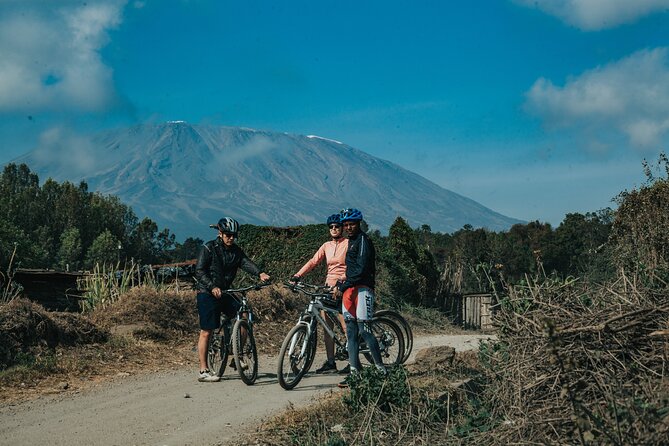
- Six riding days cover about 370 kilometers, with a mix of off-road tracks and paved roads.
- The mountain changes character each day, from southern coffee plantations to dry Maasai plains and the Rongai forest.
- One night is spent in a Maasai cultural village, with time for customs, songs, and local dishes.
- Wildlife may appear in Enduimet, an important route for elephants moving between Tanzania and Kenya.
- A full support crew travels with you, including guides, a driver, cook, bike mechanic, and support vehicle.
- The route ends with a celebratory dinner and sparkling wine back near Moshi.
What the six-day circuit around Kilimanjaro is really like
This is a cycling tour around the lower reaches of Africa’s highest mountain, not a bicycle ascent of Kilimanjaro. The mountain remains your constant reference point, but the riding takes place through villages, farms, woodland, wildlife areas, and rural tracks around its base.
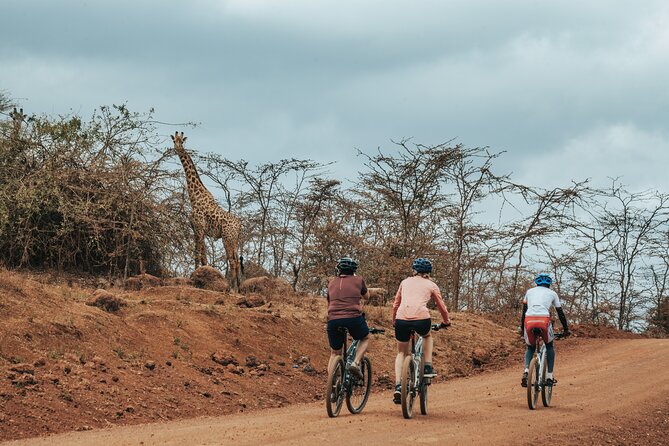
The route covers roughly 370 kilometers. Some sections are paved, but much of the ride is dusty and sometimes rocky. That mix matters. You are getting closer to everyday life around Kilimanjaro, but the ride can be slower and more tiring than the distance alone suggests.
The tour is arranged as a private activity for your group. That gives the pace some flexibility, although the supplied details do not promise a fully customized route or a particular bicycle model. Before setting off, you meet the guide, complete a bike fitting, and can take a short test ride if your flight arrives in the morning or afternoon.
The crew includes a guide, bike mechanic, driver, and cook. A support vehicle follows the journey, carrying practical supplies and helping keep the ride manageable. You also receive snacks, fruit, three liters of mineral water per rider, and all three daily meals.
Other Moshi days people book alongside this one:
- Kilimanjaro climb by Lemosho Route (7-day)
★ 5.0 · 651 reviews - Safari Serengeti And Ngorongoro
★ 5.0 · 288 reviews - Kilimanjaro climb, Machame Route (7-day)
★ 5.0 · 262 reviews
Day 1: Arrival in Moshi and a useful test ride
You are collected at Kilimanjaro International Airport and taken to Keys Hotel near Moshi. This first day is mainly about settling in, meeting the guide, and getting the bike adjusted.
If your flight arrives early enough, you can use the spare time for a short ride through a nearby coffee plantation and surrounding villages. This is more than a pleasant warm-up. It lets you check saddle height, brakes, gears, and comfort before the long days begin.
Moshi sits at the foot of Kilimanjaro, so you begin with an immediate sense of place. The first evening is also your chance to ask about the route, daily riding times, water, meals, and camping routine. The advertised start time is 7:00 a.m., so an early night makes sense.
Day 2: From coffee country to Maasai plains
The first major riding day takes you from the greener southern side of Kilimanjaro toward the drier west. You start among coffee and banana plantations, where cultivation is made possible by the wetter conditions around the mountain.
As you continue west, the fields give way to open plains and acacia woodland. The visual change is striking. Kilimanjaro may remain cloud-shrouded at times, but when the summit appears, the contrast between the snowy upper slopes and the dry ground below is powerful.
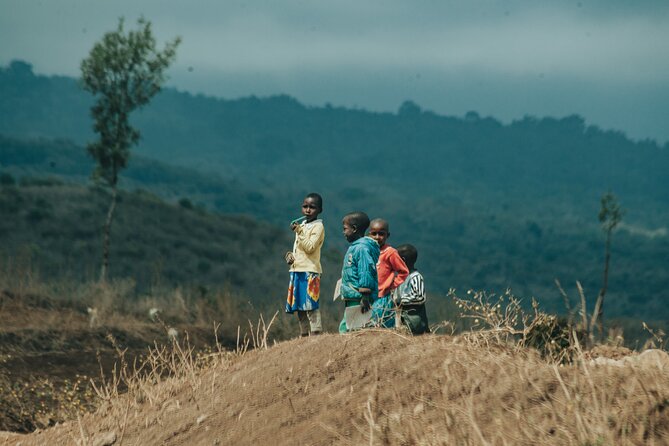
This is also your introduction to Maasai country. The western plains are home to nomadic Maasai communities and wildlife. The route finishes at Olpopongi Maasai Cultural Village and Museum, where you spend the night and learn about local customs, songs, and dishes.
This overnight stop is one of the most distinctive parts of the trip. It gives the tour a cultural purpose beyond simply passing through rural Tanzania. At the same time, remember that a cultural village visit is a planned experience, not a guarantee of seeing ordinary family life without any presentation. Go with respect, listen carefully, and treat the visit as a chance to learn rather than a performance arranged solely for photographs.
The day lasts about seven hours. The combination of heat, unpaved surfaces, and changing altitude can make it feel longer, especially if you are new to multi-day cycling.
Day 3: Elephants and open country in Enduimet
The ride continues through the Enduimet Wildlife Management Area, an important but less familiar part of the Kilimanjaro region. Enduimet borders Amboseli National Park in Kenya and serves as a movement route for wildlife, including African elephants.
You begin on wide open plains dotted with acacia trees. As the route approaches Kilimanjaro’s lower slopes, the surroundings become greener and more cultivated. Maasai communities live in this area alongside Chagga, Meru, and Pare people, so the day combines wildlife country with inhabited rural ground.
Wildlife can be seen, but it is not promised. You are on a bicycle rather than in a safari vehicle, which may give the day a more direct feel, but it also means the focus remains on cycling. Follow the guide’s instructions around animals and stay with the group.
The riding day ends at Simba Farm, above broad wheat and barley fields overlooking the western plains. At about four hours, this is one of the shorter cycling days. The farm setting should give you room to recover before the next day, which is longer and more demanding.
Same country, a completely different kind of safari:
- Kilimanjaro Climbing Lemosho Route 8 Days.
★ 5.0 · 186 reviews - Climbing Kilimanjaro – Machame Route
★ 5.0 · 170 reviews - Climbing Kilimanjaro through 7 days Machame Route
★ 5.0 · 151 reviews - Kilimanjaro climb, Lemosho Route (8-day)
★ 5.0 · 148 reviews
Day 4: Toward Rongai and the Kenyan border
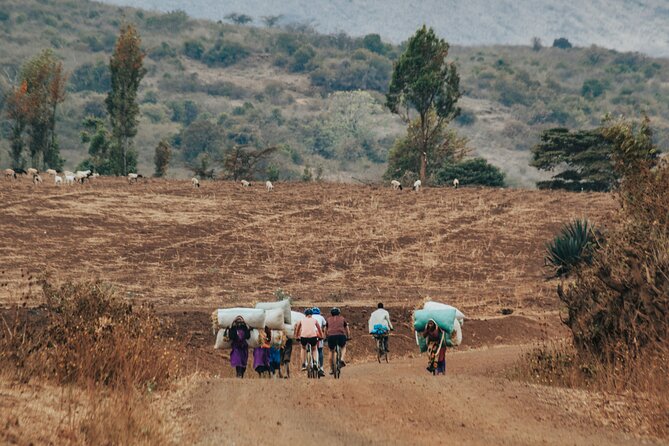
The longest day takes you northeast toward Nalemoru village, close to Kenya. Nalemoru is the starting point for the Rongai route up Kilimanjaro, so this section connects your bike journey with one of the mountain’s major climbing routes.
You ride through open farmland with views back across the western plains. The route then passes through several towns as it climbs toward the foothills and the Rongai forest. This is a day of changing scenery, but also a day where the eight-hour duration needs to be taken seriously.
The destination is Snowcap Cottages at the edge of the Rongai forest. On a clear day, you may see both Kibo and Mawenzi, two of Kilimanjaro’s major peaks. Cloud is common around the mountain, so treat clear summit views as a bonus rather than a promise.
This is likely the day when pacing matters most. Keep your water close, eat the supplied snacks before you feel depleted, and let the support crew know early if the bike needs attention. The private format may help your group ride at a sensible pace, but it does not remove the climbs.
Day 5: A downhill run to Lake Chala
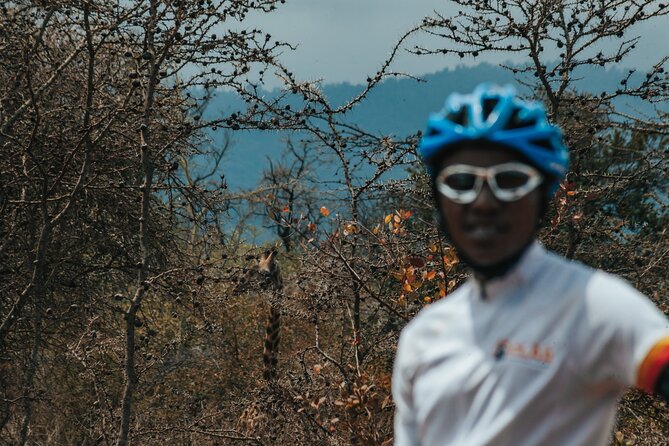
After the long ride toward Rongai, Day 5 brings a welcome change. The route heads downhill toward Lake Chala, a crater lake on the Tanzania and Kenya border.
The lake is fed by underground springs from Kilimanjaro. Its water is described as turquoise and green, and the shore is framed by plants, trees, wildlife, and volcanic walls. The camp sits beside the caldera, making this one of the best places on the route to slow down.
A downhill ride sounds easy, but rough surfaces can still be hard on your hands, arms, and attention. Ride within your ability, especially if the track is dusty or rocky. The details supplied do not specify the exact downhill distance or technical grade, so do not assume this is a smooth road descent.
Lake Chala is valuable as a rest stop because it changes the rhythm of the tour. You have spent days crossing farms and open country, and now you can enjoy a dramatic natural setting without adding another major attraction to the schedule. Camping beside the lake also gives the trip a stronger sense of place than a standard hotel circuit.
Day 6: Chagga villages and Ndoro Waterfall
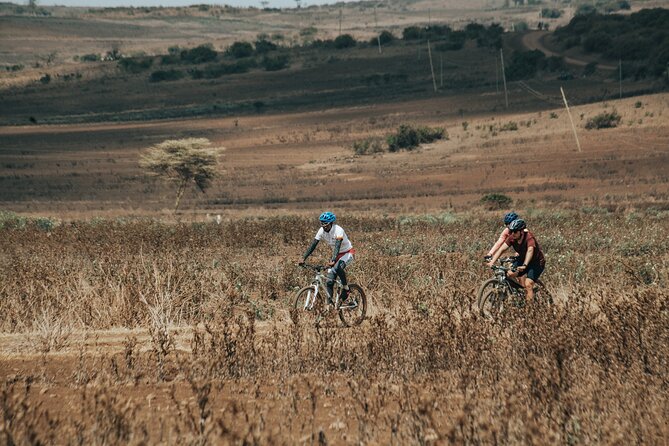
The sixth riding day is shorter in distance but described as challenging because the route climbs toward Marangu. You pass banana and coffee plantations and ride through Chagga communities on the lower slopes of Kilimanjaro.
The local welcome is part of the pleasure here. People may wave and call Jambo as you pass, and the road gives you a close look at the farming areas that supply much of the region. The experience is less about checking off a sight and more about seeing how villages, crops, and mountain life fit together.
Before reaching camp, you detour to Ndoro Waterfall. You leave the bikes and walk down to the base, where a local Chagga guide explains the area, Chagga cave, local customs, and the legend connected with the falls.
This stop adds depth to the ride. After several days of wide plains and distant views, you get a close, walking-level experience in a forested setting. The walk down to the waterfall may be tiring after cycling, so use it as a chance to stretch rather than rush.
Day 7: Final climbs, Moshi, and a proper finish
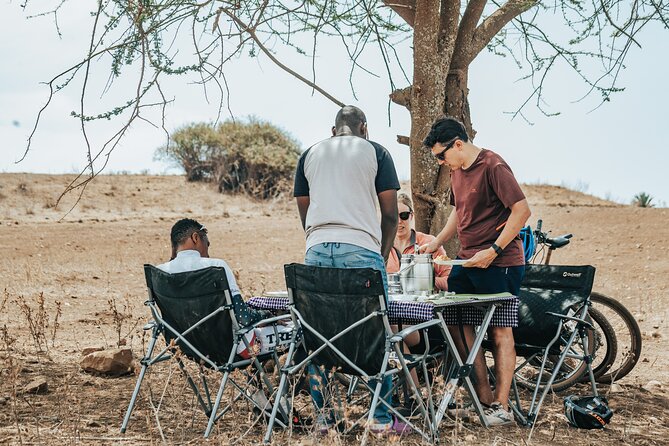
The final day crosses villages and plantations on Kilimanjaro’s slopes before returning to Moshi. The first half includes several steep ascents and descents, while the second half becomes a gradual downhill ride toward town.
You use back roads through Moshi’s outskirts and suburbs, finishing at Keys Hotel. This is a sensible route choice. It avoids making the last miles a simple transfer on a major road and lets you see the transition from rural mountain communities to the town itself.
The ride ends with a celebratory dinner and sparkling wine. After six days on dusty tracks and rural roads, that small ceremony should feel well earned. The tour calls this the end of a six-day cycling journey, while the full package lasts about seven days because the first day is used for arrival, briefing, and bike fitting.
What the $2,100 price includes
At $2,100 per person, this is not a budget bicycle holiday. The value comes from how much logistical work is included around the riding.
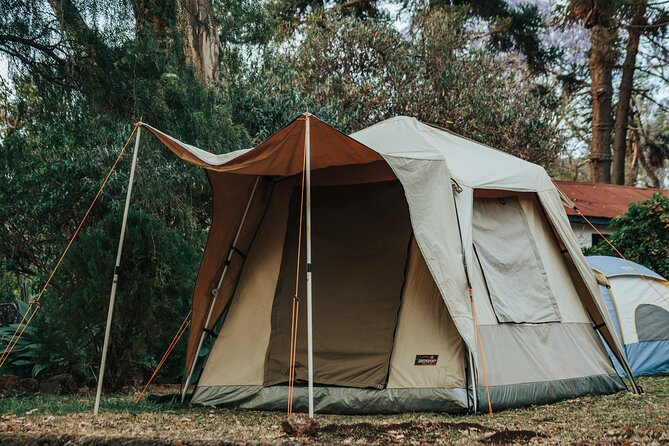
You receive accommodation before and after the trip, camping gear such as tents, sleeping mats, chairs, and tables, all three meals, snacks, fruit, and three liters of mineral water per rider. The support vehicle and bike mechanic are especially important on a route with rough tracks and long distances.
A guide carries a pulse oximeter for blood-oxygen readings, and the crew has a first-aid kit for emergencies. These are useful safeguards, though they are not a substitute for your own medical preparation or travel insurance.
The package also includes an Oclaa Adventures Tanzania T-shirt and airport pickup. Tips for the guide, bike mechanic, driver, and cook are compulsory extras, as are personal items, medicine, the Tanzanian visa, and a sleeping bag. You can rent a sleeping bag in Moshi if you do not bring one.
For the price to feel worthwhile, you should want a supported, multi-day adventure rather than an independent ride. If you would otherwise need to arrange transport, food, camps, local guides, bike repairs, and route planning yourself, the package offers a practical level of support.
The crew and the human side of the ride
The people supporting the tour are a major part of its appeal. Octavian is identified as a central contact, while George and Rashid have guided and driven longer combinations involving this Kilimanjaro circuit and Lake Natron. Their roles have included route support, transport, and personal care throughout the trip.
A cook travels with the group, which means meals are built into the daily operation instead of being left to chance. The driver and mechanic also allow you to focus on riding instead of solving every transport or equipment problem yourself.
The supplied experiences especially emphasize punctual pickup, careful attention, and a friendly approach. For a family group with children aged 10 and 11, the company arranged a successful cycling experience, but that should not be read as proof that every child or family will find the full six-day route easy. Ask directly about child-specific bike sizes, daily pacing, and the condition of the tracks before booking with young riders.
Who should book this Kilimanjaro cycling trip?
I would choose this tour if you want to combine active travel with culture, wildlife country, and rural scenery. It suits cyclists who enjoy variety and do not need smooth pavement every day.
It is also a good fit if you want Kilimanjaro to be the center of your Tanzania trip without climbing to the summit. You get views of Kibo and Mawenzi, but the focus remains on the communities, farms, forests, plains, and water sources around the mountain.
You should think twice if you dislike camping, long riding days, heat, dust, or uncertain wildlife sightings. The route is private, but private does not mean effortless. The eight-hour day toward Nalemoru and the steep sections near Marangu require real stamina.
Bring personal medicine, suitable cycling clothing, sun protection, and a sleeping bag unless you plan to rent one in Moshi. Travel and medical insurance are not included, and they are strongly recommended for an active trip of this kind.
Free cancellation is available if you cancel at least 24 hours before the local start time. Cancellations or changes made within 24 hours are not accepted for a refund.
Should you book it?
Book this Kilimanjaro circuit if you want a supported six-day ride with genuine variety: Maasai culture, possible wildlife, mountain views, village roads, Lake Chala, and a Chagga waterfall visit. The crew, meals, support vehicle, and camping setup make it far easier than organizing the same route alone.
Skip it if you are looking for a relaxed sightseeing holiday or a guaranteed safari. This is a demanding bike journey with rough surfaces and long hours. For fit cyclists who want to see Kilimanjaro from every side, it offers a memorable and unusually personal way to travel around the mountain.
FAQ
How long does the experience last?
The full experience lasts approximately seven days. Six of those days are cycling days, while the first day is used for airport pickup, arrival at Keys Hotel, briefing, and bike fitting.
How far will I cycle?
The total cycling distance is approximately 370 kilometers.
What type of roads and tracks are used?
The route uses both off-road and paved roads. The off-road sections are mainly dusty and can sometimes be rocky.
Where does the tour start?
You are picked up at Kilimanjaro International Airport and transferred to Keys Hotel near Moshi. The stated start time is 7:00 a.m.
Is the tour private?
Yes. Only your group participates in the private activity.
Is airport pickup included?
Yes. Pickup from Kilimanjaro International Airport is included.
What accommodation is included?
Accommodation before and after the trip is included, along with camping equipment such as tents, sleeping mats, chairs, and tables. The route also includes stays at places such as the Maasai cultural village, Snowcap Cottages, and a camp at Lake Chala.
Are meals included?
Yes. Breakfast, lunch, and dinner are included, along with snacks and fruit.
Is a sleeping bag provided?
No. A sleeping bag is not included, but you can rent one after arriving in Moshi.
What level of fitness do I need?
You should have a moderate level of physical fitness. The ride includes dusty and rocky tracks, steep ascents and descents, and one day lasting about eight hours.
Are wildlife sightings guaranteed?
No. Wildlife can be seen in the Enduimet Wildlife Management Area, including an area used by migrating elephants, but sightings are not guaranteed.
Are tips included in the price?
No. Tips for the guide, bike mechanic, driver, and cook are compulsory extras.
Is travel insurance included?
No. Personal travel and medical insurance are not included, but they are strongly recommended.
What is the cancellation policy?
You can cancel for a full refund if you do so at least 24 hours before the experience begins. Cancellations or changes made less than 24 hours before the start time are not accepted for a refund.
Just added around Moshi
- Mt Kilimanjaro 6 days Marangu route hike★ 5.0 · 3 reviews
- Private Cycle to Kilimanjaro Bike Park Safari★ 5.0 · 6 reviews
- Wildlife Extravaganza: Manyara, Tarangire & Ngorongoro in 3 Days★ 5.0 · 3 reviews
- 3 Days Private E-Bike Tour in West Kilimanjaro★ 5.0 · 3 reviews
- West Kilimanjaro cycling Adventures★ 4.5 · 8 reviews
- machame route★ 5.0 · 16 reviews
- Kilimanjaro Climb & Safari – Lemosho Route – 13 Day★ 5.0 · 10 reviews
- Kilimanjaro Climbing Umbwe Route★ 5.0 · 3 reviews
Kilimanjaro Tours, compared.






Climbing Kilimanjaro through 7 days Machame Route
Read our review →
