
Reviewed · KILIMANJARO TOURS
Kilimanjaro 360° 9 days Tour
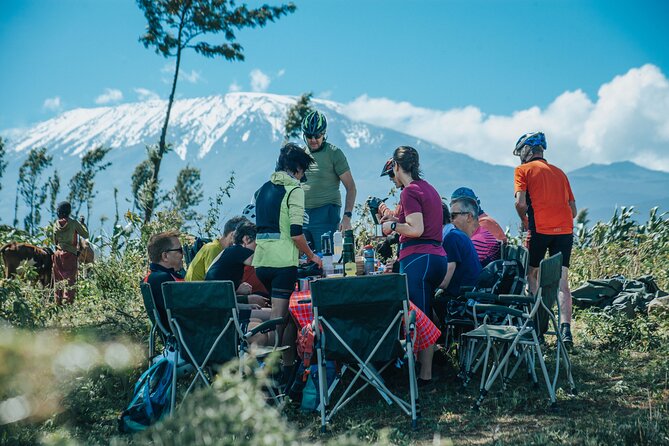
Kilimanjaro 360° is not a gentle bike holiday. It is a nine-day mountain-bike circuit around Africa’s highest peak, with rough tracks, steep climbs, muddy forest roads, and one high point near 3,700 meters. In return, you get far more than a view from a vehicle window: Chagga farms, Maasai villages, Kenya’s plains, wildlife corridors, and the changing sides of Kilimanjaro.
I like the local focus, especially the overnight stay at Olpopongi Maasai village and the route through coffee, banana, and farming country. I also like the support vehicle, which gives you practical backup on a demanding ride. The main drawback is clear: you need strong physical fitness, and the route can be very hard on rough or muddy roads.
Kilimanjaro 360° at a glance
- A true mountain circuit: You ride around the slopes of Kilimanjaro rather than simply cycling near one entrance gate.
- High point at 3,700 meters: Day 4 climbs toward the Shira Plateau and a helipad with views toward Kibo.
- Two distinct cultures: The route passes through Chagga country near Moshi and Maasai areas farther west.
- Wildlife corridor riding: Sinya and Ngasurai plains connect Kenya’s Amboseli area with Tanzania’s Enduimet wildlife zone.
- Private and adaptable: Only your group takes part, and One Bike has adjusted routes for riders seeking shorter or more demanding versions.
- Meals and riding gear included: You receive a mountain bike, helmet, water, snacks, a support vehicle, and scheduled meals.
What the nine-day circuit really involves
The advertised price is $2,499 per person, which is a serious outlay for a cycling trip. You are paying for a private nine-day program, airport or arrival transfer, a support vehicle, bike and helmet, meals, local guiding, and a route that links remote areas most independent visitors would not reach by ordinary sightseeing.
The value depends heavily on how much you want the cycling itself. If you are looking for a standard Kilimanjaro trek, this is the wrong product. You do not summit Kibo, and this is not a walking route to the top. If you want a demanding ride with cultural contact and varied scenery, the price covers a lot of moving parts.
The trip is private, so you are not locked into a large group’s pace. One Bike has also shown flexibility with custom versions of the route, including shorter circuits and very ambitious two-day attempts. That does not make the nine-day route easy, but it suggests that the plan can be discussed around your ability and goals.
The included meals are listed as nine lunches, eight breakfasts, and seven dinners. Dinner arrangements vary by night, with named stays including a Maasai village, Simba Farm campsite, Snow Cap Cottages in Rongai, a lakeside stay, and Kahawa Shambani campsite. Confirm exactly what accommodation and bedding are provided before paying, since the summary does not spell out every overnight facility.
Other Moshi days people book alongside this one:
- Kilimanjaro climb by Lemosho Route (7-day)
★ 5.0 · 651 reviews - Safari Serengeti And Ngorongoro
★ 5.0 · 288 reviews - Kilimanjaro climb, Machame Route (7-day)
★ 5.0 · 262 reviews
Day 1: Arrival in Moshi and a useful reset
Your One Bike guide collects you at Kilimanjaro Airport or another arrival point and takes you to your hotel. This is more than a transfer day. You receive information about the ride, make final preparations, and have time to rest or explore Moshi.
That pause matters. You are about to spend several days riding dirt roads around a major mountain, so arriving tired and rushing straight onto a bike would be poor planning. Use this day to ask practical questions about the route, check the fit of your bike and helmet, and make sure you understand how the support vehicle works.
The meeting point is the One Bike shop on Mailimoja Road in Moshi. The listed operating hours are 9 a.m. to 6 p.m., Monday through Sunday. Pickup is offered, and the activity ends back at the meeting point after the final ride and return to town.
Day 2: From Chagga farms to a Maasai homestead
The first riding day begins with a transfer to Machame Gate. From there, the road leads through rain forest, banana plantations, coffee farms, and homes associated with the Chagga people.
This opening section gives you a useful sense of how quickly Kilimanjaro’s setting changes. Near the mountain, the ride passes through cultivated land and settled communities. As you head west, the road becomes more open, with plains and acacia woodland replacing the denser farming areas.
You pass Ngabobo and Tinga Tinga villages and continue along the edge of the national park. The route crosses areas used by animals as well as local communities, so this is not a manicured cycling track. Expect dirt and gravel, changing surfaces, and a day in the saddle rather than a simple transfer between attractions.
The overnight stay at Olpopongi Maasai village is one of the trip’s most distinctive features. Sleeping in a traditional Maasai hut gives you a cultural experience that a lodge stop cannot match. It also means comfort may be basic, so pack with flexibility and ask ahead about sleeping arrangements.
Day 3: Riding a wildlife corridor toward Simba Farm
Day 3 takes you across the Sinya and Ngasurai open plains. These areas form a wildlife corridor between Amboseli National Park in Kenya and the Enduimet wildlife management area in Tanzania.
The appeal here is the sense of space. There is no tarmac, and the route stays away from the standard sightseeing circuit. On a clear day, you may see Kilimanjaro, Mount Meru, and Ol Doinyo Lengai. Those views are weather-dependent, so keep your expectations realistic. Mountain clouds can hide the peaks even when the ride itself is excellent.
This is also a day where the support vehicle earns its keep. Remote dirt roads, heat, and long stretches without standard visitor facilities make backup useful. Water and snacks are included, but you should still listen closely to the guide about supplies and pacing.
You spend the night at Simba Farm campsite. After a full day on open roads, a campsite provides a simple base before the toughest climb of the trip. The rural setting is part of the appeal, but riders who need hotel comfort every night may find the basic nights a challenge.
Same country, a completely different kind of safari:
- Kilimanjaro Climbing Lemosho Route 8 Days.
★ 5.0 · 186 reviews - Climbing Kilimanjaro – Machame Route
★ 5.0 · 170 reviews - Climbing Kilimanjaro through 7 days Machame Route
★ 5.0 · 151 reviews - Kilimanjaro climb, Lemosho Route (8-day)
★ 5.0 · 148 reviews
Day 4: The hard climb to 3,700 meters
Day 4 is the physical centerpiece. You climb on a dirty, rocky road toward the Shira Plateau, one of Kilimanjaro’s three major peaks or summit areas described in the route. The climb reaches a helipad at about 3,700 meters.
This is not a day to race. The road surface is rough, and the combination of steep climbing and altitude can make a manageable distance feel much longer. Strong fitness is required, but fitness alone does not remove the need for sensible pacing. Let the guide set a rhythm that leaves energy for the descent and the next days.
At the high point, you get views toward Kibo, the snow-covered upper peak of Kilimanjaro, with Maasai country stretching out on the other side. The contrast is the reward: high mountain rock and snow above, broad dry country below.
The return to Simba Farm is much easier because it is downhill, but do not treat it as effortless. Loose rock and steep descents require control. A well-fitted mountain bike matters here, and this is a good day to use the support vehicle if you need a break.
Day 5: Villages and the Rongai side of Kilimanjaro
After the big climb, the route moves around the northeastern side of Kilimanjaro near the Kenyan border. You pass through villages and farmland before reaching Nalemoru village and the entrance area for the Rongai trekking route.
The character of the ride changes again. Instead of open Maasai plains, you see settled agricultural country and the edge of Rongai Forest. The forest conservation center protects many tree species, giving you a chance to notice the mountain’s plant life rather than focusing only on summit views.
You spend the night at Snow Cap Cottages in Rongai Village. A cottage stay should feel like a welcome change after the campsite, though the supplied details do not specify the room setup or included amenities. Ask before booking if those details matter to you.
Day 5 can also be tiring because it follows the high climb. The itinerary sensibly does not present every day as a maximum effort, but you should still expect a full riding program rather than a sightseeing day with a token pedal.
Day 6: A smoother ride to Lake Chala
Day 6 is the recovery day, with a smoother downhill ride toward Lake Chala. The lake is a caldera basin fed by underground springs from Kilimanjaro.
This is one of the best-designed parts of the schedule. After several hard days, you get a chance to enjoy a place without immediately facing another major climb. Lake Chala’s appeal comes from its setting and natural variety, including forest, plants, birds, and aquatic life.
You spend the night beside the lake. That location gives you time to slow down and enjoy the setting, though the information provided does not list specific lake activities or extra equipment. Treat the stop as a scenic rest point rather than assuming that swimming, boating, or other activities are part of the price.
The downhill approach sounds easier, but your legs may still be carrying fatigue from Day 4. Keep some energy in reserve. A relaxed day is useful only if you allow it to remain relaxed.
Day 7: Mud, forest, and repeated climbs
The route turns demanding again on Day 7. You ride dirt roads that can become muddy, with frequent uphills and downhills through dense forest.
This section is about texture and atmosphere more than famous viewpoints. The forest brings a different set of plants and animals, and the changing road conditions keep the ride active. Mud can slow you down and make bike handling harder, especially after rain.
The day ends at Kahawa Shambani campsite in Uru village. The name points to the area’s coffee-growing identity, though the supplied program does not specify a farm visit or tasting. You should expect another straightforward campsite night and prepare for a less polished setting than a hotel in Moshi.
By now, the route’s value becomes easier to judge. You are not simply collecting mountain photographs. You are seeing how communities, farms, forests, and open plains fit around Kilimanjaro, while your own progress is measured in climbs, descents, and changing road surfaces.
Day 8: The final climb and the ride back to Moshi
The final cycling day heads uphill toward Mweka Gate. This is another substantial effort, arriving after a week of riding rather than at the start of your trip.
Once you finish the mountain circuit, the ride back to Moshi uses tarmac roads and feels much easier. That final smooth section is well placed. You can return to town without ending the trip on another long stretch of rock and mud.
Dinner and a night in your Moshi hotel follow. You have time to rest or go into town for an evening out. Keep that choice modest if you are exhausted. The city option is there, but a good sleep may be the smarter celebration after nine days built around physical effort.
Day 9: Sleep in, then leave Moshi
The last day has no cycling. You can sleep, recover, and take a hotel transfer to the airport or another departure point from Moshi.
That extra recovery morning is useful if your flight is not early. It also makes the trip easier to combine with a longer Tanzania holiday, though no onward itinerary is included in the information provided.
Bikes, food, support, and practical comfort
The tour supplies a mountain bike and helmet, plus water and snacks. The support vehicle is an important inclusion, especially on the remote plains and the rough climb toward Shira.
The bike is not a minor detail. One Bike is also known in Moshi for bike hire, and the feedback about its equipment is positive. Still, you should check saddle height, brakes, tires, and gear changes before leaving town. A small fit problem becomes a serious irritation after several days.
Meals included in the program are substantial in number: breakfast on eight days, lunch on nine days, and dinner on seven days. The exact menus are not specified, but the experience is intended to include local food and contact with local communities.
Insurance, flights, airport or departure tax, and any costs outside the stated meals and equipment are not included. Budget for those separately. The booking confirmation is issued at the time of reservation, and free cancellation is available up to 24 hours before the start time. Poor weather can lead to a different date or a full refund.
Who should book this ride?
I would choose this tour if you want a physically demanding cycling challenge and care about seeing more than the usual Kilimanjaro viewpoints. It suits riders who enjoy dirt roads, basic overnight stays, village routes, and long days outdoors.
It is also a good match if you want a private trip. Your group rides together rather than joining a large mixed party, and the operator has adjusted plans for riders with different ambitions. Ask about a modified route if nine days is too long or if you want to add or remove side sections.
I would not choose it if you want a soft adventure, polished lodges, or a predictable road surface. The itinerary includes steep climbs, rocky roads, possible mud, altitude, and repeated days in the saddle. You need strong physical fitness, and the trip will be more enjoyable if you already have experience with mountain biking or long-distance cycling.
The environmental angle also matters. Cycling uses your own effort rather than relying on a vehicle for the full route, and One Bike links its work with recycling awareness and bike donations in the local community. Those efforts are not a substitute for asking responsible questions about waste, water, and local partnerships, but they fit the trip’s low-impact, community-minded character.
Should you book the Kilimanjaro 360° tour?
Book it if the idea of cycling through six different settings in one journey appeals to you: Chagga farms, Maasai country, open plains, high mountain roads, Rongai forest, and Lake Chala. The combination is the strongest reason to choose this route.
The $2,499 price makes sense for a private, supported, meal-inclusive nine-day circuit, but it is not a bargain basement ride. Before confirming, ask for the full accommodation plan, daily distances, expected riding times, bike specifications, and the exact altitude profile.
If you are fit, flexible, and willing to trade comfort for access, this is an unusual way to experience Kilimanjaro. If you mainly want to stand beneath the mountain and take photographs, choose a shorter cycling outing around Moshi instead.
FAQ
How long is the Kilimanjaro 360° cycling tour?
The tour lasts approximately nine days, including arrival, eight days of scheduled breakfasts, and a departure day.
Where does the tour start?
The listed meeting point is the One Bike Shop on Mailimoja Road in Moshi, Tanzania. Pickup is also offered from Kilimanjaro Airport or another arrival point.
Where does the tour finish?
The cycling activity returns to Moshi and ends back at the meeting point. A transfer from your hotel to the airport or another departure point is arranged on Day 9.
Is this a private tour?
Yes. Only your group participates in the private activity.
How fit do I need to be?
You should have a strong physical fitness level. The route includes steep uphill sections, rocky dirt roads, muddy roads, repeated climbs and descents, and a high point near 3,700 meters.
Does the tour reach the summit of Kilimanjaro?
No. This is a cycling circuit around Kilimanjaro. The route climbs toward the Shira Plateau and reaches a helipad at about 3,700 meters, but it is not a summit trek.
Is a mountain bike provided?
Yes. A mountain bike and helmet are included.
Is a support vehicle included?
Yes. A supporting vehicle follows the cycling program and provides practical backup during the route.
Which meals are included?
The program includes nine lunches, eight breakfasts, and seven dinners. Water and snacks are also included.
Are flights and insurance included?
No. Flight tickets, insurance, and airport or departure tax are not included.
Can I cancel for a full refund?
You can cancel at least 24 hours before the experience start time for a full refund. Cancellations or changes made less than 24 hours before the start time are not accepted for a refund. If poor weather cancels the experience, you are offered another date or a full refund.
Just added around Moshi
- Mt Kilimanjaro 6 days Marangu route hike★ 5.0 · 3 reviews
- Wildlife Extravaganza: Manyara, Tarangire & Ngorongoro in 3 Days★ 5.0 · 3 reviews
- Private Cycle to Kilimanjaro Bike Park Safari★ 5.0 · 6 reviews
- 3 Days Private E-Bike Tour in West Kilimanjaro★ 5.0 · 3 reviews
- West Kilimanjaro cycling Adventures★ 4.5 · 8 reviews
- machame route★ 5.0 · 16 reviews
- Kilimanjaro Climb & Safari – Lemosho Route – 13 Day★ 5.0 · 10 reviews
- Kilimanjaro Climbing Umbwe Route★ 5.0 · 3 reviews
Kilimanjaro Tours, compared.






Climbing Kilimanjaro through 7 days Machame Route
Read our review →
