
Reviewed · AIRPORT TRANSFERS
8-Day Tanzania Private Safari Tour with Airport Pickup
Tanzania’s Northern Circuit gives you the country’s big four safari stops in one well-planned loop: Tarangire, Lake Manyara, Serengeti, and Ngorongoro Crater. You begin and end near Kilimanjaro, with airport pickup included, so the trip is easy to join even if you are not adding a Kilimanjaro climb.
I like the private format, which means your group does not share the safari vehicle with strangers. I also like the generous three-night Serengeti stay, since getting to this famous park is a long haul and one rushed night would not do it justice.
The main drawback is the amount of time on the road. Several days are listed at about six hours, and the itinerary moves quickly between parks. At $5,500 per person, you should also confirm exactly what is included, since the published list names meals and parking but does not clearly spell out every park fee, hotel cost, or camp charge.
Key points to know before booking
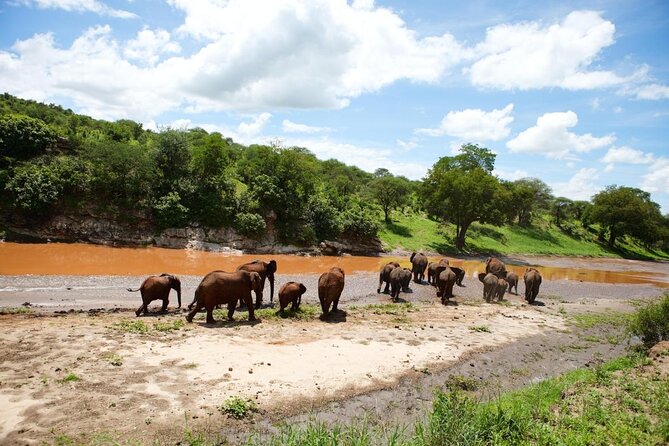
- Three nights in the Serengeti: This gives you two full game-drive days after the arrival route through Olduvai Gorge.
- Private vehicle and private group: Only your party participates, allowing more control over stops, timing, and photo opportunities.
- Airport pickup and return: Transfers connect Kilimanjaro International Airport with the safari route at the beginning and end.
- Four major wildlife areas: You see Tarangire, Lake Manyara, Serengeti, and Ngorongoro in eight days.
- Full-board camping style: The plan includes picnic lunches and meals at listed camps, with eight breakfasts, seven lunches, and six dinners specified.
- Strong guide reputation: Sopai’s named team members include Rajab, David, and Vincent. Rajab is praised for fast trip planning and communication, while David and Vincent are noted for wildlife knowledge and professional guiding.
A private start near Kilimanjaro Airport
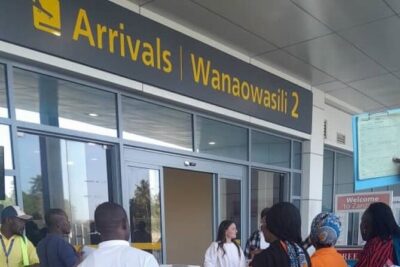
Your safari begins with a meet-and-greet at Kilimanjaro International Airport or another listed border entry point. A Sopai representative then transfers you to a hotel in Arusha City for the first night.
That first evening is useful, not wasted time. After an international flight, you get a chance to sleep, eat, and adjust before the early safari rhythm begins. The transfer itself is listed at about 30 minutes, though the exact time depends on your arrival point and traffic.
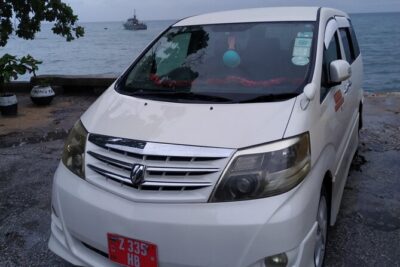
Because this is a private trip, airport pickup is arranged for your group rather than folded into a shared shuttle. That is a real convenience when you arrive with luggage and simply want to reach your hotel.
The tour information does not name the Arusha hotel. Ask for its name before paying, along with the room category and whether the first night is included in the $5,500 price. The same question applies to the final night, since Day 8 describes an airport transfer rather than another hotel stay.
A few more Moshi trips to weigh up
- Airport transfer
★ 5.0 · 38 reviews - Kilimanjaro Airport Transfer
★ 5.0 · 32 reviews - Airport Transfer between Moshi and Kilimanjaro International Airport
★ 5.0 · 13 reviews
Day 2: Tarangire and its baobab country
After breakfast, you head to Tarangire National Park for game viewing and photography. The day is listed at about six hours, including the park experience and travel, with a picnic lunch.
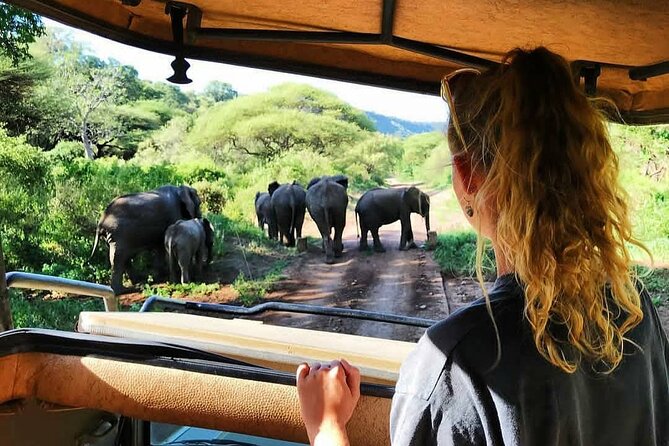
Tarangire is a fine first park because it offers a different feel from the Serengeti. Its huge baobab trees give the views a distinctive shape, and the park is especially noted for its large elephant population. Tree-climbing pythons are also part of its appeal, though sightings are never guaranteed.
You can expect a day built around slow vehicle drives, animal watching, and frequent photo stops. The private setup matters here. If your group wants to spend extra time with elephants, stop for a particular bird, or wait for a better angle, you can discuss that directly with your guide instead of following a fixed bus schedule.
The evening is planned at Tarangire Acacia Camp, with dinner and overnight accommodation on a full-board basis. Confirm whether the camp is inside or outside the park and what facilities are provided. The word tented can cover a range of comfort levels, so ask about private bathrooms, electricity, and charging access if those details matter to you.
Day 3: Lake Manyara’s escarpment views
Lake Manyara National Park follows breakfast the next morning. The park stretches along the base of the Rift Valley Escarpment, a dramatic rise of about 600 metres, and the setting is one of the main reasons to include it.
The wildlife list here includes elephants, buffalo, zebras, and more than 300 bird species. That makes Lake Manyara a good contrast to the larger open plains farther west. Bring binoculars if birds interest you, since the park’s appeal is not limited to large mammals.
The itinerary again allows about six hours, with a picnic lunch during the game drive. This is a scenic day, but it is also another transition day. You are not spending a full second day in Manyara, so your time may feel short if you prefer slow exploration over a highlights-focused route.
Your overnight stop is Twiga Manyara Camp, with dinner and breakfast arrangements described as full-board. As with the other camps, ask for current accommodation details before booking. The name and standard of a camp can change, and the supplied information does not provide room descriptions.
Day 4: Olduvai Gorge and the road to Serengeti
Day 4 is the longest-feeling transfer of the safari, even though it is again listed at about six hours. You leave after breakfast and travel toward Serengeti National Park, stopping at Olduvai Gorge for an on-route visit and game viewing.
Olduvai adds a human-origins and archaeology angle to a trip otherwise focused on animals. It breaks up the drive and gives you a sense of why this part of northern Tanzania matters beyond the safari vehicles and wildlife.
The Serengeti is the centerpiece of the route. It is Tanzania’s oldest and most famous national park, known worldwide for the annual wildebeest migration and its predators. The timing of your trip will affect what you see. The migration is seasonal, and no eight-day itinerary can promise a river crossing or a specific animal encounter.
You spend the night at Serengeti Acacia Tented Camp. The plan calls for dinner and a full-board stay. Since this is the first of three Serengeti nights, the camp’s location matters a great deal. Ask how far it is from the area planned for your game drives. A camp in central Serengeti may suit one season, while a different location may be better when herds shift.
Same country, a completely different kind of safari:
- Kilimanjaro climb by Lemosho Route (7-day)
★ 5.0 · 651 reviews - Safari Serengeti And Ngorongoro
★ 5.0 · 288 reviews - Kilimanjaro climb, Machame Route (7-day)
★ 5.0 · 262 reviews - Kilimanjaro Climbing Lemosho Route 8 Days.
★ 5.0 · 186 reviews
Days 5 and 6: Why three Serengeti nights help
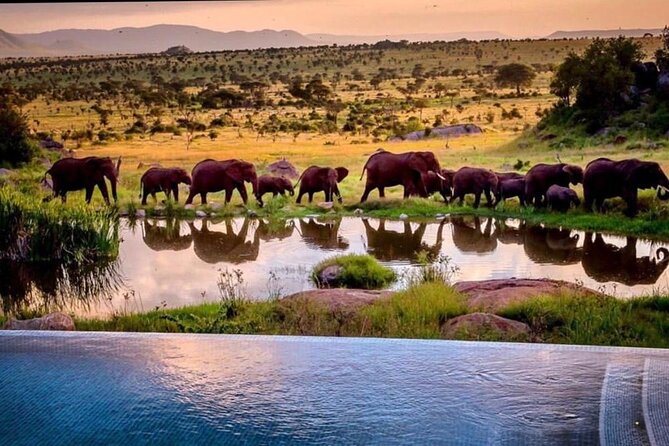
Day 5 begins with an early morning game drive. You return to camp for breakfast, then head out again for a full-day drive with a picnic lunch before returning for dinner.
That early start is worth it. Animals are often active in the cooler morning hours, and the quiet light is useful for photography. You also get a proper break at camp rather than spending every hour in the vehicle, although the return for breakfast can make the day feel divided.
Day 6 is another full-day Serengeti game drive after breakfast. You return to Acacia Central Camp for dinner and overnight accommodation.
The itinerary gives you a better chance of seeing varied behavior because you have time in the park instead of simply passing through. Your guide can adjust the day based on recent sightings, road conditions, and your interests. This is where a private safari can feel more personal: you can say if you want more birds, predators, elephants, or quiet time watching one scene.
The drawback is repetition. Two full days in a safari vehicle can be tiring, especially after the drive in from Manyara and the long route ahead to Ngorongoro. Pack a comfortable layer, sun protection, and something to occupy you during slower stretches. The best safari moments are not always constant action.
Sopai’s guiding team is a key part of the value. Rajab is associated with prompt communication and careful trip planning, while David is praised for placing the vehicle well and reading animal behavior. Vincent is also noted for professional conduct and respect for the environment. Ask in advance who will guide your departure, since the booking material does not guarantee a particular person.
Day 7: Ngorongoro Crater from the rim to the floor
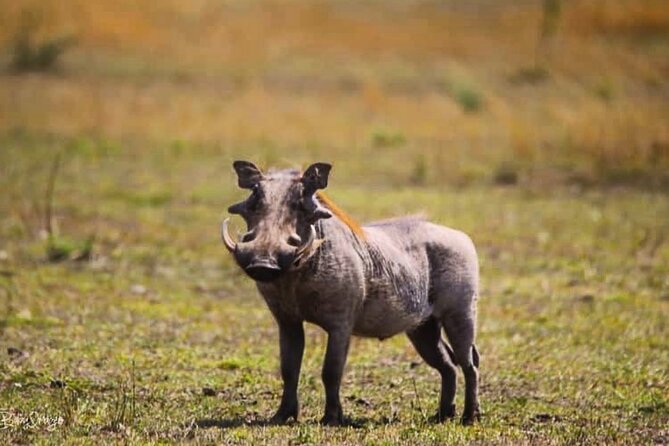
You leave early for Ngorongoro Conservation Area and descend into the crater for a game drive. A picnic lunch is included during the approximately six-hour day.
Ngorongoro is not a national park. It is a conservation area where Maasai communities live and graze cattle alongside wildlife. That shared use gives the area a different character from the parks, and it is important to understand that the safari takes place within a living community setting, not an empty wildlife enclosure.
The crater itself is a vast collapsed caldera with a high concentration of big game. The descent offers a powerful change in scenery, and the crater floor can produce a compact wildlife day. You may see large mammals in a relatively contained area, though sightings remain subject to nature and park conditions.
This is one of the most visually memorable parts of the route, but it can also be busy. Many vehicles want access to the crater, and the itinerary gives you one main crater day rather than an overnight inside the conservation area. If you prefer a quieter experience, ask how the early departure will be timed and how much flexibility your guide has.
After the crater drive, you continue to Country Lodge Karatu for dinner and overnight accommodation. Karatu is a practical place to sleep after the crater. It also prevents you from driving all the way back to Arusha on the same day.
Day 8: The airport transfer
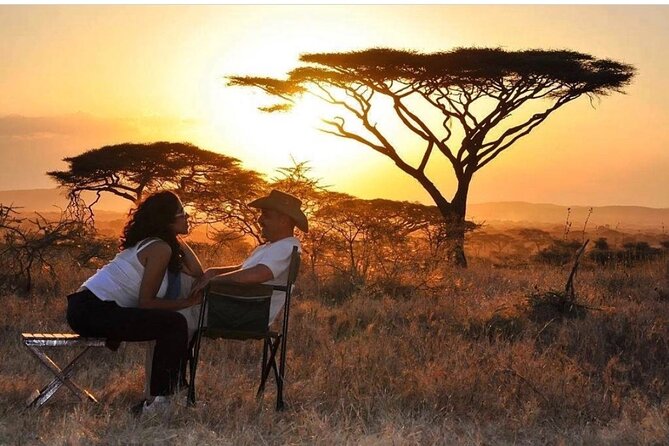
The final morning includes breakfast, a packed lunch, and a transfer to Kilimanjaro International Airport according to your flight schedule. The transfer is listed at about five hours.
That timing deserves careful attention. You should not book a tight international departure without checking the planned road time, border conditions if relevant, and the airport arrival recommendation for your airline. The information provided does not give a precise pickup time or flight cutoff.
The packed lunch is a useful touch on a long final transfer. Still, ask whether the itinerary can be adjusted if your flight leaves early or late. Since this is a private tour, the operator may be able to tailor the transfer, but that flexibility should be confirmed rather than assumed.
What $5,500 per person really buys
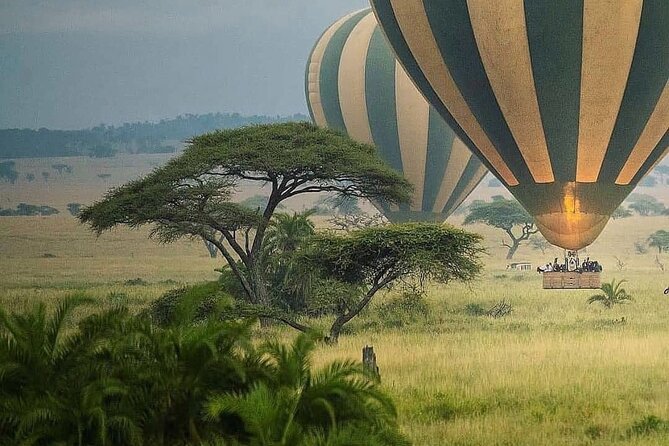
At $5,500 per person, this is a serious investment. The value comes from the private format, airport transfers, a dedicated safari vehicle and guide arrangement, four major parks and conservation areas, meals, and several nights in tented camps and a Karatu lodge.
You are also paying for route efficiency. Seeing Tarangire, Manyara, Serengeti, and Ngorongoro in eight days would be difficult to arrange independently, especially if you do not know the roads, park entry systems, or seasonal wildlife patterns.
The published inclusions specify parking fees, eight breakfasts, seven lunches, and six dinners. The daily plan also names camps and lodging stops. However, the inclusion list does not clearly state whether park entry fees, accommodation, drinking water, airport taxes, tips, or other costs are included.
That is the most important money question to settle before booking. Ask for a written cost breakdown covering:
- Park and conservation-area entry fees
- All hotel, lodge, and camp nights
- Safari vehicle and fuel
- Guide services
- Airport pickup and return
- Meals and drinks
- Olduvai Gorge charges, if applicable
- Tips and personal purchases
If those major items are included, the private eight-day structure may offer fair value for a couple or small group that wants comfort and control. If several are extra, the headline price becomes harder to judge.
Food, camps, and the practical side of safari life
Meals are built into the rhythm of the trip. You receive picnic lunches on park days and dinners at camp, with eight breakfasts listed. That means you do not need to leave a park to find lunch, which protects valuable game-drive time.
The accommodation style is mid-range tented camping, based on the named camps and lodge. This is not presented as a luxury lodge circuit, and you should set expectations accordingly. Ask about bathrooms, hot water, power, mosquito protection, and charging facilities before arrival.
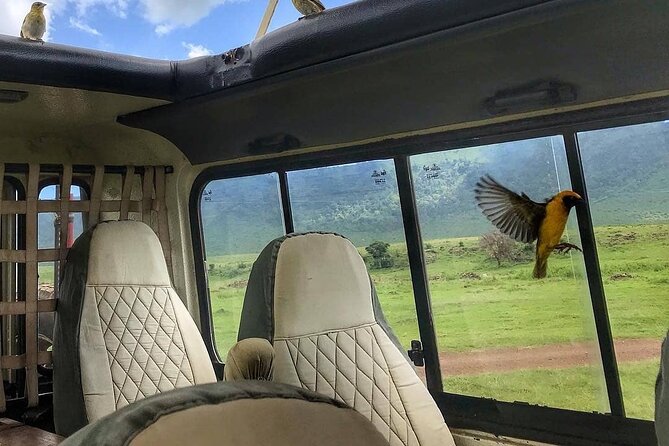
The private vehicle is central to the experience, but the vehicle type is not specified. Ask whether it is a dedicated safari vehicle with large viewing windows or a pop-up roof, and how many people your party will share it with. Only your group participates, but the booking information does not state the exact vehicle configuration.
The tour requires long days in a vehicle, uneven roads, early starts, and outdoor conditions. Most people can participate, according to the supplied information, but anyone with mobility, back, or medical concerns should discuss the physical demands directly with Sopai before booking.
Communication and trip planning with Sopai
Rajab is repeatedly associated with quick communication, including WhatsApp contact before departure. That can be especially useful when you need to adjust a route, compare options, or clarify airport arrangements from another country.
The company has also been associated with helping couples shape a safari around their needs and budget. That matters because the standard route is busy. You may want more Serengeti time, fewer park changes, or a different accommodation level.
Ask questions early and keep the answers in writing. Confirm the guide, vehicle, camps, park fees, meal plan, and airport schedule. Good pre-trip communication is valuable, but clear written inclusions protect both sides.
Free cancellation is available up to 24 hours before the start time for a full refund. Changes or cancellations inside that 24-hour window are not accepted for a refund, and poor weather may lead to a different date or a full refund.
Who should book this safari?
I would recommend this trip to a first-time safari visitor who wants the classic Northern Circuit without organizing each transfer alone. It suits couples, honeymooners, families, and small private groups that value their own vehicle and guide.
It is also a good match if your priority is variety: baobabs and elephants in Tarangire, birds and escarpment views at Manyara, predators and migration country in Serengeti, then concentrated wildlife in Ngorongoro.
I would hesitate if you dislike long drives, want a slow stay in each park, or expect luxury accommodation at every stop. I would also compare prices with a few other operators before committing, because $5,500 is high enough that the details of park fees and lodging can change the value substantially.
Should you book it?
Book this safari if you want a private, classic Tanzania route with airport pickup and three nights in Serengeti. The strongest features are the route, the private format, and the reported care given to planning, vehicle cleanliness, food, and guide service.
Before you pay, request a day-by-day written quote with every fee included. Confirm the assigned guide, vehicle, accommodation standards, and final airport timing. If those answers are clear and the price includes the main safari costs, this is a practical way to see northern Tanzania in eight focused days.
FAQ
Where does the safari start?
The safari starts with pickup at Kilimanjaro International Airport or another listed border post. The first transfer takes you to a hotel in Arusha City.
How long is the tour?
The experience lasts approximately eight days.
Which parks and conservation areas are included?
The route includes Tarangire National Park, Lake Manyara National Park, Serengeti National Park, and the Ngorongoro Conservation Area.
Is this a private tour?
Yes. Only your group participates in the tour.
Are meals included?
The listed inclusions specify eight breakfasts, seven lunches, and six dinners. Picnic lunches are planned on several game-drive days.
Is airport pickup offered?
Yes. Pickup is offered at the beginning, and the final day includes a transfer to Kilimanjaro International Airport for your flight home.
What accommodation is planned?
The itinerary names an Arusha hotel, Tarangire Acacia Camp, Twiga Manyara Camp, Serengeti Acacia Tented Camp, Acacia Central Camp, and Country Lodge Karatu. Confirm the exact properties and room details before booking.
What is the cancellation policy?
You can cancel up to 24 hours before the experience start time for a full refund. Cancellations or changes made less than 24 hours before the start time are not accepted for a refund.
Just added around Moshi
- Mt Kilimanjaro 6 days Marangu route hike★ 5.0 · 3 reviews
- Wildlife Extravaganza: Manyara, Tarangire & Ngorongoro in 3 Days★ 5.0 · 3 reviews
- Private Cycle to Kilimanjaro Bike Park Safari★ 5.0 · 6 reviews
- 3 Days Private E-Bike Tour in West Kilimanjaro★ 5.0 · 3 reviews
- West Kilimanjaro cycling Adventures★ 4.5 · 8 reviews
- machame route★ 5.0 · 16 reviews
- Kilimanjaro Climbing Umbwe Route★ 5.0 · 3 reviews
- Kilimanjaro Climb & Safari – Lemosho Route – 13 Day★ 5.0 · 10 reviews
Airport Transfers, compared.
5-Day Private midrange Tour in Arusha with Airport Pickup
Read our review →
7-Day Private midrange Tour in Arusha with Airport Pickup
Read our review →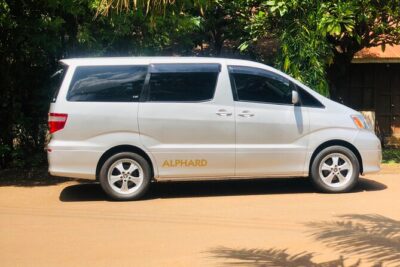

6-Day Private midrange Tour in Arusha with Airport Pickup
Read our review →Browse the lists this tour appears in