
Reviewed · MACHAME ROUTE CLIMBS
Climbing Kilimanjaro through 7 days Machame Route
Kilimanjaro’s Machame Route gives you a full mountain story in seven days: rainforest on day one, high volcanic slopes, the Barranco Wall, a hard summit night, and a different trail down. It is called the Whiskey Route because it is longer and steeper in places than Marangu’s Coca Cola Route, not because it requires technical climbing.
I like the route’s natural acclimatization pattern, especially the chance to walk high and sleep lower around Lava Tower and Barranco. I also like the serious care built into the package: daily health checks, fresh meals, Wilderness First Responder certified guides, and emergency oxygen. The main drawback is simple: seven days is demanding, and the route is often busy, so you should expect shared trail space and long days rather than solitude.
Key points to know before you book
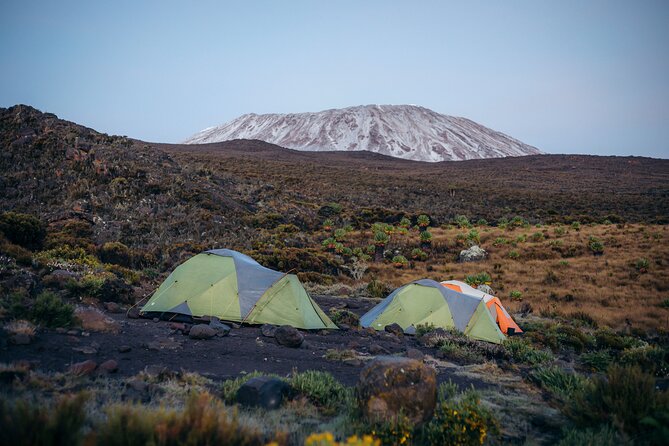
- Machame Gate begins at 1,800 meters, leading into Kilimanjaro’s south western side and its rainforest.
- The seven-day route improves acclimatization by taking you up toward Lava Tower before dropping to Barranco Camp.
- The summit push is the toughest section, followed by a descent on the Mweka trail instead of repeating the ascent.
- Experienced mountain staff are central to the trip, with guides who have at least eight years on Kilimanjaro and Wilderness First Responder certification.
- Camping equipment, meals, transport, and the mountain crew are included, while Moshi accommodation before and after the climb costs extra.
- The price is $2,425 per person, with private group arrangements, pickup, mobile ticketing, and possible group discounts.
Why the Machame Route earns its Whiskey Route name
Machame is not a technical mountaineering route. You do not need to rock climb or use ropes as part of the standard plan. Still, it is a serious physical challenge because the trail is longer and steeper in places than the Marangu Route.
The reward is a better rhythm for adjusting to altitude. You gain height toward Lava Tower, then descend to sleep at Barranco. That walk high, sleep low pattern gives your body more time to respond to thinner air than a simple steady climb would.
I would choose Machame if you want changing scenery and a route that feels like a real trek rather than a quick uphill march. You should not choose it just because it has a strong summit record. A good success rate helps, but your fitness, pacing, health, and response to altitude still matter.
The route is also described as the busiest on Kilimanjaro. That matters most at popular camp areas and on narrow trail sections. If quiet wilderness is your main goal, the crowds may test your patience. If you value a well-used route with strong logistical support, the activity can be a sensible choice.
More Machame Route Climbs in Kilimanjaro
- Kilimanjaro climb, Machame Route (7-day)
★ 5.0 · 262 reviews - Climbing Kilimanjaro – Machame Route
★ 5.0 · 170 reviews - #1. Best Kilimanjaro Day hike Tour-Machame Route-ISMANI
★ 4.2 · 47 reviews
Day 1: Machame Gate and the rainforest
The climb starts from the Moshi Leopard Hotel on Market Street, with the listed start time shown as 12:00 am. Because that time is unusually early for a standard first hiking day, confirm the exact pickup and departure time with ZAFS Tours before setting out.
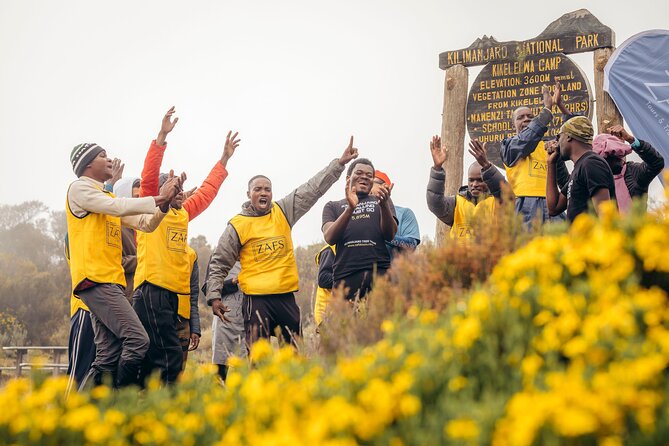
From the gate, the route heads into the rainforest on Kilimanjaro’s south western side. The starting elevation is 1,800 meters, so you begin well above Moshi but far below the summit. The first day introduces the steady pace that will shape the rest of the climb.
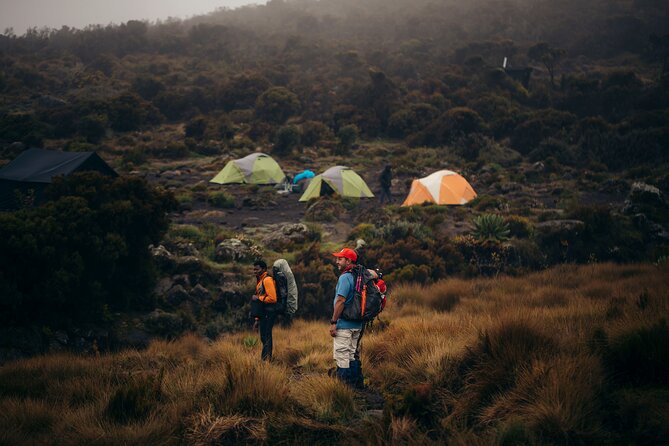
I like this opening because the forest gives you a gradual change in climate and altitude. You are not dropped straight onto barren high ground. The route begins with vegetation, shade, and a sense of entering a much larger mountain ecosystem.
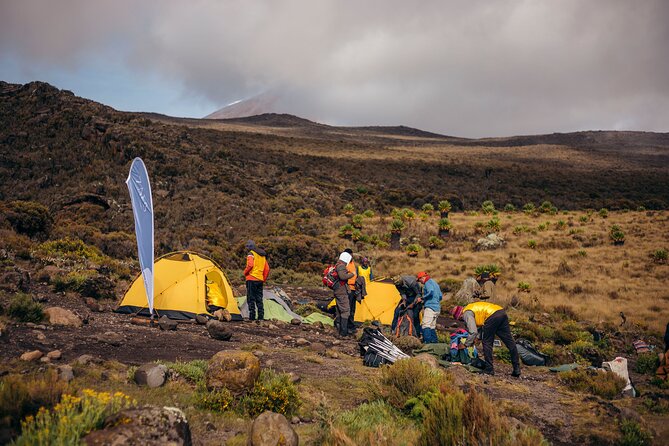
Your mountain crew includes guides, porters, a chef, and a waiter. Private tents, a dining tent, tables, chairs, mattresses, cutlery, and cooking equipment are included. That setup means you are not responsible for carrying the full camp system or preparing your own meals after a tiring day.
Day 2: Shira Camp and the first high views
The trail continues upward from the forest toward Shira Camp. This is where the Lemosho Route joins from the west, bringing you onto a wider network of Kilimanjaro routes.
Shira is important for more than its name on the itinerary. It marks a clear shift from the lower forest zone toward the open upper mountain. You will begin to feel the scale of Kilimanjaro more directly, with fewer trees and more exposed ground.
The provided plan does not give exact walking times or distances for each day, so you should ask for the current schedule before you book. Conditions, group pace, and camp arrangements can affect how long each section takes.
At camp, breakfast, lunch, and dinner are included throughout the mountain portion. Meals are freshly prepared by the camp chef, and coffee or tea is provided. That is useful on a long climb, since regular food and warm drinks help you keep moving when appetite and energy begin to change at altitude.
Day 3: Across the southern slopes toward Lava Tower
From Shira, the route crosses the southern side of Kilimanjaro and heads toward Lava Tower. This is one of the most useful days in the whole plan because it puts the route’s acclimatization strategy to work.
You climb high toward Lava Tower, then continue to Barranco Camp at a lower elevation for sleep. That change can make the day feel confusing at first. You work hard to gain altitude, only to lose some of it later. The point is not to reach the highest possible camp each night. The point is to give your body time to adjust.
Lava Tower also brings a tougher feel. The route is higher, more exposed, and more demanding than the rainforest approach. Go slowly, drink as advised, and pay attention to your condition. The guides conduct daily health checks, which gives the crew a regular chance to notice problems and adjust their support.
Emergency oxygen cylinders are carried on the climb. That is an important safety measure, but it should not be treated as a cure for altitude illness or a reason to ignore symptoms. Your guide’s health checks and instructions are much more important than any single piece of emergency equipment.
More Machame Route Climbs in Moshi:
- 7 Days Machame route – Kilimanjaro
★ 5.0 · 45 reviews - The Best of Machame Route in 6 Days: Your World’s Summit Guide
★ 5.0 · 44 reviews - Best Kilimanjaro Adventure 7 days Machame route Trekking
★ 5.0 · 42 reviews - 6 Days Machame Route Kilimanjaro Climbing
★ 5.0 · 42 reviews
Day 4: Barranco Wall and the route to Barafu
The Barranco Wall is one of Machame’s best-known sections. It adds a steep, physical passage before the route continues toward Barafu Camp. The wall can look intimidating, but the supplied information does not describe it as a technical climbing section. You should still expect a demanding day and follow the guide’s pace.
The guides are described as having at least eight years of experience on Kilimanjaro, with extensive time on the mountain. Team members named in the supplied trip feedback include Alex, Gabriel, Mushi, Farooq, Musa, Danis, and Frank. Your assigned guide may be different, so treat these names as examples of the wider guiding team rather than a promise about your exact group.
This is also the point where camp comfort becomes more valuable. After a hard trail day, a dining tent, a cooked meal, a mattress, and a warm drink are not minor extras. They give you a place to recover, eat, and prepare for the summit push.
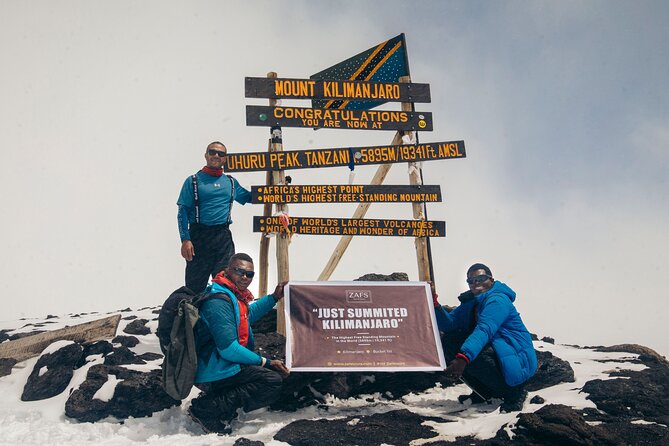
Barafu Camp is the launch point for the summit. The plan does not state the exact summit departure time, so ask ZAFS Tours for the current schedule. You should also confirm what personal gear you must bring, since the package lists camping equipment but does not provide a full packing list.
Day 5: The summit push and Uhuru Peak
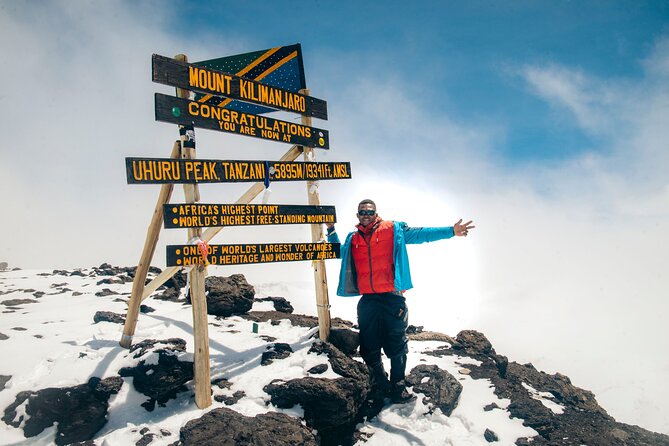
Reaching the summit is the defining challenge of the trip. The route takes you from Barafu Camp toward Kilimanjaro’s summit, where cold, altitude, fatigue, and a long uphill effort come together.
The company places strong emphasis on pacing and personal care. That matches the practical reality of a summit day. You are better served by moving slowly and steadily than by trying to prove your fitness early. The repeated advice to go pole pole, meaning slowly, is not decoration. It is the sensible way to protect your energy.
The guides also provide medical advice during the trek and monitor your health each day. Several accounts describe guides staying with slower climbers, offering motivation, and helping people continue at their own pace. That kind of support can make a real difference, especially when the summit feels far away.
Do not assume a high success rate means the summit is guaranteed. The route improves your odds through its length and acclimatization pattern, but no operator can remove the risks of altitude or exhaustion. You need a moderate level of physical fitness, and you must be ready to turn around if the guide decides it is unsafe.
After the summit, you descend toward camp and continue down the mountain according to the operator’s schedule. The supplied itinerary does not give the exact camp names or timing for each post-summit stop, so get those details in writing before arrival.
Day 6 and Day 7: Descending by Mweka
The descent uses the Mweka trail rather than sending you back over the Machame route. I like this point because you see a different side of the mountain and avoid retracing the full ascent.
Descending is not simply an easy walk downhill. Your legs may be tired after the summit, and the trail can still demand concentration. The change in altitude may feel welcome, but fatigue can make slips and poor foot placement more likely. Take your time and keep following the guide’s instructions.
The seven-day schedule ends back at the meeting point in Moshi. Pre and post hike accommodation is available on request but is not included in the listed package. Build those nights into your budget if you need a place to sleep before the start or after the descent.
What the $2,425 price covers
At $2,425 per person, this is a substantial purchase, but the price includes much more than trail access. You receive private transportation, fees and taxes, camping equipment, three daily mountain meals, coffee or tea, and the full mountain crew.
The equipment list covers private tents, a dining tent, crew tents, tables, chairs, mattresses, cutlery, and utensils. That is meaningful value because arranging a camp kitchen and support team independently would be difficult, especially on a high-altitude climb.
The food plan is another strong part of the package. Breakfast, lunch, and dinner are freshly prepared on the mountain. Several accounts describe the food as unexpectedly good and the cooking as a major comfort. Still, the menu is not detailed, so ask about dietary needs before booking if you have allergies or restrictions.
The price does not include Moshi accommodation before or after the hike. It also does not list personal clothing, boots, bags, tips, flights, or other personal costs. Do not read the included camping gear as a complete personal equipment package. Request a full list so you know what remains to buy or rent.
Group discounts may be available, and the activity is described as private, meaning only your group participates. That can be especially useful for a family, group of friends, or organized party that wants its own pace. The information does not specify the maximum group size, so ask before payment.
The human side of the climb
The strongest part of this experience is the level of human support built into the trek. The guides bring mountain experience, health training, and knowledge of Kilimanjaro’s flora and fauna. The crew also includes porters, a chef, and a waiter, so the climb is not a bare-bones walk with food left to chance.
The personal accounts repeatedly highlight guides who were friendly, patient, motivating, and willing to match a climber’s pace. Names such as Alex, Gabriel, Mushi, Musa, Farooq, Danis, and Frank appear in the feedback, along with praise for the wider porter and cooking teams.
I would pay close attention to this when choosing a Kilimanjaro operator. A guide who keeps checking your condition and gives clear advice can matter more than a glossy camp description. At the same time, ask how the company handles porter welfare, tipping, group size, and guide-to-climber ratios. Those details are not supplied here, and they are worth clarifying.
Who should choose this seven-day climb
This route suits you if you have a moderate fitness level, want a full seven-day mountain experience, and prefer a route with strong acclimatization planning. It also suits people who value a staffed camp, cooked meals, and daily oversight rather than a stripped-down trek.
It is a good fit for groups because private participation and group discounts may be available. Solo climbers may also be able to join a group arrangement, although the listed activity itself is private for the participating group.
I would be cautious if you dislike camping, struggle with steep uphill walking, or need a guaranteed schedule with fixed daily times. The route is physically demanding, the summit is never certain, and the busiest sections may not feel remote.
The activity is booked an average of 65 days in advance. That suggests you should plan well ahead, especially if your dates are fixed. Confirmation is received at booking, but it is still sensible to confirm pickup, accommodation, equipment, and the exact first-day timing.
Should you book ZAFS Tours?
I would consider this climb a strong option if you want Machame’s varied scenery, a seven-day schedule, and a substantial support team. The best value comes from the combination of camping equipment, meals, transport, health checks, emergency oxygen, and experienced guides rather than from any single feature.
Book it if you are ready for a real physical challenge and will prepare seriously. Before paying, ask for the detailed day-by-day timing, personal gear list, Moshi accommodation options, dietary arrangements, group size, and tipping guidance.
The route’s success rate and supportive crew improve your chances, but they do not replace fitness or sensible decision-making. If you accept that, the Machame Route offers one of the most varied ways to reach Kilimanjaro’s summit.
FAQ
How long is the Kilimanjaro Machame Route experience?
The climb lasts approximately seven days.
Where does the climb start?
The route begins at Machame Gate, at an altitude of 1,800 meters, on the south western side of Kilimanjaro.
Where is the meeting point?
The listed meeting point is Moshi Leopard Hotel on Market Street in Tanzania.
What is the listed start time?
The listed start time is 12:00 am. Confirm the exact pickup and departure arrangement with ZAFS Tours before the climb.
Is transportation included?
Yes. Private transportation is included, and pickup is offered.
Are meals included on the mountain?
Yes. Breakfast, lunch, and dinner are included each day on the mountain. Coffee and tea are also provided.
What camping equipment is included?
The package includes private tents, a dining tent, crew tents, tables, chairs, mattresses, cutlery, and utensils.
Is accommodation in Moshi included?
No. Pre and post hike accommodation in Moshi is available on request but is not included in the listed package.
What happens if I need to cancel?
You can receive a full refund if you cancel at least 24 hours before the experience starts. Cancellations or changes made less than 24 hours before the start are not accepted for a refund. If the minimum number of participants is not reached and the activity is canceled, you will be offered another date or experience, or a full refund.
More 7-Day Experiences in Moshi
- Kilimanjaro climb by Lemosho Route (7-day)
★ 5.0 · 651 reviews - Private Kilimanjaro Hike 7 Day Lemosho Route
★ 5.0 · 60 reviews - 7-Day Magical Tanzania Safari -Premium High End Package
★ 5.0 · 53 reviews - Kilimanjaro climb, Rongai Route (7-day)
★ 5.0 · 40 reviews
Just added around Moshi
- Mt Kilimanjaro 6 days Marangu route hike★ 5.0 · 3 reviews
- Wildlife Extravaganza: Manyara, Tarangire & Ngorongoro in 3 Days★ 5.0 · 3 reviews
- Private Cycle to Kilimanjaro Bike Park Safari★ 5.0 · 6 reviews
- machame route★ 5.0 · 16 reviews
- 3 Days Private E-Bike Tour in West Kilimanjaro★ 5.0 · 3 reviews
- West Kilimanjaro cycling Adventures★ 4.5 · 8 reviews
- Kilimanjaro Climb & Safari – Lemosho Route – 13 Day★ 5.0 · 10 reviews
- Kilimanjaro Climbing Umbwe Route★ 5.0 · 3 reviews
Machame Route Climbs, compared.



7-Day Machame Kilimanjaro Summit Tour from Arusha
Read our review →
7 Days Kilimanjaro via Machame route affordable price
Read our review →
#1. Best Kilimanjaro Day hike Tour-Machame Route-ISMANI
Read our review →

The Best of Machame Route in 6 Days: Your World’s Summit Guide
Read our review →
Best Kilimanjaro Adventure 7 days Machame route Trekking
Read our review →Browse the lists this tour appears in