
Reviewed · MACHAME ROUTE CLIMBS
7 Day Kilimanjaro Machame climb
Kilimanjaro’s Machame Route gives you the mountain in chapters: wet rainforest, open heather, volcanic desert, glacier views, and a cold midnight push to Uhuru Peak at 5,895 meters. The Barranco Wall adds a little hands-on scrambling, so this feels like a real mountain climb without ropes or technical gear.
I like the route’s careful climb high, sleep low rhythm, especially the Lava Tower day followed by a descent into Barranco Valley. I also like the practical care built into the price: guides conduct health checks twice daily, camps include a cook and waiter, and the operator follows Kilimanjaro Porters Assistance Project standards.
The main drawback is the schedule. Summit night begins around midnight and can last about 18 hours, followed by a long descent. This is not a casual week in the hills. You need strong fitness, sensible gear, and a willingness to sleep in a tent at altitude.
Key points to know before you book
- Machame offers varied scenery: You move from thick rainforest to heather, moorland, alpine desert, and the mountain’s arctic summit zone.
- The Barranco Wall is a non-technical scramble: You use hands and feet on a steep section, but no previous climbing experience or special equipment is required.
- Day three is built for acclimatization: The trail rises to Lava Tower at 4,630 meters, then drops to Barranco Valley.
- The summit attempt starts around midnight: Expect a slow, cold climb over loose volcanic scree to Stella Point and then Uhuru Peak.
- The price includes major mountain costs: Park fees, camping, meals, guide services, porters, tents, transfers, and boiled water are included.
- The operator emphasizes crew welfare and safety: Shah Tours is listed as a KPAP operator and provides medical checks, oxygen, and a first-aid kit.
Why Machame is called the Whisky Route
Machame is one of Kilimanjaro’s best-known routes, and its nickname hints at its reputation for being the stronger, steeper option compared with easier trekking approaches. You do not need technical climbing skills, but you do need to handle long uphill walks, uneven ground, cold nights, and thin air.
The route crosses the southern side of the mountain in a useful pattern. Some days take you high, then bring you lower to sleep. That matters because altitude, not just leg strength, is the main challenge on Kilimanjaro.
This seven-day version gives you more time than shorter Machame schedules. Day three reaches Lava Tower before dropping to Barranco, and day five is deliberately short. That extra rest before summit night is one of the route’s strongest features.
This is a private activity, so only your group takes part. The listed price is $2,580 per person, and group discounts are offered. That price is easier to judge when you look at what is included: national park conservation and entry fees, camping and rescue fees, transfers from Moshi, a mountain guide, a cook, a waiter, tent staff, porters, meals, drinking water from the first camp onward, and basic sleeping mattresses.
You still need to budget for tips, insurance, visas, personal gear, drinks, and possibly extras such as a private tent or portable toilet. A sleeping bag and walking poles are not supplied, so sort those out before arriving in Moshi.
More Machame Route Climbs in Kilimanjaro
- Kilimanjaro climb, Machame Route (7-day)
★ 5.0 · 262 reviews - Climbing Kilimanjaro – Machame Route
★ 5.0 · 170 reviews - Climbing Kilimanjaro through 7 days Machame Route
★ 5.0 · 151 reviews
Day 1: Moshi to Machame Gate and the rainforest
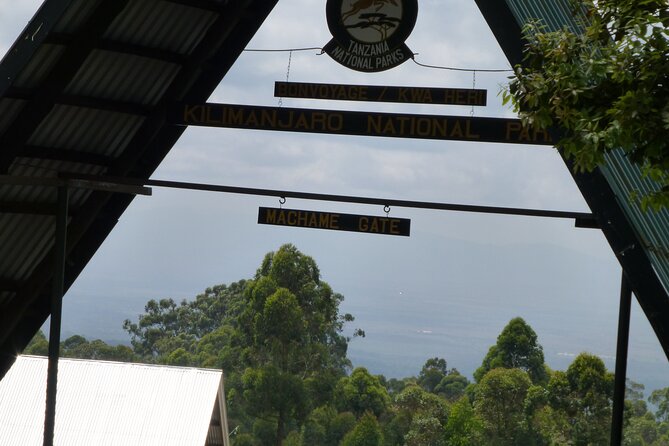
The day begins with a 9:00 a.m. pickup from Shah Tours at 6 Sekou Toure Way in Moshi, or from a Moshi-based lodge or pickup point. A road transfer takes you to Machame Gate, where registration comes before the walking starts.
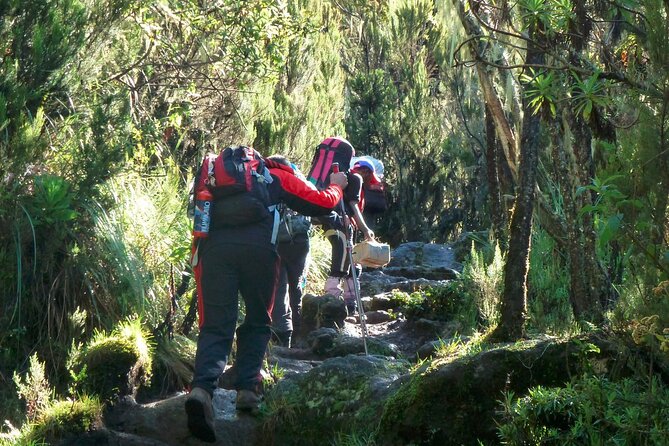
The first trail passes through Kilimanjaro’s rainforest zone. This is not a gentle stroll. The path climbs steadily and can feel steep, while rain may make the ground slippery. Thick vegetation and varied plant life give this opening day a proper wilderness feel, but wet conditions can slow you down.
The stated walking time is about seven hours. You finish near the edge of the forest and the beginning of the heather zone. Since this is your first day carrying a daypack and adjusting to the mountain, use it to establish a calm pace. You do not gain anything by racing away from the gate.
Water on the first day is not included, so bring what you need for this section. From the first camp onward, the team provides boiled drinking water.
Day 2: Heather, moorland, and views toward Shira
The forest gives way to heather and moorland, and the trail continues up a steep ridge toward Picnic Rock. On a clear day, this is your first strong look at Kibo, the main volcanic cone and the summit you are working toward.
You may also see the jagged peaks of the Shira Plateau to the west. Mount Meru, Tanzania’s second-highest mountain at 4,563 meters, can appear in the distance. The route then becomes gentler and flatter as you walk toward camp.
This is another roughly seven-hour day, so do not mistake the flatter finish for an easy day overall. The open ground offers less shelter from weather and sun than the forest. The reward is a much wider view, with the mountain feeling less like a distant shape and more like the route’s constant companion.
I like this change of scenery because it gives the climb a clear sense of progress. You are no longer simply walking uphill through trees. You can see the volcanic forms around you and begin to understand Kilimanjaro as a group of distinct cones and ridges.
Day 3: Lava Tower, altitude practice, and Barranco Valley
Day three is the route’s key acclimatization day. You climb steadily toward Kibo and cross the alpine desert to Lava Tower, at 4,630 meters. This is your first significant high point, and it gives the guides a chance to see how you are handling altitude.
After Lava Tower, the trail descends around Kibo toward Barranco Valley. That descent is important. You reach a high elevation during the day but sleep at a lower level, a pattern designed to help your body adjust.
The walking time is about eight hours, making this one of the longest days before the summit attempt. You also pass Kilimanjaro’s distinctive giant senecios, large flowering plants found on the mountain. Their unusual shape makes a welcome break from the bare volcanic ground.
This is the day to pay attention to your body. Headaches, nausea, unusual tiredness, or poor coordination should be reported to the guide promptly. The crew carries emergency oxygen and a first-aid kit, and guides conduct health checks twice daily with a medical oximeter. Those measures are useful, but they do not replace good judgment.
More Machame Route Climbs in Moshi:
- #1. Best Kilimanjaro Day hike Tour-Machame Route-ISMANI
★ 4.2 · 47 reviews - 7 Days Machame route – Kilimanjaro
★ 5.0 · 45 reviews - The Best of Machame Route in 6 Days: Your World’s Summit Guide
★ 5.0 · 44 reviews - Best Kilimanjaro Adventure 7 days Machame route Trekking
★ 5.0 · 42 reviews
Day 4: Scrambling over the Barranco Wall
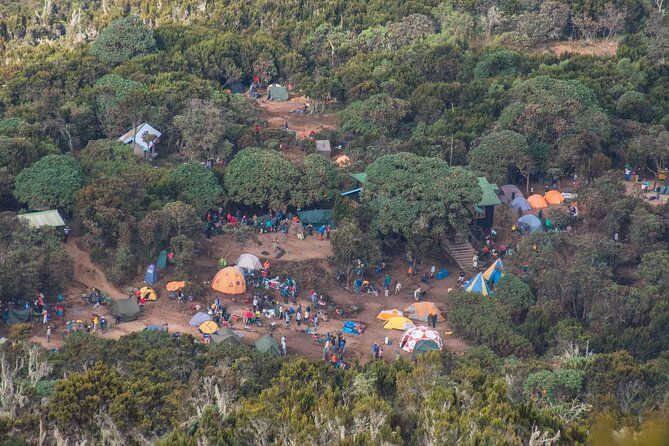
The Barranco Wall is the most distinctive feature of the Machame Route. You ascend it using hands and feet in places, but it is a non-technical scramble. No ropes, climbing course, or advanced equipment is required.
The section gives you the sensation of climbing rather than simply hiking. It is steep and can look intimidating from below, but the route is designed for trekkers who are comfortable with a little exposed, hands-on movement.
At the top, you get fine views back toward the camp and across to the Heim Glacier on Kibo. The trail then winds through alpine desert to Karanga Valley, dropping into the valley before climbing again to camp.
This day lasts about five hours, which is relatively short after the long Lava Tower crossing. Karanga is also the last water point on the route. After this stage, the team relies on carried supplies, so the porters’ work becomes especially clear.
Day 5: A short walk to summit camp
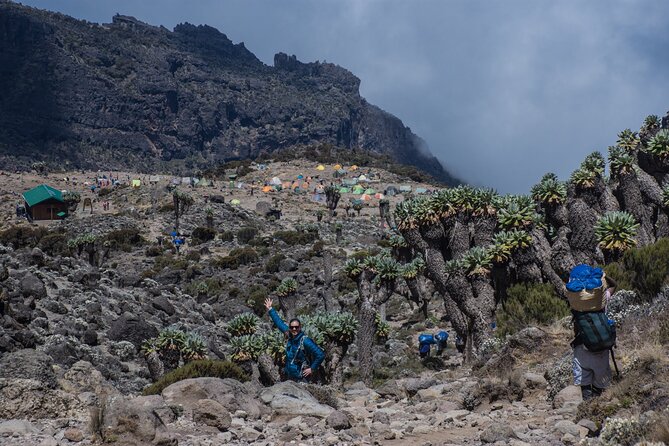
Day five is intentionally brief, at about four hours. You climb through a quiet alpine desert toward Kibo at an unhurried pace. Mawenzi, Kilimanjaro’s second major peak, may come into view to the east.
The short distance gives you time at summit camp to rest, eat, organize clothing, and prepare for the night ahead. This is not wasted time. A midnight departure leaves little room for last-minute packing or a relaxed meal, so use the afternoon to arrange your headlamp, gloves, warm layers, water, and snacks.
The scenery here is sparse, and some people find the day less exciting than the rainforest or Barranco Wall. I see its purpose differently. A calm, short day before the summit attempt is valuable, particularly when the hardest physical effort is still ahead.
Day 6: The midnight climb to Uhuru Peak
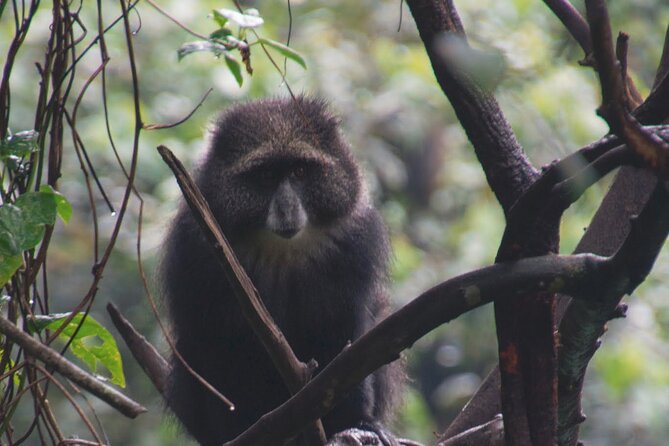
Around midnight, you begin the final ascent through Kilimanjaro’s arctic zone. The trail climbs over loose volcanic scree in the dark, with a slow zigzag pattern toward Stella Point at 5,685 meters.
This is the hardest section of the trip. The cold, darkness, steep slope, loose footing, and altitude combine to make even short distances feel long. Your guide sets the pace, and the famous slow rhythm of high-altitude trekking is more than a slogan here. It helps conserve energy and gives the group time to monitor symptoms.
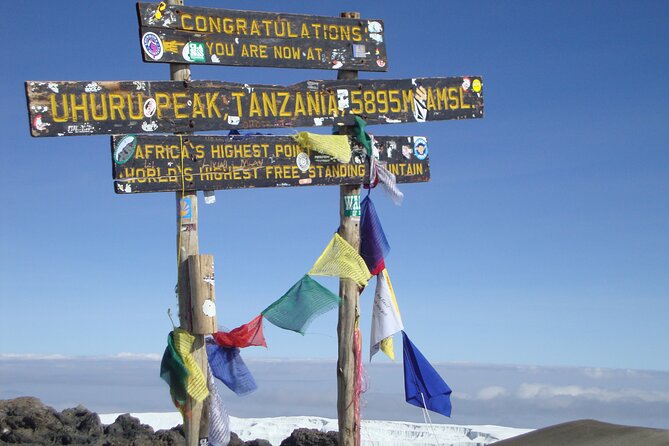
Stella Point sits on the crater rim. From there, a shorter but still difficult hike leads to Uhuru Peak, the highest point in Africa at 5,895 meters. Time at the summit is usually brief because of the extreme altitude and cold. You take in the achievement, photographs may be taken, and then you start down.
The descent returns you to base camp for breakfast or brunch. After packing your gear, you continue downhill through the alpine desert. The full day is listed at about 18 hours, which explains why summit night can feel like two hiking days joined together.
Do not judge your success only by speed. Reaching Stella Point is already a demanding achievement, and the guide team makes decisions based on health and safety. The final summit is the goal, but returning safely is the priority.
Day 7: Descent through the rainforest to Mweka Gate
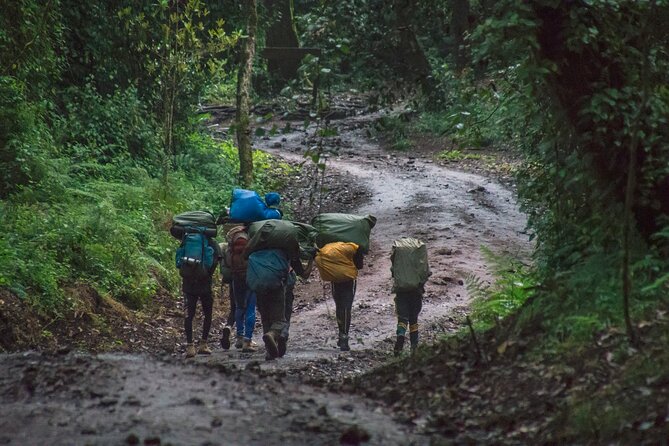
The final day takes you downhill through the southern rainforest to Mweka Gate. The walking time is about four hours, although tired legs can make a downhill path surprisingly demanding.
At Mweka Gate, a vehicle waits to return you to Moshi or your agreed drop-off point. The crew generally leaves from the gate, making it the natural place to say goodbye to the guides, cooks, porters, and tent staff who supported the climb.
The end can feel abrupt after a week of shared meals, camp routines, and long hours on the trail. Keep a little time in hand after returning to Moshi. You may be physically drained, and the transfer is part of the listed service, not a separate task you need to arrange at the gate.
Camps, food, porters, and daily comfort
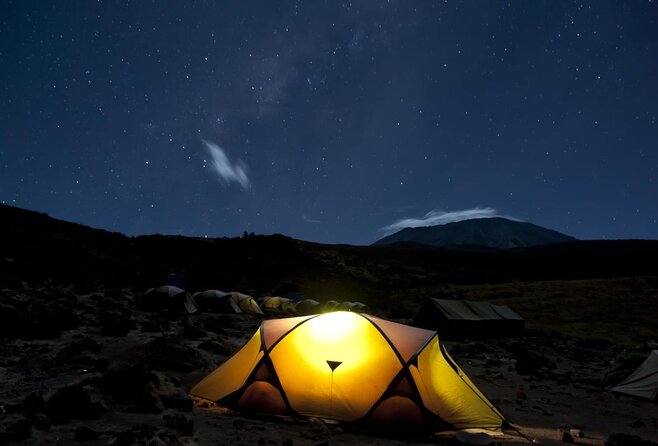
The camping setup is more organized than a bare-bones trek. You share a four-season tent, with an extra single tent used for odd-numbered groups. Chairs, tables, and a dining tent are provided, along with a basic one-inch foam sleeping mattress.
A specialist tent crew sets up camp, while a mountain cook and waiter handle meals and dining equipment. Breakfast, lunch, and dinner are included for the six nights on the mountain. The exact menu is not specified, so you should tell the operator about dietary needs before the climb.
A porter carries up to 15 kilograms of your personal luggage. You also receive a roughly 100-liter rubberized holdall for mountain packing, and luggage storage is available while you are on the trek. Keep your daypack light, but remember that your own clothing, water, snacks, camera, and essential medication stay with you.
Camps have shared public toilets, hand-washing stations, and small personal wash basins. A portable toilet and foldable bed are available as paid comfort upgrades. These extras can make camp life easier, but they are not part of the standard package.
One important ethical point is the operator’s stated KPAP monitoring. The Kilimanjaro Porters Assistance Project focuses on fair treatment and working conditions for porters. The climb still depends on a large support crew, so this is worth considering when comparing prices and operators.
Guide support and safety provisions
The guide team is central to this trip. Named guides connected with previous climbs include Calvin Shayo, Augustin, Isaac, Acasio, Baraka, Vincent, Matej, and Denis. You should confirm your assigned guide team during the pre-climb briefing rather than assume a particular name will lead your group.
The company provides trained, certified English-speaking guides at KINAPA minimum ratios. Before setting off, you attend an equipment check and briefing in Moshi. This is the right time to identify missing gear, ask about the pace, and clarify how luggage will be handled.
Safety provisions include twice-daily health checks, a high-grade medical oximeter, one emergency oxygen cylinder per five passengers, and a first-aid kit. These are reassuring practical measures, especially on the Lava Tower day and summit night.
The climb is not recommended for people with lung problems or known altitude-related medical conditions. You need a strong level of physical fitness, and you should have appropriate travel insurance. Flying Doctors emergency evacuation membership is not included.
What the $2,580 price really covers
At $2,580 per person, this is a substantial purchase. The value comes from the number of unavoidable mountain costs included in one package. Park entry, conservation, camping, and rescue fees can add up quickly, as can meals, guides, porters, camp staff, transfers, water, and equipment for communal dining.
You are also paying for logistics that are difficult to arrange independently. Camps must be established, food carried and cooked, water treated, luggage moved, and permits handled. A cheaper headline price may not include the same support or park charges.
Plan for additional expenses. Tips and gratuities are excluded, as are visas, insurance, drinks, personal items, sleeping bags, walking poles, and other personal mountain equipment. Extra guides cost $35 per guide per day, extra luggage porters cost $20 per day, and an extra single tent costs $20 per day.
Free cancellation is available if you cancel at least 24 hours before the 9:00 a.m. start time. The cutoff uses local time, and changes made inside 24 hours are not accepted.
Who will enjoy this climb most
I would choose this route if you want a classic Kilimanjaro experience with changing scenery and a genuine mountain feel, but without technical climbing. The Barranco Wall adds character, while the high and low route profile gives you a useful acclimatization pattern.
It suits hikers who can manage seven to eight hours on the trail and who are prepared for an 18-hour summit day. It also works well for a private group that wants the same guides, camp team, and schedule rather than a large mixed party.
I would hesitate if you want hotel-style comfort, short walking days, or a flexible summit schedule. The tents, shared toilets, cold, rain, and long summit push are part of the experience, not minor details.
Should you book the 7-day Machame climb?
Book it if you want a demanding but non-technical route, value strong logistical support, and like the idea of moving through nearly every major ecological zone on Kilimanjaro. The Lava Tower acclimatization day, short pre-summit day, medical checks, and KPAP connection all add practical value.
Think twice if you have altitude-related medical concerns or are not ready for steep trails and a midnight summit attempt. Before paying, confirm the assigned guide team, equipment list, tipping expectations, dietary arrangements, and any extra comfort items you may want.
For a fit hiker who accepts the rough edges of high-altitude camping, this is a well-planned way to approach Africa’s highest summit.
FAQ
Where does the Kilimanjaro climb start?
The meeting point is Shah Tours at 6 Sekou Toure Way in Moshi, Tanzania. Pickup from a Moshi-based lodge or other stated pickup location is offered, with the transfer beginning at about 9:00 a.m.
How long is the Machame climb?
The experience lasts approximately seven days. Walking times range from about four hours on day five to about 18 hours on summit day.
Is the Machame Route technical?
No. It is described as a non-technical camping route. The Barranco Wall includes a hands-on scramble using your hands and legs, but no special equipment or previous climbing experience is required.
How high is Uhuru Peak?
Uhuru Peak is 5,895 meters, or 19,341 feet, above sea level. Stella Point on the crater rim is at 5,685 meters.
Are meals included?
Yes. Breakfast, lunch, and dinner are included for six days on the mountain. Eating utensils, cutlery, bowls, and cups are also supplied.
Is drinking water included?
Boiled drinking water is provided from the first camp onward. Water for the first day is not included.
Is camping equipment provided?
A four-season tent, basic one-inch foam mattress, dining tent, chairs, tables, and camp support are included. Personal equipment such as a sleeping bag and walking poles is not included.
How much luggage can the porter carry?
One porter carries up to 15 kilograms of your personal luggage per person. Extra luggage porters can be arranged for an additional daily fee.
What happens if I need to cancel?
You can receive a full refund if you cancel at least 24 hours before the experience start time. Cancellations or changes made less than 24 hours before the start are not accepted for a refund.
More 7-Day Experiences in Moshi
- Kilimanjaro climb by Lemosho Route (7-day)
★ 5.0 · 651 reviews - Private Kilimanjaro Hike 7 Day Lemosho Route
★ 5.0 · 60 reviews - 7-Day Magical Tanzania Safari -Premium High End Package
★ 5.0 · 53 reviews - Kilimanjaro climb, Rongai Route (7-day)
★ 5.0 · 40 reviews
Just added around Moshi
- Mt Kilimanjaro 6 days Marangu route hike★ 5.0 · 3 reviews
- Private Cycle to Kilimanjaro Bike Park Safari★ 5.0 · 6 reviews
- Wildlife Extravaganza: Manyara, Tarangire & Ngorongoro in 3 Days★ 5.0 · 3 reviews
- 3 Days Private E-Bike Tour in West Kilimanjaro★ 5.0 · 3 reviews
- West Kilimanjaro cycling Adventures★ 4.5 · 8 reviews
- machame route★ 5.0 · 16 reviews
- Kilimanjaro Climb & Safari – Lemosho Route – 13 Day★ 5.0 · 10 reviews
- Kilimanjaro Climbing Umbwe Route★ 5.0 · 3 reviews
Machame Route Climbs, compared.



Climbing Kilimanjaro through 7 days Machame Route
Read our review →
7-Day Machame Kilimanjaro Summit Tour from Arusha
Read our review →
7 Days Kilimanjaro via Machame route affordable price
Read our review →
#1. Best Kilimanjaro Day hike Tour-Machame Route-ISMANI
Read our review →

The Best of Machame Route in 6 Days: Your World’s Summit Guide
Read our review →Browse the lists this tour appears in