
Reviewed · MACHAME ROUTE CLIMBS
7-Day Kilimanjaro Climbing Via Machame Route
The Machame Route gives you Kilimanjaro in its full sequence: tropical rainforest, high moorland, volcanic desert, and Arctic summit terrain. You begin near Moshi and finish at Uhuru Peak, Africa’s highest point, after a demanding seven-day climb.
I like the gradual camp pattern, especially the high-altitude lunch stop at Lava Tower followed by a descent to Barranco Camp. I also like the strong guide-and-portering team attached to this operation, with William, Rama, David, Zachariah, Joseph, and others named on past climbs. The main drawback is simple: the summit day is brutally long, and seven days is the minimum I would consider for sensible acclimatization.
Key points to know before you book
- Seven days is the better Machame option: A six-day version exists, but the extra day gives your body more time to adjust to altitude.
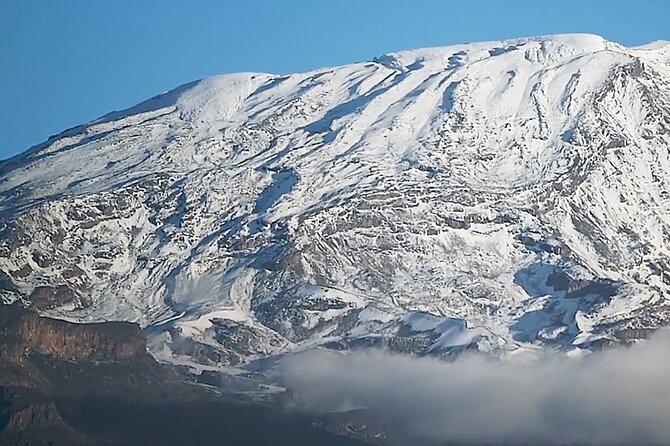
- The route crosses every major climate zone: You move from rainforest at Machame Gate to cold, barren ground near Uhuru Peak.
- Day three uses the climb-high, sleep-lower method: You hike toward Lava Tower for lunch, then descend to Barranco Camp.
- Barranco Wall is steep but not technical: You need balance and stamina, but no climbing equipment or technical climbing skills are described as necessary.
- Summit day starts around midnight: You reach Uhuru Peak near sunrise, then descend all the way to Mweka Camp.
- The price includes meals but not international costs: The $2,565 price includes seven breakfasts, seven lunches, and six dinners, while visas and flights are extra.
Machame Route: Kilimanjaro’s changing worlds in seven days
At $2,565 per person, this is a serious purchase, but it covers a full seven-day mountain program rather than a short hike. The value lies in the number of days on the route, the support of guides, porters, and a cook, and the careful progression from 1,748 meters at the gate to 5,895 meters at the summit.
The Machame Route is often called the Whiskey Route. That nickname reflects its tougher reputation compared with the easier-going Marangu Route, not a promise of comfort. You camp every night, walk on uneven ground, and spend much of the week above the altitude where many people feel completely normal.
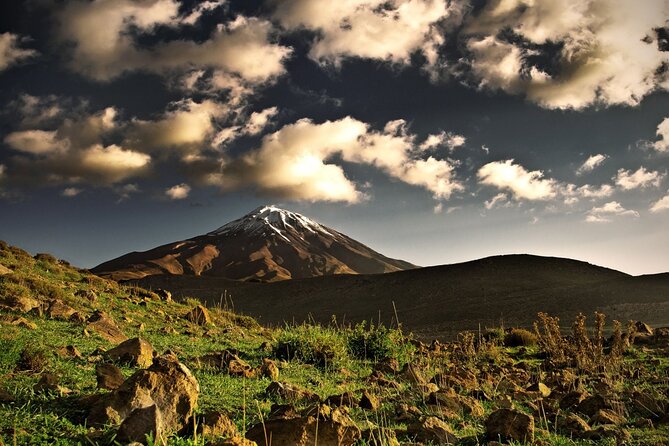
The route is popular because it gives you a fine visual sweep of Kilimanjaro. The mountain does not look the same from morning to afternoon. You start under tall forest, reach open heather, pass stark volcanic ground, and finish among ice, rock, and thin air near the summit.
This is not a casual seven-day holiday. The operator lists a moderate fitness requirement, but you should read that as a baseline. Long walking days, cold nights, steep sections, and the summit push demand preparation and patience.
More Kilimanjaro Climbs in Kilimanjaro
- Kilimanjaro climb by Lemosho Route (7-day)
★ 5.0 · 651 reviews - Kilimanjaro climb, Machame Route (7-day)
★ 5.0 · 262 reviews - Kilimanjaro Climbing Lemosho Route 8 Days.
★ 5.0 · 186 reviews
Day 1: Machame Gate to Machame Camp through rainforest
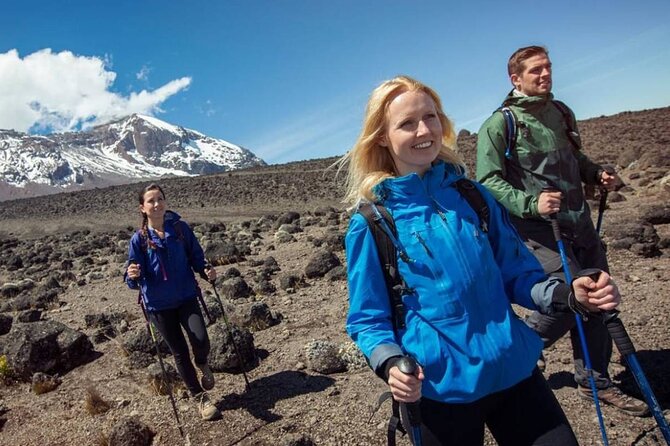
Pickup takes you from Moshi toward Machame Gate on the southern side of Kilimanjaro. The supplied schedule gives an inconsistent drive time, listing approximately 45 hours, which is clearly not practical. The route description places the gate about 20 minutes from Aishi Machame Hotel, so confirm the exact pickup point and transfer time before departure.
Machame Gate sits at 1,748 meters, or 5,718 feet. This is where the formal mountain day begins, with registration and the transition from road travel to foot travel.
Your first hike climbs to Machame Camp at 2,850 meters, or 9,350 feet. The walk takes about five to seven hours and passes through the Tropical Rainforest Zone. Expect a steady uphill path beneath thick vegetation, with damp conditions possible in the forest.
This first day is a useful test of your pace. You should not treat it as a race. Your guide will likely encourage a slow rhythm, often summed up by the Swahili phrase pole pole, meaning slowly, slowly. That approach matters more here than proving how fast you can walk.
The distance and gain are manageable for a fit person, but the forest can make the day feel longer. You may also be carrying a daypack while porters move the camp equipment. Dinner and an overnight stay follow at Machame Camp.
Day 2: Shira 2 Camp and the end of the forest
From Machame Camp, you climb toward Shira 2 Camp at 3,847 meters, or 12,621 feet. The day takes about eight hours, and it marks a clear change in scenery.
You leave the rainforest behind and enter the Moorland and Heather Zone. Trees become scarce. Low plants and open ground replace the dense forest, giving you wider views and a more exposed feeling.
This is one of the days when altitude begins to matter. You are gaining nearly 1,000 meters from the previous camp, so a slow pace and regular drinking are important. The itinerary lists breakfast and lunch as included for the day, though the meal details are not specified.
Shira 2 is a useful overnight position because it brings you higher without forcing you straight toward the summit zone. You should expect a colder night than at Machame Camp, and the open setting can make weather feel more immediate.
An eight-hour day is not extreme by Kilimanjaro standards, but it can be tiring early in the trip. Keep your evening simple. Eat, drink, organize your clothes, and sleep.
Day 3: Lava Tower lunch and the Barranco descent
Day three is one of the best-designed sections of the climb. You begin at Shira 2 and walk toward Lava Tower, reaching about 4,600 meters for lunch before descending to Barranco Camp at 3,983 meters.
This is the route’s most important acclimatization lesson: climb high, then sleep lower. Your body gets exposure to higher altitude during the day, but you spend the night at a more forgiving elevation.
The full day takes about eight hours. The terrain becomes increasingly bare as the moorland gives way to volcanic desert. Small plants thin out, the ground turns rougher, and the mountain begins to feel less like a high forest hike and more like an expedition.
The descent to Barranco is not wasted effort. It can feel odd to climb upward for hours, stop for lunch, and then lose height, but this pattern is valuable. A fixed upward march every day would be harder on your body.
Barranco Camp sits beneath the Great Breach Wall. The views of that wall are among the strongest on the route, and the camp gives you time to appreciate the mountain’s scale before the next morning’s climb.
You should also expect a demanding night at altitude. The camp is high enough that some people may sleep poorly, develop headaches, or lose appetite. Tell your guide about symptoms rather than hiding them. The guides are there to help you make safe decisions.
More Machame Route Climbs in Kilimanjaro
- Climbing Kilimanjaro – Machame Route
★ 5.0 · 170 reviews - Climbing Kilimanjaro through 7 days Machame Route
★ 5.0 · 151 reviews - #1. Best Kilimanjaro Day hike Tour-Machame Route-ISMANI
★ 4.2 · 47 reviews - 7 Days Machame route – Kilimanjaro
★ 5.0 · 45 reviews
Day 4: Crossing Barranco Wall to Karanga Camp
The day begins with the most visually dramatic obstacle before the summit: Barranco Wall. You climb from Barranco Camp at 3,983 meters to Karanga Camp at 3,994 meters, with the walking time listed as about four to five hours.
The wall sounds more alarming than it is. It is not described as a technical climb, and the guides assist you through the steeper sections. You will use your hands at points for balance and may need to move carefully around rock. No special climbing skill is presented as necessary, but confidence with steep, uneven ground helps.
This is a short day compared with days two and three, and that is intentional. After the climb over the wall, you continue toward Karanga Camp, then rest for the remainder of the day.
I like this pause in the schedule. Kilimanjaro is not won by walking hard every hour. A shorter day gives you time to eat, drink, inspect your feet, and prepare your summit clothing.
Karanga Camp is at almost the same elevation as Barranco Camp, so the physical gain is small. The value is in the gradual route position and the chance to recover before Barafu Camp.
Day 5: Karanga to Barafu, the summit staging camp
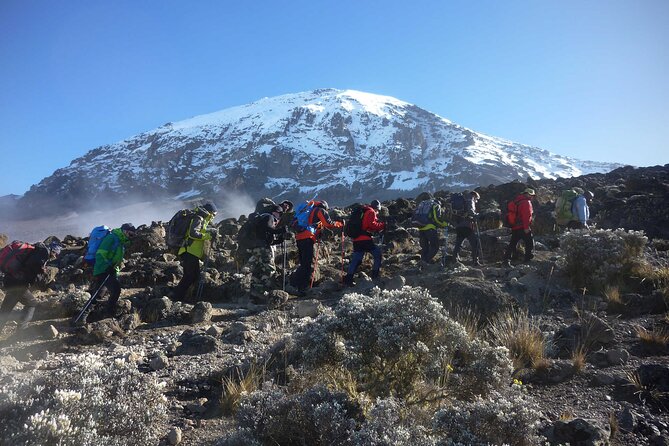
From Karanga Camp, you climb to Barafu Camp at 4,644 meters, or 15,239 feet. The hike takes about four to five hours, though the day is listed at seven hours overall.
Barafu means ice in Swahili, and the camp marks the start of the summit phase. The setting is high, dry, and exposed, with little shelter from mountain weather. You should have your warm layers close at hand rather than buried inside a duffel.
After reaching camp, you rest. The plan calls for sleep at about 7 p.m., followed by a wake-up around 11 p.m. for the summit attempt. This is not normal bedtime behavior, but it gives you a few hours of rest before the longest and hardest section of the trip.
The summit schedule is a major consideration when comparing this climb with other Kilimanjaro programs. You do not simply walk uphill after breakfast. You wake in the middle of the night, eat what you can, dress for freezing conditions, and start around midnight.
Good preparation at Barafu matters. Lay out your headlamp, gloves, water, snacks, and extra layers before sleeping. The supplied details do not specify equipment rental or a packing list, so ask the operator exactly what you must bring.
Day 6: Uhuru Peak, sunrise, and the long descent
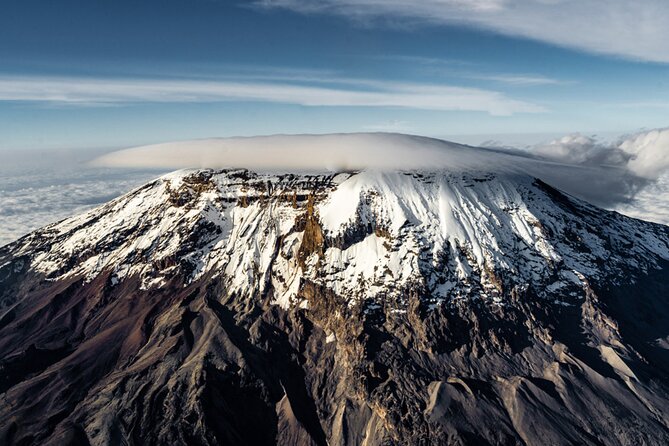
Summit day begins around midnight from Barafu Camp. The climb to Uhuru Peak at 5,895 meters, or 19,341 feet, takes about seven hours according to the schedule.
The timing aims to put you at the summit around sunrise. The final hours are likely to feel slow. Altitude, darkness, cold, and the long previous days combine to make this less a test of speed than a test of steady effort.
You ascend toward Stella Point before continuing to Uhuru Peak. At the summit, you get a short window for photographs and a chance to take in the achievement. The schedule allows only a few minutes at the top, which is sensible. At nearly 5,900 meters, lingering is not the goal.
The descent is the part many people underestimate. You continue from the summit area down to Mweka Camp at 3,110 meters, or 10,204 feet. This takes another six to eight hours.
That makes summit day roughly 13 to 15 hours of walking, depending on your pace and conditions. It is the clearest reason to train for downhill walking as well as uphill walking. Your knees, thighs, and feet will work hard after the summit.
Mweka Camp is back in the Moorland and Heather Zone, but you will not feel finished yet. You have reached the main goal, but the body still has to manage a long descent. Dinner and rest at camp should feel well earned.
Day 7: Mweka Gate, certificates, and the return to Moshi
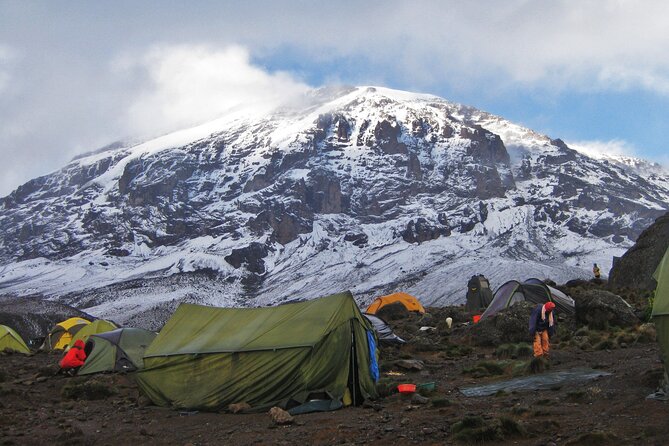
After breakfast, you descend from Mweka Camp to Mweka Gate at 1,653 meters, or 5,423 feet. This final walk takes about three to four hours.
At the gate, you sign the official Kilimanjaro National Park register, have a cold drink, and receive an official Kilimanjaro certificate from the head guide. That ceremony gives the end of the climb a clear finish.
A vehicle then takes you back to a Moshi hotel. The supplied schedule says the drive takes about three hours and that arrival is expected around mid-afternoon, near 3 p.m., depending on when you leave camp.
The final day is not difficult in the same way as summit day, but tired legs can make the descent feel slow. Give yourself breathing room if you have an onward flight. The exact return timing can shift, and the package does not include international flights.
Guides, porters, food, and the human side of the climb
The strongest part of this experience appears to be the mountain crew. William is identified as the founder of Spirit of Kilimanjaro and as a guide with hundreds of successful ascents. Other named guides include Rama, David, Zachariah, Joseph, Izadini, Paul, and Donovan.
You should not assume every person will be on your departure. Guide assignments change, and the group size can reach 100 people. Still, these names give you useful questions to ask before booking: Who is leading my group? How many guides will be assigned? Who is the cook? How are porters organized?
Past departures have specifically praised the food, with Hussein named as a cook on one climb. The package includes seven breakfasts, seven lunches, and six dinners, which covers the mountain schedule. Dinner is not listed for the final day, presumably because you descend after breakfast, but confirm the exact meal plan.
The crew’s role is more than carrying equipment. Guides manage pace, camp timing, and the summit attempt. Porters handle much of the group gear, while the cook provides meals that keep the climb moving. Treat this as a supported expedition, not a self-guided walk.
Is $2,565 good value?
The price is neither a bargain-basement climb nor an extravagant luxury package. For seven days on Kilimanjaro, it represents a midrange supported trek based on the information provided.
The value is strongest if the price includes the expected mountain services: park access, camping arrangements, guide support, porters, cooking, meals, and transport connected with the climb. The supplied details confirm the meals and the Moshi pickup and return arrangements, but they do not provide a full inclusion list for park fees, camping equipment, tips, airport transfers, or hotel nights.
That missing detail matters. Ask for a written cost breakdown before paying. You should also ask about tipping expectations, gear, sleeping arrangements, airport pickup, and the exact Moshi hotel plan.
Visa costs and international flights are not included. The cancellation terms allow a full refund if you cancel at least 24 hours before the local start time, but changes or cancellations inside that window are not accepted for a refund.
Who should choose this climb?
This route suits you if you want varied scenery and can commit to a full week on the mountain. It is a good fit for someone who prefers a gradual schedule over the shortest possible ascent.
The seven-day version is preferable to the six-day option because it gives more time for altitude adjustment. A previous climber reportedly completed the route in five days while in strong shape, but that is not a sensible target for most people and should not be used as your benchmark.
You need a moderate level of physical fitness, but fitness alone does not guarantee a summit. Altitude affects people differently, and the midnight start can be harder than the daytime hiking.
This climb is less suitable if you want a soft adventure with comfortable rooms each night, predictable sleep, or short walking days. It is also not ideal if you have only one free day after the climb. The final descent and return drive can take much of the day.
The experience has received a five-star rating from 11 submitted ratings, with 100 percent recommending it. That is a strong record, and the praise centers on the team, safe guiding, good food, organization, and encouragement during the summit attempt. I would still focus your questions on current guide assignments and what the price includes, since those details affect your actual departure.
Should you book the seven-day Machame Route?
I would book this climb if your priority is a well-supported Kilimanjaro ascent with changing scenery and a better acclimatization schedule than the shortest routes. The Barranco Wall, Lava Tower lunch, and sunrise summit attempt give the week a strong sense of progression.
Book it only after confirming the practical details. Get the pickup time, hotel name, guide team, gear list, park and camping fees, porter policy, tipping guidance, and full price inclusions in writing.
If you can train for long uphill and downhill days, accept basic camping, and respect the need to walk slowly, this is a powerful way to reach Uhuru Peak. If you want an easy hike, seven days on Kilimanjaro will feel very long.
FAQ
Where does the Kilimanjaro climb begin?
The climb begins at Machame Gate on the southern side of Mount Kilimanjaro. The gate is at 1,748 meters, or 5,718 feet.
How long is the Machame Route tour?
The advertised climb lasts approximately seven days. A six-day version is also available, but the seven-day schedule is preferred for better acclimatization.
What time does the experience start?
The listed start time is 12:00 a.m. The summit section begins around midnight after resting at Barafu Camp.
What is the highest point reached?
The climb reaches Uhuru Peak at 5,895 meters, or 19,341 feet.
Is the Barranco Wall a technical climb?
No. The Barranco Wall crossing is described as non-technical, with guides available to assist you.
What meals are included?
The package includes seven breakfasts, seven lunches, and six dinners.
Are international flights and visas included?
No. Visa costs and international flights are not included in the tour price.
Is pickup available?
Yes. Pickup is offered, and the route begins with transport from Moshi toward Machame Gate.
What happens after reaching Mweka Gate?
You sign the official Kilimanjaro National Park register, have a cold drink, receive a Kilimanjaro certificate from the head guide, and return by bus to a Moshi hotel.
More Machame Route Climbs in Moshi
- The Best of Machame Route in 6 Days: Your World’s Summit Guide
★ 5.0 · 44 reviews - Best Kilimanjaro Adventure 7 days Machame route Trekking
★ 5.0 · 42 reviews - 6 Days Machame Route Kilimanjaro Climbing
★ 5.0 · 42 reviews - 6 Days Private Mount Climbing in Kilimanjaro Machame Route
★ 5.0 · 38 reviews
More Kilimanjaro Climbs in Moshi
- Kilimanjaro climb, Lemosho Route (8-day)
★ 5.0 · 148 reviews - Kilimanjaro climb, Lemosho Route (6-day)
★ 5.0 · 129 reviews - Kilimanjaro climb, Marangu route (6-day)
★ 5.0 · 72 reviews - Private Kilimanjaro Hike 7 Day Lemosho Route
★ 5.0 · 60 reviews
Just added around Moshi
- Mt Kilimanjaro 6 days Marangu route hike★ 5.0 · 3 reviews
- Wildlife Extravaganza: Manyara, Tarangire & Ngorongoro in 3 Days★ 5.0 · 3 reviews
- Private Cycle to Kilimanjaro Bike Park Safari★ 5.0 · 6 reviews
- 3 Days Private E-Bike Tour in West Kilimanjaro★ 5.0 · 3 reviews
- West Kilimanjaro cycling Adventures★ 4.5 · 8 reviews
- machame route★ 5.0 · 16 reviews
- Kilimanjaro Climb & Safari – Lemosho Route – 13 Day★ 5.0 · 10 reviews
- Kilimanjaro Climbing Umbwe Route★ 5.0 · 3 reviews
Machame Route Climbs, compared.



Climbing Kilimanjaro through 7 days Machame Route
Read our review →
7-Day Machame Kilimanjaro Summit Tour from Arusha
Read our review →
7 Days Kilimanjaro via Machame route affordable price
Read our review →
#1. Best Kilimanjaro Day hike Tour-Machame Route-ISMANI
Read our review →

The Best of Machame Route in 6 Days: Your World’s Summit Guide
Read our review →Browse the lists this tour appears in