
Reviewed · 6-DAY EXPERIENCES
6Days Migration Safari
The great draw here is timing your safari around the wildebeest migration, with several days spent in the Serengeti rather than racing through it. The route reaches Lobo, the Grumeti River, and the Wagakuria area, all places linked with seasonal herds and strong resident wildlife.
I like the small group limit of six, which should make game drives more comfortable and give you more room to ask questions. I also like the full-board setup and included transfers, since a six-day safari involves enough moving parts without adding every meal and airport ride to your own planning list.
The main caution is the wording of the route. The days are labeled with Arusha in places where the activity clearly concerns Ngorongoro or a flight from Kogatende, so you should confirm the exact lodging, transport, and final departure plan before paying.
Key points to know before booking
- The migration route changes by season: Lobo is usually a migration area around July and August, then again in late October and November.
- Northern Serengeti is the main target from August to October: Wildebeest may be found around Wagakuria during this period.
- The Grumeti River adds year-round wildlife interest: Look for hippos, crocodiles, and resident game even when the herds have moved on.
- Ngorongoro gives you a strong opening safari: The crater descent reaches more than 600 meters and is planned as an afternoon game drive.
- Groups are capped at six people: That is a useful size for a safari vehicle and usually makes shared viewing less cramped.
- The $3,700 price includes the main package items: Full-board safari accommodation, fees and taxes, and transfers are included, but the Tanzania visa is extra.
Why the migration route matters
A migration safari is not a fixed wildlife show. The wildebeest move with the seasons, water, and grazing conditions, so the same route can produce very different sightings at different times of year.
This six-day plan tries to improve your odds by spending time in several northern and western parts of the Serengeti. Lobo is named as a likely migration corridor in July and August, with another pass through the area in late October and November. Wagakuria in the northern Serengeti is presented as the better target from August through October.
That seasonal detail is important. If your main goal is to see huge herds, book around the expected movement rather than treating the phrase migration safari as a guarantee. The schedule follows sensible areas, but no operator can promise that the animals will be beside the road on a particular morning.
The route also has value outside the migration itself. The Lobo and Grumeti areas hold resident game throughout the year, and the Grumeti River may offer hippos and large crocodiles. This gives you something worthwhile to look for even when the wildebeest are farther north or south.
A few more Moshi trips to weigh up
- Safari Serengeti And Ngorongoro
★ 5.0 · 288 reviews - Big Five Safari In Tanzania
★ 5.0 · 99 reviews - Unforgettable Tanzania Safari And Zanzibar Beach
★ 5.0 · 97 reviews
Ngorongoro gives you a dramatic first safari
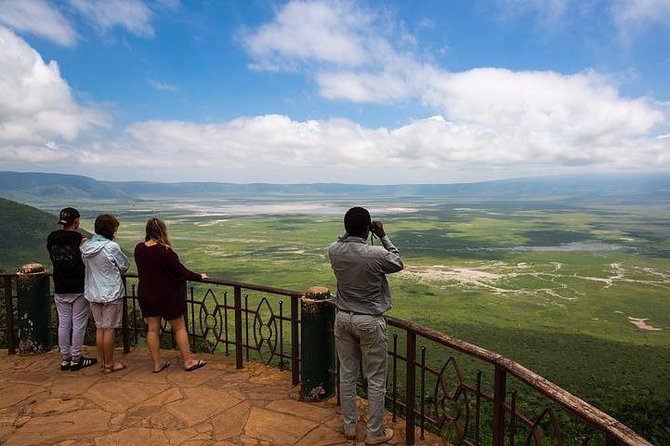
The opening wildlife stop is the Ngorongoro Crater, where the vehicle descends more than 600 meters for an afternoon safari. The crater setting makes this a memorable introduction to northern Tanzania. You are not simply driving through open plains. You are moving into a broad natural enclosure with wildlife viewing concentrated below the rim.
The plan allows about eight hours for the first day, although the actual time inside the crater is not stated. That leaves room for the descent, the game drive, and onward arrangements, but you should ask how the day is divided if you care about maximizing crater time.
One of the strongest details from the past trips connected with this company is the mention of a black rhino sighting in Ngorongoro. That is never guaranteed, but the crater is one of the places on this route where such a sighting may be possible. The practical lesson is simple: keep your eyes open for less common animals instead of focusing only on lions and wildebeest.
The first day may feel busy if your arrival and transfer are also tied to the safari start. Your stated meeting point is Kilimanjaro Airport, and the start time is listed as 12:00 am. That midnight notation is worth checking. It may reflect a system setting rather than a literal pickup at midnight.
Lobo and the Serengeti plains
Day two moves toward the Lobo area of the Serengeti. The drive is listed at about eight hours, so this is a full safari day, not a short transfer between nearby lodges.
Lobo matters because it sits on the migration route at key points in the year. The herds normally pass through around July and August as they travel onward, and they may return through the area in late October or November on the way toward the southern Serengeti.
I like the way this part of the route is used. You are not spending the whole safari on one narrow seasonal bet. Even if the herds are absent, the area has resident game throughout the year. Your guide can therefore look for a broader mix of wildlife rather than treating every hour as a search for wildebeest alone.
The eight-hour timing also tells you what sort of trip this is. There will be long hours in the vehicle, with safari viewing folded into the transfer. If you prefer short drives and a slower lodge-based holiday, this may feel demanding. If you want to cover major wildlife areas in six days, the long road days are part of the bargain.
Three Serengeti days with different goals
Days three, four, and five keep you in the Serengeti, but each day points toward a slightly different wildlife experience. That is a good feature for anyone who wants more than a quick park visit.
Day three returns to the Lobo and Grumeti area. Lobo offers the chance of seasonal migration sightings, while the Grumeti region provides resident game at other times. Keeping a full day here gives your guide more flexibility than a short stop would.
Day four focuses on the northern Serengeti, particularly Wagakuria. The migration is normally found there from August to October. If you are booking in that window, this is likely the day that most directly matches your main goal.
Northern Serengeti travel can be rewarding, but the animals still dictate the outcome. A location named in a safari plan is not a promise of a herd on the exact date. Ask Ungitours how they adjust the route if the migration has moved early or late.
Day five shifts attention to the western Serengeti and the Grumeti River. Large groups of hippos and very large crocodiles may be found there. Wildebeest may gather around waterholes in the middle of the morning in striking numbers, forming dense clusters around the water.
That midmorning timing is useful. It tells you that not every worthwhile wildlife moment happens at sunrise. A good day here may involve waiting near water rather than covering endless miles. You should still expect a long day, since this stop is also listed at about eight hours.
Same country, a completely different kind of safari:
- Kilimanjaro climb by Lemosho Route (7-day)
★ 5.0 · 651 reviews - Kilimanjaro climb, Machame Route (7-day)
★ 5.0 · 262 reviews - Kilimanjaro Climbing Lemosho Route 8 Days.
★ 5.0 · 186 reviews - Climbing Kilimanjaro – Machame Route
★ 5.0 · 170 reviews
What the guide can add to the experience
A safari guide does more than point out animals. The guide controls the pace, explains what you are seeing, and helps you understand why a particular area matters at a particular time of year.
The names associated with previous bookings include Laurent and Raymond. Laurent is described as especially caring and professional, with the ability to adjust safari timing to personal preferences. Raymond is praised for answering questions clearly and explaining what was happening during the drive.
Those details are useful, but you should not assume one of them will be your assigned guide. Ask for the guide’s name before departure if that matters to you. The company also has a contact person named Faiza, who has handled booking details and provided a local number for support.
That direct contact can be valuable on a complex trip. You have airport transfers, several park areas, changing wildlife locations, accommodation, and a departure from Kogatende to coordinate. A local contact who can respond during the journey is worth more than a glossy itinerary.
The final morning and Kogatende departure
Day six begins with breakfast at the lodge, followed by departure toward Kogatende airstrip. A game drive is planned on the way to the airstrip, with about six hours allowed for the day.
This is a smart way to use the final morning. You get one last chance to watch wildlife rather than treating the airstrip as a simple transport point. In northern Serengeti, the drive itself may produce your final sighting.
The published end point is Kilimanjaro International Airport, while the day six description refers to travel from Kogatende airstrip to Arusha. Because both locations are named, you need to confirm how the air transfer connects with your final airport drop-off.
Do not leave this question until the last day. Ask whether the airstrip transfer and onward connection are included, what time you should expect to reach Arusha, and how the plan works if your international flight leaves the same day. The package says transfers in both directions are included, but the exact sequence is not fully spelled out.
What the $3,700 price covers
At $3,700 per person, this is a substantial safari purchase. The value depends heavily on the accommodation level, vehicle standard, exact transport, and how the company manages the long distances. Those details are not provided, so you should ask for them in writing.
The price does include the main cost categories:
- All fees and taxes
- Full-board accommodation during the safari
- Transfers in both directions
- A group size of no more than six people
Full board matters in Tanzania because the route covers remote park areas. Having breakfast, lunch, and dinner arranged means less time dealing with food logistics and fewer surprise costs during long driving days.
The small group is another important part of the value. Six people is not a private safari, but it is more manageable than a large shared vehicle. You should have a better chance of getting a useful viewing position and enough space for camera equipment, though the final comfort depends on the vehicle.
The Tanzania visa is not included. The supplied information lists $50 for USA and Canada passport holders and $100 for other listed cases. Confirm the amount that applies to your nationality before departure, since visa rules and fees can change.
The practical side of a six-day safari
This is an active trip with several long days. Days one through five are each listed at about eight hours, while the final day is about six hours. That includes driving and wildlife viewing, so your day may involve extended time on uneven roads.
You should be comfortable sitting in a safari vehicle for much of the day. The reward is access to several major wildlife zones, but the tradeoff is that this is not a restful poolside holiday.
The tour offers pickup, a mobile ticket, and confirmation at booking. Most people can participate, according to the supplied information. No separate accessibility details are provided, so anyone with mobility, medical, or seating concerns should ask before booking.
The start and end information points to Kilimanjaro Airport. Since the location field says Moshi, make sure your accommodation pickup is included if you are staying elsewhere in the region. The phrase pickup offered does not explain the exact pickup radius.
Free cancellation is available if you cancel at least 24 hours before the local start time. Changes made inside that 24-hour window are not accepted, and the payment is not refunded. That is a reasonable safety net, but the midnight start-time listing makes it especially important to confirm the actual local departure time.
Who will get the most from this safari
I would recommend this trip to someone who wants the migration to guide the route, but who also wants solid wildlife viewing if the herds have moved elsewhere. The combination of Lobo, Grumeti, Wagakuria, and the crater gives you a broad six-day sample of northern Tanzania.
It also suits you if you value personal support. The booking history linked with Faiza includes tailored planning, airport pickup, local contact help, and honeymoon arrangements. That suggests the company can work around special occasions and personal preferences, although you should confirm what can be customized within this particular package.
Honeymoon couples may appreciate the full-board setup and the company’s attention to personal arrangements. The safari is not presented as a luxury honeymoon package, though, so ask about room type, lodge standards, and any private vehicle option if romance and privacy are central to your plans.
This is less suitable for anyone who wants a fixed wildlife guarantee, short transfers, or a clearly stated luxury accommodation grade. The route is promising, but migration sightings depend on nature and the season.
Should you book the 6-Day Migration Safari?
Book it if you want a focused northern Tanzania safari with several days in the Serengeti, a small group, full-board lodging, and a route built around known migration areas. The Grumeti River and Ngorongoro Crater add worthwhile wildlife options beyond the main herd movement.
Before committing $3,700, get written answers about the exact lodges, safari vehicle, assigned guide, timing of the Ngorongoro day, and the Kogatende to Arusha connection. If those details match your expectations, this is a strong choice for a first safari or a honeymoon that values personal planning over a rigid, mass-market schedule.
FAQ
Where does the safari start?
The stated start point is Kilimanjaro Airport in Tanzania. The location is listed as Moshi, and pickup is offered.
Where does the safari end?
The stated end point is Kilimanjaro International Airport on Kilimanjaro Airport Road, Tanzania.
How long is the safari?
The experience lasts approximately six days.
How many people can join the tour?
The group has a maximum of six participants.
Is accommodation included?
Yes. Full-board accommodation during the safari is included.
Are transfers included?
Yes. Transfers in both directions are included.
Are fees and taxes included?
Yes. All fees and taxes are included in the tour price.
Is the Tanzania visa included?
No. The Tanzania visa is listed as an extra cost. The supplied information gives a $50 fee for USA and Canada passport holders and $100 for other listed cases.
When can the wildebeest migration be found in the Lobo area?
The migration normally passes through Lobo around July and August, and again in late October and November.
When is the migration usually found around Wagakuria?
The migration can normally be found in the Wagakuria area from August through October.
Can I cancel for a full refund?
Yes, if you cancel at least 24 hours before the experience start time. Cancellations made less than 24 hours before the start are not refunded, and changes inside that period are not accepted.
Just added around Moshi
- Mt Kilimanjaro 6 days Marangu route hike★ 5.0 · 3 reviews
- Wildlife Extravaganza: Manyara, Tarangire & Ngorongoro in 3 Days★ 5.0 · 3 reviews
- Private Cycle to Kilimanjaro Bike Park Safari★ 5.0 · 6 reviews
- 3 Days Private E-Bike Tour in West Kilimanjaro★ 5.0 · 3 reviews
- West Kilimanjaro cycling Adventures★ 4.5 · 8 reviews
- machame route★ 5.0 · 16 reviews
- Kilimanjaro Climbing Umbwe Route★ 5.0 · 3 reviews
- Kilimanjaro Climb & Safari – Lemosho Route – 13 Day★ 5.0 · 10 reviews
6-Day Experiences, compared.

Private 6-Day Tarangire Manyara Crater and Serengeti with Mid-Range Lodges
Read our review →



Browse the lists this tour appears in