
Reviewed · KILIMANJARO TOURS
8 Days Great Wildebeest Migration – Mara River Crossing
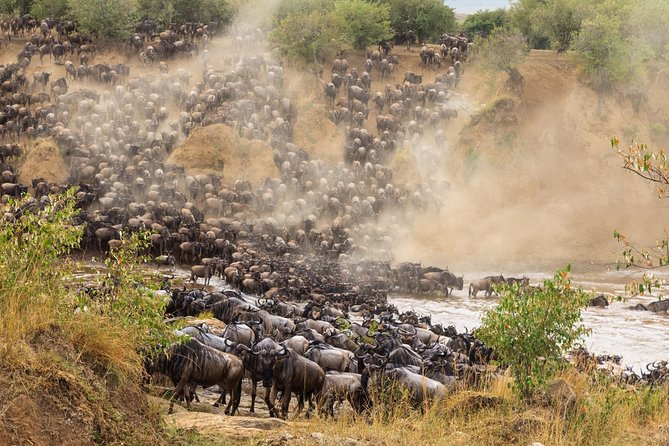
The drama here is not staged. Thousands of wildebeest gather at the Mara River, hesitate on the bank, then surge through crocodile-filled water toward Kenya. You may see a crossing, but nature keeps its own timetable, so the safari works best when you value the whole journey, not one guaranteed scene.
I like two things right away: the private guide and vehicle, which let your group set the pace, and the smart northern Tanzania route. Lake Manyara, central and northern Serengeti, Lobo, and Ngorongoro give you several strong wildlife settings instead of betting the entire trip on one riverbank.
The main consideration is price and distance. At $4,374 per person, this is a serious investment, and several days involve long drives over rough park roads. The Mara crossing can also fail to appear during your visit, even in the right season.
Key points to know before booking
- The Mara River is visited on Days 4 and 5, giving you two days of focused searching rather than one quick stop.
- Migration timing is listed as July through mid October, but the river crossing itself cannot be scheduled like a show.
- A private safari means only your group participates, with a more personal guiding experience and no strangers sharing the vehicle.
- The route covers Lake Manyara, Serengeti, Lobo, Mara River country, and Ngorongoro Crater, with good chances for the Big Five.
- Village and cultural visits balance the game drives, including Mto wa Mbu, a Maasai village, the Maasai market, and Cultural Heritage Centre.
- Full board, bottled water, park fees, lodging, and emergency air rescue insurance are included, while drinks, tips, flights, visas, and regular travel insurance are extra.
Why this eight-day route works
This is a classic northern Tanzania circuit with one clear purpose: reaching the wildebeest migration in the far north while still giving you a broad safari. You begin near Arusha, visit Lake Manyara, spend time in central Serengeti, push north for the Mara River, then return through Lobo and Ngorongoro.
That design matters. Wildlife moves, and no guide can promise that the herds will be standing at one exact point. By including several parks and multiple game drives, the trip still has plenty to offer if the crossing does not happen.
You should also understand the geography. The safari remains in Tanzania. From Northern Serengeti, you watch the herds attempt to cross toward Kenya’s Maasai Mara and later return south. You do not cross into Kenya on this itinerary.
The private format is a real advantage. You can ask for more time with a pride of lions, move on when the children tire, or spend extra minutes watching a bird or smaller antelope. The schedule is still set by the route and park hours, but you avoid the compromises of a large group.
Other Kilimanjaro days people book alongside this one:
- Kilimanjaro climb by Lemosho Route (7-day)
★ 5.0 · 651 reviews - Safari Serengeti And Ngorongoro
★ 5.0 · 288 reviews - Kilimanjaro climb, Machame Route (7-day)
★ 5.0 · 262 reviews
Day 1: An easy start in Arusha
Your airport arrival is met by a company representative, followed by a transfer to Kibo Palace Hotel in Arusha. Dinner and overnight lodging are included.
There is no sightseeing listed for this first day, which is sensible. International flights can be tiring, and a straightforward transfer gives you time to recover before the early starts ahead. The stated stop length is about 12 hours, but that refers to the day rather than a full sightseeing program.
Use this evening to confirm the next morning’s departure time, organize camera batteries, and keep a small day bag ready. The safari vehicle will become your moving base, so easy access to sunglasses, sunscreen, a hat, and a light jacket will help.
Day 2: Mto wa Mbu and Lake Manyara
After breakfast, you drive to Mto wa Mbu for a guided village walk. This is one of the more valuable parts of the schedule because it puts local life before the first major game drive.
You visit local homes, banana and rice farms, and have a taste of traditional beer. The stop is not simply a photo break. It gives you a look at farming and daily life around the safari route, plus a chance to interact with local people in a more direct way.
The cultural visit does add time to an already busy day. If your priority is wildlife at every possible minute, you may find the village walk less exciting than the park. I like having it here, though, because it prevents the trip from becoming eight days of animals viewed only through a vehicle window.
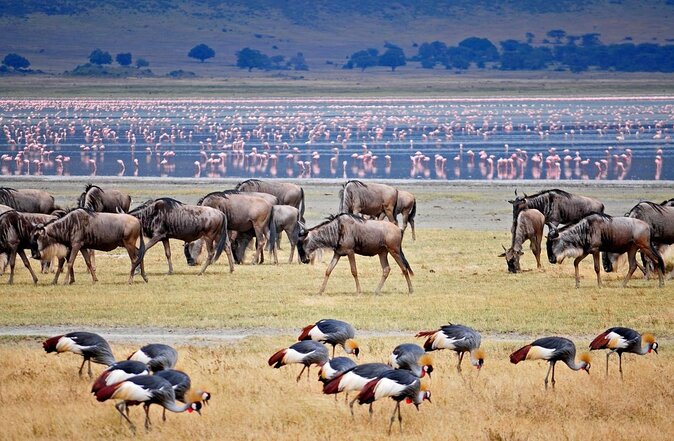
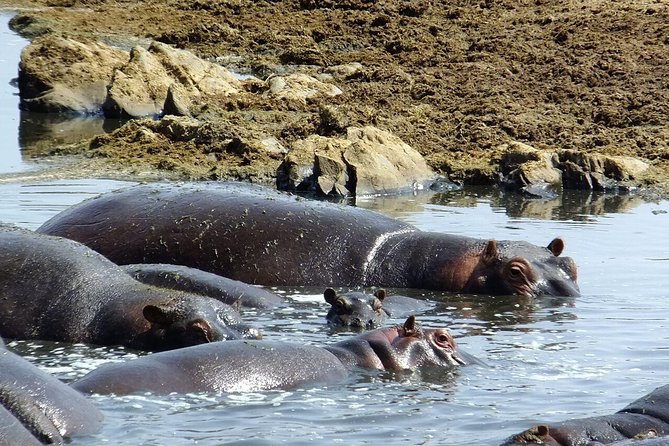
At Lake Manyara National Park, you may see elephants, giraffes, hippos, impalas, dik-diks, waterbucks, flamingos, and monkeys. Tree-climbing lions and leopards are listed as possible sightings, but they are special precisely because they are never routine.
You leave the park in the evening and stay at Marera Valley Lodge in Karatu. This first safari day combines a local experience with wildlife, but it is also a long day. Wear comfortable clothes and expect time on the road.
Day 3: Central Serengeti and the first big game drive
The route continues through the Ngorongoro Conservation Area into Serengeti National Park. You arrive at Hippo Trails Camp in time for lunch, then head out for an afternoon game drive in central Serengeti.
Serengeti is a UNESCO World Heritage Site, and the appeal is its scale. You are not visiting a small animal enclosure with a fixed circuit. You are moving through open country where the view can change from grazing herds to predators and scattered woodland.
The listed possibilities include elephants, giraffes, hippos, warthogs, gazelles, impalas, lions, leopards, and cheetahs. Central Serengeti is also a useful place to begin learning how your guide reads animal behavior, tracks, calls, and concentrations of vehicles.
You return to camp for a hot shower, dinner, and overnight stay. That shower will feel well earned. Game drives can be dusty, and the combination of an early morning, a long transfer, and an afternoon outing makes this a full day.
Same country, a completely different kind of safari:
- Kilimanjaro Climbing Lemosho Route 8 Days.
★ 5.0 · 186 reviews - Climbing Kilimanjaro – Machame Route
★ 5.0 · 170 reviews - Climbing Kilimanjaro through 7 days Machame Route
★ 5.0 · 151 reviews - Kilimanjaro climb, Lemosho Route (8-day)
★ 5.0 · 148 reviews
Day 4: Pushing north to the Mara River
Day 4 begins with an early morning game drive before breakfast. Morning light often makes this a pleasant time to be out, and the itinerary sensibly places the drive before returning to camp for food.
After breakfast, you leave with a packed lunch and head toward Northern Serengeti. This is the day when the trip shifts from a broad Tanzania safari to a focused migration search.
The goal is to find wildebeest gathering near the Mara River. You may also see zebras and other grazing animals, along with predators drawn to the herds. The plan says there are very high chances of witnessing a crossing, but that should be read as a strong seasonal opportunity, not a promise.
A river crossing can take place quickly or fail to happen after hours of waiting. Herds may crowd the bank, turn back, or choose another point farther away. Crocodiles are part of the river’s danger, and the sight can be powerful but difficult to watch.
Your packed lunch keeps the search moving. In the evening, you reach Mara River Camp for dinner and overnight. The northern camps are valuable because they reduce repeated long transfers from the center, though conditions can be more basic and the roads can be demanding.
Day 5: Two game drives along the river
This is the most important day for the migration. You set out early for a morning game drive, then have another outing in the afternoon along the Mara River.
Two drives give you a better chance than a single visit, especially when the herds shift during the day. Your guide can search different sections of the river and keep watch for movement, dust, or a gathering of wildebeest on the bank.
The best period is stated as July through mid October. Plan around that window if the crossing is your main reason for coming. Even then, timing depends on rainfall, herd movement, and conditions on the ground. You should book this experience for the broader northern Serengeti wildlife as well as the river event.
The area is not only about wildebeest. You may see big cats, elephants, giraffes, impalas, hippos, and possibly the endangered black rhino. That mix gives the day value even if the herds do not cross while you are watching.
All meals and overnight lodging are at Mara River Camp. Remaining in the north saves you from wasting the evening on a return drive and lets you make an early start for another search.
Day 6: Lobo’s predators and the return south
After breakfast, you drive to the Lobo area in northeastern Serengeti for game viewing. Lobo has a different feel from the river country, with distinctive rock formations and open spaces that can be good for spotting predators.
The itinerary highlights leopards, cheetahs, large prides of lions, and klipspringers. Klipspringers are small antelopes associated with rocky ground, so this stop broadens your wildlife list beyond the most famous animals.
In the afternoon, you return toward central Serengeti for dinner and overnight at Hippo Trails Camp. This is another long driving day, but it provides one more chance for wildlife while connecting the northern section to Ngorongoro.
You should not expect every day to deliver a headline sighting. Some of the best value here is the time spent learning the differences between habitats and watching your guide decide where to look next.
Day 7: Ngorongoro Crater’s compact wildlife viewing
After breakfast, you leave with a packed lunch and descend into Ngorongoro Crater for a full day of game viewing. The crater floor packs a wide range of animals into a contained area, making it one of the stronger places on this route for variety.
Black rhino is a major target. You may also see flamingos at Lake Magadi, Thomson’s and Grant’s gazelles, warthogs, hippos, zebras, waterbucks, hyenas, jackals, and lions. The possibility of a lion resting in the shade beside your vehicle is one of those simple safari moments that photographs well but cannot be promised.
The crater is rewarding, but it can also feel busy compared with more open parts of Serengeti. The full-day visit means a long stretch in the vehicle, followed by an ascent and drive to Marera Valley Lodge in Karatu.
Still, this is an excellent final wildlife day. It gives you a concentrated chance to look for species you might have missed in the larger parks, especially rhino and flamingos.
Day 8: Maasai culture, Arusha, and the airport
After breakfast, you drive back to Arusha, stopping at a traditional Maasai village along the way. The itinerary does not specify the length or exact activities at the village, so confirm those details before departure if this visit matters greatly to you.
In Arusha, you have a hot lunch, then may visit the Maasai market for souvenirs. The final cultural stop is the Cultural Heritage Centre, followed by a transfer to Kilimanjaro International Airport.
The listed final stop is about six hours, but your flight time is crucial. Ask the operator to confirm that the road schedule leaves a comfortable margin. A safari day can run late because of road conditions, wildlife, or a delayed departure, so do not treat a tight airport connection casually.
What the $4,374 price includes
At $4,374 per person, the tour is not a budget safari. Its value depends on what you want included and how much you value a private vehicle during migration season.
The price includes accommodation as listed, all fees and taxes, bottled drinking water, emergency air rescue insurance, and full board. The meal count provides seven breakfasts, eight lunches, and seven dinners, matching the eight-day schedule and the airport arrival and departure pattern.
You still need to budget for tips, visa costs, flights, laundry, travel insurance, and alcoholic and nonalcoholic drinks. Bottled water is included, but other drinks are not, so clarify what is available at each camp and lodge.
The private format can make the price more reasonable for a small group sharing the cost of the vehicle. It is also valuable for photographers and families who want more control over stops. Solo visitors should examine the price carefully, since there are fewer people among whom to spread the private-tour cost.
The accommodation mix includes Kibo Palace Hotel, Marera Valley Lodge, Hippo Trails Camp, and Mara River Camp. The information describes the stays as comfortable, but room styles and camp facilities are not detailed. Ask about electricity, charging, bathroom arrangements, and internet access before paying the balance.
The guide makes the difference
A safari guide is not just a driver. Your guide determines how much you understand about animal behavior, how patiently you watch, and how safely you handle a crowded sighting.
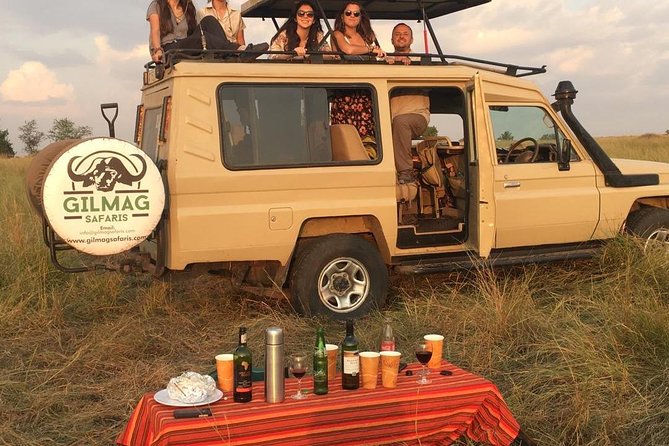
Gilmag Safaris has used guides named Nickson, Chris, Gilbert, and Abu on different Tanzania trips. Nickson is specifically associated with a successful Mara River migration safari, while other bookings highlight the company’s guiding and planning team. Your assigned guide is not named in the available tour details, so request that information before you go.
The private setup lets you ask questions throughout the day. Use that access. Ask why the vehicle is stopping, what tracks mean, why a herd is moving, and how the guide chooses between waiting and searching elsewhere.
The company’s booking contact Mary has handled detailed planning and quick communication for several itineraries. That can be useful if you need to discuss airport timing, dietary needs, room arrangements, or a custom pickup.
Who should book this safari
I would recommend this tour to you if the Mara River is a major dream, but you also want a full northern Tanzania safari. It suits couples, families, and small private groups who prefer their own guide and vehicle.
It is also a good match if you want cultural stops included rather than adding them yourself. Mto wa Mbu, the Maasai village, the market, and Cultural Heritage Centre give the trip more range.
I would think twice if you dislike long drives, rough roads, early starts, or uncertainty. The tour covers a lot of ground in eight days. It is efficient, but not leisurely.
Most travelers can participate, and service animals are allowed. The activity is private, so only your group takes part. The available information does not give a minimum age, vehicle details, or specific mobility arrangements, so ask before booking if those points affect you.
For cancellations, a full refund is available when you cancel at least six full days before the start time. Cancelling two to six full days ahead allows a 50 percent refund, while cancelling less than two full days ahead is nonrefundable. Changes inside those cutoffs are not accepted.
Should you book the Mara River safari?
Book it if you want a serious wildlife itinerary with two days in Mara River country, a private guide, and the chance to see the Big Five across several parks. The route is strong because it does not depend entirely on one crossing.
Do not book it expecting a guaranteed wildebeest stampede. The best reason to go is the entire northern Tanzania circuit, with the crossing as the thrilling possibility at its center.
If you choose it, travel between July and mid October, confirm your assigned guide, ask about camp facilities, and leave plenty of time before your departing flight. With those expectations in place, the $4,374 price buys a substantial private safari rather than a single-event excursion.
FAQ
Where does the safari begin?
The safari begins with airport pickup and a transfer to Kibo Palace Hotel in Arusha.
How long is the experience?
The itinerary lasts approximately eight days.
When is the best time to seek the Mara River crossing?
The migration is expected in Northern Serengeti between July and mid October.
Does the tour enter Kenya?
No. The itinerary stays in Tanzania and seeks views of wildebeest crossing toward Maasai Mara in Kenya.
Is this a private tour?
Yes. Only your group participates in the private tour or activity.
Which parks and areas are included?
The route includes Lake Manyara National Park, Serengeti National Park, Northern Serengeti and the Mara River, Lobo, Ngorongoro Crater, and Arusha.
Are meals included?
Yes. The package includes seven breakfasts, eight lunches, and seven dinners.
Is bottled water included?
Yes. Bottled drinking water is included.
What is not included in the price?
Tips, travel insurance, laundry, visas, flights, and alcoholic and nonalcoholic drinks are not included.
Can I cancel for a full refund?
Yes, if you cancel at least six full days before the experience start time. The cancellation cut-off uses local time.
Just added around Kilimanjaro
- Mt Kilimanjaro 6 days Marangu route hike★ 5.0 · 3 reviews
- Wildlife Extravaganza: Manyara, Tarangire & Ngorongoro in 3 Days★ 5.0 · 3 reviews
- Private Cycle to Kilimanjaro Bike Park Safari★ 5.0 · 6 reviews
- 3 Days Private E-Bike Tour in West Kilimanjaro★ 5.0 · 3 reviews
- West Kilimanjaro cycling Adventures★ 4.5 · 8 reviews
- machame route★ 5.0 · 16 reviews
- Kilimanjaro Climb & Safari – Lemosho Route – 13 Day★ 5.0 · 10 reviews
- Kilimanjaro Climbing Umbwe Route★ 5.0 · 3 reviews
Kilimanjaro Tours, compared.






Climbing Kilimanjaro through 7 days Machame Route
Read our review →
