
Reviewed · HISTORICAL TOURS
24 Hours in Arusha—Arusha Museum, Cultural Heritage, Maasai Market, Shanga
Arusha is often treated as a place to sleep before a safari, but this private city tour gives you a useful reason to stay a day. You move from tanzanite and tribal art to disability-led craft workshops, a lively market, and a museum housed in a German fort built in 1900. I especially like the mix of shopping and culture, plus the fact that lunch, transport, and entrance fees are handled for you.
I also like the door-to-door pickup and the one-on-one attention that comes with a private group. Guide Daniel has been praised for being punctual, courteous, personable, and well informed about Arusha and Tanzania. The main drawback is the pace: four stops at about three hours each can make this a long, shopping-heavy day, and the $205 price is easier to justify for a small group than for a solo visitor.
Key points at a glance
- Four very different Arusha stops: Visit Cultural Heritage, Shanga, the Maasai Market, and the Arusha Natural History and Cultural Museum.
- A private day from 8:00 a.m.: Your group travels together with pickup and drop-off at your accommodation.
- Tanzanite and local crafts: Cultural Heritage includes jewelry, precious stones, textiles, spices, antiques, and art.
- A social enterprise with working studios: At Shanga, you can watch glass-blowing, weaving, sewing, bead-making, metalwork, and Tinga Tinga painting.
- Lunch and entry fees are included: You pay separately for personal purchases, alcohol, tips, and other expenses not listed.
- Best for a full Arusha day: The tour suits visitors who want organized transport and broad coverage rather than a slow, free-form city walk.
A full day that shows Arusha beyond safari departures
The day begins at 8:00 a.m., with pickup from your accommodation. Since this is a private activity, only your group takes part, which gives you more room to ask questions, adjust your attention between shopping and museums, and avoid the compromises of a large coach tour.
That private setup matters in Arusha. The city can take time to cross, and arranging separate taxis, admissions, and stops would eat into a single free day. Here, transportation is provided throughout, and drop-off is included at the end.
The route is ambitious. The four scheduled stops are each planned for roughly three hours, making the total day about 12 hours. You should expect a full schedule, not a quick orientation tour. Lunch is provided, along with drinking water and soft drinks during game drives, although this experience itself is focused on the city and cultural sites rather than a wildlife drive.
A few more Arusha trips to weigh up
- Arusha: Traditional Tanzania Cooking Class & Food Market Tour
★ 5.0 · 34 reviews - Arusha: Traditional Tanzania Cooking class& Food Market Tour
★ 4.9 · 12 reviews - Stone Town Guided Tour: Culture, Slave Market & Spice Market
★ 4.8 · 44 reviews
Cultural Heritage Centre: shopping with a cultural angle
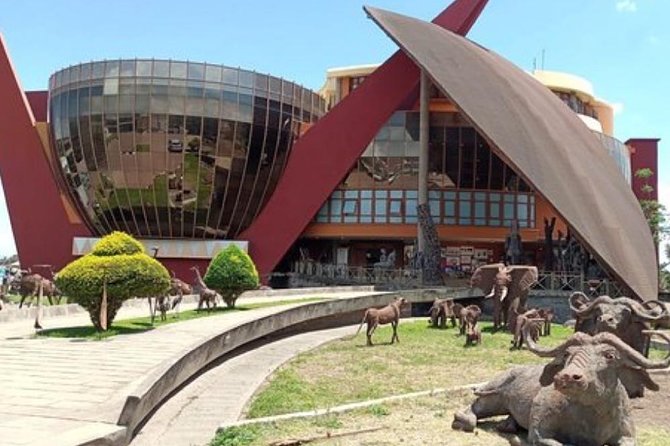
The Cultural Heritage Centre is the longest-feeling shopping stop because it combines many different types of displays and shops in one place. You can browse local crafts, ornaments, antiques, clothing, textiles, books, spices, and commercial art.
The jewelry and stone counters are a major draw. The collection includes rubies, emeralds, tsavorite, diamonds, sapphires, opals, and tanzanite. Tanzanite, a blue-violet stone associated with Tanzania, receives particular attention. If you are considering a serious jewelry purchase, this is the point in the day where you will want to slow down, compare pieces, and ask your guide for help understanding what you are seeing.
You will also find a bargain centre, a restaurant, a jewelry boutique, a gallery, and shops such as Oneway and the Spice Centre. That range makes the stop useful for different budgets. You might spend time looking at small crafts and textiles, or focus on higher-priced jewelry and precious stones.
The strength of this stop is convenience. You get many categories under one roof, which is helpful if you want gifts for family and friends but do not want to search across the city. The weakness is that three hours can feel long if shopping is not your main interest. The centre is commercial, so it does not offer the same kind of street-level contact as a local market or museum.
I would use this stop to get a sense of Tanzanian design and products before making purchases later in the day. If you are buying tanzanite or another stone, remember that personal expenses are not included in the tour price. Your guide can help with general context, but the purchase remains your responsibility.
Shanga: handmade work with a clear purpose
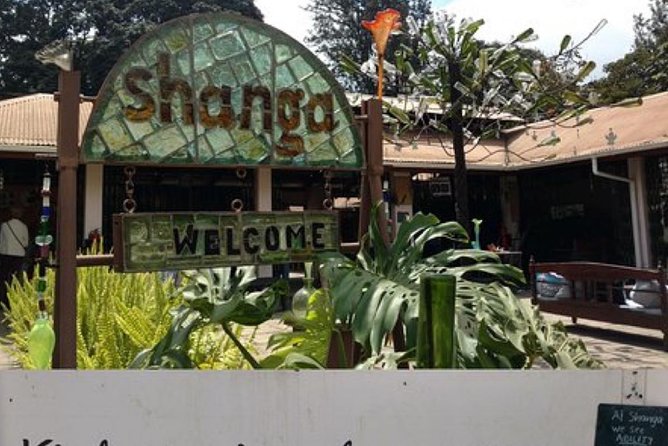
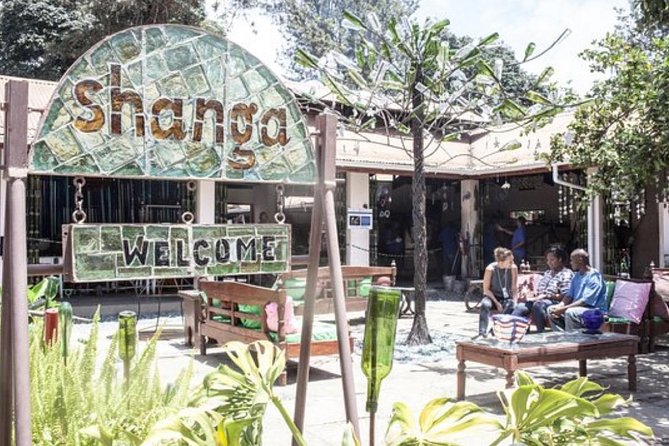
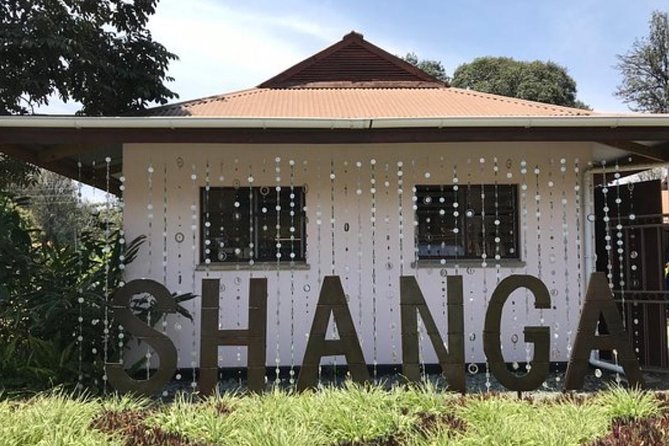
Shanga gives the day a stronger human and practical focus. It is a social enterprise employing people with disabilities to make jewelry, glassware, and household items from handmade and recycled materials.
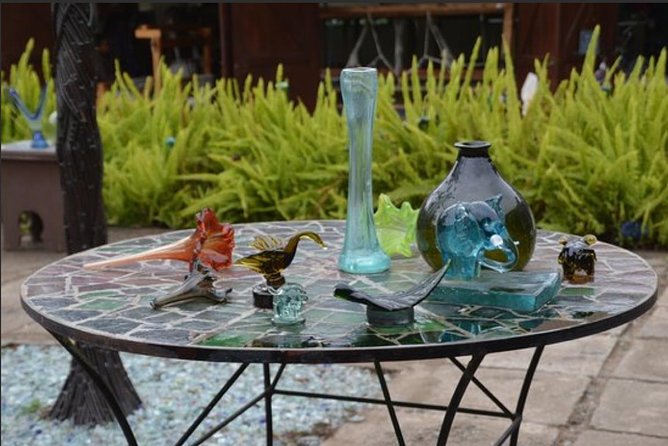
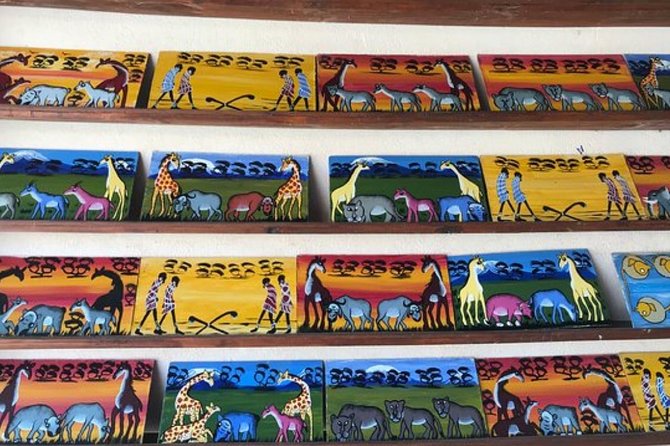
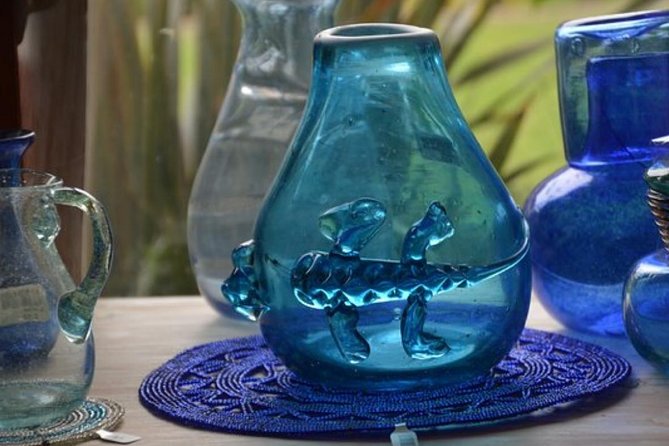
You can watch work taking place in several areas, including glass-blowing, weaving, sewing, bead-making, metalwork, and Tinga Tinga painting. This is more engaging than simply walking through a shop because you can see how products are made before you decide what to buy.
The workshop also gives you a better feel for the time and skill behind each item. Glass, fabric, beads, painted designs, and metal pieces have different textures and uses, so the three-hour visit allows you to look around without rushing from one display to the next.
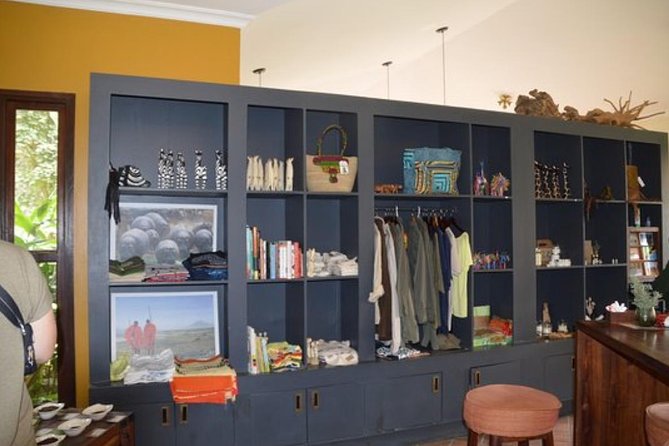
There is a shop selling Shanga products, with profits reinvested into creating more employment opportunities for people with disabilities. That does not mean every item will suit your taste or budget, but it gives your shopping a direct social purpose.
I would place Shanga high on the list for anyone who likes craft, design, or locally made gifts. It is also a good counterpoint to Cultural Heritage. Cultural Heritage presents a wide range of Tanzanian goods in a large commercial setting, while Shanga lets you see a working production space and the people behind the products.
Again, the possible drawback is time. If you are mainly interested in the museum or market, three hours here may be more than you need. The private format helps because you can discuss your interests with the guide, but the overall schedule remains a long one.
Maasai Market: prepare for a focused shopping session
The Maasai Market Curios and Crafts stop is the most intense shopping experience of the day. There are many stalls, and several sellers may offer similar products, while other stalls carry different items.
You can expect direct invitations to enter and browse. Vendors may call you mzungu, a Swahili word commonly used for a foreign visitor, and encourage you to touch the merchandise. Some sellers hand you a medium-sized basket so you can collect possible purchases while continuing to look around.
The market can feel overwhelming because there is so much to see in a compact area. That is part of its appeal, but it also calls for patience. You may want to inspect several stalls before deciding, especially when multiple vendors have similar crafts.
The tone described for this market is polite and persistent rather than aggressive. Sellers may thank you even if you do not buy anything. Still, you should expect active selling and be ready to say no clearly when something does not interest you.
I recommend arriving with a rough idea of what you want to take home. Jewelry, carvings, baskets, and other craft items may catch your eye quickly. Set a personal spending limit before you enter, and remember that purchases are not included in the $205 tour price.
This is also a place where your guide’s presence can help. Since the tour is private, you can ask for advice as you compare products and prices. The market is not presented as a museum or formal cultural performance, so approach it as a shopping stop where you will meet sellers and see a broad range of crafts.
Same country, a completely different kind of safari:
- Balloon Safari & Bush Breakfast in Serengeti – Miracle Experience
★ 5.0 · 1,646 reviews - Tanzania Classic – 7 Days
★ 5.0 · 1,151 reviews - 4 Days Group Camping Safari
★ 5.0 · 1,101 reviews - 5 Days Group Camping Safari
★ 5.0 · 730 reviews
Arusha Natural History and Cultural Museum in the old boma
The final stop is the Arusha National Natural History and Cultural Museum, located inside the old German boma. The fortified compound was completed in 1900, giving the museum an architectural setting that is part of the visit.
The most important section is devoted to human evolution. Tanzania has played a major role in fossil research, and the museum connects the country’s archaeological importance with the wider story of human origins. If you have visited safari parks but know little about Tanzania’s scientific and historical importance, this section adds useful context.
Other displays cover insects, Arusha during the German colonial period, and wildlife photographs and mounts. This makes the museum a good change of pace after several hours of shopping and craft viewing.
The museum is not presented as a huge institution, so you should keep your expectations practical. Its value comes from the subjects it covers and the old boma setting, not from an enormous number of galleries. Three hours may be generous for some visitors, but the private tour lets your guide explain points that might otherwise pass quickly.
I like ending the day here because it gives you a more historical and educational finish. You have seen modern workshops and market commerce, then you move into Tanzania’s older archaeological, colonial, and natural story.
What the $205 price really covers
At $205 per person, this is not a low-cost city outing. The value depends heavily on how many people are in your private group and how much planning you would otherwise need to do.
The price includes private transportation, pickup and drop-off, lunch, all listed entrance fees, drinking water, and soft drinks during game drives. Since this is a private tour, you are also paying for the convenience of having one vehicle and one guide for your group rather than arranging several separate visits.
For a couple, the total cost may feel substantial. For a small group splitting the vehicle and guide expense, it becomes easier to defend. Group discounts are offered, so it is worth checking the final rate if you are traveling with friends or family.
The tour also saves time. You do not need to find transport between the four locations, work out admission arrangements, or decide how to fit the stops into one day. That convenience has real value in a city where traffic and distance can interfere with a tight schedule.
The price does not include alcohol, personal purchases, visas, accommodation, tips, or other personal expenses. Shopping can add a fair amount, particularly at Cultural Heritage or the Maasai Market, so include those costs in your budget.
The pace, guide, and practical side of the day
The tour starts at 8:00 a.m. and lasts about 12 hours. That makes it best for a free day when you are not trying to catch a flight, meet a safari departure, or recover from a long international arrival.
Pickup is offered at your accommodation, and confirmation is sent at booking. Most people can take part, according to the supplied participation information, but the day includes several extended visits and shopping areas, so you should be comfortable with a full schedule.
Guide Daniel received specific praise for arriving on time and for being courteous, personable, and well informed about Arusha and Tanzania. Those qualities matter on a day with four different subjects. You want a guide who can move from precious stones to disability-led craft, market etiquette, colonial history, and human evolution without making the day feel like a series of disconnected appointments.
The private format is the biggest practical advantage. You can ask more questions, spend more time at the display that interests you, and avoid waiting for strangers. It does not remove the fixed length of the day, but it should make the long schedule easier to manage.
Free cancellation is available if you cancel at least 24 hours before the start time. Changes or cancellations inside that period are not refunded, and the activity may be rescheduled or refunded if poor weather or an insufficient number of participants causes cancellation.
Who should book this Arusha day?
I would recommend this tour to you if you have one open day in Arusha and want a broad introduction without managing transport yourself. It works especially well for first-time visitors, private groups, families interested in crafts, and shoppers who want both higher-end goods and market bargaining.
It is also a good choice if you want to support locally made work. Shanga gives the day a clear social-enterprise element, while the market and Cultural Heritage Centre show different ways crafts are produced and sold.
I would hesitate if you dislike shopping, prefer quiet historical sites, or want a slow day with plenty of unscheduled time. Three hours at each stop can feel repetitive if your interests are narrow. The cost is also harder to justify for one person who could arrange only one or two visits.
Should you book the 12-hour Arusha tour?
Book it if you want maximum coverage in one organized day. You will see four of Arusha’s most useful cultural and shopping stops, receive lunch and entry fees, and travel privately with pickup and drop-off included.
Skip it if you want to explore independently or would rather devote a whole day to one subject. The best match is a small group that values convenience, local crafts, and a guide-led introduction to the city. For that audience, the long schedule and higher price are reasonable trade-offs for seeing so much in a single day.
FAQ
What time does the tour start?
The tour starts at 8:00 a.m.
How long does the experience last?
The experience lasts approximately 12 hours.
Is this a private tour?
Yes. Only your group participates in the activity.
Is pickup available?
Yes. Pickup and drop-off at your accommodation are included.
Is lunch included?
Yes. Lunch is included in the tour price.
Are entrance fees included?
Yes. All listed fees and taxes are included, including admission to the Cultural Heritage Centre, Shanga, the Maasai Market, and the Arusha Natural History and Cultural Museum.
What is not included in the price?
Alcoholic drinks, personal items such as a camera or visa, accommodation, tips, shopping, and other personal expenses are not included.
More Historical Tours in Arusha
- Arusha Guided Walking City Tour, Culture, Lifestyle & History
★ 5.0 · 150 reviews - Materuni Waterfalls & Coffee making Cultural Tour | BURIGI CHATO SAFARIS LTD
★ 5.0 · 15 reviews - Arusha: City Walking Tour Historic and Modern Highlights
★ 4.5 · 12 reviews - Marangu waterfall & Coffee making Cultural Tour | BURIGI CHATO SAFARIS CO LTD
★ 5.0 · 12 reviews
Just added around Arusha
- 8 Days Serengeti Migration safari★ 5.0 · 11 reviews
- tarangire, ngorongoro & lake manyara park 3 days private tour★ 5.0 · 11 reviews
- tarangire & ngorongoro 2 days tour★ 5.0 · 14 reviews
- serengeti, ngorongoro & tarangire 4 days private tour★ 5.0 · 18 reviews
- serengeti & ngorongoro 3 days private tour★ 5.0 · 15 reviews
- Mt. Kilimanjaro: Shira plateau to Cathedral point 3872m Day hike★ 5.0 · 7 reviews
- 2 Days Tanzania Midrange Group Join Safari★ 5.0 · 7 reviews
- climb the KILIMANJARO via Lemosho route★ 5.0 · 4 reviews
Historical Tours, compared.

Stone Town Historical Cultural Walking Guided Tour
Read our review →
Arusha Guided Walking City Tour, Culture, Lifestyle & History
Read our review →
Stone Town’s Hidden History: Private Guided Walking Tour
Read our review →


Zanzibar Stone Town Historical Tour and Spice Farm Tour
Read our review →Browse the lists this tour appears in