
Reviewed · MACHAME ROUTE CLIMBS
7 Days Machame Route Climbing Mt. Kilimanjaro
Mount Kilimanjaro’s Machame Route gives you seven days to move from tropical forest to an Arctic summit, with a carefully shaped climb that includes a high point at Lava Tower before dropping to Barranco. That up-and-down pattern is useful for acclimatization, not just scenic variety.
I like the small maximum group of 15 and the practical support package: professional guides, porters, a cook, three hot meals a day, treated water, oxygen, and an oximeter. I also like the personal touch associated with Kilisa, a Moshi-based operator whose guides have included Bakari, Livingston, Abraham, Alfonse, Bacarri, and Bryson.
The catch is simple: this is a hard climb, especially the midnight summit push. You need strong fitness, patience, and a willingness to camp for several nights at high altitude. The $2,750 price is not a bargain-basement trek, but many major costs are already covered.
Key points before you book
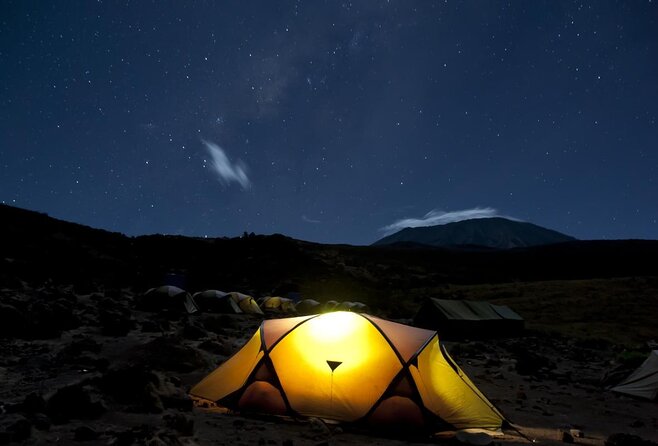
- A seven-day route with a real acclimatization day: Day 3 climbs to about 13,000 feet at Lava Tower before descending to Barranco.
- A full range of Kilimanjaro habitats: You walk through rainforest, moorland, semi-desert, alpine desert, and Arctic terrain.
- A demanding summit morning: The ascent from Barafu begins between midnight and 2 a.m., reaching Uhuru Peak at 19,345 feet.
- Strong practical support: Park fees, camping, guides, porters, a cook, meals, water, rescue fees, oxygen, and first-aid supplies are included.
- Moshi-based convenience: The package includes two nights of accommodation in Moshi and private airport transport.
- A few extra costs remain: Flights, insurance, staff tips, personal items, and the optional portable flush toilet are not included.
Why the Machame Route takes seven days
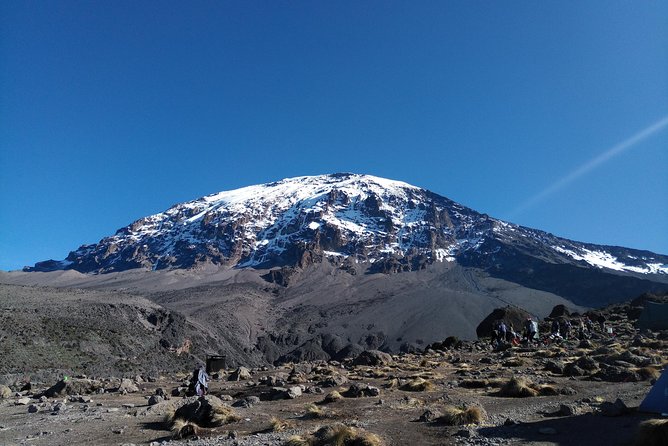
Machame is a popular choice because it gives you a varied climb without rushing the mountain. The route begins in forest, rises through open moorland, crosses dry high ground, and finishes in the cold summit zone.
The seven-day schedule matters. Kilimanjaro is not mainly a technical climbing problem. The bigger challenge is the combination of altitude, long walking days, cold, tired legs, and limited sleep. A schedule that lets your body adjust gradually is worth more than shaving a day from the price.
Day 3 is especially important. You climb toward Lava Tower at roughly 13,000 feet, with a junction toward the Arrow Glacier at about 16,000 feet, then descend to Barranco Camp. You finish near the elevation where you started, but your body has spent time higher up. That is good preparation for the summit.
You should still keep expectations realistic. A seven-day itinerary improves your chances of adjusting, but it does not remove altitude risk. The guides are expected to monitor your condition, and the package includes an oximeter, portable oxygen, and an emergency first-aid kit. These are useful safety tools, not guarantees of a successful summit.
More Machame Route Climbs in Kilimanjaro
- Kilimanjaro climb, Machame Route (7-day)
★ 5.0 · 262 reviews - Climbing Kilimanjaro – Machame Route
★ 5.0 · 170 reviews - Climbing Kilimanjaro through 7 days Machame Route
★ 5.0 · 151 reviews
Day 1: Machame Gate to Machame Camp
Your climb begins with a drive of about 50 minutes from Moshi to the Mount Kilimanjaro National Park Gate. The road passes through Machame village, on the mountain’s lower slopes, before you complete registration and begin walking.
The first day covers about 11 kilometers, with five to seven hours of hiking. You rise from approximately 5,400 feet to 9,400 feet, traveling through rainforest.
This is a pleasant but potentially messy opening. The trail winds uphill along a ridge, and lower sections can be muddy and slippery. Pack gaiters and trekking poles, even if the weather looks friendly in Moshi. A warm, dry hotel room below does not tell you much about the trail above.
The rainforest is more than an easy introduction. It gives you the first clear sense that the mountain changes as you climb. The air, plants, and trail all feel different from the town below. You finish at Machame Camp, where dinner and overnight camping follow the first full day on foot.
Day 2: Machame Camp to Shira Camp
Day 2 is shorter in distance but still climbs steadily. You cover about five kilometers in four to six hours, moving from 9,400 feet to 12,500 feet.
The rainforest gives way to moorland. The trail crosses a small valley and follows a steep, rocky ridge covered with heather. It eventually turns west toward a river gorge and Shira Camp.
This day can feel tougher than the distance suggests. The altitude rises quickly, and the path is more exposed than the forest trail. Take the slow pace seriously. Kilimanjaro guides often use the Swahili phrase pole pole, meaning slowly, and that approach is central to managing the climb.
Shira Camp places you on the Shira Plateau, where the surroundings feel open and spare. There is less tree cover, more sky, and a clearer sense that you are moving into high country. Dinner and overnight camping are included, as they are throughout the mountain portion of the trip.
Day 3: Lava Tower and the Barranco descent
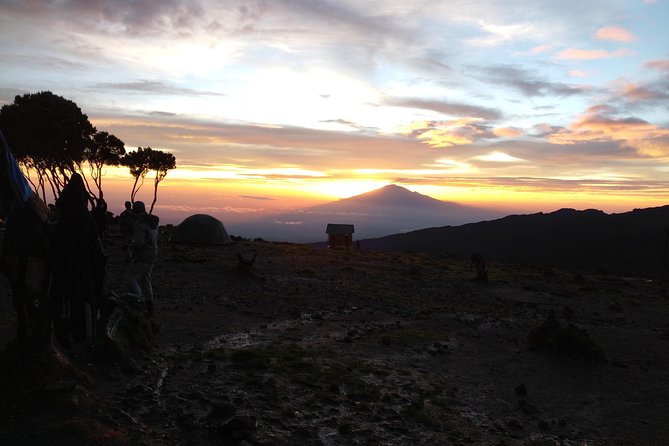
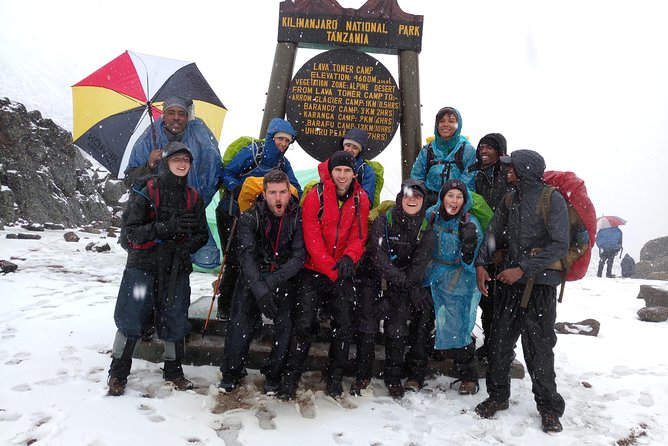
Day 3 is the route’s key acclimatization day. You hike about 10 kilometers over six to eight hours, climbing from 12,500 feet toward 13,000 feet at Lava Tower before descending to Barranco Camp.
The habitat is semi-desert, and the route moves east along a ridge. You pass a junction toward Kibo, Kilimanjaro’s main summit cone, then turn southeast toward Lava Tower, also called the Shark’s Tooth.
Beyond the tower is a junction toward the Arrow Glacier at around 16,000 feet. The itinerary does not take you to that glacier. Instead, you descend to Barranco Hut at about 13,000 feet.
I consider this the day that makes the seven-day plan sensible. You climb high, then sleep lower. That rhythm gives your body a better chance to adjust than a straight, rapid ascent. It is also a demanding day, so do not judge it by the fact that your sleeping elevation is close to your starting point.
Barranco is an important camp in the route’s rhythm. You have done a long high-altitude day, and dinner followed by rest is exactly what you need. Keep your evening simple. Eat, drink, organize your layers, and sleep.
More Machame Route Climbs in Moshi:
- #1. Best Kilimanjaro Day hike Tour-Machame Route-ISMANI
★ 4.2 · 47 reviews - 7 Days Machame route – Kilimanjaro
★ 5.0 · 45 reviews - The Best of Machame Route in 6 Days: Your World’s Summit Guide
★ 5.0 · 44 reviews - Best Kilimanjaro Adventure 7 days Machame route Trekking
★ 5.0 · 42 reviews
Day 4: The Barranco Wall to Karanga
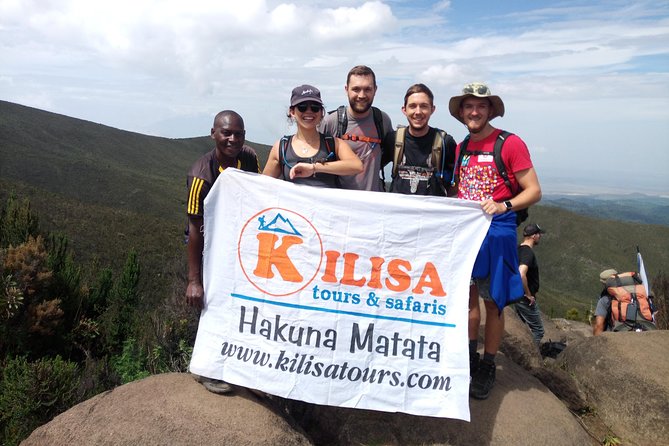
Day 4 covers about five kilometers in four to five hours, rising only slightly from 13,000 feet to 13,100 feet. It is another short day designed to help with acclimatization.
The main feature is the Barranco Wall. You leave camp after breakfast and climb a steep ridge, passing the wall before reaching the Karanga Valley campsite.
This section can feel more adventurous than the numbers suggest. A short route at high altitude may still require effort, especially after the previous day. The benefit is that you are not being pushed into another long march before the summit preparation begins.
Karanga is also a useful psychological checkpoint. You have left the lower forest and moorland far behind, and Barafu Camp is next. Keep your clothing and sleeping gear dry. At this height, small comforts matter.
Day 5: Karanga to Barafu Camp
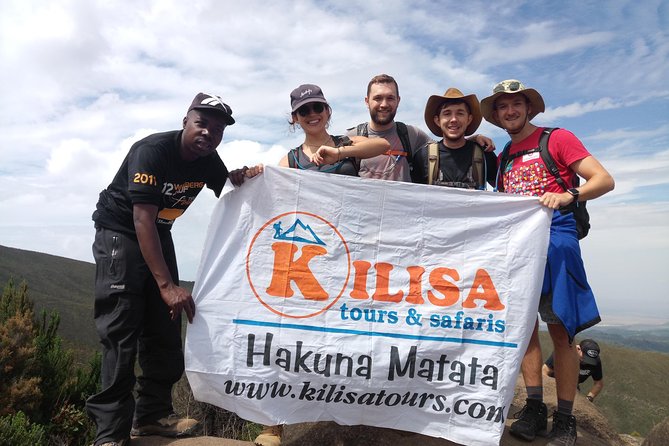
The fifth day is only about four kilometers, but it takes four to five hours because the route climbs from 13,100 feet to 15,300 feet.
You first reach the junction connecting with the Mweka Trail, then continue upward to Barafu Hut. The name means ice in Swahili, and the setting signals that the warm lower mountain is finished.
At Barafu, you have completed the South Circuit section, which provides views of the summit from different angles. Mawenzi and Kibo are visible from the camp, giving you two striking reminders of the volcanic mountain you are crossing.
This is not a sightseeing afternoon. Barafu is where you rest, eat dinner, prepare your summit clothing, and try to sleep before the midnight start. Your guide team should help you check your equipment and pacing plan. You should also keep the next morning’s layers, headlamp, water, snacks, and gloves close at hand.
The short walking distance is helpful, but the altitude makes this camp serious. Do not spend the afternoon wandering around for photographs. Save your energy.
Day 6: Barafu to Uhuru Peak and Mweka Camp
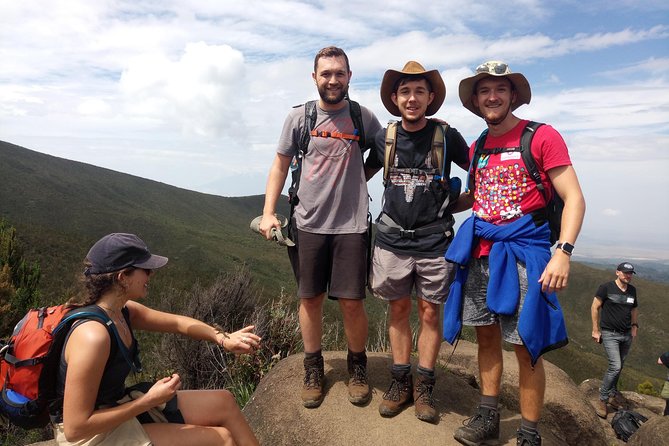
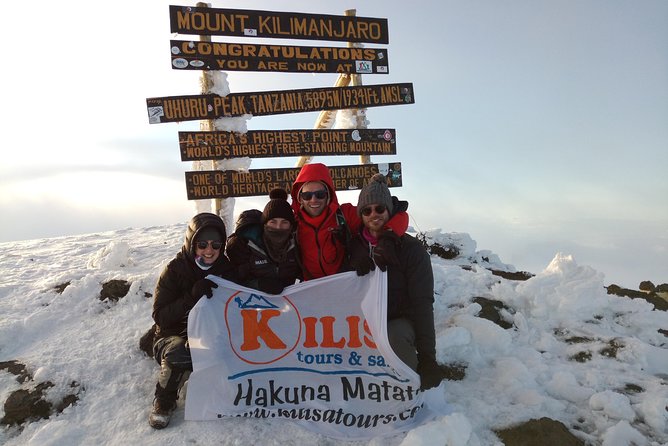
Summit day is the hardest part of the trip. The ascent begins between midnight and 2 a.m., taking you from Barafu at 15,300 feet to Uhuru Peak at 19,345 feet.
The ascent covers about five kilometers and takes seven to eight hours. You head northwest between the Rebmann and Ratzel glaciers, climbing through heavy scree toward Stella Point on the crater rim at approximately 18,600 feet.
This is where steady pacing matters most. The trail is steep, the air is thin, and you may be walking in darkness for much of the climb. The practical goal is not speed. It is to keep moving while conserving energy.
At Stella Point, you can rest briefly and, weather permitting, watch the sunrise. The final hour to Uhuru Peak may include snow. The summit is the highest point in Africa, but the time you spend there may be limited by cold, fatigue, and conditions.
After reaching the summit, you descend 12 kilometers to Mweka Hut, dropping to about 10,000 feet. The descent takes another four to six hours. That makes this a very long day, with up to 20 kilometers of total walking.
Do not underestimate the descent. Many people focus so strongly on reaching the top that they forget how much work remains afterward. Use trekking poles, take care with loose ground, and follow your guide’s instructions. Dinner and overnight camping at Mweka follow this exhausting but rewarding day.
Day 7: Mweka Camp to Moshi
The final mountain section descends about 10 kilometers from 10,000 feet to 5,400 feet. It takes three to four hours and returns you to rainforest.
The lower trail can be wet and muddy, so keep gaiters and trekking poles handy. The warmer air may tempt you to pack away your rain gear, but keep it accessible until you are off the mountain.
You continue to Mweka Park Gate to receive your summit certificates. From the gate, the route continues for about another hour to Mweka Village, where a vehicle takes you back to your Moshi hotel.
The return to town is part of the experience. After several nights at altitude, a shower, a bed, and a proper change of clothes will feel like major luxuries. The two included nights in Moshi give the package a useful beginning and end, though the supplied details do not specify exactly how those nights are scheduled.
What the $2,750 price covers
At $2,750 per person, this is a substantial trip cost, but it includes many expenses that can otherwise appear as add-ons. Park entry fees, camping fees, Kilimanjaro rescue fees, and 18 percent VAT are included.
You also receive private transport to and from Kilimanjaro International Airport, two nights of Moshi accommodation, mountain guides, a cook, porters, three hot meals each day, and treated and filtered drinking water.
The safety provisions are worth noting. Portable oxygen, an oximeter, and an emergency first-aid kit are included. Again, these supplies support responsible mountain operations, but you still need travel insurance and suitable personal preparation.
The package does not include flights, travel insurance, tips for the guides, porters, and cook, or personal toiletries. A portable flush toilet can be rented for $100 for the full trip and shared within a group. Ask before booking how the standard camp toilet arrangements work if that issue matters to you.
The operator also offers a best price guarantee for equivalent Kilisa tours under matching conditions. Read that wording carefully. It applies to practically identical Kilisa offerings, not automatically to every other company selling a Kilimanjaro climb.
Food, water, and the porters who make camp possible
Three hot meals are provided each day on the mountain. That is a meaningful benefit during a seven-day climb, when you need regular food but may not feel like carrying much of it yourself.
The supplied water is treated and filtered. You should still bring a reusable bottle or hydration system and follow the guide’s instructions about daily water needs.
The cook and porters are central to the experience. They move equipment, prepare camp, and keep the group functioning while you concentrate on walking. Several accounts of Kilisa trips specifically praise the porters and cooks for making camp feel welcoming and for serving generous evening meals.
That service also brings an ethical question. Tips are not included, and you should budget for them. Ask the operator in advance about its recommended tipping practice and how tips are distributed among guides, porters, and the cook.
The guide team and group size
The maximum group size is 15 people. That is large enough to provide a social atmosphere, but not so large that the climb must operate like a mass procession.
Guide quality matters more than polished sales language. Kilisa has had guides named Bakari, Livingston, Abraham, Alfonse, Bacarri, and Bryson working on different climbs. Past accounts place particular emphasis on calm pacing, safety checks, encouragement, and the ability to make people feel supported when the summit seems distant.
You should confirm who will lead your departure and how many porters and guides will be assigned to your group. The supplied information promises friendly and professional mountain staff, but it does not specify a fixed guide roster for every booking.
Fitness, packing, and the reality of the summit push
The operator requires a strong physical fitness level, and that is fair. You need to handle five to eight hours of hiking on several days, followed by a summit day with seven to eight hours of ascent and four to six hours of descent.
Bring reliable trekking shoes, warm layers, rain gear, gloves, a hat, gaiters, and trekking poles. The itinerary specifically warns about mud on the first and final days, so waterproof protection is not a luxury.
Your clothing must cover two very different climates. Shorts and a T-shirt may be comfortable lower down, while the summit zone can be snowy and bitterly cold. Keep warmer clothing and rain protection available rather than buried at the bottom of your bag.
The best preparation is not simply walking fast on flat ground. Practice long uphill and downhill days, use the boots and socks you plan to wear, and learn to walk slowly for hours. You should also be ready for an early summit start and limited sleep.
Who should choose this Kilimanjaro climb
This trip suits you if you want a structured Kilimanjaro climb with a full support team, included meals, camping fees, airport transport, and two Moshi hotel nights. It is also a good fit if you value a local Moshi operator and prefer a group capped at 15.
The route works well for people who want varied scenery and a schedule that gives genuine time for acclimatization. The Lava Tower to Barranco pattern and the short Karanga day are especially useful.
It is less suitable if you want a luxury mountain holiday, a quiet private wilderness experience, or a short and easy hike. Camping is part of the deal, and the summit day is physically punishing. You should also be comfortable with extra costs for insurance, flights, tips, and personal equipment.
Free cancellation is available if you cancel at least 24 hours before the local start time. Inside that window, no refund is provided, and weather-related cancellations can lead to a different date or a full refund.
Should you book the 7-day Machame Route?
I would consider this a strong option for a fit first-time Kilimanjaro climber who wants a sensible seven-day schedule and clear cost coverage. The best features are the acclimatization design, the included safety equipment, hot meals, airport transfers, and the hands-on support of guides, porters, and a cook.
Before paying, confirm your hotel dates, guide assignment, group composition, tipping guidance, equipment list, and standard toilet arrangements. If the answers are clear and you are prepared for the summit night, the $2,750 package offers solid value for a supported climb to Uhuru Peak. If you are not ready for long, high-altitude walking, no operator can make this route easy.
FAQ
Where does the 7-day Machame Route climb begin?
The experience begins in Moshi, Tanzania. Transport takes you from Moshi to Machame Gate, a drive of about 50 minutes.
How high is Uhuru Peak?
Uhuru Peak is listed at 19,345 feet. The summit is reached on Day 6 after starting the ascent from Barafu Camp.
How long is the summit day?
The ascent from Barafu to the summit takes about seven to eight hours. The descent to Mweka Hut takes another four to six hours.
What time does the summit climb begin?
The summit ascent begins very early, between midnight and 2 a.m.
Is food included during the climb?
Yes. Three hot meals are provided each day while you are on the mountain. Breakfast, lunch, and dinner are included according to the itinerary.
Is drinking water provided?
Yes. Treated and filtered drinking water is provided throughout the trek.
Are park and camping fees included?
Yes. Park entry fees and camping fees are included in the package price.
Is airport transport included?
Yes. Private transport to and from Kilimanjaro International Airport is included.
What is not included in the price?
Flights, travel insurance, tips for guides, porters, and the cook, personal items, and toiletries are not included. A portable flush toilet can be rented for $100 for the full trip to share within a group.
Can I cancel for a full refund?
You can cancel for a full refund if you cancel at least 24 hours before the experience start time. Cancellations or changes made within 24 hours are not accepted for a refund.
More 7-Day Experiences in Moshi
- Kilimanjaro climb by Lemosho Route (7-day)
★ 5.0 · 651 reviews - Private Kilimanjaro Hike 7 Day Lemosho Route
★ 5.0 · 60 reviews - 7-Day Magical Tanzania Safari -Premium High End Package
★ 5.0 · 53 reviews - Kilimanjaro climb, Rongai Route (7-day)
★ 5.0 · 40 reviews
Just added around Moshi
- Mt Kilimanjaro 6 days Marangu route hike★ 5.0 · 3 reviews
- Wildlife Extravaganza: Manyara, Tarangire & Ngorongoro in 3 Days★ 5.0 · 3 reviews
- Private Cycle to Kilimanjaro Bike Park Safari★ 5.0 · 6 reviews
- machame route★ 5.0 · 16 reviews
- 3 Days Private E-Bike Tour in West Kilimanjaro★ 5.0 · 3 reviews
- West Kilimanjaro cycling Adventures★ 4.5 · 8 reviews
- Kilimanjaro Climb & Safari – Lemosho Route – 13 Day★ 5.0 · 10 reviews
- Kilimanjaro Climbing Umbwe Route★ 5.0 · 3 reviews
Machame Route Climbs, compared.



Climbing Kilimanjaro through 7 days Machame Route
Read our review →
7-Day Machame Kilimanjaro Summit Tour from Arusha
Read our review →
7 Days Kilimanjaro via Machame route affordable price
Read our review →
#1. Best Kilimanjaro Day hike Tour-Machame Route-ISMANI
Read our review →

The Best of Machame Route in 6 Days: Your World’s Summit Guide
Read our review →Browse the lists this tour appears in