
Reviewed · MACHAME ROUTE CLIMBS
7 Days Kilimanjaro Trekking Machame Route
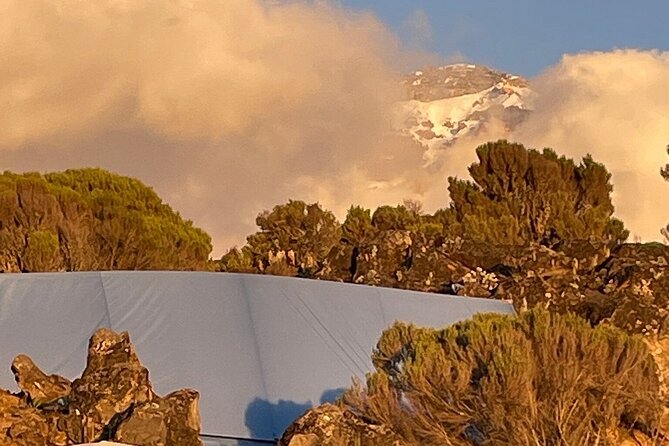
The Machame Route gives you Kilimanjaro in changing chapters: wet rainforest, open moorland, volcanic rock, glacier country, and a long descent through trees. You sleep in tents rather than huts, and the trail asks more from your legs than the gentler Marangu Route.
I like the way the itinerary uses a high crossing to Barranco before dropping back down, which gives your body useful time to adjust to altitude. I also like the strong emphasis on guide support, especially from names repeatedly connected with this trek, including Sebastian Shirima and Henry.
The main catch is simple: seven days is demanding. You need a moderate level of fitness, some hiking experience, and the patience to walk slowly at altitude. The route covers about 62 kilometers from gate to gate, with a short but intense summit night.
Key points to know before you book
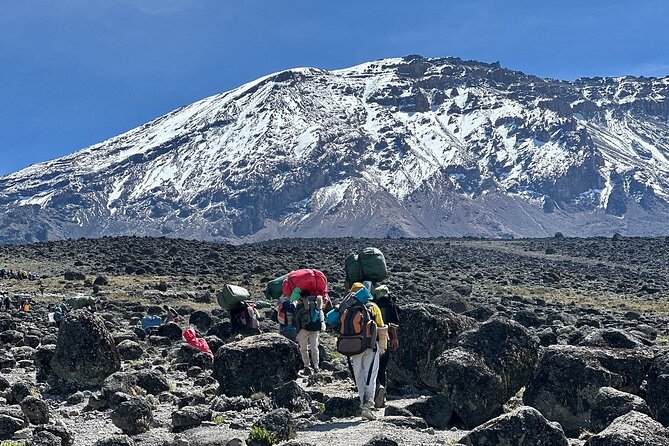
- A full habitat change each day: You move from montane forest to moorland, semi-desert, high alpine country, and alpine desert before descending through rainforest.
- The Barranco acclimatization day matters: You climb high toward Lava Tower, then sleep lower at Barranco Camp instead of gaining altitude too quickly.
- The summit push begins around midnight: Expect a long night hike to Stella Point and Uhuru Peak, followed by a major descent.
- Camping replaces mountain huts: Machame suits you if you prefer a more rugged trek and can handle longer, steeper walking days.
- Guide support is a major part of the experience: Sebastian Shirima is singled out by name, with Henry and other team members also praised for encouragement and care.
- Check the final transfer details: The tour is based around Moshi, but the final description says the vehicle returns you to a hotel in Arusha.
Why Machame feels different from Marangu
Machame is popular for good reason. It gives you more visual variety than a steady uphill route, and the trail does not simply point upward every day. You climb toward Lava Tower, descend to Barranco, cross the Barranco Wall, and continue through several altitude zones before reaching Barafu.
That variety is also the route’s test. The paths are steeper and the days can be longer than on Marangu. You sleep in tents, so this is not the choice for someone looking for a hut-based climb with a more gradual incline.
The seven-day format gives you a useful acclimatization pattern, but it does not make Kilimanjaro easy. The summit day alone combines a midnight start, a climb to 5,895 meters at Uhuru Peak, and a long descent to Mweka Camp. I would view this as a serious trekking holiday, not a casual sightseeing excursion with a mountain attached.
The private format is valuable if you want your group to move at its own pace and communicate directly with the guide team. It also means you should ask clear questions before paying, especially about the exact pickup location, what the $2,500 price includes, and whether your return is to Moshi or Arusha.
More Kilimanjaro Climbs in Kilimanjaro
- Kilimanjaro climb by Lemosho Route (7-day)
★ 5.0 · 651 reviews - Kilimanjaro climb, Machame Route (7-day)
★ 5.0 · 262 reviews - Kilimanjaro Climbing Lemosho Route 8 Days.
★ 5.0 · 186 reviews
Day 1: Machame Gate and the rainforest
Your morning starts with breakfast and a transfer to Machame Gate. The listed start time is 7:00 am, giving you an early beginning for registration and preparations before the first trail section.
The first day leads through montane forest to Machame Campsite. The distance is about 11 kilometers, with five to seven hours of walking and an overnight elevation of roughly 3,000 meters.
This is a satisfying opening because the forest makes Kilimanjaro feel alive before the bare upper mountain takes over. Expect a damp, shaded route and a steady climb rather than a flat stroll. The pace should be controlled from the start. Saving energy here matters more than showing how fast you can walk.
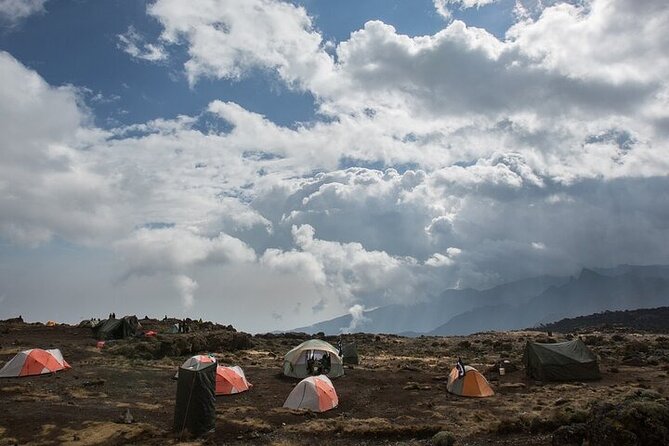
At camp, the team sets up camp and prepares dinner. You sleep in tents, and that camping routine becomes part of the rhythm for the rest of the trek. Keep rain gear easy to reach, since the forest section can be wet.
The first day is not the hardest, but it tells you what kind of trip you have chosen. You are walking for hours, carrying what you need for the day, and adjusting to a mountain schedule. Good boots and trekking poles are worth having from the beginning.
Day 2: Shira Plateau and the first real altitude gain
From Machame Camp, you leave most of the forest behind and enter heath and open moorland. The trail rises through a valley and over a steep, rocky ridge before reaching the Shira Plateau.
This day covers about 9 kilometers in four to six hours. You climb from around 3,000 meters to approximately 3,850 meters, a gain of about 850 meters. The overnight stop is Shira 2 Camp.
I like this day because it changes the feel of the trek quickly. The thick trees give way to wider views and exposed ground, and you can see that the mountain is becoming less forgiving. The route crosses a large river gorge before turning toward the campsite.
The altitude gain is the point to watch. You may feel fine at the start and notice the thinner air later in the afternoon. Walk slowly, drink as directed by your guide, and tell the team early if you develop a headache or feel unwell. The itinerary calls for a moderate fitness level, but altitude does not care how fit you are.
Shira Camp is a useful pause on the plateau. It is high enough to begin the adjustment process, yet the following day is designed to help your body cope rather than simply forcing you higher.
Day 3: Lava Tower, Shark’s Tooth, and Barranco
Day three is one of the most important days in the whole plan. You leave the Shira Plateau and head east along a ridge, passing the junction toward Kibo before turning southeast toward Lava Tower, also called the Shark’s Tooth.
The stated walking distance is about 10 kilometers, with six to eight hours on the trail. You rise toward roughly 4,600 to 4,900 meters, depending on the point described, then descend to Barranco Camp at about 3,960 meters, also listed in the itinerary as around 13,000 feet.
The unusual part is that you finish the day close to your starting elevation. That can seem inefficient, but it is exactly why the day helps with acclimatization. You spend time high, then sleep lower. The route passes through semi-desert, with rocky ground and fewer plants than the earlier sections.
Lava Tower is a major visual and physical marker. You are now in serious high-altitude country, and the mountain feels less like a forest trek and more like a volcanic ascent. The descent to Barranco is not wasted effort. It gives you a better chance to adjust before the summit push.
The day may be tough if you are already tired from the first two stages. This is where a patient guide matters. Sebastian Shirima is specifically associated with the trek, and the wider team has been praised for encouragement and support. You should expect the guide to set a measured pace rather than let the strongest person in the group dictate the day.
More Machame Route Climbs in Kilimanjaro
- Climbing Kilimanjaro – Machame Route
★ 5.0 · 170 reviews - Climbing Kilimanjaro through 7 days Machame Route
★ 5.0 · 151 reviews - #1. Best Kilimanjaro Day hike Tour-Machame Route-ISMANI
★ 4.2 · 47 reviews - 7 Days Machame route – Kilimanjaro
★ 5.0 · 45 reviews
Day 4: Scrambling up the Barranco Wall
The Barranco Wall is the day’s headline feature. It rises about 257 meters and requires basic scrambling skills. You use your hands in places, but this is not described as technical climbing. The aim is to reach the top of the Karanga Valley, then continue across a series of short climbs and descents to Karanga Camp.
The distance is around 7 kilometers, with about seven hours of hiking. The route enters the high alpine zone, and the shorter distance does not mean an easy day.
The wall can feel intimidating when you first see it. That is part of its charm and part of the reason this route is not a beginner’s mountain walk. The trail works its way across the rock rather than going straight up every section. Your guide can help with foot placement and pace, and you should keep both hands free whenever the path becomes awkward.
I like the way this stage breaks up the long altitude days. It gives you a memorable physical challenge without the all-night pressure of summit day. The Karanga Valley section also makes the mountain feel rugged and close at hand.
Do not treat the 7-kilometer figure as a quick morning outing. Seven hours at altitude, after three previous days, can leave you tired. Save your energy and keep your day pack light.
Day 5: Karanga to Barafu Base Camp
Day five is listed as a short day of about 6 kilometers and three hours. You climb from Karanga Camp to Barafu Camp at approximately 4,680 meters, joining the Mweka route along the way.
This is the quiet before the largest effort. The advice to walk easily is sound. You are not trying to win the afternoon. You are trying to reach camp with enough energy to eat, rest, and prepare for a midnight or early morning start.
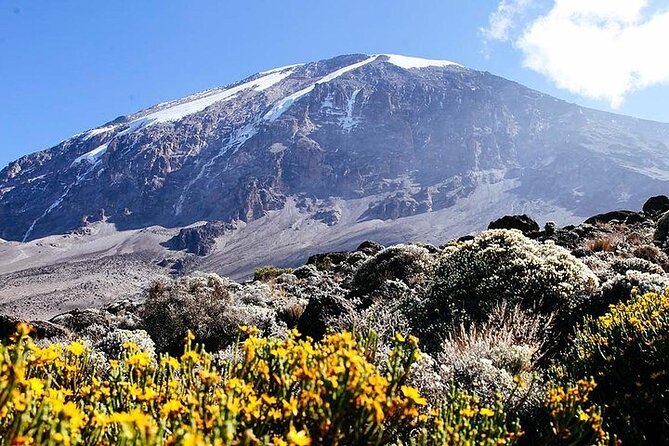
Barafu means you are at the summit launch point. The surroundings are described as alpine desert, so expect a more exposed, barren setting than the green lower mountain. The camp’s importance is less about sightseeing and more about preparation.
Use this time to sort your warm layers, headlamp, gloves, water, snacks, and trekking poles. Keep only what you need for the summit push close at hand. A short afternoon walk or gentle movement may help you avoid stiffening up, but rest should be the priority.
The itinerary does not provide a detailed packing list or a breakdown of what is included in the price. Before booking, I would ask Kiwoito Africa Safaris about camping equipment, meals, porter arrangements, transfers, and any park or rescue fees. Those details can change the real value of a $2,500 trek.
Day 6: The midnight climb to Uhuru Peak
Summit day begins very early, normally between midnight and 2:00 am. You climb toward Stella Point between the Rebmann and Ratzel Glaciers, reaching Stella Point at about 5,670 meters, or 18,600 feet.
This is the hardest section of the route. The trail is steep, the air is thin, and darkness makes the climb feel longer. A slow pace is not a sign of weakness. It is the sensible way to keep moving.
At Stella Point, you may rest and watch sunrise if the weather allows. From there, it is roughly another hour to Uhuru Peak, the highest point on Kilimanjaro and in Africa. Snow may appear on this final section, and faster walkers may reach the summit in time for sunrise.
The summit moment can be brief. Take your photographs, enjoy the achievement, and listen carefully to your guide. Weather, cold, altitude, and exhaustion all affect how long you can comfortably stay.
Then comes the part many people underestimate: the descent. You return toward Barafu for lunch and continue down to Mweka Hut Campsite. Loose gravel can make the descent hard on your knees and ankles. Gaiters and trekking poles are especially useful here, and the trip information specifically advises bringing them.
This single day combines the emotional high point with a great deal of physical work. Support from the guide team is not a small extra. It can help you stay focused when the trail becomes repetitive and your legs feel spent. Sebastian and Henry are names connected with particularly encouraging guidance, but the wider team also appears to play an important role in keeping the group moving.
Day 7: Mweka Gate and the return transfer
The final day descends from Mweka Camp, listed at about 10,000 feet, to Mweka Park Gate at roughly 5,400 feet. The walking distance is about 10 kilometers and takes three to four hours through rainforest.
This is a different kind of tiredness. The summit is behind you, but your knees may still complain. The lower trail can be wet and muddy, so keep rain gear accessible even if the sky looks clear at camp. Gaiters and poles remain useful.
At the gate, you receive your summit certificates. The description then says you continue for another hour to Mweka Village, where a vehicle meets you for the drive to your hotel in Arusha.
There is one practical detail I would confirm in writing. The tour location is listed as Moshi, while the final transfer description names Arusha. Those towns are close enough to be part of the same Kilimanjaro travel plan, but your exact drop-off matters if you have a flight, safari, or hotel booking afterward.
What the $2,500 price may be worth
At $2,500 per person, this is a substantial purchase. The price makes more sense if you value a private trek, airport or hotel pickup, a dedicated guide team, camping organization, meals, porters, park access, and support during the climb. Not all of those inclusions are spelled out in the supplied details, so you should request a written list before booking.
The private format is a real advantage for people who want a personal pace and direct contact with the crew. It may also suit friends, couples, or families who want to share the challenge without being placed into a larger mixed group.
The strongest value here is human support. The available feedback repeatedly gives attention to Sebastian, Henry, and the wider Kiwoito team, with praise for motivation, professionalism, quick answers, and help during difficult moments. One important practical point is that a small local operator may offer more direct communication than a large booking company. The tradeoff is that you should ask more questions yourself and make sure every inclusion is clear.
Free cancellation is available if you cancel at least 24 hours before the 7:00 am start time. A cancellation within 24 hours is not refundable, and late changes are not accepted.
Who should choose this seven-day climb
I would recommend this route to you if you:
- Have a moderate fitness level and some hiking experience
- Are comfortable sleeping in tents
- Want several different mountain habitats rather than one steady uphill trail
- Prefer a private group
- Can handle a midnight summit start and a long descent
- Value close guide support and encouragement
I would be cautious if you want hut accommodation, short walking days, or a relaxed sightseeing schedule. The Barranco Wall requires basic scrambling, and the summit day is physically demanding even though the itinerary gives you a rest-oriented day before it.
Service animals are allowed, and the activity is near public transportation. A mobile ticket is offered, and pickup is available. Those details are useful, but they do not change the main decision: you are signing up for a real high-altitude trek.
Should you book the Machame Route with Kiwoito?
Book it if you want a serious seven-day Kilimanjaro route with varied scenery, tented camps, a private group, and a guide team known for steady encouragement. The Machame itinerary has a sensible high-and-low acclimatization day, a memorable Barranco Wall crossing, and a full summit attempt rather than a rushed shortcut.
I would make the booking only after confirming what the $2,500 covers and where the final vehicle will take you. If you are fit enough for long days, willing to walk slowly, and ready for a midnight climb, this offers a strong route and personal support. If you prefer comfort and a gentler schedule, choose another Kilimanjaro plan.
FAQ
How long is the Kilimanjaro Machame Route trek?
The trek lasts approximately seven days. The route covers about 62 kilometers, or 37 miles, from gate to gate.
What time does the experience start?
The listed start time is 7:00 am. Summit day begins much earlier, generally between midnight and 2:00 am.
Where does the trek begin?
You are transferred to Machame Gate after breakfast on the first day. The main tour location is Moshi, Tanzania.
Where do you sleep during the trek?
You sleep in tents at camps including Machame, Shira, Barranco, Karanga, Barafu, and Mweka. The Machame Route does not use the hut accommodation associated with the Marangu Route.
How fit do I need to be?
The activity requires a moderate physical fitness level and is designed for people who are physically fit with some hiking experience.
Does the tour include pickup?
Pickup is offered. The final description says a vehicle meets you at Mweka Village after the last descent, then drives you to a hotel in Arusha.
What is the cancellation policy?
You can receive a full refund if you cancel at least 24 hours before the experience begins. Cancellations within 24 hours are not refunded, and changes made within that period are not accepted.
More Machame Route Climbs in Moshi
- The Best of Machame Route in 6 Days: Your World’s Summit Guide
★ 5.0 · 44 reviews - Best Kilimanjaro Adventure 7 days Machame route Trekking
★ 5.0 · 42 reviews - 6 Days Machame Route Kilimanjaro Climbing
★ 5.0 · 42 reviews - 6 Days Private Mount Climbing in Kilimanjaro Machame Route
★ 5.0 · 38 reviews
More Kilimanjaro Climbs in Moshi
- Kilimanjaro climb, Lemosho Route (8-day)
★ 5.0 · 148 reviews - Kilimanjaro climb, Lemosho Route (6-day)
★ 5.0 · 129 reviews - Kilimanjaro climb, Marangu route (6-day)
★ 5.0 · 72 reviews - Private Kilimanjaro Hike 7 Day Lemosho Route
★ 5.0 · 60 reviews
Just added around Moshi
- Mt Kilimanjaro 6 days Marangu route hike★ 5.0 · 3 reviews
- Private Cycle to Kilimanjaro Bike Park Safari★ 5.0 · 6 reviews
- Wildlife Extravaganza: Manyara, Tarangire & Ngorongoro in 3 Days★ 5.0 · 3 reviews
- 3 Days Private E-Bike Tour in West Kilimanjaro★ 5.0 · 3 reviews
- West Kilimanjaro cycling Adventures★ 4.5 · 8 reviews
- machame route★ 5.0 · 16 reviews
- Kilimanjaro Climb & Safari – Lemosho Route – 13 Day★ 5.0 · 10 reviews
- Kilimanjaro Climbing Umbwe Route★ 5.0 · 3 reviews
Machame Route Climbs, compared.



Climbing Kilimanjaro through 7 days Machame Route
Read our review →
7-Day Machame Kilimanjaro Summit Tour from Arusha
Read our review →
7 Days Kilimanjaro via Machame route affordable price
Read our review →
#1. Best Kilimanjaro Day hike Tour-Machame Route-ISMANI
Read our review →

The Best of Machame Route in 6 Days: Your World’s Summit Guide
Read our review →Browse the lists this tour appears in