
Reviewed · MACHAME ROUTE CLIMBS
7 Day Tour Machame Route
Kilimanjaro’s Machame Route gives you seven days to move from thick rainforest to Africa’s highest point, with a steady change in scenery and altitude. You’ll sleep at Machame, Shira, Barranco, Karanga, Barafu, and Mweka camps before reaching Uhuru Peak.
I like the route’s useful acclimatization pattern, especially the climb to Lava Tower before dropping to Barranco Camp. I also like the strong crew support, with guides such as Emanuel and Joseph, a cook, porters, drinking water, full-board meals, and fair crew wages included. The main drawback is the summit day: it combines a pre-dawn climb with a long descent, so you need solid fitness and patience.
Key points to know before booking
- Lava Tower and Barranco Camp: You climb to about 4,600 meters, then sleep lower at Barranco, a smart rhythm for altitude adjustment.
- Barranco Wall: This is the route’s most hands-on section, with a steep but memorable climb before Karanga Camp.
- Uhuru Peak summit day: You start in the early hours and cover about 18 kilometers before reaching Mweka Camp.
- Full-board support: Breakfast, lunch, dinner, drinking water, porters, a cook, and an English-speaking guide are included.
- Guides named in the trip feedback: Emanuel and Joseph are identified as friendly guides, with particular praise for the wider cooking and porter team.
- Price and group size: At $2,205 per person, the trip includes core mountain costs and accepts a maximum of 30 people.
Why the seven-day Machame Route works
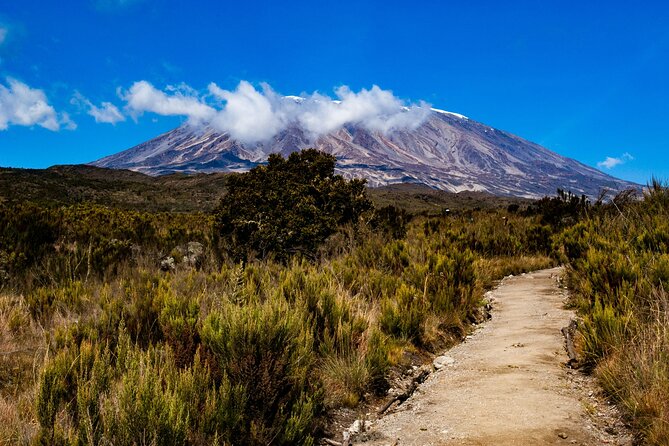
Machame is a popular choice because it gives you a gradual route up Kilimanjaro rather than rushing straight toward the summit. The path begins in forest, crosses open moorland, reaches the high alpine zone, and then returns through forest on the Mweka descent.
The seven-day length matters. Kilimanjaro is not only a test of leg strength. Altitude can affect you even if you are fit, and the route’s pattern of climbing higher before sleeping lower gives your body more time to adjust. The Lava Tower day is especially useful for that reason.
You should still keep expectations realistic. This is a demanding mountain trek, not a standard walking holiday. The tour requires moderate physical fitness, and the final summit push is long, cold, steep, and tiring. The supplied schedule gives short estimated hiking times for several days, but these figures should not make the climb seem easy. Pace, rest stops, altitude, and trail conditions can all change the day.
More Machame Route Climbs in Kilimanjaro
- Kilimanjaro climb, Machame Route (7-day)
★ 5.0 · 262 reviews - Climbing Kilimanjaro – Machame Route
★ 5.0 · 170 reviews - Climbing Kilimanjaro through 7 days Machame Route
★ 5.0 · 151 reviews
Day 1: Machame Gate to Machame Camp
Your climb starts with registration at Machame Gate in Kilimanjaro National Park. The meeting information gives a 7:30 am start and lists Kilimanjaro Airport as the starting point, with pickup offered. From there, you meet the guide and support crew before entering the mountain route.
The first day covers about 11 kilometers and takes roughly four hours. You walk through rainforest, where thick greenery and plant life make this a pleasant introduction to Kilimanjaro. The trail climbs gradually, so you can settle into the slow walking rhythm needed for the days ahead.
Machame Camp sits at about 3,000 meters. This first night is less about reaching a dramatic high point and more about beginning the altitude change without rushing. You’ll have dinner and breakfast as part of the full-board arrangement, along with drinking water.
I would use this day to learn the crew’s routine. Ask your guide about the next morning, adjust your daypack, and avoid treating the first day as a chance to prove how fast you can walk. On Kilimanjaro, a calm pace is useful from the first hour.
Day 2: Shira Camp and the end of the rainforest
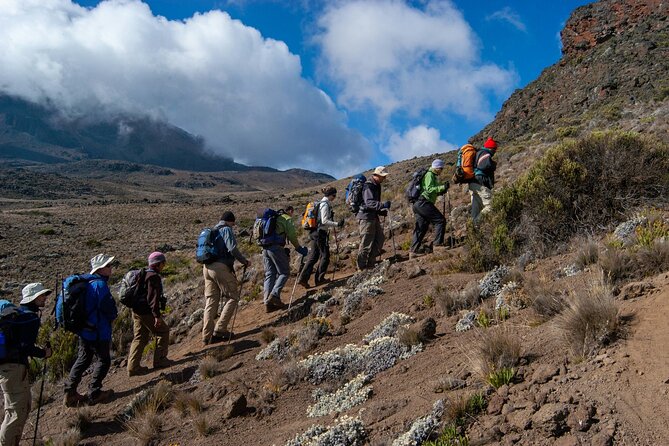
After breakfast, you leave much of the forest behind and enter open moorland. The day is shorter, covering about five kilometers in roughly three hours, and ends at Shira Camp at around 3,800 meters.
The open setting gives you broad views around the mountain. You also get a clear sense that the route is changing. The sheltered, leafy feel of day one gives way to cooler air, more exposed ground, and a greater feeling of height.
Shira Camp is an important overnight stop because the altitude rises considerably from Machame Camp. Even though the walking distance is modest, you should not spend the afternoon racing around camp. Drink the supplied water, eat well, and let your body deal with the change.
This is also a good day to check your clothing system. You may need warmer layers after sunset, while the daytime walk can still feel active. Keep essentials close rather than burying them deep in your bag.
Day 3: Lava Tower and Barranco Camp
Day three is one of the most valuable parts of the route. You climb toward Lava Tower, reaching about 4,600 meters, then descend to Barranco Camp at roughly 3,960 meters. The total distance is about 10 kilometers, with an estimated walking time of four hours.
The climb to Lava Tower is not simply a scenic detour. It gives you time at a higher elevation before you sleep lower at Barranco. That climb-high, sleep-lower pattern is one reason the seven-day route can suit people who want a better-paced ascent.
The terrain becomes more severe here, with the high alpine desert replacing the softer forest and moorland feel. You may notice the air more than you did on the lower slopes. Keep your pace slow and tell your guide if you develop symptoms that concern you.
The descent to Barranco Camp brings physical relief, but the day can still be tiring. Do not underestimate it because the posted walking time is only about four hours. The altitude makes ordinary movement harder, and the route’s rise and fall asks more from your legs than a simple uphill walk.
Same country, a completely different kind of safari:
- Kilimanjaro climb by Lemosho Route (7-day)
★ 5.0 · 651 reviews - Safari Serengeti And Ngorongoro
★ 5.0 · 288 reviews - Kilimanjaro Climbing Lemosho Route 8 Days.
★ 5.0 · 186 reviews - Kilimanjaro climb, Lemosho Route (8-day)
★ 5.0 · 148 reviews
Day 4: Climbing the Barranco Wall
The Barranco Wall is the route’s most distinctive physical feature. You climb a steep section of rock and trail before continuing to Karanga Camp, about six kilometers away and roughly four hours of walking.
You do not need to think of the wall as a technical climbing route based on the information provided, but it is clearly a challenging section. Expect to use your hands at points and move carefully. Your guide’s role is particularly important here, helping the group find a safe, steady line.
The reward is a memorable change in the route. After the wall, the trail continues through high mountain terrain toward Karanga Camp at about 4,035 meters. The day is shorter than the Lava Tower stage, but the wall gives it a sharper physical character.
I like this day because it breaks up the steady uphill pattern. You are not simply walking forward at one angle. You are working through a feature that requires focus, balance, and cooperation with the people around you.
Day 5: Karanga Camp to Barafu Camp
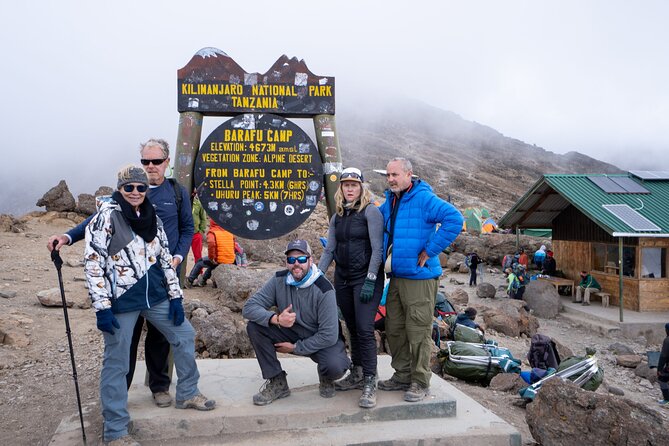
Day five covers only about four kilometers and takes around three hours, but it is not a throwaway day. You climb to Barafu Camp at approximately 4,600 meters, the final camp before the summit attempt.
The terrain is now alpine and rough, with little of the low forest feel left. Barafu is a high campsite, and the point is to reach it, eat, rest, and prepare for the early start rather than spend energy exploring.
This is the evening to organize your summit clothing and small daypack. Keep water, warm layers, snacks if you carry them, and any personal essentials ready. The tour includes meals and drinking water, but you should still make sure you know where your own basic items are.
Rest can be difficult at this altitude, and the schedule may feel strange because summit day begins in the early hours. Try to follow the guide’s instructions and save your energy. A short day on paper can still feel demanding at 4,600 meters.
Day 6: Uhuru Peak and the long descent to Mweka
Summit day is the hardest part of the entire trip. You leave Barafu in the early hours and climb toward Uhuru Peak, reaching the highest point in Africa around sunrise or shortly before it, depending on the pace and conditions.
The summit push is steep and slow. The early start lets you climb during the coldest, darkest part of the day, but it also means you are asking your body to work before normal waking hours. The reward is the achievement of reaching Uhuru Peak, followed by views across the upper mountain.
The day does not end at the summit. You descend to Mweka Camp at about 3,100 meters, making the total distance roughly 18 kilometers. That combination of ascent and descent is why you should regard summit day as a full endurance event rather than a short final walk.
Your guide and porters are central to this stage. The included crew support gives you meals, water, and practical help while you focus on pacing. A complimentary oxygen cylinder is included, but it should not encourage you to ignore altitude symptoms or push through serious trouble. Follow your guide’s safety advice.
The schedule describes about three hours for this day, but the stated 18-kilometer distance and early summit start show why you should prepare for a long, taxing day. The time estimate should not be treated as a promise.
Day 7: Mweka Camp to Mweka Gate
The last day is a downhill walk of about 10 kilometers through rainforest. After the exposed upper mountain, the return to thick forest feels like a clear shift back toward the lowlands.
The descent takes you to Mweka Gate, where the trip ends at the meeting point. You receive summit certificates there, giving you a formal reminder of what you have completed. You can also thank the guides, porters, and cook who supported the climb.
Downhill walking can be hard on tired knees, so do not rush simply because the summit is behind you. Take care with footing, keep your walking poles or other support close if you use them, and stay with the group.
Meals, guides, porters, and mountain support
The $2,205 price includes breakfast, lunch, and dinner for the seven-day trip, along with drinking water. It also includes accommodation, park fees and taxes, an English-speaking professional guide, porters, a cook, and crew wages described as fair and sustainable.
That package gives the price real value. Kilimanjaro costs are not just about guiding you up a trail. Park access, mountain camps, food, transport arrangements, and a support team all shape the total. You are not carrying the full burden of food and camp support yourself.
The strongest feedback focuses on the people. Emanuel and Joseph are named as friendly guides, while the cook, waiter, and porter team receive special praise. The food is described as unusually good, with one account comparing it to a five-star hotel. That is a notable point on a remote mountain, though you should still remember that camp food is prepared under mountain conditions.
Tips are not included. You should plan for that extra cost and ask the operator for current guidance on appropriate tipping. Towels are also excluded, so bring your own if you need one.
How much value do you get for $2,205?
At $2,205 per person, this is a major purchase, but the included services make it more than a simple guided hike. You receive seven days of accommodation, full-board meals, water, park fees and taxes, guides, porters, a cook, and an oxygen cylinder.
The value is strongest for someone who wants a supported climb and does not want to arrange every mountain service separately. The fair-wage commitment is also important to me. Kilimanjaro’s support crews do much of the physical work, so a trip that identifies sustainable crew pay gives you a useful ethical point to consider.
The maximum group size is 30 people. That is not a small private trek, and you should be comfortable with the possibility of sharing the route and camp routine with a larger group. The named guides and strong crew comments suggest personal warmth within the support team, but group size can still affect pace and daily organization.
Pickup is offered, and the stated meeting point is Kilimanjaro Airport, with the activity ending back at the meeting point. Confirm the exact airport transfer arrangement before you travel, since the route itself begins at Machame Gate.
Who should choose this climb?
I would recommend this route to you if you want a seven-day ascent with a gradual altitude plan, varied scenery, and a full support crew. It suits people who are ready for long mountain days but prefer a structured itinerary rather than an independent climb.
You should have moderate physical fitness and be comfortable walking for several hours at a time. You also need the mental patience to move slowly, rest when needed, and accept that summit day will be much harder than the earlier stages.
This may not suit you if you want a relaxed holiday, dislike shared group logistics, or are hoping for a short summit walk. The route has easier distance days, but the high altitude and 18-kilometer summit day make it a serious undertaking.
Booking, cancellation, and final decision
Confirmation is provided at booking. Free cancellation is available if you cancel at least 24 hours before the 7:30 am local start time. Cancellations or changes made within 24 hours are not accepted for a refund.
I would book this trek if you value the route’s acclimatization pattern, want meals and porters included, and are comfortable with a group of up to 30 people. Emanuel and Joseph are named as guides, and the support team receives especially strong praise for friendly service and good cooking.
I would pause before booking if you need a private, small-group climb or if your fitness is not ready for a long summit day. For the right person, the Machame Route offers a sensible mix of forest, moorland, high desert, the Barranco Wall, and Uhuru Peak, with the practical support needed to make a very demanding week more manageable.
FAQ
How long is the Machame Route tour?
The tour lasts seven days, approximately, from the first day at Machame Gate through the descent to Mweka Gate.
Where does the climb start?
The route begins at Machame Gate in Kilimanjaro National Park. The meeting information lists Kilimanjaro Airport as the starting point, and pickup is offered.
What time does the tour start?
The stated start time is 7:30 am.
What is the highest point reached?
You climb to Uhuru Peak, the highest point in Africa, during the summit attempt on day six.
Is food included?
Yes. Breakfast, lunch, and dinner are included for all seven days, along with drinking water.
Are guides and porters included?
Yes. The package includes a professional English-speaking guide, porters, a cook, and fair and sustainable crew wages.
Is oxygen provided?
A complimentary oxygen cylinder is included.
How physically fit do I need to be?
The tour states that you should have a moderate physical fitness level. The summit day is especially demanding, covering about 18 kilometers from Barafu Camp to Mweka Camp.
What is the cancellation policy?
You can receive a full refund if you cancel at least 24 hours before the local start time. Cancellations and changes made less than 24 hours before the start are not accepted for a refund.
More 7-Day Experiences in Kilimanjaro
- 7 Days Kilimanjaro via Machame route affordable price
★ 5.0 · 110 reviews - Private Kilimanjaro Hike 7 Day Lemosho Route
★ 5.0 · 60 reviews - 7-Day Magical Tanzania Safari -Premium High End Package
★ 5.0 · 53 reviews - 7 Days Machame route – Kilimanjaro
★ 5.0 · 45 reviews
Just added around Kilimanjaro
- Mt Kilimanjaro 6 days Marangu route hike★ 5.0 · 3 reviews
- Private Cycle to Kilimanjaro Bike Park Safari★ 5.0 · 6 reviews
- Wildlife Extravaganza: Manyara, Tarangire & Ngorongoro in 3 Days★ 5.0 · 3 reviews
- 3 Days Private E-Bike Tour in West Kilimanjaro★ 5.0 · 3 reviews
- West Kilimanjaro cycling Adventures★ 4.5 · 8 reviews
- machame route★ 5.0 · 16 reviews
- Kilimanjaro Climb & Safari – Lemosho Route – 13 Day★ 5.0 · 10 reviews
- Kilimanjaro Climbing Umbwe Route★ 5.0 · 3 reviews
Machame Route Climbs, compared.



Climbing Kilimanjaro through 7 days Machame Route
Read our review →
7-Day Machame Kilimanjaro Summit Tour from Arusha
Read our review →
7 Days Kilimanjaro via Machame route affordable price
Read our review →
#1. Best Kilimanjaro Day hike Tour-Machame Route-ISMANI
Read our review →

The Best of Machame Route in 6 Days: Your World’s Summit Guide
Read our review →Browse the lists this tour appears in