
Reviewed · MACHAME ROUTE CLIMBS
#1. Best 7 days kilimanjaro trek Machame route join group
Mount Kilimanjaro changes character every day on this seven-day Machame Route trek. You begin among rainforest and colobus monkeys, cross moorland and alpine desert, then climb through cold, thin air to Uhuru Peak at 5,895 meters. It is a proper mountain effort, not a stroll with a nice view at the end.
I like the route’s steady acclimatization plan, especially the climb to Lava Tower followed by a descent to Barranco Camp. I also like the variety: giant senecio plants, the Barranco Wall, broad views toward Kibo Peak, and a sunrise summit attempt. The main concern is the real cost. The advertised $900 does not include national park fees, and one detailed cost account put fees and tips at about $1,250 extra.
Key points before you commit
- Lava Tower and Barranco Camp: You climb to 4,600 meters, then sleep lower at 3,900 meters, a useful acclimatization pattern.
- A midnight summit push: Expect 10 to 14 hours on summit day, followed by a long descent to Mweka Camp.
- Rainforest to Arctic conditions: The route crosses several distinct habitat zones in one week.
- Camping details need clarification: Camps are named throughout the route, yet the description also refers to hut accommodation.
- $900 is not the full budget: National park charges are excluded, and tips may be substantial.
- Kilinge Adventures provides the basics: Transport from a Moshi hotel, meals, water, camping equipment, a mattress, and English-speaking support are included.
Why Machame is a strong seven-day choice
Machame is often selected for its scenery, and this seven-day version gives you time to enjoy it without rushing the first stages. The route begins at Machame Gate and gradually moves upward through rainforest, moorland, and bare alpine ground. By summit night, the green forest feels very far away.
I like that the schedule includes a high point at Lava Tower before dropping to Barranco Camp. That climb high and sleep lower pattern gives your body a better chance to adjust than a route that simply rises every day. It does not remove the risk of altitude sickness, but it is a sensible part of the plan.
The route is also fairly demanding. You will hike for four to eight hours on most days, then face a 10 to 14-hour summit day. The distance figures supplied for Day 1 contain a mismatch, listing both 1 kilometer and 7 miles, so ask the operator to confirm the exact route distances before you set expectations.
More Kilimanjaro Climbs in Kilimanjaro
- Kilimanjaro climb by Lemosho Route (7-day)
★ 5.0 · 651 reviews - Kilimanjaro climb, Machame Route (7-day)
★ 5.0 · 262 reviews - Kilimanjaro Climbing Lemosho Route 8 Days.
★ 5.0 · 186 reviews
Day 1: Machame Gate to Machame Camp
Your climb starts at Machame Gate, where registration takes place before you enter the national park. The first day leads into the montane rainforest, with a starting elevation of 1,800 meters and a camp at 2,835 meters.
This is a pleasant introduction to Kilimanjaro, but it is not effortless. The trail rises steadily, and wet forest conditions can make footing less certain. You may see colobus monkeys and colorful birds, which gives the first few hours a sense of place beyond simply gaining altitude.
Machame Camp is reached in the late afternoon. Dinner and rest follow, with the forest still around you. The supplied schedule gives five to seven hours for the hike, though the listed distance should be checked because the kilometer and mile figures do not agree.
Day 2: Moorland and the Shira Plateau
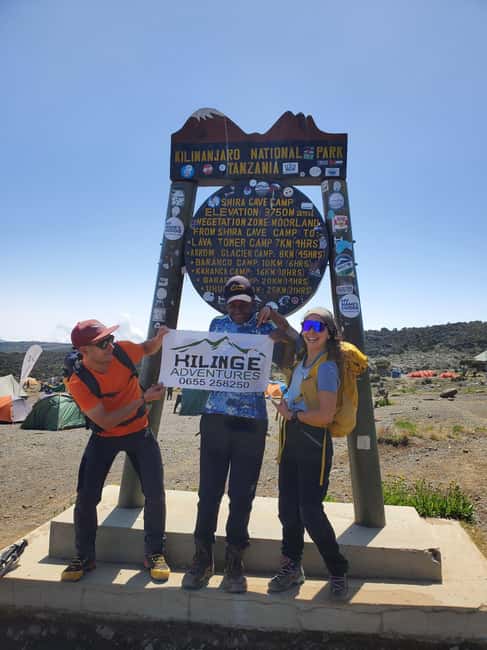
The second day takes you from Machame Camp to Shira Camp, rising from 2,835 to 3,750 meters. The rainforest gives way to moorland, and the trail becomes steeper and rockier.
This is where Kilimanjaro begins to feel like a high mountain rather than a forest hike. You get views across the Shira Plateau and toward Kibo Peak, the main summit cone. The open ground can also make the climb feel more exposed, with less shelter than on Day 1.
The planned hiking time is four to six hours. That leaves part of the day for rest at camp, which matters because altitude can affect your appetite, sleep, and energy even when the walking distance is moderate.
Day 3: Lava Tower and the descent to Barranco
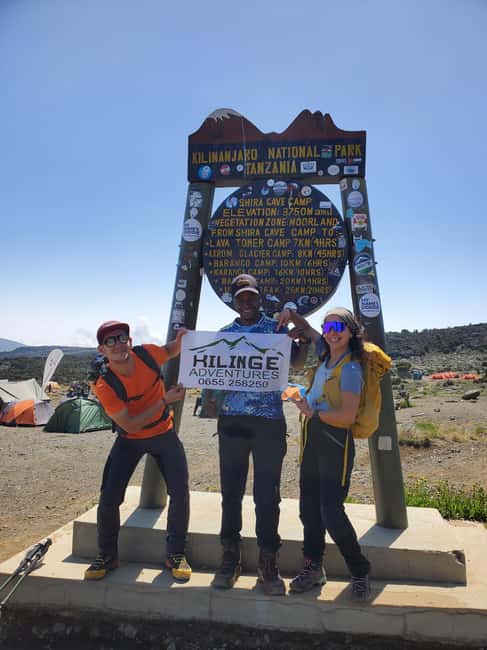
Day 3 is the route’s key acclimatization day. From Shira Camp, you climb through alpine desert to Lava Tower at 4,600 meters, then descend to Barranco Camp at 3,900 meters.
The high point is physically useful but can feel tough. You may notice a headache, slower breathing, or a sudden drop in energy. Take this day slowly and tell your guide if you feel unwell. The point is not to race to Lava Tower. The point is to let your body experience greater altitude before sleeping lower.
The descent to Barranco brings a welcome change. Barranco Valley is known for its giant senecio plants, and the camp offers impressive views of the surrounding volcanic slopes. The full day covers about 10 kilometers and takes seven to eight hours, making it one of the longer days before the summit attempt.
More Machame Route Climbs in Kilimanjaro
- Climbing Kilimanjaro – Machame Route
★ 5.0 · 170 reviews - Climbing Kilimanjaro through 7 days Machame Route
★ 5.0 · 151 reviews - 7 Days Kilimanjaro via Machame route affordable price
★ 5.0 · 110 reviews - #1. Best Kilimanjaro Day hike Tour-Machame Route-ISMANI
★ 4.2 · 47 reviews
Day 4: The Barranco Wall and Karanga Camp
The Barranco Wall is the day’s main feature. This is an exhilarating scramble rather than a technical rock climb, but you should expect to use your hands in places and move carefully over uneven ground.
The route rises from Barranco Camp at 3,900 meters and reaches Karanga Camp at about 4,035 meters. The total distance is only around 5 kilometers, with four to five hours of hiking. That shorter schedule is welcome after Lava Tower and gives you more time to eat, drink, and rest.
Do not judge the day only by distance. At altitude, a short route can still feel demanding. The trail crosses ridges and valleys, and the repeated ups and downs can tire your legs more than the numbers suggest.
Day 5: Barafu Camp and preparation for the summit
From Karanga, you climb to Barafu Camp, your launch point for the summit. The route covers about 4 kilometers and takes four to five hours, finishing at 4,640 meters.
Barafu means snow, although conditions vary, and the camp is a stark alpine desert setting. There is little to distract you from the task ahead. After reaching camp, you need to rest, hydrate, organize your warm clothing, and prepare your headlamp and daypack.
The summit attempt begins around midnight. That early start is not a small detail. You will try to sleep during the afternoon or evening, eat before setting off, and then walk through the coldest part of the night. Keep your essential layers, gloves, flashlight, snacks, and water close at hand.
Day 6: Uhuru Peak, then a long descent
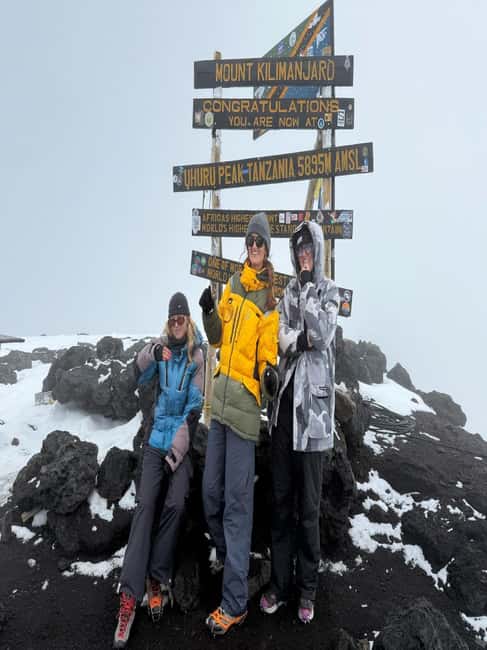
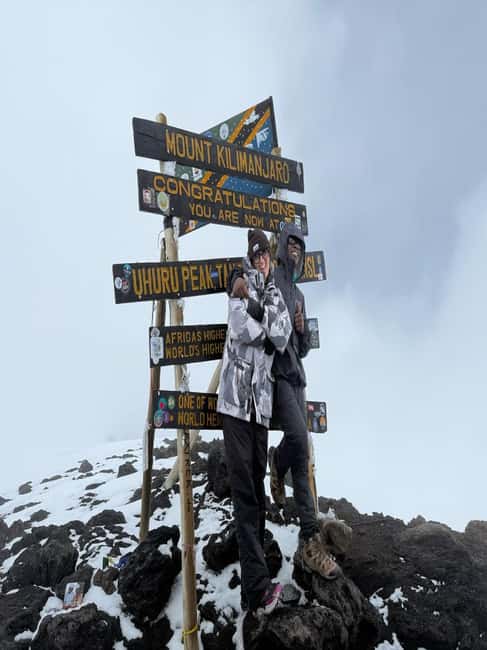
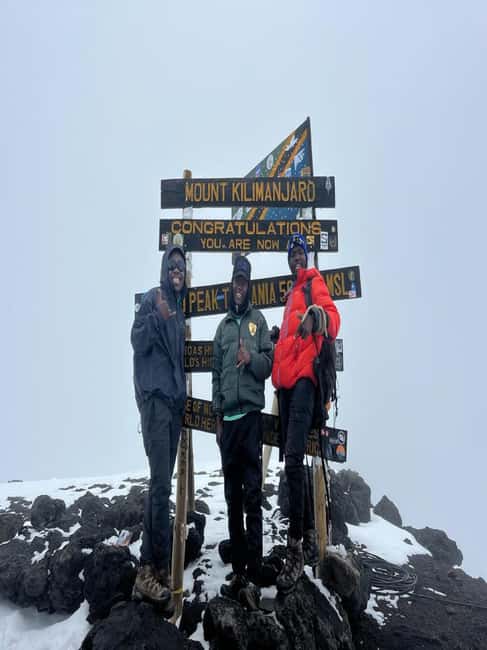
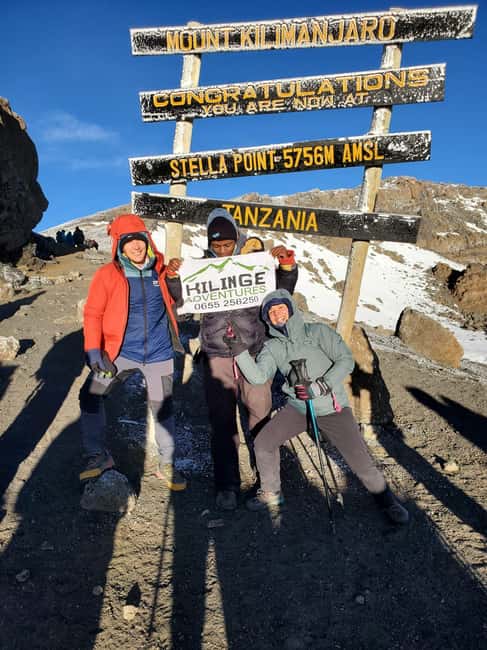
Summit day is the test. You leave Barafu Camp around midnight and climb toward Stella Point before continuing to Uhuru Peak, the summit at 5,895 meters.
The air is thin and the effort is slow. The itinerary allows 10 to 14 hours for the full day, covering roughly 17 kilometers from Barafu to Mweka Camp. That includes the summit climb and a major descent, so you should expect tired legs long before the day is over.
Reaching Uhuru Peak gives you the classic Roof of Africa moment, but the descent deserves equal respect. After photos and a short celebration, you return to lower ground and continue to Mweka Camp at 3,110 meters. The drop in elevation should bring easier breathing, though your knees and feet may complain.
This is the day when good preparation matters most. Bring warm layers, gloves, a flashlight, snacks, and a power bank. The supplied packing guidance also calls for a sleeping bag, trekking clothes, socks, a jacket, and a daypack. You should treat that list as a starting point and confirm the operator’s exact gear requirements.
Day 7: Mweka Gate and the return to town
The final morning is shorter and friendlier. You descend 10 kilometers through rainforest from Mweka Camp to Mweka Gate, usually taking three to four hours.
At the gate, you collect your certificate of achievement before transferring back to Moshi or Arusha. The return is a useful buffer after the summit, giving you time to clean up, eat properly, and recover before further travel.
The contrast is striking. In less than a week, you have moved from humid forest to an Arctic summit zone and back to green woodland. That range is one of the route’s best features.
What the $900 price really tells you
At first glance, $900 per person looks attractive for a seven-day Kilimanjaro climb. The package includes hotel pickup in Moshi to the gate, transport, meals, drinking water, an English-language guiding service, camping equipment, and a sleeping mattress.
But the headline price is not the final price. National park fees are specifically excluded. One detailed cost account associated with this trip calculated approximately $950 for entrance fees connected with the climber, porters, and guide. It also listed tips of about $50 per accompanying person, with seven guides producing another $350.
That account placed the total at roughly $2,150. The exact figure may depend on group size, park charges, staffing, and the company’s payment structure, but you should not budget only $900. Ask for a written breakdown covering park fees, porters, guides, transfers, equipment, meals, and tips.
This is the biggest value question. If the additional charges are clearly explained before payment, the trip may offer a practical way to join a guided Kilimanjaro climb. If the extra costs appear only later, the low starting price becomes much less useful.
Camping or huts? Get a clear answer
There is an important accommodation inconsistency to resolve. The experience description refers to hut accommodation, but every overnight stop in the route plan is presented as a camp, and camping equipment plus a sleeping mattress are included.
Those are different arrangements. A hut usually means a fixed shelter, while a camp normally means sleeping in a tent. Contact Kilinge Adventures and ask exactly where you sleep each night, what tent or hut equipment is supplied, and what you must bring yourself.
The packing information says to bring a sleeping bag, so you should assume you need one unless the company confirms otherwise. It also recommends a jacket, gloves, socks, hiking pants, climbing gear, trekking gear, snacks, a flashlight, a daypack, and a power bank.
Food, water, transport, and support
Meals and drinking water are included, which removes two major daily concerns. You still need snacks for the longer hiking days, especially Day 3 and summit day. Choose items you know you can eat when your appetite is low.
Transport from your Moshi hotel to Machame Gate is included, along with transportation after the descent to Moshi or Arusha. The information does not specify the vehicle type, group size, menu, or exact transfer times, so ask those questions if comfort and timing matter to you.
The guiding language is English. The supplied information does not give individual guide names, so there is no named guide team to assess in advance. A highly rated experience depends heavily on the people leading it, making a pre-trip question about guide qualifications, porter welfare, emergency plans, and staff numbers worthwhile.
Who should book this Kilimanjaro climb?
I would consider this route if you want a scenic seven-day climb, can handle long days on foot, and prefer a gradual schedule with a real acclimatization day. It suits someone who values changing scenery and does not mind a midnight start followed by a very long summit day.
It is less suitable if you want a relaxed holiday, dislike basic sleeping arrangements, or need a clearly fixed all-in price. The summit day is physically serious, and the cost issue needs sorting out before you pay.
The flexible booking terms are helpful: you can reserve and pay later, and cancellation is allowed up to 24 hours in advance for a full refund. Still, flexibility does not replace preparation. Confirm the final price and accommodation details in writing.
Should you book the Machame Route with Kilinge Adventures?
Book it if Kilinge Adventures gives you a complete cost sheet, confirms whether you sleep in huts or tents, and explains the guide and porter arrangements. The route itself has plenty to recommend it: rainforest, Shira Plateau views, Lava Tower, the Barranco Wall, and a summit attempt that follows a sensible high-and-low acclimatization pattern.
Pause if the company continues to describe $900 as the full cost. A seven-day Kilimanjaro climb can be good value, but only when the unavoidable park charges and expected tips are part of your budget from the beginning.
FAQ
How long is the Kilimanjaro Machame Route experience?
The climb lasts seven days. It begins at Machame Gate and ends at Mweka Gate, followed by transport to Moshi or Arusha.
What is the highest point reached on the trek?
You reach Uhuru Peak at 5,895 meters, the summit of Mount Kilimanjaro.
Is the summit attempt made at night?
Yes. The summit attempt begins around midnight from Barafu Camp, continuing via Stella Point to Uhuru Peak.
What is included in the $900 price?
The package includes accommodation, professional guided support, transport from a Moshi hotel to the gate, meals, drinking water, camping equipment, and a sleeping mattress.
Are national park fees included?
No. National park fees are not included in the stated price.
What should I bring?
The supplied packing guidance recommends snacks, a jacket, gloves, a sleeping bag, climbing and trekking gear, socks, a flashlight, a daypack, hiking pants, and a power bank.
Where does the trek finish?
The hiking ends at Mweka Gate after descending from Mweka Camp. You are then transferred to Moshi or Arusha.
More 7-Day Experiences in Kilimanjaro
- 7-Day Magical Tanzania Safari -Premium High End Package
★ 5.0 · 53 reviews - 7 Days Machame route – Kilimanjaro
★ 5.0 · 45 reviews - Kilimanjaro climb, Rongai Route (7-day)
★ 5.0 · 40 reviews - 7-Day Tanzania Odyssey Safari- High End Tour
★ 5.0 · 35 reviews
More Hiking & Trekking in Kilimanjaro
- Private Kilimanjaro Hike 7 Day Lemosho Route
★ 5.0 · 60 reviews - Best Kilimanjaro hiking day trip tour with Kilinge Adventures
★ 4.5 · 54 reviews - Best Kilimanjaro Adventure 7 days Machame route Trekking
★ 5.0 · 42 reviews - Kilimanjaro 7 Day Private Trekking Experience
★ 5.0 · 40 reviews
Just added around Kilimanjaro
- Mt Kilimanjaro 6 days Marangu route hike★ 5.0 · 3 reviews
- Private Cycle to Kilimanjaro Bike Park Safari★ 5.0 · 6 reviews
- Wildlife Extravaganza: Manyara, Tarangire & Ngorongoro in 3 Days★ 5.0 · 3 reviews
- 3 Days Private E-Bike Tour in West Kilimanjaro★ 5.0 · 3 reviews
- West Kilimanjaro cycling Adventures★ 4.5 · 8 reviews
- machame route★ 5.0 · 16 reviews
- Kilimanjaro Climb & Safari – Lemosho Route – 13 Day★ 5.0 · 10 reviews
- Kilimanjaro Climbing Umbwe Route★ 5.0 · 3 reviews
Machame Route Climbs, compared.



Climbing Kilimanjaro through 7 days Machame Route
Read our review →
7-Day Machame Kilimanjaro Summit Tour from Arusha
Read our review →
7 Days Kilimanjaro via Machame route affordable price
Read our review →
#1. Best Kilimanjaro Day hike Tour-Machame Route-ISMANI
Read our review →

The Best of Machame Route in 6 Days: Your World’s Summit Guide
Read our review →Browse the lists this tour appears in