
Reviewed · CITY TOURS
Private Insightful City Tour of Dar es Salaam
Dar es Salaam reveals itself best in its markets. This private city tour puts you close to the noise, color, smells, trade, and daily work of Kariakoo Market and Kivukoni Fish Market, then adds important landmarks near the port. You get a practical look at the city rather than a drive-by introduction.
I like two things here. First, the private format lets you ask about whatever catches your eye, from fish transport to colonial-era monuments. Second, the guides bring local and historical context to places that can otherwise seem confusing. The main drawback is the short length: at roughly one to two hours, you will get a strong introduction, not a full city tour.
Key points to know before booking
- Kariakoo Market gives you the city’s working pulse: Allow time for crowded streets, active shops, and a close look at local commerce.
- Kivukoni Fish Market adds a waterfront view of daily work: You will learn about fishermen, boats, transport, and the fish trade.
- The tour is private: Only your group participates, so questions and pacing are easier to manage.
- History comes through landmarks: St. Joseph’s Cathedral, the Askari monument, and the old sanctuary connect Dar es Salaam to German and British rule.
- Rain will not necessarily end the outing: A previous tour changed from walking to a tuk-tuk format because of rain.
- The price is $55.26 per person: Bottled water or soda is included, while pickup costs an additional $10.
Why the markets make this short tour worthwhile
Dar es Salaam is not a city you understand from polished waterfront views alone. Its markets explain more about how the city works. That is why I see Kariakoo and Kivukoni as the heart of this experience.
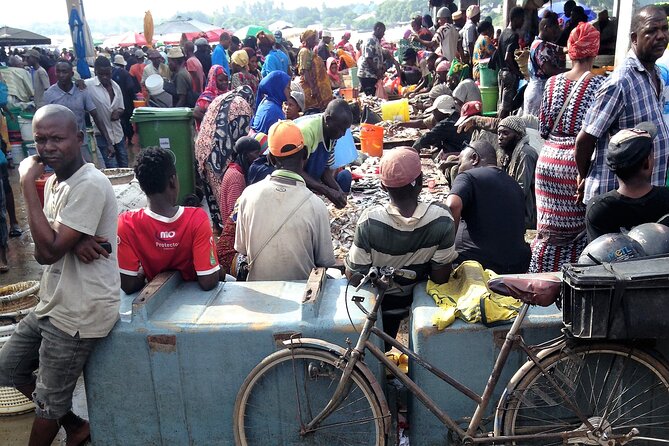
Kariakoo Market is one of East Africa’s largest markets. You can expect a busy commercial setting with shoppers, sellers, goods, movement, and plenty to look at. The visit lasts about 45 minutes, which is enough to see the market’s character without turning the whole day into a long shopping expedition.
The guide’s role matters here. A market can feel like a blur of activity if nobody explains what you are seeing. With a private guide, you can ask about the market’s past, the way business is conducted, and the kinds of goods being sold. You also have a better chance to pause when something interests you instead of following a fixed group.
I would wear comfortable shoes and keep your belongings secure. The tour requires a moderate level of physical fitness, and a market visit may involve standing and walking through busy areas. No special admission fee is listed, but that does not mean the setting will feel quiet or easy to navigate.
A few more Dar es Salaam trips to weigh up
- Private Full-Day Trip to Mikumi National Park from Dar es Salaam
★ 5.0 · 54 reviews - Private 3 Days 2 Nights Mikumi Adventures
★ 5.0 · 47 reviews - Dar Es Salaam City Tour (Full Day With Private Guide And Car)
★ 5.0 · 39 reviews
Kivukoni Fish Market and the work behind the waterfront
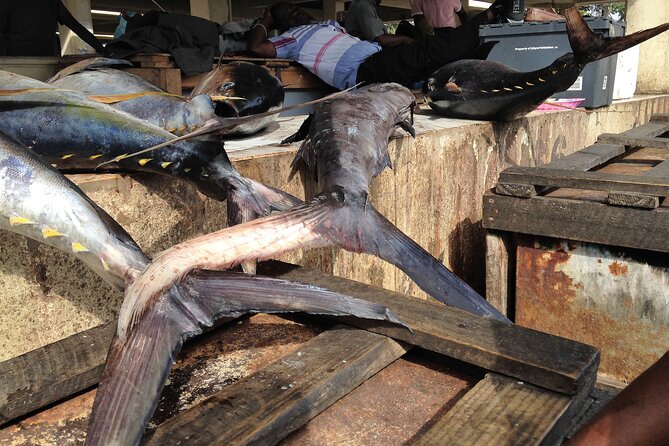
Kivukoni Fish Market gives the tour a different rhythm. Kariakoo is about broad city commerce, while Kivukoni focuses on the daily work of fishermen and the movement of fish from the water into trade.
The visit lasts about 45 minutes, including the travel time connected with this part of the outing. You will learn about the fishermen’s means of transport and how the fish trade operates. This is useful context because it takes you beyond the postcard version of a coastal city.
Expect practical sights rather than a staged attraction. The value is in seeing a working market and hearing how the trade functions. Depending on the time of day and the conditions, you might find strong smells, wet surfaces, noise, and fast-moving activity. Those are part of the setting, not flaws in the experience, but they may matter if you prefer quiet sightseeing.
I especially like that the fish market is paired with Kariakoo. Together, the stops show two sides of urban Dar es Salaam: inland buying and selling, followed by a port-connected trade shaped by the sea.
St. Joseph’s Cathedral near the port
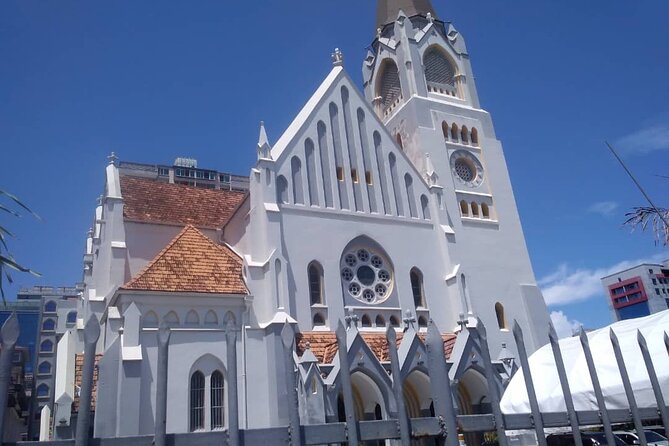
St. Joseph’s Cathedral dates from the early 1900s and was built by the Germans. Its position near the port gives it added historical weight, since Dar es Salaam’s waterfront has long connected the city with overseas trade, government, and outside powers.
You have about 20 minutes here. That is enough for a look at the building, its setting, and the story attached to it, but not enough for a slow architectural study. If church interiors are especially important to you, ask the guide how much time is available before the visit moves on.
The cathedral works well in this tour because it shifts the focus from commerce to colonial-era architecture and religious history. You are not only looking at a building. You are also considering how German influence shaped part of the city before British control took over.
The tour information describes the cathedral as facing the Dar es Salaam Port of Zanzibar. The wording is unusual, but the important point is its connection to the port area. Your guide can help place the building within the surrounding streets and explain the story in a way that links it to the other historic stops.
The Askari monument and changing colonial power
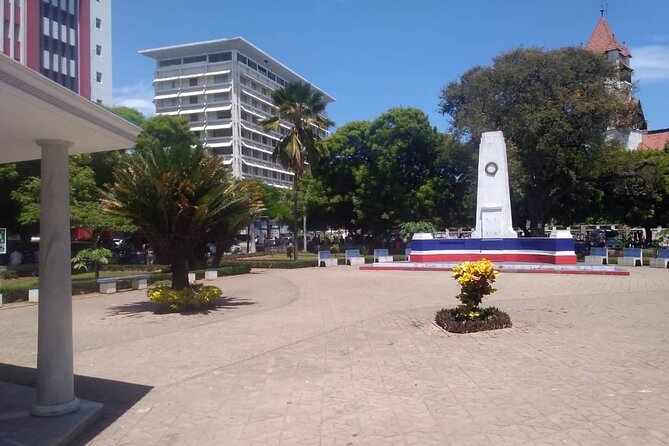
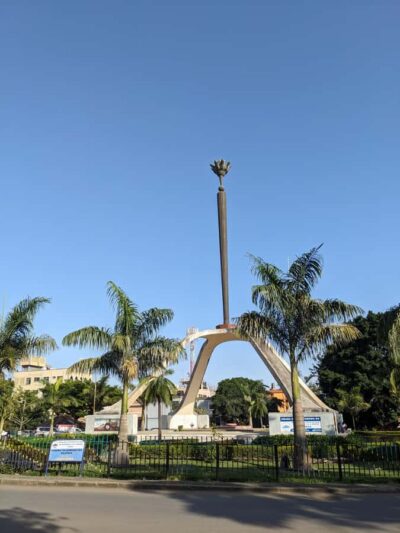
The Askari monument commemorates African troops and carriers who served the British Army during the First World War. It is a small but meaningful stop because it points to the African men whose labor and military service supported imperial campaigns.
The monument also carries a story of political change. Before it was put in place, a monument to a German soldier reportedly occupied the site. That earlier monument was removed after the British took control. The replacement Askari figure therefore reflects more than military memory. It also shows how public monuments can change when power changes hands.
This is the kind of stop that benefits from explanation. Without context, you might spend only a few seconds looking at the statue. With the background, you can think about who was honored, who controlled the city, and whose version of history appeared in a public square.
The Askari monument is one of the reasons I would choose a private tour over simply walking past the city center alone. The stop itself is brief, but the questions it raises are large.
Same country, a completely different kind of safari:
- Dar es Salaam: City Tour
★ 4.7 · 159 reviews - Dar es Salaam City Center: Walking Tour
★ 4.8 · 102 reviews - Dar es Salaam City Tour – Everyday
★ 5.0 · 64 reviews - MIKUMI NATIONAL PARK – 3 Days
★ 4.5 · 63 reviews
The unnamed 1898 sanctuary by the ocean
Another stop is a historic sanctuary built in 1898. It faces the ocean and sits near Dar es Salaam’s judiciary buildings. The information provided does not identify the sanctuary by name, so I would ask the guide to clarify its name and role when you arrive.
That missing detail is a small weakness in the advance description, but it does not make the stop pointless. Its age, waterfront setting, and location near government buildings give you another way to read the city. Dar es Salaam’s central district brings religious, legal, commercial, and colonial-era sites close together.
You should think of this stop as part of a walking history lesson rather than a major sightseeing attraction with a long interior visit. The value lies in the explanation and the relationship between the building, the sea, and nearby civic institutions.
A private format with room for questions
This is a private activity, so only your own group takes part. That is a real advantage in a city where you may want to stop and ask about an unfamiliar market practice, a building detail, or a historical event.
The tour description places emphasis on communication and the guides’ fluency in the language used for the tour. In practical terms, that means you should have a better chance to ask follow-up questions and understand the answers. No guide names are provided, so you cannot request a specific guide by name in advance based on the available information.
A high rating of 4.9 from nine ratings suggests a strong record, but the small number of ratings means I would keep expectations sensible. The most useful feedback points to the market visits, the guide’s willingness to adapt to personal interests, and the friendly, capable handling of the tour.
One outing changed from walking to a tuk-tuk tour because of rain. That is worth noting in Dar es Salaam, where weather can affect comfort and road conditions. The change shows some flexibility, but the standard description does not promise a tuk-tuk, so you should not book expecting one.
How much time should you allow?
The stated duration is about one to two hours. The listed visits add up to 110 minutes before considering travel, which suggests that the actual schedule may vary. It may be closer to two hours when all stops and movement are included.
This timing suits you if you have a spare morning or afternoon, a port stop, or a short window before another activity. It is also useful as a first orientation to the city center.
It will not suit you if you want long visits inside the cathedral, extensive shopping time at Kariakoo, or a broad tour of Dar es Salaam’s outer districts. The experience is focused on a compact group of central sites.
The meeting point is Bustani ya Posta in Dar es Salaam, and the tour ends back there. Pickup is available for an additional $10. Since the meeting point is near public transportation, you have an alternative if you do not want to pay for pickup, though the information provided does not specify which routes or fares to use.
Is $55.26 per person fair value?
At $55.26 per person, this is not the cheapest way to walk around central Dar es Salaam. It can still be good value if you want a private guide, historical explanation, and a more organized way to enter the markets.
The price makes the most sense for a small group that wants direct access to a guide. If several people share the private activity, the cost may feel more reasonable than paying for separate short visits or hiring help independently. The included bottled water or soda is modest, but useful in a warm city where you may be walking and standing.
The price is less attractive if you only want to see the exterior of a few landmarks and are comfortable finding your own way around. The tour’s real product is not admission, since the listed stops have no admission charge. You are paying for local interpretation, organization, and the chance to ask questions.
Pickup costs $10 extra. Decide in advance if that convenience is worth it, especially if you are carrying luggage or arriving from a location away from Bustani ya Posta.
Comfort, weather, and what to bring
A moderate fitness level is recommended. You should expect walking through markets and city streets, with some standing and time spent around active commercial areas.
Bring comfortable shoes, water, and clothing suited to warm conditions. Bottled water or soda is provided, but having practical walking gear will do more for your comfort than the included drink.
Rain is the main known weather concern. The tour has been adapted to use a tuk-tuk when rain made walking less practical, but you should treat that as an example of flexibility rather than a guaranteed feature. If the forecast looks wet, confirm the day’s transport plan with Chuh Chuh Tours.
A mobile ticket is offered, and confirmation is received at booking. The operating hours listed are Monday through Sunday, from 9:00 AM to 6:00 PM. The experience is therefore suited to daytime planning rather than an evening outing.
Who should book this Dar es Salaam tour?
I would choose this tour if you want a short, private introduction with real city activity at its center. It is a good match for you if markets, local trade, colonial history, and city landmarks interest you more than a long list of photo stops.
It also suits first-time visitors who want help understanding what they see. Kariakoo and Kivukoni can be rewarding but hard to interpret without context. The guide gives those places a story and helps connect them to the cathedral, monuments, and waterfront buildings.
I would hesitate if you dislike crowded markets, strong smells, uneven pacing, or outdoor city conditions. I would also choose a longer tour if you want museums, beaches, neighborhoods beyond the center, or extended time at each landmark.
Cancellation and practical booking notes
You can cancel for a full refund if you do so at least 24 hours before the start time. Cancellations or changes made within 24 hours are not accepted for a refund, and the cut-off follows local time.
Because the tour is often booked about 31 days ahead, reserving early may be sensible if your schedule is fixed. Confirmation arrives at booking, and the mobile ticket makes the arrangements easy to keep on your phone.
Should you book it?
Book this experience if you want market life and local explanation in a compact private tour. The strongest parts are Kariakoo Market, Kivukoni Fish Market, and the chance to ask questions without a large group setting. The Askari monument and historic religious buildings add useful context, even though the visits are brief.
Skip it if you want a relaxed, polished sightseeing route or a full-day look at Dar es Salaam. At $55.26, the value depends on how much you want the guide’s interpretation. For a short first look at the city’s working center, it is a sensible choice, especially when you have limited time.
FAQ
How long does the private Dar es Salaam city tour last?
The tour lasts approximately one to two hours. Travel time is included in the total duration.
What places does the tour visit?
The tour includes Kariakoo Market, Kivukoni Fish Market, St. Joseph’s Cathedral, the Askari monument, and a historic sanctuary built in 1898 near the ocean and judiciary buildings.
Is the tour private?
Yes. Only your group participates in the activity.
Where does the tour start?
The meeting point is Bustani ya Posta in Dar es Salaam, Tanzania.
Where does the tour end?
The activity ends back at the meeting point.
Is hotel pickup included?
Pickup is offered for an additional fee of $10. It is not included in the listed price.
What is included in the tour price?
Bottled water and a choice of soda or pop are included.
Do I need to be physically fit?
A moderate level of physical fitness is recommended. The tour includes walking and visits to active markets.
Can I cancel for a full refund?
Yes. You can receive a full refund if you cancel at least 24 hours before the experience start time. Changes or cancellations made less than 24 hours before the start time are not accepted for a refund.
Just added around Dar es Salaam
- Zanzibar: 3 Days to Mikumi and Chizua Waterfalls★ 3.5 · 5 reviews
- 2 Day Wildlife Experience and Masai Culture Mikumi Park★ 5.0 · 5 reviews
- Explore Dar es Salaam: Full-Day Private City Tour★ 5.0 · 18 reviews
- 3 Days Explore Selous Game Reserve + Boat safari + bushman walking★ 5.0 · 5 reviews
- Sunrise Beach Walk with Picnic Breakfast Activity★ 5.0 · 3 reviews
- 3 Days Safari to Nyerere National Park (Selous Game Reserve)★ 5.0 · 8 reviews
- Mikumi Np Mid Range Tour 3 Days★ 5.0 · 3 reviews
- Saadani National Park Day Tour★ 5.0 · 3 reviews
City Tours, compared.

Arusha Guided Walking City Tour, Culture, Lifestyle & History
Read our review →
The Best/Top Rated Cultural City Tour in Dar es Salaam
Read our review →
Browse the lists this tour appears in