
Reviewed · COOKING CLASSES
Cooking Class Tour
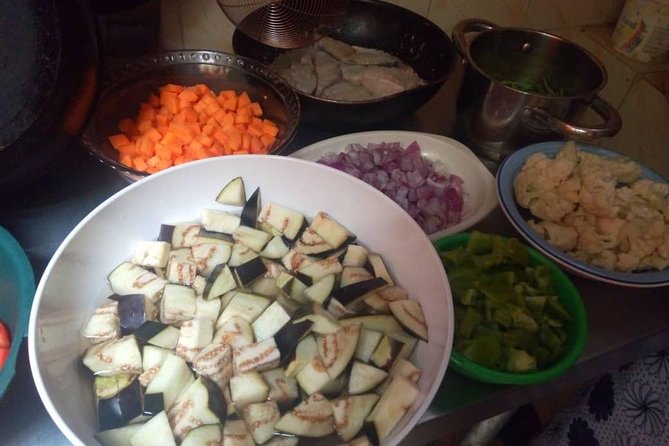
Zanzibar’s food culture makes the most sense when you handle the spices, chop the ingredients, and cook over a charcoal brazier yourself. This five-hour class takes you from a local market to a Zanzibari kitchen, then lets you eat the meal you helped make.
I like the small six-person limit, which gives you a real chance to work with the chef rather than watch from the back. I also like the market stop, since buying ingredients gives the cooking lesson a useful local setting instead of treating Swahili food as a set of recipes detached from daily life.
The main thing to consider is the meeting arrangement. The activity starts at Tembo House Hotel at 9 a.m., and private transportation is not included, even though pickup is offered in the tour details. Confirm the pickup plan before booking, especially if you are staying outside Stone Town.
Key points to know before you book
- Market first: You begin by helping buy the ingredients used in your meal.
- Charcoal cooking: The class includes practice with a kitchen knife and charcoal brazier, a hands-on look at traditional cooking methods.
- Local instruction: A Zanzibari chef guides you through Swahili cooking and the use of Zanzibar-grown spices.
- Small group: The class is capped at six people, allowing more direct help and participation.
- Lunch included: You eat the dishes prepared during the lesson with your chef.
- Vegetarian-friendly: Vegetarian cooking can be arranged if you request it.
Starting at Tembo House Hotel at 9 a.m.
Your morning begins at Tembo House Hotel on Shangani Street, near Forodhani Street in Zanzibar. The stated meeting time is 9 a.m., and the activity returns to this same meeting point at the end.
That central Stone Town location makes sense for a food experience. You are close to the old city’s market streets and waterfront, and the meeting point is near public transportation. Still, do not treat pickup as automatic private transport. The details say pickup is offered, but private transportation is not included, so you should settle the exact arrangement with Halisi Africa Tours before the morning of the class.
The five-hour schedule is long enough to cover shopping, preparation, cooking, and lunch without reducing the class to a quick demonstration. Plan for the experience to occupy most of your morning and early afternoon. If you have a tightly packed Stone Town schedule, leave room afterward rather than booking another fixed activity immediately.
A few more Zanzibar trips to weigh up
- Zanzibar: Spice Farm Tour with Traditional Cooking Lesson
★ 4.8 · 77 reviews - Zanzibar Cooking Class & Spice Tour
★ 4.5 · 77 reviews - Half-Day Kuza Cave Swimming Adventure and Cooking Class
★ 4.5 · 44 reviews
Shopping for the ingredients in Zanzibar
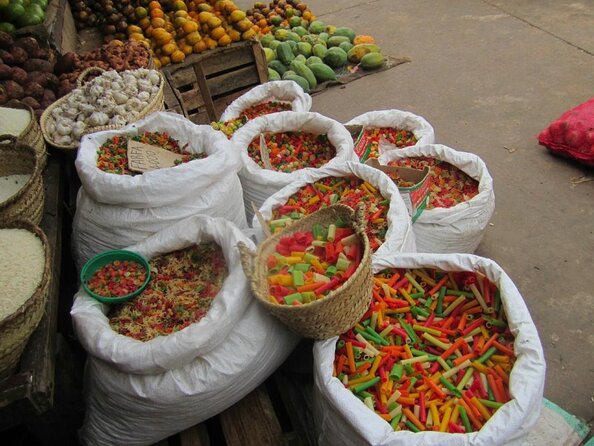
The first useful step is a visit to a local market to buy ingredients. This adds more value than a simple sightseeing stop because you see the raw materials before they reach the cooking pot.
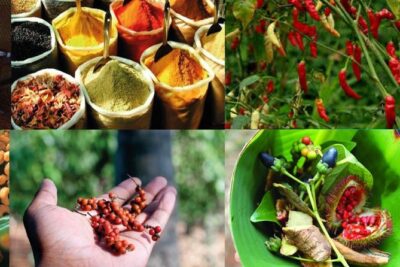
The focus is Swahili food, shaped by a mixture of Oriental influences and spices grown in Zanzibar. At the market, those influences become practical. You are not just told that spices matter. You take part in selecting the ingredients that will later flavor the meal.
The precise market and shopping list are not specified, so you should not expect a fixed menu to be guaranteed. That is part of the appeal, but it also means the dishes may depend on what is available and what the chef plans for that day.
I like this beginning because it gives you context for the meal. A plate of food can be memorable, but learning where its ingredients come from and seeing what goes into it helps you understand the cooking in a more lasting way.
The market portion may also be the busiest part of the morning. If you prefer a quiet, polished cooking studio, this experience may feel less controlled. If you want food connected to the place you are visiting, the market stop is one of the strongest parts of the schedule.
Learning Swahili cooking over charcoal
After shopping, you move into the cooking lesson with an experienced Zanzibari chef. The class is designed to have you prepare several dishes, not simply sit and watch someone else cook.
The included use of a kitchen knife and charcoal brazier gives the lesson a practical edge. You learn how ingredients are handled and how food is cooked in a Zanzibar style. Cooking over charcoal is not the same as working with a modern electric or gas stove, so the lesson can show you how heat and timing are managed in a more traditional setup.
The chef guides you through using the ingredients and preparing the dishes. Since the group is limited to six, you should have a better chance of receiving direct correction and help than in a large class. That matters when you are handling a knife, working with unfamiliar ingredients, or trying to judge heat on a charcoal brazier.
You should still keep your expectations realistic. The available information does not promise a printed recipe book, a particular number of dishes, or advanced culinary training. Think of this as a guided cultural cooking session rather than professional chef school.
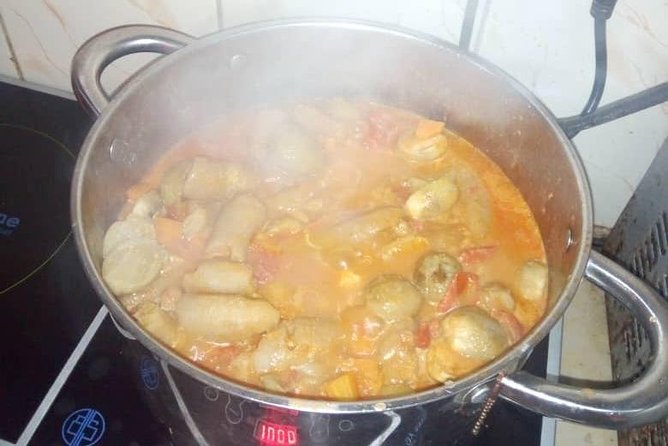
The most appealing detail is that the cooking takes place in a home setting, according to the experience description and published feedback. One account describes preparing a Zanzibar meal over a coal stove in a home, and another highlights cooking with Hamza, Miram, and their family. That points to a more personal setting than a standard commercial kitchen, though the exact host arrangement may vary.
Meeting Hamza, Miram, and the family setting
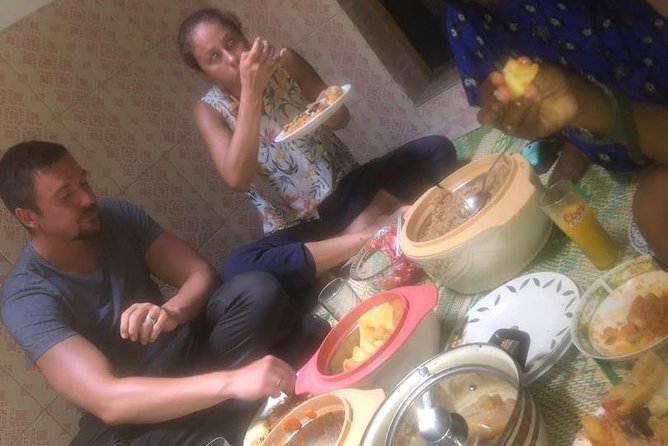
Hamza and Miram are named in one of the personal accounts, along with their family. Their involvement gives you a useful expectation: this can feel like shared cooking with local hosts, not just an instructor giving a formal lesson.
That family element is especially important for visitors who care about conversation and daily food customs. Once the dishes are ready, you eat with the chef and discuss the day and the merits of Swahili food. The meal is part of the lesson, not an afterthought.
I would not book this class only for a precise menu or a highly staged presentation. The strongest reason to choose it is the chance to prepare food with local guidance and then share it in the same setting. The family connection may also make the experience warmer and more social, but the description does not promise that the same people will lead every departure.
The feedback attached to the experience gives this personal approach particular weight. The published accounts give the class a full five-star rating, with nine ratings shown overall. One account praises both watching and taking part in the preparation, while another describes an unforgettable time with Hamza, Miram, and the family. The consistent message is clear: participation and the human side of the meal are central to the appeal.
Same country, a completely different kind of safari:
- Zanzibar: Quad Bike Adventure departing from Kendwa or Nungwi
★ 4.9 · 1,233 reviews - Zanzibar: Prison Island and Nakupenda Boat Trip with Lunch
★ 4.1 · 882 reviews - Skydive Zanzibar | Tandem Skydive
★ 5.0 · 877 reviews - Mnemba Island: Dolphin Swim & Snorkeling with Optional Lunch
★ 4.3 · 591 reviews
Eating the lunch you prepared
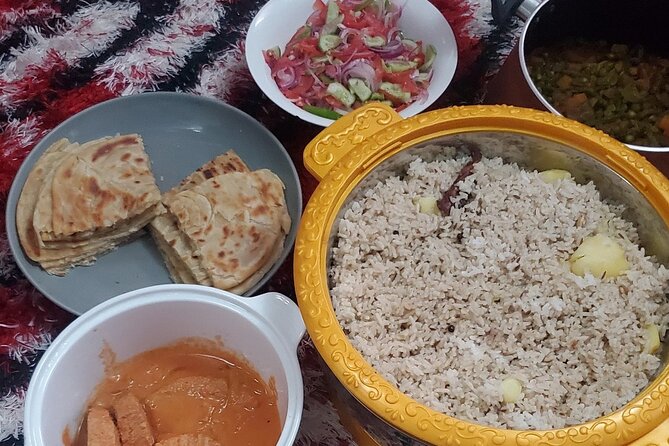
When the food is ready, lunch is served and included in the price. You eat the dishes you prepared with the chef, which gives the final meal a satisfying purpose. You are not simply handed a restaurant plate. You have seen the ingredients, worked through the preparation, and can judge the result yourself.
This format is good for couples, friends, and solo visitors who enjoy conversation with a meal. It also suits anyone who wants a food experience with a clear beginning, middle, and end: market shopping, cooking, then eating.
The menu is not stated in the available details, so you should ask about planned dishes if you have strong preferences or dietary needs. Vegetarians can be accommodated, but request this when booking rather than waiting until the class begins.
Lunch also helps justify the five-hour schedule. A shorter demonstration might be enough for a quick introduction, but this class gives you time to eat what you made and talk about the cooking afterward. If you are not interested in food preparation, though, the length may feel excessive.
What the $90 price means
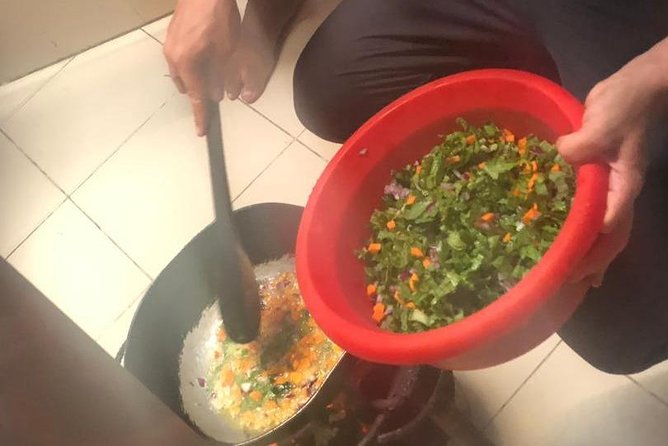
At $90 per person, this is not the cheapest way to eat in Zanzibar. You are paying for more than lunch: a market visit, instruction from a local chef, ingredients, kitchen supplies, use of a knife and charcoal brazier, and a small class with no more than six participants.
The value depends on how much you want to participate. If you count only the meal, the price may seem high. If you want a personal food lesson, local context, and time to cook rather than watch, the small group makes the cost easier to understand.
The included ingredients and supplies also simplify planning. You do not need to shop separately or bring cooking equipment. The meal is included, and the class gives you a way to learn about Zanzibar’s spice traditions through direct practice.
Private transportation is not included, so factor in your own cost and time getting to Tembo House Hotel. Pickup is offered, but the terms are not detailed here. Ask whether pickup applies to your accommodation, whether it costs extra, and where you will be collected.
The experience is booked an average of 93 days ahead. That suggests you should reserve early if the date matters, particularly because six is the maximum group size. Confirmation arrives when you book, and the mobile ticket makes it easy to keep the booking on your phone.
Who will get the most from this class
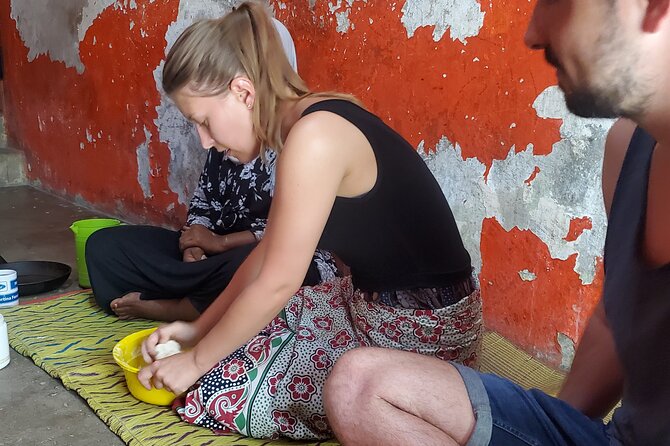
I would choose this for you if food is one of the main ways you connect with a place. It is also a good match if you like doing things with your hands, asking questions, and sharing a meal with a host.
The class is suited to:
- Visitors who want more than a restaurant meal
- Couples or friends who enjoy cooking together
- Solo visitors who like small social groups
- Vegetarians who confirm their needs ahead of time
- Anyone curious about spices, charcoal cooking, and Swahili food
- People who value local instruction over a polished tourist presentation
It may be less suitable if you need a fixed menu, private transport included in the price, or a short activity that ends quickly. It also may not fit if you dislike market visits, group cooking, or charcoal cooking.
The six-person maximum is a strong point for most people. You are less likely to spend the whole class watching someone else handle every task. Still, a small group is not the same as a private class. If you need one-to-one instruction, ask whether a private option exists.
Weather and cancellation details
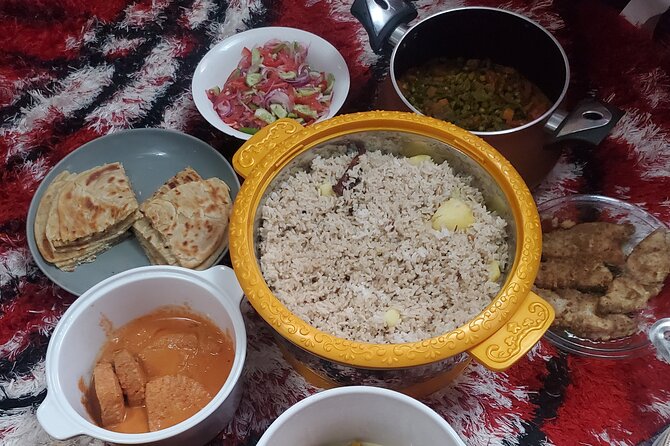
The experience requires good weather. If poor weather causes a cancellation, you are offered another date or a full refund.
You can cancel for a full refund if you do so at least 24 hours before the 9 a.m. start time. Cancellations or changes made less than 24 hours before the start are not refunded or accepted. The cut-off uses Zanzibar local time, so check the time carefully if you are arranging plans from another time zone.
This policy is worth noting because the activity includes a market visit and depends on suitable conditions. Keep your schedule flexible if rain is likely, and do not leave cancellation decisions until the last minute.
Should you book the Zanzibar cooking class?
Book it if you want to learn by doing. The market visit, hands-on preparation, charcoal brazier, and shared lunch create a full food experience rather than a passive demonstration. The six-person limit and the chance to cook with a Zanzibari chef are the best reasons to pay $90.
I would especially recommend it to food-minded visitors who want personal contact and a home-style setting. The strong published rating, along with the specific praise for participation and the time spent with Hamza, Miram, and the family, supports that choice.
Think twice if you want a guaranteed menu, included private transport, or a fast activity. Confirm vegetarian arrangements and pickup details before paying. For everyone else, this is a practical and memorable way to spend five hours learning why Zanzibar’s spices and cooking methods matter.
FAQ
How long does the cooking class last?
The activity lasts approximately five hours.
What time does the tour start?
It starts at 9 a.m.
Where does the experience begin?
The meeting point is Tembo House Hotel on Shangani Street and Forodhani Street in Zanzibar.
Where does the activity end?
The activity ends back at the meeting point.
Is transportation included?
Pickup is offered, but private transportation is not included. Confirm the pickup details with the provider.
Are ingredients and cooking equipment provided?
Yes. Ingredients and supplies are provided, and the experience includes use of a kitchen knife and charcoal brazier.
Can vegetarians take part?
Yes. Vegetarian cooking can be accommodated.
What is the cancellation policy?
You can cancel at least 24 hours before the start time for a full refund. Cancellations or changes made less than 24 hours before the start are not accepted or refunded. If poor weather cancels the activity, you can choose another date or receive a full refund.
Just added around Zanzibar
- Zanzibar: Maasai village and Nungwi turtles experience trip★ 4.9 · 16 reviews
- Zanzibar: Mnemba Atoll, Spice farm, Jozani forest & Lunch★ 3.9 · 3 reviews
- Zanzibar: Maasai World Tour with Cultural Practices★ 4.0 · 4 reviews
- Zanzibar: Kendwa Beach Professional Photoshoot★ 5.0 · 5 reviews
- ZANZIBAR: Jozani Forest,Salaam Cave, The Rock & Blue Lagoon★ 4.8 · 8 reviews
- Zanzibar: Jozani Red Colobos Monkey & Salaam Turtle Santuary★ 4.6 · 3 reviews
- Zanzibar: Jozani Forest Walking Tour★ 5.0 · 3 reviews
- Zanzibar: Jozani Forest,Red colobus,the Rock Restaurant tour★ 4.5 · 21 reviews
Cooking Classes, compared.
Half-Day Kuza Cave Swimming Adventure and Cooking Class
Read our review →
NGO Lifted Strong – Traditional Tanzanian Cooking Class
Read our review →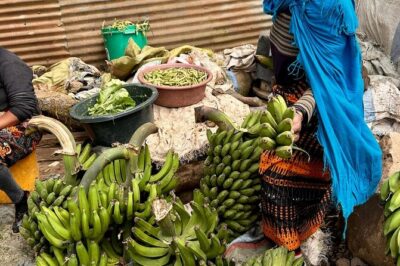
Traditional Tanzania Cooking Class & Food Market Tour
Read our review →
Cooking and Sewing & Jewelry Workshops in Arusha
Read our review →
Mnemba Dolphin Tour, Clear Kayak, Cooking Class, Horse Riding
Read our review →
Traditional Zanzibar Cooking Class including Spice Tour
Read our review →Browse the lists this tour appears in