
Reviewed · CITY TOURS
Ancient Bagamoyo City Day Tour
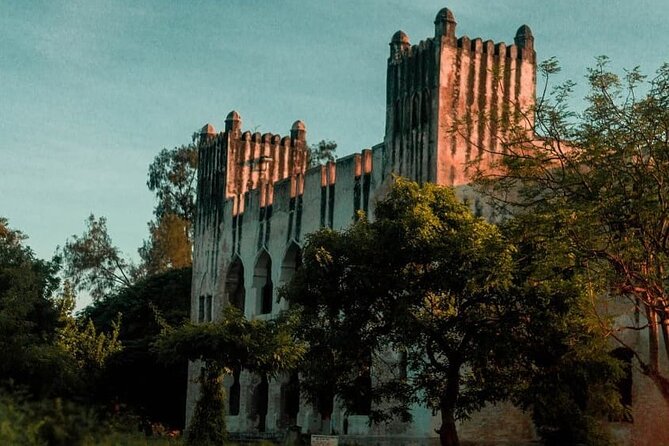
Bagamoyo is not just an old coastal town. It is a place where Swahili trade, Arab rule, German colonial power, Christian mission work, and the slave trade all meet in one compact day. The Bagamoyo Museum and Kaole Ruins give the day its weight, while the beachside Old Boma and old cathedral make the story easier to picture.
I like the private format, since you can ask questions and set the pace with your own guide. I also like the unusual mix of history and wildlife: after serious stops about trade and slavery, you finish near crocodiles and reptiles. The main drawback is the long 10-hour day from Dar es Salaam, and some of the sites may feel weathered rather than polished.
Key points to know before you go
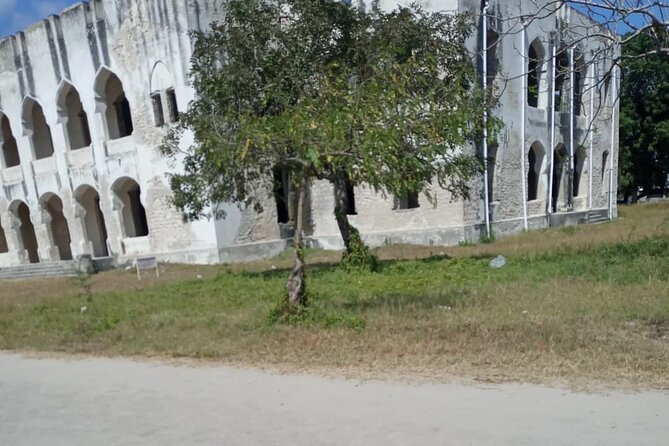
- Bagamoyo Museum puts the coastal slave trade and colonial past at the center of the day.
- Kaole Ruins reaches back to an older Swahili settlement dating to the 8th century.
- The private tour gives your group the guide’s full attention.
- Old Boma and the cathedral show Bagamoyo’s later role under German and missionary influence.
- A crocodile and reptile sanctuary adds a lighter, hands-on finish.
- The $200 price includes lunch, snacks, bottled water, alcoholic drinks, admissions, and private transport service.
Why Bagamoyo matters on Tanzania’s coast
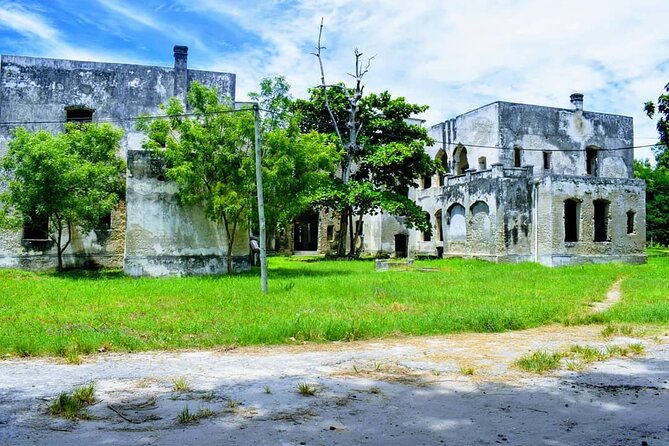
Bagamoyo was founded as a coastal town at the end of the 18th century, but its story reaches further back. Nearby Kaole marks an older Swahili settlement from around the 8th century, long before German colonial rule.
The town later became an important port on the western Indian Ocean coast. Arab traders, local communities, missionaries, and European colonial officials all shaped its development. The German administration selected Bagamoyo as the capital of German East Africa, giving the town a political role as well as a trading one.
That mixture is what makes the day useful. You are not looking at one isolated ruin and then driving away. You are following the changes that turned a Swahili coastal settlement into a port, colonial center, mission station, and historic town.
The subject matter is not always comfortable. The slave trade is a major part of the story, and the tour does not treat Bagamoyo as a simple postcard destination. I would choose this day if you want context for East African history, especially the links between inland routes, coastal ports, Arab rule, European colonialism, and the spread of Kiswahili.
A few more Dar es Salaam trips to weigh up
- Dar es Salaam: City Tour
★ 4.7 · 159 reviews - Dar es Salaam City Center: Walking Tour
★ 4.8 · 102 reviews - Dar es Salaam City Tour – Everyday
★ 5.0 · 64 reviews
A 7:00 am start and a full private day
The day begins at 7:00 am in Dar es Salaam and lasts about 10 hours. That makes this a serious day trip, not a quick outing squeezed between other plans.
The early start matters because you have several stops and a substantial drive between Dar es Salaam and Bagamoyo. Since this is a private activity for your group only, you are not sharing the day with strangers or following a fixed large-group routine. You can ask for more explanation at the museum, keep moving if a stop is not your priority, or spend extra time on the subjects that interest you.
Pickup is offered, and the tour has a mobile ticket. The experience is also listed as being near public transportation, though the private pickup is the more practical choice for a long sightseeing day.
Lunch, snacks, bottled water, and alcoholic beverages are included. That helps with the value, especially since you are out most of the day. The stated drinking age is 18 and older. Tips and gratuities are not included, so plan to handle those separately if you feel the guide or driver has earned one.
Bagamoyo Museum: begin with the difficult chapters
The Bagamoyo Museum is scheduled for about one hour, with admission included. This is the stop that frames the rest of the day.
The museum covers the history of the slave trade and the former capital role of Bagamoyo. That gives you a starting point for understanding why the town mattered. Bagamoyo was connected to trading routes reaching inland, and its position on the coast made it a key point in regional commerce.
I would pay close attention to how your guide connects the objects and displays to the wider town. A museum visit can feel disconnected if you simply move from case to case. On this tour, the guide is expected to explain how Bagamoyo’s port, buildings, religious institutions, and surrounding settlements fit together.
The subject can be heavy, so this is not a stop to rush through while thinking about lunch. Give it your full hour. If you are interested in African history, colonialism, or the human cost of trade, this may be the most important part of the day.
The museum is also a useful balance to later stops. Old buildings can look attractive without telling you much. The museum helps place those buildings inside the political and economic forces that shaped them.
Kaole Ruins and the older Swahili coast
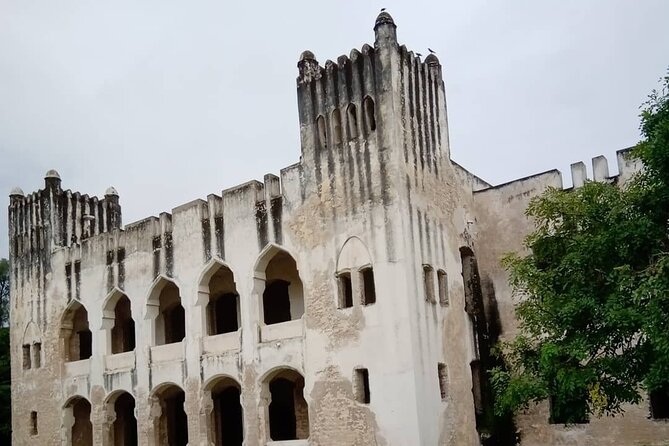
About an hour is set aside for the Kaole Ruins, with admission included. This is one of the most valuable stops because it takes the story beyond the 18th and 19th centuries.
Kaole is linked to a Swahili settlement dating to the 8th century. The ruins help show that organized coastal communities and trade networks existed long before European colonial administration. You are looking at the remains of a society that used the coast as a meeting point for people, goods, ideas, and languages.
The site is also presented as evidence of technological and cultural development under Arab influence. It helps explain the growth of other trading towns and the emergence of Kiswahili as a major East African language.
That language connection is especially worthwhile. Kiswahili is not just a modern travel tool. Its development reflects centuries of contact along the coast, with local African roots and outside influences shaping how communities communicated and traded.
Do not expect Kaole to feel like a restored European monument. The interest is in the age of the site and the story your guide builds around it. Ruins require imagination, and the quality of the explanation will shape your experience. Guides named in the tour feedback include Erick and Emmanuel, both praised for friendly, detailed explanations, but your assigned guide may be different.
Same country, a completely different kind of safari:
- MIKUMI NATIONAL PARK – 3 Days
★ 4.5 · 63 reviews - 2 nights 3 days safari to mikumi national park
★ 5.0 · 62 reviews - 2 Days 1 Night Mikumi National Park from Dar es salaam
★ 5.0 · 60 reviews - The Best/Top Rated Cultural City Tour in Dar es Salaam
★ 5.0 · 57 reviews
Old Boma: Bagamoyo’s customs house by the sea
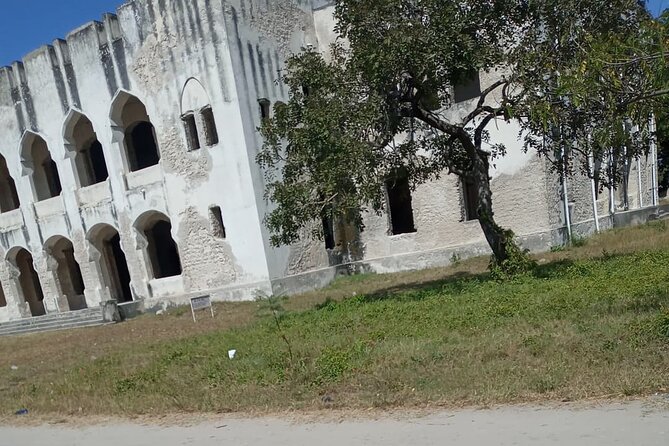
The Old Boma gets about 30 minutes. It is located near the beach and close to the center of Bagamoyo.
The building served as a customs house, which makes it a practical reminder of Bagamoyo’s commercial role. Here, the story shifts from ancient settlement and regional trade to the systems that controlled goods and movement during the colonial era.
The short visit is appropriate. Thirty minutes is enough to see the building, hear why it mattered, and connect it to the port nearby. It is not a stop that needs half a day.
Because the Old Boma is near the beach, this is also one of the moments when you can get a feel for Bagamoyo as a living coastal town rather than only a collection of historic sites. The tour presents the building as part of a strategic trading center, not simply an old structure to photograph.
The cathedral and Livingstone’s Bagamoyo
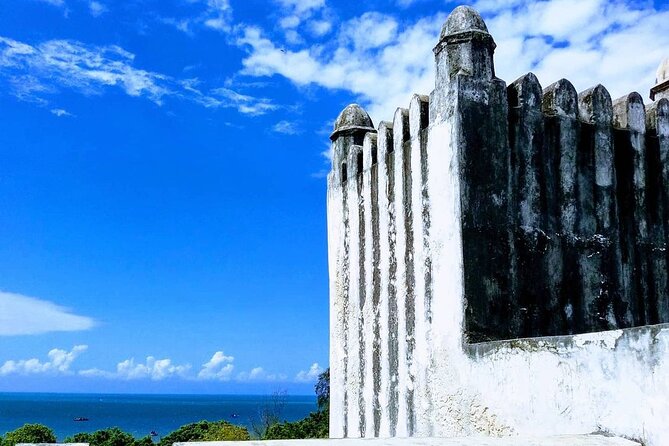
Another hour is devoted to the old Bagamoyo Cathedral and places associated with the explorer David Livingstone. Admission is free for this portion.
The cathedral adds the missionary chapter to the day. After seeing the commercial and political sides of Bagamoyo, you get a sense of how Christian mission work became part of the town’s story. The connection to Livingstone adds another layer, since Bagamoyo was linked to the movement of explorers and missionaries through East Africa.
This stop is useful for understanding how different groups viewed the coast. For traders, Bagamoyo was a port. For colonial authorities, it was a strategic center. For missionaries and explorers, it was part of a route into the interior.
The cathedral and Livingstone-linked sites also give the day a change of pace. You move from museum displays and ruins to a religious building and personal stories connected with a famous historical figure.
The information provided does not specify exactly which Livingstone locations you will enter or how much time is spent inside the cathedral. Ask your guide to explain the connection clearly, rather than treating the stop as a quick photo opportunity.
Crocodiles and reptiles for a change of pace

The crocodile and reptile sanctuary takes about 40 minutes, with free admission. This is the most playful stop, but it also makes sense as a change after several hours of serious history.
You can see crocodiles and other reptiles at close range. The tour description also says you may hold them if you want photographs. I would treat that as optional. If you are comfortable with it, it can make a memorable family picture. If not, you can still watch the animals and enjoy the contrast with the historic sites.
This part of the day may appeal most to families and anyone who wants more than buildings and museums. It is also a reminder that the tour is not designed solely for academic history enthusiasts. It mixes cultural sightseeing with a straightforward wildlife encounter.
The stop is relatively brief, so it should not overwhelm the historical focus. Still, if your main reason for visiting Bagamoyo is architecture and heritage, you may see the sanctuary as an extra rather than a highlight.
Lunch, coastal food, and what the price covers
The tour costs $200 per person. That is not a low-cost day trip, so the value depends on how much you want included and how useful a private arrangement is to you.
The price includes lunch, snacks, bottled water, alcoholic beverages, and admission tickets for the Bagamoyo Museum and Kaole Ruins. It also includes the service of a private guide and driver arrangement, with pickup offered. For a 10-hour outing, those inclusions reduce the number of extra decisions you need to make during the day.
Food is part of the appeal. One account of the day specifically praised the seafood, which fits Bagamoyo’s coastal setting. The exact lunch menu is not stated, so do not book this expecting a particular dish. If seafood matters to you, ask ahead of time what is planned.
The tour is a better value for two or more people sharing a private vehicle than for someone simply looking for the cheapest way to reach Bagamoyo. You are paying for a full day, included food and drinks, site admissions, and personal attention. If you prefer independent travel and are comfortable arranging transport and entry fees yourself, the price may feel high.
The guide can shape the whole experience
A day built around history depends heavily on the guide. The strongest descriptions of this experience focus on friendly, professional service and clear explanations.
Erick is named as a friendly and professional guide, while Emmanuel is described as especially attentive to a strong interest in history. Jacqueline appears to handle advice and tour arrangements in some cases. These names indicate the company has staff who can make the day personal, but they do not guarantee which person will lead your departure.
When you book, tell the operator what interests you most. You might focus on slavery and trade, Swahili culture, German colonial rule, missionary history, architecture, or photography. A private tour gives you a good chance to shape the conversation.
I would also ask the guide to keep the historical sequence clear. Bagamoyo’s story covers many centuries and several outside powers. Without a timeline, the sites can blur together. With a good explanation, Kaole, the museum, Old Boma, and the cathedral each play a distinct role.
Who should book this Bagamoyo day trip?
This tour suits you best if you want a history-focused coastal excursion from Dar es Salaam and prefer a private vehicle with lunch and admissions handled for you.
It is a strong choice for couples, families, and small groups who like to ask questions. The reptile sanctuary gives children a break from historic buildings, while the museum and ruins offer enough substance for adults who want more than a beach visit.
It also suits anyone whose safari plans have changed. Rain can disrupt wildlife outings, and Bagamoyo offers a different kind of Tanzanian experience. It is not a replacement for a safari, but it can turn a weather problem into a worthwhile cultural day.
You may want to choose another plan if you dislike long day trips, have limited interest in history, or want a slow beach day. The schedule is full, and the subject of the slave trade requires attention and maturity.
The experience is listed as suitable for most people, with service animals allowed and public transportation nearby. The minimum drinking age is 18. Since the tour requires good weather, poor conditions can lead to a new date or a full refund.
Should you book Ancient Bagamoyo City Day Tour?
Book it if you want to understand why this coastal town mattered and you value having a private guide explain the connections. The strongest parts are the museum, Kaole Ruins, and the way the day brings together Swahili, Arab, German, missionary, and trading history.
The crocodile sanctuary and included coastal lunch keep the day from feeling like six hours of stone walls and dates. Just be ready for a long outing, serious subject matter, and a price that makes the most sense when the private format and inclusions matter to you.
You can cancel for a full refund up to 24 hours before the 7:00 am start. Changes made inside that window are not accepted, and poor weather may result in a different date or a full refund.
FAQ
Where does the Ancient Bagamoyo City Day Tour start?
The tour starts at 7:00 am in Dar es Salaam, with pickup offered.
How long does the Bagamoyo tour last?
The experience lasts approximately 10 hours.
Is this a private tour?
Yes. Only your group participates in the private activity.
What is included in the price?
Lunch, snacks, bottled water, alcoholic beverages, and admission tickets for the Bagamoyo Museum and Kaole Ruins are included.
Are tips and gratuities included?
No. Tips and gratuities are not included.
What historical sites are visited?
The day includes the Bagamoyo Museum, Kaole Ruins, Old Boma, the old Bagamoyo Cathedral, and areas associated with David Livingstone.
Is the crocodile sanctuary included?
Yes. The tour includes a visit to the crocodile and reptile sanctuary, and admission is free.
What is the minimum drinking age?
The minimum drinking age is 18 years and older.
Can I cancel the tour for a refund?
You can cancel at least 24 hours before the start time for a full refund. If poor weather causes the experience to be canceled, you will be offered a different date or a full refund.
Just added around Dar es Salaam
- Zanzibar: 3 Days to Mikumi and Chizua Waterfalls★ 3.5 · 5 reviews
- 3 Days Explore Selous Game Reserve + Boat safari + bushman walking★ 5.0 · 5 reviews
- 2 Day Wildlife Experience and Masai Culture Mikumi Park★ 5.0 · 5 reviews
- Explore Dar es Salaam: Full-Day Private City Tour★ 5.0 · 18 reviews
- Sunrise Beach Walk with Picnic Breakfast Activity★ 5.0 · 3 reviews
- 3 Days Safari to Nyerere National Park (Selous Game Reserve)★ 5.0 · 8 reviews
- Mikumi Np Mid Range Tour 3 Days★ 5.0 · 3 reviews
- Saadani National Park Day Tour★ 5.0 · 3 reviews
City Tours, compared.

Arusha Guided Walking City Tour, Culture, Lifestyle & History
Read our review →

The Best/Top Rated Cultural City Tour in Dar es Salaam
Read our review →
Browse the lists this tour appears in