
Reviewed · CITY TOURS
The Best/Top Rated Cultural City Tour in Dar es Salaam
Dar es Salaam reveals itself best through its everyday places, and this tour gets you into them quickly. You’ll see the city’s past at the National Museum, watch the morning trade at Kivukoni Fish Market, and meet Tanzania’s many cultural traditions at the Village Museum. I especially like the fish market visit and the chance to join a traditional dance rather than simply look at huts behind a rope.
I also like the way guides such as Gideon, Mike, Tersem, and Ebony connect the sights to Tanzania’s wider story. The air-conditioned vehicle and hotel transfers matter in a city where traffic can eat up a good part of your day.
The main caution is time. Three to five hours is enough for a useful introduction, not a slow, in-depth tour. Stops can change with traffic, weather, road closures, and the time available. Kariakoo, Azania Front Lutheran Church, Slipway, and Mwenge may not all fit into the same outing.
Key points before you book
- Kivukoni Fish Market: See seafood arriving and being sold at one of Dar es Salaam’s most active trading places.
- Village Museum: Walk among traditional homes from different Tanzanian cultures and join a local dance.
- National Museum: Learn about Olduvai Gorge discoveries, Kilwa, the Zanzibar slave trade, and the colonial periods.
- Flexible city coverage: Slipway and Mwenge can replace one another, while Kariakoo may be a drive-through only.
- Useful transport: Air-conditioned round-trip transport and bottled water are included.
- Price and pace: At $90 per person, the tour is strongest for first-time visitors, cruise passengers, and anyone with only one day in the city.
A practical first look at Dar es Salaam

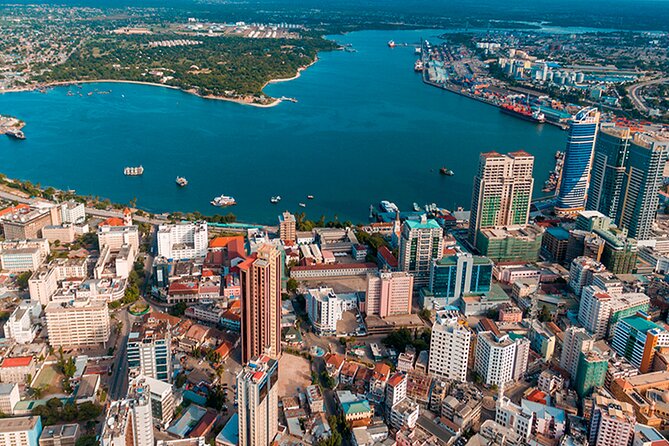
Dar es Salaam is Tanzania’s largest city and a major port, but it is not a city you understand from a string of postcard stops. Its story comes through trade, faith, migration, colonial rule, crafts, food, and the many communities that share the city.
This tour gives you those pieces in a compact morning or afternoon outing. The published start is 9:00 a.m. from Classic Mall in Mbezi Beach, with the activity returning to the meeting point. Pickup is offered, so check the arrangement carefully when you book.
The experience is described as a small-group tour, though the stated maximum is 50 people. That is a fairly large upper limit, so your actual group size may affect how much time you get to ask questions. The strongest praise has gone to the guides’ stories, calm driving, punctuality, and friendly manner. Gideon is noted for handling congested streets with care, while Tersem has been praised for making good use of a short afternoon.
A few more Dar es Salaam trips to weigh up
- Dar es Salaam: City Tour
★ 4.7 · 159 reviews - Dar es Salaam City Center: Walking Tour
★ 4.8 · 102 reviews - Dar es Salaam City Tour – Everyday
★ 5.0 · 64 reviews
The National Museum puts Tanzania’s story first
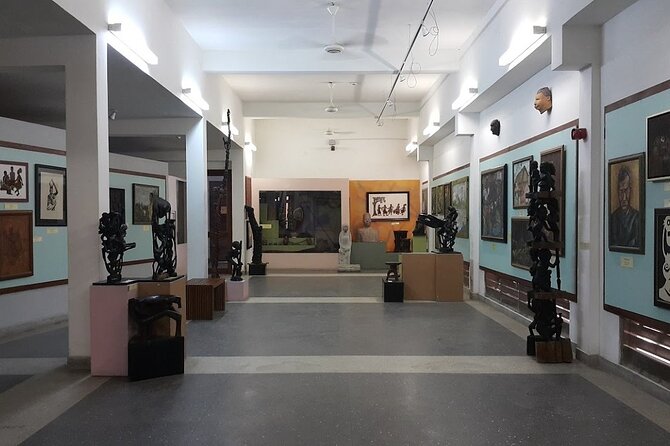
Your first listed stop is the National Museum of Tanzania, with about 45 minutes and admission included. This is the right place to begin because it gives the rest of the tour some context.
The museum includes a copy of the famous Zinjanthropus fossil, often called Nutcracker Man, found at Olduvai Gorge. You will also find archaeological material and exhibits covering Tanzania’s many cultures and political eras.
The displays touch on the Shirazi civilization of Kilwa, the Zanzibar slave trade, and the German and British colonial periods. These subjects help explain why Dar es Salaam feels connected to the Swahili coast, the Indian Ocean, inland Tanzania, and Europe all at once.
Forty-five minutes is useful but limited. I would focus on the sections your guide points out rather than trying to read every panel. If you enjoy archaeology and political history, you may wish for more time. Still, the museum gives you a solid frame for the places that follow.
Kivukoni Fish Market shows the city at work
The 20-minute stop at Kivukoni Fish Market is brief, but it may be the most memorable part of the morning. This is a working seafood market, not a staged cultural display. Fish and other seafood arrive from Kivukoni and nearby areas, and people come from across the city to buy it.
Expect activity, strong smells, wet surfaces, and a close look at ordinary commerce. The market is known for low prices and a wide range of seafood. You may see deliveries arriving and vendors arranging their catch for sale.
This stop is valuable because it puts Dar es Salaam’s coastal setting right in front of you. The city’s relationship with the sea is not an abstract museum topic here. It is food, income, transport, and daily business.
Twenty minutes will give you a sharp glimpse rather than a full market visit. Wear practical shoes and stay close to your guide. The information provided does not promise a seafood tasting, so do not book this tour expecting a meal at the market.
Azania Front and the Askari Monument
Azania Front Lutheran Church may receive about 10 minutes, but this stop depends on traffic and available time. The church was built by German missionaries near the end of the 19th century. Its German architectural features, original work, and inscriptions offer a quick look at Dar es Salaam during the colonial period.
You may drive past, stop for a visit, or skip it. That uncertainty is worth noting if the church is a major reason you want the tour. The itinerary is built around city conditions, not a fixed museum-style schedule.
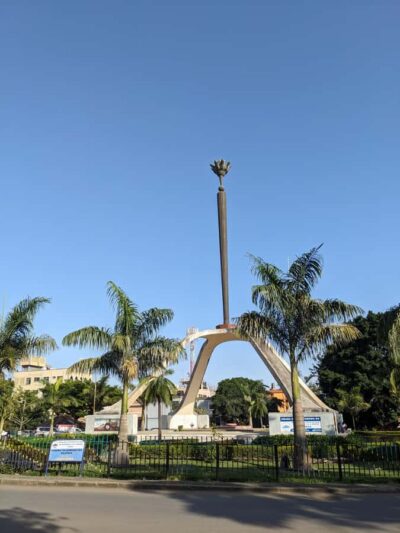
The Askari Monument is another quick historical marker. Built in 1927, it honors African soldiers who fought with Allied forces in Africa during World War I. A German statue once occupied the site, but British forces removed it after arriving in Dar es Salaam in 1916.
You cannot stop at the monument. You can take photographs from inside the vehicle. This is a drive-by orientation point, useful for seeing how the city’s central streets carry reminders of competing colonial powers.
Same country, a completely different kind of safari:
- MIKUMI NATIONAL PARK – 3 Days
★ 4.5 · 63 reviews - 2 nights 3 days safari to mikumi national park
★ 5.0 · 62 reviews - 2 Days 1 Night Mikumi National Park from Dar es salaam
★ 5.0 · 60 reviews - Private Full-Day Trip to Mikumi National Park from Dar es Salaam
★ 5.0 · 54 reviews
Slipway offers coastal views and souvenir shopping
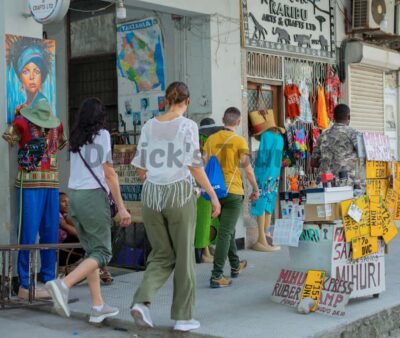
The Slipway Shopping Centre sits along the coast and is listed as a 30-minute stop. It combines open-air walkways, restaurants, shops, and ocean views. For many people, this is the easiest place on the tour to buy a souvenir.
The shops sell items such as fabrics, sandals, beaded necklaces, and other locally made goods. Prices are negotiable, so take a little time to compare stalls before buying. The advice here is simple: bargain politely and look around. A similar item may cost much less at another stall.
Slipway is more polished than the fish market or Kariakoo. That makes it comfortable for shopping, but it also means the experience is less raw and local than the working market stops. I would treat it as a useful place to browse and take photos, not as the main cultural heart of the tour.
Slipway may be replaced by Mwenge Woodcarvers Market. The change can happen because of weather, flooding, traffic, road closures, or the time of the tour. Ask your guide which market is planned so you know what kind of shopping stop to expect.
The Village Museum makes culture hands-on
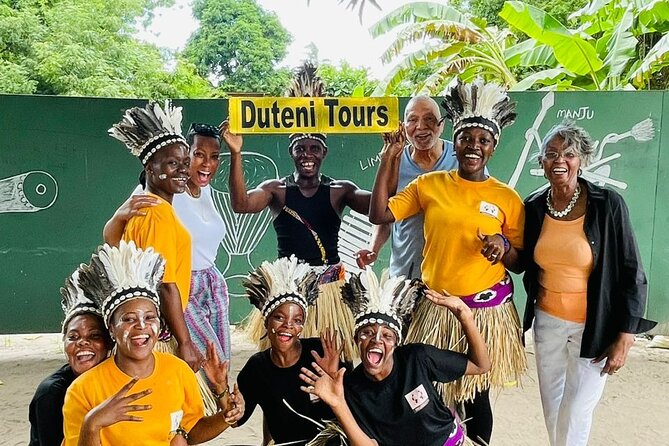
The Village Museum in Mikocheni, also called Kijiji cha Makumbusho, receives about an hour. This is the tour’s main cultural stop and one of its best uses of time.
You will see traditional African homes associated with different Tanzanian tribes and learn about the ways people lived in various parts of the country. The homes make a useful contrast with the city outside. Instead of treating Tanzania as one single culture, the museum shows how many traditions fit within the nation.
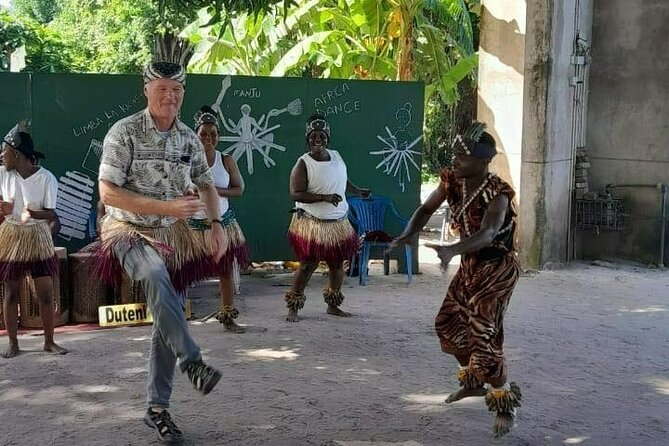
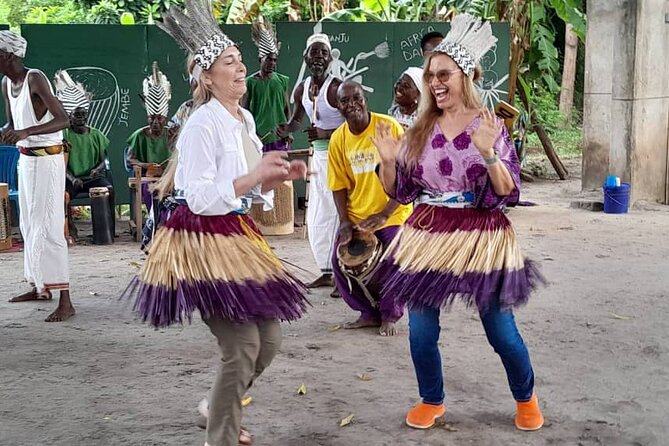
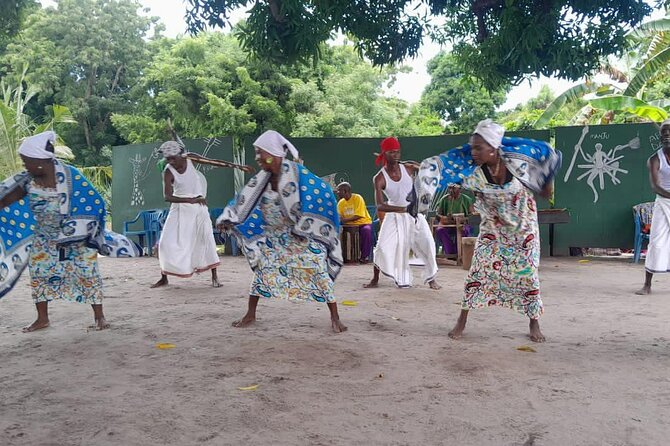
The visit includes a traditional village dance. You are welcome to join in and learn some of the movements. That invitation changes the mood from passive sightseeing to participation, even if you have two left feet. You do not need to be a dancer. The point is to take part respectfully and enjoy the moment.
Allow the full hour if you can. The National Museum explains Tanzania through objects and displays, while the Village Museum gives you a more physical sense of architecture, community, and performance. Together, the two stops make the tour much more useful than a simple drive around downtown.
Kariakoo is a drive-through, not a walking tour
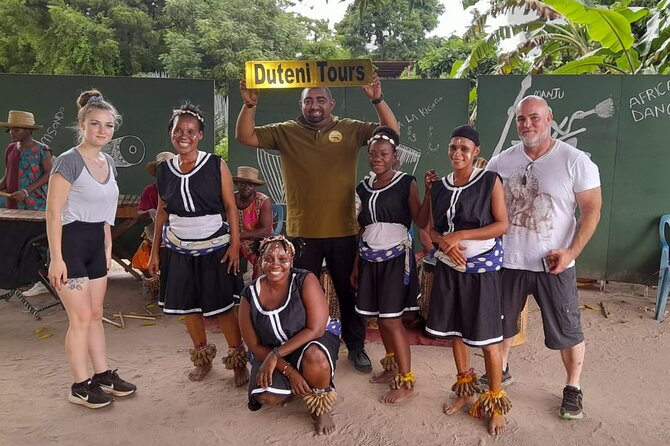
Kariakoo Market may be included if time, weather, traffic, and the time of day allow. It is described as a local center for all kinds of goods, with crowded streets, shops, people, and market activity.
There is an important limit: you will not walk through Kariakoo. The visit is a drive-through only. That means you can see the scale and movement of the area from the vehicle, but you will not have the same close contact with sellers that you get at Kivukoni.
I see Kariakoo as a bonus orientation stop, not a reason to book the tour by itself. If you want a walking market experience, the itinerary does not promise one. If you simply want to see another side of Dar es Salaam from the vehicle, it can add useful contrast.
Mwenge Woodcarvers supports local artists
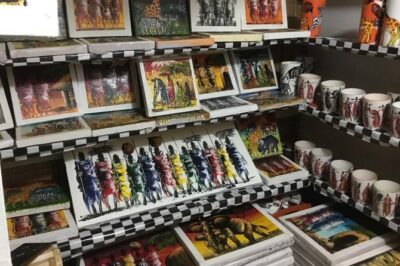
Mwenge Woodcarvers Market is another possible 30-minute shopping stop. It is known for wood carvings, paintings, drums, jewelry, traditional bags, shoes, keyrings, kitchen items, and other locally made goods.
The market is made up of local shops operated by artists and other community members. That gives this stop a stronger connection to local production than a generic souvenir shop. You can browse many types of goods in a short time, and your purchase supports the people making and selling them.
Shopping here calls for the usual good habits. Compare prices, ask questions, and bargain respectfully. You may find the same or a similar item at Slipway, since one market can replace the other.
Weather can affect access, as Mwenge sometimes floods. Traffic and the timing of the tour can also change the plan. If buying carvings is important to you, confirm the day’s route before setting your expectations.
What $90 per person really buys
The price is $90 per person. That is not the cheapest way to see Dar es Salaam, but the value depends on what you need.
You are paying for a guided introduction, an air-conditioned vehicle, bottled water, admission fees, and round-trip transport. The cost also buys time and ease. Dar es Salaam traffic can be difficult to read, and a calm driver such as Gideon can make the difference between seeing several areas and losing the afternoon to wrong turns and congestion.
The tour makes the most sense if you have limited time, are arriving from a cruise, or want a broad first look before exploring on your own. It also suits families and visitors who prefer a guide to explain what they are seeing.
Lunch, breakfast, dinner, snacks, and tips are not included. A snack bag can be arranged if requested before the tour begins. Since the day may last three to five hours, consider eating beforehand or arranging the snack bag in advance.
The maximum group size of 50 is worth keeping in mind. The experience may feel intimate if the group is small, but a larger group can make museum questions and market stops less personal. The operator’s ability to adjust guides may help, but the exact group size is not guaranteed.
Timing, traffic, and what may change
The tour can run in the morning or afternoon, although the listed meeting time is 9:00 a.m. Traffic is the largest practical variable. It affects the church stop, Kariakoo, the choice between Slipway and Mwenge, and the total length of the day.
You should see the schedule as a sensible route rather than a promise that every stop will receive its full listed time. Azania Front Lutheran Church may be skipped, Askari is viewed from the vehicle, and Kariakoo may be passed through without stopping.
The tour requires good weather. If poor weather forces cancellation, you can receive a different date or a full refund. You can cancel for a full refund up to 24 hours before the start time. Changes or cancellations inside that window are not accepted, and the amount paid is not refunded.
Most people can participate, and service animals are allowed. The tour is also near public transportation. Confirmation is normally sent at booking, though bookings made within two hours of departure are confirmed as soon as possible and depend on availability.
Who should book this Dar es Salaam tour?
I would choose this tour if you want a quick, guided introduction to the capital and do not want to arrange several separate visits. It is especially useful for first-time visitors, cruise passengers, families, and anyone who wants both museum context and ordinary city life.
It also works well if you care about local crafts. The choice between Slipway and Mwenge gives you a chance to shop for fabrics, carvings, jewelry, drums, and other goods, though you should not assume both markets will be included.
I would look elsewhere if you want a slow museum day, an extended walk through Kariakoo, or a fixed schedule with every stop guaranteed. The tour is designed for range. You will see many parts of Dar es Salaam, but some visits are short and some may be changed.
Should you book it?
Book it if you have three to five hours and want the city explained by a local guide rather than viewed through a vehicle window alone. The combination of the National Museum, Kivukoni Fish Market, and Village Museum gives you the strongest value, while the craft market adds a practical shopping option.
At $90, the tour is a fair choice when transfers, a driver, water, entry fees, and guiding all matter to you. Just confirm pickup, ask which market is planned, and remember that traffic and weather can reshape the route. If you accept that flexibility, Duteni Tours offers a useful and lively first chapter in Dar es Salaam.
FAQ
How long does the Dar es Salaam cultural tour last?
The tour lasts approximately three to five hours.
How much does the tour cost?
The price is $90 per person.
What time does the tour start?
The listed start time is 9:00 a.m. from Classic Mall in Mbezi Beach, Dar es Salaam.
Is hotel pickup available?
Pickup is offered. The stated meeting point is Classic Mall, and the activity ends back at the meeting point.
What is included in the price?
The price includes bottled water, an air-conditioned vehicle, and all fees and taxes.
Is food included?
No. Breakfast, lunch, dinner, snacks, and gratuities are not included. A snack bag can be purchased if requested before the tour begins.
Which museums are visited?
The route includes the National Museum of Tanzania and the Village Museum in Mikocheni.
Can I visit both Slipway and Mwenge Woodcarvers Market?
The route may include one of them. Slipway can be replaced by Mwenge Woodcarvers Market, depending on the tour, weather, traffic, flooding, and road conditions.
Can I walk through Kariakoo Market?
No. If Kariakoo is included, it is a drive-through only, and walking through the market is not permitted on this tour.
What is the cancellation policy?
You can cancel at least 24 hours before the start time for a full refund. Cancellations and changes made less than 24 hours before the start time are not accepted for a refund. If poor weather causes cancellation, you will be offered another date or a full refund.
Just added around Dar es Salaam
- Zanzibar: 3 Days to Mikumi and Chizua Waterfalls★ 3.5 · 5 reviews
- 3 Days Explore Selous Game Reserve + Boat safari + bushman walking★ 5.0 · 5 reviews
- 2 Day Wildlife Experience and Masai Culture Mikumi Park★ 5.0 · 5 reviews
- Explore Dar es Salaam: Full-Day Private City Tour★ 5.0 · 18 reviews
- Sunrise Beach Walk with Picnic Breakfast Activity★ 5.0 · 3 reviews
- 3 Days Safari to Nyerere National Park (Selous Game Reserve)★ 5.0 · 8 reviews
- Saadani National Park Day Tour★ 5.0 · 3 reviews
- 5 Days Selous/Nyerere & Mikumi NP Game drive, Maasai and Walking★ 5.0 · 13 reviews
City Tours, compared.

Arusha Guided Walking City Tour, Culture, Lifestyle & History
Read our review →
Browse the lists this tour appears in