
Reviewed · CITY TOURS
Dar es salaam Private City Tour with Professional Guide
Dar es Salaam reveals itself through contrasts: a fish market by the harbor, German-era churches, crowded shopping lanes, quiet war graves, and traditional homes from across Tanzania. This private city tour links those places in one long day, with a guide to explain what you are seeing and private transport to handle the city’s spread-out sights.
I like the mix of daily life and formal history, especially Kariakoo Market beside the National Museum. I also like that lunch, drinks, entry fees, bottled water, and an air-conditioned vehicle are included. The drawback is the length: nine to ten hours is a serious day, and Kariakoo’s crowds and traffic may feel tiring.
Key points at a glance
- Kariakoo Market brings you close to everyday Dar es Salaam, with food, clothing, electronics, spices, and household goods.
- The National Museum includes a 1.75-million-year-old hominid fossil, along with archaeological and cultural displays.
- The Village Museum presents traditional homes from more than 20 Tanzanian ethnic groups, including Maasai, Chagga, Sukuma, and Zaramo examples.
- Mwenge Woodcarvers Market is the place for handmade souvenirs, with bargaining expected.
- The private format gives your group its own vehicle and guide, rather than placing you with strangers.
- The day includes both coastal food culture and colonial-era landmarks, a useful introduction to Dar es Salaam’s many layers.
A full day that explains Dar es Salaam through places
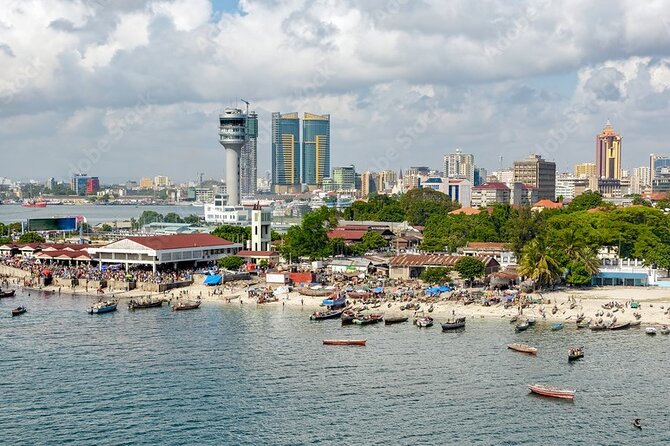
Dar es Salaam is not a city you understand from a single viewpoint. Its story is spread across the harbor, old religious buildings, markets, museums, and neighborhoods. This tour works because it moves between those settings rather than treating the city as a row of monuments.
Your day begins at 8:30 a.m. Pickup is offered, and the tour uses private transportation in an air-conditioned vehicle. That matters here. The stops are spread across the city, and a private vehicle gives you a place to cool down between visits.
The guide is an important part of the value. The tour is designed around explanation, not just transport, so you can ask about customs, buildings, food, and the city’s past as you go. Emmanuel is one guide specifically named in the tour feedback, and the guide team is described as warm, helpful, and easy to deal with. If having a particular guide matters to you, ask the operator if Emmanuel is available when you book.
A few more Dar es Salaam trips to weigh up
- Private Full-Day Trip to Mikumi National Park from Dar es Salaam
★ 5.0 · 54 reviews - Private 3 Days 2 Nights Mikumi Adventures
★ 5.0 · 47 reviews - Dar Es Salaam City Tour (Full Day With Private Guide And Car)
★ 5.0 · 39 reviews
Starting by the Indian Ocean at the Ferry Fish Market
The Dar es Salaam Ferry Fish Market sits near Kivukoni Front and the main ferry terminal. It is a good first stop because it introduces you to the city as a working port, not simply as a collection of sights.
Fishermen bring in catches from the Indian Ocean, while sellers handle prawns, octopus, red snapper, tuna, and other seafood. You might see fish being prepared for sale, hear bargaining, and catch the smell of grilled seafood in the air. The visit lasts about 30 minutes, so think of it as a quick look at coastal commerce rather than a long meal stop.
This is also one of the places where a guide helps. A local can explain what you are seeing and help you read the rhythm of the market. The setting may be crowded and noisy, and anyone sensitive to strong food smells should be prepared for a very direct market visit.
Admission is free. The tour includes lunch, soda or pop, alcoholic beverages, and bottled water, but the schedule does not specify precisely where lunch is served. Ask your guide early in the day if you have dietary needs or want to know when the meal break will happen.
Meeting Tanzania’s past at the National Museum
The National Museum of Tanzania gives the day a more formal historical center. Established in 1934, it covers archaeology, ethnography, colonial rule, independence, art, and culture.
The major draw is the Zinjanthropus skull, a hominid fossil dated at about 1.75 million years old. That single object gives the museum international importance, but the wider collection helps place Tanzania’s human story in a larger setting. Traditional objects and historical displays add context after the market’s immediate sights and sounds.
You have about 40 minutes here, with admission included. That is enough for a focused visit, but not enough to study every display at length. I would ask your guide to point out the main highlights rather than trying to see everything.
The museum also has calm gardens and sits close to other central landmarks. After the noise of the fish market, the quieter setting offers a useful pause. For anyone interested in archaeology, cultural traditions, or Tanzania’s path from colonial rule to independence, this is one of the day’s most valuable stops.
Reading the Askari Monument and colonial-era center
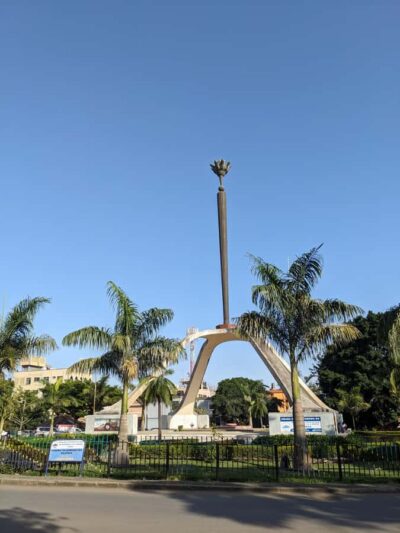
The Askari Monument sits in the middle of a roundabout on Samora Avenue. The bronze soldier holds a rifle with its bayonet pointed down, a pose meant to suggest peace. The monument honors African soldiers who fought with the British during World War I.
It was unveiled in 1927 and carries an inscription in English and Swahili. The work was designed by British sculptor James Alexander Stevenson. Those details matter because the monument is not only a war memorial. It also raises questions about colonial power, African military service, and how public memory is presented.
The visit is a brief exterior stop. You will not need a long time here, but you should give the guide room to explain the monument instead of treating it as a quick photograph. Its position in the center of a roundabout also means you should follow the guide’s directions and remain aware of traffic.
Same country, a completely different kind of safari:
- Dar es Salaam: City Tour
★ 4.7 · 159 reviews - Dar es Salaam City Center: Walking Tour
★ 4.8 · 102 reviews - Dar es Salaam City Tour – Everyday
★ 5.0 · 64 reviews - MIKUMI NATIONAL PARK – 3 Days
★ 4.5 · 63 reviews
Two churches, two quiet changes of pace
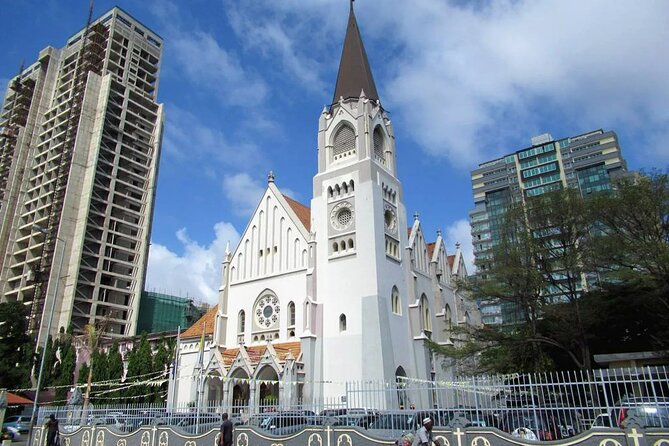
St. Joseph’s Cathedral was built by German missionaries between 1897 and 1902. Its Gothic design includes tall spires, arched windows, stained glass, and religious artwork. Located on Sokoine Drive near the harbor, it remains an active place of worship and a significant Catholic building in the city.
The scheduled visit lasts about 30 minutes, with admission included. The interior offers a break from the traffic outside, but visitors should remember that this is a working church. Modest clothing and a respectful tone are sensible.
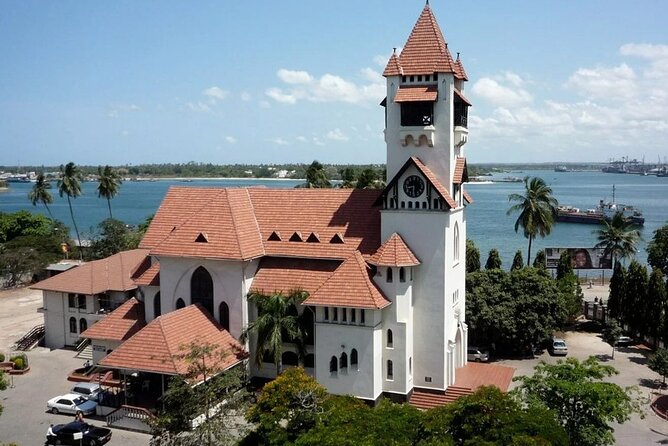
The Azania Front Lutheran Church provides a second look at German-era religious architecture. Built in 1898, it is a red-brick Gothic church with a tall spire near Kivukoni Front. Its name comes from Azania, an ancient Greek term for the East African coast.
The church is useful for photography and quiet reflection, though the tour gives you only around 30 minutes. Seeing both churches allows you to compare their designs and religious traditions while also considering the colonial period that shaped parts of central Dar es Salaam. The pairing is more useful than visiting one church alone.
Entering the crowded lanes of Kariakoo Market
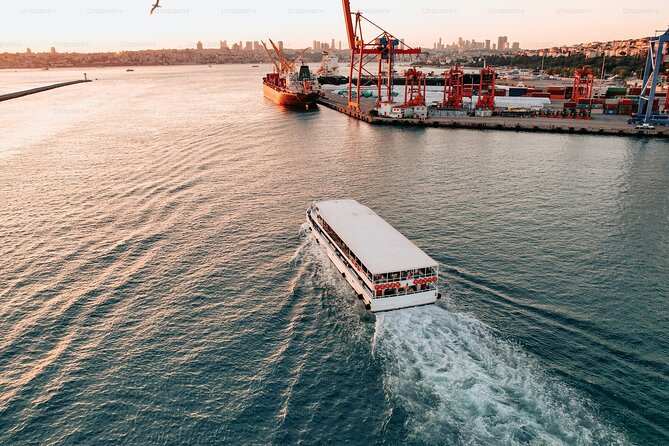
Kariakoo Market is the day’s most intense stop. It is a major commercial center where locals shop for fresh produce, spices, seafood, clothing, electronics, and household goods. The market’s name comes from the World War I-era Carrier Corps, known locally as Kariakoo.
Expect narrow passages, busy stalls, strong smells, and constant movement. This is not a polished shopping center. It is a place of trade, and the value lies in seeing how people buy and sell ordinary goods in the city.
You might find spices, food, clothing, or small items to take home, but this is not the best place to wander alone while trying to keep up with a tight schedule. Stay with your guide, keep your belongings secure, and ask before photographing people or merchandise.
The tour description does not give a fixed time for Kariakoo Market. That means the actual visit may depend on traffic and the pace of the day. I would treat it as a cultural stop first and a shopping stop second. The market can be overwhelming, but that intensity is precisely what makes it a useful window into daily life.
Shopping for carved art at Mwenge Woodcarvers Market
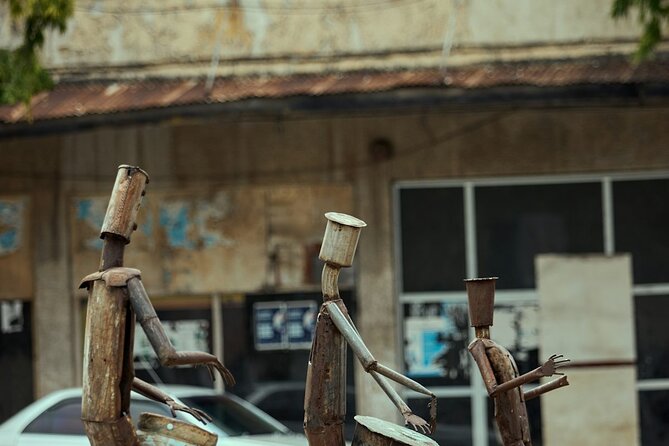
Mwenge Woodcarvers Market offers a calmer form of commerce. Artisans sell wooden sculptures, masks, carvings, household decorations, and other handmade pieces that reflect Tanzanian artistic traditions.
You have about 40 minutes here, and admission is free. Bargaining is expected, so the conversation is part of the shopping experience. The guide can help explain the process, but you should still decide what an item is worth to you before negotiating.
This is a good place to buy a physical reminder of the day, especially if you prefer handmade work to mass-produced souvenirs. Take your time examining the carving, ask about the material and purpose, and remember that a low price is not always the best measure of value. Buying directly in an artisan market supports local makers, though the tour does not guarantee that every item is made by the person selling it.
The market also gives the day a practical finish. After seeing museum objects and traditional structures, you can consider how cultural forms are used in present-day art and trade.
A quiet pause at Dar es Salaam War Cemetery
The Dar es Salaam War Cemetery in Makumbusho offers a sharp change in mood. Maintained by the Commonwealth War Graves Commission, it contains more than 1,500 graves of Commonwealth servicemen, including British, South African, and East African troops, as well as some non-Commonwealth soldiers.
The grounds are carefully maintained, with rows of white headstones and a peaceful atmosphere. The cemetery honors people who died during World War II and gives the city’s wartime story a solemn setting.
The visit lasts about 30 minutes and admission is free. This is not a stop for loud conversation or rushed sightseeing. Allow the guide to provide context, then take a quiet moment to look around. The cemetery may appeal most to people interested in military history and remembrance, but its calm setting can also provide welcome relief after Kariakoo Market.
Walking through Tanzania at the Village Museum
The Village Museum is an open-air cultural center in Kijitonyama, about 10 kilometers from the city center. It presents replicas of traditional homes from more than 20 Tanzanian ethnic groups.
The examples include Chagga, Maasai, Sukuma, and Zaramo architecture. Each structure uses traditional materials and building methods to show how homes were designed for different communities and ways of life. You are not simply looking at isolated objects in glass cases. You can see the shape, scale, and practical layout of a dwelling.
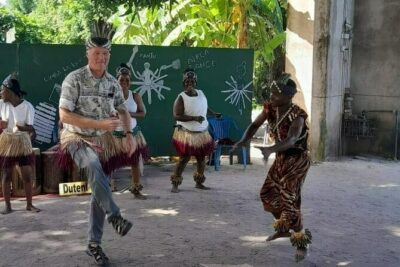
The museum also hosts traditional dancing, music, and craft demonstrations. The supplied schedule allows about 40 minutes, with admission included. That is enough for an overview, but cultural performances may not always fit neatly into a short visit. Ask your guide what is planned on the day.
This stop is especially useful after the National Museum. The museum downtown presents objects and history, while the Village Museum gives those traditions a physical setting. It also helps prevent a common problem with short city tours, where culture is reduced to a few souvenirs and photographs.
What the $180 price means
At $180 per person, this is not a low-cost city outing. The price is easier to assess once you consider what is included: private transportation, an air-conditioned vehicle, a professional guide, pickup, lunch, soda or pop, alcoholic beverages, bottled water, entry fees, and taxes.
The private format is the main value. Your group has its own guide and vehicle, so you are not tied to strangers’ interests or forced to wait for a large group. That can make a difference at Kariakoo Market, the churches, and the museums, where questions and pacing matter.
The tour also lasts nine to ten hours. If you paid separately for transport, food, guide services, and several entrance fees, the total would rise. Still, the price makes most sense for a small group splitting the cost or for a visitor who wants one organized day rather than arranging several separate visits.
The tradeoff is that you cover a lot of ground. You will see many places, but several visits are short. If you prefer to spend two hours in one museum or shop slowly, this schedule may feel hurried. If you have only one day in Dar es Salaam, the range of stops makes the price more defensible.
Who will get the most from this tour
I would recommend this tour to a first-time visitor who wants a broad introduction to Dar es Salaam. It suits people who enjoy markets, architecture, museums, local crafts, and historical explanation in equal measure.
It is also a practical choice for families, couples, and small groups who value a private vehicle and a flexible guide. Most people can participate, and service animals are allowed. The tour is near public transportation, but the package is built around private transport.
You should think twice if you dislike crowded markets, long days, or frequent changes of scene. Kariakoo can be tiring, and the nine to ten-hour length leaves little room for a slow, unplanned afternoon. This is a city sampler, not a relaxed single-neighborhood walk.
The tour has received five positive ratings, with particular praise for the guides’ warmth, helpfulness, and knowledge of the city. The food and overall organization also receive strong approval. Those qualities matter because a day with this many stops depends on a guide and driver who can keep the group comfortable and moving.
Practical details before you book
The start time is 8:30 a.m., and pickup is offered. Confirmation is provided at booking, and the activity is private, with only your group participating.
Wear comfortable clothing and shoes suitable for walking through markets and museum grounds. Bring patience for traffic and crowded spaces. At churches and the cemetery, behave respectfully. At Kariakoo and Mwenge, ask before taking photographs and let the guide handle local etiquette if you are unsure.
The tour includes alcoholic beverages, but the information does not specify when or where they are served. If you do not drink, tell the operator. Free cancellation is available if you cancel at least 24 hours before the start time. Cancellations or changes made less than 24 hours ahead are not accepted for a refund.
Should you book the Dar es Salaam private city tour?
Book it if you want one well-packed day covering Dar es Salaam’s markets, food culture, museums, churches, memorials, and traditional architecture. The private vehicle and guide are the strongest reasons to choose it, while the included meal, drinks, water, entrance fees, and taxes make the $180 price easier to justify.
Skip it if you want an unhurried day or already know the city well. For a first visit, though, this tour gives you useful context quickly, from the fish market and Kariakoo’s daily trade to the National Museum and Village Museum. Ask about the guide, confirm the lunch plan, and prepare for a long day. If you do that, you will be ready for Dar es Salaam’s noise, variety, and warm human scale.
FAQ
What is included in the tour price?
The tour includes bottled water, lunch, soda or pop, alcoholic beverages, an air-conditioned vehicle, private transportation, all fees and taxes, and a professional guide.
How long does the Dar es Salaam city tour last?
The tour lasts approximately nine to ten hours and begins at 8:30 a.m.
Is this a private tour?
Yes. Only your group participates, with private transportation and a professional guide.
Does the tour offer pickup?
Yes, pickup is offered. Confirmation is received at the time of booking.
Which museums are included?
The tour includes the National Museum of Tanzania and the Village Museum. Admission to both is included.
Can I cancel for a full refund?
Yes. You can cancel for a full refund if you cancel at least 24 hours before the experience start time. Cancellations or changes made less than 24 hours before the start time are not accepted for a refund.
Just added around Dar es Salaam
- Zanzibar: 3 Days to Mikumi and Chizua Waterfalls★ 3.5 · 5 reviews
- 3 Days Explore Selous Game Reserve + Boat safari + bushman walking★ 5.0 · 5 reviews
- 2 Day Wildlife Experience and Masai Culture Mikumi Park★ 5.0 · 5 reviews
- Explore Dar es Salaam: Full-Day Private City Tour★ 5.0 · 18 reviews
- Sunrise Beach Walk with Picnic Breakfast Activity★ 5.0 · 3 reviews
- 3 Days Safari to Nyerere National Park (Selous Game Reserve)★ 5.0 · 8 reviews
- 5 Days Selous/Nyerere & Mikumi NP Game drive, Maasai and Walking★ 5.0 · 13 reviews
- Mikumi Np Mid Range Tour 3 Days★ 5.0 · 3 reviews
City Tours, compared.
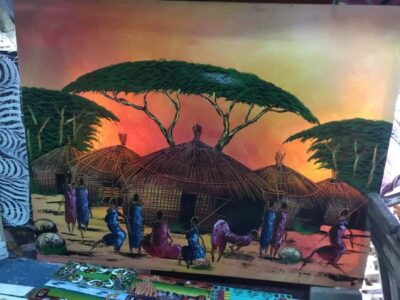

Arusha Guided Walking City Tour, Culture, Lifestyle & History
Read our review →
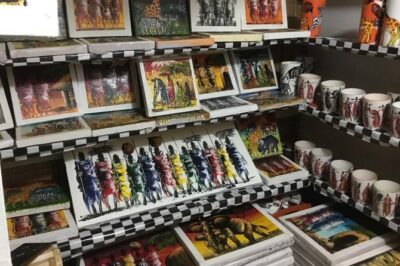
The Best/Top Rated Cultural City Tour in Dar es Salaam
Read our review →
Browse the lists this tour appears in