
Reviewed · DAR ES SALAAM TOURS
Dar es salaam Reality Tour
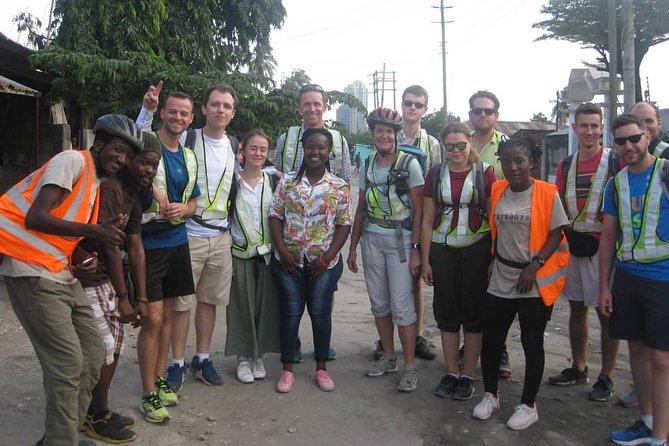
The most interesting part of the Dar es Salaam Reality Tour is its focus on ordinary working life rather than headline attractions. From the Village Museum, you move through the city by bicycle or bajaj, meeting people who earn a living through coffee, food, traditional medicine, and fabric.
I like that the tour keeps to a half-day schedule, leaving you time for other plans. I also like the small-scale route, which should feel more personal than a large sightseeing group. The main caution is reliability: the overall rating is 4.3 from 16 ratings, but one serious complaint describes a missed pickup and difficulty reaching the operator.
Key points to know before booking
- Coffee with a working local seller: You visit a coffee maker who also sells coffee as an income source, giving the stop a direct link to daily work.
- Swahili breakfast preparation: The food stop focuses on how a local breakfast is made, but food is not included in the price.
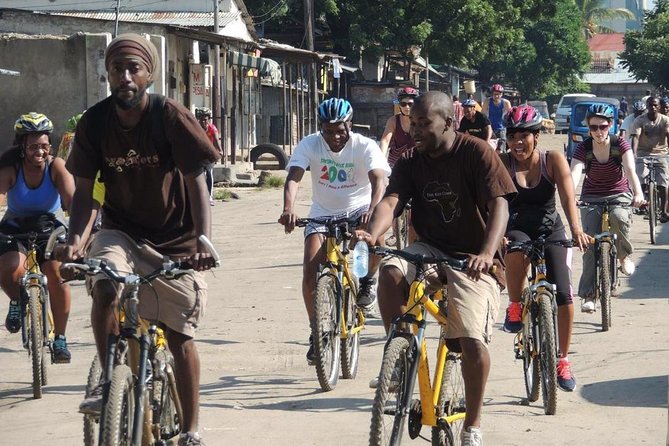
- Bicycle or bajaj transport: Your ride is provided, so you do not need to arrange local transport for the tour itself.
- Five hours from 8:00 a.m.: The tour ends back at the Village Museum, leaving much of the afternoon free.
- Small-group potential: The maximum group size is 30 people, though the actual number may be lower.
- Alcohol information is unclear: Drinks are listed as included in one place, while another section says alcohol is not included. Confirm before you go.
Meeting Dar es Salaam at the Village Museum
The tour begins at 8:00 a.m. at Kijiji cha Makumbusho, also called the Village Museum, in the Mikocheni area of Dar es Salaam. You return to this same meeting point at the end, which makes planning before and after the activity fairly simple.
Starting at the Village Museum gives the tour a useful setting. You are not being collected for a long drive to a distant attraction. Instead, the meeting point places you near the city and its working neighborhoods, where the tour’s main subject is everyday life.
You should arrive with enough time to find the exact entrance and meet the operator. The meeting address includes the plus code 66FW+WG8, which can help if your map application handles plus codes. Since one past booking problem involved nobody appearing and no easy way to make contact, I would take a screenshot of the booking confirmation and confirm the meeting details before the 24-hour cancellation deadline.
The activity uses a mobile ticket. Confirmation is sent at the time of booking, and the tour is available through public transportation connections. Service animals are allowed, and most people can participate.
Other Dar es Salaam days people book alongside this one:
- Dar es Salaam: City Tour
★ 4.7 · 159 reviews - Dar es Salaam City Center: Walking Tour
★ 4.8 · 102 reviews - Dar es Salaam City Tour – Everyday
★ 5.0 · 64 reviews
Seeing the city by bicycle or bajaj
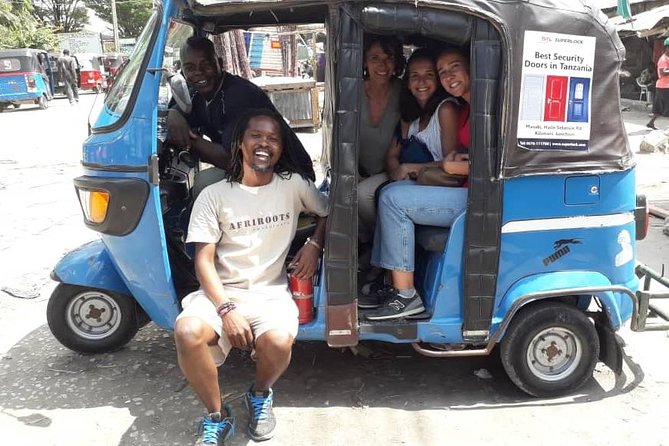
The choice of bicycle or bajaj gives the tour a more local feel than a standard air-conditioned vehicle. A bajaj, commonly used for short trips in Tanzania, lets you sit close to the streets and move between stops without arranging taxis yourself. A bicycle offers a slower view of the surrounding area and may make short transfers feel more active.
The details do not say whether every person chooses between the two options or whether the operator assigns the transport. If you have a strong preference, ask before the morning begins. That question matters if you are not comfortable cycling or would rather sit during the five-hour outing.
I would also ask about the route length and road conditions. Those details are not provided, so you should not assume this is a gentle sightseeing ride. The tour is built around local businesses and workers, not around a fixed list of monuments. That means the exact pace may depend on the day, the locations visited, and how long each meeting takes.
The transport is included, which improves the value of the $51.29 price. You are paying for a guided city experience as well as the vehicle or bicycle, rather than adding several short fares during the morning.
Meeting a coffee maker who sells his own coffee
The first listed stop is a coffee maker who also sells coffee as a way to earn income. This is a useful distinction. You are not simply tasting a drink in a café designed for sightseeing. You are seeing coffee connected to one person’s work and small business.
This stop may be especially worthwhile if you want to understand how income is made at a local level. A cup of coffee becomes a starting point for conversation about production, selling, and the practical decisions behind a modest enterprise.
The available information does not say whether a tasting is included, how the coffee is prepared, or whether you can buy coffee to take away. Do not assume that the drink itself is part of the tour cost. Ask your guide what is included at this stop and bring a little extra money if you want to make a purchase.
I like the way this visit sets the tone for the rest of the morning. The tour is not asking you to look at Dar es Salaam from a distance. It directs your attention to people working in specific trades, with the chance to see how a product and a livelihood connect.
Learning how a Swahili breakfast is made
Next, the route visits a place where Swahili breakfast is prepared. The value here is the process. You get to see how a traditional morning meal is made instead of simply sitting down at a restaurant with a finished plate.
That distinction matters for anyone who wants more than a quick food stop. Preparation can show the tools, methods, and timing behind a familiar local meal. It also gives you a chance to ask questions about what people eat at the start of the day.
Food is not included, so budget separately if you want to eat. The details do not specify the menu, portion size, or price, so I would ask what is available before ordering. This is one of the tour’s clearest practical drawbacks: the itinerary brings you to food preparation, but the advertised price does not cover the meal.
If breakfast is important to you, eat lightly before the 8:00 a.m. start or plan to buy something at the stop. If you only want to watch and learn, you can treat the visit as a cultural stop without adding a meal.
Same country, a completely different kind of safari:
- MIKUMI NATIONAL PARK – 3 Days
★ 4.5 · 63 reviews - 2 nights 3 days safari to mikumi national park
★ 5.0 · 62 reviews - 2 Days 1 Night Mikumi National Park from Dar es salaam
★ 5.0 · 60 reviews - The Best/Top Rated Cultural City Tour in Dar es Salaam
★ 5.0 · 57 reviews
Visiting a traditional medicine place
The traditional medicine visit adds another view of local work. It is not presented as a medical consultation or treatment, so you should approach it as an opportunity to learn about a local practice and the people connected with it.
The information does not identify the practitioner, list the remedies, or explain whether demonstrations are part of the visit. Your experience may therefore depend on the guide’s explanation and what is available that day.
I would keep an open but careful mind here. You can be interested in the plants, methods, and cultural role of traditional medicine without treating anything offered as a substitute for professional medical care. If you have allergies or health concerns, do not consume or apply anything unless you fully understand what it is and have chosen to do so.
This stop also helps explain why a reality tour can feel different from a regular city tour. It brings you toward work and services used in local communities, not just places selected for their appearance.
Browsing a khanga shop
The final listed type of stop is a khanga shop. Khanga, a colorful printed cloth worn and used across East Africa, is both clothing and a form of visual expression. The tour description only confirms a visit to the shop, so you should not expect a fashion demonstration or a guaranteed purchase opportunity.
Still, a fabric shop can be a practical place to see an item that has daily use and cultural meaning. You may find printed designs, sayings, and cloth intended for clothing or household use. Since the exact stock changes, the visit is likely to be more useful for browsing and asking questions than for finding one specific pattern.
Ask whether photography is permitted before taking pictures. If you want to buy something, confirm the price and payment method directly with the seller. Shopping is not listed as included, and the tour price covers the activity rather than merchandise.
For many people, this will be one of the easiest stops to connect with after returning home. A piece of fabric can be a useful souvenir, but you should buy only what you genuinely want, not because the visit feels like a sales pitch.
What the $51.29 price really covers
At $51.29 per person, the tour sits above the cost of simply walking around a neighborhood or taking a few short bajaj rides. Its value depends on how much you want help finding local businesses and making sense of what you see.
The price includes the bicycle or bajaj and drinks according to the included features. It does not include food. There is a conflict about alcohol: the highlights say drinks including alcohol are included, while the exclusions specifically say alcohol is not included. I would treat alcohol as excluded until Afri Roots Adventures confirms otherwise.
The price makes more sense if you value access and structure. You are getting a five-hour route, transport between stops, and visits arranged around local workers. Without a guide, you might pass a coffee seller, breakfast kitchen, medicine shop, or khanga store without knowing whether it is appropriate to stop or how to begin a conversation.
The value is weaker if you mainly want major sights, monuments, or a food tour with meals included. This is a people-and-work tour. Its success depends on the quality of the guide, the openness of the businesses visited, and the day’s arrangements.
The tour averages bookings about 23 days ahead, so advance planning is sensible. That does not guarantee a particular guide or a specific group size. The maximum is 30 people, which is large enough to affect conversation if the tour fills completely.
Timing, group size, and the reliability question
The 8:00 a.m. start is useful in a city where you want to keep the afternoon free. You should finish after roughly five hours and return to the Village Museum, giving you time to arrange lunch, rest, or book another activity.
The early start also fits the subject of the tour. Coffee sellers, breakfast makers, and other workers are likely to be most active in the morning. The schedule is not simply a convenient short slot. It matches the working day described by the itinerary.
The maximum group size of 30 is the point to watch. A group of that size can make a small shop feel crowded and can limit the time you get to speak with a local worker. The description calls this a personal experience, but the group cap leaves open the possibility of a fairly sizeable outing. Ask how many people are booked if close conversation is important to you.
The one serious operational warning concerns the missed booking. A 1-star rating reports that the operator did not show up after a booking made 24 hours in advance, and that the customer was still waiting for a refund. One incident does not prove a pattern, especially with only 16 ratings, but it is enough reason to confirm the pickup directly and avoid scheduling an important connection immediately afterward.
Afri Roots Adventures is the provider. Keep the confirmation and contact details on your phone, and check the meeting point before leaving your accommodation. Free cancellation is available up to 24 hours before the start time. Within 24 hours, cancellation and changes are not accepted, and poor weather may lead to a new date or a full refund.
Who will enjoy this five-hour outing
I would recommend this tour most to you if you want to see how people earn a living in Dar es Salaam. The coffee, breakfast, medicine, and khanga stops cover different kinds of work and give the morning a clear theme.
It also suits you if you have limited time. Five hours is long enough for several stops but short enough to leave room for other plans. The return to the original meeting point is helpful if you do not want to solve a new transport arrangement at the end.
The tour may suit solo visitors and couples who want a guided introduction to local life. It is also open to most participants and allows service animals. The bicycle option may appeal to active visitors, while the bajaj option is better if you want to conserve energy or simply observe from the seat.
I would look elsewhere if you want a carefully timed culinary tour with food included, a major-sights city tour, or a fully dependable last-minute booking. The absence of included food and the unclear alcohol information require a little planning.
My call: book it with two checks first
I would book the Dar es Salaam Reality Tour if your priority is contact with small businesses and working people, not a checklist of famous sights. The half-day format, included local transport, and unusual range of stops give you a useful introduction to the city at a reasonable price.
Before paying, confirm two things with Afri Roots Adventures: that your booking and 8:00 a.m. pickup are active, and whether alcohol is included. Also ask whether you will use a bicycle or bajaj and how many people are booked.
If those details are clear, this can be a good first morning in Dar es Salaam. You will see coffee, breakfast preparation, traditional medicine, and khanga trading through the people who work with them. That is a more grounded way to meet the city than simply passing through its streets.
FAQ
Where does the Dar es Salaam Reality Tour begin?
It begins at Kijiji cha Makumbusho, also called the Village Museum, in Mikocheni, Dar es Salaam. The listed plus code is 66FW+WG8.
What time does the tour start?
The start time is 8:00 a.m. The activity lasts approximately five hours.
Where does the tour end?
The tour ends back at the Village Museum meeting point.
What will I visit during the tour?
You will visit a coffee maker who sells coffee, a place where Swahili breakfast is prepared, a traditional medicine place, and a khanga shop.
Is transportation included?
Yes. A bicycle or bajaj is included as part of the experience.
Is food or alcohol included?
Food is not included. The information about alcohol is conflicting: one section lists drinks including alcohol as included, while another says alcohol is not included. Confirm this with Afri Roots Adventures before booking.
Can I cancel for a full refund?
Yes, if you cancel at least 24 hours before the scheduled start time. Cancellations or changes made within 24 hours are not refunded or accepted. If poor weather causes the operator to cancel, you will be offered another date or a full refund.
Just added around Dar es Salaam
- Zanzibar: 3 Days to Mikumi and Chizua Waterfalls★ 3.5 · 5 reviews
- 3 Days Explore Selous Game Reserve + Boat safari + bushman walking★ 5.0 · 5 reviews
- 2 Day Wildlife Experience and Masai Culture Mikumi Park★ 5.0 · 5 reviews
- Explore Dar es Salaam: Full-Day Private City Tour★ 5.0 · 18 reviews
- Sunrise Beach Walk with Picnic Breakfast Activity★ 5.0 · 3 reviews
- 3 Days Safari to Nyerere National Park (Selous Game Reserve)★ 5.0 · 8 reviews
- 5 Days Selous/Nyerere & Mikumi NP Game drive, Maasai and Walking★ 5.0 · 13 reviews
- Mikumi Np Mid Range Tour 3 Days★ 5.0 · 3 reviews
Dar es Salaam Tours, compared.

2 Days 1 Night Mikumi National Park from Dar es salaam
Read our review →
The Best/Top Rated Cultural City Tour in Dar es Salaam
Read our review →
Private Full-Day Trip to Mikumi National Park from Dar es Salaam
Read our review →Browse the lists this tour appears in