
Reviewed · MARANGU ROUTE CLIMBS
5 Days Marangu Route Kilimanjaro Trekking
The Marangu Route gives you Kilimanjaro in its most familiar form: rainforest on day one, open moorland above the trees, a stark high-altitude saddle, and a midnight push to Uhuru Peak. It is the only main route on the mountain with sleeping huts, which explains its nicknames, the Tourist Route and the Coca-Cola Route.
I like the simple progression from forest to summit, and I like that this is a private trek, so your group does not have to match another party’s pace. The included guide, porters, meals, park fees, rescue fees, and mountain accommodation also make the $1,800.16 price easier to understand.
The main concern is the five-day schedule. You gain a shorter, generally less expensive climb, but you get less time to adjust to altitude than on longer routes. The summit day is also a serious 12 to 15 hours, with about 22 kilometers of walking.
Key points before you commit
- Sleeping huts instead of tent camping: Marangu is the only route in this program with hut accommodation, although the package also lists camping equipment, so confirm exactly what is provided.
- A midnight summit attempt: You begin the final ascent around midnight and aim for Gillman’s Point at 5,681 meters before continuing to Uhuru Peak at 5,895 meters.
- A private group: Only your party participates, which can make pacing and communication easier.
- A real price package: Porters, four dinners, four breakfasts, five lunches, park charges, rescue fees, taxes, and accommodation are included.
- A demanding five-day plan: Day four can last up to 15 hours, followed by another long descent before the day is done.
- Helpful guide support: Walter is specifically named as a patient guide who supplied suitable gear and clothing when needed.
Why Marangu feels different from other Kilimanjaro routes
Marangu follows the same broad challenge as any Kilimanjaro climb, but the sleeping arrangements change the feel of the trip. You stay in huts rather than tents, so you do not need to sleep on the ground or carry a full camp setup yourself.
That comfort comes with a tradeoff. The route is popular, and its nickname, Tourist Route, is not an insult so much as a warning that you should not expect solitude. The path is well established, and the huts make the climb more accessible, but the mountain experience can feel less remote than on routes that use tents.
The Coca-Cola nickname comes from the hut system and the availability of drinks along the route. Do not read that as a promise of a resort-style mountain holiday. The higher you climb, the colder, thinner, and more demanding the air becomes. A warm hut is welcome, but it does not make altitude sickness disappear.
The private format is a useful feature. Your group travels with its own professional guide and porters, rather than joining a large mixed party. That matters on the long summit day, when one person may need a slower pace or more encouragement. It also makes the experience easier to shape around your group, although the published schedule remains fixed at five days.
More Kilimanjaro Climbs in Arusha
- 8-Day Small-group Lemosho Kilimanjaro Summit Trekking
★ 5.0 · 186 reviews - 7-Day Machame Kilimanjaro Summit Tour from Arusha
★ 5.0 · 125 reviews - 4 days Best experience Kilimanjaro Hike, Serengeti &Ngorongoro
★ 5.0 · 54 reviews
Day one: rainforest, primates, and Maundi Crater
After breakfast, you are collected from your lodge in Moshi and driven to the Marangu Gate. The park paperwork comes first. Once the formalities are complete, you start along a trail through dense tropical rainforest.
This opening day covers 8.3 kilometers and takes about five hours. It is not the highest or longest day, but it introduces the steady uphill rhythm that will define the trek. The forest is the most distinctive part of the route at this point, with thick vegetation and a chance to spot primates.
Your destination is Mandara Hut. After reaching the hut, you can rest before taking an optional walk to Maundi Crater. That short outing is worth keeping in mind because it gives you a view toward the Kenyan interior, a change from the enclosed forest around the first part of the day.
The first day is a good test of your boots, clothing, and pack setup. If anything rubs or feels awkward, tell your guide early. Walter, one of the guides associated with this experience, is described as patient and attentive to comfort, and guide support is most useful when you speak up before a small problem becomes a large one.
Day two: from timberline to Horombo Hut
Day two is longer, covering 12.5 kilometers in about nine hours. You leave Mandara Hut after an early breakfast and soon move out of the rainforest toward the timberline.
The vegetation changes as you enter the heath and moor zone. This is one of the satisfying parts of the climb because the scenery changes in a clear, visible way. The dense green forest gives way to more open ground, with wider views and a greater sense of altitude.
Horombo Hut appears after roughly four to six hours of walking from Mandara. At 3,700 meters, it is high enough for altitude to become a real concern. The hut has views toward Mawenzi, Kibo, and the broad plain of the Masai Steppe.
You should treat this as more than a scenic overnight stop. Eat well, drink as directed by your guide, and keep your pace controlled. The goal is not to prove how fast you can walk. It is to arrive with enough energy for the higher days ahead.
Day three: the saddle and Kibo Hut
Day three covers 9.5 kilometers and takes around seven hours. The trail is well built, but the day feels tougher because you are gaining height and leaving most vegetation behind.
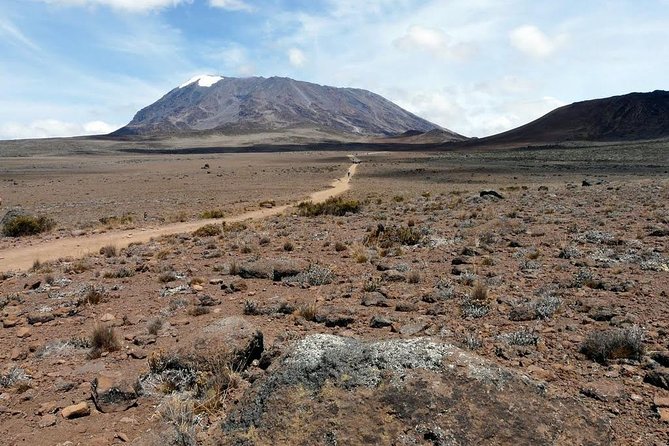
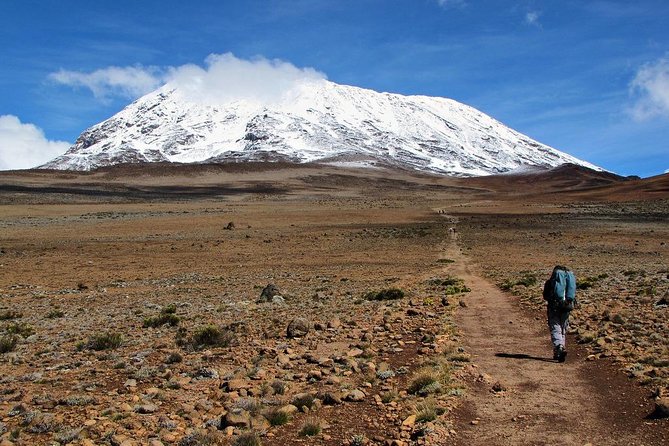
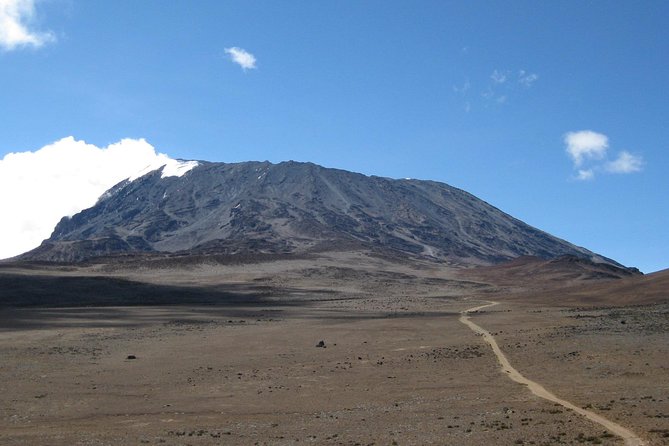
You pass the Last Water point, then continue across the saddle, a nearly vegetation-free plateau connecting Kibo and Mawenzi. This wide, exposed section is one of the most memorable parts of the route. It also makes the mountain feel much more severe than it did in the forest.
Kibo Hut, at about 4,700 meters, is normally reached after five to six hours. From here, the schedule becomes very simple: eat an early evening meal, prepare your clothing and headlamp, and try to sleep. Your night will be short.
This is the day when practical packing matters most. The included package does not include a sleeping bag, but one is available to rent. Climbing gear is also available for rent. Bath towels are not included, and personal items remain your responsibility, so check every rental and personal item before leaving Moshi.
More Marangu Route Climbs in Arusha
- Private Full Day Hiking Experience to Marangu Route
★ 5.0 · 61 reviews - From Arusha/Moshi: Kilimanjaro Hike Marangu Route Day Trip
★ 4.5 · 54 reviews - Mount Kilimanjaro Day Hike Through Marangu Route to Mandara Hut
★ 5.0 · 37 reviews - Marangu waterfall & Coffee making Cultural Tour | BURIGI CHATO SAFARIS CO LTD
★ 5.0 · 12 reviews
Day four: the 5,895-meter summit push
Summit day is the heart of the climb and the part that demands the clearest expectations. You begin around midnight for a slow ascent in darkness. The full day can last 12 to 15 hours and covers about 22 kilometers.
The route passes Hans Meyer Cave at 5,220 meters as it rises toward the crater rim. The pace is deliberately slow. Cold, darkness, steep ground, and thin air all work against you, so your guide’s job is not just navigation. A patient guide can help you maintain a steady rhythm and recognize when you need to slow down.
Around sunrise, you aim to reach Gillman’s Point at 5,681 meters. This is on the crater rim, not the final summit. From there, you continue for another one to two hours toward Uhuru Peak, the highest point on Kilimanjaro, at 5,895 meters.
Reaching Uhuru Peak is a major physical achievement, but the summit is only the midpoint of the day. You return to Kibo Hut for a warm meal and a one to two-hour rest, then continue down to Horombo Hut. That second descent is easy to underestimate. Your legs have already worked hard, and the walk is not finished when you leave the summit.
The schedule makes this a demanding option for anyone worried about altitude. A longer climb would usually give you more adjustment time, but this five-day program does not include an extra acclimatization day. You should book it only if you understand that the summit attempt is strenuous and that reaching the top cannot be guaranteed by paying the tour price.
Day five: back through the forest to Moshi
The final day covers 20.8 kilometers and takes about eight hours. You descend from Horombo through the heath and moor zone to Mandara Hut, where lunch is provided.
After Mandara, the trail returns to the tropical rainforest. This change feels especially welcome after the cold, open conditions above the trees. You continue to the Marangu Gate at 1,860 meters, where the mountain portion ends after roughly six hours of trekking, according to the schedule.
A short transfer takes you back to your hotel in Moshi. The listed package does not include accommodation before or after the trek, so you need to arrange those nights separately. It does include accommodation during the mountain program, plus the meals specified for the climb.
The return is a good time to check your final transport plan. The activity begins and ends at the meeting point, with Arusha given as the start location, while the day-by-day plan describes pickup from a lodge in Moshi and return to a Moshi hotel. Ask the operator to confirm the exact pickup address and transfer arrangements before you leave.
What the $1,800.16 price actually covers
At $1,800.16 per person, this is not a bare entry ticket or a simple guided walk. The price includes a professional driver and guide, porterage, all taxes and VAT, parking charges, rescue fees, accommodation, camping equipment, and cooking equipment.
The food allowance is also substantial on paper: four dinners, four breakfasts, and five lunches. That matters because meals on a five-day mountain climb are part of your energy plan, not an optional extra. The food has been described as plentiful and adaptable during the climb, which is useful if you need meals adjusted to suit the demands of the trek.
Still, the package needs a few points of clarification. The route description centers on Mandara, Horombo, and Kibo Huts, while the inclusions list tents, a mess tent, mattresses, and cooking equipment. Ask if the equipment is supplied as backup, used for staff, or part of an alternate arrangement.
You must pay separately for international flights, visas, travel insurance, personal purchases, souvenirs, sleeping bags, rented climbing gear, bath towels, and accommodation before and after the trek. Tips are also not included. Government increases in park fees or taxes may be added if imposed after booking.
The price can be good value if the included support is delivered as described. Porters, rescue coverage, food, park charges, and mountain accommodation are costly elements to arrange independently. I would compare not just the headline figure, but also the operator’s porter policy, equipment rental terms, and exact hut arrangements.
Guide support, equipment, and comfort
The most useful personal detail attached to this experience is the account of Walter, who is described as patient and careful about comfort. He also provided suitable clothing and gear when a climber arrived without everything needed.
That is especially relevant if you are making a last-minute booking. It does not mean you should arrive unprepared, but it does suggest that the operator may be able to help fill equipment gaps. Confirm availability and rental costs in advance, since climbing gear and sleeping bags are not included in the price.
Food is another strong part of the package. You receive meals throughout the five mountain days, and the food is described as good and adapted during the trek. Even so, bring any personal snacks or dietary items you need, because the provided information does not list specific menus or dietary guarantees.
The activity is private, and most people can participate according to the supplied information. That should not be confused with easy. The summit reaches 5,895 meters, and day four can last up to 15 hours. You need enough fitness for repeated uphill walking, a long descent, and a short night at high altitude.
The start time is listed as 1:30 am, while day one describes pickup after breakfast. Those details do not fully match. Confirm the exact starting time with Mafie Adventures, especially if you are staying in Arusha rather than Moshi.
Who should choose this five-day climb
I would consider this route a good fit for someone who wants a private Kilimanjaro climb with hut accommodation and a clear five-day structure. It also suits people who value included meals, porters, rescue fees, and transfers rather than assembling each service separately.
The route may appeal to you if you like changing scenery. You start among primates and thick rainforest, cross heath and moor, walk the empty saddle between Kibo and Mawenzi, and finish at the crater rim and summit.
I would be cautious if your main goal is the greatest possible chance of reaching the summit. The short schedule gives you fewer days to adjust to altitude, and the summit day combines an overnight ascent with a long return. A longer program may be worth comparing before you pay.
The activity has a published rating of 5 from four posted ratings, with praise focused on organization, responsiveness, food, comfort, and guide support. One named guide, Lucas, is associated with a separate safari experience, not specifically with this climb, so do not assume he will lead your Kilimanjaro group. Walter is the guide name directly connected to the climbing experience.
The booking is non-refundable and cannot be changed for any reason. That is a serious financial point for a high-cost trip, so arrange your flights, insurance, visas, and personal schedule carefully before confirming.
Should you book the Marangu Route?
Book this trek if you want the practical Marangu format: sleeping huts, a private group, porter support, included mountain meals, and a direct route to Uhuru Peak. The $1,800.16 cost has real substance behind it, provided the listed services and hut arrangements are confirmed.
Think twice if you need a relaxed acclimatization plan or dislike long summit days. The five-day schedule is efficient, but day four is hard and the cancellation terms leave little room for a change of heart.
Before paying, ask Mafie Adventures to confirm the exact start time, pickup point, hut versus tent arrangements, rental gear, and any extra park or tax charges. If those answers suit you, this is a straightforward way to attempt Kilimanjaro on the mountain’s most established hut route.
FAQ
Where does the Kilimanjaro trek start?
The activity information gives Arusha, Tanzania as the start location. The daily plan says you are collected from your lodge in Moshi and taken to Marangu Gate, so confirm the exact pickup location before booking.
How long does the trek last?
The trek lasts approximately five days.
Is this a private tour?
Yes. Only your group participates in the activity.
What route does the trek use?
The trek uses the Marangu Route, also known as the Tourist Route and the Coca-Cola Route.
Where do you sleep during the climb?
The route uses sleeping huts at Mandara Hut, Horombo Hut, and Kibo Hut. The package also lists camping equipment, so you should confirm the exact accommodation arrangement with the provider.
Is a sleeping bag included?
No. Sleeping bags are available to rent, but they are not included in the price.
Are climbing fees and rescue fees included?
Yes. Parking fees, rescue fees, taxes and VAT are included. Government increases in taxes or park fees may be charged separately.
Are meals included?
Yes. The package includes four dinners, four breakfasts, and five lunches.
Can the booking be canceled or changed?
No. The experience is non-refundable and cannot be changed for any reason.
More 5-Day Experiences in Arusha
- 5 Days Group Camping Safari
★ 5.0 · 730 reviews - 5-Day Highlights mid-Range Crater, Serengeti, Tarangire
★ 5.0 · 296 reviews - 5 Days Camping Tarangire, Serengeti & Ngorongoro crater & Visiting Maasai
★ 5.0 · 229 reviews - Tanzania Simba Safari – 5 Days
★ 5.0 · 217 reviews
More Hiking & Trekking in Arusha
- Mountain Kilimanjaro Day Hike
★ 5.0 · 102 reviews - 4 Days Mount Meru Trekking
★ 5.0 · 55 reviews - 6 Days Serengeti Safari(hiking waterfalls &coffee tour)
★ 5.0 · 48 reviews - Arusha: Napuru Waterfalls Guided Hike
★ 4.8 · 39 reviews
Just added around Arusha
- 8 Days Serengeti Migration safari★ 5.0 · 11 reviews
- tarangire, ngorongoro & lake manyara park 3 days private tour★ 5.0 · 11 reviews
- tarangire & ngorongoro 2 days tour★ 5.0 · 14 reviews
- serengeti, ngorongoro & tarangire 4 days private tour★ 5.0 · 18 reviews
- serengeti & ngorongoro 3 days private tour★ 5.0 · 15 reviews
- Mt. Kilimanjaro: Shira plateau to Cathedral point 3872m Day hike★ 5.0 · 7 reviews
- 2 Days Tanzania Midrange Group Join Safari★ 5.0 · 7 reviews
- climb the KILIMANJARO via Lemosho route★ 5.0 · 4 reviews
Marangu Route Climbs, compared.



Private Full Day Hiking Experience to Marangu Route
Read our review →
From Arusha/Moshi: Kilimanjaro Hike Marangu Route Day Trip
Read our review →
Mount Kilimanjaro Day Hike Through Marangu Route to Mandara Hut
Read our review →

Best Kilimanjaro Adventures 6 Days Marangu Route Experience
Read our review →
Kilimanjaro Private Climbing in 6 Days Marangu Route
Read our review →Browse the lists this tour appears in