
Reviewed · HISTORICAL TOURS
Arusha City Culture and Historical Walking Tour
Arusha’s story comes into focus when you walk it, from the old German military post at Old Boma to the market stalls, murals, crafts, and street life around town. This private tour gives you a useful first look at a city many people pass through on the way to Tanzania’s parks.
I like the mix of history and everyday life, and I like that the route includes both formal museums and places where people shop, work, eat, and meet. The guide, bottled water, hotel transport, and private format make the $35 price especially fair. The main catch is that Old Boma’s $5 entrance fee is extra, and five hours on city streets may feel long if you prefer a quick orientation.
Key points to know before you book
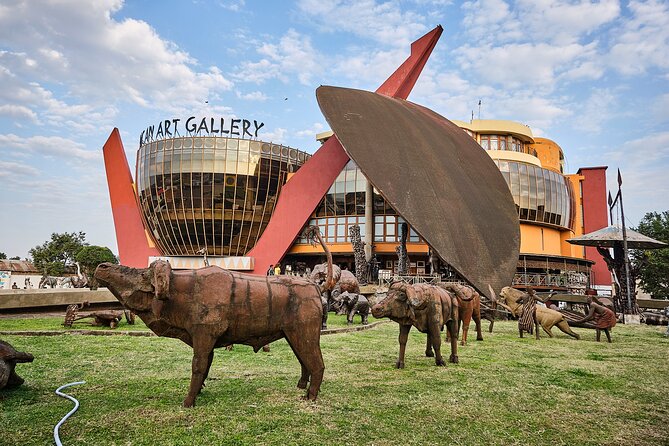
- Six varied stops: You move from colonial history and tanzanite to crafts, markets, neighborhoods, and post-independence politics.
- A private walking experience: Only your group takes part, so the pace and questions can stay personal.
- The Old Boma fee is extra: Add $5 at the museum entrance, despite other listed fees being covered.
- Arusha Chini gives the tour local texture: This is the part focused most directly on ordinary city life, shops, food, and community activity.
- Street food may be part of the fun: Samosas were a highlight for one person, but food and drinks are not included.
- Plan ahead: The tour is often booked well in advance, with an average lead time of 172 days.
Why this walking tour makes sense in Arusha
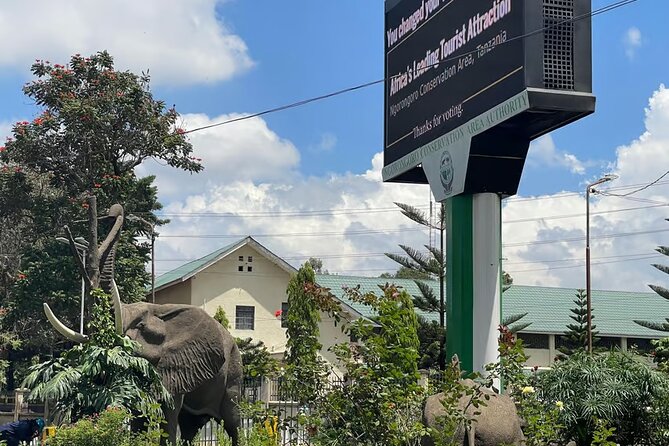
Arusha is often treated as a staging point for safari trips. That is a mistake. The city has its own story, and this tour helps you see it through several different lenses rather than reducing it to a quick photo stop at the Clock Tower.
The route covers colonial rule, Tanzanian independence, the tanzanite trade, Maasai crafts, local shopping, and neighborhood life. That range matters because no single museum can explain Arusha on its own. You get formal exhibits, commercial spaces, and open-air city scenes in one half-day.
I also like the private setup. You are not folded into a large group, and only your own party participates. That should make it easier to ask about local customs, Tanzania’s past, the gemstone trade, or anything you notice along the way.
Hotel pickup and drop-off are included, which is useful if you are staying outside the immediate center or simply want to avoid figuring out transport before a walking tour. Bottled water is included too. Meals, drinks, and personal purchases are not, so carry some money if you want food or souvenirs.
A few more Arusha trips to weigh up
- Arusha Guided Walking City Tour, Culture, Lifestyle & History
★ 5.0 · 150 reviews - Materuni Waterfalls & Coffee making Cultural Tour | BURIGI CHATO SAFARIS LTD
★ 5.0 · 15 reviews - Arusha: City Walking Tour Historic and Modern Highlights
★ 4.5 · 12 reviews
Old Boma Museum: Arusha’s colonial starting point
The tour begins with about 45 minutes at the Old Boma Museum, a former German military outpost. The building itself provides the first lesson: Arusha’s modern story is tied to the colonial period, and this site lets you consider that past in a physical setting rather than only through dates and names.
Inside, exhibits cover local tribes, natural history, and art. Educational programs and workshops are also part of the museum’s work, though your visit is scheduled for a short stop rather than a full day of study.
This is one of the more useful stops for setting context. Later parts of the tour touch on Tanzania’s independence-era political ideas and local culture, and the Old Boma helps you understand why the city has such a layered identity.
There is one cost detail to watch. Entry is not included, and you pay $5 at the entrance desk. The tour includes other listed fees, but this museum charge remains separate. Bring cash or confirm the preferred payment method before you arrive.
The Tanzanite Experience and Tanzania’s famous blue stone
The next stop lasts about 30 minutes and focuses on tanzanite, the rare gemstone associated with Tanzania. The Tanzanite Experience combines a museum and retail space, so you can learn about the stone before seeing jewelry offered for sale.
Displays explain the gemstone’s history, mining process, and wider importance. You can also see how tanzanite is cut and polished. That practical element makes the stop more useful than a simple shop visit because you get some background before considering a purchase.
Certified tanzanite jewelry is available to buy. You do not need to treat this as a shopping obligation. If you are interested in gemstones, ask questions and compare what you see. If you are not shopping, the short museum portion still gives you a better understanding of one of Tanzania’s best-known natural products.
Because the stop is only half an hour, expect an introduction rather than an exhaustive technical lesson. The retail setting may appeal to some people and feel less interesting to others. Either way, it adds a distinctly Tanzanian subject to the morning.
Clock Tower: A quick look at Arusha’s city center
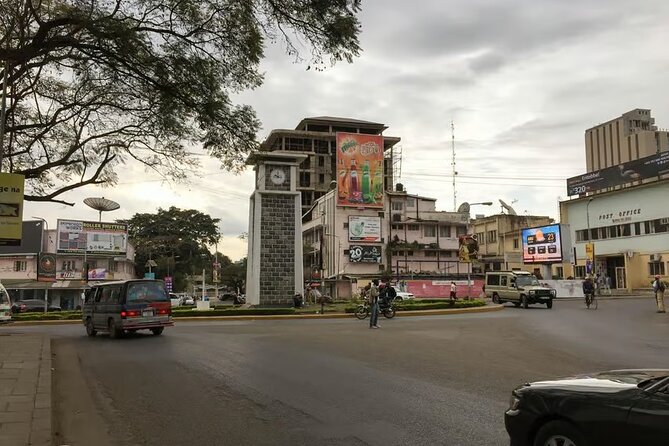
The Clock Tower gets about 15 minutes, and that is enough. It is a central landmark on Boma Road and a common meeting point in the city.
The tower is famously described as the midpoint between Cairo and Cape Town. That claim gives the landmark its symbolic appeal, though the real value of the stop is its location. You are seeing a place connected to daily movement through central Arusha, not an isolated monument behind museum walls.
This is a good moment to pause, take photographs, and watch the city around you. The stop is short, so do not expect a guided architectural study. Think of it as a useful orientation point between longer visits.
Same country, a completely different kind of safari:
- Balloon Safari & Bush Breakfast in Serengeti – Miracle Experience
★ 5.0 · 1,646 reviews - Tanzania Classic – 7 Days
★ 5.0 · 1,151 reviews - 4 Days Group Camping Safari
★ 5.0 · 1,101 reviews - 5 Days Group Camping Safari
★ 5.0 · 730 reviews
Maasai Market: Crafts, bargaining, and souvenir choices
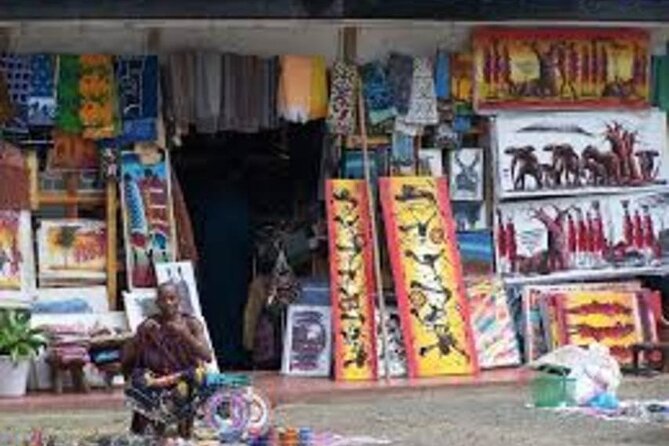
The Maasai Market Curios and Crafts stop lasts about 25 minutes. You will find handmade goods such as beaded jewelry, traditional Maasai pieces, wood carvings, textiles, and other local art.
This is a practical place to buy a souvenir with a clear connection to Tanzania. It also gives you a chance to meet local artisans and see the work behind the objects. The tour specifically includes interaction with local artisans, which adds a human element that a simple shop visit would miss.
Twenty-five minutes is not much time for browsing, comparing prices, and making a purchase. If you already know you want crafts, use the stop efficiently. If you prefer to look without buying, that is fine too. Personal expenses are not included, so purchases are your responsibility.
Use ordinary shopping sense. Examine the item, ask about its materials and workmanship, and decide what feels right for your budget. The tour creates access to the market, but it does not promise a fixed shopping price or a set number of purchases.
One hour in Arusha Chini
Arusha Chini receives the longest stop, at about one hour. This is where the tour moves most clearly from landmarks to local routines.
The area is known for local markets, shops, cultural hubs, and places to find local food. You get time to observe how the city works at street level, with the guide providing context as you move through the neighborhood.
This section may be the most rewarding part for you if you want something beyond museum displays. The supplied details point to local cuisine, friendly encounters, colorful murals, and street food such as samosas. Food is not included, so any tasting is at your own expense, but the stop gives you the chance to consider it.
The one-hour timing also helps the walking tour breathe. You are not rushing from one photo stop to the next. You can look around, ask questions, and notice the difference between a famous central landmark and a neighborhood where daily business carries on.
Keep your expectations sensible. This is a city walk, not a cooking class or a scheduled meal. The attraction is the atmosphere and contact with local life, not a formal performance.
Arusha Declaration Museum and Julius Nyerere’s political legacy

The final scheduled stop is the Arusha Declaration Museum, with about 40 minutes inside. It focuses on the Arusha Declaration of 1967, a major statement in Tanzania’s socialist and self-reliance program.
The museum explains the declaration’s principles, its effect on Tanzania’s social and economic development, and the life of Julius Nyerere, the country’s first president. This is important political background, especially if you know little about Tanzania beyond safari parks and beaches.
The stop gives the tour a thoughtful ending. You have already seen the city’s colonial starting point, commercial activity, crafts, and neighborhood life. Here, you consider the national ideas that shaped modern Tanzania.
Forty minutes is enough for a guided introduction, though people with a strong interest in Nyerere or African political history may want more time than the schedule allows. Still, it is a valuable stop because it connects Arusha to national events rather than treating the city as a collection of markets and monuments.
What the $35 price covers
At $35 per person, this is a strong value if you want a guided introduction and would otherwise pay separately for transport, museums, and a private guide.
The price includes:
- Hotel pickup and drop-off
- A guided walking tour
- Interaction with local artisans
- Bottled water
- Listed fees and taxes
- Tanzanite Experience admission
- Maasai Market admission
- Arusha Declaration Museum admission
Old Boma is the exception, with a separate $5 admission charge. Meals, drinks, and personal shopping also come out of your pocket.
The private format improves the value for couples, families, or a small group who want to set their own questions and pace. Group discounts are available, which may make the cost more attractive for larger parties.
The tour lasts around five hours. That is long enough to cover a meaningful slice of Arusha, but not so long that you need to give up an entire day of sightseeing. The walking component means comfortable shoes matter. The exact level of physical effort is not specified, so ask the operator if you have concerns about distance or pace.
What the experience does especially well
The strongest feature is the balance. You are not spending five hours in museums, and you are not spending five hours shopping. The route mixes a former military post, a gemstone center, a city landmark, a craft market, a local neighborhood, and a political museum.
The guide’s role matters here. You need clear explanations to connect these stops, especially the Old Boma and Arusha Declaration Museum. The experience is designed around a guide who can make the history approachable and keep the walk lively.
The city contact also comes through strongly. You can meet artisans, pass through markets and shops, notice murals, and perhaps try a samosa. Those small details help the tour feel like an introduction to Arusha as a working city, not just a checklist of attractions.
The tour also suits families. One person described the whole outing as well organized and suitable for a family experience. Since only your group participates, you can ask for pauses or clarification instead of trying to keep up with a large party.
Points to consider before setting out
The tour’s five-hour length is both a strength and a limitation. If you want a quick city orientation before a safari, you may find the full route demanding. If you enjoy walking and want a fuller picture of Arusha, the time gives the experience substance.
The Old Boma admission fee is easy to overlook, so budget for it. You should also bring money for food, drinks, and crafts. The tour includes bottled water, but not lunch or snacks.
The schedule gives fixed times to each stop, so the tour cannot linger everywhere. The Clock Tower receives only 15 minutes, and the Maasai Market 25 minutes. The best use of your time is to decide in advance what matters most: museums, shopping, street scenes, or food.
The experience is offered near public transportation and most people can participate. Still, this is a walking tour with several hours on city streets. Ask about the route if you have mobility concerns, since the supplied details do not provide a specific accessibility description.
Free cancellation is available if you cancel at least 24 hours before the start time. Changes or cancellations inside that window are not accepted for a refund.
Who should book this Arusha city tour
I would recommend it to anyone spending a first day in Arusha, especially if you want more than a hotel-to-safari transfer. History fans will appreciate Old Boma and the Arusha Declaration Museum. Shoppers will like the tanzanite and craft stops. People curious about ordinary city life will get the most from Arusha Chini.
It also makes sense for families and private groups that want a guide without strangers joining the party. The price is reasonable for the transport, five-hour format, included admissions at most stops, and private arrangement.
I would be more cautious if your priority is wildlife, mountain scenery, or a relaxed food tour. This experience stays in the city and focuses on culture, history, shopping, and local routines. It is also not ideal if you dislike walking or want a short, tightly focused visit.
FAQ
How long does the Arusha City Culture and Historical Walking Tour last?
The tour lasts approximately five hours.
Is hotel transportation included?
Yes. Hotel pickup and drop-off are included.
Is this a private tour?
Yes. Only your group participates in the activity.
Is entry to the Old Boma Museum included?
No. Old Boma admission costs $5 and is paid at the entrance desk.
Are meals and drinks included?
No. Meals and drinks are not included. Bottled water is provided.
Can I cancel for a full refund?
Yes, if you cancel at least 24 hours before the experience start time. Cancellations or changes made less than 24 hours before the start time are not refunded or accepted.
Should you book it?
Book this tour if you want Arusha explained through both its major events and its ordinary streets. The combination of Old Boma, tanzanite, the Clock Tower, Maasai crafts, Arusha Chini, and the Arusha Declaration Museum gives you a better sense of the city than a short drive past landmarks.
At $35, the private format and included transport make the cost appealing. Just add the $5 Old Boma fee, carry money for food or purchases, and allow five hours for walking. For a first look at Arusha before or after a safari, this is a practical, worthwhile choice.
Just added around Arusha
- 8 Days Serengeti Migration safari★ 5.0 · 11 reviews
- tarangire, ngorongoro & lake manyara park 3 days private tour★ 5.0 · 11 reviews
- tarangire & ngorongoro 2 days tour★ 5.0 · 14 reviews
- Mt. Kilimanjaro: Shira plateau to Cathedral point 3872m Day hike★ 5.0 · 7 reviews
- serengeti, ngorongoro & tarangire 4 days private tour★ 5.0 · 18 reviews
- serengeti & ngorongoro 3 days private tour★ 5.0 · 15 reviews
- 2 Days Tanzania Midrange Group Join Safari★ 5.0 · 7 reviews
- climb the KILIMANJARO via Lemosho route★ 5.0 · 4 reviews
Historical Tours, compared.

Stone Town Historical Cultural Walking Guided Tour
Read our review →
Arusha Guided Walking City Tour, Culture, Lifestyle & History
Read our review →
Stone Town’s Hidden History: Private Guided Walking Tour
Read our review →



Zanzibar Stone Town Historical Tour and Spice Farm Tour
Read our review →Browse the lists this tour appears in