
Reviewed · MARANGU ROUTE CLIMBS
6 Days Trekking Marangu Route Mount Kilimanjaro
Kilimanjaro’s Marangu Route gives you a bed, a roof, and a steady path toward Africa’s highest summit. You walk from rainforest to moorland and Alpine desert, then face the real test: a steep night climb over loose rock to Gillman’s Point and, if strength and altitude allow, Uhuru Peak.
I like the mountain-hut lodging, which removes the chore of sleeping in a tent after long walking days. I also like the extra acclimatization day at Horombo, plus the small group size of no more than six. The drawback is clear: the final summit push is very demanding, and the route’s reputation as the easiest option should not be mistaken for an easy climb.
Key points to know before you book
- Huts instead of tents: You sleep in simple mountain huts at Mandara, Horombo, and Kibo, a practical choice in cold, high conditions.
- A useful acclimatization day: Day three stays at Horombo and includes an optional hike toward Mawenzi and Zebra Rocks.
- A midnight summit start: You wake around 11:30 p.m. for tea and biscuits before the steep climb toward Gillman’s Point.
- A small group: The maximum group size is six, allowing closer contact with your guides and a more personal pace.
- A fully supported climb: Park fees, guides, porters, cook, transport, meals, and pre-climb lodging are included.
- Two certificate levels: Reach Gillman’s Point for a silver certificate or Uhuru Peak for a gold certificate.
Why Marangu is the hut route
The Marangu Route is often chosen because it follows a developed trail and uses huts rather than campsites. That matters after a day of walking. You do not need to pitch a tent, and you have a basic indoor place to rest at Mandara, Horombo, and Kibo.
Do not expect hotel comfort. The huts are simple mountain accommodation, and the information provided does not specify room arrangements, bathrooms, or bedding details. You should ask the operator what to bring for sleeping and how rooms are assigned before departure.
The route rises at a fairly steady rate for most of the climb. That makes the early days less punishing than the summit night, but altitude still governs the trip. You can be fit and still struggle high on Kilimanjaro. The extra night at Horombo is one of the best features of this schedule because it gives your body more time to adjust before you go higher.
The group limit of six also has real value. A small party is easier to manage on a narrow trail, and it gives you more opportunity to discuss pace, fatigue, hydration, and the next day with the guide. The operator has used guides including Michael and Yano, names worth asking about when you confirm your booking.
More Kilimanjaro Climbs in Arusha
- 8-Day Small-group Lemosho Kilimanjaro Summit Trekking
★ 5.0 · 186 reviews - 7-Day Machame Kilimanjaro Summit Tour from Arusha
★ 5.0 · 125 reviews - 4 days Best experience Kilimanjaro Hike, Serengeti &Ngorongoro
★ 5.0 · 54 reviews
Day 1: Marangu Gate to Mandara Hut
Your day begins with a morning departure from Arusha or Moshi, with the meeting time listed as 7:00 a.m. The route reaches Marangu Gate for registration before you begin walking.
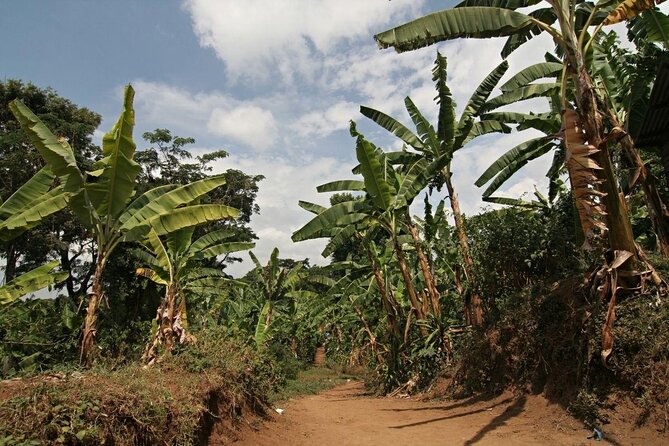
The first section passes through Kilimanjaro’s rainforest. The trail is narrow, and much of the day remains under trees. This is a pleasant beginning because the forest offers shade and a gradual introduction to the climb, but muddy or slippery footing can still slow you down.
A picnic lunch is planned at Kisambioni, roughly the halfway point. After lunch, you continue through the forest to Mandara Hut. The timing gives you the afternoon to settle in rather than rushing straight into another long section.
If you still have energy, take the short walk to Mahundi Crater. On a clear day, you can look east toward Taveta and northwest toward Mawenzi Peak. Clouds can hide those views, so treat the walk as a worthwhile outing rather than a guaranteed panorama.
This first night also shows you what hut-based trekking means. The setup is practical, not luxurious. Pack clothing that can dry and keep you warm, since the temperature will change sharply as you gain height.
Day 2: Moorland views on the way to Horombo
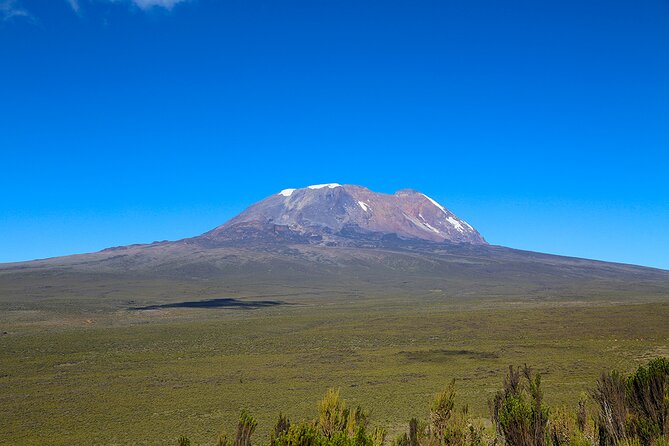
After breakfast, you leave the forest behind and enter Kilimanjaro’s moorland. The scenery becomes more open, rocky, and dry, with unusual high-altitude plants replacing the dense trees.
Your picnic lunch comes at Kambi ya Taabu. From there, the path continues to Horombo Hut, with arrival expected around 3:00 p.m. That early arrival is useful. You can eat, organize your belongings, and rest before the next stage.
Clear weather may reveal Mawenzi and Kibo, the two major peaks associated with this part of the mountain. The views are one reason to avoid burying your head in the trail all day. Look up often, but keep your walking pace slow and steady.
Horombo is an important point in the trip. You are high enough for altitude to matter, and the next day is designed to help your body adjust. Some people may be tempted to treat the extra night as a free day. It is better viewed as part of the climb itself.
Day 3: The acclimatization day at Horombo
You remain at Horombo for an additional night. This is not wasted time. It lets you gain experience at altitude without also moving your sleeping place higher.
The recommended outing heads toward Mawenzi and passes Zebra Rocks. The walk takes about three hours up and one and a half hours down. That is enough activity to help with acclimatization, while still returning you to Horombo for another night.
This day can also help you judge how your body is responding. Pay attention to your breathing, energy, appetite, and ability to walk at a measured pace. The guide is the person to consult if you feel unwell, and a small group makes those conversations easier.
The main drawback is that the schedule is not a quick six-day dash. You spend a full day at Horombo, which means less time for anyone trying to fit the climb into a very tight itinerary. In my view, that is a sensible trade for a better chance of handling the upper mountain.
More Marangu Route Climbs in Arusha
- Private Full Day Hiking Experience to Marangu Route
★ 5.0 · 61 reviews - From Arusha/Moshi: Kilimanjaro Hike Marangu Route Day Trip
★ 4.5 · 54 reviews - Mount Kilimanjaro Day Hike Through Marangu Route to Mandara Hut
★ 5.0 · 37 reviews - Marangu waterfall & Coffee making Cultural Tour | BURIGI CHATO SAFARIS CO LTD
★ 5.0 · 12 reviews
Day 4: Into the Alpine desert
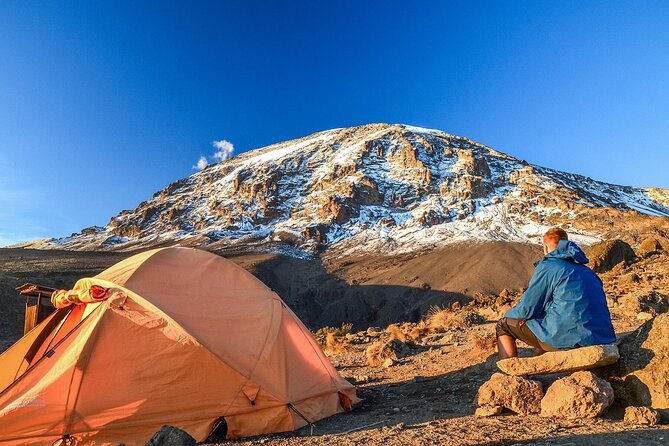
After breakfast, you climb out of the moorland and into the Alpine desert. The scenery becomes barer and more severe, with less plant life and a stronger sense that the summit is near.
The last stated water point is at about 13,550 feet, or 4,130 meters. You need to fill your bottles there with enough water for the climb to Kibo Hut and the return to Horombo two nights later, unless you plan to buy mineral water at Kibo.
This is a practical detail, not a footnote. Carrying enough water adds weight, and you should understand the plan before leaving Horombo. Ask how much water the crew expects you to carry and how refilling works.
The summit is still about 3,921 feet, or 1,195 meters, above this point. You reach Kibo Hut and try to rest before the night ascent. The planned bedtime is around 6:30 p.m., which can be difficult after a full day of walking, but even quiet rest helps.
Kibo is where the trip changes character. The earlier days have been long mountain walks. Now you are preparing for cold, darkness, loose footing, and a steep climb with very little sleep.
Day 5: The hard climb to Gillman’s Point and Uhuru Peak
Around 11:30 p.m., you wake for tea and biscuits. The summit attempt begins after midnight, and this is the most demanding part of the route.
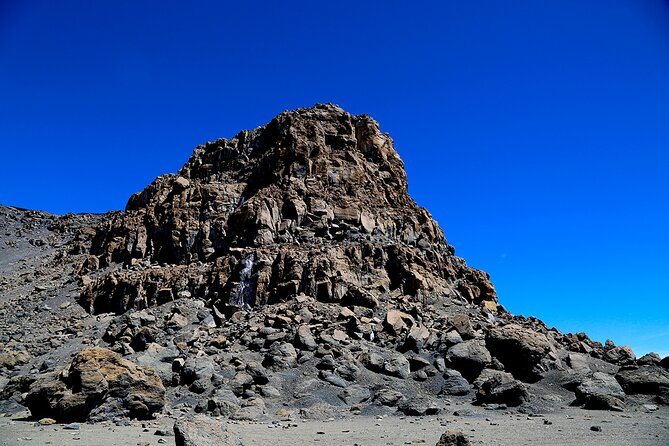
The first section follows rocky ground toward Hans Meyer Point at about 17,225 feet, or 5,250 meters. It serves as a useful rest point before the steepest section. From there, the trail zigzags toward Gillman’s Point on the crater rim.
The surface includes loose stone scree, which can make every step feel less secure. The route is steep, and the combination of darkness, cold, altitude, and fatigue calls for patience. Your guide will set the pace, but you still need to be honest about how you feel.
Reaching Gillman’s Point is a major achievement. The stated elevation is about 18,639 feet, or 5,681 meters, and successful climbers who reach it receive a silver certificate. The material also gives a nearby figure of 18,652 feet, or 5,685 meters, so you may see slightly different figures used for the point.
If you have enough strength and the conditions are suitable, you continue around the crater rim toward Uhuru Peak. The listed elevation is 19,341 feet, or 5,895 meters. Reaching Uhuru brings a gold certificate.
It is important to frame this correctly. Gillman’s Point is not a consolation prize. The final section to Uhuru is still serious, and the guide may need to judge what is safe. The package description says most people can participate, but the summit section specifically requires strong physical and mental effort.
After the summit attempt, you descend to Kibo Hut and then continue down to Horombo Hut. That makes Day 5 an exceptionally long and tiring day. You should expect the return to feel harder than the ascent in some ways, especially on loose ground and tired legs.
Day 6: Descending through the cloud forest
After breakfast, you leave Horombo and walk back toward Marangu Gate. The final section passes through Kilimanjaro’s cloud forest, bringing you back to the trees and a much lower altitude.
The descent is usually easier on the lungs, but it can be rough on knees and feet. The trail may be slippery, so careful footing matters. Do not let the excitement of finishing make you rush.
At the gate, you sign out and receive your certificate if you reached Gillman’s Point or Uhuru Peak. Vehicles then take you back to Arusha. The tour includes private transport and arrival and departure transfers, which removes the need to arrange a separate ride after a long descent.
The return drive is part of the reward, but it is also when fatigue catches up with you. Plan a quiet evening rather than a packed schedule.
What the $1,900 price covers
At $1,900 per person, this is not a budget walk. The price includes park fees, all listed taxes, private transportation, transfers, guides, porters, a cook, and the crew’s salaries. It also includes accommodation before the climb and the mountain huts during the trek.
Food is listed as seven breakfasts, seven lunches, and seven dinners. That count appears generous for a six-day itinerary, so confirm exactly which meals are covered before you pay. The important point is that meals are planned throughout the climb, rather than left for you to arrange on the mountain.
The value depends on what you would otherwise need to organize. Kilimanjaro park charges, crew support, transport, lodging, and food can become expensive and complicated when booked separately. A maximum of six people also gives you a more personal setup than a large group departure.
The price does not include flights, visa fees, alcoholic drinks, tips, or mountaineering insurance. Insurance deserves special attention. A standard holiday policy may not cover a high-altitude climb, so check the wording before you leave home.
Tips are also excluded. The information does not state an amount, and it is best to ask the operator about customary tipping practice before the climb so you can budget properly and distribute it fairly among guides, porters, and the cook.
Food, crew, and practical support
The package includes breakfast, lunch, and dinner, with a cook assigned to the climb. No detailed menu is provided, so you should tell the operator about dietary needs when booking rather than waiting until you reach the mountain.
Porters carry equipment and luggage, and guides manage the route and daily progress. The inclusion of guide, porter, and cook salaries is important because it means those core costs are built into the price instead of appearing as surprise charges.
The strongest practical signal from the available information is the care given to small-group support. Guides Michael and Yano are specifically associated with well-organized climbs, and the crew has helped with luggage and small backpacks when needed. I would still confirm which guides will be assigned to your departure.
Pickup is offered, and the starting point is connected to Arusha or Moshi. The exact pickup details should be confirmed after booking, since the stated meeting time is 7:00 a.m. while the day-one departure is described as around 8:00 a.m.
Who should choose this climb?
This route suits you if you want a structured Kilimanjaro climb with huts, organized transport, included meals, and a small group. It is also a good fit if you prefer a gradual early schedule and value the extra night at Horombo.
It may suit a first-time high-altitude climber who wants professional support, but you should not read easiest route as easy holiday. The summit night is steep and tiring, and the altitude can affect people unpredictably.
The climb is less suitable if you dislike basic accommodation, cannot manage a long summit night, or need a highly flexible schedule. It is also not the right choice if you want to avoid carrying water above the final water point.
The tour is private in transport and limited to six participants, but the supplied information does not explain whether the climb itself is fully private or how individual pacing is handled. Ask before booking if that matters to you.
Booking details worth checking
Confirmation is provided at booking. Free cancellation is available up to 24 hours before the start time, using the local cutoff. Cancellations inside that window are not refunded, and late changes are not accepted.
The climb requires suitable weather. If poor weather causes cancellation, you are offered another date or a full refund.
Most people can participate according to the supplied activity information, but the summit day makes a careful self-assessment wise. The listing does not provide detailed medical, age, equipment, or accessibility requirements, so ask the operator for those details before committing.
Should you book the six-day Marangu Route?
Book it if you want Kilimanjaro with hut accommodation, a planned acclimatization day, and a crew-supported climb that keeps the group small. The $1,900 cost is easier to justify because it includes the major operational expenses, not just guiding.
I would choose this route over a faster schedule because the Horombo rest day gives you a better chance to adjust before the summit attempt. I would not choose it simply because it is called the easiest route. The midnight climb to Gillman’s Point remains a serious physical and mental challenge.
Before paying, confirm the pickup time, hut arrangements, meal count, water plan, insurance requirements, tipping guidance, and the guides assigned to your group. If those details suit your needs, this is a practical and well-supported way to approach Kilimanjaro.
FAQ
How long is the Marangu Route climb?
The climb lasts approximately six days. The schedule includes an extra acclimatization night at Horombo Hut before the summit attempt.
Where does the trek begin?
You depart from Arusha or Moshi and travel to Marangu Gate for registration. The stated meeting time is 7:00 a.m.
Where do you sleep during the climb?
You sleep in simple mountain huts at Mandara Hut, Horombo Hut, and Kibo Hut. Accommodation before the climb is also included.
Is food included?
Yes. Breakfast, lunch, and dinner are included. The package lists seven breakfasts, seven lunches, and seven dinners, so confirm the exact meal schedule with the operator.
What is included in the $1,900 price?
The price includes fees and taxes, private transportation, arrival and departure transfers, pre-climb accommodation, professional mountain guides, porters, a cook, crew salaries, park fees, and meals.
What happens if bad weather cancels the climb?
If poor weather causes cancellation, you can choose a different date or receive a full refund. For other cancellations, you must cancel at least 24 hours before the start time to receive a full refund.
More 6-Day Experiences in Arusha
- Tanzania Wildlife Encounters – 6 Days
★ 5.0 · 277 reviews - Private 6-Day Tarangire Manyara Crater and Serengeti with Mid-Range Lodges
★ 5.0 · 238 reviews - 6 Days Private Budget Safari
★ 5.0 · 163 reviews - 6 Days Tanzania Budget Camping Safari
★ 5.0 · 145 reviews
More Hiking & Trekking in Arusha
- Mountain Kilimanjaro Day Hike
★ 5.0 · 102 reviews - 4 Days Mount Meru Trekking
★ 5.0 · 55 reviews - 6 Days Serengeti Safari(hiking waterfalls &coffee tour)
★ 5.0 · 48 reviews - Arusha: Napuru Waterfalls Guided Hike
★ 4.8 · 39 reviews
Just added around Arusha
- 8 Days Serengeti Migration safari★ 5.0 · 11 reviews
- tarangire, ngorongoro & lake manyara park 3 days private tour★ 5.0 · 11 reviews
- tarangire & ngorongoro 2 days tour★ 5.0 · 14 reviews
- Mt. Kilimanjaro: Shira plateau to Cathedral point 3872m Day hike★ 5.0 · 7 reviews
- serengeti, ngorongoro & tarangire 4 days private tour★ 5.0 · 18 reviews
- serengeti & ngorongoro 3 days private tour★ 5.0 · 15 reviews
- 2 Days Tanzania Midrange Group Join Safari★ 5.0 · 7 reviews
- climb the KILIMANJARO via Lemosho route★ 5.0 · 4 reviews
Marangu Route Climbs, compared.



Private Full Day Hiking Experience to Marangu Route
Read our review →
From Arusha/Moshi: Kilimanjaro Hike Marangu Route Day Trip
Read our review →
Mount Kilimanjaro Day Hike Through Marangu Route to Mandara Hut
Read our review →

Best Kilimanjaro Adventures 6 Days Marangu Route Experience
Read our review →
Kilimanjaro Private Climbing in 6 Days Marangu Route
Read our review →Browse the lists this tour appears in