
Reviewed · MARANGU ROUTE CLIMBS
5 Days Marangu Route Kilimanjaro Climbing
The Marangu Route gives you something unusual on Kilimanjaro: a bed every night. Instead of camping in a tent, you sleep in communal mountain huts with bunk beds, sponge mattresses, pillows, and solar lights. That makes this route the most straightforward choice for hikers who want fewer camp chores and a lower equipment burden.
I like the hut comfort and the variety of scenery, from coffee and banana country to thick forest, open moorland, volcanic scree, and the high summit zone. I also like the practical support: meals, purified water, park fees, rescue fees, airport transfers, and professional guides are covered. The catch is the five-day schedule, which gives you less time to adjust to altitude than the six-day version.
Key points to know before booking
- Huts replace tents: You sleep in communal bunk rooms at Mandara, Horombo, and Kibo.
- Summit day is the hard one: The torchlit start around 1 a.m. can lead to an 11 to 15-hour day.
- Uhuru Peak is not automatic: From Gillman’s Point, the stronger hikers can continue around the crater rim to Uhuru Peak.
- The route is scenic but busy in reputation: Its Coca Cola nickname reflects its easier logistics, not an easy summit.
- Gasto is linked with the operation: He is described as having climbed Kilimanjaro about 250 times.
- The price covers major essentials: At $1,730 per person, meals, huts, park charges, rescue fees, water, and transfers are included.
What the $1,730 price really buys you
At $1,730 per person, this is not a casual mountain walk. You are paying for access to Kilimanjaro National Park, mountain hut accommodation, professional guides, rescue fees, food, purified water, and airport transfers. Those inclusions matter because the mountain costs do not end with the booking fee.
You also receive meals on the mountain, listed as five breakfasts, five lunches, and five dinners, along with a quality mess tent equipped with tables and chairs. The huts provide your sleeping space, while the mess tent gives you a place to eat and prepare for the next day. Personal climbing gear is not included, so budget separately for the equipment you need.
The company has a strong food and organization reputation. Past booking feedback specifically praises fresh, hot meals, generous support with heavy luggage, safety attention, and good group spirit. That combination is useful on a climb where your energy and morale can change quickly.
Gasto is one name associated with Mountain Warriors Tours and Safaris. He is described as having completed the mountain about 250 times and as helping climbers stay safe while keeping the mood light. You should confirm your assigned guide at booking, but the company’s guide experience is an important part of the value here.
More Kilimanjaro Climbs in Arusha
- 8-Day Small-group Lemosho Kilimanjaro Summit Trekking
★ 5.0 · 186 reviews - 7-Day Machame Kilimanjaro Summit Tour from Arusha
★ 5.0 · 125 reviews - 4 days Best experience Kilimanjaro Hike, Serengeti &Ngorongoro
★ 5.0 · 54 reviews
Day 1: Marangu Gate to Mandara Hut
Your climb begins with pickup around 7:30 a.m. from Arusha or Moshi, followed by a short drive to the Kilimanjaro National Park gate near Marangu village. The gate sits at about 1,830 meters, at the edge of coffee and banana plantations.
Park entry formalities take place before you start walking. The first route section passes through attractive forest, with roughly three to five hours of walking to Mandara Hut at 2,700 meters. The path is a steady introduction rather than a brutal opening, but you still need to pace yourself.
Mandara is more than a place to sleep. Birdlife is common around the huts, and monkeys may appear in the forest. If your legs feel fresh, you can make a short afternoon excursion toward Maundi Crater, whose volcanic remains offer an extra viewpoint.
I like this opening because it gives you time to settle into the mountain rhythm. You walk, eat, rest, and let your guide watch how your body responds. The main drawback is that the forest can feel humid, and the route’s early comfort may give you a false sense of how demanding the upper mountain will become.
Day 2: Mandara to Horombo through moorland
Day two covers about four to six hours from Mandara Hut to Horombo Hut, rising to 3,720 meters. The route begins with more forest and a steep section, then opens into grassy moorland.
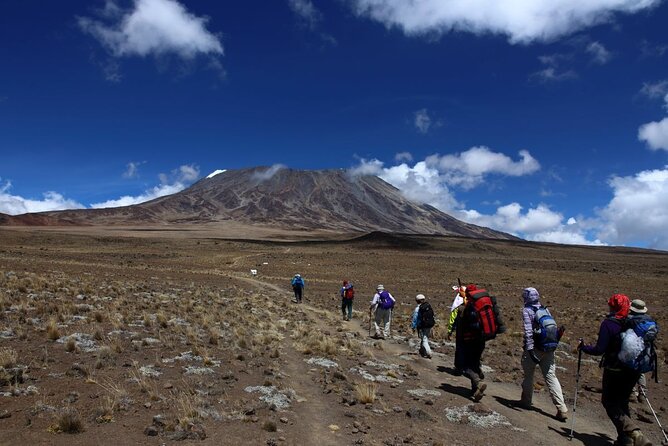
This change in scenery is one of the pleasures of Marangu. Giant heather and occasional giant groundsel replace the dense lower forest. In clear weather, you may see Kibo and Mawenzi, the two major volcanic peaks that shape the upper mountain.
Horombo is an important stop because you are now high enough for altitude to become a serious concern. Sunrises and sunsets can be striking, and the hut sits near the glaciated dome of Kibo. Clouds often sit below this level, giving you that memorable feeling of looking down on the world.
The day is not especially long by mountain standards, but do not race it. The five-day plan moves upward quickly, so a slow pace, regular water intake, and honest communication with your guide are vital. If you want a gentler adjustment schedule, the six-day option adds a rest day at Horombo or an outing toward Mawenzi.
Day 3: Horombo to Kibo Hut across the Saddle
The walk from Horombo to Kibo Hut takes about four to five hours and crosses the Saddle, the broad high zone between Mawenzi and Kibo. The route climbs gradually at first, then the ground changes to loose scree and volcanic desert.
This is where Kilimanjaro begins to feel stark and remote. Vegetation thins out, the air is noticeably higher, and the route becomes less forgiving underfoot. Kibo Hut sits at about 4,700 meters near the crater wall, and you usually arrive around midday.
The afternoon is for eating, resting, and thinking about the summit attempt. That may sound simple, but it is good advice. You need to conserve every bit of strength for the night ahead. The early arrival also gives your body a chance to settle before the torchlit start.
Kibo has no comfortable woodland or moorland around it to soften the setting. You are in a high, exposed zone, and the short night can feel tense. Try to sleep, even if you do not manage much. Keep your summit clothing and personal gear ready before resting so you are not searching through your bag at midnight.
More Marangu Route Climbs in Arusha
- Private Full Day Hiking Experience to Marangu Route
★ 5.0 · 61 reviews - From Arusha/Moshi: Kilimanjaro Hike Marangu Route Day Trip
★ 4.5 · 54 reviews - Mount Kilimanjaro Day Hike Through Marangu Route to Mandara Hut
★ 5.0 · 37 reviews - Marangu waterfall & Coffee making Cultural Tour | BURIGI CHATO SAFARIS CO LTD
★ 5.0 · 12 reviews
Day 4: Gillman’s Point, Uhuru Peak, and the long return
Summit day begins at about 1 a.m. You climb by torchlight over loose volcanic scree, using a slow, steady rhythm toward Gillman’s Point at 5,685 meters. The ascent typically takes five or six hours.
The timing is deliberate. Reaching Gillman’s around sunrise gives you the chance to see the light spread across the crater rim. It also places the hardest climbing in the coldest part of the day, so warm layers, gloves, and a headlamp are essential personal gear.
From Gillman’s Point, you can rest and take in the sunrise. If you still have enough strength, the route continues along the crater rim toward Uhuru Peak at 5,896 meters. The round trip from Gillman’s takes about three hours and passes near the remaining summit glaciers.
This is the point where the five-day schedule reveals its cost. You have gained altitude quickly, and even strong hikers may find the final crater-rim section difficult. The itinerary does not promise Uhuru Peak for every participant. It gives stronger climbers the option to continue, which is a sensible approach to safety.
The descent is faster, but the day remains extremely long. The full schedule is described as roughly 11 to 15 hours of walking from Kibo Hut to Gillman’s Point, with the possible Uhuru extension adding more time. You then continue down to Horombo Hut for the night.
This is the day that demands the most from you. Good guides matter here, and the company’s strongest praise centers on safety, support, and care during the summit push. Listen to your guide, report symptoms early, and do not treat reaching Uhuru as more important than getting down safely.
Day 5: Horombo to the park gate
The final day retraces the route through moorland to Mandara Hut, then continues through the forest to the national park gate. Expect about five to six hours of walking before transport returns you to Moshi or Arusha.
After the summit day, the lower forest feels almost startlingly lush. The contrast helps you see how many climate zones Kilimanjaro holds in a single climb. You finish tired, but the descent is generally easier than the ascent.
This last walk is also a reminder that the route is not only about standing on Africa’s highest mountain. The lower forest, moorland plants, crater views, and volcanic highlands are part of the experience. Take your time on the way down if your knees allow it.
Why hut sleeping changes the trip
Marangu is the only Kilimanjaro route in this offering with sleeping huts at every campsite. The huts are communal, and bunks come with a sponge mattress and pillow. Solar lights add a small but useful touch after dark.
That setup reduces the amount of camping equipment you need and gives you a more defined nightly routine. You still need personal climbing gear, but you are not setting up a tent or sleeping directly on the ground. For some people, that makes the mountain feel more manageable.
The tradeoff is privacy. Communal huts mean shared sleeping rooms, and the route does not offer the same tent-based separation found on other Kilimanjaro routes. If you sleep lightly, bring suitable personal items, though the provided information does not specify what is available beyond beds, mattresses, pillows, and lighting.
The mess tent is another practical plus. Tables and chairs make meals easier, especially after a long day when you do not want to eat on the floor or outside in poor weather.
The five-day versus six-day decision
The five-day itinerary is shorter and usually costs less in time and incidental expenses, but it gives you less room to adjust to altitude. You sleep at Mandara, Horombo, Kibo, return to Horombo after the summit, and finish at the gate on day five.
The six-day option adds time at Horombo. You can rest there or climb the small peak of Mawenzi, which creates a gentler acclimatization pattern. If your schedule allows, I would give serious thought to the extra day.
The shorter version may suit you if you have limited vacation time and a good fitness base. Still, fitness does not guarantee altitude adjustment. You can be strong on steep ground and still struggle at 4,700 meters or higher. The additional day is the clearest upgrade available in this route plan.
Who should book this climb
I would point this experience toward someone who wants Kilimanjaro with hut accommodation and organized support. It suits you if you value included meals, a private group, park and rescue fees handled in advance, and transport connections from Arusha or Moshi.
It may also suit a family or small private group that prefers to travel together rather than join a large shared departure. The activity is private, with only your group participating, and confirmation is provided at booking.
You should have a moderate level of physical fitness. That phrase should not be read as meaning easy. The final climb is steep, cold, high, and long. You need to be comfortable walking for several hours on consecutive days, then managing a summit night that begins around 1 a.m.
This is a poor match if you want a relaxed holiday with a guaranteed summit. It is also not the best pick if you dislike communal sleeping arrangements or cannot allow time for strenuous walking.
Practical details before you commit
Pickup is offered, and airport transfers are included. The stated start time is 7:30 a.m., with transport from Arusha or Moshi to the Marangu gate. Confirm the exact pickup point and timing when you book.
A mobile ticket is available, and confirmation arrives at the time of booking. The route is near public transportation, though the package itself includes transfers, which makes the included transport more useful than relying on local connections after an international flight.
Bring or rent your own climbing gear. The package does not include personal equipment, and no detailed gear list is provided here, so ask Mountain Warriors Tours and Safaris for current requirements before departure. You will also need to arrange a Tanzania visa separately and plan for guide and crew tips.
Cancellation is flexible up to 24 hours before the experience starts, with a full refund available if you cancel in time. Cancellations or changes made within 24 hours are not refunded or accepted.
Should you book the Marangu Route?
Book it if hut sleeping, a private group, and a package with meals, water, park fees, rescue fees, and transfers appeal to you. The $1,730 price is reasonable for the number of major costs included, particularly if the guide support and food quality match the company’s established service pattern.
My main caution is the schedule. Five days is the fast version, and the summit day can run 11 to 15 hours. If you can add a day, the Horombo acclimatization option is the smarter choice for many people.
Choose this climb for practical comfort and a direct route through Kilimanjaro’s main climate zones. Choose the six-day format if you can make room for it, and confirm the guide team, personal gear requirements, and airport transfer details before paying.
FAQ
How long is the Marangu Route climb?
The experience lasts approximately five days. Walking times range from about three to six hours on most days, while the summit day is much longer.
Where does the climb begin?
The climb begins at the Kilimanjaro National Park gate near Marangu village, at about 1,830 meters. Pickup is offered from Arusha or Moshi.
Do I sleep in tents or huts?
You sleep in communal mountain huts at each campsite. The bunks have sponge mattresses and pillows, and the huts have solar lights.
Is Uhuru Peak included?
The route reaches Gillman’s Point at 5,685 meters. From there, climbers who still feel strong can make the round trip to Uhuru Peak at 5,896 meters. The itinerary does not guarantee that every participant will continue to Uhuru.
What is included in the $1,730 price?
The price includes mountain hut stays, professional guides, park fees, rescue fees, meals on the mountain, purified drinking water, a mess tent with tables and chairs, and airport transfers.
Is the extra acclimatization day available?
Yes. The route can be completed in six days instead of five, with the additional day spent resting at Horombo or climbing the small peak of Mawenzi.
More 5-Day Experiences in Arusha
- 5 Days Group Camping Safari
★ 5.0 · 730 reviews - 5-Day Highlights mid-Range Crater, Serengeti, Tarangire
★ 5.0 · 296 reviews - 5 Days Camping Tarangire, Serengeti & Ngorongoro crater & Visiting Maasai
★ 5.0 · 229 reviews - Tanzania Simba Safari – 5 Days
★ 5.0 · 217 reviews
Just added around Arusha
- 8 Days Serengeti Migration safari★ 5.0 · 11 reviews
- tarangire, ngorongoro & lake manyara park 3 days private tour★ 5.0 · 11 reviews
- tarangire & ngorongoro 2 days tour★ 5.0 · 14 reviews
- Mt. Kilimanjaro: Shira plateau to Cathedral point 3872m Day hike★ 5.0 · 7 reviews
- serengeti, ngorongoro & tarangire 4 days private tour★ 5.0 · 18 reviews
- serengeti & ngorongoro 3 days private tour★ 5.0 · 15 reviews
- 2 Days Tanzania Midrange Group Join Safari★ 5.0 · 7 reviews
- climb the KILIMANJARO via Lemosho route★ 5.0 · 4 reviews
Marangu Route Climbs, compared.



Private Full Day Hiking Experience to Marangu Route
Read our review →
From Arusha/Moshi: Kilimanjaro Hike Marangu Route Day Trip
Read our review →
Mount Kilimanjaro Day Hike Through Marangu Route to Mandara Hut
Read our review →

Best Kilimanjaro Adventures 6 Days Marangu Route Experience
Read our review →
Kilimanjaro Private Climbing in 6 Days Marangu Route
Read our review →Browse the lists this tour appears in