
Reviewed · KILIMANJARO CLIMBS
Private 8 day Northern Circuit Kilimanjaro Climb
The Northern Circuit is Kilimanjaro’s long way around, and that is exactly its appeal. You begin on the quiet western side, cross the Shira Plateau, circle the lonely northern slopes, then reach the summit from the east before descending south. In eight days, you see nearly every side of the mountain instead of marching up and down one busy corridor.
I like the route’s extra acclimatization time and the changing scenery, from giant-tree forest to moorland, lava, high desert, and the ice-capped Kibo summit. I also like that this is a private trip, so your walking pace, meal needs, and daily routine stay within your own group. The catch is simple: this is still a serious high-altitude climb, and summit night is long, cold, tiring, and never guaranteed.
Key points before you book
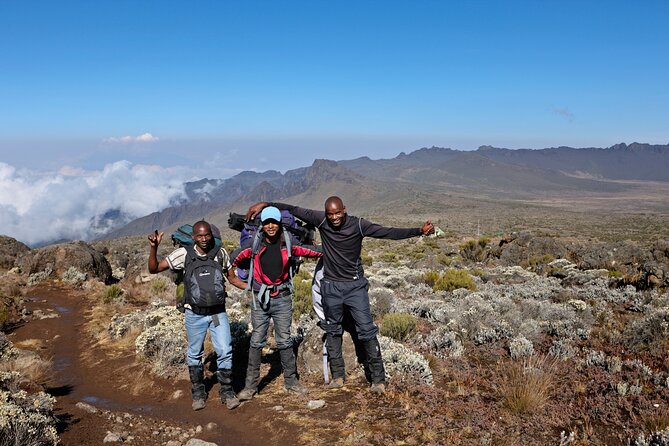
- The quiet northern route: You spend much of the climb away from the more heavily used trails, with broad views of Kibo and Mawenzi.
- Eight days help with altitude: The gradual schedule includes high acclimatization walks and several nights at increasing elevations.
- A full circuit of Kilimanjaro: The route connects with sections associated with Lemosho, Rongai, Marangu, and Mweka.
- Private group format: Only your party takes part, with pickup offered and a 9:00 am start.
- A demanding summit night: You leave School Hut around midnight, reach Uhuru Peak at 5,895 meters, then descend for many more hours.
- Strong crew praise: Duma’s guiding and porter team has included Emmanuel, Humphrey, Imran, Colman, Dickson, and Mariam, with past trips also praised for safe pacing, good food, and vegetarian meals.
Why the Northern Circuit earns eight days
Kilimanjaro is not a technical climb in the mountaineering sense, but altitude makes it hard. You can be fit, determined, and used to long walks, yet still struggle above 4,000 meters. That is why the eight-day format matters more than the route name alone.
The Northern Circuit gives you several gradual steps upward. You sleep at about 2,785 meters on the first night, reach 3,504 meters on Day 2, then spend nights above 4,000 meters before your summit attempt. You also climb higher during the day and return to camp, which gives your body useful time at altitude without forcing you to sleep at the highest point reached.
That approach cannot promise success, but it gives you a better chance than a rushed schedule. Duma specifically recommends this option for its high summit success rates, and the route has a calmer rhythm than shorter climbs. You still need strong fitness, patience, and a willingness to walk pole pole, slowly and steadily.
The price is $2,999 per person. For an eight-day private climb with meals, guides, porters, camps, national park access, and transport back to Arusha, that can represent solid value. The price alone does not tell you everything, though. Ask what porter welfare standards are followed, how many guides support your group, and what equipment or hotel nights are excluded. Duma is a registered partner of the Kilimanjaro Porters Assistance Project and was among its ten founding partners, which is an important point for anyone who wants their money to support fair treatment on the mountain.
More Kilimanjaro Climbs in Arusha
- 8-Day Small-group Lemosho Kilimanjaro Summit Trekking
★ 5.0 · 186 reviews - 7-Day Machame Kilimanjaro Summit Tour from Arusha
★ 5.0 · 125 reviews - 4 days Best experience Kilimanjaro Hike, Serengeti &Ngorongoro
★ 5.0 · 54 reviews
Day 1: Londorossi Gate to Mti Mkubwa Camp
Your day begins with a drive to Londorossi Gate, where your team handles registration. From there, the vehicle continues about 12 kilometers to the Lemosho starting point. That last stretch can take 45 minutes to 1 hour 30 minutes, depending on road conditions, so do not expect the walking schedule to run like a city tour.
The first hike covers roughly 5 kilometers, with about 400 meters of ascent. You walk through some of Kilimanjaro’s finest forest, a cool and shaded beginning that feels far removed from the summit to come.
The overnight camp is Mti Mkubwa, also called Big Tree Camp, at 2,785 meters. Your tent is set up before you arrive, and a snack awaits. That small detail matters after a first day of walking, registration, and vehicle travel. The night is not glamorous, but you are not expected to pitch camp after a tiring hike.
Day 2: Shira Ridge and the first view of Kibo
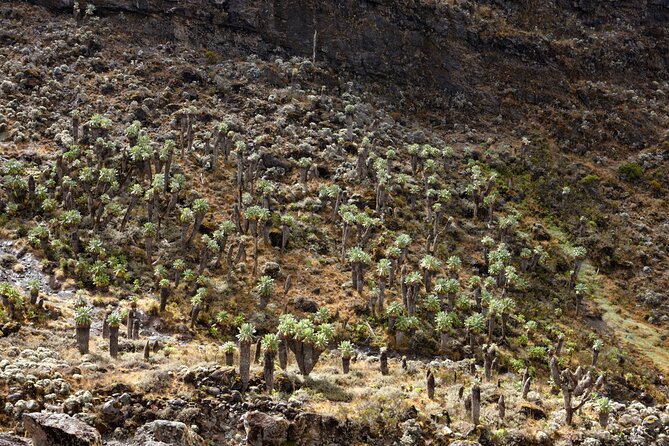
Day 2 is one of the most varied. You begin among trees, then move into grasses, wildflowers, heather, and moorland. The change is gradual but striking. Kilimanjaro starts to feel less like a forest walk and more like a high mountain crossing.
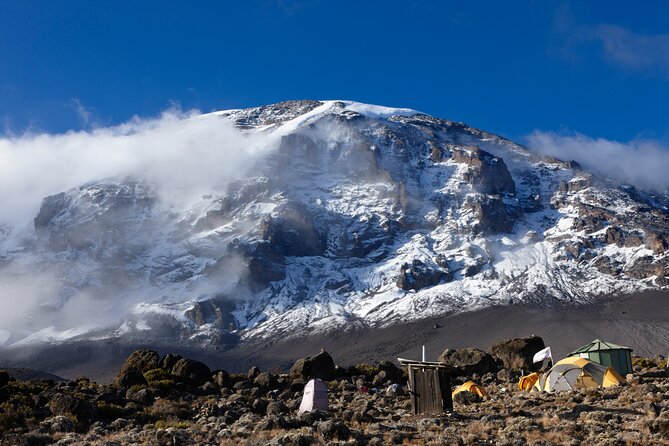
You round the northern slopes of Shira Ridge, Kilimanjaro’s lesser-known third summit, and get an early view of Kibo, the snow-capped main summit. The route then drops slightly onto the Shira Plateau, ending at Shira One Camp at 3,504 meters.
The day takes about seven hours. A mild headache is possible at this point, so take the warning seriously. Drink regularly, keep your pace slow, and tell your guide about symptoms rather than trying to hide them. A private group makes it easier to adjust the pace, but it does not remove the need to respect altitude.
Day 3: Moir Hut and a useful acclimatization climb
From Shira One, you walk toward Simba Camp and a junction with the four-wheel-drive emergency track. The trail then crosses boulders, old lava flows, and grassy sections before reaching an impressive cave near Moir Hut.
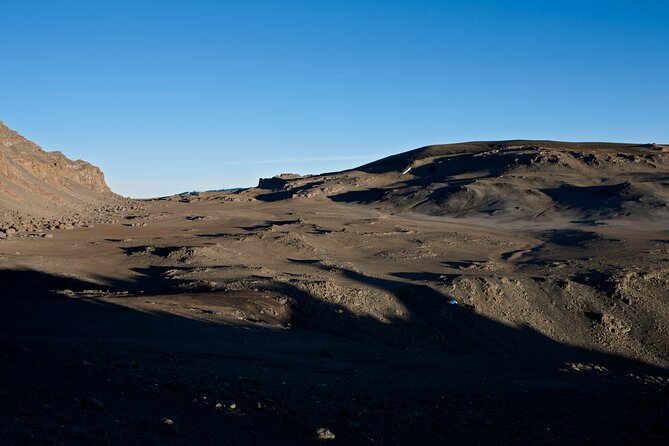
Your total distance is about 9.7 kilometers, with 657 meters of ascent. Moir Hut sits at 4,161 meters, making this your first high camp. The setting feels remote, and the broad views help explain why the Northern Circuit is prized for solitude.
There is also an optional sunset acclimatization walk to a ridgeline at about 4,300 meters. It adds 1.9 kilometers and 139 meters of ascent. This is not wasted effort. The point is to spend a short time higher than your sleeping camp, then return to rest. If you already feel unwell, though, you should discuss the extra climb with your guide instead of treating it as a test of toughness.
Same country, a completely different kind of safari:
- Balloon Safari & Bush Breakfast in Serengeti – Miracle Experience
★ 5.0 · 1,646 reviews - Tanzania Classic – 7 Days
★ 5.0 · 1,151 reviews - 4 Days Group Camping Safari
★ 5.0 · 1,101 reviews - 5 Days Group Camping Safari
★ 5.0 · 730 reviews
Day 4: Around Kibo’s northern face
Day 4 takes you through the route’s quietest country. You climb to about 4,402 meters, then drop to Second Pofu Camp at 4,033 meters. The repeated up and down can be more tiring than the distance suggests.
The first climb is a steady push up a barren slope to 4,300 meters. From there, the trail curves around Kibo’s northern face, crossing valleys and climbing out of them. You are not simply walking toward a visible finish line. You are circling the mountain, and the changing angles make Kibo look different throughout the day.
Altitude symptoms are common here, especially headaches. The best advice is basic and useful: drink often, walk slowly, and speak up early. The camp may be called Old Pofu or Second Pofu in trip details, so confirm the exact camp name with Duma before departure.
Day 5: Third Cave and the Mawenzi view
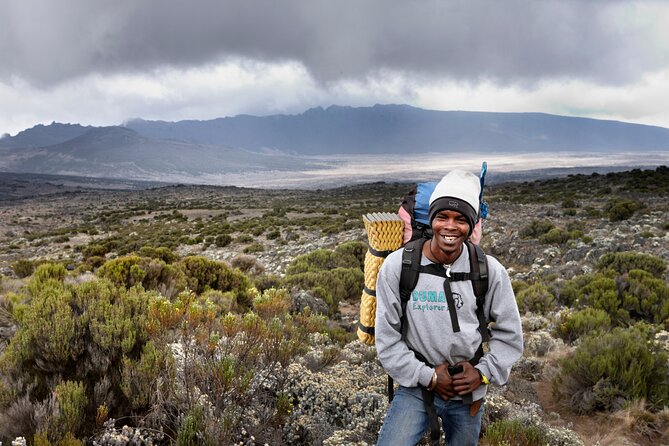
This is a shorter day, about 6.8 kilometers and roughly four hours of walking, but do not mistake short for easy. The trail keeps rising and falling along the northern slopes, with enough repeated climbing to leave you tired.
Kibo remains to your right, while Mawenzi grows larger ahead. Mawenzi is Kilimanjaro’s jagged second summit, and its shape provides a welcome change from Kibo’s broad dome. You reach Third Cave Campsite, where the shorter schedule gives you time to rest.
This day is a good example of why a route profile matters more than mileage. Six or seven kilometers at altitude, with repeated gradients, can feel much harder than a longer flat walk at home.
Day 6: School Hut and the wait for midnight
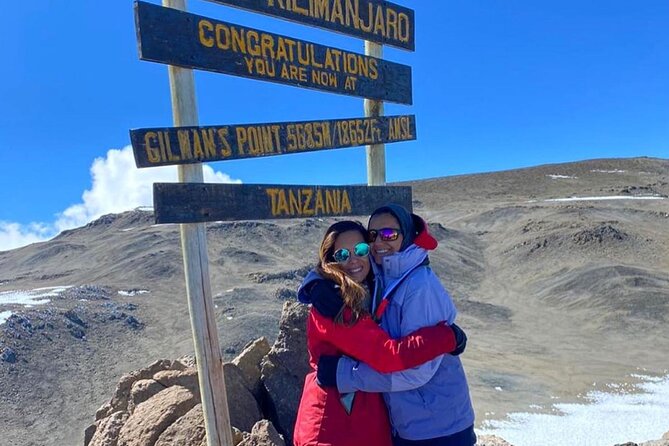
From Third Caves, you cross the eastern slopes and climb to School Hut at 4,717 meters. The distance is only 4.9 kilometers, but you gain 781 meters. That is a major climb in a short stage.
You should arrive in the early or middle part of the afternoon. The rest of the day is about conserving energy. Eat what you can, drink, organize your summit clothing, and try to sleep before your wake-up call around 11:00 pm or midnight. The staff will wake you for meals, so you do not need to worry about setting an alarm or managing the camp routine alone.
School Hut is not a victory lap. It is the launch point for the hardest part of the trip. You may feel tired, cold, or uninterested in food. Try to eat anyway, because the summit push will use every bit of energy you have.
Day 7: Uhuru Peak, Gilman’s Point, and a very long descent
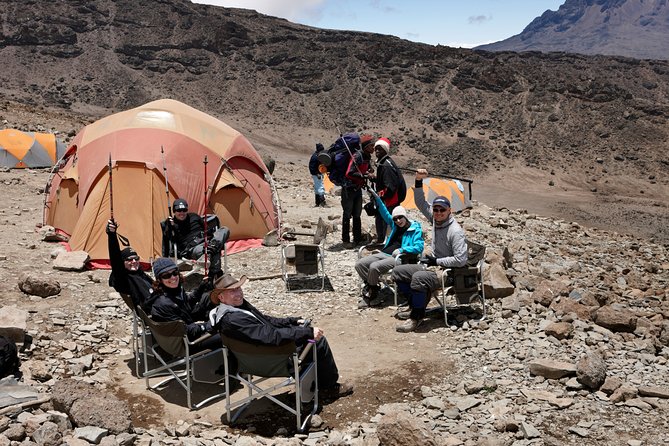
You leave School Hut around midnight. The route passes Hans Meyer Cave at 5,259 meters and continues toward Gilman’s Point on the crater rim. The listed elevation for Gilman’s Point is 5,719 meters in the day description, while the separate stop lists 5,756 meters. The exact figure matters less than the reality: you are near the top of Africa and operating in thin air.
From Gilman’s Point, you continue around the rim to Uhuru Peak at 5,895 meters. Your guide decides how long you can safely remain at the summit, based on your condition, timing, and weather. Expect a short summit stop rather than a long picnic. At this altitude, the safest celebration is often a few photographs and a careful start downward.
The summit section is about 15 hours in total. After reaching Uhuru Peak, you descend about 4.86 kilometers to Barafu Camp, eat breakfast, and rest for about an hour. Then you continue another 6.6 kilometers down the mountain before reaching the lower camp area. This is the day that tests your commitment. The final 550 meters before the summit are especially hard, but the descent is not a free pass. Legs become sore, concentration slips, and the total time on your feet is substantial.
You may reach Uhuru Peak, Gilman’s Point, or need to turn back earlier. The tour provides certificates for Uhuru Peak and for Gilman’s Point, but the real priority is getting down safely. A good crew will treat that decision seriously.
Day 8: Mweka Trail and the return to Arusha
After breakfast, you descend via the Mweka Trail to Mweka Gate at about 1,633 meters. The final walking section takes about four hours. At the gate, those who reached Uhuru Peak or Gilman’s Point collect their certificates, then a vehicle takes you back to your hotel in Arusha.
The contrast is almost comic: one day you are above 5,800 meters, and the next you are thinking about a warm shower and a cold drink. The descent is less scenic than the high route, but it is practical and direct. You are tired, and the trip is ready to end.
The listed itinerary describes Day 7 as finishing at Barafu Camp before the final lower descent and Day 8 as the Mweka Gate transfer. Confirm the precise overnight camp arrangement before you book, since the day-by-day wording includes several camp names and a lengthy summit-day schedule.
Food, crew support, and the private format
The package includes eight lunches, seven breakfasts, and seven dinners. Food becomes more important as the climb continues. You may not feel hungry at high altitude, but you need fuel for the long summit night. Duma has also accommodated vegetarian meals on past climbs and provided a birthday cake for one group, so tell the company about dietary needs before arrival.
The private format is one of the strongest features here. Only your group participates, which lets the guides respond to your fitness, altitude symptoms, and preferred pace. It also makes the trip feel more personal than a large commercial departure.
Past Duma crews have included guides such as Emmanuel, Humphrey, Imran, and Colman, with Dickson and Mariam also named among the support staff. The most valued qualities are practical ones: calm guidance, safety-first decisions, good humor, and a team that keeps camp running while you focus on walking. One vegetarian group specifically praised the food and support, and another family found the preparation and organization strong from the first planning calls through the climb.
What the $2,999 price really buys
At $2,999 per person, this is not a budget day hike. It is a full mountain expedition lasting about eight days, with park entry, camps, meals, crew support, and a private operating structure built into the experience. The eight-day length is also part of the value, since extra days can make the climb less rushed and give you more time to adjust.
Pickup is offered, and the meeting time is 9:00 am. The package details specify transport back to Arusha on the final day, but you should confirm the pickup point, hotel arrangements, airport transfers, gear rental, tips, and any extra nights directly with Duma. Those items can change the real cost of a Kilimanjaro trip.
You also need strong physical fitness. This is not suitable for someone looking for a gentle scenic walk. The climb includes long days, steep gains, repeated descents, sleeping at high altitude, and a summit attempt that begins in the middle of the night.
Free cancellation is available if you cancel at least 24 hours before the local start time. Cancellations inside that window are not refunded, and late changes are not accepted.
Who should choose this climb?
I would choose this route if you want to see the mountain from several sides and can spare eight days. It suits hikers who value a quieter trail, gradual acclimatization, and the feeling of crossing a whole mountain rather than simply following the shortest line to the summit.
It also suits a private family group or a pair of friends who want more control over pace and meals. Duma has handled family groups and larger private parties, but the activity remains physically demanding for everyone.
I would think twice if your holiday schedule is tight, if you dislike camping, or if a 15-hour summit day sounds beyond your limits. A longer route gives your body more time, but it does not remove altitude risk or guarantee Uhuru Peak.
Should you book the Northern Circuit with Duma Explorer?
Book it if you want Kilimanjaro as a full mountain journey, not just a summit photo. The route gives you forest, moorland, lava, northern solitude, views of Kibo and Mawenzi, and a south-side descent. The eight-day plan is the sensible choice for many strong hikers because it allows more time to adjust.
Before paying, confirm the exact camp sequence, what is covered beyond the listed meals and transport, and the names of your guide team. If those details suit you, the $2,999 price buys a serious, well-supported attempt on Africa’s highest mountain, with a route that feels broad, quiet, and genuinely rewarding.
FAQ
Where does the climb begin?
The trip starts with a drive to Londorossi Gate in Kilimanjaro National Park. After registration, you continue by vehicle for about 12 kilometers to the Lemosho starting point.
What time does the activity start?
The listed start time is 9:00 am.
How long is the Kilimanjaro climb?
The climb lasts approximately eight days.
Is this a private tour?
Yes. Only your group participates in the activity.
How high is Uhuru Peak?
Uhuru Peak is 5,895 meters above sea level.
What is the highest camp before the summit attempt?
School Hut is listed at 4,717 meters. You leave from there around midnight for the summit push.
Which trail do you use to descend?
You finish by descending the Mweka Trail to Mweka Gate at about 1,633 meters.
Are meals included?
Yes. The package includes eight lunches, seven breakfasts, and seven dinners.
Can I cancel for a full refund?
Yes, if you cancel at least 24 hours before the experience start time. Cancellations or changes made less than 24 hours before the start are not accepted, and the amount paid is not refunded.
Just added around Arusha
- 8 Days Serengeti Migration safari★ 5.0 · 11 reviews
- tarangire, ngorongoro & lake manyara park 3 days private tour★ 5.0 · 11 reviews
- tarangire & ngorongoro 2 days tour★ 5.0 · 14 reviews
- Mt. Kilimanjaro: Shira plateau to Cathedral point 3872m Day hike★ 5.0 · 7 reviews
- serengeti, ngorongoro & tarangire 4 days private tour★ 5.0 · 18 reviews
- serengeti & ngorongoro 3 days private tour★ 5.0 · 15 reviews
- 2 Days Tanzania Midrange Group Join Safari★ 5.0 · 7 reviews
- climb the KILIMANJARO via Lemosho route★ 5.0 · 4 reviews
Kilimanjaro Climbs, compared.



8-Day Small-group Lemosho Kilimanjaro Summit Trekking
Read our review →



7-Day Machame Kilimanjaro Summit Tour from Arusha
Read our review →
Browse the lists this tour appears in