
Reviewed · LEMOSHO ROUTE CLIMBS
Kilimanjaro-lemosho Route 8 Days Itinerary
Kilimanjaro’s Lemosho Route gives you a gradual approach to Africa’s highest point, beginning in forest and crossing the open Shira Plateau before the hard summit push. I like the route’s changing scenery and its extra time for altitude adjustment. The package also includes airport transfers and Arusha lodge nights, which removes much of the arrival-day fuss.
I especially like the thoughtful climb profile: you reach Lava Tower at about 4,600 meters, then descend to Barranco before climbing higher again. That rise and fall is useful for acclimatization. The team’s guides, including Emmanuel and Frankie on some departures, have earned strong praise for patience, mountain skill, and steady encouragement.
The main drawback is the wording around duration. The mountain section is an eight-day climb, but the full program takes about 10 days, including Arusha nights and transfers. Summit day is also extremely long, listed at 13 to 15 hours, so this is not a casual hiking holiday.
Key points to know before booking
- Lemosho begins quietly at Londorossi Gate, with a forest walk to Mti Mkubwa Camp rather than an immediate high-altitude climb.
- The route crosses the Shira Plateau, offering broad views and colder, more exposed camping at Shira.
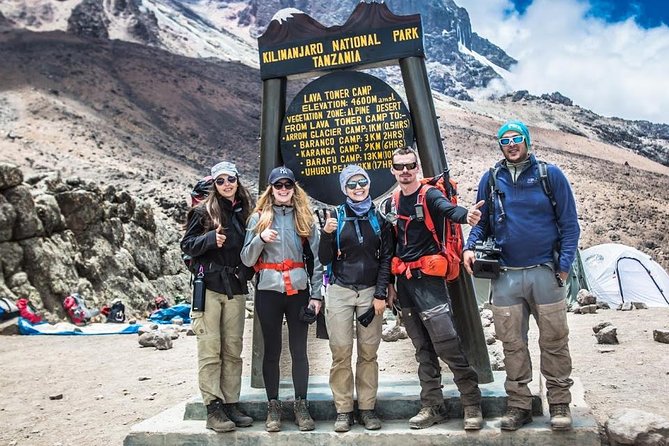
- Lava Tower and Barranco are central to acclimatization, with a high lunch stop followed by a lower overnight camp.
- Summit day lasts 13 to 15 hours, beginning before midnight and finishing at Mweka Camp.
- Arusha lodging and airport transfers are included, making the arrival and departure days easier to manage.
- The package costs $2,950 per person, before tips, international flights, and personal items.
What the $2,950 package really covers
At $2,950 per person, this is a serious purchase, but the price includes more than the mountain days alone. You receive private transfers from Kilimanjaro International Airport to Arusha and back, accommodation at Arusha Safari Lodge, meals, park admission, and the guided climb.
That matters because Kilimanjaro logistics can become complicated quickly. You do not have to arrange a separate airport taxi, find a hotel after a long flight, or work out how to reach the mountain gate. The first and last nights at Arusha Safari Lodge give you a fixed base before and after the climb.
The package lists breakfast for 10 days, lunch for 10 days, and dinner for nine days. Tips, international flights, and personal items are extra. You should also confirm exactly what personal climbing equipment you must bring or rent, since the program includes an equipment check but does not list gear rental among the inclusions.
This is a private activity, meaning only your own group participates. That can be worth paying for if you want your pace and summit strategy handled around your group rather than fitted into a large mixed party. It also gives you a direct relationship with the guides.
More Lemosho Route Climbs in Arusha
- 8-Day Small-group Lemosho Kilimanjaro Summit Trekking
★ 5.0 · 186 reviews - 8 Days Mountain Kilimanjaro Lemosho Route
★ 5.0 · 22 reviews - 7 Day Kilimanjaro Climb Lemosho Route & 2 Day Safari
★ 5.0 · 16 reviews
Day 1: Arrive in Arusha and check your gear
The program begins at Arusha Safari Lodge, located on the lower slopes of Mount Meru. You can arrive at Kilimanjaro International Airport at any time, with a private transfer waiting to take you to the lodge.
The evening briefing is scheduled for 5:30 pm. This is when the team checks your equipment, explains the climb, and confirms that you have the required medical coverage and travel insurance. Treat this meeting as essential rather than ceremonial. It is your chance to identify missing layers, unsuitable footwear, or other problems before you are on the mountain.
Dinner and breakfast are included at the lodge. The setting gives you a calm first night, although you should not expect this to be a full sightseeing day in Arusha. The priority is rest, preparation, and getting clear instructions for the morning.
Day 2: Londorossi Gate to Mti Mkubwa Camp
After breakfast, you drive for roughly two hours through rural countryside to Londorossi Gate. The road passes farmland and open views across the plains before you reach the park registration point.
These gate formalities can take time, so keep your first morning flexible. Once registration is complete, the drive continues toward the Lemosho trailhead. The route then enters forest and climbs to Mti Mkubwa Camp at about 2,650 meters.
The walk is listed at three to four hours. This is a gentle opening compared with what follows, but it still sets the tone for the trip. You are walking at altitude, carrying what you need for the day, and beginning a steady routine of walking, eating, resting, and drinking.
Mti Mkubwa means big tree, and the forest section feels like a proper start to the climb. It is quieter and less abrupt than routes that begin higher up. I like that Lemosho gives you time to settle into the effort before the air becomes thin.
Day 3: Mti Mkubwa to the Shira Plateau
Day three is longer, with six to seven hours of walking to Shira Camp at about 3,550 meters. The forest falls away, and the trail climbs toward the rim of the Shira Plateau.
The pace is deliberately slow and steady. That may feel frustrating if you are fit and eager to move faster, but it is one of the most important habits on Kilimanjaro. A controlled pace saves energy and gives your body more time to adjust to rising altitude.
This day brings a major change in scenery. You leave the enclosed forest for broad views and more open ground. The climb is not just a test of leg strength. It is also a lesson in managing breathing, hydration, and effort before the route becomes more demanding.
Because this is a full walking day, use the evening to prepare your clothing and daypack for colder conditions. The next camp is more exposed, and the temperature can drop sharply.
Same country, a completely different kind of safari:
- Balloon Safari & Bush Breakfast in Serengeti – Miracle Experience
★ 5.0 · 1,646 reviews - Tanzania Classic – 7 Days
★ 5.0 · 1,151 reviews - 4 Days Group Camping Safari
★ 5.0 · 1,101 reviews - 5 Days Group Camping Safari
★ 5.0 · 730 reviews
Day 4: Shira Cathedral and Shira Hut
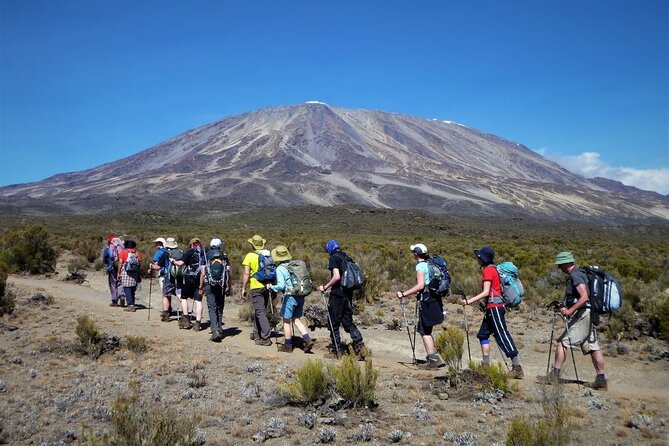
The walk to Shira Hut takes roughly three to five hours and follows an easier path toward Shira Cathedral. The shorter schedule gives you some breathing room after the longer day before it.
Shira Hut sits at about 3,840 meters, and the camp is exposed. The itinerary warns that temperatures can fall well below freezing. This is one of the nights when a warm sleeping system and dry layers matter most. The route may feel manageable during the day, but cold can drain your energy after sunset.
Shira is valuable because it gives you another night at altitude without forcing an all-day march. You have time to enjoy the open views, eat properly, and rest. It is also a reminder that the climb is not won by speed. The team’s repeated advice to move slowly is practical, not just motivational.
Day 5: Lava Tower, then down to Barranco
Day five is one of the most carefully designed sections of the route. You traverse the southwestern side of Kilimanjaro, passing beneath Lava Tower and the final section of the Western Breach.
The trail reaches the bottom of Lava Tower at about 4,600 meters, where you have a hot lunch. From there, you descend to the bottom of the Great Barranco Valley at about 3,900 meters. The walking time is listed as five to seven hours.
This is the classic high point, sleep lower pattern. You spend part of the day at a greater altitude than your camp, then descend to rest. That makes the day physically tiring, but it can help your body adjust before the summit push.
The elevation change also makes this a day to watch yourself honestly. Headaches, nausea, unusual fatigue, or poor coordination should be reported to the guide. The route is not a contest, and strong guide judgment matters here.
Barranco is a dramatic place to spend the night, with the valley and mountain walls close around the route. You should expect a demanding day, but it is also one of the most memorable portions of the climb.
Day 6: The Barranco Wall and Karanga Valley
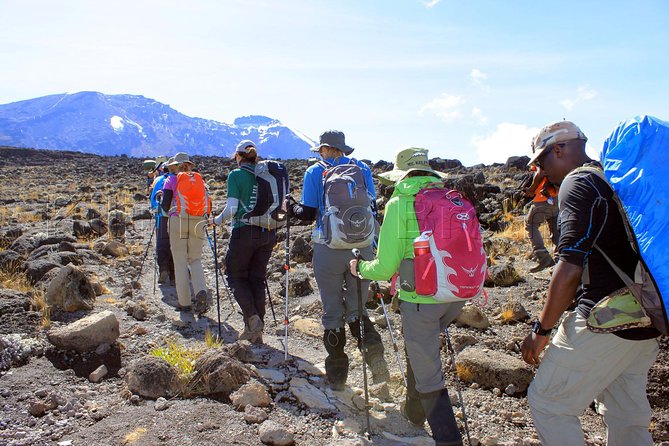
From Barranco Camp, you climb the eastern wall. The path rises below the Heim Glacier before reaching the steep exit up the Great Barranco Wall.
This section requires care rather than speed. The wall separates the valley from Kilimanjaro’s southeastern slopes, and the trail then drops into the alpine desert of the Karanga Valley. A final steep climb leads to Karanga Camp at about 4,000 meters.
The schedule gives four to five hours for this section, although one timing entry is incorrectly shown as four minutes. Plan on the stated four to five hours of walking, not four minutes.
I like this day because it breaks the climb into a shorter, focused effort after the long Lava Tower day. It is still steep in places, and you should follow the guide’s instructions closely. Guides such as Emmanuel and Frankie have been praised for staying cautious and encouraging, qualities that are especially useful on sections where a calm pace matters more than bravado.
Day 7: Karanga to Barafu Camp
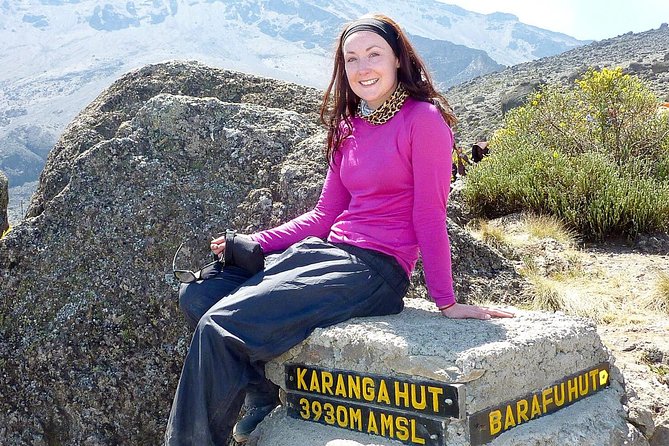
The trail follows the Traverse Route toward Barafu Ridge, reaching Barafu Camp at about 4,600 meters after three to four hours.
Barafu is the final camp before the summit attempt. The rest of the day is spent preparing for the early start. You should keep your evening simple: eat, organize your clothing, check your headlamp and water, and sleep if you can.
Do not expect a normal night. You will wake before midnight, and the cold at this altitude can make even small tasks feel slow. Put the items you need first in an easy-to-reach place. Your guide will give you the exact instructions, but personal organization helps.
This short walking day is important because it preserves strength for the hardest section. The route is not designed to entertain you at Barafu. It is designed to put you in position for the summit.
Day 8: Stella Point, Uhuru Peak, and Mweka Camp
Summit day begins in darkness, before midnight. You climb over loose volcanic scree, using graded zigzags and a slow, steady pace toward Stella Point on the crater rim at about 5,735 meters.
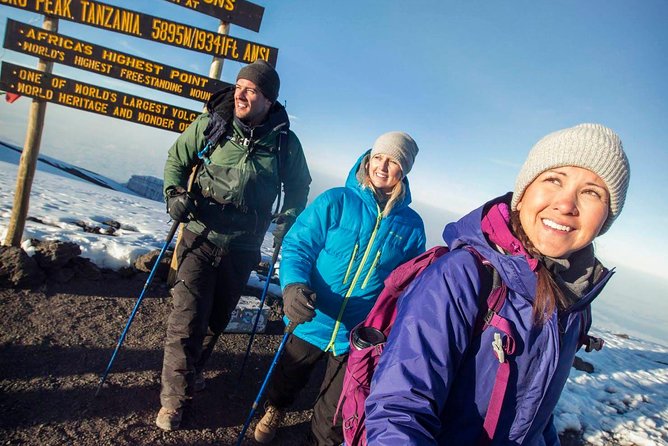
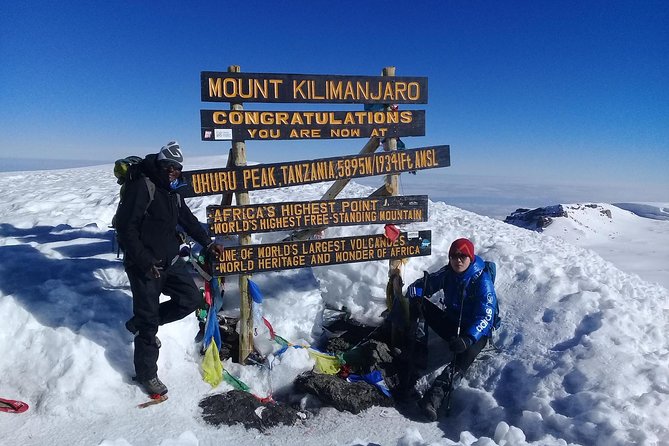
At Stella Point, you can rest and watch the sunrise over Mawenzi. If you still feel strong, the route continues along the crater rim to Uhuru Peak at 5,895 meters, Africa’s highest point. The round trip from Stella Point to the main peak is listed at about two hours.
This is an enormous day. The full route from Barafu Camp to the summit and then down to Mweka Camp takes 13 to 15 hours. After reaching the summit, you descend to Barafu for refreshments, then continue down to Mweka Camp at about 3,100 meters.
The descent may feel fast at first, but it is hard on tired legs. Save some energy for it. The summit moment is important, but getting down safely is part of the achievement.
Day 9: Mweka Gate and a warm Arusha night
The final walk leads through rainforest to Mweka Gate and takes about three to five hours. Successful climbers receive summit certificates at the gate.
After lunch, you drive back to Arusha Safari Lodge. Dinner, bed, and breakfast are included. This return to a lodge is a welcome change after the mountain camps, though your body may need more than one quiet evening to recover.
The transfer also gives you a chance to say goodbye to the mountain team. The personal side of this climb matters. The guides, cooks, and porters carry much of the practical workload, and the supplied comments place particular emphasis on the team’s professionalism and encouragement.
Day 10: Airport transfer or extra Tanzania plans
The final day includes a private departure transfer from Arusha to Kilimanjaro International Airport. You can use it for your flight or discuss adding a short safari or another activity.
The airport transfer is included, but check the timing against your flight before booking. The drive from Arusha to JRO is part of the plan, yet the exact transfer duration is not stated.
Best months and weather concerns
January and February are described as the warmest climbing months, often with clear conditions in the mornings and evenings. August and September are also listed among the best periods.
July can be colder. November and December may be wet, although November’s short rains do not necessarily stop every climb. March, April, and May bring the long rains and are best avoided according to the schedule.
Weather on Kilimanjaro can change quickly, so a good month does not guarantee easy conditions. The experience requires medical coverage and travel insurance, and you should take both seriously. Poor weather can cause a cancellation, in which case the operator offers another date or a full refund.
Who should choose this Lemosho climb?
I would recommend this route to someone with moderate physical fitness who wants a gradual approach and enough time to experience several altitude zones. The private format suits couples, families with suitable fitness, and small groups who prefer to move together.
It is also a good choice if you value local guiding. The team connected with this climb has been praised for experienced guides, careful decisions, and steady morale. Past departures included guides named Emmanuel and Frankie, while Clinton is associated with the company’s trip planning and local operation.
I would not choose this climb if you want a short, easy mountain holiday. The summit day is long, the camps can be below freezing, and altitude can affect even fit people. You also need to budget for tips, international airfare, and personal items beyond the listed price.
Booking confirmation is provided at the time of purchase. Free cancellation is available up to 24 hours before the start time. Changes or cancellations inside that window are not accepted for a refund.
Should you book it?
Book this Lemosho program if you want a properly paced Kilimanjaro climb with Arusha accommodation, private airport transfers, park access, meals, and a private group format already arranged. The route’s high lunch at Lava Tower followed by a lower camp at Barranco is a real strength, and the guide support appears to be a major part of the experience.
Before paying, confirm the exact group size, equipment arrangements, tip expectations, and the difference between the eight mountain days and the roughly 10-day total program. If you accept the long summit night and prepare for cold conditions, the $2,950 price offers a substantial, well-organized route to Uhuru Peak.
FAQ
Is this an eight-day or 10-day experience?
The mountain climb is described as an eight-day Lemosho Route itinerary. The full program takes about 10 days because it includes arrival and departure days, Arusha lodge nights, and airport transfers.
Where does the climb begin and end?
The program begins and ends at Arusha Safari Lodge for the overall trip. The mountain walk begins at Londorossi Gate and finishes at Mweka Gate before you return to Arusha.
Are airport transfers included?
Yes. Private transfers between Kilimanjaro International Airport and Arusha are included in the package.
What is the highest point reached?
The summit section reaches Uhuru Peak at 5,895 meters, the highest point in Africa. The route also reaches Stella Point at about 5,735 meters.
How long is summit day?
The walk from Barafu Camp to the summit and down to Mweka Camp is listed at 13 to 15 hours. The summit start is before midnight.
What meals are included?
The package lists breakfast for 10 days, lunch for 10 days, and dinner for nine days. Personal items are not included.
What should I expect at the pre-climb briefing?
The briefing takes place at 5:30 pm on the first day. The team checks your equipment and confirms that you have the required medical coverage and travel insurance.
Can I cancel for a full refund?
You can cancel up to 24 hours before the experience begins for a full refund. Cancellations or changes made less than 24 hours before the start time are not accepted, and poor-weather cancellations offer another date or a full refund.
Just added around Arusha
- 8 Days Serengeti Migration safari★ 5.0 · 11 reviews
- tarangire, ngorongoro & lake manyara park 3 days private tour★ 5.0 · 11 reviews
- tarangire & ngorongoro 2 days tour★ 5.0 · 14 reviews
- Mt. Kilimanjaro: Shira plateau to Cathedral point 3872m Day hike★ 5.0 · 7 reviews
- serengeti, ngorongoro & tarangire 4 days private tour★ 5.0 · 18 reviews
- serengeti & ngorongoro 3 days private tour★ 5.0 · 15 reviews
- 2 Days Tanzania Midrange Group Join Safari★ 5.0 · 7 reviews
- climb the KILIMANJARO via Lemosho route★ 5.0 · 4 reviews
Lemosho Route Climbs, compared.


8-Day Small-group Lemosho Kilimanjaro Summit Trekking
Read our review →





Climbing Kilimanjaro through 8 days Lemosho Route
Read our review →Browse the lists this tour appears in