
Reviewed · CAMPING SAFARIS
10-Day Amazing Comfort Camping Safari
The best feature of this safari is its unhurried route through northern Tanzania. You get time in Arusha National Park, Lake Manyara, the Serengeti, Ngorongoro, and Tarangire, rather than racing from one famous park to the next. The mix of game drives, a ranger-led walk, and a visit to Mto wa Mbu gives the trip more range than a standard wildlife-only circuit.
I like the private, flexible format, since your driver and guide can shape the pace around your interests. I also like the local touch: lunch with a Tanzanian mama, a walk through Mto wa Mbu, contact with local craftspeople, and the option to visit a Maasai boma. Past trips have featured guides such as Christopher, Japhet, Jaffed, and Warren, with special praise for careful animal spotting and personal help when problems arose.
The main drawback is the camping. You sleep at public campsites, and several driving days are long, bumpy, and dusty. If you need polished lodges, private bathrooms, and short transfers, this will feel demanding. Also, an arrival after 3 p.m. means an extra night in Arusha at your own cost.
What makes this safari worth considering
- Five very different settings: Walk beneath giant fig trees in Arusha, watch birds at Manyara, search for predators in the Serengeti, enter the Ngorongoro Crater, and track elephants in Tarangire.
- A private trip for your group: You are not placed with strangers, and the pace can be adjusted with your guide.
- Camping inside or near major wildlife areas: Nights at Momella, Endabash, Seronera, Simba, and Tarangire keep you close to the next morning’s action.
- Strong birdwatching potential: Arusha and Manyara each record more than 400 bird species, while the Serengeti records more than 500.
- Useful cultural stops: Mto wa Mbu adds local food, crafts, plantations, markets, and insight into the many communities living around the park.
- Practical inclusions: Camping gear, drinking water, meals, a professional driver-guide, and non-resident park fees are covered.
Arusha National Park starts the safari gently
Your first day begins at Kilimanjaro International Airport, where a driver-guide takes you toward Arusha National Park. This is a good opening because it lets you trade airport fatigue for forest, lakes, waterfalls, and views of Mount Meru.
The park is not simply a warm-up stop. It has more than 400 recorded bird species and a wide mix of habitats. The Momella Public Campsite becomes your first base, with the tents set up while your guide explains the days ahead.
Pay close attention to your arrival time. If your flight lands after 3 p.m., the drive into the park is not possible, so you need to arrange and pay for a night in an Arusha lodge. That extra cost is not included in the $3,899 price.
Day two gives Arusha National Park the attention it deserves. After breakfast, you take a two to four-hour nature walk with an armed ranger. You may see waterfalls, large fig trees, forest plants, and smaller signs of wildlife that are easy to miss from a vehicle.
The walk can be shorter or longer according to your preference, which is useful if you want a break from sitting in a safari vehicle. After a hot lunch at camp, you head out for an evening drive. Look for wildlife around lakes, swamps, and steep cliffs, with Mount Meru and, in clear conditions, Kilimanjaro adding drama to the view.
A walk to Meru’s summit is available as an optional extra, but it should be treated as a separate challenge, not a casual add-on. Ask about timing, fitness demands, and cost before committing.
More Camping Safaris in Arusha:
- 4 Days Group Camping Safari
★ 5.0 · 1,101 reviews - 5 Days Group Camping Safari
★ 5.0 · 730 reviews - 3 Days Serengeti & Ngorongoro Group Camping Safari
★ 5.0 · 574 reviews
Mto wa Mbu adds people to the wildlife story
On day three, you drive about 150 kilometers toward Lake Manyara National Park. The road takes roughly three and a half hours and is mostly paved, but the visit to Mto wa Mbu makes this more than a transfer day.
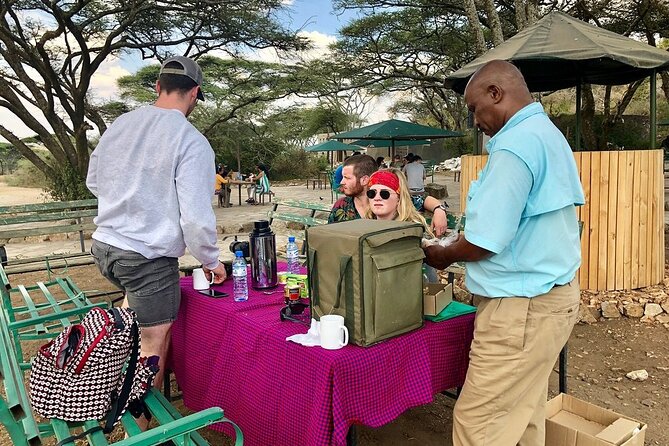
You spend an hour or two walking through town, seeing plantations, market stalls, local crafts, and traditional homes. The area is home to Maasai people and roughly 100 other cultural groups. A stop in an authentic bar for banana beer and lunch prepared by a local mama gives you a taste of daily life that a game drive cannot provide.
This is one of the trip’s most useful details. A safari can become a string of animal sightings viewed through glass. Mto wa Mbu brings the surrounding communities into the picture and gives you a chance to support local food producers and craftspeople.
Afterward, you enter Lake Manyara National Park and camp at Endabash Public Campsite. The day is not excessively long by safari standards, but it combines a road transfer, a cultural walk, lunch, and a park entry. Keep some energy in reserve.
Lake Manyara rewards early starts and patient birdwatching
Lake Manyara is especially good for birdlife. More than 400 species have been recorded here, and you might see around 100 in a single day if conditions cooperate. The hippo pool is a strong place to watch water birds, including pelicans, herons, storks, sacred ibis, glossy ibis, and black egret.
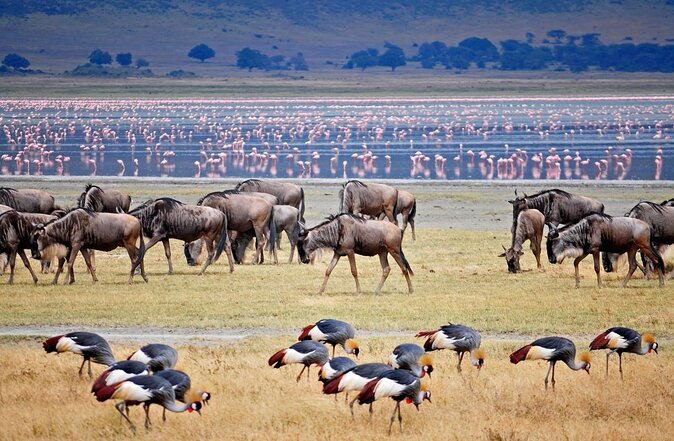
When water levels are favorable, flamingos gather in pink groups along the lake. Birds of prey are also well represented, with more than 50 species recorded, including crowned eagle and African hawk-eagle.
Day four begins with an early morning game drive. That timing matters. The park is quieter, light is softer, and predators are more active before the heat builds. The schedule then continues with more wildlife viewing and a return to camp for food and rest, depending on the guide’s plan.
Lake Manyara can be a rewarding stop for someone who cares about birds as much as large mammals. If your only goal is to see the Big Five, it may feel less dramatic than the Serengeti or Ngorongoro. Its value comes from variety, scenery, and the chance to slow down and observe.
The Serengeti brings the longest road day
Day five takes you from the Manyara area toward the Serengeti through the Ngorongoro Conservation Area. The route covers about 210 kilometers and takes around six hours, with partly paved roads followed by sandy, rough sections.
This is a demanding transfer, but it also functions as a safari. You cross a large portion of central Serengeti near the Seronera River, so animals can appear before you reach camp. You also get broad views toward the Ngorongoro Crater along the way.
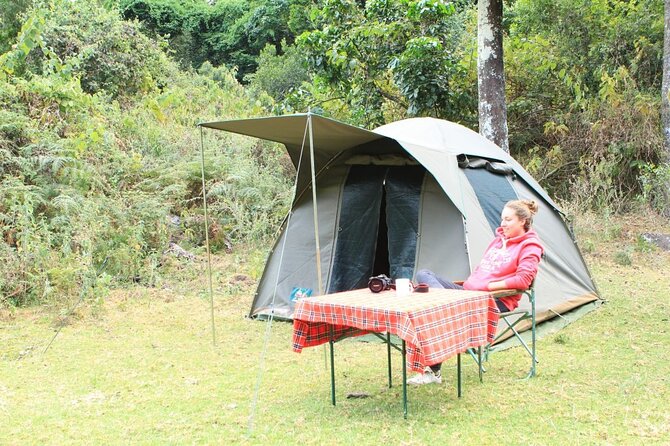
Your base is Seronera Public Campsite. Public camping keeps the price below many lodge-based safaris, but it also means you should be ready for a simpler setup. Camping equipment, meals, and drinking water are included, while bath towels are not.
The Serengeti is a major bird area as well as a mammal destination. More than 500 bird species are recorded, including five species found nowhere else in the Serengeti-Mara ecosystem. The park is famous for the migration, but the wildlife experience is not limited to a particular season. Your guide will still need luck, patience, and sharp eyes.
A few more Arusha trips to weigh up
- Balloon Safari & Bush Breakfast in Serengeti – Miracle Experience
★ 5.0 · 1,646 reviews - 7-Day Premium Luxury Tanzania Safari All-Inclusive
★ 5.0 · 426 reviews - 3-Day Classic Serengeti Safari
★ 5.0 · 263 reviews - 8 Days Great Wildebeest Calving Migration Safari from Arusha
★ 5.0 · 254 reviews
A full Serengeti day gives the wildlife room to unfold
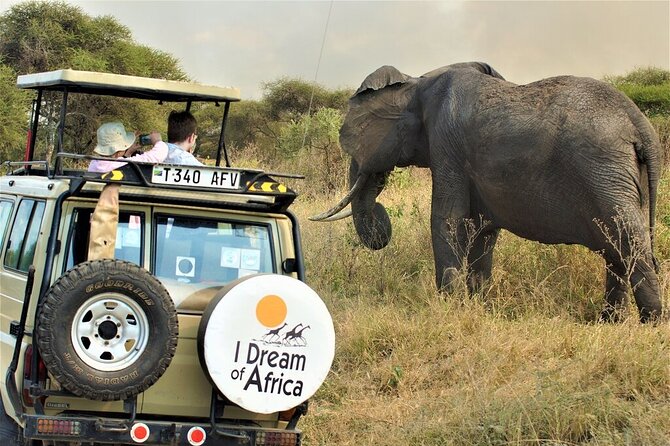
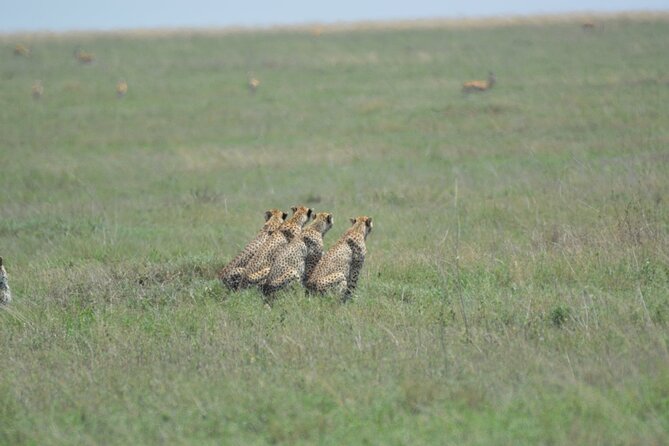
Day six is the safari centerpiece: a full-day drive around the Seronera and Mara River areas. You may look for wildebeest, cheetahs, lions, crocodiles, giraffes, and other animals moving through the grassland.
The descriptions of river crossings should be read as possibilities, not promises. Wildlife does not follow a schedule, and crossing events depend on season, water, and animal behavior. You might instead spend time watching a predator stalk, a crocodile wait near the water, or a giraffe move across the horizon.
The route includes less familiar areas away from the heaviest concentration of vehicles. That can make the day feel more personal, though remote tracks can also mean more bumps and longer periods between sightings.
This is where the quality of the guide matters most. Christopher has been singled out for close attention, clear explanations of wildlife and plants, and strong animal spotting. A past safari also included help with luggage late at night, a small detail that tells you what personal service can mean when something goes wrong.
Ngorongoro combines a sunrise drive with a crater descent
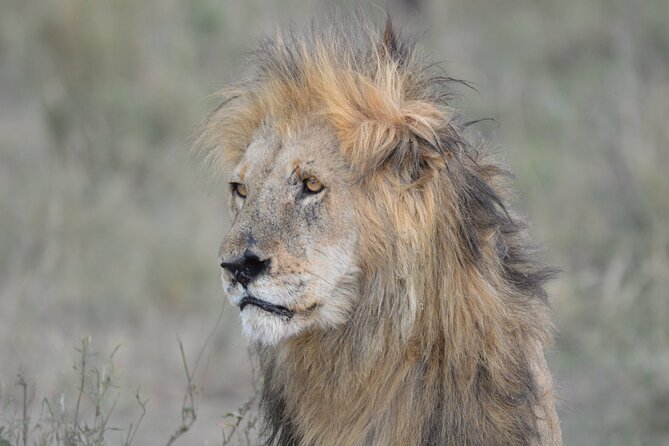
On day seven, you leave the Serengeti early for a final morning game drive. Sunrise is a smart time to be out. Carnivores may still be hunting, and the bush is cooler and quieter.
Around midday, you return to camp for brunch before leaving for the Simba Public Campsite near Ngorongoro. An optional Maasai boma visit is available at extra cost. Ask what the visit includes and how it fits into the day, since the schedule already involves an early start and a transfer.
Day eight is dedicated to the Ngorongoro Crater. You wind down into the caldera with wide views from the rim, then search the crater floor for wildlife. Rhino sightings are possible, as are close encounters with lion prides.
The crater also supports flamingos, sandpipers, storks, vultures, ostriches, kori bustards, crowned cranes, and other grassland birds. Its compact setting can make wildlife viewing feel concentrated, but the crater can also be busy. Your guide’s timing and patience will help you get the most from the visit.
Tarangire closes with elephants and swamp country
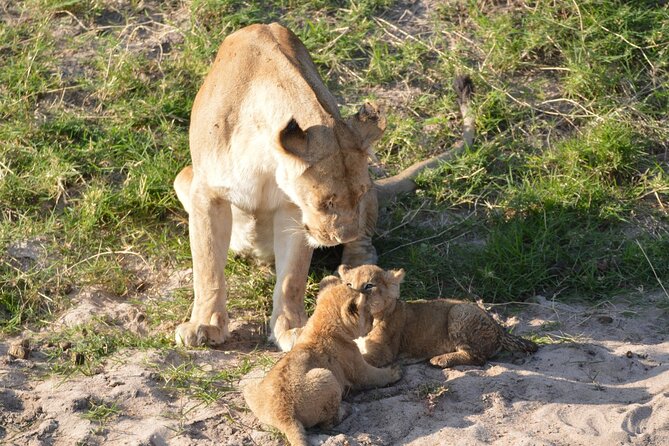
After Ngorongoro, the route continues to Tarangire National Park. Tarangire is well known for elephants, and the itinerary gives you time for a game drive on day eight and another on day nine.
The second drive focuses on Larmaku Swamp, where elephants and other animals may cool off in the water or shelter beneath acacia trees. The swamp is also a productive bird area, with many breeding species in one habitat. You may see dry-country birds such as northern pied babbler and vulturine guineafowl.
Elephants sometimes come close to the campsite near the river. That proximity can be thrilling, but it is also a reminder to follow your guide’s instructions. Wildlife encounters cannot be guaranteed, even when the odds of seeing elephants in Tarangire are described as extremely high.
Tarangire makes a fitting final park because it offers a different feel from the Serengeti. Instead of endless open plains, you get river country, swamps, acacia shade, and large herds of elephants. It is a strong finish for someone who wants both mammals and birds.
What the $3,899 price really covers
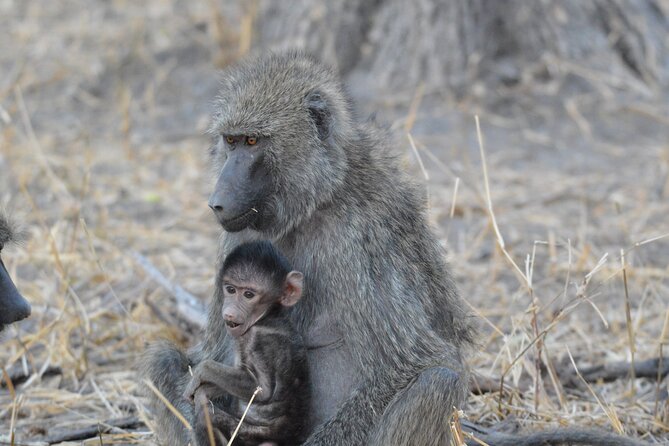
At $3,899 per person, this is not a bare-bones trip. The price includes camping equipment, drinking water on all days, non-resident park fees, a professional driver-guide, nine dinners, ten breakfasts, and ten lunches.
The private format is the biggest value factor. You are paying for a vehicle and guide dedicated to your group, plus a route that covers several of Tanzania’s best-known parks. Public campsites help keep the cost lower than a safari using lodges every night.
Still, you should budget beyond the advertised price. International flights, accommodation before the start and after the finish, towels, visas, insurance, souvenirs, and tips are excluded. The stated tipping guideline is $10 per person per day, which adds about $100 per person for ten days.
This trip is best value for people who want more time in the parks than comfort at night. Before booking, ask exactly what the camping equipment includes and what sleeping arrangements are provided. The title suggests comfort camping, but the listed inclusions do not spell out the tent furnishings or washing facilities.
Who will enjoy this route most
I would recommend this safari to someone with moderate physical fitness who wants a full northern Tanzania circuit and does not mind long drives. The walking day in Arusha is manageable by design, but the road sections, rough tracks, early starts, and repeated camp changes require stamina.
It also suits couples and small private groups. The trip has worked well for honeymooners, and the flexible format lets you shape the pace around wildlife, birds, scenery, or cultural visits. Guides such as Christopher and Japhet have also handled tailored routes that included different parts of the Serengeti and Maasai cultural stops.
You should think twice if you want a fixed luxury standard or short travel days. Public campsites and sandy roads are part of the bargain. You also need to accept that no guide can guarantee a Big Five sighting, a river crossing, or a specific predator encounter.
The operator is described as family-run, flexible, and focused on local community impact. That matters if you prefer a smaller Tanzanian company and direct contact with the people organizing your safari.
Practical details before you commit
Pickup is offered, and the activity uses a mobile ticket. Booking confirmation is received at the time of booking, and the experience is available daily during the stated operating period.
The safari is private, so only your group participates. You need a moderate level of physical fitness, especially for the nature walk, long drives, and uneven roads.
Plan your arrival carefully. A flight after 3 p.m. requires a separate Arusha night, and that lodging is not included. At the end, the driver can take you to an Arusha lodge, Arusha Airport for a domestic flight, or Kilimanjaro International Airport.
Cancellation is flexible up to three full days before the start time, when you can receive a full refund. Within three days, the amount paid is not refunded, and changes are not accepted.
Should you book this safari?
Book it if you want a private, broad-ranging Tanzania safari with real time in five major wildlife areas, local cultural contact, and a pace that can adjust to your group. The combination of Arusha’s walking trails, Manyara’s birdlife, the Serengeti’s predators, Ngorongoro’s crater floor, and Tarangire’s elephants gives you a well-rounded trip.
Do not book it expecting lodge luxury or easy roads. Ask detailed questions about the camping setup, confirm your airport timing, and set aside money for tips, visas, insurance, and extra accommodation.
For an active couple, a small family group, or friends who value wildlife, personal guiding, and local connections over polished rooms, this is a strong choice at the price. If you can accept the dust and the early mornings, the route gives you a lot of Tanzania in ten days.
FAQ
How long is the safari?
The safari lasts approximately 10 days, beginning near Arusha and ending with transport to Arusha, Arusha Airport, or Kilimanjaro International Airport.
What parks and areas does the route visit?
The route includes Arusha National Park, Lake Manyara National Park, Serengeti National Park, the Ngorongoro Conservation Area, the Ngorongoro Crater, and Tarangire National Park.
Is this a private tour?
Yes. Only your group participates in this private activity.
Is airport pickup available?
Yes. Pickup is offered, and the trip begins with a transfer from Kilimanjaro International Airport.
What happens if my flight arrives after 3 p.m.?
You cannot drive to the Arusha National Park campsite after that time. You need to stay at a lodge in Arusha, and that accommodation is not included in the tour price.
What is included in the price?
The price includes camping equipment, drinking water on all days, non-resident park fees, a professional driver-guide, nine dinners, ten breakfasts, and ten lunches.
What is not included?
International flights, accommodation before and after the safari, bath towels, souvenirs, travel insurance, visa fees, and tips are not included.
Is a nature walk part of the itinerary?
Yes. On day two, you take a nature walk in Arusha National Park with an armed ranger. The walk generally lasts two to four hours and can be adjusted in length.
Can I cancel for a full refund?
Yes, if you cancel at least three full days before the experience start time. Cancellations within three days are not refunded, and changes within that period are not accepted.
Just added around Arusha
- 8 Days Serengeti Migration safari★ 5.0 · 11 reviews
- tarangire, ngorongoro & lake manyara park 3 days private tour★ 5.0 · 11 reviews
- tarangire & ngorongoro 2 days tour★ 5.0 · 14 reviews
- Mt. Kilimanjaro: Shira plateau to Cathedral point 3872m Day hike★ 5.0 · 7 reviews
- serengeti, ngorongoro & tarangire 4 days private tour★ 5.0 · 18 reviews
- serengeti & ngorongoro 3 days private tour★ 5.0 · 15 reviews
- 2 Days Tanzania Midrange Group Join Safari★ 5.0 · 7 reviews
- climb the KILIMANJARO via Lemosho route★ 5.0 · 4 reviews
Camping Safaris, compared.



3 Days Serengeti & Ngorongoro Group Camping Safari
Read our review →
5 Days Camping Tarangire, Serengeti & Ngorongoro crater & Visiting Maasai
Read our review →
2 Days Tarangire and Ngorongoro Group Camping Safari
Read our review →

3 Days Tarangire, Ngorongoro & Lake Manyara Group Camping Safari
Read our review →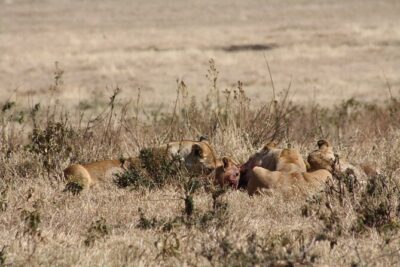
5-Day private Camping Safari Tour in Tanzania
Read our review →Browse the lists this tour appears in