Reviewed · SAFARI
8 Days Great Wildebeest Calving Migration Safari from Arusha
The main reason to choose this safari is timing. From December through April, the southern Serengeti and Ndutu area can fill with wildebeest mothers and newborn calves, along with predators waiting for an easy meal. February is the key window, but nature keeps its own calendar, so no operator can promise a particular scene.
I like the broad route, which gives you elephants and baobabs in Tarangire, a compact wildlife circuit at Manyara, the calving grounds at Ndutu, big-cat country in the Serengeti, and the wildlife-packed Ngorongoro Crater. I also like the practical package: airport transfers, private vehicle, meals, park fees, bottled water, and seven nights of accommodation are included.
The tradeoff is time on the road. Eight days covers a lot of ground, and the move from northern parks to Ndutu and then central Serengeti can mean long, bumpy drives. You gain variety and a strong chance of seeing the migration, but this is not a slow, stay-in-one-camp safari.
Key points before you book
- Calving season is the headline: The best chance for newborn wildebeest comes around February and may last about three weeks.
- Five major safari areas are included: Tarangire, Lake Manyara, Ndutu, central Serengeti, and Ngorongoro Crater.
- A private vehicle keeps the schedule flexible: Your guide can focus on wildlife sightings and adjust the day’s pace.
- The route mixes scenery with animals: Expect baobabs, soda lakes, short-grass plains, swamps, woodland, and crater views.
- The package covers the costly basics: Accommodation, meals, entrance fees, transport, bottled water, and a driver-guide are included.
- The group limit is seven: That is small enough to keep the vehicle from feeling crowded, though the listing does not clarify the exact vehicle arrangement for each booking.
Why the Ndutu calving season matters
The wildebeest migration is not a single parade moving past one viewpoint. It is a huge annual cycle, shaped by rain, grass, water, and instinct. During the calving period, herds gather on the southern Serengeti’s short-grass plains, especially around Ndutu.
This is one of the most rewarding times to visit because the spectacle is not only about numbers. You may see very young calves finding their feet, protective adults staying close, and predators drawn to the concentration of prey. The same conditions that make the area special also make it emotionally charged. A lion, cheetah, or hyena encounter can feel close and immediate.
The timing needs careful handling. December to April is a wide seasonal range, while the main calving burst is described as lasting roughly three weeks around February. If your priority is newborn calves, ask for dates as close as possible to that period. If you visit earlier or later, you can still see wildebeest and zebras, but the calving action may be less intense.
A few more Arusha trips to weigh up
- Balloon Safari & Bush Breakfast in Serengeti – Miracle Experience
★ 5.0 · 1,646 reviews - 4 Days Group Camping Safari
★ 5.0 · 1,101 reviews - 5 Days Group Camping Safari
★ 5.0 · 730 reviews
Day 1: A soft landing at Mount Meru Hotel
Your trip begins with pickup at Kilimanjaro Airport and transport to Mount Meru Hotel. The stated meeting point is in Arusha, with an 8:30 am start time for the safari portion, so confirm the relationship between your arrival time, hotel check-in, and next morning’s departure before you book flights.
This first night is useful rather than flashy. It gives you a place to rest before the long park days begin and removes the need to arrange your own airport transfer. If you are arriving tired after an international flight, that simple handoff matters.
Arusha is the practical gateway for this northern Tanzania route. The next morning brings the first real safari stop, so use the arrival day to organize luggage, charge cameras, and tell the operator about dietary needs.
Day 2: Tarangire’s elephants and baobab trees
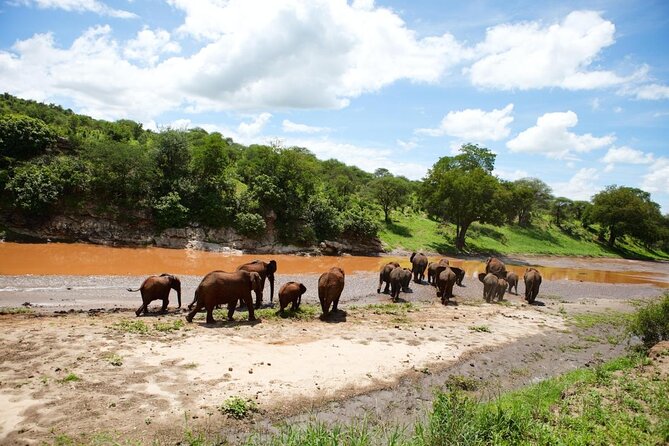
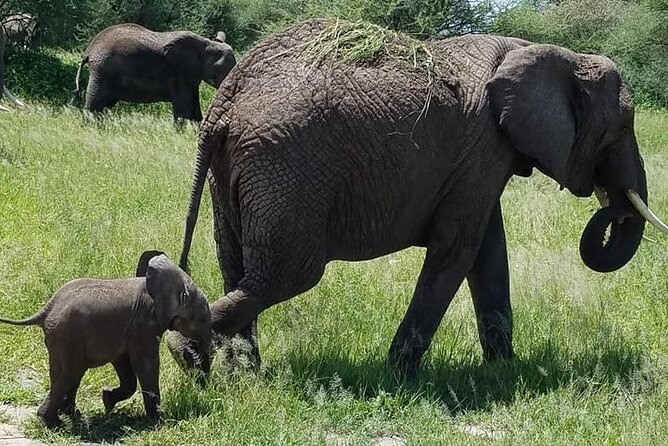
Tarangire National Park opens the wildlife portion of the trip with a very different feel from the Serengeti. The park is known for large elephant herds, baobab trees, and its year-round river. The river helps explain why animals gather here, particularly when other water sources are less reliable.
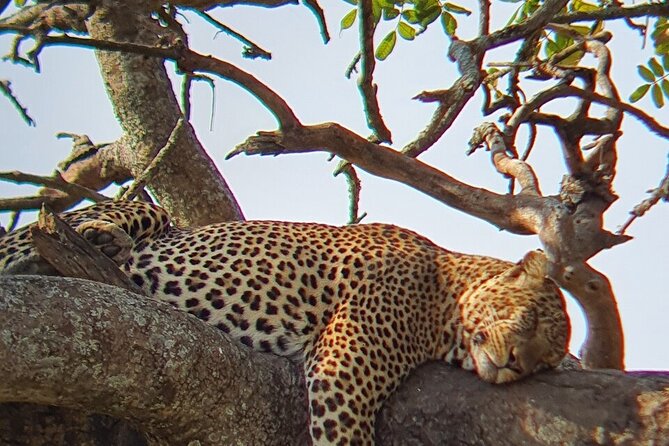
I especially like Tarangire as a first park because it gives you immediate variety. The giant baobabs create memorable photographs, while elephants provide the kind of close wildlife viewing that makes a first game drive feel substantial. Tree-climbing lions are also associated with the park, though sightings are never guaranteed.
You spend the night in a luxury tented camp. That phrase can cover different standards from one property to another, so ask for the specific camp name if room style and facilities matter to you. The package includes breakfast, lunch, and dinner on this day, which keeps meals simple while you are out in the field.
Day 3: Lake Manyara’s compact wildlife circuit
Lake Manyara National Park is smaller and more concentrated than the Serengeti. The park combines lake views, woodland, and a compact game-viewing route, giving you a different kind of safari day. Ernest Hemingway called it one of the loveliest places he had seen in Africa, and the appeal is easy to understand: the lake adds open horizons to a park otherwise framed by vegetation.
This stop works well as a contrast to Tarangire. You are not simply ticking off another park. You are seeing how wildlife uses a different setting, with the lake and surrounding habitats shaping the experience. The description also points to the park’s broad range of plant and animal life.
The practical drawback is that a compact area can feel less expansive than the Serengeti. If your dream is endless grassland, Manyara may seem like a brief interlude. I think it earns its place because the route would otherwise lean heavily toward open plains and long drives.
Your overnight stay is at a luxury lodge. Breakfast, lunch, and dinner are included, as they are on most full safari days.
Same country, a completely different kind of safari:
- Tanzania Classic – 7 Days
★ 5.0 · 1,151 reviews - Materuni Waterfalls, coffee tour & Kikuletwa Hot Springs
★ 5.0 · 643 reviews - 3 Days Serengeti & Ngorongoro Group Camping Safari
★ 5.0 · 574 reviews - 7-Day Premium Luxury Tanzania Safari All-Inclusive
★ 5.0 · 426 reviews
Day 4: Reaching the southern Serengeti and Ndutu
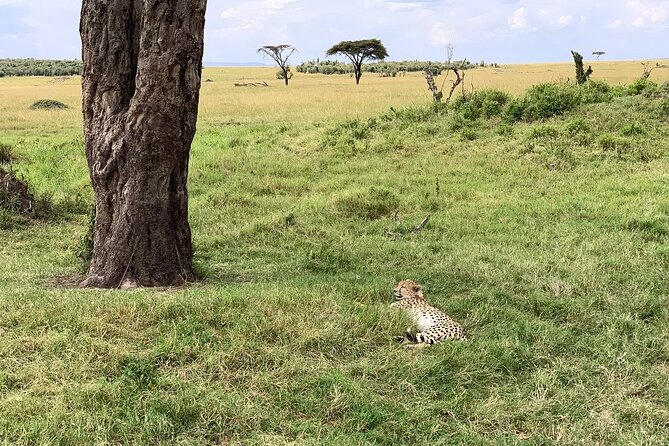
After breakfast, you head toward Ndutu, part of the Ngorongoro Conservation Area and the southern Serengeti ecosystem. This is the point where the itinerary shifts from a general northern safari to a trip built around the migration.
Lake Ndutu is alkaline, like many Rift Valley lakes, yet its water is used by local wildlife. Around it, you can find a mix of habitats rather than one unbroken plain. That matters because different animals prefer different ground, and the setting can change quickly from open grass to woodland, swamp, or lakeshore.
The drive is one of the demanding parts of the journey. You are covering serious distance to reach the calving area, and road conditions can make the day tiring. Still, this long transfer is what puts you in the right part of Tanzania at the right season. A shorter itinerary may be easier, but it would not provide the same time in both Ndutu and central Serengeti.
You sleep in another luxury tented camp. Confirm how many nights are spent at each property, since the itinerary names accommodation types but not every camp.
Day 5: A full Ndutu game drive
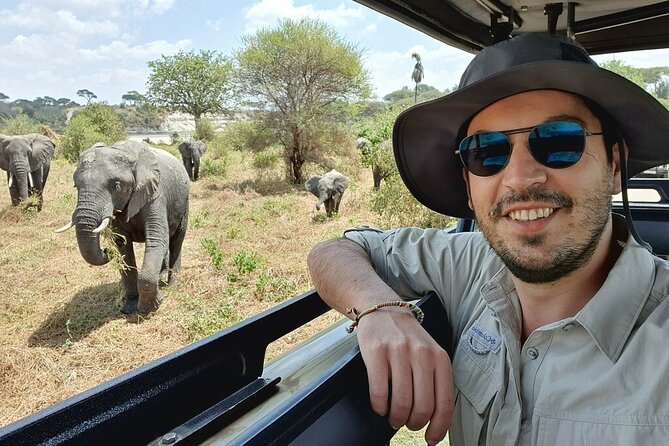
This is the trip’s most important day for the calving season. You spend a full day around Ndutu, exploring swamps, woodland, soda lakes, and short-grass plains. Those habitats give your guide several ways to search for wildlife, and the open plains are the main stage for wildebeest and zebra.
Around February, the focus is likely to be on mothers, calves, and the predators that follow the herds. Lions, cheetahs, hyenas, and other meat-eaters may be active in the area, but sightings depend on weather, animal movement, and luck. A good guide can improve your chances by reading tracks, watching animal behavior, and sharing information about the ecosystem, but even the sharpest guide cannot control the wildlife.
This is where guide quality really matters. The operator’s guide team includes names such as William David, Albert, Emanuel, George Matias, Calvin Kileo, Ombeni, Rahim, Innocent Mafuru, Michael Sangiwa, and Michel. Their reported strengths include finding animals early, explaining plants and wildlife, handling rough roads, and keeping children engaged. Your actual guide is assigned by the operator, so request a preferred guide if that is important to you, but do not assume a specific person is guaranteed.
After the drive, you stay in a luxury tented camp. A full day in the vehicle can be dusty and tiring, especially for young children or anyone who struggles with rough roads. The moderate fitness requirement is worth taking seriously.
Day 6: Tracking the migration in central Serengeti
The sixth day shifts north toward central Serengeti. Here, the purpose is to follow migration trails and continue game drives in one of Africa’s best-known wildlife regions. The central zone gives you a broader sense of the Serengeti beyond the calving grounds.
The value of this day is contrast. Ndutu is about a seasonal concentration of animals, while central Serengeti gives you a wider safari experience. You may be looking for lions, leopards, rhinos, elephants, and other plains wildlife, with the guide explaining how the migration connects the different regions.
Several guide accounts emphasize sharp eyesight. One guide, Albert, is praised for spotting animals before passengers could find them with binoculars. William David is associated with repeated Big Five sightings and clear answers to questions. Those details are useful because a safari guide is not just a driver. The guide sets the pace, explains behavior, chooses routes, and helps you make sense of what you are seeing.
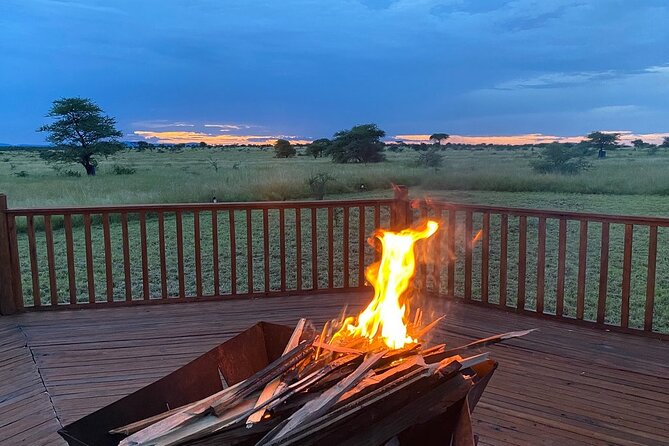
You spend the night in a luxury tented camp. Ask how much driving is planned on this day, since the route between southern and central Serengeti can be substantial.
Day 7: Ngorongoro Crater’s concentrated wildlife
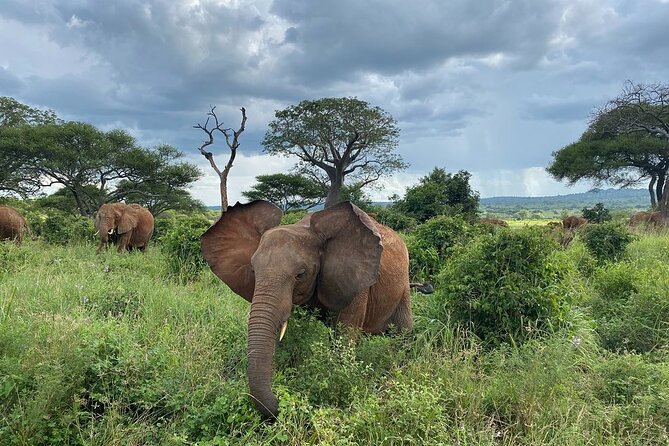
The route then heads to the Ngorongoro Conservation Area, followed by a descent of about 600 meters into the famous crater. The crater is a natural enclosure with a high concentration of wildlife, making it one of Tanzania’s most efficient game-viewing settings.
I like the crater near the end of the trip because it offers a strong final wildlife day after the open spaces of the Serengeti. The scale changes. Instead of following a moving herd across huge plains, you are looking across a defined basin where many animals can be seen in a relatively concentrated area.
The crater can also be busy, and its compact viewing area does not offer the same sense of solitude as the wider Serengeti. That is the price of its reliable wildlife potential. The day may also feel full after several long drives, so keep your expectations practical.
Your overnight stay is at a luxury lodge. Breakfast, lunch, and dinner are included.
Day 8: Mto wa Mbu culture before departure
The final day leaves the wildlife route for Mto wa Mbu. After breakfast, you take part in a morning cultural tour and walking safari, followed by a local lunch and views over the surrounding area. This adds a human and community-focused note to a trip that otherwise centers on national parks and animals.
I appreciate this ending. A safari should not be only a sequence of sightings from a vehicle. The Mto wa Mbu visit gives you time on foot and a chance to connect the park circuit with daily life in northern Tanzania.
In the afternoon, the tour returns to Arusha or the airport for your flight home. Be careful with same-day international connections. The itinerary provides a return transfer, but it does not state a guaranteed arrival time, so leave a generous buffer before departure.
What the $2,999.62 price covers
At $2,999.62 per person, this is a major purchase, but the price includes many of the expenses that can quickly add up on a Tanzania safari. You receive seven nights of accommodation, meals listed by day, park entrance fees, bottled water, airport pickup and drop-off, private-vehicle transport, and a driver-guide.
The private vehicle is an important part of the value. It gives your party a dedicated guide and avoids the uncertainty of a large shared vehicle. The maximum group size is seven, which is still small by safari standards, but ask if your booking is fully private and how many people will share the vehicle.
Alcohol is not included, though it is available to buy. Specific camp names, room details, and vehicle specifications are not provided, so compare those points before paying a deposit. The strongest value here comes from the route and the included park fees, not from assuming every luxury tented camp is identical.
Who will enjoy this safari most
This trip suits you if the calving season is your main goal and you want a broad northern Tanzania itinerary without arranging each transfer yourself. It also works well for first-time safari visitors who want a guide to handle the roads, park entries, meals, and daily schedule.
Families can consider it, since children are allowed when accompanied by an adult, and Michael Sangiwa is praised for being patient and engaging with children. Still, eight days of early starts, rough roads, and long transfers can test very young children. Bring that concern to the operator before booking.
You should also have a moderate level of physical fitness. Most viewing is from the vehicle, but the itinerary includes a walking safari at Mto wa Mbu and long days outdoors.
The cancellation terms are useful: you can receive a full refund if you cancel at least 24 hours before the start time. Poor weather or failure to reach the minimum number of participants may lead to a new date, another experience, or a full refund.
Should you book the 8-day calving safari?
Book it if you want the migration at its most dramatic and you are willing to accept long drives in exchange for reaching Ndutu. The combination of Tarangire, Manyara, southern Serengeti, central Serengeti, Ngorongoro, and Mto wa Mbu gives you far more than a single-park safari.
I would choose it for a first Tanzania safari, a wildlife-focused family trip with realistic expectations, or a special journey built around newborn wildebeest and predator action. I would think twice if you dislike moving hotels, rough roads, or tightly planned days.
Before booking, ask for your exact camp names, likely guide, vehicle setup, and proposed dates around the February calving peak. If those details suit you, this is a well-packed way to see Tanzania’s northern circuit while keeping the major costs under one booking.
FAQ
How long is the safari?
The experience lasts approximately eight days and includes seven nights of accommodation.
Where does the safari start?
The meeting point is in Arusha, in Tanzania’s Arusha Region. Airport pickup is provided from Kilimanjaro Airport.
What time does the tour start?
The stated start time is 8:30 am. Confirm the exact pickup arrangement with the operator before the safari.
Which national parks and areas are included?
The route includes Tarangire National Park, Lake Manyara National Park, the Ndutu area, central Serengeti National Park, the Ngorongoro Conservation Area and Crater, and Mto wa Mbu.
Is food included?
Yes. Breakfast, lunch, and dinner are included on the days marked B/L/D. Breakfast and lunch are included on the final day.
Are airport transfers included?
Yes. Airport pickup and drop-off are included, with the final transfer going to Arusha or the airport.
Can children join the safari?
Yes. Children must be accompanied by an adult. The activity also advises that participants should have a moderate level of physical fitness.
Just added around Arusha
- 8 Days Serengeti Migration safari★ 5.0 · 11 reviews
- tarangire, ngorongoro & lake manyara park 3 days private tour★ 5.0 · 11 reviews
- tarangire & ngorongoro 2 days tour★ 5.0 · 14 reviews
- Mt. Kilimanjaro: Shira plateau to Cathedral point 3872m Day hike★ 5.0 · 7 reviews
- serengeti, ngorongoro & tarangire 4 days private tour★ 5.0 · 18 reviews
- serengeti & ngorongoro 3 days private tour★ 5.0 · 15 reviews
- 2 Days Tanzania Midrange Group Join Safari★ 5.0 · 7 reviews
- climb the KILIMANJARO via Lemosho route★ 5.0 · 4 reviews
Safari, compared.

Serengeti Balloon Safari and authentic bush breakfast
Read our review →
Mikumi Safari Day Trip with Flights and Meal
Read our review →


3 Days Serengeti & Ngorongoro Group Camping Safari
Read our review →
7-Day Premium Luxury Tanzania Safari All-Inclusive
Read our review →