
Reviewed · WORKSHOPS
Private Traditional Pottery Class near Arusha
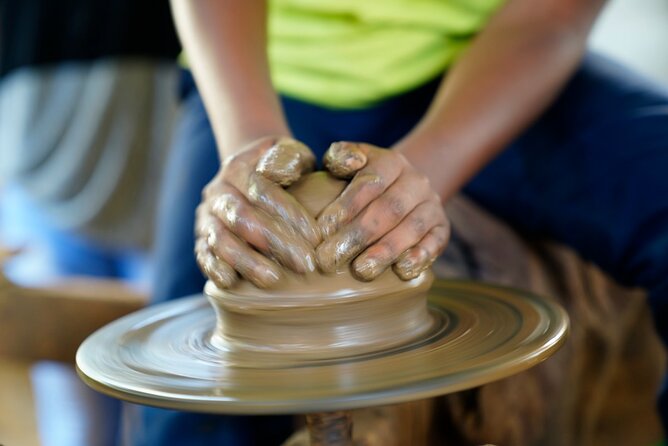
The most memorable part of this Arusha-area outing is the chance to work with locally mined clay on a foot-powered wheel. You are not simply watching a craft demonstration. With help from a local potter such as Kitomary, you shape, trim, and fire your own piece, then take home a useful reminder of Tanzania.
I like two things here: the class offers a close look at Meru culture, and the visit to The Small Things connects your spending with work supporting children and families. Guides such as Reuben and Andrew have also helped make the day welcoming for families and solo visitors. The main consideration is lunch: one description says it is provided, but the detailed inclusions say it costs an extra $10, so confirm this before booking.
Key points to know before you book
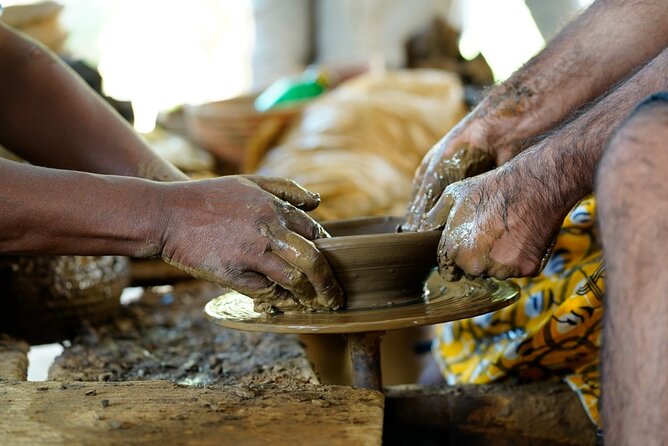
- Foot-powered pottery wheel: Learn a traditional method that gives you a direct feel for the clay, rather than using a modern electric studio setup.
- A real community connection: Visit The Small Things, an organization supporting orphaned and vulnerable children and local families.
- A handmade souvenir: Your own clay creation gives you a personal memento, though you should ask how and when the finished piece will be ready.
- Small group setting: The maximum is eight people, which leaves room for individual help at the wheel.
- Meru culture included: A local guide explains the history and customs of the Meru people during the outing.
- Plan your own transport: Hotel or Arusha pickup is not included, and the meeting point is listed on an unnamed road in Tanzania.
Why this pottery class feels different from a standard craft stop
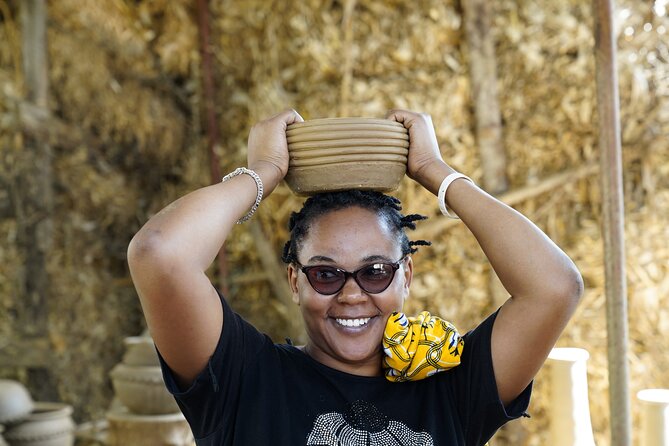
Many craft activities put you behind a rope while someone else does the interesting work. This one puts your hands into the process. You prepare local clay, turn it on a foot-powered wheel, trim the shape, and take part in traditional firing.
That matters because pottery is not just a souvenir here. It is a working skill tied to local materials and local makers. You get a better sense of the patience involved when the potter guides your hands and the clay refuses to do exactly what you want.
The experience takes place in Tengeru, near Arusha. Its setting gives the outing a village connection rather than a polished tourist-studio feel. That can be a strength if you want direct contact with local life. It can also mean the experience feels less scripted, so come ready for a class shaped by the potters, the group, and the conditions on the day.
The group limit of eight is useful. Pottery takes close attention, especially when you first try to keep a lump of clay centered. A small group gives the instructor a better chance to correct your technique instead of leaving you to struggle alone.
A few more Arusha trips to weigh up
- NGO Lifted Strong – Traditional Tanzanian Cooking Class
★ 5.0 · 39 reviews - Arusha: Traditional Tanzania Cooking Class & Food Market Tour
★ 5.0 · 34 reviews - Cooking and Sewing & Jewelry Workshops in Arusha
★ 5.0 · 14 reviews
Starting at The Small Things
The first stop is The Small Things, where you learn about support for orphaned and vulnerable children and families in the community. This is more than a quick introduction to a charity attached to a tour. It gives context for the way the activity connects visitors with local work.
You should pay attention to what the guide explains about the organization and how your visit supports it. The value here is not only financial. You get a chance to understand the people and projects behind the community link, rather than treating the pottery class as an isolated activity.
The stop may be especially meaningful for visitors who want their spending to support a local effort. At the same time, it is fair to keep expectations grounded. This is a short visit within a two-hour activity, not a full volunteer placement or extended social program.
Lunch may be available at The Small Things for an additional $10. The supplied information is inconsistent, since the highlights refer to lunch as provided while the inclusions list lunch as not included. I would confirm the current arrangement before you go, including whether the meal is part of your price or paid separately.
Bottled water is listed as included. Still, a morning or afternoon around clay can be warm and dusty, so you may prefer to carry extra water if you need more than one bottle.
Meeting the potters in Tengeru
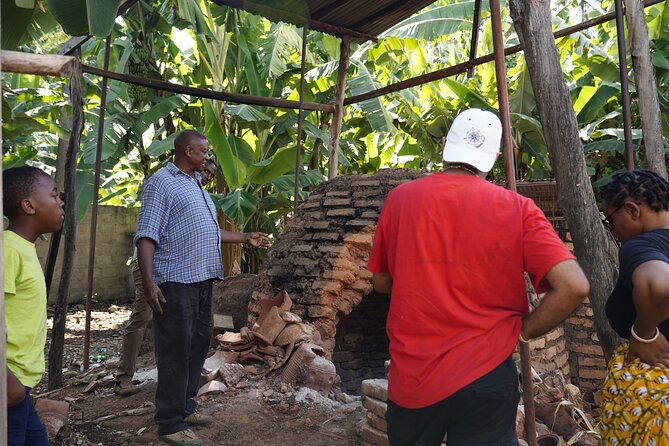
After The Small Things, you go to Tengeru to meet local potters. The class covers several stages of the craft:
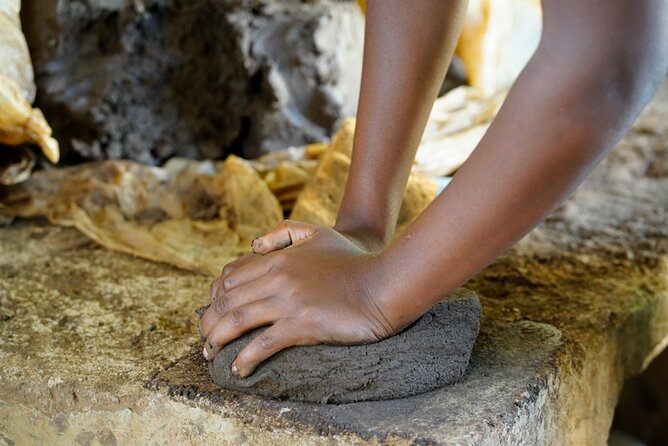
- Preparing the clay
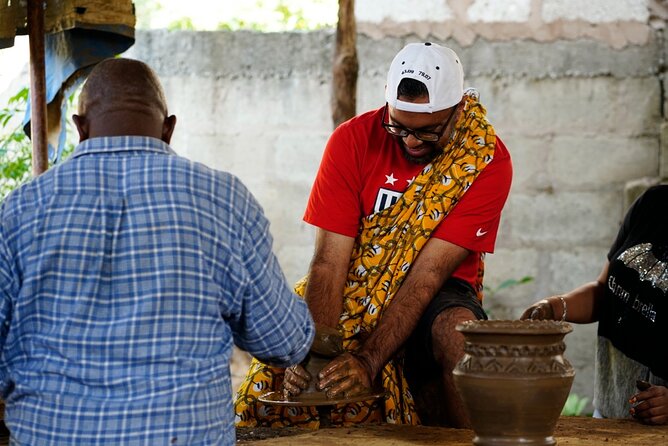
- Turning it on a foot-powered wheel
- Trimming the form
- Firing it in a traditional kiln
The order gives you a useful sense of pottery from start to finish. Preparing the clay shows that the craft begins well before the wheel. Turning it teaches balance and control. Trimming is where the shape gets cleaned up, and firing changes soft clay into a lasting object.
The foot-powered wheel is one of the best features of the class. You control the wheel with your feet while using your hands to shape the clay. That split task can take concentration, especially if you have never tried pottery before. The method also shows how much skill local potters have built through repetition.
Kitomary is identified as the artist who teaches the clay work on some visits. The descriptions of his instruction point to a teacher who explains the process clearly and shares practical knowledge about clay. Reuben is also named as a guide, including on a family visit, while Andrew has helped lead the experience for a solo participant. Guide assignments may change, so do not assume one particular person will be present unless the provider confirms it.
You do not need prior pottery experience. The activity is designed around instruction and hands-on practice, and most people can participate. Expect to get your hands dirty. Wear clothing and shoes that can handle clay, even though the supplied information does not set a formal dress code.
What you can actually make in two hours
Two hours is enough for a satisfying introduction, but it is not a full pottery apprenticeship. You will learn the main steps and create your own object with guidance. The exact size, shape, and finish will depend on your technique and the time available.
The chance to take the piece home gives the activity a strong finish. A handmade object carries more meaning than a shop-bought trinket because you remember the wobble of the clay, the corrections from the potter, and the effort needed to keep the form together.
There is one practical point to clarify: the description says you will fire the piece and take it home, but it does not explain how long the kiln process takes or whether the item is collected later the same day. Ask the provider how finished pottery is handled. If the piece needs more time to dry or fire, you may need to arrange collection or confirm that it can be transported later.
The class is not likely to suit someone seeking a perfectly finished studio object with no imperfections. Your creation may show fingerprints, uneven edges, or a shape that is more personal than polished. That is part of the appeal, but it is worth knowing before you book.
Same country, a completely different kind of safari:
- Balloon Safari & Bush Breakfast in Serengeti – Miracle Experience
★ 5.0 · 1,646 reviews - Tanzania Classic – 7 Days
★ 5.0 · 1,151 reviews - 4 Days Group Camping Safari
★ 5.0 · 1,101 reviews - 5 Days Group Camping Safari
★ 5.0 · 730 reviews
Learning about the Meru people along the way
The local guide also introduces the culture and history of the Meru tribe. This adds meaning to the outing because you are not only learning a technique. You are hearing how a local tradition fits into the community around Arusha.
The cultural explanation is likely to be conversational and tied to the places you visit. That is often more useful than a long museum-style lecture. You can ask questions as the day unfolds, and the small group size should make it easier to do so.
The activity is a good choice if you want an experience that combines making, conversation, and community contact. It is less suitable if you prefer a tightly timed sightseeing tour with several major landmarks. The focus here is narrow by design: one community visit, one craft, and an introduction to local culture.
Families can enjoy the class because each person can make a piece. One family of five used the outing as a shared activity, and a child also had the chance to milk a cow during that visit. That farm detail is not promised as part of every booking, so treat it as a possible extra rather than a scheduled feature.
Solo visitors can also fit comfortably into the group. The activity has a social side without requiring you to arrive with companions, and the maximum of eight helps keep the setting personal.
The community value, and the questions worth asking
The link with The Small Things is one of the strongest reasons to choose this class instead of a generic pottery workshop. Your visit supports an organization working with vulnerable children and families, while the class itself pays local potters for their skills.
You should still ask clear questions. Responsible community tourism depends on consent, respect, and fair treatment. The information provided says the community link is made with respect for different viewpoints and wishes, but it does not spell out exactly how every part of the visit operates. A quick conversation with the provider can help you understand what you will see and how your payment helps.
I would ask:
- Is the $10 lunch optional or already included?
- Will the pottery be ready to take home that day?
- If not, can it be collected or shipped later?
- Who will guide the class on your date?
- Where exactly should you meet, since the listed starting point is an unnamed road?
- Is the activity still running if rain is expected?
These are not signs of a problem. They are sensible questions when an experience combines a working community organization, traditional production, and outdoor travel.
Price, group size, and the transport question
The price is $50 per person. For that amount, you receive instruction, clay, tools, equipment, bottled water, the community visit, and roughly two hours of activity. There is also a group discount option, which may improve the value for families or friends booking together.
I consider the price reasonable if you place value on direct instruction and a small-group setting. You are paying for access to local makers, not just admission to a place. The handmade object adds value, too, although its quality will depend on your own result and the firing arrangements.
The price is less attractive if you are mainly looking for a cheap souvenir or a quick photo stop. You could spend less at a market, but you would miss the process and the chance to make the item yourself.
Pickup from hotels or Arusha is not included. This is the biggest logistical point to settle before booking. The meeting information gives an unnamed road in Tanzania, so request clear directions and agree on how you will reach the starting point. The experience is near public transportation, but no specific route or fare is supplied.
Confirmation is received at booking, and mobile tickets are available. The maximum group size is eight. Service animals are allowed, and most people can participate, though the activity involves working with clay and using a foot-powered wheel.
Weather, timing, and what to bring
The experience requires good weather. If poor weather forces cancellation, you can choose another date or receive a full refund. You can also cancel for a full refund up to 24 hours before the start time. Changes or cancellations inside that 24-hour window are not accepted and are not refunded.
A practical packing list is simple:
- Clothes that can get dirty
- Shoes suitable for a clay-working area
- Water beyond the included bottle if needed
- A way to protect your finished pottery during transport
- Your booking confirmation and meeting details
The activity lasts about two hours, though the exact flow may vary between the community visit, travel to Tengeru, and pottery work. If you have a tightly packed safari or airport schedule, leave extra time around the class. The listed duration is approximate, and the meeting and return point is the same location.
Who should book this Arusha experience?
I would recommend it to families, couples, solo visitors, and small groups who want to make something rather than only look at sights. It works especially well for anyone interested in local crafts, community projects, and a more personal encounter near Arusha.
It is also a strong choice for children old enough to follow instructions and work with clay. The family experience shows how the class can become a shared activity instead of separate sightseeing. Ask the provider about the ages in your group if you are booking with very young children.
You may want to skip it if you dislike messy hands-on work, need guaranteed hotel transport, or expect a finished professional-quality pot every time. It is also not the right fit if you want a long cultural tour with several major stops.
Should you book the pottery class?
Book it if you want a small, practical activity with a clear local connection. The foot-powered wheel, Meru cultural explanation, community visit, and personal pottery piece give the outing more substance than a basic craft demonstration.
Before paying, confirm the lunch arrangement, exact meeting instructions, guide availability, and how you receive the fired pottery. With those details settled, the $50 price offers fair value for a two-hour class that supports local makers and gives you a souvenir you helped create.
FAQ
How long does the pottery class last?
The activity lasts approximately two hours.
Where does the experience take place?
It begins near Arusha and includes a visit to The Small Things before continuing to Tengeru for the pottery class.
What pottery techniques will I learn?
You will learn how to prepare the clay, turn it on a foot-powered wheel, trim your creation, and fire it in a traditional kiln.
Can I take my pottery home?
The activity says you can take home your pottery creation. Ask the provider how long firing takes and whether the piece is ready that day.
Is lunch included?
The information is inconsistent. Lunch is described as available for an extra $10 at The Small Things, while another section refers to lunch as provided. Confirm the current arrangement before booking.
Is bottled water included?
Yes. Bottled water is listed among the included items.
Is transportation from my hotel included?
No. Pickup from local hotels or Arusha is not included. The meeting point is listed on an unnamed road in Tanzania, so request exact directions.
How many people can join the activity?
The maximum group size is eight people. Group discounts are available.
What happens if bad weather cancels the class?
If poor weather causes cancellation, you can choose a different date or receive a full refund. You can also cancel up to 24 hours before the start time for a full refund.
Just added around Arusha
- 8 Days Serengeti Migration safari★ 5.0 · 11 reviews
- tarangire, ngorongoro & lake manyara park 3 days private tour★ 5.0 · 11 reviews
- tarangire & ngorongoro 2 days tour★ 5.0 · 14 reviews
- Mt. Kilimanjaro: Shira plateau to Cathedral point 3872m Day hike★ 5.0 · 7 reviews
- serengeti, ngorongoro & tarangire 4 days private tour★ 5.0 · 18 reviews
- serengeti & ngorongoro 3 days private tour★ 5.0 · 15 reviews
- 2 Days Tanzania Midrange Group Join Safari★ 5.0 · 7 reviews
- climb the KILIMANJARO via Lemosho route★ 5.0 · 4 reviews
Workshops, compared.
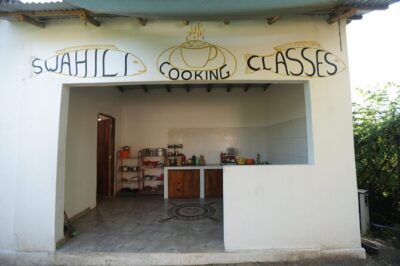
Half-Day Kuza Cave Swimming Adventure and Cooking Class
Read our review →
NGO Lifted Strong – Traditional Tanzanian Cooking Class
Read our review →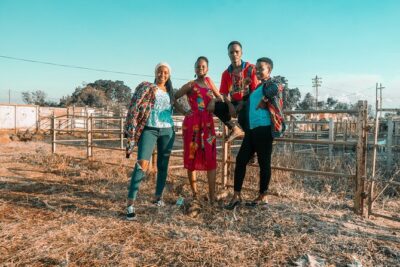
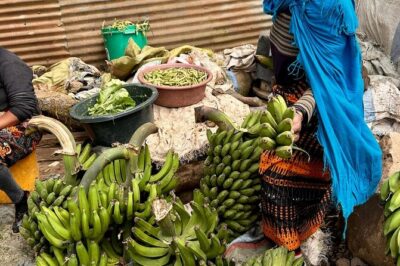
Traditional Tanzania Cooking Class & Food Market Tour
Read our review →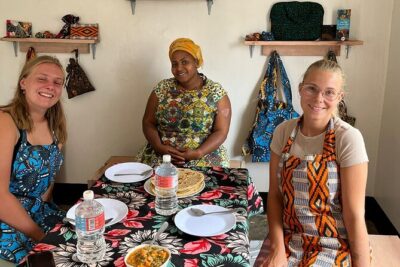
Cooking and Sewing & Jewelry Workshops in Arusha
Read our review →
Mnemba Dolphin Tour, Clear Kayak, Cooking Class, Horse Riding
Read our review →Browse the lists this tour appears in