
Reviewed · CAMPING SAFARIS
Embark on a 5-day camping safari adventure.
The big appeal here is the route: Tarangire, Serengeti, and Ngorongoro in five days, with two nights in the Serengeti rather than rushing through for a single game drive. You get a proper taste of Tanzania’s northern circuit, from Tarangire’s wildlife to the open Serengeti plains and the Ngorongoro Crater’s packed animal population.
I like the small private group of up to six and the fact that park fees, tented accommodation, meals, bottled water, and a driver-guide are included. I also like the infinity pool at Migombani Campsite, a welcome comfort after Tarangire. The main drawback is the pace: long drives, early starts, picnic lunches, and four nights under canvas will suit an adventurous safari-goer more than someone seeking a soft hotel holiday.
At a glance
- Three famous parks in five days: Tarangire, Serengeti, and Ngorongoro all appear on one compact route.
- Two nights in Seronera: You get a full day in the Serengeti, not just a drive-through visit.
- Private group, maximum six: Your party travels together rather than joining a large vehicle.
- Migombani’s infinity pool: The first night includes a chance to relax above views of Lake Manyara.
- Camping with practical inclusions: Tents, bed linen, breakfast, lunch, dinner, bottled water, and park fees are covered.
- Strong guide reputation: Eastco guides named in safari feedback include Bernard, Wilson, Emmanuel, and others, though your assigned guide should be confirmed before booking.
What this five-day route gets right
This safari is built around variety. Tarangire gives you a first wildlife day close to Arusha. The Serengeti then receives the most time, with an afternoon and evening drive on day two followed by a full day on day three. Ngorongoro finishes the trip with a crater descent and a concentrated day of animal watching.
That order makes sense. You begin with an accessible park, spend the middle of the trip in Tanzania’s best-known wildlife area, and finish with Ngorongoro’s compact bowl of grassland, woodland, wetlands, and open water. You are not trying to squeeze in every northern park, but you do see the three destinations most people hope to visit.
The tour costs $1,250 per person. That is not a shoestring price, but it covers the expensive parts of a northern Tanzania safari: park and conservation charges, a private guide and driver, four nights of tented accommodation, and eight meals beyond the included five lunches. For a private trip with no more than six people, the price can be good value.
Still, check the details before you pay. Tips, snacks, personal purchases, and government increases to taxes or park fees are excluded. The description also says pickup is offered, but the stated meeting point is AIM Mall in Mbauda, Arusha, at 8:00 am. Confirm where your pickup will happen and how early you need to be ready.
More Camping Safaris in Arusha:
- 4 Days Group Camping Safari
★ 5.0 · 1,101 reviews - 5 Days Group Camping Safari
★ 5.0 · 730 reviews - 3 Days Serengeti & Ngorongoro Group Camping Safari
★ 5.0 · 574 reviews
Day one: Tarangire gives you an easy start
The first day begins early in Arusha, with the drive to Tarangire National Park. You spend the remainder of the day game viewing with a picnic lunch before heading to Migombani Campsite for dinner and the night.
Tarangire is a good opening act because it gives you a full park visit without waiting for the long transfer to the Serengeti. The day is still about eight hours, so do not expect a gentle morning followed by a short afternoon outing. You will spend much of the day moving through the park and then continue toward camp.
I like the rhythm of this first day. You begin seeing Tanzania quickly, then end somewhere with a little comfort. Migombani has views toward Lake Manyara, and its infinity pool offers a pleasant place to sit with a drink after the drive. That pool is a useful extra, not just a decorative feature, because the safari itself is active from the start.
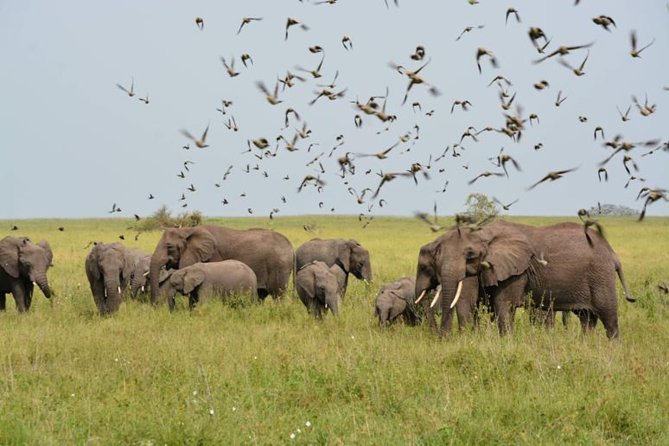
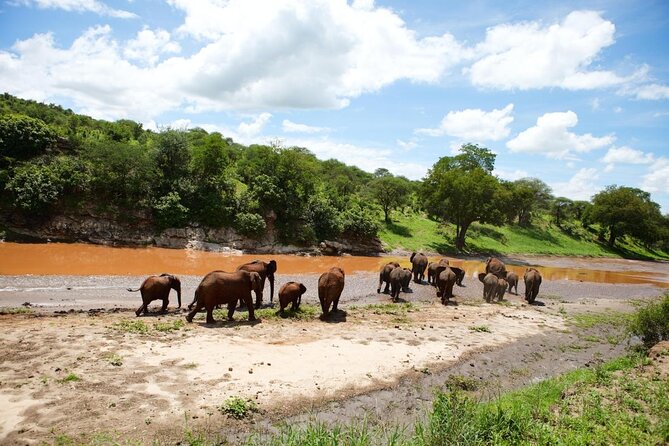
The tradeoff is that Tarangire receives only one day. If elephants, birds, or the park’s distinctive scenery are your main reason for coming, you may wish you had more time here. On this itinerary, Tarangire works as an introduction rather than the main event.
Day two: the long road into the Serengeti
After breakfast, you leave for Serengeti National Park with a picnic lunch. Game viewing begins as you make your way across the park toward the Seronera Valley, where you arrive for dinner and the night.
This is the most important transfer day. The Serengeti is enormous, covering about 14,763 square kilometers within the park, while the wider ecosystem extends across roughly 35,000 square kilometers and into Kenya’s Masai Mara. A trip across it is not a quick hop between attractions. The long drive is part of the safari, but it can also be tiring.
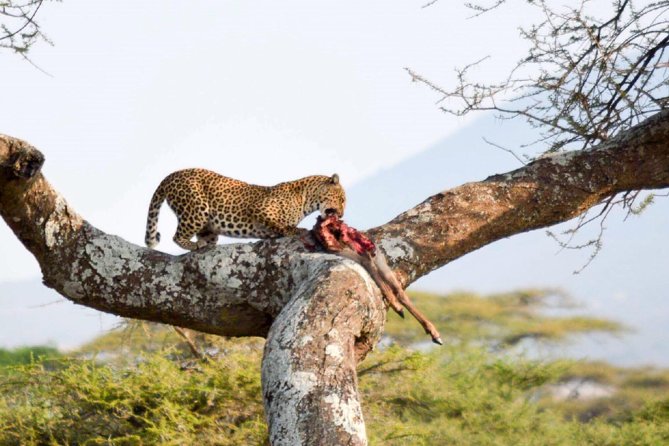
The reward is that you are game viewing as you go. Instead of treating the transfer as dead time, your guide can look for animals and stop when something worthwhile appears. The exact sightings will depend on season, conditions, and luck, so you should not book this route expecting a fixed wildlife checklist.
You sleep in or near Seronera, one of the key areas of the Serengeti. The location matters because day three is a full day in the park rather than another long approach from outside. It also gives you two chances to see the area at different times of day.
Day three: a full Serengeti day in Seronera
Day three is the safari’s central wildlife day. You spend the entire day exploring the Serengeti with a picnic lunch, then return to the camp in Seronera for dinner and another night.
The Serengeti is famous for its endless grass plains, but it is not all one flat open field. The southern plains, the rolling hills around Lobo, and wooded river valleys toward the Grumeti and Kirawira areas create different settings for animal watching. The itinerary points toward several broad regions, though your actual route will depend on park conditions and the guide’s judgment.
This full day is a major strength. You have time to sit quietly, watch animal behavior, and move on when a sighting has run its course. That is much better than spending each day packing, transferring, and checking into a new lodge.
You should also be realistic about camping in the Serengeti. You are there for location and access, not hotel-style service. Tents and bed linen are included, along with dinner and breakfast, but the tour does not promise private bathrooms, electricity in every tent, or lodge facilities. Ask exactly what type of tented accommodation is provided if those details affect your decision.
The camping format can make the trip feel more connected to the setting, but it requires flexibility. You will be eating prepared meals, carrying only what you need for the day, and following the camp schedule. For me, that is part of the appeal. If you prefer a fixed room, restaurant menu, and reliable downtime each evening, consider a lodge-based alternative.
A few more Arusha trips to weigh up
- Balloon Safari & Bush Breakfast in Serengeti – Miracle Experience
★ 5.0 · 1,646 reviews - 7-Day Premium Luxury Tanzania Safari All-Inclusive
★ 5.0 · 426 reviews - 3-Day Classic Serengeti Safari
★ 5.0 · 263 reviews - 8 Days Great Wildebeest Calving Migration Safari from Arusha
★ 5.0 · 254 reviews
Day four: leaving the plains for the crater rim
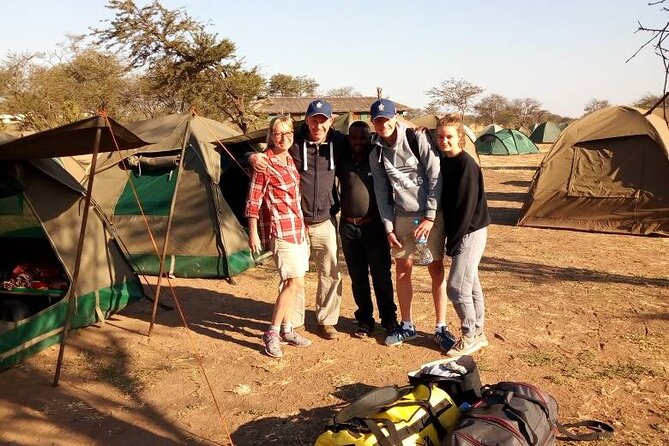
Day four starts early as you leave the Serengeti with a picnic lunch and continue toward the Ngorongoro Highlands. You keep game viewing along the way and spend the night at Simba Campsite on the edge of the crater rim.
This is another long day, but it changes the scenery and the feel of the trip. The Serengeti is expansive and open. Ngorongoro brings highlands, cooler air, and the anticipation of looking down into the crater the next morning.
The Ngorongoro Conservation Area covers about 8,300 square kilometers around the crater and surrounding highlands. It is not simply a national park. The area was designated as a conservation zone in 1956 after pressure from the Maasai community, who had been dispossessed of land when the national park was created. That history matters: wildlife protection here exists alongside human settlement and pastoral life.
Simba Campsite’s position by the rim is valuable because it places you close to the next morning’s descent. You are not starting day five with a long approach from Arusha. But the overnight stop is still basic camping, and the early start means this is not the evening for a late celebration.
Day five: down into Ngorongoro Crater
The final morning begins with a descent into the crater for a full day of game viewing and a picnic lunch. After lunch, you leave for Arusha and are due to arrive in the middle to late afternoon. The stated activity time for this day is about six hours, though the exact return time will depend on road and park conditions.
Ngorongoro Crater is the trip’s most concentrated wildlife setting. The crater floor covers about 210 square kilometers and contains several types of habitat in a compact natural bowl. That makes it easier to encounter a broad mix of animals in one day than in the wide Serengeti, where sightings can be spread over great distances.
I would save your patience for this morning. The crater descent is early, and the day includes game viewing, lunch, and the drive back toward Arusha. You will have spent four nights camping and several days on rough roads, so the final transfer may feel longer than it looks on paper.
The itinerary calls the crater’s famous Garden of Eden comparisons justified. That is enthusiastic wording, but the basic point is sound: Ngorongoro offers a remarkable cross-section of wildlife and habitats in a relatively compact area. It is an excellent finale, especially if this is your first northern Tanzania safari.
Camping comfort, meals, and what is included
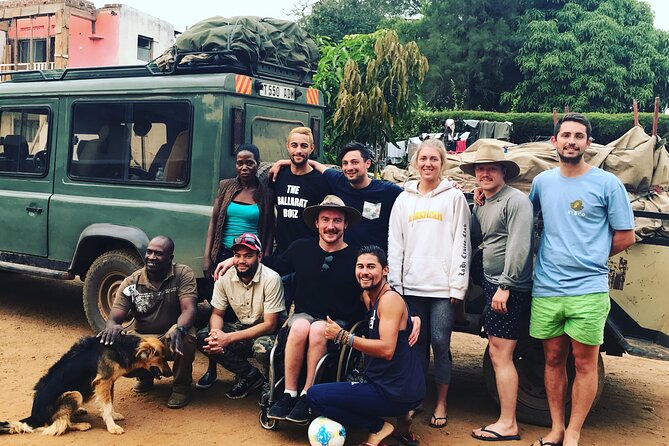
The package includes tented accommodation with bed linen, four breakfasts, five lunches, and four dinners. Bottled water is also included, which is useful on long game-drive days when you are away from camp for hours.
All taxes, park fees, conservation fees, and handling charges are included as listed. Those charges are a large part of the cost of a Tanzania safari, so having them bundled makes the advertised price easier to compare with cheaper-looking trips that add fees later.
You should plan to pay separately for tips, personal items, snacks, and any government increase in taxes or park fees. Dietary requirements must be supplied when booking. Vegetarian food is available if you request it in advance.
The meals are built around the safari timetable. Picnic lunches let you stay out in the parks rather than returning to camp at midday. That gives you more time for wildlife watching, but it also means you should not expect a long restaurant lunch with a broad menu.
The guide can shape the whole experience
A safari vehicle is only part of the experience. Your guide decides how long to stay at a sighting, how carefully to scan the area, and how much context to give you about the animals and places you pass.
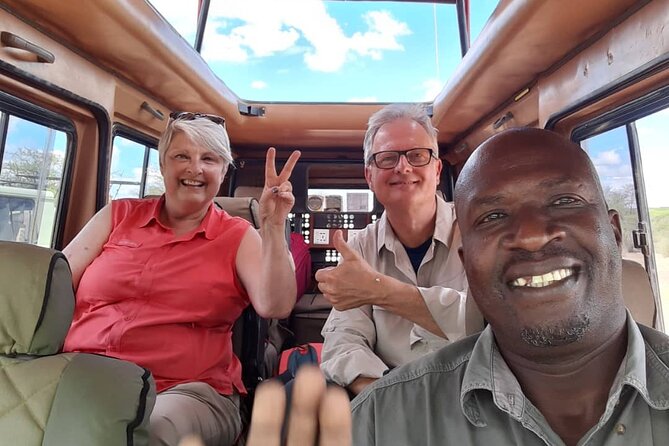
Eastco’s safari team includes guides such as Bernard, Wilson, and Emmanuel in its wider work. Bernard is particularly associated with strong driving and guiding, a friendly manner, and a sharp eye for cats. Wilson is also praised for making a five-day safari work smoothly. That does not mean one of these guides will automatically lead your departure, so ask for the assigned guide’s name and whether a request can be made.
The tour may use a multilingual guide, which can help if your group includes different language needs. Since this is a private activity, your group is the only group participating, even though the maximum size is six. That distinction matters: you get a private booking, but not necessarily a vehicle for only one or two people unless your party books that way.
Who should book this safari
I would recommend this trip to you if you want the classic northern circuit without committing to a week or more. It is a strong fit for first-time safari visitors, couples, friends, and small families who want the privacy of their own group and are comfortable with camping.
It also suits people who value time in the Serengeti. Two nights in Seronera and a full day in the park give the Serengeti a proper place in the trip instead of treating it as a quick photo stop.
You may want a different plan if you dislike early starts, long road transfers, or basic accommodation. The route is busy, and the first four days all involve substantial movement. I would also hesitate to recommend it to anyone seeking a relaxed luxury break, since the included lodging is tented and the meals are arranged around park access.
Practical details before you book
The experience starts at 8:00 am at AIM Mall, Mbauda, Arusha, and ends back at the meeting point. Pickup is offered, but confirm the exact arrangement before departure.
Confirmation is sent at booking. Most people can participate, and the meeting point is near public transportation. Since the safari runs through remote parks and involves camping, ask any personal questions before committing, especially about tent facilities, luggage, and the vehicle.
Cancellation is free if you cancel at least 24 hours before the local start time. Cancellations inside that window are not refunded, and late changes are not accepted.
Should you book it?
Book this safari if you want maximum northern Tanzania variety in five days, value a private group, and see camping as part of the adventure rather than a compromise. The combination of included park fees, meals, water, tented accommodation, and a driver-guide gives the $1,250 price a solid case.
Think twice if you want slow mornings, lodge comforts, or several days in one park. Before paying, confirm your guide, tent setup, pickup point, and any possible fee increases. If those practical details suit you, this is a well-shaped first safari: Tarangire starts the story, the Serengeti gets the most time, and Ngorongoro provides the memorable final chapter.
FAQ
How long is the safari?
The safari lasts approximately five days, beginning in Arusha and ending back at the meeting point in Arusha on day five.
What time does the tour start?
The stated start time is 8:00 am.
Where does the safari begin?
The listed starting point is AIM Mall, Mbauda, Arusha, Tanzania. Pickup is offered, so confirm the exact pickup details when booking.
Where does the safari end?
The activity ends back at the meeting point in Arusha.
Which parks and protected areas are visited?
The route includes Tarangire National Park, Serengeti National Park, Ngorongoro Crater, and the wider Ngorongoro Conservation Area.
How many people can join the private tour?
The tour has a maximum of six participants. It is a private activity for your group only.
Is accommodation included?
Yes. Tented accommodation and bed linen are included for the four nights of the safari.
Which meals are included?
The package includes five lunches, four dinners, and four breakfasts. Lunches are described as picnic lunches.
Is bottled water included?
Yes. Bottled water is included.
Are park and conservation fees included?
Yes. The listed inclusions cover taxes, park fees, conservation fees, and handling charges. Government increases to taxes or park fees are not included.
Can I request vegetarian food?
Yes. A vegetarian option is available, but you must advise the operator when booking. Specific dietary requirements should also be provided in advance.
More 5-Day Experiences in Arusha
- 5-Day Highlights mid-Range Crater, Serengeti, Tarangire
★ 5.0 · 296 reviews - 5 Days Camping Tarangire, Serengeti & Ngorongoro crater & Visiting Maasai
★ 5.0 · 229 reviews - Tanzania Simba Safari – 5 Days
★ 5.0 · 217 reviews - 5 Days Budget Private Safari, Tanzania
★ 5.0 · 191 reviews
Just added around Arusha
- 8 Days Serengeti Migration safari★ 5.0 · 11 reviews
- tarangire, ngorongoro & lake manyara park 3 days private tour★ 5.0 · 11 reviews
- tarangire & ngorongoro 2 days tour★ 5.0 · 14 reviews
- serengeti & ngorongoro 3 days private tour★ 5.0 · 15 reviews
- Mt. Kilimanjaro: Shira plateau to Cathedral point 3872m Day hike★ 5.0 · 7 reviews
- serengeti, ngorongoro & tarangire 4 days private tour★ 5.0 · 18 reviews
- 2 Days Tanzania Midrange Group Join Safari★ 5.0 · 7 reviews
- climb the KILIMANJARO via Lemosho route★ 5.0 · 4 reviews
Camping Safaris, compared.



3 Days Serengeti & Ngorongoro Group Camping Safari
Read our review →
5 Days Camping Tarangire, Serengeti & Ngorongoro crater & Visiting Maasai
Read our review →
2 Days Tarangire and Ngorongoro Group Camping Safari
Read our review →

3 Days Tarangire, Ngorongoro & Lake Manyara Group Camping Safari
Read our review →
5-Day private Camping Safari Tour in Tanzania
Read our review →Browse the lists this tour appears in