
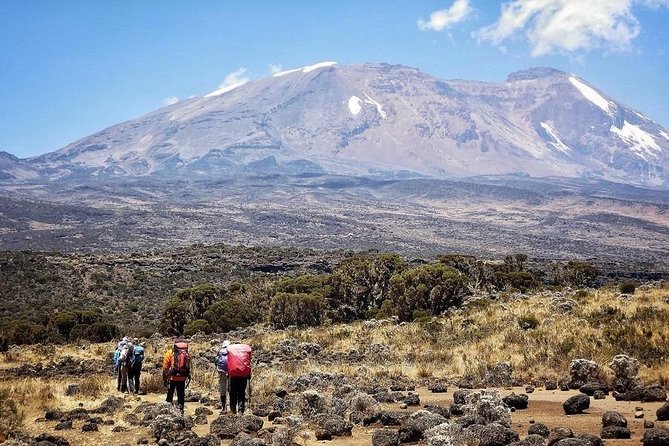
Reviewed · LEMOSHO ROUTE CLIMBS
8 Days Lemosho Route Kilimanjaro Trekking
The Lemosho Route earns its reputation the old-fashioned way: it gives you rainforest, high moorland, the huge Shira Plateau, glacier views, and the rocky approach to Uhuru Peak. The route is quieter at first, then joins Machame on the southern circuit. That changing scenery is the main reason I would choose it over a shorter, more direct climb.
I like the slow 8-day pace and the built-in acclimatization days at Moir Hut, Lava Tower, Barranco, and Karanga. I also like that this is a private trip, with pickup offered, porters, camping equipment, meals, rescue fees, and taxes included. The catch is simple: summit day is long, cold, and punishing, and the non-refundable booking policy gives you little room if your plans change.
Key points to know before booking
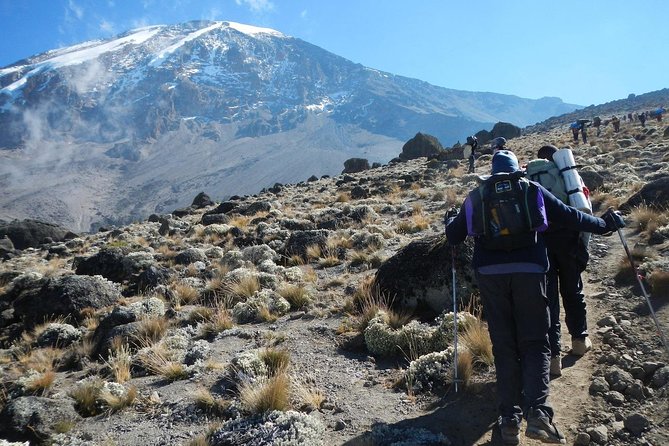
- A varied route from 1,400 meters to 5,895 meters: You begin with forest and finish among stone scree and ice.
- A quieter first half: The Lemosho trail has low crowds before it joins the Machame route.
- Useful acclimatization built in: Moir Hut, Lava Tower, Barranco, and Karanga help spread out the altitude gain.
- A private group with local organization: Erastus handles arrangements, while Oliver is named as a main guide in the trip details.
- A demanding summit schedule: You wake around 11:30 p.m., reach Stella Point in about six hours, then continue to Uhuru Peak.
- A broad package of inclusions: Porters, camping gear, park and rescue fees, all meals, taxes, and accommodation are covered.
Why the Lemosho Route is worth eight days
Kilimanjaro is not a technical climbing trip in the usual sense, but it is a serious high-altitude trek. The key challenge is not rock climbing. It is walking uphill for days while your body adjusts to thinner air, then attempting the summit after a short night of sleep.
The Lemosho route gives you more time than a compressed itinerary. That matters. You spend the first days moving through several altitude zones rather than rushing straight toward the summit. The route also gives you a better visual story: thick forest at the start, open grass and heather, the broad Shira Plateau, semi-desert near Lava Tower, and finally the cold upper mountain.
The early section is relatively quiet. Once Lemosho joins Machame, you share the southern circuit, but by then the route has already given you its more peaceful opening. I see this as a strong choice if scenery matters as much as reaching the top.
The listed price is $2,700.52 per person. That is not a small sum, but the package covers a great deal: camping equipment, park fees, rescue fees, taxes, accommodation, a professional guide, porters, seven breakfasts, seven dinners, and eight lunches. You still need to budget for international flights, pre- and post-trek lodging, a sleeping bag, rental gear if needed, towels, tips, travel insurance, visa fees, souvenirs, and any government increase in park or tax charges.
More Kilimanjaro Climbs in Arusha
- 8-Day Small-group Lemosho Kilimanjaro Summit Trekking
★ 5.0 · 186 reviews - 7-Day Machame Kilimanjaro Summit Tour from Arusha
★ 5.0 · 125 reviews - 4 days Best experience Kilimanjaro Hike, Serengeti &Ngorongoro
★ 5.0 · 54 reviews
Day 1: From Arusha to the rainforest
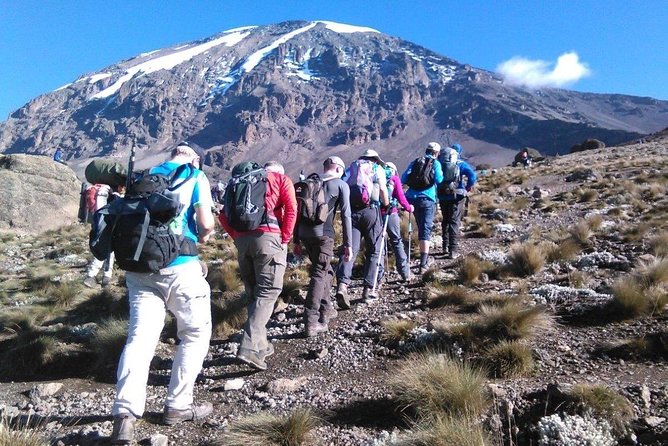
Your morning begins with breakfast at your hotel and a guide briefing. The drive from Arusha, at about 1,400 meters, takes roughly two hours to Londorossi Park Gate, at 2,100 meters. Entry formalities take place near the village, followed by another hour on the road to the Lemosho trailhead.
That extra transfer is part of the character of the route. You do not begin at a crowded roadside trail entrance. You are carried farther into the western side of Kilimanjaro, where the first walking starts in undisturbed rainforest.
After lunch at the trailhead, you walk about 6 kilometers in three to four hours. The pace is a gentle introduction, but do not treat it as a free pass. You are already gaining altitude, and your legs have a full week ahead.
The first night is in the forest. Expect damp air, thick greenery, and a trail that feels far removed from Arusha. The tour begins at 6:00 a.m., so arrange your bags and clothing the night before.
Day 2: Crossing into moorland and Shira 1
The second day covers about 8 kilometers in roughly five and a half hours. The forest gives way to moorland, with tall grasses, heather, volcanic rock, and pale lichen hanging from branches and stones.
You climb over rolling ground toward Shira Ridge, then drop gently to Shira 1 Camp. This is one of the route’s best transitions. The enclosed feel of the forest disappears, and the view opens toward Kibo, Kilimanjaro’s main summit cone.
The distance is moderate, but the change in altitude is more important than the number of kilometers. Walk slowly. The local phrase pole pole, meaning slowly slowly, is useful advice here even if it is not part of the formal schedule.
Day 3: Shira Plateau and Moir Hut
Day three is longer, about 15 kilometers over five to seven hours. You cross Shira 2 Camp on moorland meadows beside a stream, then continue east toward Moir Hut at the base of the Lent Hills.
Shira is described as one of the highest plateaus on Earth, and its broad openness gives you a very different Kilimanjaro experience. The summit appears across the plateau, often with its glaciered upper slopes visible ahead. This is a day for looking around, but the walking remains purposeful.
Moir Hut is used less than some camps and gives the schedule an important acclimatization stop. You can take walks on Lent Hills, using the extra time to let your body adjust rather than simply sitting in camp.
The drawback is the length. Fifteen kilometers at altitude can feel much longer than the same distance at sea level. Keep your daypack light, drink regularly, and follow your guide’s pace rather than trying to prove you are fit.
More Lemosho Route Climbs in Arusha
- 8 Days Mountain Kilimanjaro Lemosho Route
★ 5.0 · 22 reviews - 7 Day Kilimanjaro Climb Lemosho Route & 2 Day Safari
★ 5.0 · 16 reviews - 8-Day Private Kilimanjaro Trekking via Lemosho Route from Arusha
★ 5.0 · 11 reviews - Kilimanjaro Climb- Lemosho Route
★ 5.0 · 9 reviews
Day 4: Lava Tower, Arrow Glacier junction, and Barranco
This is one of the most useful days on the whole route. From Moir Hut, you climb east along a ridge and pass a junction toward Kibo. The trail then turns southeast toward Lava Tower, also called the Shark’s Tooth, at about 4,600 meters, or 15,000 feet.
The day covers around 7 kilometers and takes about seven hours through semi-desert. After Lava Tower, the route reaches another junction toward Arrow Glacier at about 16,000 feet, then drops to Barranco Camp at approximately 13,000 feet.
You finish the day at roughly the same elevation where you began, but your body has spent hours higher up. That is exactly the point. The climb high and sleep lower pattern helps prepare you for summit night.
Barranco is also a memorable camp because it places the Great Barranco Wall directly into the next morning’s plans. At the end of a seven-hour day, that wall can look more intimidating than it really is. You will want dinner, warmth, and sleep.
Day 5: The Great Barranco Wall and Karanga Valley
Day five is shorter, about 5 kilometers in four to five hours. The headline is the Great Barranco Wall, a rocky Class 2 section that looks dramatic from below.
You do not need technical climbing equipment for the wall based on the information provided, but you do need care, balance, and patience. Your guide will set the pace. The reward at the top is a view toward Heim Glacier and a position above the clouds.
From there, the trail rises and falls through Karanga Valley before reaching Karanga Camp at about 3,950 meters. This short day is valuable because the summit attempt is close, and you need time to recover.
I like this part of the plan because it gives you a physical achievement without spending another full day on the trail. Still, the repeated ups and downs can surprise you. Kilimanjaro is not a steady staircase, and a short distance can include plenty of climbing.
Day 6: Barafu Camp and the final rest
The walk to Barafu Camp is only about 4 kilometers and takes three to four hours. You pass the junction with the Mweka Route, which you will use for the descent, then continue toward Barafu Hut.
Barafu means ice in Swahili. The camp sits on an exposed, rocky ridge at about 4,550 meters. There is no accessible water at Barafu Camp, so this is the last water stop for porters before the summit push. That detail explains why porters carry so much of the working camp higher up.
The exposed setting means wind and rocks are part of the night. Familiarize yourself with the camp before dark, then eat the early dinner and rest as much as possible.
This is not a sightseeing afternoon. You are preparing for a midnight wake-up. Keep your summit clothing, headwear, gloves, water, and other essentials ready before you lie down. The itinerary calls for waking around 11:30 p.m. for tea and biscuits.
Day 7: Stella Point, Uhuru Peak, and the long descent
Summit day is the test. You begin around midnight and climb northwest over stone scree. The ascent to Stella Point, on the crater rim, takes about six hours and reaches 5,685 meters.
The combination of darkness, cold, altitude, and sleep loss makes this section mentally hard. You may find that the steady pace matters more than speed. Breaks should help you recover without letting your body cool too much.
At Stella Point, you can watch the sunrise and take in the crater rim. The final push to Uhuru Peak is about two more hours over a snow-covered trail, bringing you to 5,895 meters, the highest point on Kilimanjaro.
The published schedule gives about eight hours to reach Uhuru Peak, then another seven to eight hours to descend to Mweka. It also lists roughly 7 kilometers of ascent and 23 kilometers of descent. Read those figures as a very full day, not a normal hiking day with a summit added on.
After the summit, you descend through the Mweka Route to Mweka Camp. Your legs may feel surprisingly tired even though going downhill seems easier. The descent is long, and you have already used your energy at high altitude.
Day 8: Forest descent, certificates, and the mountain celebration
After breakfast, the crew holds a celebration with dancing and singing on the mountain. You also present tips to the guide, assistant guides, chef or chefs, and porters at this point.
Tipping is not included in the listed price, so plan for it separately. The celebration is more than a photo stop. It marks the end of the shared work that makes a camping climb possible.
The final descent to Mweka Gate takes about three hours through forest and covers roughly 15 kilometers. At the park, you sign your name to receive a completion certificate. Reaching Stella Point earns a green certificate, while reaching Uhuru Peak earns a gold certificate.
The route then continues to Mweka village for about an hour and 3 kilometers, according to the supplied schedule. The activity ends back at the meeting point in Arusha, with the listed trip information also stating that pickup is offered.
Guides, porters, and the local touch
The strongest part of the organization appears to be direct communication and the local team. Erastus is identified as the owner and organizer, and the trip details name Oliver as the main guide. John is also named in the company’s response about the experience.
That direct local setup can be useful when you need to adjust plans, ask detailed questions, or combine the trek with a safari. The booking information says Erastus helped make last-minute adjustments for one booking, so I would contact him directly with questions about airport arrival, extra nights, rental equipment, and the exact tipping plan.
Porters are included, as are the professional guide and cooking equipment. You should still ask how luggage limits and porter loads are handled before departure. The supplied details confirm porterage, but they do not state a baggage allowance or a detailed staff-to-hiker ratio.
What the $2,700.52 price really covers
The price has solid value if you need a full supported camping trek. You are paying for eight days on the mountain, park and rescue fees, accommodation, meals, tents, a mess tent, a mattress, cooking equipment, porters, guide services, taxes, and VAT.
The meal count is also clear: seven breakfasts, seven dinners, and eight lunches. That means food is covered throughout the mountain portion, though the package does not include accommodation before or after the tour.
You will need to add several costs. Sleeping bags and climbing gear are available to rent, but they are not included. Towels, international flights, visa fees, travel insurance, personal items, souvenirs, tips, and any government-imposed increase in fees are also outside the listed price.
I would compare the total cost, not only the headline figure. A cheaper trek that excludes rescue fees, porters, meals, or camping equipment may not be cheaper once you add the extras.
Who should choose this trek
I would recommend this route to a reasonably fit person who wants the scenic western approach and accepts a demanding summit day. The 8-day schedule suits you if you prefer more time for altitude adjustment rather than chasing the lowest possible price or shortest duration.
It also suits a couple, a family group of capable adults, or friends who want a private trip. The experience is private, meaning only your own group participates.
I would think twice if you dislike camping, struggle with long walking days, or need flexible cancellation terms. The activity is non-refundable and cannot be changed for any reason once booked. The listing says most people can participate, but it does not provide a medical screening process or a detailed fitness standard, so ask direct health and preparation questions before paying.
The start is early, at 6:00 a.m., and the summit schedule is even earlier. This is a mountain expedition with a support team, not a casual sightseeing day.
Should you book the 8-day Lemosho trek?
Book it if you want Kilimanjaro’s most varied route, value a private group, and prefer a slower schedule with several acclimatization stages. The combination of rainforest, Shira Plateau, Lava Tower, Barranco Wall, and the southern circuit gives you far more than a simple march toward the summit.
The package also makes budgeting easier because the main mountain costs are included. Before booking, confirm the price of rental gear, sleeping bags, tipping expectations, airport and hotel arrangements, and how the final return to Arusha is handled.
I would choose this experience for its route design and its local organization through Erastus, with Oliver named as a main guide. Just go in with clear eyes: the summit day is extremely long, the upper camps are exposed, and the cancellation terms are strict. If those points suit your plans, this is a strong-value way to approach Kilimanjaro.
FAQ
Where does the trek start?
The activity starts in Arusha, Tanzania, with pickup offered. The listed start time is 6:00 a.m.
How long does the Kilimanjaro trek last?
The trek lasts approximately eight days.
Is the experience private?
Yes. Only your group participates in this private tour or activity.
What route does the trek use?
The trek uses the Lemosho Route, beginning in rainforest, crossing the Shira Plateau, and later joining the southern circuit shared with the Machame Route.
Is camping equipment included?
Yes. The package includes a mess tent, mattress, and cooking equipment. A sleeping bag is not included, but it is available to rent.
Are meals included?
Yes. The package includes seven dinners, seven breakfasts, and eight lunches.
Are park and rescue fees included?
Yes. Parking fees, rescue fees, all taxes, and VAT are included in the listed package.
Can I cancel or change the booking?
No. The experience is non-refundable and cannot be changed for any reason.
More Hiking & Trekking in Arusha
- Mountain Kilimanjaro Day Hike
★ 5.0 · 102 reviews - Private Full Day Hiking Experience to Marangu Route
★ 5.0 · 61 reviews - 4 Days Mount Meru Trekking
★ 5.0 · 55 reviews - From Arusha/Moshi: Kilimanjaro Hike Marangu Route Day Trip
★ 4.5 · 54 reviews
Just added around Arusha
- 8 Days Serengeti Migration safari★ 5.0 · 11 reviews
- tarangire, ngorongoro & lake manyara park 3 days private tour★ 5.0 · 11 reviews
- tarangire & ngorongoro 2 days tour★ 5.0 · 14 reviews
- Mt. Kilimanjaro: Shira plateau to Cathedral point 3872m Day hike★ 5.0 · 7 reviews
- serengeti, ngorongoro & tarangire 4 days private tour★ 5.0 · 18 reviews
- serengeti & ngorongoro 3 days private tour★ 5.0 · 15 reviews
- climb the KILIMANJARO via Lemosho route★ 5.0 · 4 reviews
- 2 Days Tanzania Midrange Group Join Safari★ 5.0 · 7 reviews
Lemosho Route Climbs, compared.


8-Day Small-group Lemosho Kilimanjaro Summit Trekking
Read our review →





Climbing Kilimanjaro through 8 days Lemosho Route
Read our review →Browse the lists this tour appears in