
Reviewed · LEMOSHO ROUTE CLIMBS
7 days Lemosho route
The Lemosho route gives you Kilimanjaro in seven hard-working hiking days, from monkey-filled rainforest to the snow and stone around Uhuru Peak. It is quieter than some other routes, and the slow climb across the Shira Plateau gives your body useful time to adjust. I love the changing plant zones and the smart climb-high, sleep-lower pattern at Lava Tower and Barranco. I also like that this is a private trip for up to two people, not a large mixed group.
The main catch is the wording. The trek is called seven days, but the full plan takes about eight days because arrival, hotel, briefing, and the descent back to Arusha are part of the schedule. Summit day is also very demanding: about eight hours to the top, followed by another seven to eight hours down to Mweka.
Key points to know before booking
- Seven hiking days, about eight calendar days: The route begins after an Arusha hotel night and ends after the Mweka descent and transfer.
- Lemosho starts quietly in the west: You drive to Londorossi Gate, then walk through rainforest before joining the Machame route at Shira 2.
- Excellent altitude practice: Lava Tower at 4,630 meters is followed by a descent to Barranco Camp at 3,950 meters.
- The Barranco Wall is a real highlight: It looks severe from below but is described as a Class 2 scramble rather than a technical climb.
- Private pricing favors two people: The listed cost is $6,300 per group of up to two, including guides, porters, camping equipment, transport, meals, and park fees.
- The summit day tests stamina: You start around 11:30 p.m., reach Stella Point near sunrise, continue to Uhuru Peak, then descend all the way to Mweka.
Why Lemosho is a strong route choice
Lemosho begins on Kilimanjaro’s western side, away from the busiest approach roads. The first drive from Arusha takes roughly two hours to Londorossi Park Gate, followed by a final 45-minute stretch on a rough forest track. That last section requires a four-wheel-drive vehicle, so you should expect a bumpy ride before the walking begins.
This route is recommended for its low traffic, broad scenery, and strong summit record. I would choose it over a shorter route if you care about a calmer start and better acclimatization. The route eventually meets the Machame trail at Shira 2 Camp, then follows Kilimanjaro’s southern circuit to Barafu and Mweka.
The private format matters. With only your group participating, the pace and daily support are easier to manage than on a large departure. The available feedback also points to careful coordination between guides and porters, steady pacing, and filling meals. One group reported that everyone reached the summit, which reflects the value of taking the climb slowly rather than treating it as a race.
More Lemosho Route Climbs in Arusha
- 8-Day Small-group Lemosho Kilimanjaro Summit Trekking
★ 5.0 · 186 reviews - 8 Days Mountain Kilimanjaro Lemosho Route
★ 5.0 · 22 reviews - 7 Day Kilimanjaro Climb Lemosho Route & 2 Day Safari
★ 5.0 · 16 reviews
Arusha arrival: equipment check and a useful reset
Your first day starts with pickup at Kilimanjaro International Airport and a transfer to Arusha. The listed overnight is at Arusha Planet Lodge. You meet the guide, receive a briefing, and check your mountain equipment.
This is more important than it sounds. Missing gear can be rented on this day, before you are standing at a cold, exposed camp with no easy way to replace anything. Use the session to confirm that your boots, warm layers, rain protection, headlamp, sleeping setup, and other required items are ready. Trekking gear is not included in the price, although missing equipment can be rented locally.
The stated start time is 8:00 a.m., but your practical schedule begins with the airport or hotel pickup. Confirm the exact pickup details with Wild Root Safaris and Adventures before setting out.
Day 1 on the mountain: Londorossi Gate and rainforest
After breakfast, you drive from Arusha, at about 1,400 meters, to Londorossi Gate at 2,100 meters. The route passes through a village near the gate, where you receive a packed lunch and can buy mineral water.
At the park entrance, guides and porters divide the supplies and complete registration with the Tanzania National Parks Authority. This can take time, so do not expect to leap from the vehicle straight onto the trail.
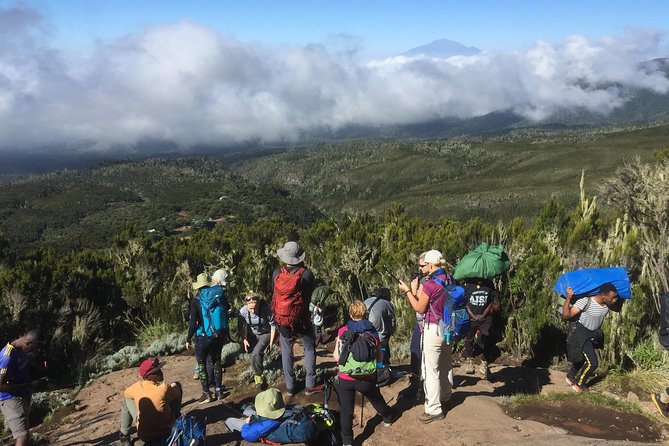
The first walk lasts about three hours through montane forest. The path is green, damp, and shaded, with streams along the way. Keep an eye out for colobus monkeys. The forest is a gentle introduction to the climb, though wet ground and roots can make the opening miles slower than the distance suggests.
Your tents should be ready when you reach camp. The crew supplies drinking and washing water, and the chef prepares snacks and dinner. That setup saves you energy, but you are still camping at altitude, so keep your evening simple and get some rest.
Day 2: Shira 2 and the first cold night
The next morning, the trail leaves the rainforest and enters heather moorland. You cross streams and walk over the plateau toward Shira 2 Camp, at about 3,840 meters. The hiking time is listed as roughly six to six and a half hours.
This is where the route begins to feel properly alpine. You get views toward the Western Breach and its glaciers, with a stream near camp. The open setting also brings colder weather. Temperatures can fall below freezing at night, so keep warm clothing near the top of your pack rather than buried in your duffel.
The Shira Plateau is valuable for acclimatization because you gain height gradually after the first night. You may notice a headache, tiredness, or shortness of breath. Those symptoms can occur as altitude begins to affect you, and the guide’s slow pace becomes part of the safety plan.
Same country, a completely different kind of safari:
- Balloon Safari & Bush Breakfast in Serengeti – Miracle Experience
★ 5.0 · 1,646 reviews - Tanzania Classic – 7 Days
★ 5.0 · 1,151 reviews - 4 Days Group Camping Safari
★ 5.0 · 1,101 reviews - 5 Days Group Camping Safari
★ 5.0 · 730 reviews
Day 3: Lava Tower at 4,630 meters, then Barranco
This is one of the best-designed days on the route. You leave the moorland and enter a rocky semi-desert zone, walking east for about five hours toward Lava Tower. The total day takes roughly seven hours and covers about 15 kilometers.
Lava Tower rises to 4,630 meters. You receive a packed lunch there, and, if weather allows, you may have the option of climbing the tower. The stop also gives you a clear test of how your body is handling the altitude. Headaches and shortness of breath are common at this point in the climb.
Then comes the important part: you descend about 680 meters to Barranco Camp, at 3,950 meters. This is the classic acclimatization pattern of climbing high and sleeping lower. You gain useful altitude exposure without spending the night at Lava Tower.
Barranco is in the alpine desert zone, with the huge wall rising nearby. The combination of rough rock, thin air, and a long day can wear you down. Keep drinking, walk slowly, and tell the guide if you feel unwell. There is no prize for hiding symptoms.
Day 4: The Barranco Wall and Karanga Valley
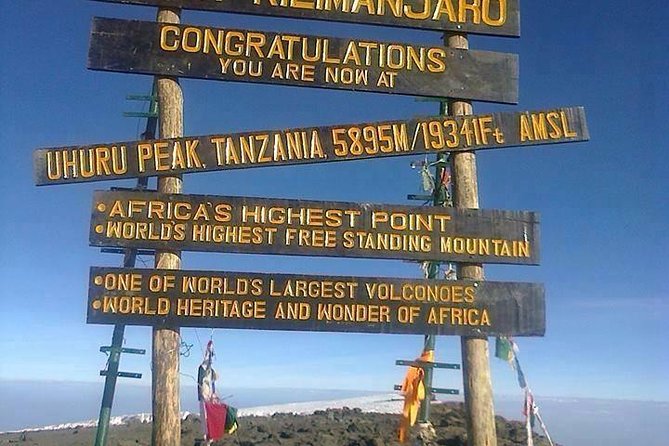
The walk to Karanga Camp is shorter, about four to five hours and five kilometers. Its main challenge comes early: the Barranco Wall.
From below, the wall looks intimidating. In practice, it is described as a Class 2 hike, and the route is generally easier than its appearance suggests. You need a steady foot and a willingness to use your hands in places, but this is not presented as a technical climbing pitch.
At the top, you can see Heim Glacier and look out over the clouds. That view is one of the route’s memorable moments, and it arrives after a physical effort that feels manageable compared with summit day.
The trail then rises and falls through the Karanga Valley before reaching Karanga Camp, also around 3,950 meters. This short day is not wasted time. It gives you another night at a useful sleeping height and breaks up the approach to Barafu.
Day 5: Barafu Camp and the final water stop
The walk to Barafu Camp takes only two to three hours and covers about four kilometers. You climb through alpine desert until reaching the rocky, exposed camp at 4,550 meters.
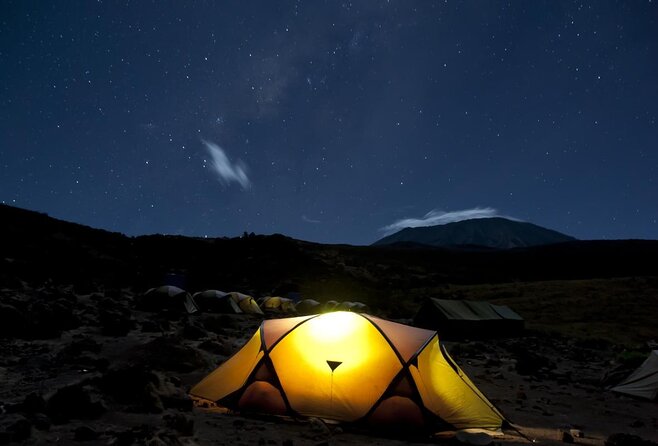
Barafu means ice in Swahili. The name suits the height and cold, but the camp’s more practical feature is its exposure. Tents sit on a windy ridge among rocks, and there is no accessible water at Barafu. It is the final water stop for the porters, so the crew carries what is needed from lower down.
Arrive with enough time to learn the camp before dark. Know where your tent is, where you can move safely, and where your important gear sits. The early dinner is designed to leave you time to rest before the midnight summit start.
This is a short walking day but not an easy one. You are sleeping high, and many people find the thin air more tiring than the distance. Keep your expectations modest. The goal is not to feel fresh. The goal is to conserve enough strength for the summit attempt.
Summit night: Stella Point and Uhuru Peak
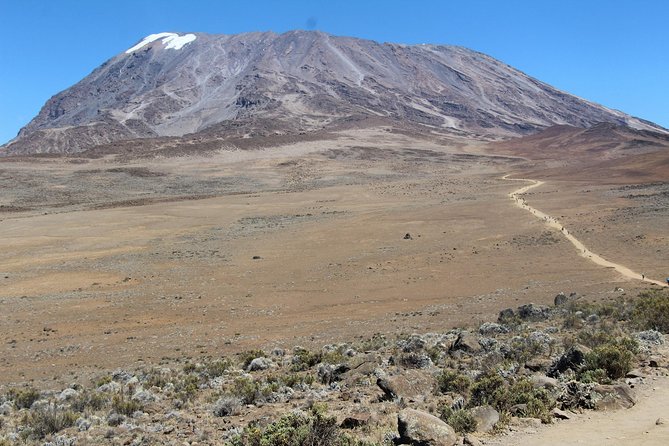
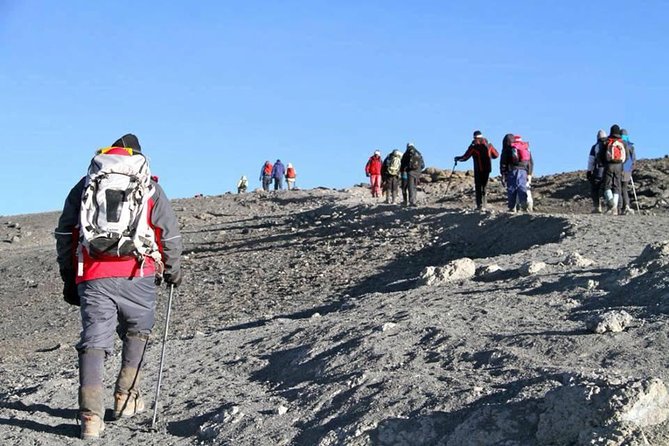
The guide wakes you at about 11:30 p.m. for tea and biscuits. You begin in darkness, heading northwest over stone scree. The ascent to Stella Point, at approximately 5,685 meters, takes around six hours for many climbers.
This is usually the toughest mental and physical part. The trail is steep, the air is thin, and the cold can make every stop feel costly. Move at the slow pace set by the guide. Small steps are more useful than bursts of speed.
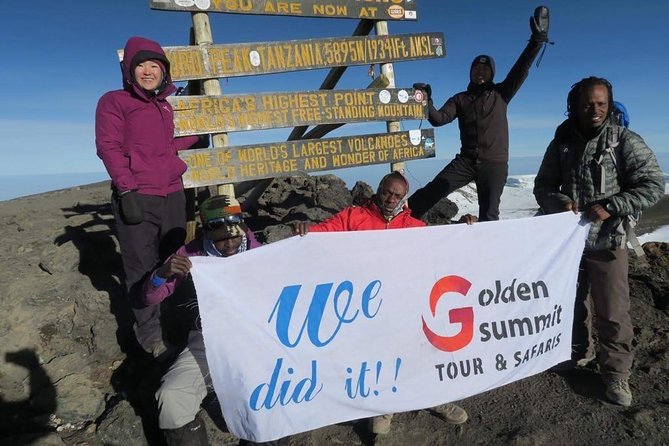
At Stella Point, you reach the crater rim and can watch the sunrise. From there, you continue for about two hours across a snow-covered trail to Uhuru Peak, at 5,895 meters. The summit is the highest point in Africa, but the time at the top may be brief because of cold, fatigue, and the long descent ahead.
The stated summit day includes about eight hours to Uhuru Peak and another seven to eight hours down to Mweka. The distance is listed as about seven kilometers up and 23 kilometers down. That downhill section is easy to underestimate. Your knees and feet may take more punishment on the descent than during the ascent.
If you reach Stella Point but do not continue to Uhuru Peak, you receive a green certificate. Reaching Uhuru Peak earns a gold certificate. The distinction gives you a clear, practical goal, but your guide should make the final decision based on your condition and safety.
Mweka descent, certificates, and the crew celebration
After breakfast, the crew holds a celebration with dancing and singing. You also present tips to the guide, assistant guides, chef or chefs, and porters. Tip money is not included in the listed price, so plan for this customary expense separately.
The descent to Mweka Gate takes about three hours and passes back into forest. At the gate, all hikers sign their names to receive completion certificates. From there, the plan includes another hour to Mweka village, about three kilometers.
The return is a satisfying change from the exposed upper camps. The forest feels warmer and thicker, and you will appreciate ordinary comforts in a new way. The published schedule says the activity ends back at the Arusha meeting point, but the exact transfer timing should be confirmed because the gate, village, and Arusha are separate points.
Guides, food, and the value of support
The team structure is one of the strongest parts of this trip. The guides and porters handle park registration, supplies, water, tents, and camp routines, while the chef prepares breakfast, lunch, dinner, and evening snacks.
Seven breakfasts, seven lunches, and six dinners are included. The food is described as generous and well balanced, which matters on a route where you burn energy for hours each day. Packed lunch is used on the longer Lava Tower day, while meals at camp give you a more regular routine.
Names associated with the guiding and support team include Lucia as a lead guide and Hamish as a local safari guide and driver. Mathew is associated with itinerary planning and trip arrangements. Confirm the exact team before departure, since guide assignments can change.
The strongest practical sign is coordination. On a mountain trek, good support should feel almost invisible: water arrives, camp is ready, meals appear, and the pace stays controlled. That is especially useful on summit day, when you need to focus on breathing and footing rather than camp details.
What the $6,300 price really covers
The listed price is $6,300 per group of up to two people. For two climbers, that is $3,150 each. For one person, the same group price would make the trip much less economical, so this arrangement makes the most sense for a pair.
The cost includes admission and park fees, camping equipment, guides, porters, transportation, and meals. It does not include international flights, a visa, or trekking gear. You should also set aside money for porter and guide tips.
The value is strongest if you want private organization and a longer route with more acclimatization time. You are paying for the crew, permits, transport, food, and a supported camping operation, not simply a walking route. A shorter or larger-group trip might cost less, but it may not provide the same private pace or gradual approach.
The 7-day label can also cause confusion. This is seven days of mountain movement, with the Arusha arrival day making the full program approximately eight days. Check the final schedule before booking flights.
Who should choose this Kilimanjaro trek?
I would recommend it to someone with moderate physical fitness who wants a quieter route and accepts long days, cold camps, and a difficult summit night. The private format suits couples, friends, or two relatives who want to share the climb without joining a larger group.
You should be comfortable camping for several nights and walking for up to eight hours before the summit day. The final ascent is not a casual hike. The route includes stone scree, snow near the summit, a high camp at Barafu, and a very long descent.
This is less suitable if you need a relaxed holiday with short walks or if you are looking for guaranteed comfort. The route is carefully paced, but no operator can remove the effects of altitude or control the weather. Poor weather can lead to a changed date or a full refund under the stated policy.
Booking includes confirmation at the time of reservation, and pickup is offered. Free cancellation is available up to 24 hours before the experience begins. Changes or cancellations inside that window are not accepted for a refund.
Should you book the Lemosho route?
I would book this trek if you value scenery, a lower-traffic start, private support, and a route that gives you several chances to adjust before the summit. The Lava Tower descent, short Karanga day, and long southern-circuit approach all work in your favor.
I would pause if your budget is for one person, if you have not prepared for a demanding summit night, or if you assumed seven days meant seven total calendar days. For two people who want a fully supported Kilimanjaro climb, the $6,300 group price is easier to justify. Go in ready for cold, fatigue, and a very long final day, and Lemosho offers one of the most satisfying ways to reach Africa’s highest point.
FAQ
How long does the Lemosho trek take?
The mountain portion takes seven hiking days. The full experience lasts approximately eight days because it includes the Arusha arrival, hotel stay, briefing, and return arrangements.
What is the price for this trek?
The price is $6,300 per group of up to two people. For two people, that works out to $3,150 each.
What is included in the price?
The price includes admission and park fees, camping equipment, guides, porters, transportation, seven breakfasts, seven lunches, and six dinners.
Are flights and visas included?
No. International or domestic flights and visas are not included.
Is trekking equipment included?
No. Trekking gear is not included. Missing equipment can be rented during the Arusha arrival and briefing day.
Where does the trek begin?
The trek begins at Londorossi Park Gate after a drive from Arusha. The first walking section passes through montane forest.
Where does the route finish?
The mountain descent finishes at Mweka Gate, followed by a one-hour descent to Mweka village. The activity then ends back at the Arusha meeting point.
How difficult is the summit day?
The summit day includes about eight hours to Uhuru Peak and seven to eight hours of descent to Mweka. The ascent begins around 11:30 p.m. and reaches Stella Point near sunrise.
What happens if I reach Stella Point but not Uhuru Peak?
You receive a green certificate for reaching Stella Point. Climbers who reach Uhuru Peak receive a gold certificate.
What is the cancellation policy?
You can cancel at least 24 hours before the experience starts for a full refund. If poor weather causes cancellation, you are offered a different date or a full refund.
More 7-Day Experiences in Arusha
- 7-Day Premium Luxury Tanzania Safari All-Inclusive
★ 5.0 · 426 reviews - Group Safari 7 Days in Tanzania’s Main Parks
★ 5.0 · 240 reviews - 7 Days Tanganyika Wilderness Safari
★ 5.0 · 159 reviews - 7-Day Machame Kilimanjaro Summit Tour from Arusha
★ 5.0 · 125 reviews
Just added around Arusha
- 8 Days Serengeti Migration safari★ 5.0 · 11 reviews
- tarangire, ngorongoro & lake manyara park 3 days private tour★ 5.0 · 11 reviews
- tarangire & ngorongoro 2 days tour★ 5.0 · 14 reviews
- Mt. Kilimanjaro: Shira plateau to Cathedral point 3872m Day hike★ 5.0 · 7 reviews
- serengeti, ngorongoro & tarangire 4 days private tour★ 5.0 · 18 reviews
- serengeti & ngorongoro 3 days private tour★ 5.0 · 15 reviews
- 2 Days Tanzania Midrange Group Join Safari★ 5.0 · 7 reviews
- climb the KILIMANJARO via Lemosho route★ 5.0 · 4 reviews
Lemosho Route Climbs, compared.


8-Day Small-group Lemosho Kilimanjaro Summit Trekking
Read our review →





Climbing Kilimanjaro through 8 days Lemosho Route
Read our review →Browse the lists this tour appears in