
Reviewed · GUIDED
7-Day Tanzania Private Guide Motorcycle Safari Tour
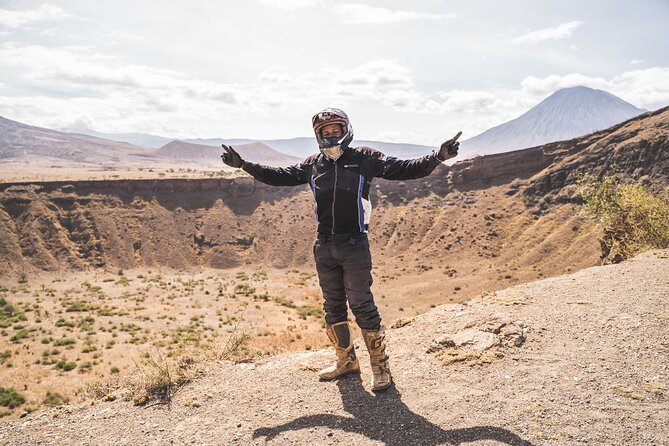
This is a motorcycle safari for riders who want Tanzania beyond the usual jeep route. You’ll cross rough mountain roads, dry savannah, rice country, village tracks, and Rift Valley terrain, with stops at Lake Chala, Mkomazi, Tarangire, Lake Manyara, and Lake Eyasi. The changing scenery is the main attraction.
I like the private format, since your group can ride at its own pace, and I like that safety gear, three daily meals, and a route briefing are included. The bikes are reported to be well maintained, with Honda CRF300s available, and guide Alpha and his crew provide both riding help and technical support. The tradeoff is real: long days, loose gravel, sand, sharp corners, and no tarmac on some sections mean this is not a casual sightseeing ride.
Key points before you book
- Seven days on changing terrain: Ride from Lake Chala and the Pare Mountains to Maasai country, Lake Eyasi, and Arusha.
- A private trip: Only your group participates, which gives the guide room to adjust the pace and route.
- Honda CRF300 motorcycles: The bikes are described as fresh and well maintained, with technical support from the crew.
- Two levels on the final day: Choose the harder Monduli route or an easier route back toward Arusha.
- Culture beyond the main parks: The route includes villages, Maasai communities, and a visit with Hadza hunters and gatherers.
- Pack for effort: Moderate fitness is required, and some days include up to 275 kilometers of loose gravel or long hours in the saddle.
What the $2,600 price buys you
At $2,600 per person, this is not a cheap way to move around Tanzania. It is a specialized private safari built around the motorcycle itself, with a guide, support crew, safety equipment, meals, and a route that would be difficult to organize alone.
The included meals matter. Breakfast, lunch, and dinner are covered for all seven days, which removes a steady stream of small expenses and keeps the group moving. A safari briefing on arrival and safety gear are also included. The private setup adds value if you are riding with friends and want more control than a fixed group departure allows.
Still, read the inclusions carefully before paying. Flights, visa costs, medical insurance, personal expenses, drinks other than bottled water, and a tip for the guide are not included. Accommodation appears throughout the route, including a motel near Same and Maramboi Tented Camp, but accommodation is not clearly listed in the stated inclusions. I would ask the operator to confirm exactly which nights, park charges, motorcycle costs, fuel, and support services are covered.
The five-star rating and strong comments about the motorcycles, guides, food, and organization point to good value for riders who want a serious African road trip. If you are mainly seeking wildlife viewing from a comfortable vehicle, the motorcycle format may not justify the price for you.
A few more Arusha trips to weigh up
- Balloon Safari & Bush Breakfast in Serengeti – Miracle Experience
★ 5.0 · 1,646 reviews - 4 Days Group Camping Safari
★ 5.0 · 1,101 reviews - 5 Days Group Camping Safari
★ 5.0 · 730 reviews
Day 1: Lake Chala starts the trip quietly
The first day runs about 10 hours and takes you to Lake Chala, a deep volcanic lake near the Tanzania and Kenya border region. The water and steep surrounding sides provide an early change from Arusha’s city setting, and the ride gives you a gentle introduction to the trip.
Lake Chala has an odd crocodile story. Crocodiles were reportedly introduced in the 1930s, but the lake had no suitable beaches or sandy nesting areas. Fishermen later began removing them after their nets were damaged, and no crocodiles remain today. Swimming is considered safe, though normal care around open water still makes sense.
The lake stop is less about checking off a famous attraction and more about beginning to read Tanzania from the seat of a bike. You’ll have time to see how the dirt feels, how the guide handles the group, and how your body responds to a full day outside.
Because the first day lasts about 10 hours, do not treat it as a warm-up ride with no demands. Ask how much of the day is riding and how much is spent at the lake or on breaks. That distinction matters when you are adjusting to heat, dust, and a new motorcycle.
Day 2: Mkomazi and the South Pare Mountains
After breakfast, you ride south toward the Pare Mountains on curved dirt roads. The route heads toward Lake Jipe, a transboundary lake, before climbing toward the South Pare Mountains. Views open over small towns and villages below, giving you a useful sense of how closely farming communities and dry-country wildlife areas sit beside one another.
This day is described as a trial for the harder ride that follows. The approach to the lodge includes downhill dirt roads and plenty of sharp corners. That is good preparation if you are comfortable standing on the pegs and managing a loose surface, but it can be tiring if you have limited off-road experience.
The accommodation near Same is described as having views of the South Pare Mountains. Its location also provides access to Mkomazi National Park, the South Pare Mountains, and Shengena Forest. You are not simply transferring between major parks here. The route uses the mountain roads as part of the experience.
One point needs clarification before departure. The day is listed at about 16 hours, which is an unusually long published duration even for an ambitious motorcycle route. Ask the operator for the expected riding time, departure schedule, and planned arrival time. A route can be thrilling and still become unpleasant if the final hours are rushed in the dark.
Day 3: From Pare tracks to the Usambara highlands
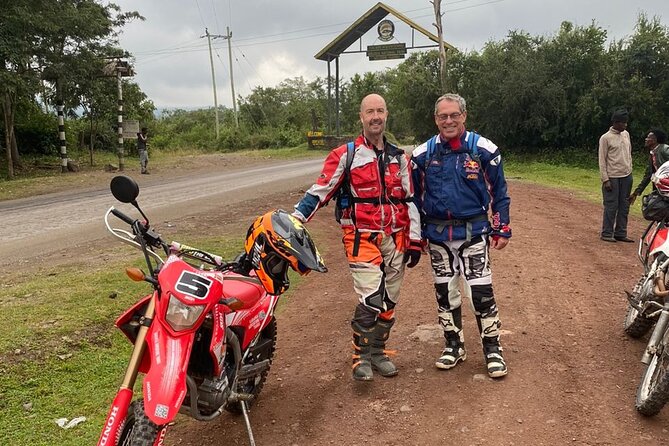
Day 3 is the most demanding section described in the route. It covers about 190 kilometers in roughly seven hours of riding, using sandy, hilly, and stony trails with no tarmac roads.
You begin in the eastern Pare Mountains and ride through savannah toward Lake Kalimawe. Rice plantations and small villages surround the lake, giving the day a more settled, agricultural feel. The track then runs near Mkomazi National Park before continuing toward the Usambara Mountains.
After lunch, the scenery changes again. The route passes small villages such as Mnazi and Mlalo, along with palm forests, before climbing a zigzag road toward Mtae and Mambo village. At more than 2,300 meters, the high point provides broad views over the surrounding country.
This is the kind of riding that rewards patience. Sandy corners require calm throttle control. Stony trails punish a stiff grip. Long climbs and repeated bends can wear down even a fit rider, so take the guide’s advice on speed and spacing.
The high elevation also brings a useful change in temperature, but do not assume the day is easy because the air is cooler. Seven hours on rough tracks can feel longer than a full day on paved roads. If you are a novice rider, tell the guide early. The tour is advertised for all levels, but the terrain itself is not equally forgiving to every level.
Same country, a completely different kind of safari:
- Tanzania Classic – 7 Days
★ 5.0 · 1,151 reviews - Materuni Waterfalls, coffee tour & Kikuletwa Hot Springs
★ 5.0 · 643 reviews - 3 Days Serengeti & Ngorongoro Group Camping Safari
★ 5.0 · 574 reviews - 7-Day Premium Luxury Tanzania Safari All-Inclusive
★ 5.0 · 426 reviews
Day 4: Rift Valley views around Lake Manyara
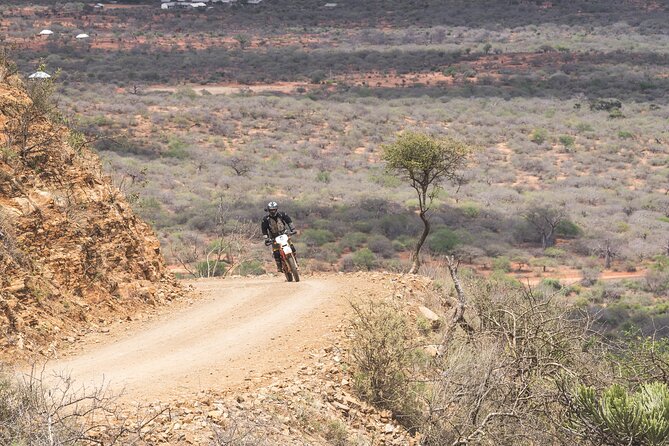
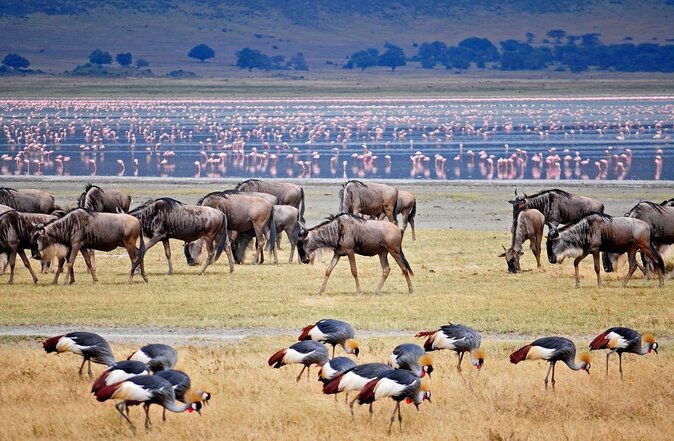
The fourth day brings you into the Lake Manyara and Tarangire ecosystem. The route description places you near Maramboi Tented Camp, between Tarangire and Lake Manyara, with rolling golden grassland and palms across a dry setting.
This is a valuable change of pace after the mountain tracks. The area helps explain the Rift Valley on a large scale, including the relationship between escarpments, lakes, dry plains, and wildlife movement. You may find the setting especially rewarding if you like geology and human origins as much as animals.
The day is again listed at roughly 16 hours, while the description does not give a clear riding distance. I would ask for a firm schedule. Lake Manyara and Tarangire are close enough on a map to seem simple, but dirt detours and remote roads can make the day much longer than expected.
The camp setting is part of the appeal, but the exact lodging arrangements and park access should be confirmed in writing. The provided details mark admission as free for this day, yet they do not explain whether that means no separate charge on the tour or simply no admission ticket at the stated stop.
Day 5: A long gravel crossing toward Tarangire
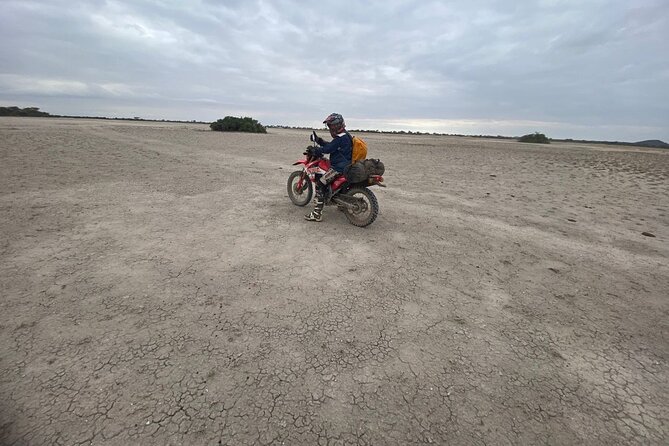
Day 5 is a major riding day: about 275 kilometers, with the final 50 kilometers on tarmac, and roughly eight hours in the saddle. Most of the route uses loose gravel across semi-arid savannah.
This is also the day when the relationship between wildlife and people becomes especially visible. The road passes through a migratory corridor connected to the Tarangire and Manyara ecosystem, an area used by wildlife and Maasai communities. You are riding through working country, not an enclosed attraction.
After lunch, you continue on dirt for about an hour before reaching the better-maintained paved road to the overnight accommodation. That final stretch of tarmac should feel welcome after hours of vibration and dust.
Loose gravel is manageable when you keep your speed steady and avoid sudden braking, but your comfort depends heavily on experience, tires, weather, and the condition of the road that day. The tour’s stated moderate fitness requirement is important here. You need stamina, balance, and enough concentration to keep making sensible choices late in the ride.
Day 6: Lake Eyasi and the Hadza community
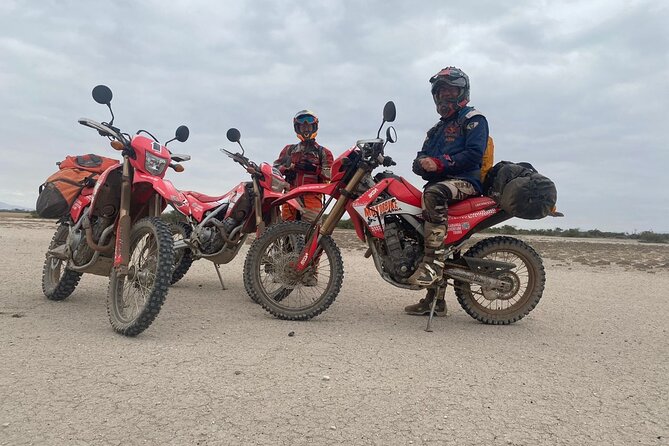
The sixth day is listed under Lake Natron, but the route description actually takes you toward Lake Eyasi and the Hadza community. Confirm the day’s final destination before booking, since the heading and route details do not match.
The ride begins on the Rift Valley escarpment and heads toward the Hadza area through rocky, hilly roads. You pass through changing elevations and vegetation before reaching Magara village near Lake Manyara National Park. After a packed lunch, the route continues toward Lake Eyasi.
The Hadza are described as hunters and gatherers, and the planned visit includes hunting with them on their grounds. This is one of the route’s most distinctive cultural elements, but it deserves a respectful approach. Follow the guide’s instructions, ask before taking photographs, and treat the visit as an introduction to a living community rather than a staged show.
The riding itself remains demanding. The day is listed at about 140 kilometers and six hours, with tarmac, hills, loose gravel, and sand. Compared with Day 5, the shorter distance may sound easier, but mixed surfaces can require more concentration than a single road type.
The camp provides cold drinks and food at the end of the day. That simple finish will be welcome after the heat and rough ground.
Day 7: Maasai country and the ride back to Arusha
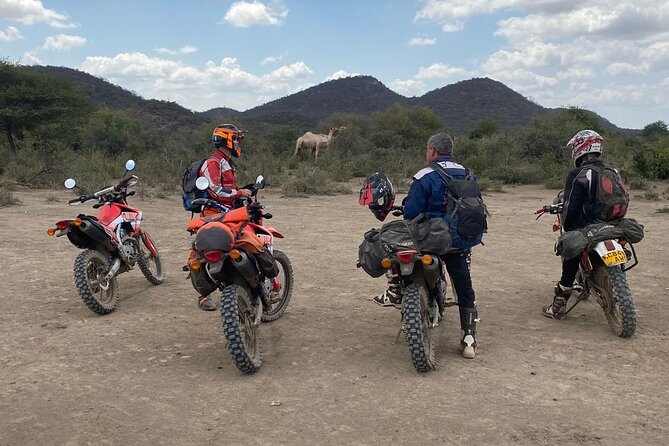
The final day gives you a choice. You can take the harder Monduli route or an easier option. Both pass through rolling country with scrub and scattered thorn trees, where you may see Maasai herding cattle and goats. Antelope and zebra are possible, and a predator might appear if conditions are favorable.
The surface begins with loose gravel and some sand, then improves to a well-maintained dirt road toward Longido village. From Longido, you join tarmac for the final ride to Arusha.
The guide may add a few trails if time allows, but that depends on when the group reaches Longido. You are expected to arrive in Arusha before evening, with transport to the airport if you have a flight that same evening. If not, you’ll be taken to the reserved accommodation.
That airport connection is useful, but I would not schedule an extremely tight international departure. The tour gives an expected early arrival, not a guaranteed one, and dirt roads, weather, mechanical issues, or a slower group can change the timing.
Bikes, guides, and the private format
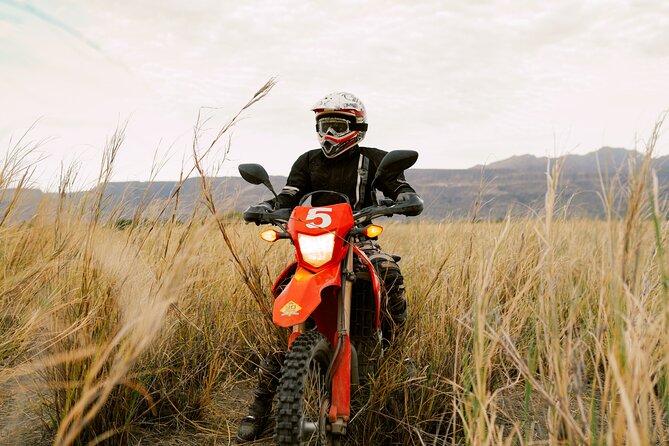
The strongest practical feature is the motorcycle support. Honda CRF300s are described as fresh and well maintained, and the technical crew is part of the operation. That matters in Tanzania, where loose gravel, sand, stones, and long distances put more strain on a bike than a short rental around town.
Alpha is named as part of the guiding team, along with the wider Motorbike Safari Tanzania crew. The guide’s experience with the terrain is especially important on Day 3, the sharp descents near Same, and the sand and gravel sections around Lake Eyasi and Monduli.
Because this is a private activity, only your group participates. That is a real advantage for friends with similar interests. You can discuss the easier final route, take breaks when needed, and ask for more explanation at villages, lakes, or community visits. It also means the price is tied to a private operation rather than a large shared departure.
The route is advertised for riders of all levels, but I would read that as a broad welcome, not a promise that every section is easy. Moderate fitness is required, and a rider should be ready for long hours, rough surfaces, and changing weather.
What to pack and confirm before departure
The tour provides safety gear, but ask exactly what is supplied and what you need to bring. You should also confirm the motorcycle model and fit before arrival, especially if you have a short or tall build.
Useful questions for the operator include:
- How many hours will each day actually be on the motorcycle?
- Is accommodation included in the $2,600 price?
- Are fuel, park fees, and motorcycle damage deposits included?
- Which day is Lake Natron, and which day is Lake Eyasi?
- What safety gear is supplied?
- Can the final day’s easier route be selected in advance?
- What happens if a rider cannot complete a rough section?
Bring clothing for dust, sun, cooler mountain air, and changing conditions. Bottled water beyond the stated meals may cost extra, as will drinks other than bottled water. Medical insurance is not included, so arrange your own cover before riding.
The meeting point is Mount Meru Hotel on Arusha-Taveta Road in the Sekei area of Arusha. The scheduled start is 7:00 a.m., and pickup is offered. Booking confirmation is provided at the time of booking, and the meeting point is near public transportation.
The cancellation rules are strict close to departure. Cancel at least six full days before the start for a full refund. Cancellation two to six days before departure receives a 50 percent refund, while cancellation less than two full days before departure receives no refund.
Should you book this Tanzania motorcycle safari?
Book it if you want a private, physically active route through Tanzania, and if dirt roads are a major reason for your trip. You’ll get far more than a standard transfer between parks: volcanic lakes, mountain tracks, villages, Maasai country, a Hadza visit, and long stretches where the road itself is the attraction.
I would choose it with friends who ride at a similar pace. The private format, maintained Honda CRF300s, safety equipment, meals, and technical support make the price easier to justify for a committed group.
I would hesitate if you want a relaxed holiday, precise daily timing, or guaranteed comfort. The route includes sharp corners, loose gravel, sand, stony trails, and very long listed days. Before paying, get clear answers about accommodation, fuel, park fees, the Lake Natron and Lake Eyasi discrepancy, and the actual riding hours.
For the right rider, this is a memorable way to see Tanzania at ground level. You feel the road, stop in places a standard vehicle may pass, and earn the evening meal one dusty kilometer at a time.
FAQ
Where does the tour start?
The tour starts at Mount Meru Hotel, Arusha-Taveta Road, Sekei Area, Arusha, Tanzania. The scheduled start time is 7:00 a.m., and pickup is offered.
How long is the motorcycle safari?
The experience lasts approximately seven days.
Is this a private tour?
Yes. Only your group participates in the activity.
Are meals included?
Yes. Breakfast, lunch, and dinner are included for all seven days. Extra meals and drinks other than bottled water are not included.
Is safety equipment provided?
Yes. Safety gear and a safari briefing on arrival are included.
Do I need a certain level of fitness?
The tour states that riders should have a moderate physical fitness level. The route includes loose gravel, sand, stony trails, hills, sharp corners, and long riding days.
What is the cancellation policy?
You receive a full refund if you cancel at least six full days before the experience start time. Cancellation two to six full days before departure receives a 50 percent refund. Cancellation less than two full days before departure is not refunded.
Just added around Arusha
- 8 Days Serengeti Migration safari★ 5.0 · 11 reviews
- tarangire, ngorongoro & lake manyara park 3 days private tour★ 5.0 · 11 reviews
- tarangire & ngorongoro 2 days tour★ 5.0 · 14 reviews
- serengeti & ngorongoro 3 days private tour★ 5.0 · 15 reviews
- Mt. Kilimanjaro: Shira plateau to Cathedral point 3872m Day hike★ 5.0 · 7 reviews
- serengeti, ngorongoro & tarangire 4 days private tour★ 5.0 · 18 reviews
- 2 Days Tanzania Midrange Group Join Safari★ 5.0 · 7 reviews
- climb the KILIMANJARO via Lemosho route★ 5.0 · 4 reviews
Guided, compared.

3 Hours Private Stone Town walking Tour with Guide
Read our review →

Stone Town Historical Cultural Walking Guided Tour
Read our review →
Arusha Guided Walking City Tour, Culture, Lifestyle & History
Read our review →
Stone Town’s Hidden History: Private Guided Walking Tour
Read our review →
Red Colobus Monkeys in Jozani Forest Guided Tour
Read our review →
Browse the lists this tour appears in