
Reviewed · STONE TOWN WALKING TOURS
Walking in Stone Town with a Expert Tourguide
Stone Town is best understood on foot, where a carved door, spice stall, or narrow lane can tell you more than a quick look from a taxi. I like the local female guide’s perspective, especially when Hosna explains both island history and the role of women in Zanzibari life. I also like the route’s mix of famous sights and small details, from the Old Fort and House of Wonders to quiet courtyards and coral-stone walls.
The price is a reasonable $25 per person for two hours with a private-feeling local perspective, though entrance tickets and transport from outside Stone Town cost extra. One practical caution: the English may be delivered quickly, and one recent participant found it hard to follow, so ask your guide to slow down when needed.
Five things to know before you book

- Forodhani Gardens is the easy meeting point: Meet at the central bandstand, then return there at the end.
- Hosna earned especially warm praise: She is described as experienced, able to answer questions, and strong on island history.
- The walk links major sights with everyday life: Expect landmarks, markets, carved doors, courtyards, and local shops rather than a museum-only tour.
- The cultural mix is the main subject: Your guide connects African, Arab, Indian, and European influences to Stone Town’s streets and buildings.
- Budget for extras: Old Slave Market admission, other monument tickets, food, drinks, and transport from other parts of Zanzibar are not included.
Starting at Forodhani Gardens

Your meeting point is Forodhani Gardens, at the central pavilion or bandstand in Stone Town. Arrive at least 10 minutes early. That gives you time to find the right person in a busy public area and begin without cutting into the two-hour walk.
The guide returns you to Forodhani at the end, which makes this a handy first-day activity. You can start learning the shape of Stone Town without arranging a complicated transfer, then use what you have learned to plan later walks on your own.
Pick-up from hotels in Stone Town is available if you request it in advance. If you are staying elsewhere on Unguja, you must arrange your own way to town. The price does not include island-wide transfers.
Forodhani is also a useful place to get your bearings. From here, the route leads into the old quarter, where streets become narrow and the pace naturally slows. You will want comfortable walking shoes, not sandals with thin soles, since the walk includes uneven streets and tight alleys.
More Stone Town Walking Tours in Zanzibar
- Zanzibar Stone Town Walking Tour
★ 5.0 · 145 reviews - Stone Town Historical Walking Tour
★ 5.0 · 143 reviews - Spice Tour + Stone Town Tour + Prison Island
★ 4.5 · 130 reviews
Stone Town’s narrow lanes and old buildings
The heart of this experience is not one grand monument. It is the movement between them. Your guide leads you through winding passages where spice smells, local shops, textiles, produce, and carved wooden doors create a fuller picture of daily life.
Stone Town’s architecture reflects its place at a crossroads. African, Arab, Indian, and European influences appear together in the town’s buildings, courtyards, balconies, coral-stone walls, and decorative doors. Your guide helps you connect those details instead of simply pointing at them and moving on.
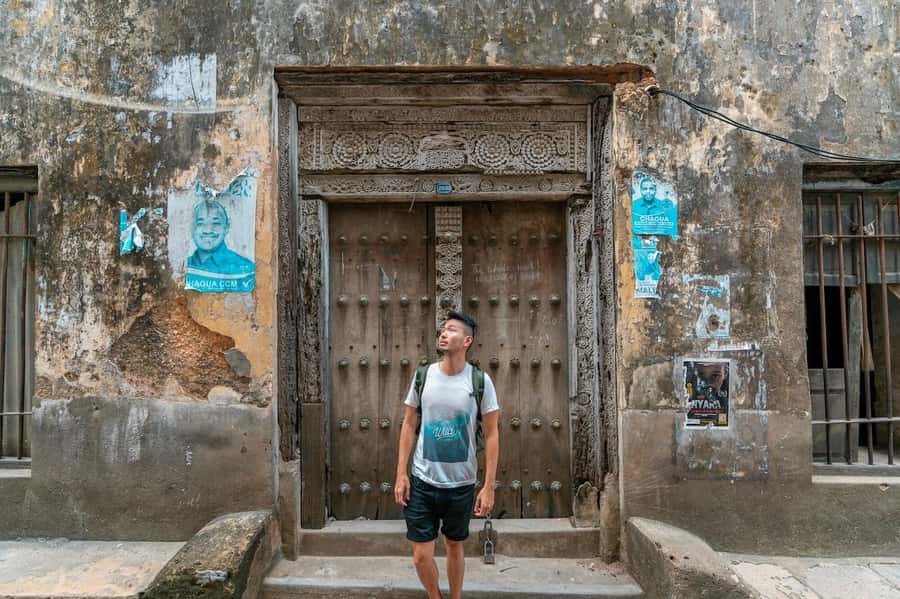
The doors deserve special attention. They are among the most memorable details in Stone Town, and a local guide can explain why their decoration matters within the wider culture of the island. The route also includes quiet courtyards and less obvious cultural sites that are easy to miss if you are following only a map.
I would keep your camera ready, but do not rush from one photo to the next. The value of this walk comes from asking why a building looks the way it does and how the old quarter still functions as part of modern Zanzibar.
The Old Fort and House of Wonders
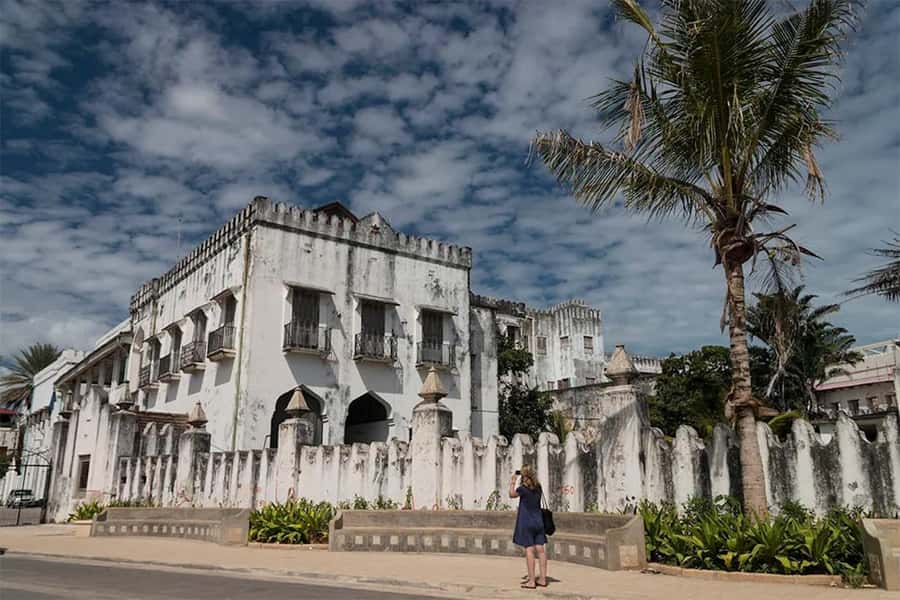
The Old Fort is one of the key historic stops. It gives the walk a clear anchor and helps explain Stone Town’s role in the changing political and commercial life of Zanzibar.
The House of Wonders is another major landmark on the route. Along with the former Sultan’s Palace, it points to the period when Zanzibar was closely tied to regional trade and the authority of the sultanate. Your guide places these buildings within the larger meeting of African, Arab, Indian, and European cultures.
Do not expect a long museum visit to be included in the $25 price. The activity focuses on walking and guided explanation, while entrance tickets to the Old Slave Market and specific museums or monuments are paid separately on site.
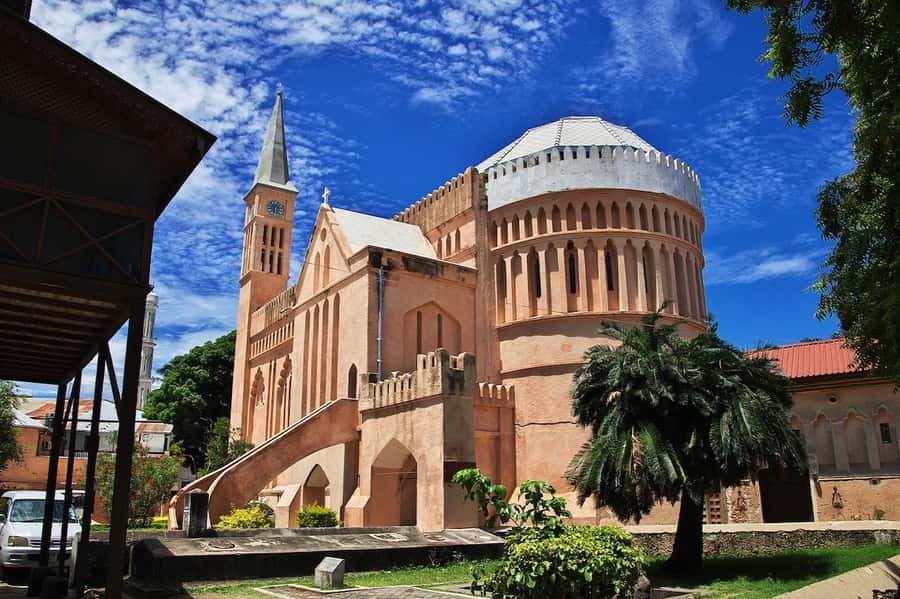
The itinerary also includes the Anglican Cathedral, with time for a photo stop, a visit, sightseeing, and passing through nearby areas. The supplied timing is a little unclear: the activity is advertised as two hours, while the route details refer to a 2.5-hour sightseeing block. I would confirm the actual timing before booking, especially if you have a ferry, flight, meal reservation, or another excursion afterward.
Markets, spices, and the working town
The market section adds color and movement to the historical material. Stalls may include spices, fresh produce, textiles, crafts, snacks, and other local goods. You can watch vendors at work, ask questions, and use your small cash reserve for a souvenir or something to eat.
This is also where the tour feels most connected to present-day life. Stone Town is not only a collection of old buildings. It is a place where people shop, work, meet, and move through the same streets that carry centuries of outside influence.
The guide can help you understand what you are seeing, but keep your expectations sensible. A two-hour walk cannot provide a full market tour, detailed shopping service, and extended visits to every landmark. The strength of this experience is the broad view: a little architecture, a little history, a little market life, and room for questions.
Bring cash if you may want to buy something. Food and drinks are not included, so plan to pay directly for anything you purchase. You should also ask before photographing people or vendors, particularly in a busy market setting.
Same country, a completely different kind of safari:
- Zanzibar: Quad Bike Adventure departing from Kendwa or Nungwi
★ 4.9 · 1,233 reviews - Zanzibar: Prison Island and Nakupenda Boat Trip with Lunch
★ 4.1 · 882 reviews - Skydive Zanzibar | Tandem Skydive
★ 5.0 · 877 reviews - Mnemba Island: Dolphin Swim & Snorkeling with Optional Lunch
★ 4.3 · 591 reviews
A female guide’s view of Zanzibari culture
The female-guide option is the most distinctive part of this walk. The experience is not limited to buildings and dates. It includes discussion of women’s roles in Zanzibari society, both in earlier generations and today.
That perspective can make the tour feel more personal. You hear about tradition, change, and resilience through someone who speaks from local experience, rather than receiving only a standard list of monuments. Hosna received particularly strong praise for explaining the island’s past and answering questions. A female student may also accompany or assist the guide, depending on the arrangement.
The guide’s ability to answer questions matters here. If you are curious about clothing, family life, religious customs, work, architecture, or the mix of cultures in Stone Town, this is a good format for asking directly. The walk invites conversation instead of keeping you in silence behind a fixed script.
There is one communication issue to consider. English is the stated tour language, and one participant found the guide’s speech too fast to understand comfortably. If English is not your first language, say so at the beginning and ask for slower delivery. That small request could make a major difference during the history portions.
The Tanzanite sales stop: an important caution
One participant reported being taken for about 15 minutes into a Tanzanite sales presentation and found it unnecessary. This is worth knowing before you book, because it can interrupt a short two-hour route.
The supplied tour details do not describe a Tanzanite stop as a standard part of the experience. If you do not want commercial shopping included, tell the guide at the start. You can also ask what the planned route includes and whether any shop visits are optional.
This does not erase the positive parts of the walk, but it affects the value calculation. Two hours pass quickly in Stone Town. A 15-minute sales presentation takes time away from courtyards, markets, landmarks, and questions. I would make your preference clear before setting out.
How much walking should you expect?
The tour moves through narrow alleys and uneven streets at a leisurely pace. It is not described as a strenuous hike, but you will be on your feet for most of the activity, and the surface may be irregular.
Comfortable walking shoes are essential. A hat, sunscreen, and sunglasses will help in the sun, while modest clothing shows respect for local customs. Women are advised to cover their shoulders and knees.
The activity is not suitable for babies under one year, people over 95, or anyone who needs a stroller. Baby strollers are not allowed. The route may also be difficult for people with mobility challenges, even though the pace is relaxed.
You should carry water, though drinks are not supplied. Keep your belongings close in crowded areas and bring only the cash you expect to use. These are simple habits, but they let you focus on the street scenes instead of your bag.
Is $25 a fair price?

At $25 per person, this is a fair entry point for a two-hour guided introduction to Stone Town. You are paying for a local English-speaking guide, a planned walking route, cultural explanation, and help interpreting places that can otherwise seem confusing.
The value is strongest if this is your first time in Stone Town. A guide can give you context for the major landmarks, show you architectural details, and help you understand the connection between old buildings and everyday life. You also avoid spending your first few hours wandering without knowing what you are looking at.
The value is weaker if you want long interior visits. Entrance fees are extra, and food, drinks, and transport from outside Stone Town are not part of the price. You may also lose some of the limited time if a shop stop is added.
For a small budget, I would treat this as an orientation walk rather than a full historical tour. It can help you decide which museums and sites deserve a separate visit later.
Who will enjoy this Stone Town walk?
I would recommend it most strongly to:
- First-time visitors who want a useful introduction to Stone Town.
- People who prefer walking and conversation to a vehicle tour.
- Anyone interested in architecture, local markets, and cultural contact.
- Visitors who specifically want a female guide’s view of Zanzibari society.
- Couples, friends, or small groups who can comfortably manage uneven streets.
- Photographers who enjoy doors, courtyards, markets, and street details.
History fans should ask questions and consider paying for selected monument entrances. The basic walk gives you context, but it does not include every interior or ticketed site.
This may be less suitable for very young children, people who cannot walk comfortably for two hours, or anyone with a tight schedule. It is also not ideal if you want a silent photo walk or a purely commercial shopping tour.
Practical advice for a better two hours
Book at least four hours before the start time. Confirm the meeting details, particularly if you have asked for hotel pick-up in Stone Town.
Arrive early at the Forodhani bandstand and look for the female guide waiting there. Since Forodhani is the start and end point, it is simple to continue exploring afterward, but leave yourself enough time if you have a later booking.
At the beginning, tell the guide three things: your preferred walking pace, whether you need slower English, and whether you want to avoid shopping presentations. Also ask which entrance tickets might be useful, so you can carry enough cash.
Wear modest, breathable clothing and supportive shoes. Bring sun protection, water, a small amount of cash, and a camera. Avoid bringing a stroller, and do not count on food or drinks being included.
The tour allows questions and photographs, so use that freedom. Ask about a door, a market item, a courtyard, or the connection between a landmark and modern life. You will get more from the walk if you treat it as a conversation rather than a checklist.
Should you book this Stone Town experience?
I would book it if you want a reasonably priced first look at Stone Town, especially if the female-guide perspective matters to you. Hosna’s strong showing for history, answers, and personal connection suggests the right guide can make this short walk feel much more useful than a quick solo circuit.
I would book with two conditions. First, confirm whether the actual walk lasts two or 2.5 hours. Second, make clear that you want slow, easy-to-follow English and no unnecessary Tanzanite sales stop.
For $25, the mix of major landmarks, markets, architecture, and local stories is good value. Just remember that tickets and transport are extra, and the route is an introduction rather than a full museum tour. If those limits fit your plans, this is a practical way to meet Stone Town on foot and begin seeing Zanzibar through local eyes.
FAQ
Where does the Stone Town walking tour begin?
The tour begins at Forodhani Gardens in Stone Town, at the central pavilion or bandstand. You should arrive at least 10 minutes before the start time.
Where does the tour end?
The walk returns to Forodhani Gardens.
How long does the activity last?
The activity is advertised as two hours. The route details also mention a 2.5-hour sightseeing block, so confirm the exact timing when you book.
What language is the tour conducted in?
The stated tour language is English.
Is hotel pick-up available?
Pick-up is available from hotels in Stone Town if you request it in advance. Transfers from other parts of the island are not included.
Are entrance fees included?
No. Entrance fees and tickets for the Old Slave Market, museums, or other monuments are paid separately on site.
What should I wear and bring?
Wear comfortable walking shoes and modest clothing, with shoulders and knees covered for women. Bring a hat, sunscreen, sunglasses, water, and a small amount of cash for possible market purchases.
More Walking Tours in Zanzibar
- Stonetown: Food Markets and Street Food Walking Tour
★ 4.7 · 151 reviews - Walking City Tour in Zanzibar Island
★ 5.0 · 122 reviews - Zanzibar: Jozani nature walk and wildlife tour
★ 4.5 · 89 reviews - 3 Hours Private Stone Town Walking Tour
★ 5.0 · 71 reviews
Just added around Zanzibar
- Zanzibar: Maasai village and Nungwi turtles experience trip★ 4.9 · 16 reviews
- Zanzibar: Mnemba Atoll, Spice farm, Jozani forest & Lunch★ 3.9 · 3 reviews
- Zanzibar: Maasai World Tour with Cultural Practices★ 4.0 · 4 reviews
- Zanzibar: Kendwa Beach Professional Photoshoot★ 5.0 · 5 reviews
- ZANZIBAR: Jozani Forest,Salaam Cave, The Rock & Blue Lagoon★ 4.8 · 8 reviews
- Zanzibar: Jozani Red Colobos Monkey & Salaam Turtle Santuary★ 4.6 · 3 reviews
- Zanzibar: Jozani Forest Walking Tour★ 5.0 · 3 reviews
- Zanzibar: Jozani Forest,Red colobus,the Rock Restaurant tour★ 4.5 · 21 reviews
Stone Town Walking Tours, compared.

Stone Town, Spice Tour, Prison Island with Lunch
Read our review →
Stone Town, Spice tour & Prison Island with Lunch
Read our review →

3 Hours Private Stone Town walking Tour with Guide
Read our review →
Full-Day Private Stone Town +Spice Farm and Prison Island Tour
Read our review →
Stone Town Historical Cultural Walking Guided Tour
Read our review →
Browse the lists this tour appears in